
Production & Characterisation of Fermented Coconut Water and a Report on Its Health Benefits
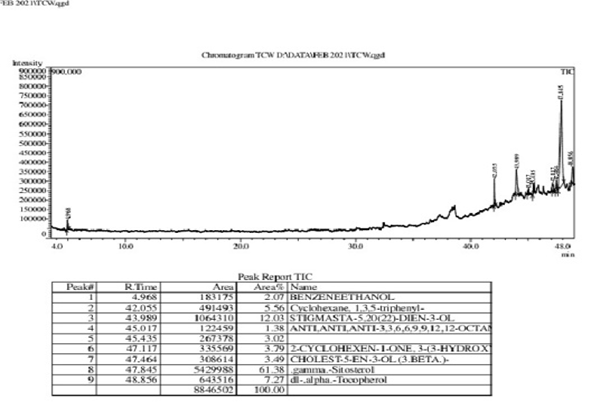
Coconut water known as nutritive liquid and a natural medium for microbial growth is obtained from the endosperm of coconuts (Cocos nucifera) and is largely consumed in tropical countries. Fermentation with known culture of microbes gives desirable quality and more shelf life to this perishable drink. Fermentation of coconut water to prepare a beverage of high health benefits and commercial value was attempted. Tender coconut was fermented with Saccharomyces cerevisiae yeast and observed for the fermentative changes in around 15 days. The sensory analysis of obtained fermented drink was done to prove the quality of fermented product. The physiochemical analysis revealed that the pH was 4 to 5 pH on 15th day of fermentation and was stable. Fermented coconut water prepared contained textural element tannin in very low concentration as desired. Tannin content was found in range of 0.016 to 0.25%. The phenol content was measured using folin cioclteu assay method and was 33.8 % in finished drink. The alcohol content was 7-8% in finished drink as measured by spectrophotometry. Fermented coconut water retained active enzymes like peroxidase, catalase, and dehydrogenase that aids in the digestion and metabolism of food, and was proved by enzyme activity tests such as Amylase test, catalase test, peroxidase test. Coconut water is known to be flourished with amino acids and the presence of amino acids like tyrosine, tryptophan, alanine and valine in fermented coconut water was confirmed by paper chromatography. GC-MS analysis of fermented coconut water showed the presence of compounds - benzene ethanol, cyclohexane, gamma sitosterol, di alpha tocopherol. These compounds are known to support antibacterial, antithrombotic and antioxidant properties. Protein prediction using Swiss prediction was done to identify the available ligands in the Bio active compounds reported by Gas Chromatogram.
Introduction
Tender coconut water is a natural source of electrolytes, minerals, vitamins, complex carbohydrates, amino acids and other nutrients. The natural carbohydrate content is Perspective usually between 4-5% in coconut water. Coconut water is technically liquid endosperm, forming small quantities in the third month of coconut maturation and reaching a maximum in eight months, declining as the nut ripens. Coconut water obtained from mature nuts when harvested for the production of copra and coconut oil is wasted on large scale in several tropical countries [1]. In tropical regions, tender coconut water is consumed as a sports drink [2]. and matured coconut water is generally discarded, because only coconut meat is used for various purposes. Coconut water contains carbohydrate (glucose, fructose, sucrose, and sorbitol) essential amino acids (lysine, histidine, and tryptophan) and organic acids (tartaric, citric, malic acid). The unique chemical composition of sodium, potassium, phosphorus, chloride and magnesium, vitamins, sugars, proteins, free amino acids and growth promoting factors [3].
In coconut water is the factor that make it’s a worldwide drink. Further coconut water contains most of the nutrients (growth promoting factor) required for plant and microbial cell growth. Fruit with a good proportion of sugar may be used for wine production and the resulting wines are normally named after the fruit involves. Coconut water obtained from mature nuts when harvested for the production of copra and coconut oil is wasted on large scale in several tropical countries. Pilo, et al. had documented that the consumption of CW has increased notably and establishment of coconut palm plantation was encouraged in eastern and north eastern parts of Brazil. Coconut water is perishable and is always consumed fresh. Commercially processed coconut water dose its heat labile components as the processing employs ultra high temperature technology. It loses its delicate fresh flavour and some of its nutrients during heating Aqua, et al. and Kailaku, et al., so would be desirable a non –thermal process to protect the fresh flavour and nutrient content of coconut water [4, 5]. Fermentation is any metabolic cycle wherein microorganisms’ movement makes an attractive change in food and drinks, regardless of whether it’s expanding flavour, preserving foodstuffs, giving medical advantages, or more.
Fermenting coconut water with known microbe Baker’s yeast will prepare a healthy probiotic drink like KEFIR. Fermenting coconut water with known cultures of microbes gives desirable quality and more shelf life. Nowadays, CW consumption is increasing worldwide and represents one of the fastest growing beverage categories due to its natural hydrating qualities, enhanced taste, health properties and nutritional benefits. Most bioactive molecules perform their action by interacting with proteins or other macromolecules. Catechin possess antioxidant, antimicrobial and anticancer activities [6].
Computational predictions of bioactive molecule targets based on similarity with known ligands are powerful to narrow down the number of potential targets and to rationalize side effects of known molecules.Binding Site Prediction and Docking, 3D Ligand site- binding site prediction, EXPASY-Swiss Prot help in protein ligand binding site predictions.
Materials and Methods
Substrate Preparation
Tender coconut was procured from local market with preference of using coconuts of similar variety. The coconut water was filtered and collected in a sterile container. The filtered coconut was pasteurized at 72ºc for 15 secs.
Substrate Inoculation
S.cerevisiae commonly termed as Baker’s yeast used as fermenting organism. The inoculum was prepared by adding 21g of yeast in YEPD broth(Yeast Extract Peptone Broth) for the overnight culture. Yeasts are capable of growing at 45ºC in presence of sugar. A closed system of fermentation is set with sterile container (bottle) sealed well to avoid contamination. 1% of yeast inoculum was added to the pasteurized coconut water. The setups were incubated at room temperature for 10 days and observed for the fermentation changes every day.
Product Recovery
Recovery of fermented drink is done by removing suspended particles and elements like yeast. This is done by filtration using muslin cloth and pasteurization at 72ºC for 15 seconds. And the process gives the clearer and healthier appearance of finished product. Aging of fermented product was facilitated by incubation after clarification in air tight containers and absence of light. The FCW was siphoned to sterile bottle later.
Biochemical Analysis
To 2-3ml of FCW sample, few drops of 5% FeCl3 solution was added and observed for formation of Dark blue colour which indicates the presence of tannin. To the10 ml of diluted sample 1ml of freshly prepared K2Cr2O7(Potassium Dichromate) solution was added along with 4ml of concentrated H2SO4 was added.10ml of distilled water, 0.5g of K2Cr2O7 and 4ml of concentrated H2SO4 was taken as standard. Calorimetric values were measured at 600nm. Alcohol content was calculated by comparing with standard curve.
Pipette out a standard volume of the test sample in different tubes. Add equal volume of Folin Ciocalteu reagent and read the calorimetric value at 420nm.0.05g of phenol solution was taken as standard and the graph obtained can be compared to quantitate the concentration of phenolic compounds. Flavonoids are analyzed by phytochemical analysis methods. To 1ml of the fermented coconut water (FCW) sample, 1ml of Ammonia and 1ml conc. H2SO4 were added and formation of yellow color indicates the presence of Flavonoids.
Gas chromatography –mass spectrometry is an analytical method that combines the feature of gas chromatography and mass spectrometry to identify different compounds present within test sample. Use polydimethylsiloxane-based and polyethylene glycol-based stationary phases for effective analysis.
Analysis for Bioactive Enzymes: Enzymatic Property
Amylase and Dehydrogenase Activity: Starch agar plates were prepared and sterilized. The medium was streaked with FCW and CW. The plates were incubated at 37˚C for 24 hours. Plates were observed for zone of hydrolysis. Catalase and Peroxidase Activity: FCW and CW were taken in separate test tubes. Catalase reagent (3 % Hydrogen peroxide) was added and observed for effervescence.
Analysis for Bioactivity
Antidiabetic Activity- Amylase Inhibition Assay: 15 ml of Starch solution were prepared and dispersed into a set of 3 test tubes. Steam Sterilized and commercially available alpha Amylase enzyme was added to the tubes with 1ml of Fermented coconut water, Coconut Water and Nutrient broth each. All the tubes were incubated at 37 ˚C overnight.
Antioxidant Activity-Hydrogen Peroxide Scavenging Assay
A solution of hydrogen peroxide is prepared in phosphate buffer. Sample was added to hydrogen peroxide solution (0.6 ml). Absorbance of reacting mixture at 230nm was determined after 10 minutes. A blank was taken as phosphate buffer without hydrogen peroxide. Ascorbic acid was used as standard. The hydrogen peroide free radical scavenging activity was determined by evaluating % inhibition. %Inhibition = ((control - test)/control)
Anti-Thrombotic Activity-Clotting Time Assay
Anti-thrombin is a protein produced by the liver that helps regulate blood clot formation (i.e., a naturally-occurring mild blood thinner. A drop of blood was taken in a clean glass slide and was tested with FCW, CW and Normal saline for blood clotting time.
Results and Discussion
The fermentative changes in coconut water from the day of incubation to recovery of product was observed closely and documented in Table 1. Quality of FCW recovered can be assured by few basic analytical assessments like Tannin presence, Alcohol content, Phenol content, Flavonoids content, Anthocyanin content, and Aldehyde content.
| Sample | Day 2 | Day 3-5 | Day 7-8 | Day 10 | Day 13-15 |
|---|---|---|---|---|---|
| Tender coconut wine | White colour | Cream white colour with gas production | Light yellow colour with foam and settled cells | Light yellow color | Clear light yellow color |
| (TCW) | pH 5-6 | pH 5 |
Table 1: Change Observed During Fermentation At Various Period Of Incubation
Physiochemical Analysis
Very low or negligible amount of tannins were observed in the Fermented product obtained. The phenol content was 33.8% in the finished product when measured by Folin Ciocalteu assay method. Alcohol content was analysed using Spectrophotometric method was initially 12% that reduced to 7 % after storing for 10 months. Flavonoids, Anthocyanins, Aldehyde content were all nil in the finished product.
Enzyme Activity
A clear zone of hydrolysis in starch agar plates was observed on adding iodine solution to the plates with starch which shows the FCW retains the amylase and dehydrogenase activity after fermentation. Brisk Effervescences on adding hydrogen peroxide to aliquot of finished sample clearly indicates the presence of catalase and peroxidase activity in the fermented coconut water (FCW).
Biological Property
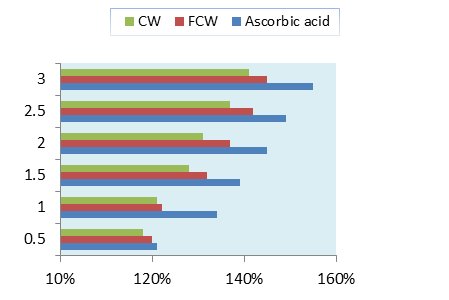
After incubation the starch solutions appeared blue on adding iodine in tubes with FCW & CW indicating that fermented coconut water has amylase inhibitory activity. Normal value of thrombin clots to form usually is 12-15 seconds. Blood drop mixed with fermented coconut water took 15 minutes indicating active anti thrombotic activity of FCW. The antioxidant property of fermented coconut water, coconut water and a standard ascorbic acid is charted in Figures 1 & 2.
| Compound | Target | Known Actives(2d) | Target Class |
|---|---|---|---|
| Benzene Ethanol | Carbonic anhydrase CA2 | <9 | Lyase |
| γ- Sitosterol | Nuclear Receptors | >300 | TNTM |
| Regulatory Proteins Reductase | >20 | Unclassified | |
| Acetyl Choline Transporters | >10 | Oxidoreductase | |
| 1 | Electrochemical transporter | ||
| >20 | |||
| α-Tocopherol | Nuclear receptors | >100 | Receptors |
| Amino acyl Kinases | >25 | Kinases | |
| Phosphatases | >10 | Enzyme | |
| Oxidoreductase | >10 | Enzyme | |
| Lipooxygenase | >10 | Enzyme | |
| Stigmasta | Sterol Regulation with binding protein | 1 | Unclassified |
| Nuclear Receptor | 9 | Nuclear receptor | |
| LXR Alpha | >50 | Nuclear Receptor | |
| Testis specific androgen Binding Protein | 48 | Secreted protein | |
| Vitamin –D receptor | 49 | Nuclear Receptor | |
| Dopamine Transporter | 1 | Electrochemical Transporter | |
| Cytochrome receptor | 161 | ||
| Progesterone receptor | 26 |
Table 2: Binding Site Prediction.
Modern society seeks to consume foods that can treat and prevent disease, as well as increase longevity, and in this context stand out functional foods rich in antioxidant compounds with proven health benefits. Tender coconut water is consumed worldwide and are exported and imported across the world. They are consumed as refreshing drink, and other forms for the numerous therapeutic qualities. As processing with UHT results in loss of few thermo labile nutrients this study attempts to prepare a fermented drink from CW which can be an alternate method to preserve such perishable drink and can be exported and imported with ease without losing the health benefits of coconut water.
References
-
Brito NM, Navickiene S, Polese L, Jardim EF, Abakerli RB, et al. (2002) Determination of pesticide residues in coconut water by liquid-liquid extraction and gas chromotography with electron-capture plus thermionic specific detection and solid-phase extraction and high performance liquid chromotography with ultraviolet detection. Journal of chromotography A 957(2): 201- 209.
-
Marchi FD, Aprea E, Endrizzi I, Charles M, Betta E, et al. (2015) Effects of Pasteurization on Volatile Compounds and Sensory Properties of Coconut (Cocos nucifera L.) Water: Thermal vs. High-Pressure Carbon Dioxide Pasteurization. Food Bioprocess Technol 8: 1393-1404.
-
Matsui KátiaGut, Jorg Oliveira, Pedro Tadini Carmen (2008) Inactivation kinetics of polyphenol oxidase and peroxidase in green coconut water by microwave processing. Journal of Food Engineering 88(2): 169-176.
-
Malhotra SK, Maheswarappa HP, Selvamanin V, Chowdappa P (2016) Diagnosis and management of soil fertility constraints in coconut (Cocos nucifera). A review 2017Indian Journal of Agricultural Sciences 87(6): 711-726.
-
Dibash G, Aroshau UL, Rajiv D, Prabesh J (2017) Nonthermal pasteurization of tender coconut water using a continuous flow coiled UV reactor LWT - Food Science and Technology Volume 83: 127-131.
-
Zaveri TN (2006) Green tea and its polyphenolic catechins: medicinal uses in cancer and noncancer applications 78(18): 2073-2080.
- The Role of Podocyte Apoptosis and the Involvement of SIRT1 in Diabetic Nephropathy
- Dealcoholization of Beer by Osmotic Distillation for the Beverage Industry
- Biopolymer-Based Edible Packaging- Biomaterials, Methods, and Applications in Food Industry: An Updated Review
- Influence of Bioprocessing Methods on 'China Rice' (Gawal R1), and Soyabean Supplementation on the Quality of Complementary Food
- Cassava (Manihot esculenta) Varietal Growth, Yield and Cyanide Content Performance in Three Sites in the South- Eastern Semi Arid Regions of Kenya
- Food Waste Treatment, Recycling, Management and Production of Value-Products-An Update on Methodologies and Current Trends