
GC-MS Characterization of Bioactive Compounds from the Whole Plants Analysis of Ethyl Acetate Fractions of Talinum fruticosum(Water Leaf)
Plants have played an important role in the fight for survival from man s evolution. Plants aren’t just the principal food source for all animals and even humans, but there are a lot of plant species that have been shown to be very valuable medicinal products over time. Medicinal plants are used to treat and diagnose and infections from ancients times, plants have been rich source of effective and safe medicines.While Ethiopia has a long history of a traditional health care system, research on traditional medicinal plants (TMP) has lagged behind the country's multiethnic, cultural, and flora diversity (Fenta-country's multiethnic, cultural, and flora diversity). Nevertheless, medicinal plants continue to play significant roles in the daily lives of people living in developing countries in Asia and Africa, including Ethiopia.cines . According to estimates from the World Health Organization (WHO), between 75 and 80 percent of the world's population already uses herbal medicine for some aspect of primary healthcare . Plants with a long history of usage in ethnomedicine offer a valuable source of medicines for the treatment of many illnesses and infectious diseases in pharmaceutical conditions. Most herbal medicines and their derivative products were often prepared from crude plant extracts, which comprise a complex mixture of different phytochemical constituents (plant secondary metabolites). The aim of the research was to characterized the bioactive compounds of ethyl acetate fraction using gas-chromatography mass spectrophotometer.The resultant fraction was analyzed using GC-MS. Fatty acids, sterols, and terpenoids were among the bioactive substances found in the sample, according to the analysis. Different chemicals were indicated by the unique peaks in the GC-MS chromatogram. Hexadecanoic acid (palmitic acid), phytol, 2-decanol, 2-methyl-3-(3-methyl-but-2-enyl)-2-(4-methyl-pent-3-enyl), cyclotrisiloxanehexamethyl, pentanedioic acid, 2-oxo-, and dimethyl ester are among the main chemicals found. Numerous pharmacological characteristics, including anti-inflammatory, antioxidant, and antibacterial effects, have been documented for these substances. To assess the distinct biological activity and possible therapeutic uses of the purified compounds, in vitro and in vivo investigations had to be conducted. Talinum fruticosum (water leaf) are used for the treatments of various ailments in folklore medicine, Waterleaf also holds medicinal significance. It is believed to possess various health benefits, including anti-inflammatory, diuretic, and antioxidant properties. Traditional medicine practitioners often use water leaf to treat ailments such as gastrointestinal disorders, malaria, and high blood pressure. and high blood pressure. Bioactive compounds, which are bioactive compounds found in plants, have gained significant attention due to their potential health benefits and therapeutic properties. These compounds include alkaloids, flavonoids, tannins, saponins, and phenolic compounds, among others . The extraction of these bioactive compounds is crucial for their characterization and subsequent application in various industries, including pharmaceuticals, nutraceuticals, and cosmetics.
Benedict Ojoago A* and Victor Sheneni D
Introduction
Plants have played an important role in the fight for survival from man’s evolution. Plants aren’t just the principal food source for all animals and even humans, but there are a lot of plant species that have been shown to be very valuable medicinal products over time. medicinal plants are used to treat and diagnose and infections from ancients times, plants have been rich source of effective and safe medicines. According to estimates from the World Health Organization (WHO), between 75 and 80 percent of the world’s population already uses herbal medicine for some aspect of primary. Plants with a long history of usage in ethnomedicine offer a valuable source of medicines for the treatment of many illnesses and infectious diseases in pharmaceutical conditions. Free radicals play a crucial role in the development of pathological events. Antioxidants are chemical compounds which have the ability to quench the free radicals and thereby it prevents the human body against various diseases. Studies have demonstrated that Tallinum fruticosum exhibits significant antioxidant properties, primarily due to its flavonoid and tannin content, which help in neutralizing free radicals and reducing oxidative stress, a factor implicated in chronic diseases like cancer and cardiovascular disorder [1, 2, 3]. Water leaf (Talinum fruticosum) is a widely consumed leafy vegetable in many parts of the world, known for its nutritional and medicinal values. It is rich in vitamins, minerals, and bioactive compound that contribute to its antioxidant, anti-inflammatory, and antimicrobial properties [4]. Medicinal plants still play important roles in the daily lives of people living in developing countries of Asia and Africa, including Ethiopia, Ethiopia has a long history of a traditional health care system, but studies on traditional medicinal plants (TMP) have been limited in comparison to the country’s multiethnic, cultural, and flora diversity (Fenta- country’s multiethnic, cultural, and flora diversity country’s multiethnic, cultural, and flora diversity [2].
The first practical GC-MS demonstration was carried out in the 1950s by scientists Fred McLafferty and Roland Gohlke of the Dow Chemical Company. The beginnings of GC- MS may be traced back to the mid-20th century. The ability of mass spectrometry to identify individual components and the ability of gas chromatography to separate mixtures were combined to create a revolutionary analytical tool that has since become indispensable in a variety of fields, including pharmaceuticals, environmental monitoring, and forensic science. The evolution of GC technology has led to the development of various types of detectors, including thermal conductivity detectors (TCD), flame ionization detectors (FID), and mass spectrometers (MS). Among these, MS is recognized for its ability to identify and quantify compounds with high sensitivity, making it an ideal complement to GC.
| Ethyl acetate S/N | Name of compound | R/T | Peck Area | MW | Class of compound | Chemical formula |
|---|---|---|---|---|---|---|
| 1 | Hexadecanoic acid, methyl ester | 14 | 301075.95 | 270 | Fatty acid methyl ester | C17H34O2 |
| 2 | Phytol | 12 | 210175.57 | 296 | Diterpenealcohol | C20H40O |
| 3 | 2-Decanol | 10 | 168771.87 | 158 | Long chain fatty acid | C10H22O |
| 4 | Unidentified | 10 | 154385.53 | |||
| 5 | 2-Methyl-3-(3-methyl-but-2-enyl)-2-(4- methyl-pent-3-enyl)-oxetane | 13 | 222.19837 | 222 | terpenes or terpenoids | C15H26O |
| 6 | Cyclotrisiloxane, hexamethyl | 222 | Terpenoids | C6H18O3Si3 | ||
| 7 | Dibutyl phthalate | 14 | 132021.85 | 278 | Benzoic acid ester | C16H22O4 |
| 8 | Phenol, 2,5-bis(1,1-dimethylethyl)- | 9.4 | 121243.18 | 206 | alkane | C14H22O |
| Pentanoic acid, 5-hydroxy-, 2,4-di-t- butylphenyl esters | 306 | C19H30O3 | ||||
| 9 | Pentanedioic acid, 2-oxo-, dimethyl ester | 3.7 | 118545.35 | 174 | C7H10O5 | |
| Mono-Ethyl malonate | 132 | C5H8O4 | ||||
| Butanedioic acid, dimethyl ester | 146 | C6H10O4 | ||||
| 10peck 33 | Benzenepropanoic acid, 3,5-bis(1,1- dimethylethyl)-4-hydroxy-, methyl ester | 14 | 84725.17 | 292 | C18H28O3 | |
| 11 peck 28 | Ethanethioic acid, S-(4-methylphenyl) ester | 13 | 87808.96 | 166 | C9H10OS | |
| Benzenemethanol, 3-hydroxy- | 124 | C7H8O2 |
Table 1: Ability to identify and quantify compounds with high sensitivity, making it an ideal complement to GC.
5 x10 + TIC Scan Victor Ethyl A Fraction1.d
20 42 36 Figure 2: Chromatograph of all the identifield compounds from gas chromatography mass spectrometer.
Material and Method
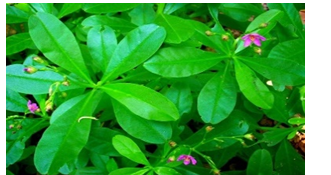
Collection and Identification of Plant Materials The Tallinum fruticosum plants were harvested from its natural habitat at the Department of biological sciences garden
Federal university lokoja, Nigeria in month of May 2024 and authenticated based on morphological characteristics by the Herbarium taxonomist of the Department of Botany, Federal University Lokoja, Kogi, where a voucher species number of FULH0230 was deposited on it for references purposes.
Sample Extraction
The powdered plant sample (650g) was weighed into a conical flask using an electronic weighing balance, measuring cylinder, 1300ml of 100%methanol was transferred into the conical flask and allowed to stand for 24 hours at ambient temperature with vigorous shaking at intervals. The methanol extract was then filtered first using cotton wool and then Whatman No. 1 filter paper. The methanol extract was concentrated at 30.50c to dryness using an electronic steam bath. The dried extract was then transferred and stored in a sterile container for further use.
GC-MS spectrometer analysis of Tallinum fruticosum
Depending on the kind of analytes and sample matrix, the sample can be prepared using extraction, derivatization, or other appropriate methods.
Injection: A split/splitless injector is usually used to introduce the prepared sample into the GC-MS system.
The sample is vaporized and then transported via a stationary phase-coated capillary column by an inert gas, like hydrogen or helium. According to Manji, et al. the compounds segregate according to their interactions with the stationary phase and boiling points.
Detection and identification: The separated chemicals are broken and ionized in the mass spectrometer’s ion source as they elute from the GC column. The mass-to-charge ratio of the ions is used by the mass analyzer, such as a quadrupole or time-of-flight (TOF), to separate them.
Data analysis: The acquired data is processed using specialized software, which compares the obtained mass spectra with ref.
erence libraries for compound. identification. Quantification is achieved by comparing the peak areas or heights with those of standard compounds [3].
Result and Discussion
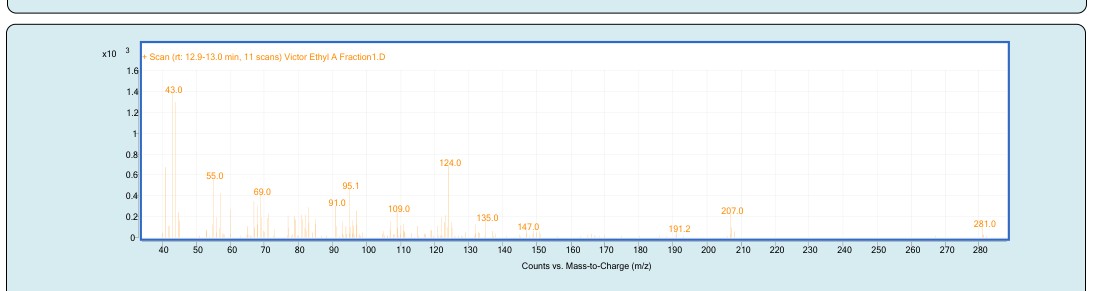
Medicinal plants are the resources of new drugs. Many of the modern medicines are produced indirectly from the medicinal plants. They have contributed many various diseases and illness. The analysis and extraction of plant material play an important role in the development, modernization and quality control of herbal formulations. Studying of medicinal plants also facilitates to comprehend plant toxicity and also helps to protect human and animals from natural poisons. The GC-MS study of the ethyl fraction of Talinum fruticosum indicated the presence of various bioactive chemicals. Table 1 summarizes the principal compounds found, together with their retention periods, peak regions, molecular weight, class of compounds, chemical formular, name of compounds which show thatHexadecanoic acid, methyl ester, also known as palmitic acid methyl ester, is the most abundant compound in the ethyl fraction, accounting for 301075.95 of the peak area. This fatty acid methyl ester has been reported to possess various biological activities, including antibacterial, antioxidant, nematicidal, and insecticidal properties It has also shown potential in reducing cholesterol levels and exhibiting anti-inflammatory, antiarthritic, anticancer, and antiandrogenic activities. Phytol, a diterpene alcohol derived from chlorophyll, is the second most abundant compound, making up 210175.57of the peak area. It is commonly used as a precursor for the synthesis of vitamins E and K1Phytol has been reported to exhibit sedative, anxiolytic, and antischistosomal activities. Phenol, 2,5-bis(1,1-dimethylethyl)-, an alkane compound, accounts for 121243.18 of the peak area, it has applications in the production of antioxidants and fragrances [4]. Research has shown that DBP (Dibutyl phthalate) has significant activity against a variety of bacteria, including both Gram- positive and Gram-negative strains. For instance, was found to exhibit a zone of inhibition against strains of Escherichia coli, Streptococcus pneumoniae, and Staphylococcus epidermidis [5]. This antibacterial activity may be attributed to the fact that DBP can disrupt bacterial cell membranes, though the precise mechanisms involved are still not entirely understood [6, 7].
Conclusion
The foundation of traditional medicine is made up of medicinal plants, which have been the focus of extensive pharmacological research in recent decades [8, 9, 10, 11, 12]. This is because medicinal plants are now recognized as potential sources of new compounds with therapeutic value as well as lead compounds for drug development. Thus, the identification of bioactive compound in Tallinum fruticosum was done by GC-MS analysis which shows the presence of 10compounds.Amongtheidentifiedcompounds, The ethyl acetate fraction of Talinum fruticosum was analyzed using gas chromatography-mass spectrometry (GC-MS), which has yielded important insights into the phytochemical composition of this underappreciated green crop. The results highlight Talinum fruticosum’s potential as a source of bioactive chemicals with a range of health advantages.
The GC-MS analysis successfully identified a range of bioactive compounds. These compounds are known for their antioxidant, anti-inflammatory, and antimicrobial properties, which contribute to the overall health benefits of the plant.
References
-
Misganaw A, Addisu S, Alemayhu G, Kesete N, Khan H (2023) Crop production in northwestern Ethiopian highlands under changing climate. International Journal of Climatology 43(12): 5797-5812.
-
Fentahun M, Ayele Y, Amsalu N, Alemayehu A, Amsalu G (2017) Antibacterial evaluation and phytochemical analysis of selected medicinal plants against some pathogenic enteric bacteria in Gozamin District, Ethiopia. J Pharmacovigil 5(5): 1-6.
-
Ranjan R, Anand N, Tripathi MN, Srivastava N, Sharma AK, et al. (2023) SCAPS study on the effect of various hole transport layer on highly efficient 31.86% eco-friendly CZTS based solar cell. Scientific reports 13(1): 18411.
-
Peng P, Wang T, Wang C, Lin X (2019) A meta-analysis on the relation between fluid intelligence and reading/ mathematics: Effects of tasks, age, and social economics status. Psychological Bulletin 145(2): 189.
-
Shobi T, Viswanathan M (2018) Antibacterial activity of di-butyl phthalate isolated from Begonia malabarica. Journal of Applied Biotechnology & Bioengineering 5(2): 97-100.
-
Nya EJ, Eka MJ (2015) Morphological Characterization and Hybridization of Talinum fruticosum Land Races for Desirable Metric Characters in South Eastern Nigeria Inter. Journal of Science and Technoledge 3(7): 192-197.
-
Alharbi KL, Raman J, Shin HJ (2021) Date fruit and seed in nutricosmetics. Cosmetics 8(3): 59.
-
Lange BM (2024) Terpenoids in plant-insect interactions: Biosynthesis, regulation, and ecological roles. Current Opinion in Plant Biology 65: 102196.
-
Schuman MC, Baldwin IT (2022) The diverse roles of secondary metabolites in plant defense and responses to herbivory. Current Opinion in Plant Biology 68: 102178.
-
Fontem DA, Schippers RR (2004) Talinum fruticosum (Jacq.) Wild. In: Grubben GJH, Denton OA (Eds.), PROTA Plant Resources of Tropical Africa / Ressources végétales de l’Afrique tropicale), Wageningen, Netherland.
-
Zhang Y, Luo Y, Sun Y, Zhang Y, Xie Q, et al. (2023) Flavonoids play critical roles in plant defense against pathogen infection via microbe-associated molecular pattern-triggered immunity in Arabidopsis thaliana. Frontiers in Plant Science 14: 1356.
-
Okonkwo JO, Eze PM, Olabisi AO (2021) Application of FTIR spectroscopy in the analysis of the bioactive compounds in Tallinum fruticosum(water leaf) extracts. Journal of Analytical and Bioanalytical Techniques 12(4): 253-265.
- An Efficient and Affordable Method for Isolating Bone Marrow- Derived Mesenchymal Stem Cells from Swiss Albino Mice
- Superposition of Cryo-EM and AlphaFold Predictions of Dengue Antigen-Antibody Complexes
- Jugular-Applied Coherent Low-Level Laser Therapy Enhances Systemic Mitochondrial Metabolic Function and Antioxidant Response
- Role of OMC32 Polypeptide in Acrosin-Mediated Exocytosis during the Bovine Sperm Acrosome Reaction
- Association of Galectin-3 but not Laminin in Tamoxifen-Induced Growth Suppression in Breast Cancer MCF-7 Cells
- Effect of Different Wavelengths of Light on the Rate of Photosynthesis