
Mass Species of the Sea Star Asterina Pectinifera as a Potential Object of Mariculture
Starfish Asterina (= Patiria) pectinifera) is widely distributed along the western coast of the Pacific Ocean from Sakhalin Island to the Yellow Sea. This is the most numerous species in the Peter the Great Bay of the Sea of Japan. Asterina tissues in large quantities contain a mixture of carotenoids, the most famous of which is astaxanthin. The developed technology of complex processing of A. pectinifera starfish allows to obtain biologically active collagen peptides and carotenoid preparations enriched with astaxanthin, exhibiting immunomodulatory, anti-inflammatory and antioxidant activities. They can be used as a raw material for obtaining new medicinal, cosmetic and food products.
Short Communication
Preparations based on extracts from echinoderms have not yet received widespread use in modern medicine, but are actively used in Chinese medicine for the prevention and treatment of a wide range of diseases. Increasingly, scientific works began to appear showing the effectiveness of using extracts from echinoderms in the treatment of various diseases [1, 2]. In this regard, any scientific studies of the composition of metabolites of this animal phylum are of great scientific interest. The internal cavity of echinoderms is filled with a coelomic fluid that bathes the internal organs, the salt composition of which is close to that of sea water [3], but contains an increased concentration of potassium chloride, lipids, proteins, sugars, and coelomocytes [4, 5]. The coelomic fluid performs a variety of functions, including transport of substances, excretion, movement, protection of internal organs, and humoral immunity [5].
Asterina (=Patiria) pectinifera (fam. Asterinidae, Asteroidea, Echinodermata) is an unpretentious species of sea stars, widespread along the western coast of the Pacific Ocean from Sakhalin Island to the Yellow Sea. It is the most abundant species in Peter the Great Bay, Sea of Japan (Figure 1). A. pectinifera spawn at a surface water temperature of about 20 ° C. Spawning is extended from July to mid- November and has two peaks. On the Japanese island of Honshu, spawning can last from April to September [6].
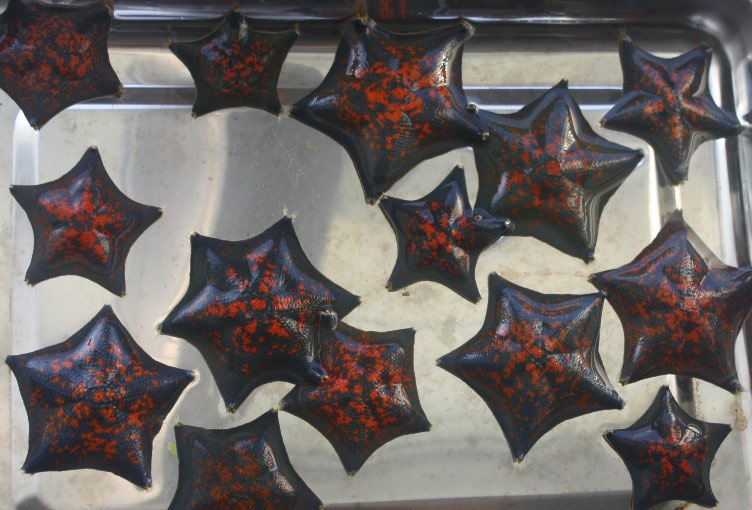
Asterina tissues contains a large amount of a mixture of carotenoids, the most famous of which is astaxanthin. Carotenoids are naturally occurring fat-soluble pigments. The synthesis of carotenoids is carried out only by plants, including phytoplankton algae, in particular the Haematococcus microalgae. Animals get them from their nutritious diet. Carotenoids determine the color formation from yellow (lutein, zeaxanthin) to pinkish red (astaxanthin, canthaxanthin) and act as antioxidants. They protect cells and tissues from oxidative stress, prevent coronary heart and vascular diseases, strengthen the body’s immune system, and inhibit the development of certain tumors. The most famous physiological role of carotenoids is provitamin activity. Synthetic astaxanthin is highly toxic and unstable.
Starfish A. pectinifera do not contain polyhydroxynaphthoquinones. The main antioxidants of these marine organisms are carotenoids (astaxanthin derivatives), the main functions of which are cytoprotection by suppressing lipid peroxidation of plasma membranes and the formation of colored complexes with certain proteins (the color of many marine and terrestrial organisms). These antioxidants neutralize only free radicals and partially singlet oxygen. Interaction with ordinary oxygen is uncharacteristic for them and carotenoids are not mimetics of suproxide dismutases. Thus, it is possible that sea stars can also function under anaerobic conditions, but their energy supply is due to some other energy substrates than in sea urchins.
The composition of the metabolites of the coelomic sea star fluid of A. pectinifera was studied by NMR. A coelom liquid was obtained from control animals both immediately after being caught from their natural habitat, and 24 hours after keeping the animals in conditions of lack of oxygen. Animals responded differently to hypoxia conditions. Starfish Asterina are too sensitive to stress caused by hypoxia: the dead individuals were found already on the second day. Since the main energy substrates in living nature are fatty acids, which give acetyl coenzyme A in mitochondria, we found a high content of acetate and propionic acid in the coelomic fluid of the sea star A. pectinifera (Figure 2). These compounds can be utilized in mitochondria in the form of acetyl coenzyme A and acyl coenzyme A, resulting in ATP. Propionic acid is freely included in the Krebs cycle and is used as an energy product [7]. At the same time, it is completely oxidized to carbon dioxide and water with the release of energy in the amount of 4957 cal/g [8]. The origin of propionic acid in the coelomic fluid of a starfish can be explained by the oxidation of C 18: 0 fatty acid (the main energy substrate), first by the mechanism of alpha-oxidation, and then by the process of beta-oxidation.
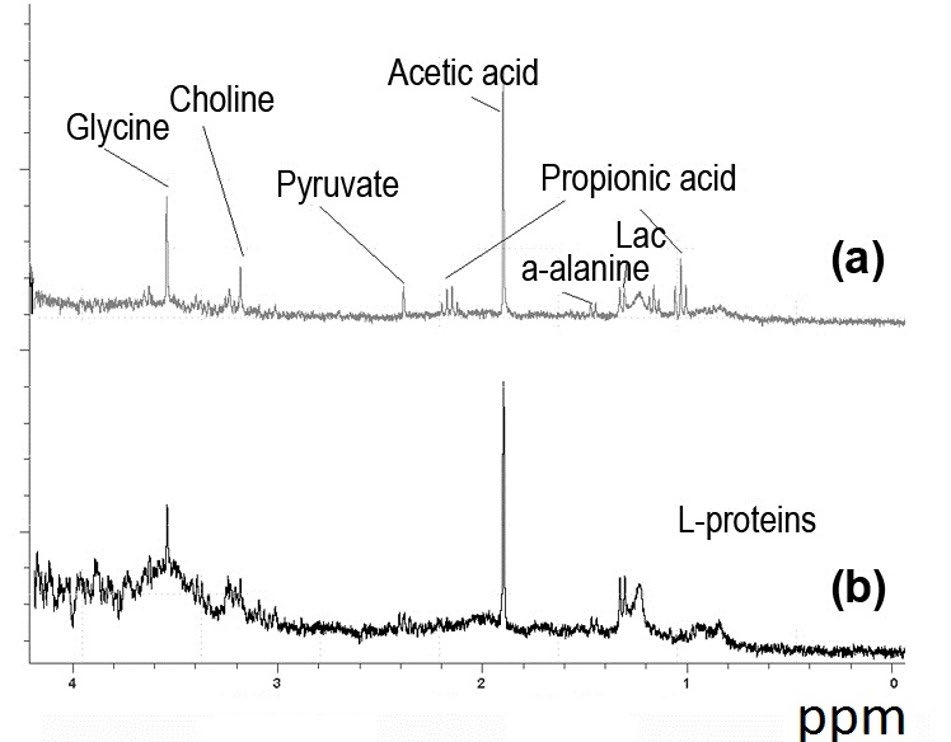
Of particular interest is the fact that under conditions of hypoxia in the composition of the coelomic liquid of sea stars no significant growth of lactate is detected, which is observed both in sea urchins and in rodents, in humans. A
similar pattern in starfish may be due to the fact that starfish do not have a mechanism to adapt to the absence of oxygen, and changes in the composition of metabolites are caused by tissue necrosis.
Unlike other species of sea stars from the Asteriidae family living in the Sea of Japan (Asterias amurensis, Lysastrosoma anthosticta, Distolasterias nipon, etc.), starfishes belonging to the Asterinidae family acquire bright colors ranging from blue to red. Apparently, this is due to the fact that they feed not only on animal tissues, but also on cyanobacteria and microalgae that overgrow solid substrates. Accumulations of microbenthos rich in carotenoids are especially abundant on maricultural reservoirs with growing bivalve molluscs: scallops, mussels and oysters.
In connection with the development of mariculture, starfish from Asterinidae family accumulate en masse near sea plantations. The need to collect and destroy these predators allows at the same time to provide sufficient resources for the production of carotenoid drugs. Using traditional approaches to the preliminary processing of moisture-containing raw materials, which must be dehydrated before the extraction of lipid materials, we have developed a universal technology for the complex processing of starfish [9]. The essence of the method consists in sequential operations of dehydration, extraction, chromatographic purification, waste demineralization, deproteinization, enzymolysis and the production of marine collagen peptides. After chromatographic purification of the extract concentrate, a complex of carotenoids enriched with astaxanthin, lutein and zeaxanthin is obtained. The developed technology of complex processing of starfish Asterina pectinifera allows obtaining biologically active collagen peptides and carotenoid preparations enriched with astaxanthin, exhibiting immunomodulatory, anti- inflammatory and antioxidant effects. They can be used as raw materials for new medicinal, cosmetic and food products.
References
-
Shang XH, Liu XY, Zhang JP, Gao Y, Jiao BH, et al. (2014) Traditional Chinese medicine--sea urchin. Mini Rev Med Chem 14(6): 537 - 542.
-
Yancen Dai, Nagarajan Prithiviraj, Jianhong Gan, Xin A Zhang, Jizhou Yan (2016) Tissue Extract Fractions from Starfish Undergoing Regeneration Promote Wound Healing and Lower Jaw Blastema Regeneration of Zebrafish. Scientific Reports 6, Article number: 38693.
-
Barrington EJW (1972) Invertebrate structure and function, 2nd (Edn.), Nelson, London, 14: 765.
-
Smith VJ (1981) The echinoderms. In: Ratcliffe NA, Rowley AF (Eds.), Invertebrate Blood Cells, Academic Press, London, pp: 513 - 562.
-
Chia F, Xing J (1996) Echinoderm coelomocytes. Zool Stud 35(4): 231-254.
-
Kas’yanov VL, Medvedeva LA, Yakovlev SN, Yakovlev Yu M (1980) Reproduction of echinoderms and bivalve molluscs. M Nauka, pp: 208.
-
Liu L, Zhu Y, Li J, Wang M, Lee P, et al. (2012) Microbial production of propionic acid from propionibacteria: Current state, challenges and perspectives. Critical Reviews in Biotechnology 32(4): 374 - 381.
-
Prudnikova TN, Roslyakov Yu F (1994) Propionic acid in the metabolism of living organisms. Izvestiya Vuzov. Food technology 5-6: 23-27.
-
Artyukov AA, Rutskova TA, Cooper EV, Makhankov VV, Glazunov VP, et al. (2012) A method of obtaining a carotenoid complex from sea stars. RF Patent No. 2469732 C1.
- Genetic Improvement of Nile Tilapia (Oreochromis niloticus): Advances in Selective Breeding and Genomic Approaches for Sustainable Aquaculture
- Microplastics, Contaminants, and Waste Hotspots: Divergences and Faults in Prioritizing Control Efforts
- Creating a Healthier, More Vibrant Open and Closed Aquatic Environment. A Submersible, Centrifugal Magnetically Affixed Current Changing Aquarium Pump
- An Attempt to Assess Alpha Diversity and Sample Size: Using the Ostracod Assemblages off Kumamoto Port, Japan
- Assessment of the Efficiency of Common Fishing Gears and Crafts Used at Mohananda River of Chapai Nawabganj, Bangladesh
- Fish Productivity and Biodiversity Status of Sundarban Mangrove in Bangladesh