
Comparative Study of Length-Weight-Relationship (LWR) of the Fishes and Fishing Gears Use in Goronyo Reservoir and River Rima in Sokoto State, Nigeria
Length - weight relationship is an important fishery management tool in estimating the average weight at a given length group and in assessing the relative wellbeing of a fish population.This study was conducted for six months, from April to October 2018 in both Goronyo reservoir (GR) and downstream River Rima (RR) to compare and evaluate the Length-Weight- Relationship (LWR) of some important commercial fishes and fishing gears used in the two water bodies. Five (5) and three (3) fish landing sites were purposively selected from Goronyo reservoir and River Rima because of their high fish landings and 10 fishermen were randomly selected and their catches monitored. The length and weight values were transformed into natural logs through the regression equation Log W = a + b Log L using SPSS computer software version 22. A total of 66 fish species were identified from the two water bodies, Goronyo reservoir accounted for 28 while River Rima accounted for 38 and 22 species were common in both water bodies. The mean b values of the LWR indicated that Latesni loticus, Bagrusbayad macropterus and Auchenoglanisocci dentalis exhibited positive allometric growth pattern in both water bodies, but slightly higher in Rima River (b = 3.9, 3.51, 3.7 in Rive Rima and 3.8, 3.04, 3.5 in Goronyo Reservoir) respectively. The least mean b values (b = 2.01) of LWR was recorded in respect of Synodontisgobroni in River Rima while Labeocoubie exhibited the highest b value of 3.93 in River Rima with SE value of 0.392. Gill nets were the most frequent gear used in Goronyo reservoir, and the least (3.14%) was cast net while hook and lines were almost equally used in both water bodies. In conclusion, the positive allometric growth pattern exhibited by Latesniloticus, Bagrusbayad and Auchenoglanisocci dentalis indicated favorable aquatic environments for the species to thrive well, therefore management practices should be centered on maintaining these aquatic environments. Labeocoubie should be re-introduced in both water bodies because they exhibited positive allometric growth pattern despite expected predation from Latesniloticus and fishing mortality. More attention should be given to the types of gears used in the water bodies in order to avoid catching smaller fishes. Selective gears like gillnet must conform to the Sokoto State Fisheries Edict of 1988 in order to protect heavily fished species such as Synodontis species from being over exploited. Finally, more studies are recommended to determine the effect of sex on LWR of some fish species in the two waterbodies.
Introduction
Stock assessment is a fundamental and important tool needed for generating inputs necessary in developing strategies for efficient and proper management, development and enhancement of the fish species in any water body [1, 2]. The length-weight-relationship (LWR), length-length- relationship (LLR), weight-w eight-relationship (WWR) and Fulton’s condition factor (‘k’) are some examples of stock assessment tools use in fisheries management. These tools can be used to predict the health status, standing crop or biomass, growth pattern and yield of fish stock. Length-weight data of population are basic parameters for any monitoring study of fishes since it provides important information concerning the structure and function of populations [3]. In fish population studies, it is therefore imperative to study fish species diversity together with the fish stock assessments in order to have a clear understanding of the management strategies peculiar to the fish population in such a water body.
According to Ita [4], fishery management is water body specific. Fish growth is an addition in length and size as it ages with a growth pattern of either isometric or allometric [5]. The isometric growth pattern was when a fish shape did not change when growing up, while in an allometric pattern of growth, the fish either becomes slender as it grows or becomes deeper and bulkier.
Various scholarly works were published which reported and described different means values for LWR, LLR, CF et cetera, for many important freshwater fish species [2, 6, 7, 8, 9, 10, 11, 12]. There was a paucity of information regarding fish LWR and fishing gears used in the Goronyo reservoir and downstream River Rima [13]. Thus, this study was aimed at bridging the gap and therefore provide information on LWR of some important fish species and the fishing gears used by the artisanal fishermen in the two water bodies.
Materials and Methods
Description of the Study Sites/ Locations
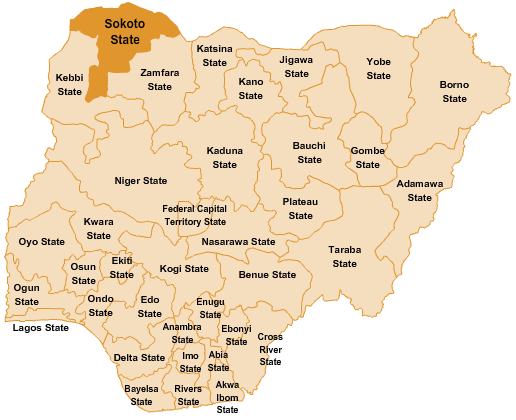
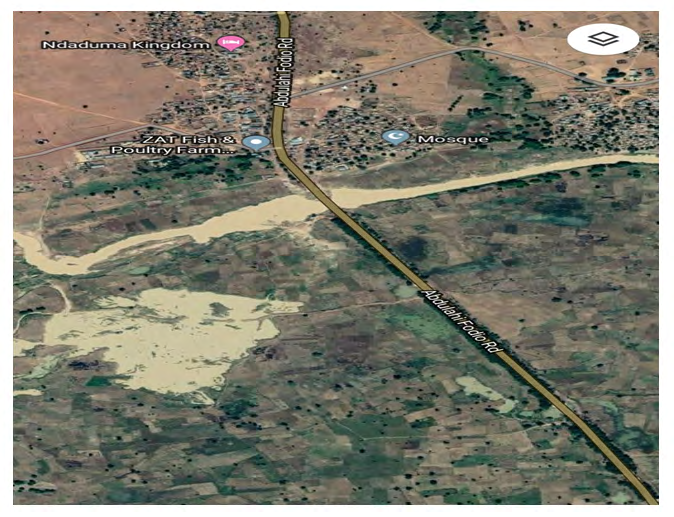
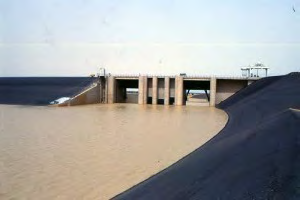
The study sites were downstream River Rima (RR) and Goronyo reservoir (GR) all in Sokoto State, Northwestern Nigeria (Figure 1). The state lies between longitude 4o 8‘E and 6o 5‘E and Latitude 12o N and 13o 58’ N [14]. The exact point on River Rima where this study was conducted was at latitude 13.0667o and Longitude 5.1667o E (Figure 2). The upper Rima is seasonal before it was dammed at Goronyo village (Figure 3) so it flows during the rainy season overflowing its banks in August and September [4]. The reservoir (Figure 3) formed after damming the Rima river is known as Goronyo reservoir, it lies on coordinates 13o 31‘50“N 05o 52’56”E [15].
The reservoir has a storage capacity of 976,000,000 cubic meters [16]. It has river Bunsuru, Maradi and Gangare as its main tributaries. Some of the fish landing sites selected were in Keita, Katsira, Killaro, Marima and Gidanyarfara fishing villages surrounding it.
Data Collection and Sample Size
A total of eight (8) landing sites were purposively selected because of their high fish landings from the study area. Three (3) landing sites selected from River Rima were Usmanu Danfodiyo University major bridge (Kwalkwalawa), Dundaye village and Sokoto State Water treatment Plant along Illela road and designated as stations A, B, and C. Five (5) fish landing sites, Keta, Rimawa, Killaro, Katsira and Gidanyarfara at Goronyo reservoir were selected. Ten (10) fishermen were randomly selected and their catches monitored. A total of about 1,535 (GR, 848 and RR, 687) fish specimen samples were collected for data collection. The specimen samples were collected monthly between April and October, 2018.
The Fish Length/ Size
The fishermen’s fish catches were measured based on species. The length of the individual fish specimen was measured using a meter rule to the nearest mm expressed as total and standard lengths as described by Bagenal and Tesch [17] and the same method carried out by Gray, et al. [18], Balogun [19] and Shinkafi, et al. [20].
The Fish Weight
The individual fish of each species was measured using a weighing balance to the nearest gram (g) as described by Bagenal and Tesch [17] and the same method carried out by Gray, et al. [18].
Fishing Gears and Equipment Survey
Information on types and kinds of fishing gears and equipment used by the fishermen from both water bodies was collected using a structured questionnaire. A total of
50 fishermen were selected randomly from both water bodies for an interview, using an open and closed structured questionnaire and display of their gears for inventory taking [21].
Data Analysis
Length-Weight-Relationship (LWR) The LWR parameter of the fish species from the two water bodies was fitted into the following regression equation using SPSS computer software: W = a Lb The regression equation was further transformed as follows: Ln W = a +b ln L where W = weight of the fish specimen L = length of the fish specimen a = intercept of the slope b = slope of the regression ln = natural log
Results
Growth and Growth Pattern
Table 1 showed results for means b values of the LWRs which indicated that Latesniloticus, Bagrusbayad macropterus and Auchenoglanisocci dentalis species from both water bodies had exhibited positive allometric (b = 3.8, 3.04 and 3.5) with those of downstream River Rima exhibiting slightly higher means values (b = 3.9, 3.51 and 3.7), respectively. The least mean b values of the LWRs were recorded in respect of specie Synodontisgobroni from Goronyo reservoir. Mormyrus rume and Bagrusbayad macropterus had the highest number of individuals accounting for 134 and 110 respectively while the least (4) individuals were recorded for Labeocoubie.
| S/No. | Fish species | No. of individual | R | R2 | A | b | SEE | ||||||
|---|---|---|---|---|---|---|---|---|---|---|---|---|---|
| GR | RR | GR | RR | GR | RR | GR | RR | GR | RR | GR | RR | ||
| 1 | Latesniloticus | 31 | 4 | 0.841 | 1 | 0.713 | 1 | -12.02 | -21 | 3.8 | 3.9 | 0.9 | 1.138 |
| 2 | Bagrusdocmac | 47 | 16 | 0.81 | 0.707 | 0.66 | 0.499 | -7 | -3 | 3.04 | 3.51 | 0.7 | 0.65 |
| 3 | Bagrusbayadmacropterus | 110 | 44 | 0.805 | 0.828 | 0.649 | 0.685 | -53 | -11 | 3.2 | 3.82 | 0.98 | 1.3 |
| 4 | Bagrus filamentous | 4 | Nil | 0.539 | ------ | 0.288 | ----- | -14.6 | ----- | 2.4 | ------ | 1.5 | ----- |
| 5 | Auchenoglanisoccidentalis | 4 | 9 | 0.908 | 0.669 | 0.824 | 0.447 | -28.5 | -30 | 3.5 | 3.7 | 0.69 | 0.841 |
| 6 | Auchenoglanisbiscutatus | 5 | 7 | 0.868 | 0.959 | 0.753 | 0.92 | -23.1 | -51 | 2.09 | 2.3 | 0.7 | 0.844 |
| 7 | Claroteslaticep | 5 | 21 | 0.006 | 0.542 | 0 | 0.295 | -12.1 | 3.83 | 2.01 | 2.8 | 10.7 | 0.66 |
| 8 | Clarotesauratus | Nil | 7 | 0.649 | ------ | 0.418 | ----- | 8 | ------ | 2.3 | ----- | 2.22 | |
| 9 | Synodontisclarias | 66 | 58 | 0.827 | 0.645 | 0.693 | 0.416 | -9.6 | -1.5 | 3.77 | 3.8 | 1.8 | 1.318 |
| 10 | Synodontissorex | 4 | 5 | 0.999 | 0.313 | 0.998 | 0.098 | -7.1 | -5.32 | 2.35 | 2.5 | 1.45 | 0.701 |
| 11 | Synodontisnigrata | 12 | 16 | 0.343 | 0.118 | 0.295 | 0.14 | -2.3 | -2.046 | 2.51 | 2.45 | 1.92 | 1.53 |
| 12 | Synodontismembranaceus | 5 | Nil | 0.992 | ------ | 0.983 | ------ | -1.8 | ---- | 2.75 | ---- | 0.77 | ------ |
| 13 | Synodontisgobroni | 5 | Nil | 0 | ----- | 0 | ------ | 10.5 | ------ | 3 | ------ | 1.1 | ------ |
| 14 | Synodontiscourteti | 9 | 4 | 0.115 | 1 | 0.013 | 1 | -7 | -6.47 | 2.35 | 3.09 | 0.9 | 1.091 |
| 15 | Synodontisvermiculatus | Nil | 6 | ----- | 0.444 | ----- | 0.19 | ---- | -6.56 | ----- | 2.1 | ----- | 0.219 |
| 16 | Synodontisbudgetti | Nil | 5 | ---- | 0.98 | ---- | 0.98 | ---- | 2.143 | ---- | 3.8 | ---- | 0.53 |
| 17 | Synodontis filamentous | Nil | 5 | ---- | 0.992 | ---- | 0.983 | ---- | -7.74 | ---- | 3.2 | ----- | 0.711 |
| 18 | Synodontismacropterus | Nil | 5 | ------ | 0.969 | ----- | 0.939 | ----- | -8.23 | ---- | 3.6 | ----- | 0.866 |
| 19 | Schilbemystus | 45 | 25 | 0.526 | 0.403 | 0.277 | 0.162 | 4.97 | -1.66 | 3.65 | 3.1 | 0.74 | 0.87 |
| 20 | Schilbeintermedius | Nil | 24 | ---- | 0.212 | ---- | 0.045 | ---- | 10.613 | ---- | 2.4 | ---- | 0.951 |
| 21 | Parailiapelucida | 6 | 9 | 0.514 | 0.938 | 0.265 | 0.88 | -3.67 | 6.55 | 2.53 | 2.09 | 0.886 | 1.078 |
| 22 | Clariasgariepinus | 41 | 25 | 0.96 | 0.868 | 0.921 | 0.74 | -598 | -3.13 | 3.24 | 3.4 | 0.66 | 0.414 |
| 23 | Clariasanguillaris | 22 | 11 | 0.862 | 0.792 | 0.743 | 0.627 | -60.6 | -20.4 | 2.15 | 2.6 | 1.74 | 1.9 |
| 24 | Malapteriruselectricus | 31 | 21 | 0.71 | 0.17 | 0.504 | 0.029 | -12 | 51.319 | 3-2.53 | 2.3 | 1.29 | 1.16 |
| 25 | Alestes nurse | Nil | 11 | ----- | 0.793 | ----- | 0.593 | ----- | -3.05 | ----- | 3.4 | ----- | 0.65 |
| 26 | Alestesbaremose | Nil | 15 | ---- | 0.616 | ---- | 0.379 | ---- | -1.04 | ---- | 3.5 | ----- | 1.37 |
| 27 | Hydrocynusforskalii | Nil | 5 | ---- | 0.983 | ---- | 0.966 | ----- | -2.3 | --- | 3.3 | --- | 0.99 |
| 28 | Mormyrusrume | 134 | 102 | 0.735 | 0.833 | 0.54 | 0.695 | -21 | -8.6 | 3.48 | 3.7 | 2.31 | 0.99 |
| 29 | Hyperopisusbebeoccidentalis | 52 | 39 | 0.901 | 0.854 | 0.812 | 0.73 | 8.1 | -2.4 | 2.42 | 3.5 | 0.85 | 1.069 |
| 30 | Gnathonemusabadii | 27 | 15 | 0.939 | 0.772 | 0.882 | 0.596 | -3 | -10.5 | 2.49 | 2.8 | 0.49 | 0.9 |
| 31 | Marcusenussenegalensis | 4 | 27 | 0.999 | 0.998 | ------ | -3 | ------ | 2.1 | ----- | 2.23 | ------ | |
| 32 | Petrocephalusbovie | 4 | 20 | 0.91 | 0.164 | 0.829 | 0.027 | -12.9 | 14.56 | 2.9 | 3.1 | 3.995 | 1.38 |
| 33 | Mormyropsmacrophthalmus | 7 | 0.557 | 0.311 | 30.35 | 2.61 | 1.42 | ||||||
| 34 | Mormyropstapirus | Nil | 8 | ------ | 0.982 | ------ | 0.964 | ------ | -16.5 | ----- | 2.3 | ------ | 1.45 |
| 35 | Tilapia zilli | 5 | 0.984 | 0.968 | -6 | 3.53 | 1.29 | ||||||
| 36 | Oreochromisniloticus | 65 | 33 | 0.757 | 0.609 | 0.573 | 0.371 | -7.5 | -5.7 | 3.8 | 3.01 | 1.3 | 0.73 |
| 37 | Hemichromisfasciatus | Nil | 5 | ------ | 0.998 | ------ | 0.997 | ------ | -12.1 | ------ | 2.6 | ------ | 1.462 |
| 38 | Labeosenegalensis | Nil | 8 | ------ | 0.462 | ------ | 0.214 | ------- | -34.84 | ------- | 3.1 | -------- | 1.121 |
| 39 | Labeocoubie | Nil | 4 | ----- | 0.999 | ----- | 0.999 | ------ | -5.77 | ------ | 3.93 | ------ | 0.392 |
| 40 | Polypterussenegalensis | 21 | Nil | 0.355 | ----- | 0.128 | ----- | -12 | ----- | 3.1 | ------ | 0.23 | ------ |
| 41 | Polypterusansorgie | Nil | 12 | ------ | 0.504 | ------ | 0.254 | ------ | 33.5 | ----- | 2.6 | ------ | 0.84 |
| 42 | Protopterusannectens | 77 | 29 | 0.932 | 0.759 | 0.868 | 0.576 | 22.24 | 27.87 | 3.1 | 2.9 | 0.77 | 0.82 |
| 43 | Distichodusrostratus | Nil | 13 | ----- | 0.754 | ------ | 0.568 | ----- | -4.5 | ------ | 2.8 | ------ | 1.1 |
| 44 | Distichodusengycephalus | Nil | 14 | ----- | 0.376 | ----- | 0.141 | ------ | -35.73 | ------ | 2.7 | ------ | 2.45 |
Table 1: The Mean b Values of the length-weight-relationships (LWRs) of some important fish species in Goronyo reservoir and down
Fishing Gears and Equipment Survey
Results of the present study had indicated that gillnets and hook and line were the major gears used by the fishermen in the study area (Table 2). Gillnets account for 30.37% and
14.15% whilehook and linerecorded 29.28% and 29.87% in both Goronyo and river Rima respectively. The least gear (Yawa/bottom gillnetand screen fishing method) accounted for about 0.16 each in terms of usage and quantity in river Rima.
| Gear Type | Goronyo Reservoir (%) | Rima River (%) | |
|---|---|---|---|
| 1 | Malian trap | 17.35 | 26.73 |
| 2 | Gillnet | 30.37 | 14.15 |
| 3 | Clap net | 10.85 | 23.58 |
| 4 | Cast net | Nil | 3.14 |
| 5 | Ndrutu | 10.85 | Nil |
| 6 | Fish barrier/Screen | Nil | 0.16 |
| 7 | Seine net | 0.43 | 0.31 |
| 8 | Hook and line | 29.28 | 29.87 |
| 9 | Pole and line | 0.87 | 1.89 |
| 10 | Yawa (bottom gillnet) | Nil | 0.16 |
| Total | 100 | 100 | |
| Equipment | |||
| 1 | Canoe/boat | 1.72 | 0.45 |
| 2 | Fishing gourd | 98.28 | 99.55 |
| Total | 100 | 100 |
Table 2: Fishing gears and equipment Used by the Fishermen in both Goronyo and downstream River Rima. Source: The Study fieldwork
Discussion
The results showed most of the fish to be fairly exhibiting allometric growth patterns in both water bodies. For instance, the species Latesniloticus exhibited positive allometric growth pattern. This means as the fish were growing; they were adding weight and becoming bulkier and deeper. The same thing happened with other predators in both water bodies, such asBagrusdocmac, Bagrusbayadmacropterus, Auchenoglanisoccidentalis and Hydrocinusforskalii.
The results obtained were probably due to good/ favourableaquatic environments, slightly better in river Rima as reported by Malami and Magawata [13] and Abubakar, et al. [22]. While some of our results are in agreement with other regionaland international findings on biometrics of fish studied, others are contrary. Similar results were obtained in the studies conducted by Mansor, et al. [10] in Kerian river basin and Keru Lake all in Malaysia. Furthermore, the current study was in conformity with the positive allometric growthreported by Froese [9] among 1773 specimens of fish.
Several studies corroborate the negative allometric growthreported in our study. According to Reed, et al. [23], Bagrusfilamentosus, Auchenoglanisbiscutatus and Claroteslaticep were relatively insectivorous or carnivores in feeding habits. These species exhibited negative allometric growth patterns from both water bodies. This could be due to steep competition from other species of the same families who are favorably disposed in the Rima and the reservoir. Imaobong, et al. [24] also reported steep competition for food among species of same families in Qua Iboe River estuary, AkwaIbom State, southeastern Nigeria. This could probably be responsible for them exhibiting negative growth pattern in the two water bodies. Correspondingly, Waidi [25] reported negative allometric growth patterns (b = 2.114) for an African silver fish, Chrysichthysnigrodigitatus in Ogun State coastal estuary.
Synodontisclarias and others from Mochokidae family exhibited positive allometric growth patterns more than the Synodontisgobroni in the Rima which exhibited negative growth patterns. This finding was also reported by Beniditto- cecillio, et al. [6] in Itaipu reservoir, Parana, Brazil where the authors observed mean b values ranged from 2.34 to 3.35 for about 72 fish species. Clariasgariepinus exhibited positive allometric growth pattern in both Goronyo and River Rima more than Clariasanguillaris which might be related to their feeding habits and reproductive strategy [26]. Mormyrusrume which accounted for the highest individuals caught exhibited positive allometric growth pattern for most of the 134 specimens examined. However, Mormyropstapirus exhibited negative allometric growth pattern (b+ 2.3) and was only found in Rima. By adapting to bottom-feeding habit, this species successfully colonized the bottom strata as was reported by Reed, et al. [23] in the northern Nigerian water bodies. The fishermen successfully caught these species using Ndrutu and other traps and bottom gill nets in the two water bodies. Similar findings were reported by Reed, et al. [23] and Ita [4] in northern Nigeria.
Oreochromisniloticus exhibited a positive allometric growth pattern in both Goronyo and the Rima, indicating the adaptability of the species in the reservoir. But Hemichromisfasciatus was not found in the reservoir and had exhibited a negative growth pattern in the Rima. According to Reed, et al. [23], Hemichromisfasciatus is a predatory Cichlid and probably could not survive the steep competition for food with the other predators in the reservoir. Nehemiah, et al. [2] reported both positive and negative allometric growth patterns in Tilapia zilli and some Oreochromisniloticus species cultured in freshwater and seawater ponds in Tanzania. But Dan-kishiya [11] reported mean negative allometric growth patterns for 5 tropical fish species which included Tilapia zilli, Tilapia mariae and Oreochromisniloticus in a tropical reservoir in Abuja. Labeocoubie and Labeosenegalensis, a very important fish species exhibited positive growth pattern in River Rima and were completely absent in the reservoir. This indicated the species to be suitable in lotic rather than lacustrine aquatic environment of the reservoir. Ita [4] also reported the high number of this specie in river Niger prior to creating of Lake Kainji. Distichodusrostratus and Distichodusbiscutatus all exhibited negative (2.8 and 2.7) allometric growth patterns in the reservoir. The reservoir had scanty macrophytes and other vegetation probably was responsible for the absence of these species. Reed, et al. [23] reported that this species lived on grasses and therefore could not thrive well in open water devoid of vegetation cover.
The agreements and disagreements with other works could be attributed tothe condition of the species itself, its phenotype and its specificgeographic location and hence its environment as several researchers have observed [27]. Phenotypic factors can play a role in affectingthe allometric growth data. The bodyform and shape strongly affect the LWRs [28]. The variation in the obtainedbvalues might be correlated with many factors such as food availability, season and sex [29, 30].
Survey on the fishing gears and equipment has shown that gillnets, hook and lines, and Malian traps are the most important fishing gears in both Goronyo and river Rima. Similar findings were reported by Reed, et al. [23] in Northern Nigeria and Gusau, et al. [21] in the Bakolori reservoir. Most of the fishing gears are seasonal and selective and is based on the type of fish species to be catch.The types of fishing gears (gillnet, cast net, hook and line, and Malian trap) found in this area were also reported by Adeyemi, et al. [31] as the common fishing gears infish gear survey of Gbedikere Lake, Bassa, Kogi State, Nigeria.
Conclusion
This study revealed that most of the predatory fish species in both river Rima and Goronyo reservoir exhibited positive growth patterns, indicating the ability to adapt and colonize the different ecological niche in the water bodies. But few species with low resilience and ability to compete for food and space became slender as they were aging. The study recommended paying attention to Labeocoubie in the river Rima because of its ability to survive expected predation as they were growing. It’s also very important for the gears to be regulated in order to protect the fishes in the two water bodies from been overfished.
Acknowledgment
The authors wish to acknowledge the support and encouragement of the management of the Sokoto-Rima Basin Development Authority for making their facilities available to us. We also wish to thank the fishermen who took part in the fishing gears and equipment survey as well those whose fishes were made available to us for stock assessment.
References
-
Gupta SR, Gupta PC (2008) General and Applied Ichthyology (Fish and Fisheries), S Chand and Company PVT, LTD, Ram nagar, New Delhi, pp: 1156.
-
Nehemiah A, Justin D, Rumsha C (2012) Length-Weight- Relationships and Condition Factors of Tilapia Species Grown in Marine and Freshwater Ponds. Agriculture and Biological Journal of North America 3(3): 117-124.
-
Anderson OR, Neumann RM (1996) Length, weight and associated structural indices, Fisheries Techniques Bethesda. A Fish Soc, pp: 732.
-
Ita EO (1993) Inland Fisheries Resources of Nigeria, FAO of the United Nation, CIPA Occasional, Rome, pp: 20.
-
Pauly D (2002) Reproductive Strategies of Fishes in a Tropical Temporary Stream of Upper Senegal Basin: Beole River in Mali. Aquatic Living Resources 15(1): 25- 35.
-
Beniditto-Cecillio E, Agostinho AA, Carnelos- machadovelho RC (1997) Length-Weight-Relationships of Fishes Caught in the Itaipu Reservoir, Parana, Brazil. Naga, the ICLARM Quarterly 20(3-4): 57-61.
-
Barham CP, Baxter A (2003) Condition Factor, K for Salmonid fish, Fisheries Notes, pp: 1-3.
-
Fafioye OO, Oluaye OA (2005) Length-Weight- Relationships of Five Fish Species in Ife Lagoon, Nigeria. African Journal of Biotechnology 4(7): 741-751.
-
Froese R (2006) Cube Law, Condition Factor and Weight- Length- Relationship: History, metal-analysis and Recommendation. Journal of Applied Ichthyology 22(4): 241-253.
-
Mansor MI, Rawi CSM, Rosla R, Sha SAM, Sha ASRM (2010) The Length-Weight-Relationships of Fresh Water Fish Species in KerianRiver Basin and Pedu Lake. Research Journal of Fisheries and Hydrobiology 5(1): 1-8.
-
Dan-Kishiya A (2013) Length-Weight- Relationship and Condition Factor of Five Fish Species from a Tropical Water Supply Reservoir in Abuja, Nigeria. American Journal of Research Communication 1(9): 175-187.
-
Jin S, Yam X, Zhong H, Fan W (2015) Weight-Length- Relationships and Fulton’s Condition Factors of Skip Jack Tuna (Katsuwanuspelamis) in the Western and Central Pacific Ocean. PeerJ 3: e758.
-
Malami GZ, Magawata I (2010) Analysis of Food and Feeding Habits of Catfish (Bagrusbayadmacropterus, Daget) in River Rima in Sokoto State, Nigeria. Nigerian Journal of Basicand Applied Sciences 18(2): 277-284.
-
Mamman AB, Oyebanji JO, Peters SW (2000) Nigeria: A People United A Future Assured (Sokoto State), Gabumo Publishing Company Limited, Lagos Nigeria, pp: 298.
-
(2010) Goronyo Main and Secondary Dam. Sembenelli Consulting.
-
Bagenal T, Tesch F (1978) Age and Growth. In: Bagenal TB, (Ed.), Methods for Assessments of Fish Production in Freshwater, 3rd (Edn.), Blackwell Scientific Publications, Oxford.
-
Gray CA, Jones M, Rotterdam D, Broadhurst M, Johnson D (2005) Utility and Efficiency and Multi mesh Gill net and Trammel nets for Sampling Assemblages Populations of Estuaries Fishes, Marine and Freshwater Research 56: 1077-1088.
-
Balogun JK (2005) Fish Distribution in a Small Reservoir: A case Study of Kaingimi Reservoir. Journal of Applied Science and Environmental Management 9(1): 93-97.
-
Shinkafi AS, Ukaola LN, Thekir NA (2013) Some Aspects of Growth and Reproduction in Nile Perch (Latesniloticus, Linne 1760) from Rivers Rima, North western Nigeria. Nigerian Journal of Fisheries and Agriculture 1(1): 31- 41.
-
Gusau IA, Bilkisu AS, Ipinjolu JK (2016) Artisanal Fisheries of Bakolori Reservoir in Zamfara State, Northwestern Nigeria. Equity Journal of Science and Technology 3(2): 43-50.
-
Abubakar M, Ipinjolu JK, Magawata W (2012) Seasonal Variation in Some Chemical Parameters of the Sokoto– Rima Rivers in Northwestern Nigeria. Journal of Agriculture and Environment 3(1-2): 55-65.
-
Reed W, John B, Hopson AJ, Jennings J, Yaro I (1967) The Fish and Fisheries of Northern Nigeria, 1st (Edn.), Zaria, Gaskiya Corporation Limited, Zaria, Nigeria.
-
Imaobong EE, Mandu AE, Nkwoji JN (2014) Food and feeding habits and condition factor of fish species in Qua Iboe River estuary, AkwaIbom State, southeastern Nigeria. International Journal of Fisheries and Aquatic Science 2(2): 38-46.
-
Waidi OA (2015) Life History Change in Silver- Catfish (Chrysichthysnigrodigitatus) family Bagridae, in Ogun State Coastal Estuary, Nigeria. Ife Journal of Sciences 17(3): 691-700.
-
Yusuf K, Dada SA, Abari MI (2013) Length-Weight- Relationship, Fecundity and Gonadal development of the African Catfish (Clariasgariepinus) from Dowa Dam, Nasarawa State, Nigeria. PAT 9(1): 47-58.
-
Tsoumani M, Liasko R, Moutsaki P, Kagalou I, Leonardos I (2006) Length–weight relationships of an invasive cyprinid fish (Carassiusgibelio) from 12 Greek lakes in relation to their trophic states. J Appl Ichth 22(4): 281- 284.
-
Karachle PK, Stergiou KI (2012) Morphometrics and Allometry in Fishes. Intech Open, pp: 65-86.
-
Yilmaz S, Yazıcıog˘lu O, Erbasaran M, Esen S, Zengin M, et al. (2012) Length weight relationship and relative condition factor of white bream, Bliccabjoerkna (L., 1758), from Lake Ladik, Turkey. J Black Sea/Medit Environ 18(3): 380-387.
-
Ali RAS, Elawad AN, Khalifa MM, El-Mor M (2016) Length-weight relationship and condition factor of Liza ramada from Eastern coast of Libya. Int J Fish Aqua Res 2(2): 1-9.
-
Adeyemi Segu, Bankole N, Adikwu I (2009) Fish Gear Survey of Gbedikere Lake, Bassa, Kogi State, Nigeria. International Journal of Lakes and Rivers 2(1): 53-56.
- Genetic Improvement of Nile Tilapia (Oreochromis niloticus): Advances in Selective Breeding and Genomic Approaches for Sustainable Aquaculture
- Microplastics, Contaminants, and Waste Hotspots: Divergences and Faults in Prioritizing Control Efforts
- Creating a Healthier, More Vibrant Open and Closed Aquatic Environment. A Submersible, Centrifugal Magnetically Affixed Current Changing Aquarium Pump
- An Attempt to Assess Alpha Diversity and Sample Size: Using the Ostracod Assemblages off Kumamoto Port, Japan
- Assessment of the Efficiency of Common Fishing Gears and Crafts Used at Mohananda River of Chapai Nawabganj, Bangladesh
- Fish Productivity and Biodiversity Status of Sundarban Mangrove in Bangladesh