
Constructed Wetlands for Marine Aquaculture Wastewater Treatment: A New Challenge
Aquaculture is the fastest growing food production sector worldwide. Global demand for seafood continues to grow, and landbased aquaculture is expected to grow in order to meet the increasing market demand. In this context, marine aquaculture production systems are moving towards land-based farming. However, due to the large volumes of wastewater with high salinity and other fish-metabolism derived pollutants (e.g., nitrogen compounds), it remains a challenge for treatment of effluents from land-based marine aquaculture. In this scenario, development of environmental-friendly and efficient aquaculture effluent treatment system is crucial for sustainable intensification of aquaculture. Owing to low capital, operating costs, and low energy consumption, constructed wetlands (CWs) are becoming a promising technique to treat aquaculture effluents before discharge.
Mini Review
Aquaculture provides nearly 50% of the world’s fish production, and this is expected to fast increase in the next years due to the growing demand for marine fishery products. Land-based marine aquaculture systems will play an important role in meeting this demand and will also do so in a more environmentally sustainable way regarding marine aquaculture in the ocean [1]. In addition, development of environment-friendly and efficient aquaculture effluent treatment system is crucial for sustainable intensification of aquaculture, including recirculating aquaculture systems (RAS) (Figure 1). The main benefit of RAS is the ability to reduce the need for fresh, clean water while still maintaining a healthy environment for fish. To be operated economically commercial RAS must have high fish stocking densities, and many researchers are currently conducting studies to determine if RAS is a viable form of intensive aquaculture [2].
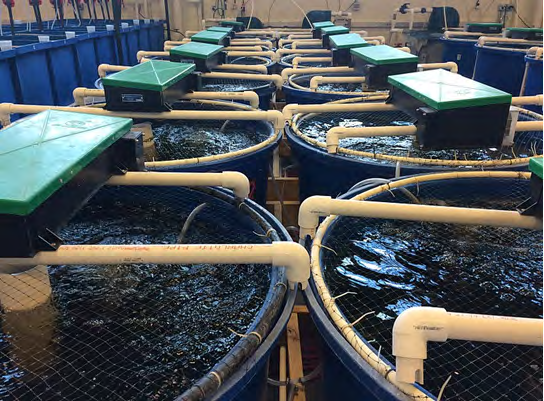
Figure1: An example of recirculating aquaculture systems (RAS) located at the Virginia Tech Department of Food Science and Technology (Blacksburg, VA, USA). (Image taken from Wikipedia; https://en.wikipedia.org/wiki/ Recirculating_aquaculture_system).
On the other hand, the treatment of effluents from land- based marine aquaculture remains being a challenge due to the large volumes of wastewater with high salinity to attend [3]. In addition, the development of RAS is not only limited by the ability to efficiently treat saline wastewater, but also because it accumulates a large amount of nitrogen compounds derived from the metabolism of culture organisms. The removal of nitrogen compounds from RAS, mainly ammonium (NH4 +) and ammonia (NH3), is a priority because these compounds quickly degrade the quality of the water which negatively impacts fish farming [4, 5].
In fact, nitrogen pollution has become a worldwide emerging concern because the environmental impact of nitrogen-caused water eutrophication and subsequent toxicity to aquatic organisms. Inorganic nitrogen compounds (i.e., ammonia, nitrite and nitrate) in water and wastewater are also significant in public health, agriculture, industry, and geochemistry. Moreover, nitrate (NO3 −) is a risk to human health, especially as a possible cause of infant methemoglobinemia [6, 7]. Therefore, cost-effective and environmental-friendly nitrogen pollution abatement techniques are still desired and recommended.
A number of physical (e.g., mechanical filtration), chemical (e.g., catalytic reduction) and biological (e.g., biofilters) methods, used in conventional wastewater treatment have been applied for treating mariculture wastewater, while they are costly in terms of capital investment, energy demand, and system maintenance. Other types of filtration and environmental control are often also necessary to maintain clean water and provide a suitable habitat for fish [8].
Constructed wetlands (CWs) are treatment systems that use natural processes involving wetland vegetation, soils, and their associated microbial assemblages to improve water quality. Alternatively, constructed wetlands (CWs) act as a natural biofilter and can remove considerable amounts of nutrients (e.g., nitrogen and phosphorus compounds), organic matter, and suspended solids from wastewater. Owing to low capital, operating costs, and low energy consumption, CWs are becoming a promising technique to treat aquaculture effluents before discharge [9, 10, 11].
In order to deal with the pollutant load that accumulates in marine RAS, the use of CWs with facultative or obligate halophytes has been proposed [12]. Halophytes are plants which naturally survive in salt-contaminated environments and can tolerate high saline concentrations. About 1% of the total flora of the world (both dicots and monocots) are halophytic plants. Moreover, halophyte plants have the ability to absorb different forms of nitrogen, depending on different environmental factors, such as CO2 availability [13].
In addition, when plants are grown in wetland systems, the interactions between the soil, the filter media, the microorganisms, and the plants not only improve the potential of CWs to remove nitrogen compounds from wastewater but also affect biomass production which can be further used for animal feed or human food, or in the production of biofuels or by-products of interest to the pharmaceutical industry, among other applications [9, 10, 11].
On the other hand, microorganisms within the biofilm on the surface of filter media and plant roots in CWs are widely considered to play a key role in the removal of nitrogen pollutants [9, 10, 14]. Nitrogen removal is a microbial- governed process, where a great diversity of microorganisms related to the nitrogen cycle are involved. Simultaneous nitrification-denitrification plays a major role for nitrogen removal, being ammonium-oxidant bacteria (AOB) and denitrifiers the dominant microbial communities associated to such bioprocesses [10, 14, 15, 16].
In recent years, a growing body of literature has examined the response of microbial community in CWs to wastewater quality characteristics, substrate type, filter material, plant diversity, pH variation, operational time, and so on [9, 10, 11, 12, 13, 14, 15, 16, 17, 18]. In a generic context, a better understanding of the microbial communities in CWs and their influential parameters could aid in optimization and management of CWs toward further efficiency enhancement [19]. Until now, only a few published studies have focused on CWs for hypersaline wastewater treatment from offshore and coastal marine aquaculture [2, 20], while the characteristics of the microbial communities in CWs for mariculture wastewater treatment has not yet been explored in depth.
Accordingly, a number of methods are available for the analysis of environmental microbiota, such as plate count method, machine learning-based measurements, and molecular technologies [21, 22, 23]. In particular, high- throughput data, the information generated in a massive, fast manner by “omics”’ technologies (i.e., transcriptomics, metabolomics and proteomics) have opened a new era in microbiomes research. High-throughput sequencing technology is a highly efficient molecular biology method to profile complicated microbial populations in CWs, and provides an opportunity to investigate the links between the microbial communities and operational environment of CWs in particular [24, 25, 26]. To date, there are few published studies on the characteristics of microbial communities in CWs treating mariculture effluents, based on the high-throughput sequencing technology [2]. Therefore, more studies are needed in order to characterize the diversity and structure of microbial communities involved in mariculture wastewater treatment in order to investigate the relationships between nutrients’ removal efficiency and the corresponding functional genera.
References
-
Tovar A, Moreno C, Manuel-Vez MP, Garcia-Vargas M (2000) Environmental impacts of intensive aquaculture in marine waters. Water Research 34(1): 334-342.
-
Ma X, Song X, Li X, Fu S, Li M, et al. (2018) Characterization of microbial communities in pilot-scale constructed wetlands with Salicornia for treatment of marine aquaculture effluents. Archaea.
-
Carballeira C, de Orte MR, Viana IG, Carballeira A (2012) Implementation of a minimal set of biological tests to assess the ecotoxic effects of effluents from land-based marine fish farms. Ecotoxicology and Environmental Safety 78: 148-161.
-
Camargo JA, Alonso A (2006) Ecological and toxicological effects of inorganic nitrogen pollution in aquatic ecosystems: A global assessment. Environment International 32(6): 831-849.
-
Thoman ES, Ingall ED, Davis DA, Arnold CR (2001) A nitrogen budget for a closed, recirculating mariculture system. Aquacultural Engineering 24(3): 195-211.
-
Howarth RW (2008) Coastal nitrogen pollution: A review of sources and trends globally and regionally. Harmful Algae 8(1): 14-20.
-
Ghaly AE, Ramakrishnan VV (2015) Nitrogen sources and cycling in the ecosystem and its role in air, water and soil pollution: A critical review. Journal of Pollution Effects & Control **3**(2): 2375-4397.
-
Turcios A, Papenbrock J (2014) Sustainable treatment of aquaculture effluents-what can we learn from the past for the future? Sustainability 6(2): 836-856
-
Vymazal J (2007 Removal of nutrients in various types of constructed wetlands. Sci Total Environ 380(1-3): 48-65.
-
Vymazal J (2013) The use of hybrid constructed wetlands for wastewater treatment with special attention to nitrogen removal: A review of a recent development. Water Research 47(14): 4795-4811.
-
Vymazal J (2014) Constructed wetlands for treatment of industrial wastewaters: A review. Ecological Engineering 73: 724-751.
-
De Lange HJ, Paulissen M, Slim PA (2013) Halophyte filters: The potential of constructed wetlands for application in saline aquaculture. International Journal of Phytoremediation 15(4): 352-364.
-
Buhmann A, Papenbrock J (2013) Biofiltering of aquaculture effluents by halophytic plants: Basic principles, current uses and future perspectives. Environmental and Experimental Botany 92 122-133.
-
Chang JJ, Wu SQ, Liang K, Wu Z, Liang W (2015) Comparative study of microbial community structure in integrated vertical-flow constructed wetlands for treatment of domestic and nitrified wastewaters. Environmental Science and Pollution Research International 22(5): 3518-3527.
-
Faulwetter JL, Gagnon V, Sundberg C, Chazarenc F, Burr MD, et al. (2009) Microbial processes influencing performance of treatment wetlands : A review. Ecological Engineering 35(6): 987-1004.
-
Chon K, Chang JS, Lee E, Lee J, Ryu J, et al. (2011) Abundance of denitrifying genes coding for nitrate (narG), nitrite (nirS), and nitrous oxide (nosZ) reductases in estuarine versus wastewater effluent-fed constructed wetlands. Ecological Engineering 37(1): 64-69.
-
Li M, Zhou Q, Tao M, Wang Y, Jiang L, et al. (2010) Comparative study of microbial community structure in different filter media of constructed wetland. Journal of Environmental Science 22(1): 127-133.
-
Guan W, Yin M, He T, Xie S (2015) Influence of substrate type on microbial community structure in vertical- flow constructed wetland treating polluted river water. Environmental Science and Pollution Research international 22(20): 16202-16209.
-
Zhang CB, Wang J, Liu WL, Zhu SX, Liu D, et al. (2010) Effects of plant diversity on nutrient retention and enzyme activities in a full-scale constructed wetland. Bioresource technology 101(6): 1686-1692.
-
Ramond JB, Welz PJ, Cowan DA, Burton SG (2012) Microbial community structure stability, a key parameter in monitoring the development of constructed wetland mesocosms during start-up. Research in Microbiology 163(1): 28-35.
-
Liang Y, Zhu H, Banuelos G, Yan B, Zhou Q, et al. (2017) Constructed wetlands for saline wastewater treatment: A review. Ecological Engineering 98: 275-285.
-
Zhong F, Wu J, Dai Y, Yang, L, Zhang, Z, et al. (2015) Bacterial community analysis by PCR-DGGE and 454-pyrosequencing of horizontal subsurface flow constructed wetlands with front aeration. Applied Microbiology and Biotechnology 99(3): 1499-1512.
-
Liu Z, Li H, Cao G (2017) Quick estimation model for the concentration of indoor airborne culturable bacteria: An application of machine learning. International Journal of Environmental Research and Public Health 14(8): 857.
-
Morató J, Codony F, Sánchez O, Pérez, LM, García J, et al. (2014) Key design factors affecting microbial community composition and pathogenic organism removal in horizontal subsurface flow constructed wetlands. Science of the Total Environment 481: 81-89.
-
Ligi T, Oopkaup K, Truu M, Preem JK, Nõlvak H, et al. (2014) Characterization of bacterial communities in soil and sediment of a created riverine wetland complex using high-throughput 16S rRNA amplicon sequencing. Ecological Engineering 72: 56-66.
-
Hua G, Cheng Y, Kong J, Li M, Zhao Z (2018) High- throughput sequencing analysis of bacterial community spatiotemporal distribution in response to clogging in vertical flow constructed wetlands. Bioresource Technology 248(Pt B): 104-112.
- Genetic Improvement of Nile Tilapia (Oreochromis niloticus): Advances in Selective Breeding and Genomic Approaches for Sustainable Aquaculture
- Microplastics, Contaminants, and Waste Hotspots: Divergences and Faults in Prioritizing Control Efforts
- Creating a Healthier, More Vibrant Open and Closed Aquatic Environment. A Submersible, Centrifugal Magnetically Affixed Current Changing Aquarium Pump
- An Attempt to Assess Alpha Diversity and Sample Size: Using the Ostracod Assemblages off Kumamoto Port, Japan
- Assessment of the Efficiency of Common Fishing Gears and Crafts Used at Mohananda River of Chapai Nawabganj, Bangladesh
- Fish Productivity and Biodiversity Status of Sundarban Mangrove in Bangladesh