
Development of Semi-Dried and Smoked Laminates from Pangasius Sp. and it’s Storage Stability under Vacuum Packaging
Fish is an easily digestible food with rich in protein content and nutritional value, but also a highly perishable product especially in hot climates and tropical areas. Many traditional curing practices are followed in order to preserve this perishable meat and also for value addition with minimum cost involvement. Since the traditional process of drying and smoking is associated with unhealthy conditions and poorquality product, it could be improved by adopting mechanical process. Pangasius fish, due to the high fat content and distinctive odour, are much less preferred by the consumer, thus offering lower prices. Therefore, value addition of this product would be a better option to use. In this study, semi dried laminates and smoked laminates has been developed through increases surface area to ensuring uniform drying and were improved the shelf life or oxidation of lipids could be controlled by vacuum packaging at ambient condition. The data showed that there was a no significant effect of moisture, SSP and rehydration capacity, between both products while protein, lipid, ash, NPN, TVBN, PV and TBA was significant effect between both products during storage period (84 days) at the p<0.05 level. TPC content was found to exceed its acceptable limits after 8 weeks. The sensory data revealed that smoked laminates has acceptable limit for maximum 10-12 weeks and semi-dried one for 8 weeks.
Introduction
Curing is a technique of preservation of fish from time immemorial. Traditional curing processes of fish like salting or brining, drying or smoking, are techniques for improvement of storage of fish. About 8 million tons of fish (25-30%) of the world catch for human consumption are dried, salted, smoked or treated by some combination of these processes each year. Smoked and dried fish products are traditional diet of a large section of the world’s population.
Drying is considered as a traditional and primitive method of preservation of fish by removing moisture to a certain level of ranging from about 10% to 60% [1] and reducing water activity. Primitive drying process includes sun drying or solar drying which has been modified to mechanical drying in a controlled atmosphere. Fish smoking is a traditional processing which accounts for about 3% of the world’s catch and also increases the shelf-life [2, 3]. The flesh of smoked fish is delicate, succulent, delicious and can readily be consumed without further processing [2, 4]. Curing such as salting, smoking, drying and combination of these on fish are common practices amongst the farmers of North- eastern states of India. People of this part of the country also relish these cured products which include in almost every day’s diet of the populace. The smoked fish products are very popular among the people of Manipur and they prepare it traditionally at home by exposing fish above the flame in house hold furnace. Smoke is produced by burning saw dust, wood pieces or paddy husk. Small fishes like Puntius sp., Mola carplet, Guntia, Colisa, Channa, Loaches are found in smoked form in the markets as also bigger fishes like Rohu, Mrigal, Common carp, Eel, Notopterus sp. etc. In Manipur, traditional smoking is done by packing the fishes in bamboo baskets and then hanging this above chimney in traditional households for drying and smoking [5]. Mostly ladies are involved for fish smoking and selling in local markets.
Similarly, dried fish products are a delicacy among the tribal as well as other section of population in Tripura. The dried products prepared from fishes like Puntius sp., tengra, mola, small fresh water prawns etc. are commonly found in the markets of Tripura and fetch a very good price. The tribal as well as Bengali population of the State is very fond of these dried products. Some researchers even claim that people of the state especially tribals consume fishes more in dried form than in fresh, but, no data to authenticate this.
The traditional process of drying and smoking since associated with unhygienic condition and poor quality product; it could be improved by adopting mechanical process. This will help enhancing quality and shelf life of the products and no facilities such as refrigeration are required while transportation and storage reducing the production cost considerably. Various pre-treatments such as salting and drying and/or after treatments e.g., cooking, marinating is applied prior to smoking. Lamination is a process applied prior to dehydration and smoking which increases surface area, flattens the fish/fillet or pieces of fish thus ensuring uniform drying, lesser time requirement and better appearance of the products. Few works have been undertaken on developing dehydrated laminate from ribbon fish [6], semi-dried laminates from Bombay duck [7] and storage of semi-dried cat fish steaks [8].
Pangasius sutchi is available at low price and in sufficient quantity in the markets of Tripura contains about 16 % of protein and the yield of meat varies from 45-50%. It also contains significant amount of essential amino acid such as: valine, leucine, isoleucine, methionine, phenylanine, tryptophan, lysine, arginine, histidine and threonine [9]. High fat content and typical smell of the fish fetch low value in market and less preferred. So, value addition of this product is a potential approach to popularize the culture of the fish. The present study is designed with application of methods of lamination, drying and smoking on Pangasius sp. for development of semi-dried laminates and semidried- smoked laminates which seems to be acceptable as well as economical. Lipid oxidation is a major problem in fatty fish like Pangas causing flavor deterioration and nutritional quality loss. Vacuum packaging is an approach which delays lipid oxidation (auto oxidation) because of limiting oxygen molecule. According to the report by Anelich, et al. [10] and Perez Alonso, et al. [11] packaging under vacuum has positive effect on extension of shelf life of fish fillets. So, the vacuum packaging of the products is expected to enhance shelf life to some extent under ambient storage.
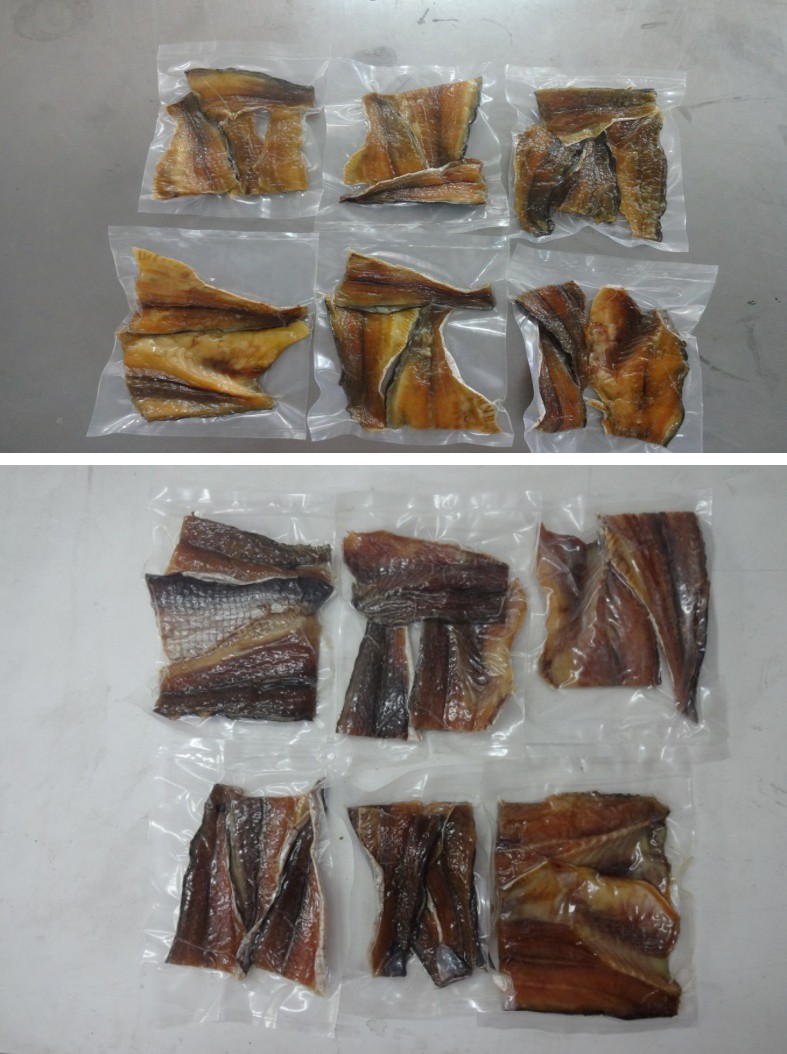
Plate 1: Semi-dried laminates under vacuum packing.
Plate 2: Smoked laminates.
Materials and Methods
The fresh pangas fish was brought to laboratory under iced condition from local fish market. Fishes weighing on an average length of 35 cm and weight of 675 g fishes were studied for moisture, ash, crude protein and total lipid following the standard methods of AOAC [12].
Standardization of Operating Parameters for Preparation of Laminated Cured Products
Standardization of the process of lamination by the method suggested by Jeevanandam, et al. [6] and Lewis [7] and drying and smoking as described by Karthikeyan, et al. [5]. Operational parameters like temperature, time of drying & smoking, process of laminating the fillets and time of lamination etc. was standardized after several trials (Table 1). The lamination process for the fish fillet was standardized in order to get a better & attractive product.
| Sl No. | Parameters | Standard |
|---|---|---|
| 1 | Length of fish fillet | 15-22 cm length |
| 2 | Weight of fillet | 185 g |
| 3 | Lamination of fillets | 5 min in screw press |
| 4 | Drying temperature | 55-60° C |
| 5 | Drying time | 10-12 hrs. |
| 6 | Smoking temperature | 60° C |
| 7 | Smoking time | 2 and half hrs. |
Table 1: Processing parameters optimized for dried and smoked laminate preparation.
Preparation of Products
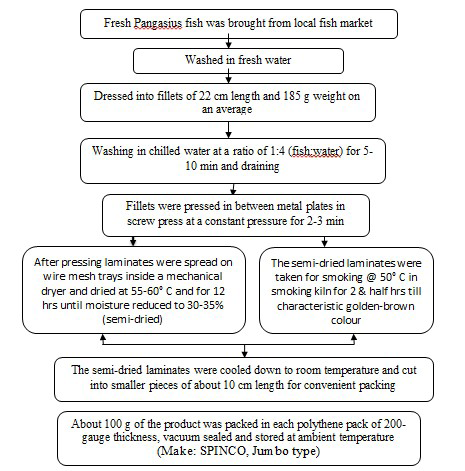
The preparation process of dried and smoked laminates from Pangasius sp. is explained in flowchart (Figure1). The proximate composition of both dried and smoke laminates and during storage period were analysed according to the method of AOAC [12]. The pH was determined according to AOAC [12]. Total nitrogen and nonprotein nitrogen (NPN); total volatile base nitrogen (TVBN) was determined by using the micro-kjeldahl method [12], Conway’s micro- diffusion method respectively. Protein nitrogen was estimated by subtracting non-protein nitrogen from the total nitrogen. The peroxide value (PV) was determined on the chloroform extracts of tissues as per the method suggested by Jacob. Thiobarbituric acid reacting substance (TBARS) was determined by the method given by Benjakul & Bauer [13]. Rehydration/Reconstitution property of the products was analyzed by Valson [14]. The breaking strength of the products was studied in Texture Profile Analyzer (Make: Stable Microsystem, Model: TA-XT Plus). Total plate count (TPC) and total fungal count (TFC) were done using nutrient agar and potato dextrose agar [15] respectively by spread plating method. Sensory or Organoleptic characteristics of the products were judged by normal sensory methods using hedonic scale [16].
The products were analyzed for every 7 days interval and for different quality parameters to evaluate shelf life and was continued till 84 days till the product was unacceptable for consumption. All statistical analyses were performed using SPSS (version 16.0 for windows). Analysis of variance (one way - ANOVA) was performed to determine the differences between storage periods of products. The tests for differences were done by using Duncan’s Multiple Comparison Test. Significance was tested as (p<0.05).
Results and Discussion
The quality characteristics of the raw fish used for product preparation are given in Table 2.
| Parameters | Pangasius Fish Weight Less than 1 Kg |
|---|---|
| Moisture (%) | 74.62±0.068 |
| Protein (%) | 15.08±0.02 |
| Fat (%) | 5.77±0.075 |
| Ash/mineral (%) | 0.94±0.04 |
| SSP (% of TP) | 8.78±0.036 |
| NPN (mg%) | 0.37±0.032 |
| pH | 6.29±0.05 |
| TPC | 4.5X10² |
Table 2: Results on Biochemical composition of fresh _Pangusius_ sp. used for product development.
The fish consisted of 74.62% moisture, 15.08% crude protein, 5.77% fat, 0.94% mineral and 8.78% salt soluble protein with negligible non protein nitrogen (0.37%) content. Nguyen, et al. [17] reported proximate composition of 19.6% protein, 2.1% lipid, 74.8% water and 3.5% minerals for pangas fillet. The basic composition varies greatly from species to species and also from individual to individual depending on age, sex, environment and season [18].
Changes in Proximate Composition of Dried and Smoked Laminates During Storage
The changes in proximate composition of freshly prepared dried and smoked laminates is shown in (Figures 2a-2d). The initial moisture content for dried and smoked laminates was 32.76±0.14 and 28.66± 0.07 respectively at first day. Decrease in moisture in dried and smoked laminates during the initial days and then increase in the late storage period was not significant (p>0.05). Vacuum packaging and storage at relatively higher temperature (ambient) might have led to this [8]. An increase in moisture content of both the products at the later storage periods may be attributed to take up of some moisture by the products during storage due to difference in moisture of the products and their surroundings, supported by the works of many researchers Lilabati, et al. [19], Daramola, et al. [20], Kiin-Kabari, et al. [21].
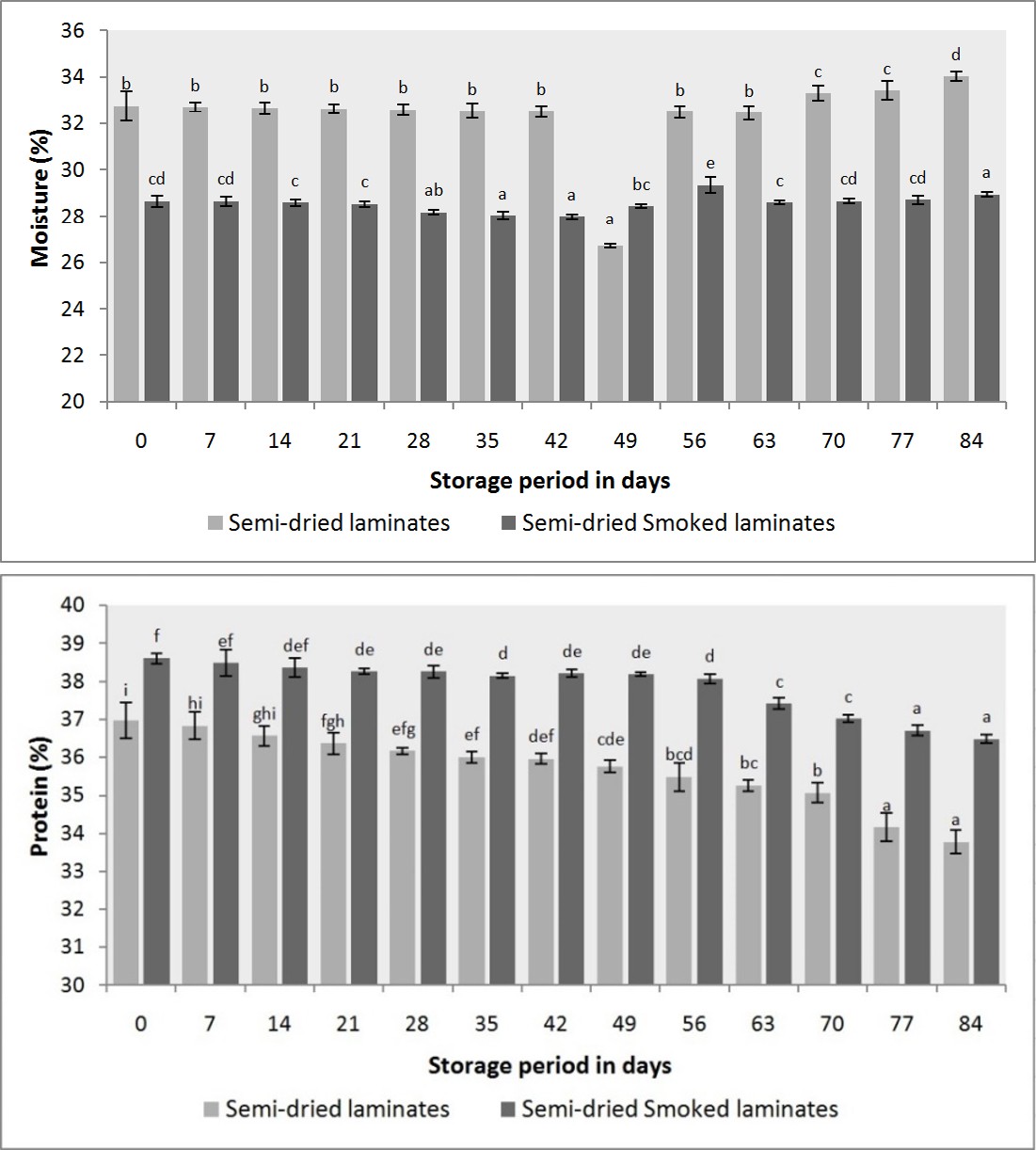
Figure 2a
Figure 2b
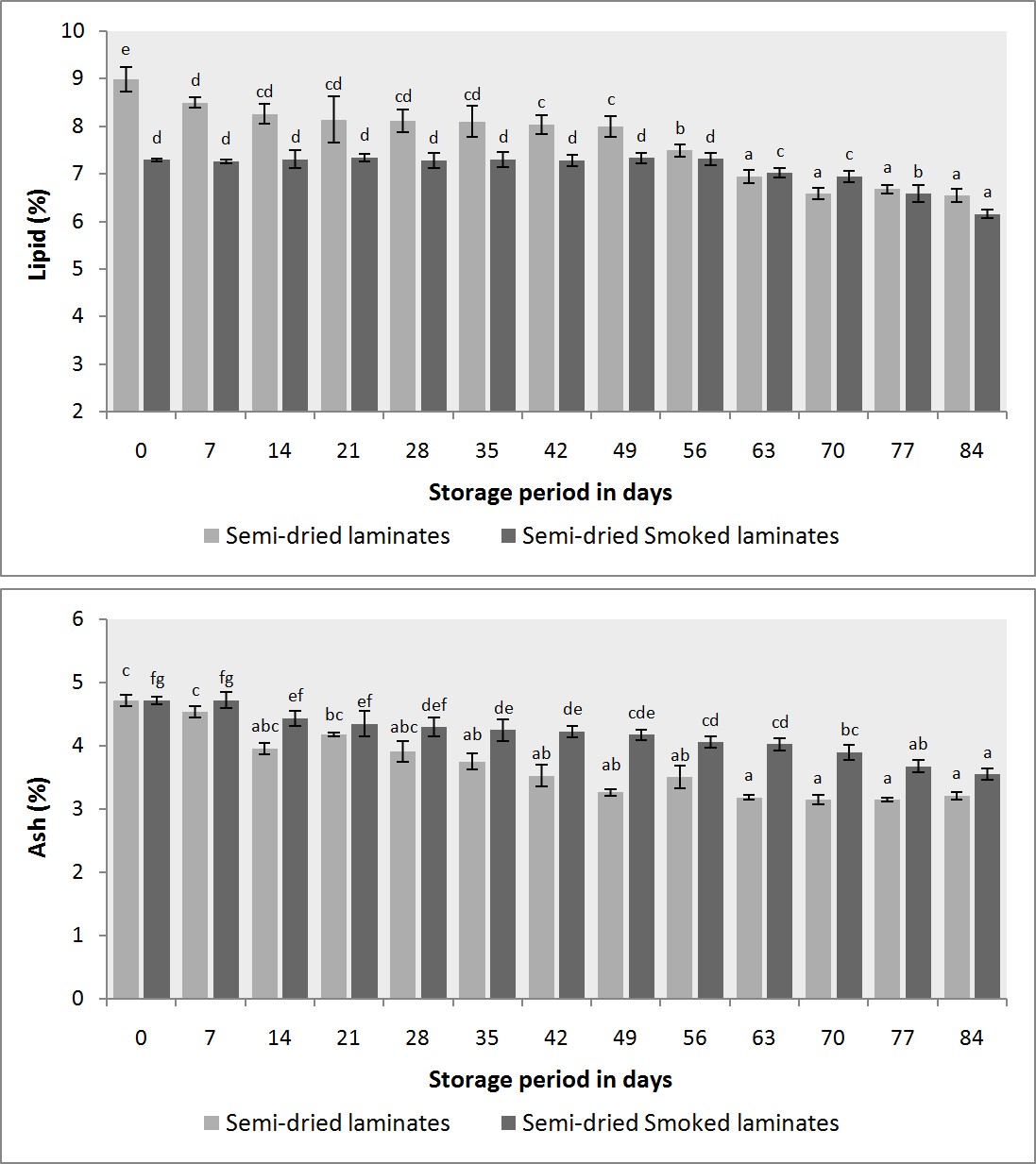
Figure 2c
Figure 2d Figure 2: Changes in proximate composition of semi-dried and smoked laminates from Pangasius sp. during storage.
Initial protein content showed a decreasing trend throughout the storage period. The protein contents decreased from 38.61 to 36.48 % in smoked and 36.96 to 33.77% in dried laminates. Smoking affects the nutritional value of fish, mainly by reducing the biological availability of proteins Stroud [22]. The decrease in crude protein at storage might be partly due to microbial and enzymatic breakdown and assimilation by Mould [23, 24]. Fat/lipid content in dried laminates was as high as 8.99% on 0th day which reduced to 6.54% at the end of 12th weeks. Similarly, in smoked laminates lipid content decreased from initial 7.29% to 5.87% at the end. Presence of lipids during the smoking step is a positive factor for the uptake of smoke compounds [25]. The fat loss was more intensive in the smoking than in oven drying. Fat may exude with the moisture evaporation and extended heat treatment during smoking enhances this phenomenon [1]. The ash/mineral content was 4.55% and 4.88% in dried and smoked products immediately after the process and gradually decreased during the storage period but not significantly (p>0.05). The lower value of ash might be due to the loss of water-soluble minerals as drip on heating [26].
Changes in Biochemical Compositions
The results of biochemical compositions of the products under study are shown in (Figures 3a- 3f). Salt soluble protein of the products was 16.91% and 19.21% of total protein in dried and smoked laminates respectively. The lower value of SSP during storage indicated denaturation of protein and formation of high molecular weight protein aggregates while smoking and subsequent drying process Karthikeyan, et al. [5]. In smoked laminate NPN increased from 1.17 to 2.12 % and in dried one from 1.85 to as high as 2.82%. An increase in NPN and decrease in SSP level during storage confirmed the protein denaturation.
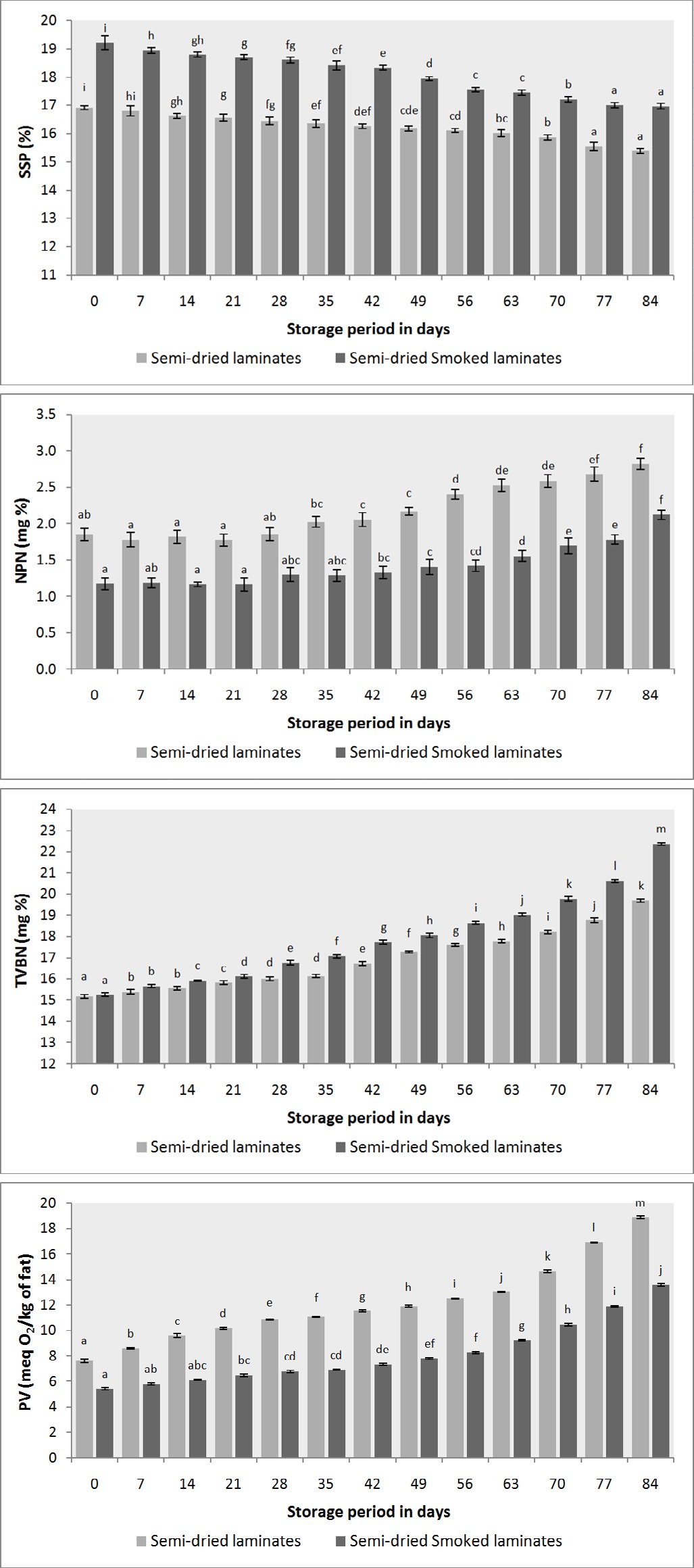
Figure 3a
Figure 3b
Figure 3c
Figure 3d
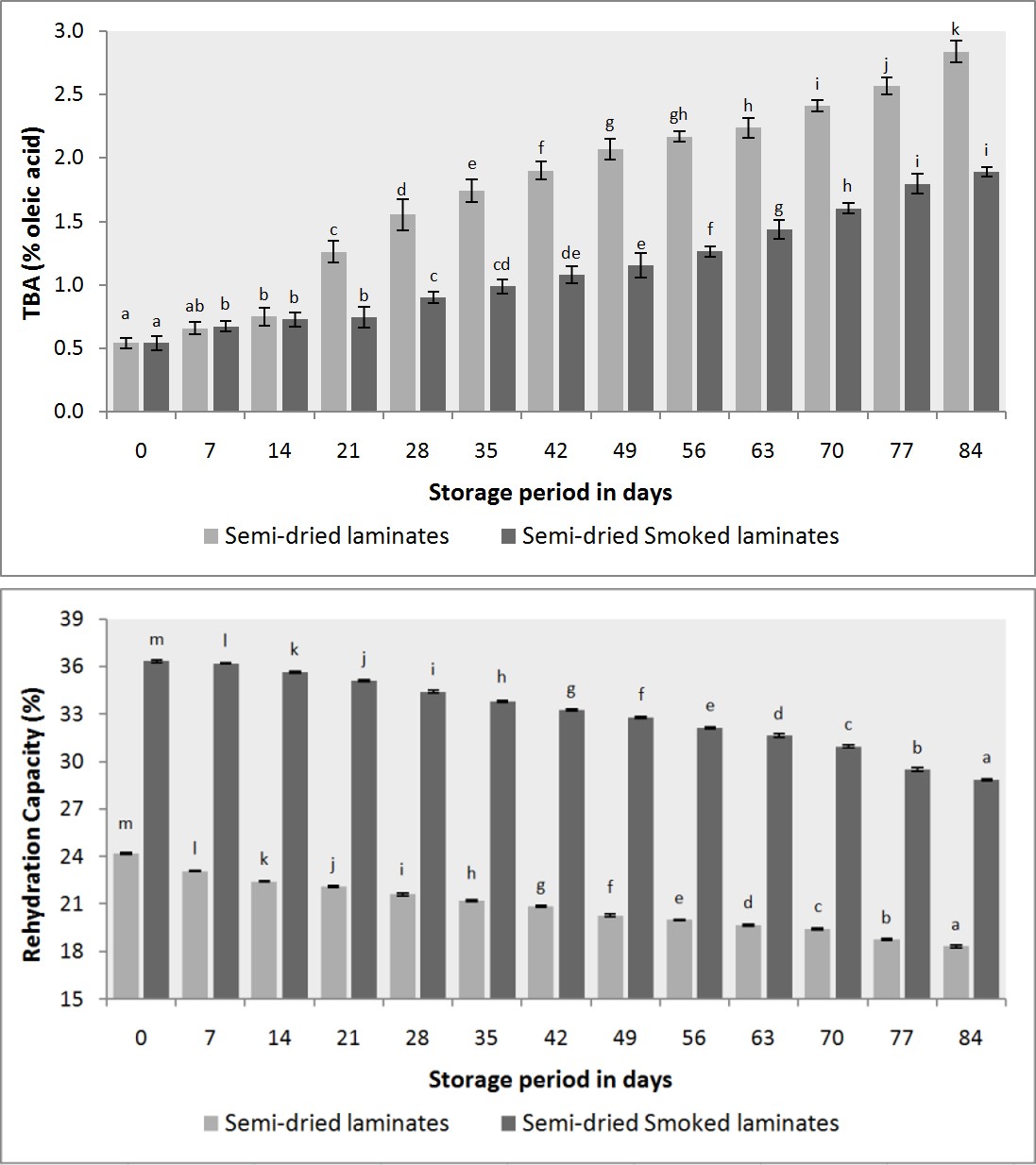
Figure 3e
Figure 3f Figure 3: Changes in biochemical characteristics of semi-dried and smoked laminates of Pangasius sp. during storage.
TVB-N measurement indicates the extent of the breakdown of protein due to bacterial and enzymatic action leading to amines production. In the present study, the TVBN value of the products was found to increase significantly (p<0.05) during storage indicating release of volatile bases and free amino acids. The TVBN content in dried laminates increased from 15.16 to 19.69 mg% whereas in smoked laminates it increased from 15.26 to 22.36 mg%. The high value of TVBN of smoked laminates might be attributed to the release of volatile bases during smoking and the subsequent biochemical changes in the fish muscle. In a similar study by Daramola, et al. [20], 21.03 mg% of TVBN was reported in smoke-dried fish after 8 weeks of storage at ambient temperature.
The peroxide value is a measure of the first stage of oxidative rancidity and fish lipid being highly unsaturated, is liable for both autolytic as well as oxidative rancidity [27]. Peroxide value and TBARS values showed an increase during storage of the products indicating fat oxidation. The PV values significantly (p<0.05) increased from 7.61 to as high as 18.9 meq/Kg of fat in semi-dried and 5.41 to 12.58 meq/Kg in smoked samples. TBA index is a widely used indicator for the assessment of degree of lipid oxidation [28]. The TBARS value increased significantly (p<0.05) after 14th day from 0.51 to 2.84 mg malonaldehyde kg-1 meat in semi- dried samples and 0.55 to 1.89 mg malonaldehyde kg-1 in smoked laminates where significant increase after 42nd day of storage. The increase of PV and TBARS content during storage might also be a result of the presence of pro-oxidant enzymes lipoxygenases, peroxidises etc. and chemical pro- oxidant molecules namely; haeme proteins and metal ions as explained by Erickson [29] and Sikorski & Kolakowski [30]. The comparatively lower value of PV and TBARS in the smoked laminates may be due to the phenolic substances in wood smoke which provided some protection against oxidation [31].
pH values in dried laminates decreased from 5.50 to 5.03 and in smoked product from 5.96 to 5.11 during entire storage (Figure 4). Change in pH from 6.69 to 4.94 was reported by Somboonyarithi, et al. [8] in semi-dried fish steaks and Daramola, et al. [20] in smoke-dried fish. Lower pH value in smoked sample indicated the effect of phenolic/ acidic constituents deposited on the fish muscle during smoking [32]. The reconstitution (rehydration) property of the meat gives an index of protein quality and its ability to retain moisture. The rehydration capacity of dried laminates was 24% initially which reduced further to 18.34% at the end of storage. Similarly, smoked laminates showed decrease in value from 36.36% to 28% during storage. The aggregation of protein molecules during the smoking and drying process lowers the reconstitution capacity of the cured fish products. The change in rehydration capacity during storage may be due to different degree of protein denaturation during drying and smoking to damage of cellular structure causing shrinkage of tissue [33]. Nath & Majumder [34] reported rehydration value above 60% for mechanically dried freshwater fish Mystus sp.
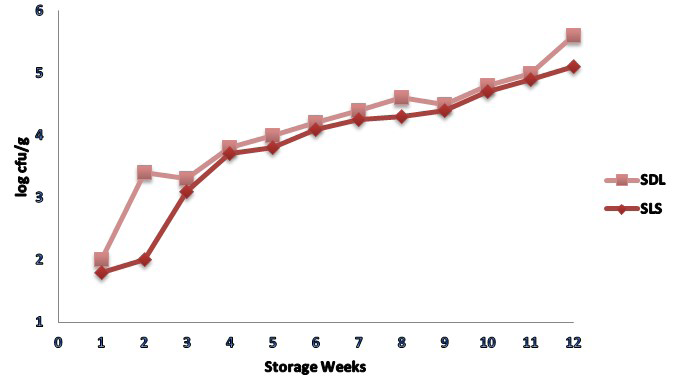
Changes in Microbial Characteristics
The result of microbial study of the products is presented in Figure 4. ICMSF [35] suggested acceptable limit of bacterial load in dry fish as < 5 log cfu g-1. In the present study, the TPC content of dried laminates was 2 log cfu g-1 initially which increased during storage and reached up to 6 log cfu g-1 after 10 weeks. Similarly, bacterial load in smoked laminates increased from 2 log cfu g-1 to 5 log cfu g-1 up to 12 weeks in storage. The low level of bacterial load in smoked product may be due to several preservative compounds in smoke compounds including phenols, organic acids and formaldehyde which exhibited antimicrobial properties [36, 37]. The quality of dried fish is often adversely affected by growth of fungi [38] and substantial amount of fish are discarded during drying due to fungal growth. However, the smoking process is effective in controlling the onset of fungal attack [39]. In the present study, the total fungal counts (log cfu g-1) were > 10 and count increased to 2.08 (8 weeks) and 0.90 (10 weeks) in dried and smoked laminates respectively. The higher TFC in dried sample may be due to higher moisture content. All the samples were free from any visible fungal growth, whereas a very low yeast and mould count was recorded in some samples of semi-dried laminates after 10th week when moisture content increased.
Changes in Sensory Characteristics and Acceptability of the Products
The sensory score obtained for color, texture, appearance, taste and overall acceptability was above 8.0 initially (Figures 5a,5b). The overall acceptability scores however, decreased throughout the storage period and reached a level of 4.0 at the end of 10th week for dried laminates and 4.5 after 12th week for smoked one. Texture of the products became soft at the end of storage. The rancid odour in the samples was very prominent especially the one not smoked. Smoking process improves organoleptic characteristics and induces water loss and reduction of the microbial load of foods due to heat, aromatic and bactericidal substances of smoke, thus predisposing them to better conservation [40, 41]. More moisture content in semi-dried laminate might have aggravated the microbial and enzymatic breakdown of volatile components and generated off flavours and odours more readily. The vacuum packaging has some influence on maintaining the sensory attributes till 8th to 10 weeks of studies even in dried products. Somboonyarithi, et al. [8] reported that the appearance, odour and flavour scores of semi-dried fish steaks packed in vacuum or modified atmosphere were significantly higher than those packed in air. The scores showed a sharp decline after 8th week of storage in control and 10th week in case of final product. Daramola, et al. [20] observed similar changes in smoked fishes after 8 weeks of storage. The changes were more prominent and rapid in dried laminates.
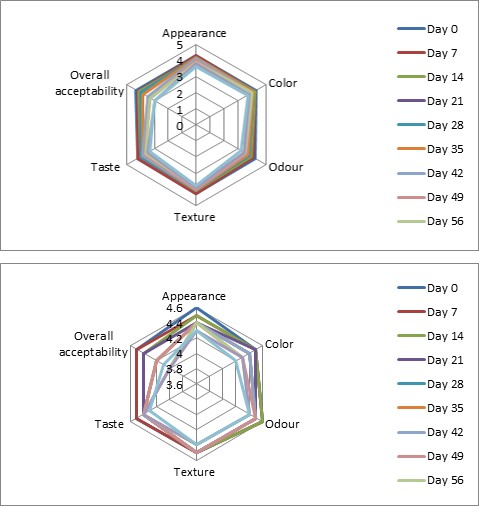
Figure 5a
Figure 5b Figure 5: Changes in sensory attributes of semi-dried and smoked laminates of Pangasius sp. during storage.
Conclusion
In case of dried laminates, the spoilage was faster which might be due to more moisture content and also higher fat content. Some volatile amines, breakdown products of protein are found to increase during storage period. The sensory data revealed that smoked product has acceptable limit for maximum 10-12 weeks whereas the dried one has 8 weeks. Visible fungal colonies on semi-dried laminate were observed with ammoniacal pungent smell. A cost economic study revealed about 30% profit including packaging and other costs which might be a profitable approach towards income generation for the manufacturers in N.E. India.
References
-
Chukwu O (2009) Influences of Drying Methods on Nutritional Properties of Tilapia Fish (Oreochromis Nilotieus). World Journal of Agricultural Sciences 5 (2): 256-258.
-
Olowoniyan FO, Bolorunduro PI, Dikko H, Chindo H (1998) Preparation, Processing and Utilization of Fish Products. In: Olowoniyan FO (Ed.), Preparation, Processing and Utilization of Fish Products extension Bulletin Number 99, National Agricultural Extension and Research Liaison Services. Ahmadu Bello University, Nigeria, pp: 3-6.
-
Gupta SK, Gupta PC (2006) General and Applied Ichthyology (Fish and Fisheries). S Chand and Company Ltd, India, pp: 1045-1068.
-
Eyo AA (2001) Fish Processing Technology in the Tropics. University of Ilorin press, Nigeria, pp: 112-129.
-
Karthikeyan M, Dhar B, Kakati B, Hassan A, Das S (2007) Quality Changes in Smoked Colisafasciata from the Markets of Manipur During Storage. Fishery Technology 44(1): 49-54.
-
Jeevanandam K, Venugopal V, Doke SN, Rao YK, Bongirwar DR (2001) Preparation and Storage Characteristics of Ribbon Fish Laminates. Journal of Aquatic Food Product Technology 10(4).
-
Lewis NF (1978) Radiation Preservation of Seafoods: Development of Dehydro-Irradiation Processes for Shrimp (penaeus Indicus) and Bombay Duck (harpodonnehereus), Lewis NF, India .
-
Somboonyarithi V, Phongchawee K, Raksakulthai N (1996) Production and Storage of Semi-Dried Catfish Steaks from Hybrid Catfish. Asean Food Journal 11(2): 53-60.
-
Can NT (2001) The Technological Seafood Processing. 4th (Edn.), Published by Science and Technology, Vietnam, pp: 350.
-
Anelich LE, Hoffman LC, Swanpoel MJ (2001) The Influence of Packaging Methodology on the Microbiological and Fatty Acid Profiles of Refrigerated African Catfish Fillets. J Appl Microbiol 91(1): 22-28.
-
Perez-Alonso F, Aubourg SP, Velazques O, Velazques J (2004) Shelf-Life Extension of Atlantic Pomfret (Brama Brama) Fillets by Packaging Under a vacuum-Skin System. European Food Research Technology pp: 313- 317.
-
AOAC (2000) Official Methods of Analysis. 17th (Edn.), The Association of Official Analytical Chemists, USA.
-
Benjakul S, Bauer F (2001) Biochemical and Physicochemical Changes in Catûsh (SilurusglanisLinne) Muscle as Inûuenced by Different Freeze-Thaw Cycles. Food Chemistry 72(2): 207–217.
-
Valson AP (1975) A Comparative Yield and Biochemical Evaluation of the Existing Fish Curing Methods in India. Association of Food Scientists and Technologists and Central Food Technological Research Institute, India, pp: 77-79.
-
APHA (2001) Compendium of Methods for the Microbiological Examination of Foods. American Public Health Association, USA.
-
Siddaiah D, Reddy GVS, Raju CV, Chandrasekhar TC (2001) Changes In Lipids, Proteins and Kamaboko Forming Ability of Silver Carp (Hypothalmicthys Molitrix) Mince during Frozen Storage. Food Research International 34: 47-53.
-
Nguyen TL, Du Le H, Nguyen TD (2013) Optimization of the Smoking Process of _Pangasius_ Fish Fillet to Increase theProduct Quality. Advance Journal of Food Science and Technology.
-
Sankar TV, Ramachandran A (2001) Changes in Biochemical Composition in Indian Major Carp in Relation to Size. Fishery Technology 38(1): 22-27.
-
Lilabati H, Vishwanath W, Singh MS (1999) Changes in Bacterial and Fungal Quality during Storage of Smoked Esomusdanricus of Manipur. Fish Technology 36(1): 36- 39.
-
Daramola JA, Fasakin EA, Adeparusi EO (2007) Changes in Physicochemical and Sensory Characteristics of Smoke- Dried Fish Species Stored at Ambient Temperature. African Journal of Food, Agriculture, Nutrition and Development 7(6).
-
Kiin-Kabari DB, Barimalaa IS, Achinewhu SC, Adeniji TA (2011) Effcets of Extracts from Three Indigenous Spices on the Chemical Stability of Smoke-Dried Cat Fish (Clariaslezera) during Storage. African Journal of Food, Agriculture, Nutrition and Development 11(6): 5335- 5343.
-
Stroud GD (1988) A Technical and Economical Appraisal of Artisanal Smoking Ovens in Ghana. FAO, Fisheries Report pp: 400.
-
Eyo AA (1983) Effect of Different Handling Methods on the Keeping Quality of some Commercially Important Fish Species of Kainji Lake. Paper Presented at 3rd Annual Conference of Fisheries Society of Nigeria, pp: 7-9.
-
Fapohunda OO, Ogunkoya M (2006) Effect of Smoke- Drying on the Proximate Composition of Tilapia Zilli, Parachanna Obscura and Clariasgariepinus Obtained from Akure, Ondo-state, Nigeria. Animal Research International 3(2): 478-480.
-
Beltran A, Moral A (1991) The Effects of Fat Contents and Storage Temperature on the Storage Life of Smoked Sardine (Fillets Sardinapilchardus W.) Prepared from Frozen Sardine. Food Chemistry 42(3): 347-356.
-
Viswanath W, Lilabati H, Bijen M (1998) Biochemical, Nutritional and Microbiological Quality of Fresh and Smoked Mud Eel Fish Monopterusalbus- A Comparative Study. Food Chemistry 61(1-2): 153-156.
-
Balachandran KK (2001) Biochemistry and Nutrition. Post-Harvest Technology of Fish and Fish Products, Daya Publishing House, India, pp: 1-28.
-
Nishimoto J, Suwetja IK, Miki H (1985) Estimation of Keeping Freshness Period and Practical Storage Life of Mackerel Muscle During Storage at Low Temperatures. Memoirs of Faculty Fisheires-Kagoshima University, Japan, 34(1): 89-96.
-
Erickson MC (1997) Lipid Oxidation: Flavor and Nutritional Quality Deterioration in Frozen Foods. In: Erickson M, Hung Y, et al. (Eds.), Quality in Frozen Food. Chapman and Hall, USA, pp: 141-173.
-
Sikorski Z, Kolakowski E (2000) Endogenous Enzyme Activity and Seafood Quality: Influence of Chilling, Freezing, and Other Environmental Factors. In: Haard N, Simpson B, et al. (Eds.), Seafood Enzymes. Marcel Dekker, USA, pp: 451-487.
-
FAO (1981) The Prevention of Losses in Cured Fish. FAO Fish Technical Papers Number 219, pp: 87.
-
Doe PE, Sikorski Z, Haard N, Olley J, Pan B S (1998) Basic Principles. In: Doe PE (Ed.), Fish Drying and Smoking: Production and Quality, Technomic Publishing Company incorporated, USA, pp: 13-46.
-
Horner WFA (1992) Preservation of Fish by Curing (Drying, Salting and Smoking). Blackie Academic and Professional, UK, pp: 31-72.
-
Nath K, Majumder RK (2013) Quality Evaluation of Solar Tent Dried Puntius Sophoreand Mystusgulio of North East India. Fishery Technology 50(2).
-
ICMSF (1986) Microorganisms in Foods: Sampling for Microbiological Analysis: Principles and Specifications. International Commission of Microbiological Specification for Foods, University of Toronto Press, Canada.
-
Olsen CZ (1977) Smoke Flavouring and its Bacteriological Antioxidative Effects. Acta Alimentaria Polonica 3(27): 313-324.
-
Daun H (1979) Interactions of Wood Smoke Components and Foods. Food Technology 83: 66-71.
-
Chakraborti R, Verma PRG (1999) Halotolarent Fungi in Salted and Dried Fish at Lower Visakhapatnam coast. Fish Technology 36(1): 28-31.
-
Joseph AC, Phrabhu PV, Balachandra K (1987) Studies on Dried/Smoked Barracuda. Fish Technology 24(2).
-
Igwegbe AO, Negbenebor CA, Chibuzo EC, Badau MH, Agbara GI (2015) Effect of Season and Fish Smoking on Heavy Metal Contents of Selected Fish Species from Three Locations in Borno State of Nigeria. Asian Journal of Science and Technology 6(2): 110-119.
-
Yusuf KA (2015) Influence of Fish Smoking Methods on Polycyclic Aromatic Hydrocarbons Content and Possible Risks to Human Health. African Journal of Food Science 9(3): 126-135.
- Genetic Improvement of Nile Tilapia (Oreochromis niloticus): Advances in Selective Breeding and Genomic Approaches for Sustainable Aquaculture
- Microplastics, Contaminants, and Waste Hotspots: Divergences and Faults in Prioritizing Control Efforts
- Creating a Healthier, More Vibrant Open and Closed Aquatic Environment. A Submersible, Centrifugal Magnetically Affixed Current Changing Aquarium Pump
- An Attempt to Assess Alpha Diversity and Sample Size: Using the Ostracod Assemblages off Kumamoto Port, Japan
- Assessment of the Efficiency of Common Fishing Gears and Crafts Used at Mohananda River of Chapai Nawabganj, Bangladesh
- Fish Productivity and Biodiversity Status of Sundarban Mangrove in Bangladesh