
Gut Microbiota of Salmo trutta fario and Oncorhynchus mykiss: Implications for Fish Health and Aquaculture Management
This review compares the gut microbiota of two economically significant freshwater fish species from India’s Himalayas, Salmo trutta fario and Oncorhynchus mykiss. Knowing the composition and variety of gut microbiota in these two species is crucial to their health and productivity. Recent sequencing advances have helped to find and characterize different microbial communities in numerous habitats, including fish gut microbiota. The gut microbiota of these two fish has been compared using Himalayan literature. Proteobacteria, Firmicutes, Bacteroidetes, and Actinobacteria dominate both species’ gut microbiota, but their relative abundance differs. S. trutta fario has a more metabolically varied gut microbiota than O. mykiss. Scientific literature reveals that diet, water quality, seasonality, and host genetics influence the fish gut microbiome. Nutrition greatly affects the intestinal microbiome of animals. This study examines how the gut microbiota affects these fish’s immune systems and probiotics’ ability to boost their health and performance. This review reveals how changing the gut microbiota of these species might increase their health and production. In order to enhance the health of these commercially important fish species, there is a need for more research to understand the complex interaction between gut microbiota, host genetics, and environmental factors.
Introduction
The gut microbiota is made up of microorganisms that live on body surfaces and cavities. Commensal or mutualistic bacteria alter host biology [1]. Gut flora affects vertebrate digestive health. Allochthonous and autochthonous gut microbiota exist. Allochthonous bacteria are foreign to the host ecosystem, while autochthonous bacteria are native. These bacteria form long-term relationships with the host. They shield hosts from pathogens. Host-related factors impact the fish gut microbiota and can benefit or harm the host. The gut microbiome balances fish Metabolism, digestion, and immunity is controlled. Fish health, behavior, and growth depend on the gut microbiota [2, 3]. Culture-oriented methods, which underestimate microbial diversity, dominate fish intestinal microbiota research [4, 5, 6, 7, 8, 9]. Culture-based microbiota function studies don’t explain in vivo processes. Environmental factors, host genetics, developmental stage, and immunological conditions affect the fish gut microbiome. Foregut and hindgut microbial compositions differ [10, 11, 12, 13, 14, 15, 16, 17]. Proteobacteria, Firmicutes, and Bacteroidetes dominate most fish gastrointestinal tracts. Actinobacteria, Fusobacteria, Bacilli, Clostridia, and Verrucomicrobia dominate fish gut microbes. Development, digestion, immunology, and disease resistance depend on the fish gut microbiota [18]. The gut microbiome affects fish behavior, digestion, and immunity.
Food, environment, and host development affect gut microbiota. Fish guts include pathogenic, mutualistic, and benign microorganisms. These species affect host immunity and physiology. Host size, developmental stage, nutrition, environment, and season affect fish gut microbiota [19, 20, 21]. Aquaculture needs hybrid fish. The gut microbiota affects growth, behavior, digestion, and immunity. Pathogenic, mutualistic, and benign commensal microorganisms influence fish gut physiological functioning. Fish gut microorganisms depend on environment, trophic level, eating behavior, and host-specific traits.
The gut microbiota impacts host fish development, metabolism, feeding behavior, and immune response [22, 23, 24]. Fish intestines have 107–111 microorganisms per gram. Digestive enzymes and water quality can affect gut flora. Due to AMR bacteria and hard-to-treat fish diseases, gut microbes may help fish as probiotics. Understanding fish gut microbiomes helps aquaculture managers improve fish health and well-being [24, 25]. Metagenomics and next- generation sequencing enable ambient sample microbial genome analysis, transforming fish gut microbiota research. Brown trout’s endogenous autochthonous gut microbiota is unknown; however, its allochthonous microbiome has been studied. Effective management requires understanding gut microorganisms’ role in host physiology.
Composition of Fish Gut Microbiome
Microorganisms are present in various fish organs, including the skin, digestive tract, and internal organs. The gut microbiota, which is influenced by factors such as environmental conditions, hereditary patterns, developmental stages, nutrition, and diet composition, is highly diverse. Significant differences in the composition of gut microbiota have been reported between marine and freshwater fish, fresh water species having a higher abundance of Acinetobacter sp., Aeromonas sp., Flavobacterium sp., Lactococcus sp., Pseudomonas sp., Bacteroides sp., Clostridium sp., Fusobacterium sp., and members of Enterobacteriaceae [18, 26, 27, 28, 29]. In freshwater fish, carnivores and omnivores have shorter gut lengths and lower short-chain fatty acids (SCFAs) than marine fish due to unassimilable algal constituents.
Enzyme-producing bacteria have been identified in the fish gut microbiota, with the two main phyla being Bacteroidetes and Firmicutes in mammals and Proteobacteria in fish. In freshwater and seawater fish, the dominant phyla were Proteobacteria and Firmicutes, with the dominant genus including Citrobacter sp., Exiguobacterium sp., Pseudomonas sp., Lactococcus sp., Acinetobacter sp., AnoxyBacillus sp., Escherichia coli, and GeoBacillus sp. Oncorhynchus sp., Firmicutes play a significant role in fish probiotic properties and energy reabsorption. The presence of similar bacterial phyla, regardless of taxonomic position or geographical location of the fish, indicates the vital role of the microbiome in host functions such as nutrient absorption, digestion, and immune response [30, 31, 32, 33]. Microbial diversity in Salmo sp. and Oncorhynchus sp.
Fish gastrointestinal (GI) microbiota has been studied for over a century by several pioneers. However, the majority of research into gut microbial communities focuses on mammals, despite fish representing the greatest species diversity among vertebrates [6]. To comprehend the co- evolution of gut microbes and vertebrates, broad fish analyses are crucial. Studies have evaluated the gut microbiota of various fish species, such as zebrafish, guppy, and rainbow trout. In addition, they have evaluated economically valuable aquatic animals, including carp, Atlantic salmon, sturgeon, and Atlantic cod. Nonetheless, these studies provide only limited insight into the composition of the gut microbiota in fish and co-evolutionary patterns [8, 17, 31, 34, 35, 36, 37]. In recent years, attempts have been made to reveal the structure of the intestinal microbiome of a few fish species that inhabit a wide range of habitats. However, knowledge of microbiota variations in fish is incomplete, and it remains uncertain whether structural microbiome alterations found in diseases are epiphenomenal or causal.
Fish are the first vertebrate group with full capacities to mount disease resistance strategies through adaptive and innate immune mechanisms. Therefore, microbiome research in teleost fish lags behind higher taxa. However, our understanding of fish microbiota variations is still evolving [38, 39, 40, 41]. Microbial communities colonize virtually every surface of the host organism exposed to the external environment. These communities include members of the prokaryota, eukaryota, and viruses, which together provide an enormous enzymatic capacity and play a key role in controlling many aspects of host physiology. However, the core microbiota is instantly altered, resulting in dysbiosis. Such dysbiosis represents the state in which the microbiota’s ecological balance is critically disturbed, triggering perturbations in the meta-community structure that may damage some of the less represented beneficial species, thereby producing pathological states at any developmental stage of the host [42, 43, 44].
In antibiotic-induced dysbiosis, the microbiota’s functional aspects are affected, including the microbiota’s ability to break down fibers and starches into absorbable short-chain fatty acids (SCFAs), resulting in high levels of undigested carbohydrates that trigger a pathological state in the host [44]. Over the past few years, the fundamental role played by the microbiota in the induction, knowledge, and function of the vertebrate immune system has revolutionized the field of immunology, ranging from fish to humans [45, 46]. Thus, it is now widely accepted that the microbiome benefits vertebrates in maintaining overall health. In fish, the interrelations between both entities are even more complex since microbes and animals share their outer environment, which is characterized by a high load of organic material that directly supports microbial growth [27, 47].
Most aquaculture probiotics include lactic acid bacteria and Bacillus sp. Isolated from mammals or terrestrial environments [48]. Although several studies have shown that exogenous bacteria benefit fish, many use lactic acid bacteria, or Bacillus sp. conclusive or showed no beneficial effect on the host [49, 50]. Studies have examined the microbial community association with the fish intestines of Salmo trutta fario and Oncorhynchus mykiss in the Himalayan region of India. This is to understand their gut microbiota composition and co-evolution patterns. These studies have shed light on the functional diversity of the gut microbiota of these fish species and their associated environmental and host factors. A comparative analysis of the gut microbiota of these two fish species in the Himalayan region of India may provide new insights into their ecological niches, as shown in Table 1, nutritional physiology, and evolutionary history [8, 37, 51].
| S No. | Isolate Bacteria | Oncorhynchus mykiss | Salmo trutta fario | References |
|---|---|---|---|---|
| 1 | Gram negative aerobic motile rods | |||
| (i) | Alcaligenes sp., Pseudomonas sp. and Shewanella sp. | Present | Absent | Zhang, et al. |
| 2 | Gram negative aerobic coccobacilli and rods | |||
| (i) | Acinetobacter sp., Moraxella sp., and psychrobacter | Absent | Present | Bøgwald, et al. |
| (ii) | Enterobacteriaceae (Citrobacter sp., Enterobacter sp., Edwardsiella sp., Hafnia sp., Klebsiella sp., Proteus sp., and Providencia sp.,); | Present | Absent | Komaroff, et al. |
| (iii) | Micrococcaceae (Kocuria Macarococcus sp., Planococcus sp., and Staphylococcus sp.) | Present | Absent | Bøgwald, et al. |
| (iv) | Lactococcus sp. | Absent | Absent | Xia, et al. |
| (v) | Lactobaciilus sp. | Present | Present | Pelto, et al. |
| (vi) | Micrococcu sp. Bacillus sp. | Absent | Present | |
| (vii) | Proterobacteria and fusobacteria | Present | Present | Miettinen, et al. |
| (viii) | Fermicutes and Bacteroids (diet dependent) | Absent | Present |
Table 1: Showing guts microbiome diversity in Salmo sp. and Oncorhynchus sp.
In mammalian hosts, butyric acid plays a crucial role in providing energy to gastrointestinal cells. It exhibits various health benefits, such as enhancing mucus production, acting as an anti-carcinogen and anti-inflammatory agent, and regulating satiation. Butyrate is observed in the gut of both herbivorous and omnivorous fish, but not in carnivorous species due to their low carbohydrate diets. Studies have shown that butyric acid can inhibit potential pathogens in freshwater fish and is sold as a food additive to promote fish health and growth. However, trials using blends of sodium butyrate and other additives have not succeeded. Further research should explore the role of fusobacteria in the gut microbiota of fish species [52, 53, 54, 55, 56, 57, 58].
Importance of Fish Gut Microbiota
The gut microbiota is considered an “extra organ” that plays a crucial role in intestinal development, physiology, growth, and overall health. Studies have revealed that the gut microbiota regulates feeding, digestion, metabolic processes, and immune responses. This helps maintain energy homeostasis in the body. The fish gut microbiota plays a crucial role in several aspects of fish biology [19, 20, 21, 59].
Studies have shown that the gut microbiota plays a significant role in host growth and development, behavior, and immune system function. Animal guts provide vital functions that cannot be performed by the host itself. The metabolic role of the gut microbiome has gained attention, especially with the refinement of high-throughput sequencing and computational tools. Dysbiosis can lead to various diseases, whereas a state of “normobiosis” dominated by beneficial microorganisms promotes host health [60].
The gut microbiota of aquatic vertebrates synthesizes vitamins and amino acids. This synthesis is positively correlated with anaerobic bacteria abundance in the genera Bacteroides sp. and Clostridium sp. in Nile tilapia.
The gut microbiota plays a vital role in maintaining fish health in aquaculture, as it protects fish against infections caused by waterborne pathogens and opportunistic commensals. Diversity and stability of the gut microbiota are crucial to maintaining a healthy gut microbiome. This can be achieved through probiotic bacteria, such as Bacillus sp. and Lactobacillus sp. that stimulate the expression of inflammatory cytokines, increase mucus layer production, and enhance phagocytic activity [61, 62, 63, 64].
Manipulating the gut microbiota in fish can be achieved through various methods, including dietary proteins, lipids, probiotics, and prebiotics. Dietary proteins and lipids modulate the gut microbial composition by providing suitable substrates for bacterial growth, while probiotics and prebiotics selectively ferment ingredients that result in specific changes in the gastrointestinal microbiota, thereby conferring health benefits to the host [65, 66].
Salmo trutta fario and Oncorhynchus mykiss, which are significant fish species, have microbial communities in their guts, predominantly consisting of bacteria. Microbial communities’ composition and diversity are influenced by habitat, feeding habits, and physiological conditions. Potentially pathogenic bacteria have also been reported in the gut microbiota of these fish species. Probiotics have been studied as a potential tool to modulate the endogenous gut microbiota and improve brown trout growth performance, immunity, and disease resistance [67].
Few beneficial effects of gut microbiota are conferred on host fish, and such impacts can be systematically classified into biological and immunological impacts. These functions of bacteria in fish GI tracts are discussed on the basis of studies carried out in this sector. The importance of gut microbiota can be seen in Figure 1. The gut microbiota’s physiological impact on the host fish is perceived through a number of interactions between metabolic ability and the host metabolism of the gut microbiota. This relationship is defined by the failure of host fish to break down certain components of food, such as xenobiotic compounds or cellulose. These are used as a medium of energy by the host gut microbiota of fish, and the metabolites generated from this are used as an energy source by the fish. Another component that contributes to the physiological effect on the fish gut microbiota is the synthesis or part of the synthesis of an essential supplement like a vitamin [9].
![Figure 1: The gut microbiota’s physiological impact on the host fish is perceived through a number of interactions between metabolic ability and the host metabolism of the gut microbiota. This relationship is defined by the failure of host fish to break down certain components of food, such as xenobiotic compounds or cellulose. These are used as a medium of energy by the host gut microbiota of fish, and the metabolites generated from this are used as an energy source by the fish. Another component that contributes to the physiological effect on the fish gut microbiota is the synthesis or part of the synthesis of an essential supplement like a vitamin [9].](/fulltextimages/10418/fig_1.png)
The presence of native Gastrointestinal (GI) microbiota in fish has been recognized, though little is known about the bacterial communities and their establishment, diversity, and most importantly, their role in fish nutrition and health [68, 69].
Role of Fish Gut Microbiota in Disease Resistance
The gut microbiota is crucial for the development of the fish’s immune system and optimal nutrient absorption. Beneficial bacterial strains have been developed for the treatment of microorganism-induced bacterial diseases. The isolation of Lactococcus lactis from marine fish, which produces bacteriocin nisin that inhibits Lactococcus garvieae, highlights its potential as a preventative strategy for lactococcosis. Similarly, bacteria isolated from the gut of a deep-sea shark had antagonistic activity in the fish gut. The gastrointestinal tract is the main site for interactions between environmental microorganisms and the host. The mucus layer provides the first line of defense against pathogenic challenges by secreting various protective and antimicrobial substances [70, 71].
Role of Fish Gut Microbiota in Digestion
Intestinal microflora enzymes may help digest cellulose and other substrates poorly absorbed by mammals [72]. Fish intestines are colonized by many heterophilic aerobic and anaerobic microorganisms. The gut microbiota provides vitamins, amino acids, and enzymes by breaking down food [73]. Digestive tract anatomy determines gut bacteria communities.
There is a large and diverse enzymatic potential in gut bacteria that may interfere with a host animal’s metabolism. Aquatic bacteria may affect the fish gut microbiome [74]. Tilapia (Oreochromis mossambica), Chinese grass carp (Ctenopharyngodon idella), and common carp (Cyprinus carpio) digestive tract microbes show cellulolytic and amylolytic activities [75, 76]. Studies confirmed the existence of an enzyme-producing microbial population in fish gut and demonstrated that the bacterial load in feeds affects intestinal microflora by showing that amylolytic bacterial populations consisting of Bacillus spp. are significantly present in the digestive tracts of L. bata and C. mrigala, respectively [75, 77].
Fish digestive system enzyme-producing microbes can be employed as probiotics in fish diets, especially larval ones. Probiotics are used by isolating helpful intestinal bacteria from adult animals and adding large amounts to the feed of young animals of the same species [78, 79]. Commercial aquaculture requires probiotics for creating diets at larval stages to limit feed preparation expenses. Fish lack cellulase, yet their digestive systems include aerobic and facultative anaerobic bacteria communities that break down plant food [75, 76, 80].
Impact of Fish Gut Microbiota on Host
Gnostobiotic studies also indicate GI microbe involvement in fish immunity and xenobitic metabolism. Microbial regulation of glycoprotein production in the GI tract is reported in Dicentrarchus sp. [81]. The GI microbes play a critical role in the development and maturation of GALT (gut- associated lymphoid tissue), which in turn mediates a variety of host immune functions [82]. A complex and integrated interaction between the epithelium, immune components in the mucosa, and microbes is responsible for the development and maturation of the gut-associated immune system of the host. Genobiotic studies in different animal models also support this notion [83]. Several mechanisms are proposed for the GI bacteria’s involvement in GALT development. Bacteria could stimulate B cell proliferation in GALT through a classical antigen-specific immune response like protein A of Staphylococcus aureus and protein L of Peptostreptococcus magnus [84, 85].
The gut-associated lymphoid tissue (GALT) must develop mechanisms to distinguish between potentially pathogenic microorganisms and commensal microbiota to decide whether to show tolerance or induce an immune response. This is because the intestinal microbiota is constantly in direct contact with the gut mucosa. The mucosal immunity system regulates cells like phagocytes and lymphocytes found in GALT, resulting in powerful immune responses against dangerous foreign pathogens. This is done by coordinating, targeting, and mounting quickly for pathogen presentation and destruction. Normal intestinal mucosal colonization has a positive impact on immune regulatory processes, and the disruption of these processes by an unbalanced microbiota may aid in illnesses [86, 87].
Impact of Fish Gut Microbiota on Host Nutrient Metabolism
The gut microbiota of hosts is involved in nutrient metabolism, especially cholesterol metabolism and tracking. It has been reported that the gnotobiotic Danio sp. larvae failed in the uptake of protein macromolecules, with a significant difference in the levels of farnesyl diphosphate synthetase and apolipoprotein B compared with conventional larvae [88]. Moreover, the microbial upregulation of apolipoprotein B, which plays a pivotal role in intra- and extracellular cholesterol tracking, and the downregulation of liver-specific cholesterol 7a-hydrolase, which catalyzes the first step in cholesterol catabolism and bile acid biosynthesis, indicate the microbial modulation of cholesterol metabolism and tracking [88, 89].
The gut microbial population represents a very significant and diversified enzymatic potential. The enzymatic mass present in the digestive tract might interfere with a major part of the host animal’s metabolism. Microflora present in the fish digestive tract grow upon the food absorbed by the host animal, digestive secretions, and fragments scaled off the mucosal epithelium [73]. Cellulolytic bacteria present in the fish digestive tract influence metabolism, and a correlation exists between the degree of cellulolytic activity and feeding habits.
Impact of Fish Gut Microbiota on Host Health
For some time, it was thought that the longevity of hosts was connected with the activity of the gut microbiota [73]. The GI microbiota in endothermic animals facilitates digestion and protects against infections [90]. By depriving invasive pathogens of nutrients and secreting antibiotic chemicals, these gut microorganisms can defend the host. Fish have a variety of microorganisms in their intestines that can thwart diseases. Whereas Sugita, et al. discovered that 3.2% of GI bacterial isolates in freshwater fish were effective against Aeromonas sp. [73], they discovered that 2.7% of GI bacteria in freshwater fish inhibited various pathogens.
A host’s gut typically contains a diverse population of commensal, pathogenic, and non-pathogenic bacteria that can have a substantial impact on the overall health of the host and susceptibility to disease. In the intestine of a healthy animal, certain bacteria are permanent and others are transitory. The host microbiota and regulatory system are in balance. However, if this equilibrium is upset, a number of bacteria in the transitory stage can cause fatal illnesses [91, 92].
Impact of Fish Gut Microbiota on Host Nutrient Metabolism
The composition and diversity of the gut microbiome of fish are influenced by various host-associated factors, such as genetics, age, diet, and environment, as shown in Figure 1. Alterations in diet can cause changes in the gut microbiota composition, leading to dysbiosis characterized by an overgrowth of harmful microorganisms [93], as shown in Figure 2. A series of exogenous and endogenous factors can affect the establishment and nature of microbial composition in fish GI tracts. Fish developmental stage depends on [91, 94, 95], gut structure [95], and the surrounding environment, like ambient water temperature.
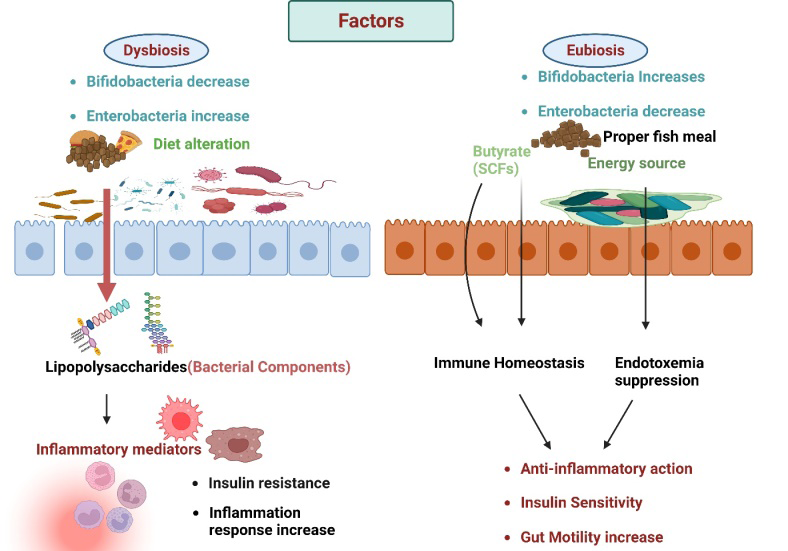
Biotic (genotype, physiological status, pathobiology, and lifestyle) and abiotic (environmental) factors may affect the fish gut microbiota and influence its composition and diversity, as well as its function and metabolic activity, like feeding, growth, energy storage, and the health of the fish [96]. Studies have shown that microbes in water affect fish gut microbiota [97, 98]. Two main factors influencing grass carp (Ctenopharngodon sp.) GI microbiota is water and sediment. Reported that the composition of intestinal lactic acid bacteria (LAB) varied with seasons in four species of fish, namely silver carp (Hypophthalmichthys molitrix), common carp (Cyprinus carpio), catfish channel (Ictalurus punctatus), and deep-bodied crucian carp (Carassius cuvieri) [99]. The intestinal microbiota of fish from estuarine environments is closer to that of freshwater fish. In contrast, the intestinal microbiota of fish from mixed salinity ecosystems is more similar to a saltwater fish’s intestinal microbiota. Nevertheless, it is difficult to evaluate the exact role of salinity in forming the intestinal microbiota as they used different fish from freshwater or marine water [99]. Recently revealed the gut microbiota composition of Nile tilapia born salinized. The study results showed that in high-salinity conditions, the abundance of Devosia and Pseudomonas species increased. Cetobacterium sp. is more common [99]. Feeding habit is also an important factor influencing GI microbial diversity and is increasing among carnivores, omnivores, and herbivores [51, 100, 101, 102].
Stress factors can significantly affect the GI microbiota [96]. When different types of chemicals, antibiotics, and pollutants like pesticides, herbicides, and insecticides enter the digestive tract of an aquatic animal, they can drastically affect the composition of the dominant GI microbiota and may lead to the elimination of species from the whole microbial community [103]. Feed and feeding conditions considerably influence the composition of the GI microbiota of fish [104], and during the larval stage, the gut microbial flora changes rapidly with respect to feeding.
Conclusion
The gut microbiota of fish, especially salmonids such as brown trout and rainbow trout, has significant roles in the development, digestion, immunity, and disease resistance of the gastrointestinal tract. Although there have been extensive investigations into the allochthonous microbiota, there is a dearth of information on the autochthonous gut microbiota of these species. Further research is necessary to fully understand the impact of gut microbiota on fish health and identify potential strategies to modulate it to improve growth performance, immunity, and disease resistance. These factors are influenced by various host-associated factors, and disturbances in the gut microbiota can lead to dysbiosis and various diseases. Although the comparison of fish gut microbiota with mammalian gut microbiota reveals fascinating associations, research on fish gut microbiota is still in its infancy. Salmo trutta fario and Oncorhynchus mykiss, both native to the Himalayan belt, have been found to harbor bacterial communities in their guts, with their composition and diversity being influenced by various factors. Further research on the gut microbiota of these fish species can provide valuable insights into their ecology, physiology, and health. The gut microbiome plays a crucial role in regulating various physiological processes in fish, including digestion, metabolism, and immune response. The gut microbiota community in fish changes with the host’s developmental stage, size, and environmental factors, such as habitat, diet, and season. Understanding the fish gut microbiome can help develop effective strategies to promote the health and growth of fish in aquaculture and conserve the aquatic ecosystem [105, 106, 107]. The recent emergence of metagenomics and next-generation sequencing techniques has revolutionized fish gut microbiota research. Studies on Salmo trutta fario and Oncorhynchus mykiss gut microbiota have shown that the composition of the gut microflora varies according to diet, habitat, geographical location, and season. Further research is necessary to fully understand the dynamics of fish gut microbiota and their impact on fish health. The gut microbiota plays a critical role in the physiology and health of fish. Research has shown that freshwater fish have a unique gut microbial composition due to their environmental conditions. Understanding the role of gut microbiota in fish is essential to developing effective strategies for their management and improving their health and well-being. However, the current understanding of the intestinal microbiota of fish is limited due to culture-based approaches. Gut microbiota composition in fish can vary depending on environmental conditions, host genetics, developmental stage, and immune status. Furthermore, microbial composition in different regions along the GI tract also differs, with foregut communities being significantly different from hindgut communities. The gut-associated microbes might have potential beneficial or harmful effects on the host, and maintaining a healthy microbiome is essential for optimal fish health.
Acknowledgement
An author duly acknowledges Central University of Himachal Pradesh for providing facilities to carry out the work.
Statements & Declarations
Funding-“The authors declare that no funds, grants, or other support were received during the preparation of this manuscript.”
Competing Interest
The authors declare no completing interest.
References
-
Spor A, Koren O, Ley R (2011) Unravelling the effects of the environment and host genotype on the gut microbiome. Nature Reviews Microbiology 9(4): 279- 290.
-
Berg RD (1996) The indigenous gastrointestinal microflora. Trends in Microbiology 4(11): 430-435.
-
Ringø E (1999) Intestinal microflora of fish larvae and fry. Aquaculture Research 30(2): 73.
-
Gibbons NE (1933) The slime and intestinal flora of some marine fishes. Contributions to Canadian Biology and Fisheries 8(1): 275-290.
-
Margolis L (1953) The Effect of Fasting on the Bacterial Flora of the Intestine of Fish. Journal of the Fisheries Research Board of Canada 10(2): 62-63.
-
Reed GB, Spence CM (1929) The intestinal and slime flora of the haddock: A preliminary report. Contributions to Canadian Biology and Fisheries 4(1): 257-264.
-
Shiina A, Itoi S, Washio S, Sugita H (2006) Molecular identification of intestinal microflora in Takifugu niphobles. Comparative Biochemistry and Physiology Part D: Genomics and Proteomics 1(1): 128-132.
-
Sullam KE, Essinger SD, Lozupone CA, O’Connor MP, Rosen GL, et al. (2012) Environmental and ecological factors that shape the gut bacterial communities of fish: A meta‐analysis. Molecular Ecology 21(13): 3363-3378.
-
Van Kessel MA, Dutilh BE, Neveling K, Kwint MP, Veltman JA, et al. (2011) Pyrosequencing of 16S rRNA gene amplicons to study the microbiota in the gastrointestinal tract of carp (Cyprinus carpio L.). AMB Express 1(1): 1-9.
-
Burns AB, Stephens WZ, Stagaman K, Wong S, Rawls J, et al. (2016) Contribution of neutral processes to the assembly of gut microbial communities in the zebrafish over host development. The ISME Journal 10(3): 655- 664.
-
Clements KD (1997) Fermentation and Gastrointestinal Microorganisms in Fishes. In Springer eBooks pp: 156- 198.
-
Hennersdorf P, Kleinertz S, Theisen S, Abdul-Aziz MA, Mrotzek G, et al. (2016) Microbial Diversity and Parasitic Load in Tropical Fish of Different Environmental Conditions. Plos One 11(3): e0151594.
-
Llewellyn MS, Boutin S, Hoseinifar SH, Derome N (2014) Teleost microbiomes: the state of the art in their characterization, manipulation and importance in aquaculture and fisheries. Frontiers in Microbiology pp: 5.
-
Mouchet M, Bouvier C, Bouvier T, Troussellier M, Escalas A, Mouillot D (2012) Genetic difference but functional similarity among fish gut bacterial communities through molecular and biochemical fingerprints. FEMS Microbiology Ecology 79(3): 568-580.
-
Rawls J, Mahowald M, Ley R, Gordon Jl (2006) Reciprocal gut microbiota transplants from zebrafish and mice to germ-free recipients reveal host habitat selection. Cell 127(2): 423-433.
-
Ray AK, Ghosh K, Ringø E (2012) Enzyme‐producing bacteria isolated from fish gut: A review. Aquaculture Nutrition 18(5): 465-492.
-
Ye L, Amberg J, Chapman D, Gaikowski M, Liu WT (2014) Fish gut microbiota analysis differentiates physiology and behavior of invasive Asian carp and indigenous American fish. The ISME Journal 8(3): 541-551.
-
Johny TK, Puthusseri RM, Bhat SG (2021) A primer on metagenomics and next‐generation sequencing in fish gut microbiome research. Aquaculture Research 52(10): 4574-4600.
-
Burokas A, Moloney RD, Dinan TG, Cryan JF (2015) Microbiota Regulation of the Mammalian Gut–Brain Axis. In Elsevier eBooks pp: 1-62.
-
Gonçalves AC, Gallardo Escárate C (2017) Microbiome dynamic modulation through functional diets based on pre- and probiotics (mannan-oligosaccharides and Saccharomyces cerevisiae) in juvenile rainbow trout (Oncorhynchus mykiss). Journal of Applied Microbiology 122(5): 1333-1347.
-
Mayer EA, Tillisch K, Gupta A (2015) Gut/brain axis and the microbiota. Journal of Clinical Investigation 125(3): 926-938.
-
Cui X, Zhang Q, Zhang Q, Jiang Y, Chen H, et al. (2022) Research Progress of the Gut Microbiome in Hybrid Fish. Microorganisms 10(5): 891.
-
Talwar C, Nagar S, Lal R, Negi RK (2018) Fish gut microbiome: Current approaches and future perspectives. Indian Journal of Microbiology 58: 397- 414.
-
Yukgehnaish K, Kumar P, Sivachandran P, Marimuthu K, Arshad A, Paray BA, Arockiaraj J (2020) Gut microbiota metagenomics in aquaculture: Factors influencing gut microbiome and its physiological role in fish. Reviews in Aquaculture 12(3): 1903-1927.
-
Navarrete P, Magne F, Araneda C, Fuentes P, Barros LF, et al. (2012) PCR-TTGE Analysis of 16S rRNA from Rainbow Trout (Oncorhynchus mykiss) Gut Microbiota Reveals Host-Specific Communities of Active Bacteria. Plos One 7(2): e31335.
-
Austin B (2002) The Bacterial Microflora of Fish. The Scientific World Journal 2: 558-572.
-
Gómez GD, Balcázar JL (2008) A review on the interactions between gut microbiota and innate immunity of fish: Table 1. Fems Immunology and Medical Microbiology 52(2): 145-154.
-
Izvekova GI, Izvekov EI, Plotnikov AO (2007) Symbiotic microflora in fishes of different ecological groups. Biology Bulletin of the Russian Academy of Sciences 34(6): 610-618.
-
Kim PJ, Shin N, Lee J, Kim MS, Whon TW, et al. (2021) Host habitat is the major determinant of the gut microbiome of fish. Microbiome 9(1).
-
Bøgwald J, Dalmo RA (2014) Gastrointestinal Pathogenesis in Aquatic Animals. In John Wiley & Sons, Ltd eBooks pp: 53-74.
-
German DP, Nagle BC, Villeda JM, Ruiz ALTG, Thomson AW, et al. (2010) Evolution of Herbivory in a Carnivorous Clade of Minnows (Teleostei: Cyprinidae): Effects on Gut Size and Digestive Physiology. Physiological and Biochemical Zoology 83(1): 1-18.
-
Ley RE, Hamady M, Lozupone CA, Turnbaugh PJ, Ramey RR, et al. (2008) Evolution of Mammals and Their Gut Microbes. Science 320(5883): 1647-1651.
-
Xia JH, Lin G, Fu GH, Wan ZY, Lee M, et al. (2014) The intestinal microbiome of fish under starvation. BMC Genomics 15: 1-11.
-
Geraylou Z, Souffreau C, Rurangwa E, D’Hondt S, Callewaert L, et al. (2012) Effects of arabinoxylan- oligosaccharides (AXOS) on juvenile Siberian sturgeon (Acipenser baerii) performance, immune responses and gastrointestinal microbial community. Fish & Shellfish Immunology 33(4): 718-724.
-
Hagiwara A, Suga K, Akazawa A, Kotani T, Sakakura Y (2007) Development of rotifer strains with useful traits for rearing fish larvae. Aquaculture 268(1): 44-52.
-
Redfearn DP, Trim GM, Skanes AC, Petrellis B, Krahn AD, et al. (2005) Esophageal Temperature Monitoring During Radiofrequency Ablation of Atrial Fibrillation. Journal of Cardiovascular Electrophysiology 16(6): 589-593.
-
Roeselers G, Mittge EK, Stephens WZ, Parichy DM, Cavanaugh CM, et al. (2011) Evidence for a core gut microbiota in the zebrafish. The ISME Journal 5(10).
-
Karthik L, Kumar G, Keswani T, Bhattacharyya A, Chandar SS, et al. (2014) Protease Inhibitors from Marine Actinobacteria as a Potential Source for Antimalarial Compound. PLOS ONE 9(3): e90972.
-
Romero J, Navarrete P (2006) 16S rDNA-Based Analysis of Dominant Bacterial Populations Associated with Early Life Stages of Coho Salmon (Oncorhynchus kisutch). Microbial Ecology 51(4): 422-430.
-
Vickers NJ (2017) Animal Communication: When I’m Calling You, Will You Answer Too? Current Biology 27(14): R713-R715.
-
Wong S, Rawls JF (2012) Intestinal microbiota composition in fishes is influenced by host ecology and environment. Molecular Ecology 21(13): 3100-3102.
-
Karlsson F, Tremaroli V, Nookaew I, Bergström G, Behre CJ, et al. (2013) Gut metagenome in European women with normal, impaired and diabetic glucose control. Nature 498(7452): 99-103.
-
McFarland LV (2008) Antibiotic-associated diarrhea: Epidemiology, trends and treatment. Future Microbiology 3(5): 563-578.
-
McFarland LV (2014) Use of probiotics to correct dysbiosis of normal microbiota following disease or disruptive events: A systematic review. BMJ Open 4(8): e005047.
-
Belkaid Y, Hand TW (2014) Role of the Microbiota in Immunity and Inflammation. Cell 157(1): 121-141.
-
Galindo-Villegas J, García-Moreno D, de Oliveira S, Meseguer J, Mulero V (2012) Regulation of immunity and disease resistance by commensal microbes and chromatin modifications during zebrafish development. Proceedings of the National Academy of Sciences 109(39): E2605-E2614.
-
De Schryver P, Vadstein O (2014) Ecological theory as a foundation to control pathogenic invasion in aquaculture. The ISME Journal 8(12): 2360-2368.
-
Verschuere L, Rombaut G, Sorgeloos P, Verstraete W (2000) Probiotic Bacteria as Biological Control Agents in Aquaculture. Microbiology and Molecular Biology Reviews 64(4): 655-671.
-
Oliva-Teles A (2012) Nutrition and health of aquaculture fish. Journal of Fish Diseases 35(2): 83-108.
-
Ran C, Carrias AA, Williams MA, Capps NK, Dan BTL, et al. (2012) Identification of Bacillus Strains for Biological Control of Catfish Pathogens. Plos One 7(9): e45793.
-
Larsen AM, Tao Z, Bullard SA, Arias CR (2013) Diversity of the skin microbiota of fishes: evidence for host species specificity. FEMS Microbiology Ecology 85(3): 483-494.
-
Collinder E, Björnhag G, Cardona ME, Norin E, Rehbinder C, et al. (2003) Gastrointestinal Host–Microbial Interactions in Mammals and Fish: Comparative Studies in Man, Mice, Rats, Pigs, Horses, Cows, Elks, Reindeers, Salmon and Cod. Microbial Ecology in Health and Disease 15(2-3): 66-78.
-
Gao Y, Storebakken T, Shearer KD, Penn MH, Øverland M (2011) Supplementation of fishmeal and plant protein- based diets for rainbow trout with a mixture of sodium formate and butyrate. Aquaculture 311(1-4): 233-240.
-
Hamer HM, Jonkers D, Bast A, Vanhoutvin S, Fischer M, et al. (2009) Butyrate modulates oxidative stress in the colonic mucosa of healthy humans. Clinical Nutrition 28(1): 88-93.
-
McBain JA, Eastman A, Nobel CSI, Mueller GC (1997) Apoptotic death in adenocarcinoma cell lines induced by butyrate and other histone deacetylase inhibitors. Biochemical Pharmacology 53(9): 1357-1368.
-
Owen M, Waines P, Bradley G, Davies S (2006) The effect of dietary supplementation of sodium butyrate on the growth and microflora of Clarias gariepinus (Burchell 1822) pp: 147.
-
Schrama JW, Leenhouwers JI, Verreth JA (2005) Plant ingredients in fish diets: Effects of non-starch polysaccharides pp: 39.
-
Von Engelhardt W, Bartels J, Kirschberger S, Zu Düttingdorf HM, Busche R (1998) Role of short‐chain fatty acids in the hind gut. Veterinary Quarterly 20(S3): 52-59.
-
Johnson KV, Foster KR (2018) Why does the microbiome affect behaviour? Nature Reviews Microbiology 16(10): 647-655.
-
Hooper LV, Gordon JI (2001) Commensal Host-Bacterial Relationships in the Gut. Science 292(5519): 1115-1118.
-
Chen S, Liu C, Hu S (2019) Dietary administration of probiotic PaeniBacillus ehimensis NPUST1 with bacteriocin-like activity improves growth performance and immunity against Aeromonas hydrophila and Streptococcus iniae in Nile tilapia (Oreochromis niloticus). Fish & Shellfish Immunology 84: 695-703.
-
He S, Ran C, Qin C, Li S, Zhang H, et al. (2017) Anti- Infective Effect of Adhesive Probiotic Lactobacillus in Fish is Correlated with Their Spatial Distribution in the Intestinal Tissue. Scientific Reports 7(1).
-
Balcázar JL, Decamp O, Vendrell D, De Blas I, Ruiz- Zarzuela I (2006) Health and nutritional properties of probiotics in fish and shellfish. Microbial Ecology in Health and Disease.
-
Topic Popovic N, Strunjak‐Perovic I, Sauerborn‐Klobucar R, Barisic J, Jadan M, et al. (2017) The effects of diet supplemented with Lactobacillus rhamnosus on tissue parameters of rainbow trout, Oncorhynchus mykiss (Walbaum). Aquaculture Research 48(5): 2388-2401.
-
Asaduzzaman Sofia E, Shakil A, Haque NF, Khan MI, Ikeda D, et al. (2018) Host gut-derived probiotic bacteria promote hypertrophic muscle progression and upregulate growth-related gene expression of slow-growing Malaysian Mahseer Tor tambroides. Aquaculture Reports 9: 37-45.
-
Siriyappagouder P, Galindo Villegas J, Lokesh J, Mulero V, Fernandes JM, et al. (2018) Exposure to yeast shapes the intestinal bacterial community assembly in zebrafish larvae. Frontiers in Microbiology 9: 1868.
-
Balcázar JL, De Blas I, Ruiz-Zarzuela I, Vendrell D, Calvo AM, et al. (2007) Changes in intestinal microbiota and humoral immune response following probiotic administration in brown trout (Salmo trutta). British Journal of Nutrition 97(3): 522-527.
-
Nicholson JK, Holmes E, Wilson ID (2005) Gut microorganisms, mammalian metabolism and personalized health care. Nature Reviews Microbiology 3(5): Article 5.
-
Xu J, Bjursell MK, Himrod J, Deng S, Carmichael LK, et al. (2003) A Genomic View of the Human-Bacteroides thetaiotaomicron Symbiosis. Science 299(5615): 2074- 2076.
-
Montalto M, D’Onofrio F, Gallo A, Cazzato A, Gasbarrini G (2009) Intestinal microbiota and its functions. Digestive and Liver Disease Supplements 3(2): 30-34.
-
Perpetuini G, Chuenchomrat P, Pereyron V, Haure M, Lorn D, et al. (2021) Microorganisms, the Ultimate Tool for Clean Label Foods? Inventions 6(2): 31.
-
Smith LS (1989) Digestive functions in teleost fishes. Fish Nutrition pp: 331-421.
-
Sugita H, Kawasaki J, Deguchi Y (1997) Production of amylase by the intestinal microflora in cultured freshwater fish. Letters in Applied Microbiology 24(2): 105-108.
-
Cahill MM (1990) Bacterial flora of fishes: A review. Microbial Ecology 19(1): 21-41.
-
Bairagi A, Ghosh KS, Sen SK, Ray AK (2002) Enzyme producing bacterial flora isolated from fish digestive tracts. Aquaculture International 10(2): 109-121.
-
Saha S, Roy RN, Sen SK, Ray AK (2006) Characterization of cellulase-producing bacteria from the digestive tract of tilapia, Oreochromis mossambica (Peters) and grass carp, Ctenopharyngodon idella (Valenciennes). Aquaculture Research 37(4): 380-388.
-
Savaş S, Kubilay A, Basmaz N (2005) Effect of bacterial load in feeds on intestinal microflora of seabream (Sparus Surata) larvae and juveniles.
-
Ganguly S, Paul ID, Mukhopadhayay SK (2010) Application and Effectiveness of Immunostimulants, Probiotics, and Prebiotics in Aquaculture: A Review. Israeli Journal of aquaculture-Bamidgeh pp: 62.
-
Gildberg A, Mikkelsen H, Sandaker E, Ringø E (1997) Probiotic effect of lactic acid bacteria in the feed on growth and survival of fry of Atlantic cod (Gadus morhua). In Springer eBooks pp: 279-285.
-
Trust T, Sparrow R (1974) The bacterial flora in the alimentary tract of freshwater salmonid fishes. Canadian Journal of Microbiology 20(9): 1219-1228.
-
Rekecki A, Dierckens K, Laureau S, Boon N, Bossier P, et al. (2009) Effect of germ-free rearing environment on gut development of larval sea bass (Dicentrarchus labrax L.). Aquaculture 293(1-2): 8-15.
-
Rhee KJ, Sethupathi P, Driks A, Lanning DK, Knight KL (2004) Role of commensal bacteria in development of gut-associated lymphoid tissues and preimmune antibody repertoire. The Journal of Immunology 172(2): 1118-1124.
-
Peterson DA, McNulty NP, Guruge JL, Gordon JI (2007) IgA response to symbiotic bacteria as a mediator of gut homeostasis. Cell Host & Microbe 2(5): 328-339.
-
Nilson B, Solomon A, Björck L, Åkerström B (1992) Protein L from Peptostreptococcus magnus binds to the kappa light chain variable domain. Journal of Biological Chemistry 267(4): 2234-2239.
-
Silverman GJ, Goodyear CS (2002) A model B-cell superantigen and the immunobiology of B lymphocytes. Clinical Immunology 102(2): 117-134.
-
Cebra JJ (1999) Influences of microbiota on intestinal immune system development. The American Journal of Clinical Nutrition 69(5): 1046-1051.
-
Falk PG, Hooper LV, Midtvedt T, Gordon JI (1998) Creating and Maintaining the Gastrointestinal Ecosystem: What We Know and Need to Know from Gnotobiology. Microbiology and Molecular Biology Reviews 62(4): 1157-1170.
-
Bates J, Mittge E, Kuhlman J, Baden KN, Cheesman SE, et al. (2006) Distinct signals from the microbiota promote different aspects of zebrafish gut differentiation. Developmental Biology 297(2): 374-386.
-
Rawls J, Samuel BS, Gordon JI (2004) Gnotobiotic zebrafish reveal evolutionarily conserved responses to the gut microbiota. Proceedings of the National Academy of Sciences of the United States of America 101(13): 4596-4601.
-
Sissons JW (1989) Potential of probiotic organisms to prevent diarrhoea and promote digestion in farm animals–a review. Journal of the Science of Food and Agriculture 49(1): 1-13.
-
Bell GR, Hoskins GE, Hodgkiss WS (1971) Aspects of the Characterization, Identification, and Ecology of the Bacterial Flora Associated with the Surface of Stream- Incubating Pacific Salmon (Oncorhynchus) Eggs. Journal of the Fisheries Research Board of Canada 28(10): 1511- 1525.
-
Sekirov I, Finlay BB (2009) The role of the intestinal microbiota in enteric infection. The Journal of Physiology 587(17): 4159-4167.
-
Hanning I, Diaz Sanchez S (2015) The functionality of the gastrointestinal microbiome in non-human animals. Microbiome 3: 51.
-
Sugita H, Ishida Y, Deguchi Y, Kadota H (1982) Bacterial flora in the gastrointestine of Tilapia nilotica adapted in seawater. Bulletin of the Japanese Society of Scientific Fisheries.
-
Sugita H, Tokuyama K, Deguchi Y (1985) The intestinal microflora of carp Cyprinus carpio, grass carp Ctenopharyngodon idella and tilapia Sarotherodon niloticus. BULL JAP SOC SCI FISH/NISSUISHI 51(8): 1325-1329.
-
Ghanbari M, Kneifel W, Domig KJ (2015) A new view of the fish gut microbiome: Advances from next-generation sequencing. Aquaculture 448: 464-475.
-
Tanasomwang V, Muroga K (1988). Gastrointestinal flora of flounder larvae. Fish Pathology 23(2): 77-83.
-
Wang H, He M, Liu P (1995) Study on the Intestinal Microflora of Carp in Freshwater Culture Ponds. Elsevier Science 3(14): 28-29.
-
Zhang C, Derrien M, Levenez F, Brazeilles R, Ballal SA, et al. (2016) Ecological robustness of the gut microbiota in response to ingestion of transient food-borne microbes. The ISME Journal 10(9): 2235-2245.
-
Li J, Ni J, Li J, Wang C, Li X, et al. (2014) Comparative study on gastrointestinal microbiota of eight fish species with different feeding habits. Journal of Applied Microbiology 117(6): 1750-1760.
-
Miyake S, Ngugi DK, Stingl U (2015) Diet strongly influences the gut microbiota of surgeonfishes. Molecular Ecology 24(3): 656-672.
-
Ward NL, Steven B, Penn K, Methé BA, Detrich WH (2009) Characterization of the intestinal microbiota of two Antarctic notothenioid fish species. Extremophiles 13: 679-685.
-
Mickėnienė L, Šyvokienė J (2008) The impact of zinc on the bacterial abundance in the intestinal tract of rainbow trout (Oncorhynchus mykiss) larvae. Ekologija 54(1): 5-9.
-
Martín Antonio B, Manchado M, Infante C, Zerolo R, Labella AM, et al. (2007) Intestinal microbiota variation in Senegalese sole (Solea senegalensis) under different feeding regimes. Aquaculture Research 38(11): 1213- 1222.
-
Komaroff AL (2017) The Microbiome and Risk for Obesity and Diabetes. JAMA 317(4): 355.
-
Miettinen M, Vuopio Varkila J, Varkila K (1996) Production of human tumor necrosis factor alpha, interleukin-6, and interleukin-10 is induced by lactic acid bacteria. Infection and Immunity 64(12): 5403- 5405.
-
Pelto L, Isolauri E, Lilius E, Nuutila J, Salminen S (1998) Probiotic bacteria down-regulate the milk- induced inflammatory response in milk-hypersensitive subjects but have an immunostimulatory effect in healthy subjects. Clinical & Experimental Allergy 28(12): 1474-1479.
- Genetic Improvement of Nile Tilapia (Oreochromis niloticus): Advances in Selective Breeding and Genomic Approaches for Sustainable Aquaculture
- Microplastics, Contaminants, and Waste Hotspots: Divergences and Faults in Prioritizing Control Efforts
- Creating a Healthier, More Vibrant Open and Closed Aquatic Environment. A Submersible, Centrifugal Magnetically Affixed Current Changing Aquarium Pump
- An Attempt to Assess Alpha Diversity and Sample Size: Using the Ostracod Assemblages off Kumamoto Port, Japan
- Assessment of the Efficiency of Common Fishing Gears and Crafts Used at Mohananda River of Chapai Nawabganj, Bangladesh
- Fish Productivity and Biodiversity Status of Sundarban Mangrove in Bangladesh