
Occurrence and Characterization of Enterococcus Faecalis from Infected Farmed African Catfish in Ogun State, Nigeria
Background: The opportunistic fish pathogen are the main cause of mass mortality in several fish species and severe economic losses in different countries. This study was conducted to determine occurrence and characterization of Enterococcus faecalis from infected farmed African catfish in Ogun State, Nigeria. Methodology: The bacteria was isolated from infected farmed African catfish (Clarias gariepinus, n=128) with clinical signs of atrophied or reduced barbels, desquamation or abrasion of the skin, and ascites were purposively sampled in Ogun State. The isolates were identified based on morphological, biochemical tests, and 16S rRNA molecular characterization. The 16S rRNA gene sequence was analyzed using BLAST, submitted to the NCBI database, and an accession number was generated. Results: The percentage occurrence of Enterococcus faecalis isolates in infected Clarias gariepinus from Ogun State were; Ogun East 30.00% (18/60); Ogun Central 17.86% (5/28); Ogun West 12.50% (5/40). The highest incidence (p < 0.05) in Ogun State recorded was in Ijebu Ode local government compared to other local governments area. All Enterococcus faecalis isolates in this study were non-motile, gram-positive cocci, showed negative reaction for catalase, negative for oxidase, negative for methyl-red, and negative for indole. 16S rRNA gene of Enterococcus faecalis isolates in infected Clarias gariepinus from Ogun State, Nigeria (OP595802.1) was closely related to 16S rRNA gene of other Enterococcus faecalis isolates Conclusions: The bacteria isolated from infected farmed Clarias gariepinus in Ogun State, Nigeria was Enterococcus faecalis, and showed an evolutionary relationship with NCBI reference global strains from different countries.
Introduction
Background
In the past century, there has been a significant rise in demand for fisheries products, which has led to the rapid growth of the aquaculture industry [1]. Clarias gariepinus, the African catfish, is perfect for closed land-based aquaculture systems. The rearing of fish started in the early 1970s in central and western African countries. The species became widely accepted after it was found to be ideal for aquaculture and of high economic value. Since then, it has become the most widely raised fish in Nigeria and Africa [2]. The increased farming of African catfish is encouraged by capability to withstand high stocking density; ability to adapt to tropical environments; suitability for monoculture and polyculture with other freshwater fish species; ability to withstand handling stress; high fecundity; disease resistance; high weight gain; nutritional quality and palatability; and low production cost [3, 4].
Aquaculture encounters significant production losses for several reasons. The disease is the most significant obstacle among these reasons, causing harm to farmers’ livelihoods, reducing their income, and resulting in unemployment and food insecurity [5]. Diseases in stressed warm-water aquaculture are often caused by bacterial agents [6]. In recent years, severe outbreaks in aquaculture facilities have been linked to opportunistic bacterial fish pathogens. Enterococcus sp. has emerged as one of the most critical fish pathogens affecting aquaculture practices globally [7]. Enterococcus sp. may result in streptococcosis, meanwhile, streptococcosis outbreaks are usually triggered by stress factors, such as high temperatures, harvesting, improper handling, transportation, and poor water quality [8].
Fish diseases caused by Enterococcus sp were first reported in yellow-tail fish (Seriola quinqueradiata) in Japan [9] and then in Turbot (Scophthalmus maximus) [10] and tilapia [11]. Also, Enterococcus faecalis has been isolated from African catfish in Egypt [8]. However, E. faecalis has not been reported in infected African catfish in Nigeria. Hence, the present study aimed to determine the occurrence, isolate and characterize Enterococcus faecalis in infected farmed African catfish from Ogun State, Nigeria.
Materials and Methods
Study Area
The study area was Ogun state, which is a state in South Western Nigeria. It is situated in the tropical rainforest area, with latitudes 6.2°N to 7.8°N and longitudes 3.0° E to 5.0°E. The investigation area is 2200 square kilometers and the north side is confined by Oyo State, the west side by Benin Republic, the south by Lagos State, and the west by Ondo State [12]. It has a population of 3,751,140 and contains twenty local governments. Ogun state is a major catfish- producing state in the southwestern zone, with average yearly temperature and rainfall of 28°C and 1,270 mm .
Samples Collection
Infected African catfish (Clarias gariepinus) (n=128) with clinical signs of atrophied or reduced barbels, desquamation, or abrasion of the skin were purposively sampled during disease outbreaks from sixteen commercial farms in Ogun State. The samples were packaged, labeled, and transported on a sterile icepack at 40C to Aquatic Animal Medicine and Wildlife Laboratory (AAWL), Department of Veterinary Medicine, University of Ibadan for sampling. The samples were collected between October 2021 and June 2022. A total of 128 diseased catfish samples were collected from one Local Government Area in the three Senatorial Districts of the State as described in Table 1. The samples were collected from infected C. gariepinus fry to adults in various farms using earthen, concrete, or plastic ponds with stocking densities of 1,000 – 10,000 respectively. The farms were not on administration of antibiotics before and during sample collections.
| Location | Senatorial District | Local Government Area | Number of Farms | Number of Samples |
|---|---|---|---|---|
| Ogun State | Ogun Central | Abeokuta North | 4 | 28 |
| Ogun East | Ijebu Ishiwo | 7 | 60 | |
| Ogun West | Ota | 5 | 40 | |
| Total | 16 | 128 |
Table 1: Sample collection from different local government areas in the selected States.
Bacterial Isolation and Phenotypic Characterization
The skin, fin, liver, kidney lesions were swabbed with a sterile cotton swab, submerged in buffered peptone water;
and the stick swab was sealed in the tube. The swab was marked, labeled, and incubated for 24 hours at 300C, then the sample incubated in buffered peptone water was cultured on Tryptic Soy and MacConkey agar (HiMEDIA®, USA) at 30oC for 24 hrs. The dominant colonies were subcultured on Tryptic Soy agar (TSA) to obtain a pure culture. Suspected colonies were confirmed to be Enterococcus faecalis with the biochemical tests. The isolates were identified based on morphological and biochemical tests such as oxidase, catalase, motility, Gram staining, Simon citrate, Indole, Glucose (gas), Hydrogen sulfide production, Lysine, Ornithine and Urease, Methyl red, Vogues Proskauer, Triple sugar Iron agar slant culture as well as sugar fermentation test [13].
Genotypic Characterization
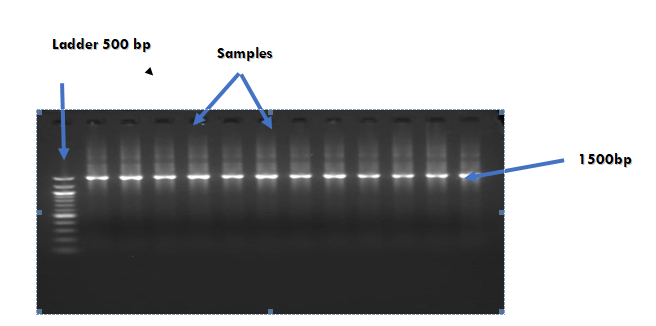
24-hour pure culture of Enterococcus faecalis was pelleted at 6000rpm for 10 mins and 1ml of DNA Extraction Buffer (DEB) containing proteinase K (0.05mg/ml) was added. The mixture was macerated in a sterile mortal and the extract was transferred into a 1.5ml Eppendorf tube.50µl of 20% Sodium Dodecyl Sulphate (SDS) was added and incubated in a water bath at 65°C for 30 minutes.100µl of 7.5M Potassium Acetate was added to each isolate and mixed briefly. The mixture was centrifuged at 13000rpm for 10 minutes and the supernatant was transferred into new fresh autoclaved tubes, 2/3 volumes of cold Isopropanol were added to each tube, inverted gently, incubated at -20°C for 1 hour, and centrifuged at 13, 000 rpm for 10 minutes. The supernatant was decanted and subsequently washed in 300μl of 70% ethanol. They were centrifuged again at 13, 000 rpm for 5 minutes and then incubated for 15 minutes at 37°C. The ethanol was decanted off and nucleic acids were air-dried at room temperature. The pellets were suspended in 30μl of sterile distilled water and stored at 4°C as stock solution. Forward primer 27F (5′ GGATTAGATACCTGGTAGTCC-3′ ′) and reverse primer 1495R (5′-TCGTTGCGGGACTTAACCCAAC -3′) were used to amplify 16S rRNA gene. The PCR reaction mixture (iTRON, Korea) was as follows: 2.5-unit Taq DNA polymerase, 2.5 mMmm dNTP, 1x reaction Buffer (10x), 1x Gel loading buffer, 5µl of template DNA, 1µL of primer (27F:10pmol/µ), 1µl of primer (1495R10 pmol/µl) and 15µl of distilled water mixed in a final volume of 25µl. The PCR conditions were; 94ºC for 5 minutes, 37 cycles of 94ºC for 1 minute, 58ºC for 1 minute, 72ºC for 1 minute, and final extension at 72ºC for 10 minutes. Amplification was done using a thermocycler system (BIO-RAD, USA). The PCR products were assessed by gel electrophoresis. One percent agarose gel with 0.5% ethidium bromide was mixed and 5μl of PCR product and ladder (iTRON, Korea) were transferred into separated wells in the gel. The electric current was allowed at 100 volts for 30 minutes, while UV Trans- illuminator (UVP, USA) was used for the observation of DNA bands [14]. The gene segments amplified from the isolates were sequenced in both directions from purified products after ethanol purification.
Bioinformatic Analysis
The 16S rRNA gene sequence was analyzed using BLAST [15] with a non-redundant NCBI GenBank database to find closely related bacterial 16S rRNA gene sequences. The 16S rRNA gene sequence of Enterococcus faecalis isolate was submitted to the NCBI database with accession number (OP595802.1). Ten high-quality 16S rRNA gene sequences were selected from the NCBI GenBank database and subjected to multiple sequence alignment using the Clustal W program [16] within BioEdit software [17]. The phylogenetic tree was constructed according to the maximum likelihood method using MEGA 11 software.
Statistical Analysis
The occurrence of Enterococcus faecalis isolates in infected Clarias gariepinus from selected local governments were calculated in percentage and the analysis of variance (ANOVA) was used to determine the level of statistical significance, a ‘less than 0.05 (p < 0.05) was considered as significant.
Result
The occurrence of Enterococcus faecalis isolates in infected Clarias gariepinus from Ogun State was; Ogun East 30.00% (18/60); Ogun Central 17.86% (5/28); Ogun West 12.50% (5/40). The highest incidence (p < 0.05) in Ogun State recorded was in Ijebu ode local government compared to other local governments area (Table 2).
| Location | Senatorial District | Local Government Area | Percentage Occurrence (%) |
|---|---|---|---|
| Ogun State | Ogun Central | Abeokuta North | 17.9 |
| Ogun East | Ijebu Ishiwo | 30 | |
| Ogun West | Ota | 12.5 |
Table 2: Occurrence of Enterococcus faecalis isolated from infected Clarias gariepinus in Ogun State.
All Enterococcus faecalis isolates in this study were non-motile, gram-positive cocci, showed negative reaction for catalase, negative for oxidase, negative for methyl-red, negative for indole, negative for citrate, positive for glucose, positive for maltose, positive for mannitol, positive for sucrose, positive for fructose, negative for arabinose and showed negative reaction for hydrogen sulfide gas (Table 3).
| Biochemical Characteristics | Enterococcus faecalis Isolate |
|---|---|
| Gram Staining | Gram-positive cocci |
| Catalase | Negative |
| Oxidase | Negative |
| Motility | Negative |
| Methyl-red | Negative |
| Hydrogen sulfide production | Negative |
| Indole production | Negative |
| Citrate | Negative |
| Voges-proskauer | Positive |
| Urea Hydrolysis Test | Negative |
| TSI Agar | alkaline slant, acidic butt, and absence of gas |
| Sugar Fermentation Test | |
| Glucose | Positive |
| Maltose | Positive |
| Lactose | Positive |
| Mannitol | Positive |
| Fructose | Positive |
| Sucrose | Positive |
| Arabinose | Negative |
Table 3: Biochemical Characteristics of Enterococcus faecalis isolates.
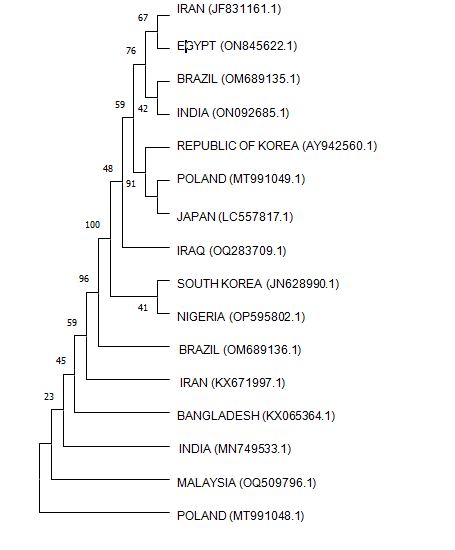
The evolutionary history was inferred using the maximum likelihood method based on the Tamura-Nei model. The tree was constructed by MEGA 11 software. 16S rRNA gene of Enterococcus faecalis isolates in infected Clarias gariepinus from Ogun State, Nigeria (OP595802.1) was closely related to16S rRNA gene of Enterococcus faecalis isolate from South Korea (JN628990.1) and other countries as shown in Figure 3.
Discussion
Discovery of circulating bacterial isolates is important for proper diagnosis during diseases outbreak. Moreover, Clarias gariepinus is a major fish cultured in every part of the country. The result of this study indicated the percentage occurrence of Enterococcus faecalis isolates in infected Clarias gariepinus from Ogun State; Ogun East 30.00% (18/60); Ogun Central 17.86% (5/28); Ogun West 12.50% (5/40). This implies a high occurrence of Enterococcus faecalis in infected African catfish from Ogun State. The lower report of its isolation and characterization may be due to a lack of efficient diagnostic tools and inefficient aquatic disease epidemiology in the country.
The biochemical tests of the (28) isolates of Enterococcus faecalis observed in this study were similar to a previous study which included non-motile, gram-positive cocci, showed negative reaction for catalase, negative for oxidase, negative for methyl-red, negative for indole, negative for citrate, positive for glucose, positive for maltose, positive for mannitol, positive for sucrose, positive for fructose, negative for arabinose and showed negative reaction for hydrogen sulfide gas [13].
The 16S rRNA gene was employed for molecular identification of Enterococcus faecalis in infected Clarias gariepinus from Ogun State, Nigeria. Characterization of Enterococcus faecalis from infected Tilapia (Oreochromis niloticus) using 16S rRNA was previously reported by Rahman M, et al. [13] and Akter et al., [18].
16S rRNA gene is important and useful for molecular identification of bacterial infections associated with fish diseases as a result of its precision and exactness. Meanwhile, the accuracy of pathogen identification at the strain and species levels is important in the detection of any causative agent of disease or infection. 16S rRNA gene is used to identify bacterial strains due to its accuracy than phenotypic analysis and its ability to characterize strains that show poor growth in the culturing medium and do not show peculiar distinguishable physical traits [19].
Afterward, quantification of extracted DNA, gel electrophoresis, and DNA sequencing, the obtained 883 pb sequence with the aid of BLAST confirmed that the isolate was Enterococcus faecalis with 100% identity to the database sequence. It is known that the full-length or near-full-length 16S rRNA gene sequences are crucial for making confident genus and species-level taxonomic placements [20]. The 16S rRNA gene could be used as a phylogenetic marker because of its functional constancy and the presence of conserved and variable sequence regions evolving at very different rates. It is also critical for the concurrent universal amplification and measurement of both close and distant phylogenetic relationships. So, it can be used in the assignment of close relationships at the genus level, and in several cases at the species level [19, 20].
Phylogenetic analysis using the maximum likelihood method based on the Tamura-Nei model showed that the closest strain to Enterococcus faecalis identified in this study was in South Korea (JN628990.1), Moreover, 16S rRNA sequence analysis of the phylogenetic tree of Enterococcus faecalis isolated from this study indicated a close evolutionary relationship with reference global isolates from different countries with their ascension number: Iran JF831161.1, Egypt ON845622.1, Brazil OM689135.1, India ON092685.1, Republic of Korea AY9425060.1, Poland MT991049.1, Japan LC557817.1, Iraq OQ283709.1, and South Korea JN628990.1
Conclusion
Bacterial diseases continue to be a significant challenge to the aquaculture industry in Ogun state, Nigeria and Enterococcus faecalis, an established pathogen of fish is presently circulating within the population. The findings should stimulate research interest in this regard to control ongoing and future disease burdens from this pathogen. There is also a need for further evaluation of the pathogenicity of the isolated strain and to determine its antimicrobial susceptibility for optimal control and prevention.
- Declarations Ethics Approval and Consent to Participate Ethical approval was received from the University of Ibadan, Animal Care and Use Research Ethics Committee (UI-ACUREC) with the assigned number UI- ACUREC/056-0622/10
- Consent for Publication Not applicable
- Availability of Data and Material The datasets used and or analysed during the current study are available from the corresponding author on reasonable request
- Competing Interest There are no competing interests to declare concerning the actualization of this work
- Funding This study was completely funded by the personal funds of the authors.
• Authors’ Contributions OR and GA Conceptualized the study, OR, OG, OO, and GA generated data and carried out fieldwork, OR, OO, analyzed data and made the manuscript draft, GA and OO edited the manuscript, OR, OG, OO, and GA approved the final manuscript.
• Acknowledgments We want to acknowledge Miss Nike Dada for her assistance during Bioinformatics.
References
-
Food and Agriculture Organization of the United Nations (2022) Clarias gariepinus. Cultured aquatic species information programme (Fisheries and Aquaculture Division).
-
Musa BO, Hernández‐Flores A, Adeogun OA, Oresegun A (2021) Determination of a predictive growth model for cultivated African catfish Clarias gariepinus (Burchell, 1882). Aquaculture Research 52(9): 4434-4444.
-
Kumar D, Prasad Y, Singh AK, Ansari A (2012) Columnaris disease and its drug resistance in cultured exotic African catfish Clarias gariepinus in India. Biochemical and Cellular Archives 12(2): 415-420.
-
Anyanwu MU, Chah KF, Shoyinka VS (2015) Evaluation of pathogenicity of motile Aeromonas species in African catfish. International Journal of Fisheries and Aquatic Studies 2(3): 93-98
-
Remilekun AO, Akinola OG, Olubusola OO (2021) Causal factors of mass mortality of hatchery reared Clarias gariepinus fry during exogenous feeding. International Journal of Fisheries and Aquatic Studies 9(1): 235-239.
-
Abbas A (2010) Food and feeding habits of freshwater catfish. Eutropiichthysvacha (Bleeker). Indian Journal Fish Science Research 1(2): 83-86.
-
Martins ML, Mouriño JLP, Amaral GV, Vieira FN, Dotta G, et al. (2008) Hematological changes in Nile tilapia experimentally infected with Enterococcus sp. Braz J Biol 68: 657-661.
-
Nada AE, Elsheshtawy HM, Youssef FM (2022) Enterococcus faecalis Infection in the Cultured Clarias gariepinus Fish from Ismailia Governorate. Suez Canal Veterinary Medical Journal 27(2): 389-400.
-
Kusuda R, Salati F (1993) Major bacterial diseases affecting mariculture in Japan. Annual review of fish diseases 3: 69-85.
-
Nieto JM, Devesa S, Quiroga I, Toranzo AE (1995) Pathology of Enterococcus sp. infection in farmed turbot, Scophthalmus maximus L. Journal of Fish Diseases 18(1): 21-30.
-
Plumb JA, Hanson LA (2010) Health maintenance and principal microbial diseases of cultured fishes. John Wiley and Sons.
-
Ogunsanwo FO, Olowofela JA, Okeyode IC, Idowu OA, Olurin OT (2019) Aeroradiospectrometry in the spatial formation characterization of Ogun State, Southwestern, Nigeria. Scientific African 6: e00204.
-
Rahman M, Rahman MM, Deb SC, Alam MS, Alam MJ, et al. (2017) Molecular identification of multiple antibiotic resistant fish pathogenic Enterococcus faecalis and their control by medicinal herbs. Scientific reports 7(1): 3747.
-
Lee PY, Costumbrado J, Hsu C (2012) Agarose gel electrophoresis for the separation of DNA fragments. J Vis Exp 62: 1-5.
-
Seemann T (2014) Prokka: rapid prokaryotic genome annotation. Bioinformatics 30(14): 2068-2069.
-
Larkin MA, Blackshields G, Brown NP, Chenna R, McGettigan PA, et al. (2007) Clustal W and Clustal X version 2.0. bioinformatics 23(21): 2947-2948.
-
Hall T (2013) BioEdit: biological sequence alignment editor for Win95/98/NT/2K/XP pp: 95-98.
-
Akter T, Rahman MM, Tay ACY, Ehsan R, Islam MT (2020) Whole-genome sequence of fish-pathogenic Enterococcus faecalis strain BFFF11. Microbiology Resource Announcements 9(7): e01447-19.
-
Clarridge JE (2004) Impact of 16S rRNA gene sequence analysis for identification of bacteria on clinical microbiology and infectious diseases. Clin Microbiol Rev 17(4): 840-862.
-
Fournier PE, Raoult D (2011) Prospects for the future using genomics and proteomics in clinical microbiology. Annu Rev Microbiol 65: 169-188.
- Genetic Improvement of Nile Tilapia (Oreochromis niloticus): Advances in Selective Breeding and Genomic Approaches for Sustainable Aquaculture
- Microplastics, Contaminants, and Waste Hotspots: Divergences and Faults in Prioritizing Control Efforts
- Creating a Healthier, More Vibrant Open and Closed Aquatic Environment. A Submersible, Centrifugal Magnetically Affixed Current Changing Aquarium Pump
- An Attempt to Assess Alpha Diversity and Sample Size: Using the Ostracod Assemblages off Kumamoto Port, Japan
- Assessment of the Efficiency of Common Fishing Gears and Crafts Used at Mohananda River of Chapai Nawabganj, Bangladesh
- Fish Productivity and Biodiversity Status of Sundarban Mangrove in Bangladesh