
Acute Toxicity Effect of Mulsate (Glyphosate) Herbicide on Behaviour and Haematological Indices of African Catfish (Clarias gariepinus Burchell 1822) Juvenile
A semi-static bioassay method was used to study the toxicity effect of acute exposure of a commercial formulation of glyphosate herbicide (Mulsate) on the behaviour and haematological profile of Clarias gariepinus juvenile. Sample fish were exposed to lethal concentrations of mulsate at 0.00mg/l, 55.00mg/l, 65.00mg/l, and 75.00mg/l for 96 hours. Behavioural characteristics observed in exposed fish include respiratory distress, erratic swimming, loss of equilibrium, lethargies and sudden fish death. These varied greatly with differences in concentration of the toxicant. Mortality increased with an increase in concentration of the toxicant. The differences observed in the mortalities of C. gariepinus at varying concentrations were significant (P<0.05), an indication that mortality could be a factor of concentration and time of exposure. After 96 hr of exposure, the LC50 for mulsate glyphosate herbicide was found to be 44.67mg/l. Furthermore, the toxicant led to significant reduction (P<0.05) in haematological parameters as the toxicant concentration increased. Mean Red Blood Cells (RBC), Haemoglobin content (Hb), Packed Cell Volume (PCV), reduced as the concentration of toxicant increased. Mean corpuscular volume (MCV), mean corpuscular haemoglobin (MCH), and mean corpuscular haemoglobin concentration (MCHC) were significantly different (P <0.05) between the treated and control fish. Our results indicate that the commercial formulation of glyphosate herbicide (Mulsate) is toxic to C. gariepinus. The herbicide must hence be applied with care in our environment particularly close to water bodies to avoid ecotoxicological consequences.
Introduction
The contamination of freshwater by different pollutants has posed a serious global challenge in recent times owing to its undesirable effects on aquatic organisms [1]. Knowledge on the deleterious effects of fresh water pollution due to toxic pollutants such as heavy metals, industrial and domestic sewage as well as agro-chemicals is on the rise [2]. The flow of agro-wastes such as herbicides in the form of ‘run-offs’ from farm lands into streams, rivers and lakes is a global occurrence that needs attention. This is because the exposure of fish and other aquatic biota to these chemicals can lead to grievous physiological impairment as well as death of the organisms [3].
As a result of population explosion and industrialization, agrochemicals are employed to boost food production [4]. However, indiscriminate use of these agrochemicals like herbicides by farmers to checkmate weed growth in farms is causing harmful consequences on non-target organisms [5]. Herbicides are blend of chemicals formulated to control the growth of unwanted weeds [6]. They comprise a wide range of pesticides with more than 500 active products in different marketable constitutions [7, 8]. After applying herbicides on target organisms, they leach into water bodies far from their originating source where they exert harmful effects on aquatic biota and their surroundings. This is because herbicides are naturally persistent and can be transported through atmospheric exchange or water currents to far-flung locations. Besides, other human activities like washing spray cans and pouring away of spray remnants help to spread the chemicals. Aquatic pollution due to herbicide contamination is of great concern because it rigorously affects fish and other organisms in the aquatic food chain [9, 10].
Mulsate is a brand of glyphosate herbicide formulated in a soluble liquid form. Like other varieties of glyphosate, it is a non-selective systemic herbicide. It is readily absorbed by the foliage with rapid translocation through the plant body. Generally, glyphosate is an organophosphorus compound. It is one of the most accepted herbicides used by farmers the world over because of its dynamic action of eliminating weeds without affecting the crops. Due to its low toxicity, it is regarded as being eco-friendly [11]. It can easily dissolve in water, has a low vapour pressure, high water solubility and has a low persistence in the environment [12]. However, studies have revealed that glyphosate use at higher concentrations is lethal and can end in physiological damages or death in organisms. A range of glyphosate concentrations have been found to be poisonous to young catfish species leading to poor growth, low survival and death [5]. Other behavioural changes caused by glyphosate contamination which have been shown to be lethal to the survival of affected species include loss of equilibrium, erratic swimming, jerky movement, hyperactivity, decreased opercula movement and air gulping [13, 14]. A good number of surfactants have been detected in the formulation of glyphosate which are noxious and so not suitable for aquatic use [15]. Herbicide residues in the agro-waste may be moved further away into near water bodies where they bioaccumulate in the food chain and non- target organisms like fish are affected [16]. Humans rely on fish as a veritable source of protein food.
Toxicity experiments on aquatic organisms have been utilized over the years to assess the risks that may affect a larger populace man inclusive [17]. So, to establish if a prospective toxicant is hazardous to aquatic life, need arises that the correlation between the toxicant concentrations and their effect on the aquatic organisms be determined.
This is done in an aquatic bioassay experiment which is also necessary to control water pollution [18]. Hence, toxicological studies have the capacity to recognize potential hazards in the ecosystem given that pollutants found in aquatic animals may likely affect the whole community where man is on top of the food chain [19]. African catfish C. gariepinus was used as a biological model for this ecotoxicological research. This is because the fish is hardy and widespread in Nigeria’s natural and manmade water bodies. The fish is an interesting model for toxicological studies because results of the experiment can be applied in order to resolve human and other environmental health concerns [20].
However, glyphosate has been shown from many studies to pose a variety of health and environmental hazards [21]. Portier CJ, et al. [22] and Portier CJ [23] equally reports that glyphosate formulations are probable human carcinogens. Moreover, there is no existing data on the toxicity levels of mulsate brand of glyphosate herbicide. There is therefore the need to investigate the toxicity of commercial formulation of glyphosate herbicide (Mulsate) on C. gariepinus juveniles through; observation of the behavioural characteristics of C. gariepinus during acute exposure to Mulsate glyphosate; determination of mortality response of C. gariepinus at different concentrations; determination of the 96 hours LC50 of C. gariepinus juveniles exposed to Mulsate glyphosate and evaluation of the effect of acute exposure of Mulsate glyphosate on the haematological profile of C. gariepinus.
Materials and Method
Study Area
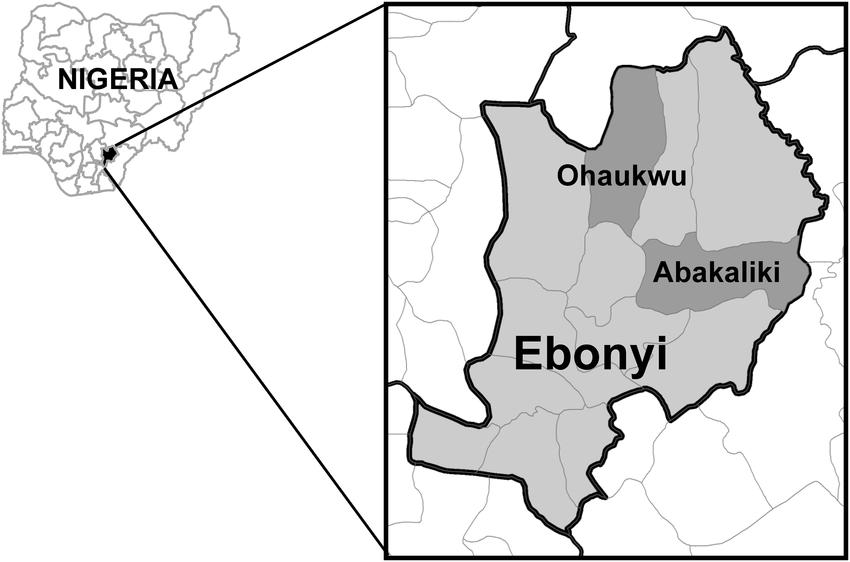
The study was carried out in the Water Quality and Toxicology Unit, Wet Laboratory, Department of Fisheries and Aquaculture, Faculty of Agriculture and Natural Resource Management, Ebonyi State University, Abakaliki, Ebonyi State, Nigeria. Ebonyi State is located between Latitude: 6° 15’ 18” N, Longitude: 8° 05’ 55” E and it has Land Area - 5,533 sq. kms on the South-Eastern part of Nigeria (Figure 1) [24].
Experimental Fish and Chemical
More than three hundred (300) specimens of C. gariepinus juveniles were purchased from Orimori fish farm, Mile 50 in Abakaliki, Ebonyi state. They were transported to the Water Quality and Toxicology unit, Wet Laboratory of the Department of Fisheries and Aquaculture, Ebonyi State University, Abakaliki. The fish were acclimatized in the laboratory condition for two weeks during which they were fed with commercial floating pellets at 5% of their body weight. For the present experiment, a commercial formulation of glyphosate herbicide (Mulsate) is the chemical assessed for its probable toxicity effect on C. gariepinus juveniles. Mulsate with the active ingredient isopropylamine salt of glyphosate 41 w/w (400g/l) is produced by Multichem Chemical Industries, China and marketed by Multichem Chemical Industries, Lagos, Nigeria. The herbicide was procured from an agrochemical shop in International market, Abakaliki. Mulsate (Glyphosate) exactly 100ml of the liquid was measured using a measuring cylinder (1000ml). The measured sample was mixed in 200ml of distilled water contained in a conical flask and swirled according to the method of Oti EE, et al. [25]. After 30minutes interval, the mixture was stirred.
Acute Toxicity Bioassay
Acute toxicity bioassay to find out the 96 h LC50 values of commercial formulation of glyphosate (Mulsate) herbicide was conducted with definitive test in a semi-static system in the laboratory according to the standard methods prescribed [26]. The range finding test was carried out earlier to determine the concentrations of the test solution for definitive test. This research was carried out using a Complete Randomized Experimental Design. C. gariepinus juveniles with average mean weight 3.5±0.20 g and 5.9±0.31 cm mean total length were randomly distributed into four 50 x 80 x 50 cm plastic aquaria tanks (100L) containing 40L of borehole water and replicated thrice. In the definitive test, a set of 30 test fish specimens were randomly exposed to glyphosate (Mulsate) herbicide (55.0, 65.00 and 75.0mg/l) concentrations. Another set of 30 fish were concurrently maintained in borehole water, with no test chemical, and considered as control (0.00mg/l). Feeding of the test fishes was ended 24 hours prior to acute toxicity testing to avoid fecal interference. After being measured, the stock solution was added to the test tanks. The solutions were stirred for homogenous mixing before each aquarium was randomly stocked with the fish. The test solution was changed on every alternate day to counter-balance the decreasing herbicide concentrations. During the treatment, fish behaviour was observed daily. The 24, 48, 72, and 96-hour survival and mortality rates were noted. The LC50 of Mulsate glyphosate herbicide was determined following the prohibit analysis method described by Finney DJ [27].
Biochemical and Haematological Analysis
Blood samples were collected from each treatment for haematological analysis. Blood samples were collected at the beginning and at the end of the experiment. Blood was drawn from the caudal peduncle of the fish using a disposable needle and syringe into an EDTA sample bottle to avoid clotting. Packed cell volume (PCV) was analyzed with microhaematocrit by means of heparinized 25mm capillary tubes. Red and white blood cell counts were analyzed as described by Blaxhall PC, et al. [28]. While, haemoglobin concentration (Hb) was estimated using the method outlined by Wedemeyer GT, et al. [29]. Other haematological indices like mean cell haemoglobin (MCH), mean cell volume (MCV) and mean cell haemoglobin concentration (MCHC) were determined using the formular put forward by Dacie JV et al. [30] thus:
MCH (pg) = [Hb (g dl-1) x 10]/ RBC (106µl-1) MCV (fl) = Hct/RBC (106 µl-1) MCHC (g l-1) = (Hb (g dl-1) x 10]/Hct x 100
Physicochemical Parameters of the Test Water
The physicochemical properties of test water, namely temperature, pH, dissolved oxygen, alkalinity, conductivity and total hardness were analyzed using standard methods according to APHA, AWWA, and WPCF [26].
Statistical Analysis
The probit method of Finney DJ [27] was applied to estimate the 96 hour LC50. Results were reported as mean ± standard error (SE) where appropriate. The averages were compared with one-way analysis of variance (ANOVA) and considerable variations amongst sets were determined by Duncan multiple range test using SPSS for windows version 20. The degree of significance was set at P<0.05.
Results
Physico-chemical parameters of the Test Water
The physico-chemical parameters of the test water are shown in Table 1. During the experiment water temperature ranged from 26.06 to 26.55°C. The pH of the water ranged from 5.80 to 6.78. Dissolved oxygen varied from 5.15 to 8.19 mg/l. Alkalinity ranged from 37.4 to 38.4 mg/l. The conductivity value ranged from 254 to 287 µS/cm whereas total hardness varied from 158 to 176 mgl/l.
| Parameters | Unit | Mean | Range |
|---|---|---|---|
| Temperature | ℃ | 26.31 | 26.06 - 26.55 |
| Dissolved oxygen | mg/l | 6.67 | 5.15 - 8.19 |
| pH | - | 6.29 | 5.80 - 6.78 |
| Alkalinity (mg/l) | mg/l | 37.9 | 37.4-38.4 |
| Conductivity | μS/cm | 271 | 254 - 287 |
| Total hardness (mg/l) | mg/l | 167 | 158 - 176 |
Table 1: Physico-chemical Parameter of the Test Water.
Behavioural and Morphological Response of Fish to Different Test Concentrations of Mulsate (glyphosate) Herbicide
Behavioural response of the test fish was observed in the exposed fish as well as in the control. In this investigation, behavioural and morphological changes were observed on the test fish at 24 to 96 h durations of exposure. The control group showed active swimming, static equilibrium, normal skin colouration and no deaths during the bioassay. Conversely, fish exposed to the varying concentrations of Mulsate glyphosate herbicide displayed various abnormal behavioural responses and morphological changes such as loss of equilibrium, hyperactivity, erratic swimming, loss of reflex and jerky movements. Morphological changes noticed include skin corrosion and increased mucus secretion at the snout and gill areas. Afterward, fish became lethargic, lost consciousness and finally settled down inactively at the bottom of the tank with the operculum wide open and eventually died. These behavioural changes were dose- dependent as shown in Table 2.
| Loss of equilibrium | Hyperactivity | Erratic Swimming | Loss of reflex | Jerky movement | Corrosion of skin | Mucus secretion | |
|---|---|---|---|---|---|---|---|
| 24 hrs | |||||||
| Control | - | - | - | - | - | - | - |
| 55 | ++ | + | + | + | ++ | + | + |
| 65 | ++ | ++ | ++ | ++ | ++ | ++ | ++ |
| 75 | +++ | +++ | ++ | +++ | ++ | +++ | +++ |
| 48 hrs | |||||||
| Control | - | - | - | - | - | - | - |
| 55 | ++ | ++ | + | ++ | ++ | + | ++ |
| 65 | ++ | +++ | +++ | +++ | ++ | +++ | +++ |
| 75 | +++ | + | +++ | +++ | +++ | +++ | +++ |
| 72 hrs | |||||||
| Control | - | - | - | - | - | - | - |
| 55 | + | ++ | ++ | +++ | +++ | ++ | ++ |
| 65 | ++ | + | ++ | +++ | +++ | +++ | ++ |
| 75 | - | - | - | - | ++ | - | - |
| 96 hrs | |||||||
| Control | - | - | - | - | - | - | - |
| 55 | ++ | +++ | +++ | +++ | ++ | +++ | +++ |
| 65 | ++ | ++ | ++ | ++ | ++ | +++ | +++ |
| 75 | - | - | - | - | - | - | - |
Table 2: Behavioral and morphological characteristics of _Clarias gariepinus_ exposed to different concentrations of Mulsate g
Key: - None; + mild; ++ moderate; +++ strong. Source: field survey 2022 Table 2: Behavioral and morphological characteristics of Clarias gariepinus exposed to different concentrations of Mulsate glyphosate herbicide.
Fish Survival and Mortality at Different Test Concentrations and Time Intervals in Clarias gariepinus Exposed to Mulsate (glyphosate) Herbicide
Table 3 shows the effect of mulsate glyphosate herbicide on survival and mortality of C. gariepinus. The numbers of survived and dead fish were examined depending on the duration of exposure (24, 48, 72 and 96 h) in C. gariepinus. The herbicide concentration of 75.0 ml/l showed the highest fish mortality of 90% and lowest survival of 3% while no mortality was recorded in the control group throughout the experiment. This shows that increase in mortality rate results to decrease in survival rate of fish.
| Conc. ml/l | No of fish exposed | Periods (Hours) | % Survival | % Mortality | |||
|---|---|---|---|---|---|---|---|
| 24 | 48 | 72 | 96 | ||||
| Control 0.00 | 30 | 0 | 0 | 0 | 0 | 30 | 0 |
| 55 | 30 | 0 | 3 | 6 | 12 | 18 | 40 |
| 65 | 30 | 6 | 9 | 15 | 21 | 9 | 70 |
| 75 | 30 | 9 | 15 | 21 | 27 | 3 | 90 |
Table 3: Fish survival and mortality at different test concentrations and time intervals in Clarias gariepinus exposed to Mulsate
Acute Toxicity (96hr LC50) for Mulsate (glyphosate) Herbicide
Table 4 show the effect of acute concentrations of Mulsate herbicide on the mortality and probit values of juveniles of C. gariepinus. Mortality and probit values increased with increasing concentrations of the test herbicide with the highest mortality recorded in the highest concentration. The 96 h LC50 value for mulsate herbicide was calculated based on these values and was found to be 44.67 mg/L.
| Conc. ml/l | Log conc. | No of fish exposed | Periods (Hours) | % Mortality | Probit kill | |||
|---|---|---|---|---|---|---|---|---|
| 24 | 48 | 72 | 96 | |||||
| Control 0.00 | 0 | 30 | 0 | 0 | 0 | 0 | 0 | - |
| 55 | 1.74 | 30 | 0 | 3 | 6 | 12 | 40 | 4.76 |
| 65 | 1.813 | 30 | 6 | 9 | 15 | 21 | 70 | 5.52 |
| 75 | 1.875 | 30 | 9 | 15 | 21 | 27 | 90 | 6.28 |
Table 4: Mortality and probit values of Clarias gariepinus exposed to acute concentrations of Mulsate glyphosate herbicide for 96
Haematological response of Clarias gariepinus juvenile exposed to Mulsate (glyphosate) Herbicide
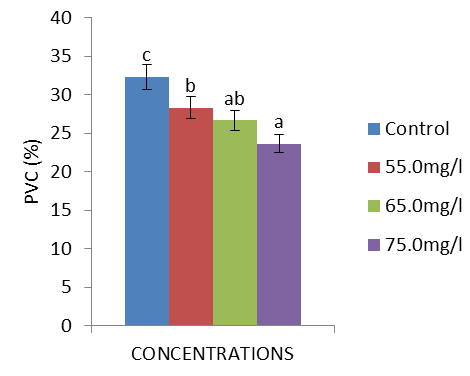
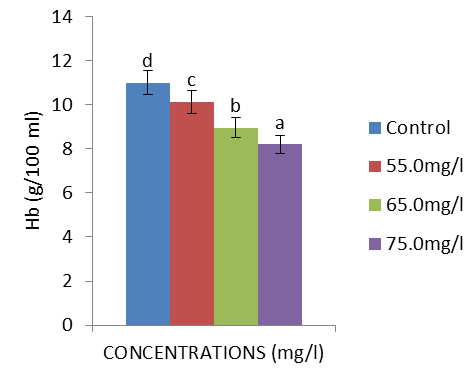
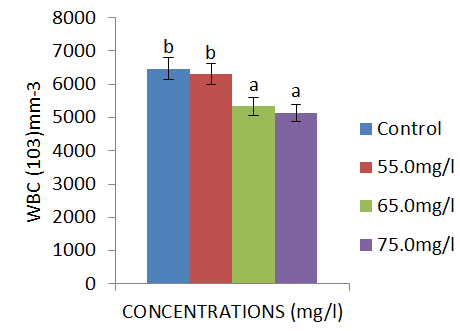
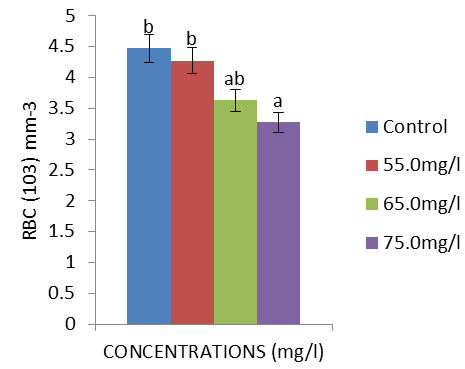
Variations in mean values of haematological parameters of C. gariepinus juvenile exposed to acute toxicity of mulsate (glyphosate) herbicide are shown in Figures 2-5. There was significant (P<0.05) reduction in the volume of packed cell volume (PCV), haemoglobin (Hb), white blood cells (WBC) and red blood cell (RBC) with increase in Mulsate concentration when compared with the control. The results indicated that the value of PCV reduced significantly (P<0.05) from 32.33±1.20 to 23.67±0.88, Hb values also reduced significantly (P<0.05) from 11.00±0.12 to 8.20±0.12 g/l, WBC reduced from 6466.67±88.19 to 5133.33±176.38 while RBC count also reduced from 4.47±0.20 to 3.27±0.39 with increase in concentration of mulsate (glyphosate) herbicide. Also Mean corpuscular volume (MCV), mean corpuscular haemoglobin (MCH), and mean corpuscular haemoglobin concentration (MCHC) were significantly different (P <0.05) between the treated and control fish. The decrease in these values was observed to be both a factor of time and the concentration of the toxicant (Table 5).
| Control | 55.0mg/l | 65.0mg/l | 75.0mg/l | |
|---|---|---|---|---|
| $MCH (pg) | 89.7±0.18^{d}$ | $69.3±0.71^{a}$ | $51.2±0.41^{c}$ | $68.9±0.37^{a}$ |
| $MCV (fl) | 493±0.65^{d}$ | $128.1±1.34^{c}$ | $104.3±0.39^{b}$ | $91.8±1.33^{a}$ |
| $MCHC (%) | 28.5±3.13^{b}$ | $28.7±0.76^{b}$ | $26.3±0.09^{b}$ | $24.2±0.57^{a}$ |
Table 5: Effects of exposure to acute mulsate glyphosate herbicide concentrations on red blood cell indices in _Clarias gariep
MCV- Mean Corpusular volume, MCH- Mean cell hemoglobin, MCHC- Mean cell hemoglobin concentration. *Means within rows with different superscripts are significantly different (P<0.05). Table 5: Effects of exposure to acute mulsate glyphosate herbicide concentrations on red blood cell indices in Clarias gariepinus juveniles.
Discussion
Aquatic pollution owing to agricultural practices has become a global concern. This is because of the quantum of harm done to the aquatic ecosystem and consequent disruption of the normal food chain. There are a lot of research works on the degree of harm caused by some agricultural activities such as the use of pesticides and herbicides, industrial activities like mining and oil exploration.
Acute toxicity experiments are exceedingly required in the determination of water quality requirements of fish [9]. The present investigation was done to assess the effect of acute toxicity of commercial formulations of Mulsate glyphosate herbicide on C. gariepinus juveniles. Findings from the study showed that exposure of juvenile C. gariepinus to glyphosate (Mulsate) herbicide resulted in increased mortality rate and decreased survival rate at different level of concentrations. The result is in conformity with the assertion of Nikinmma M, et al. [3] that fish and other aquatic biota are debilitated by herbicide polluted water. Observed behavioural changes caused by the toxicant (Mulsate) glyphosate on the test fish are in harmony with earlier reports on glyphosate based herbicides [31, 32, 33, 20, 11]. Fish treated with large doses of glyphosate displayed behavioural characteristics like loss of equilibrium, hyperactivity, erratic swimming, loss of reflex, jerky movement, and morphological changes such as corrosion of skin and secretion of mucus at the snout and gill areas. It eventually led to the death of the test fishes when compared with the control group. These behavioural and morphological alterations are direct responses of the fish to the herbicide and other allied chemicals [9]. Therefore, the behavioural activities of organisms represent the final integrated result of diversified biochemical and physiological processes [34]. These behavioural alterations noted may be credited to the neurotoxic consequence of Mulsate glyphosate toxicity. The toxicant may have caused the body to accumulate acetycholine at synaptic junctions which inhibited the functions of the enzyme acetycholinerase (AChE) [2, 35]. As Miron D, et al. [36] posited this type of constraint impedes normal neurotransmission in cholinergic synapses and neuromuscular junctions of the nervous system thereby influencing the standard functioning of the nerves. The observed corrosion of the outer epithelial cells (hydroedema) of C. gariepinus in higher acute concentrations of glyphosate may be because of COX-1 inhibition that also results in the significant release of endothelin-1, which is a very potent vasoconstrictor that may have caused the deterioration of the skin [19]. The mucus secretion noted on the mouth and gills of fish is a protective mechanism against the toxicant. According to mucus cells enclose mucins and polyanions made up of glycoprotein that entraps toxicants and block their entry into the gill epithelium. However, the mucus in the gill area may lead to respiratory impairments in the fish.
After 96hr of exposure of the test fish to glyphosate (Mulsate) herbicide, the LC50 recorded was 44.67mg/l which indicated that Mulsate is extremely toxic. The value obtained was greater than 17.5mg/l, 43.65mg/l, 24.6mg/l, 8.098mg/l and 1.50mg/l recorded for C. gariepinus treated with glyphosate based herbicide by Ani LC, et al. [11], Nafiu SA, et al. [12], Edeh IC, et al. [19], Akinsorotan AM, et al. [32] and Okomoda VT, et al. [37] respectively. In this study LC50 value however is lower than the 86mg/l reported by Deivasigamani S [38] for Cyprinus carpio treated witb glyphosate herbicide and 300mg/l reported by Erhunmwunse NO, et al. [33] when C. gariepinus was exposed to glyphosate. It is also lower than 975mg/l reported by Shiogiri NS, et al. [39] when she treated Phalloceros caudimaculatu_s with Aterbane glyphosate [40]. The LC50 recorded in this present investigation is also lower than 211.80mg/l documented by Nwani CD, et al. [41] when he exposed _Tilapia zillii to glyphosate herbicide Forceup. This result shows that Mulsate glyphosate is less toxic than some of the earlier reported formulations of glyphosate. More so, earlier literature show that toxicity of glyphosate based herbicides fluctuates from species to species. It may also vary in organisms of the same species. Besides, toxicity of chemicals to aquatic biota has been reported to be influenced by temperature, pH, dissolved oxygen, size and age, type of species, water quality, concentration and formulation of test chemicals [40, 41]. WHO [42] equally affirms that the LC50 value of glyphosate based herbicides vary broadly due to the prevailing test conditions and the active ingredient present in the herbicide.
Study of haematological indices is very important to the diagnoses of fish health especially under different strenuous situations [43]. The constituents of blood are very vulnerable to chemicals and if there is a variation physiologically, it will be manifested in the standards of some blood characteristics [44]. In the present experiment, exposure of C. gariepinus juveniles to acute concentrations of Mulsate (glyphosate) caused a significant (P<0.05) decrease in Packed cell volume (PCV), Haemoglobin (Hb), white blood cell (WBC) and red blood cell (RBC) counts of the fish (Figure 2-5). There was also a decrease in mean cell haemoglobin (MCH), mean cell volume (MCV) and mean cell haemoglobin concentration (MCHC). The decrease was noted to be time and dose dependent. The reduction in these haematological indices may be as a result of hemolysis of red blood cells, haemodilution owing to weakened osmoregulation across the gill epithelial cells. It may also be as a result of significant deterioration in hematopoiesis [45]. This physiological change can be attributed to the effect of Mulsate glyphosate toxicity. A similar drop in these haematological parameters was reported in C. gariepinus exposed to different concentrations of glyphosate [19, 46, 47, 48]. Acute exposure of C. gariepinus to Mulsate glyphosate as well resulted in a non- significant increase in MCHC. The reduction in MCH, MCV and MCHC is an affirmative signal of a malfunctioned Hb biosynthesis in the fish. Similar decline in MCV, MCH, and MCHC have been reported in fish treated to different doses of herbicides [48, 49].
Conclusion
The present study shows that the LC50 of Mulsate is 44.67mgl1, which implies that the herbicide is toxic to C. gariepinus. Exposure of the fish to acute concentrations of the herbicide resulted in behavioural, morphological and haematological modifications that is likely be detrimental to the survival and general well being of the fish. The use of Mulsate herbicide has been found to be on the rise in recently. Based on the results presented, we conclude that the use of the herbicide for weed eradication and control in our farms and fields should be regulated. This is because the toxicant has the capability to seep into water bodies. We therefore recommend the establishment of environmental monitoring agency to monitor the cautious use of mulsate glyphosate in our environment. This will help mitigate the ecotoxicological consequences associated with herbicide use and prevent the risk of contamination by humans.
References
-
Muhammad UA, Yasid NA, Daud HM, Shukor MY (2021) Glyphosate Herbicide Induces Changes in the Growth Pattern and Somatic Indices of Crossbred Red T i l a p i a (_O. niloticus; O. mossambicus_). Animals 11(5): 1209.
-
Ayanda OI, Oniye SJ, Auta J (2017) Behavioural and Some Physiological Assessment of Glyphosate and Paraquat Toxicity to Juveniles of African Catfish, _Clarias gariepinus._ Pakistan Journal of Zoology 49(1): 175-181.
-
Nikinmma M (2014) An Introduction to Aquatic Toxicology Academic Press of Elsevier, 225 Wyman Street, Waltham, MA 02451, USA, pp: 30-32.
-
Ayanda IO, Olasehinde GI, Ajayi AA (2018) Toxicity of sublethal concentrations of glyphosate and paraquat herbicide in the African catfish (_Clarias gariepinus_). International Journal of Agriculture and Biology 20(1): 1359-1364.
-
FAO/WHO (2016) Pesticides residues in food 2016. Special session of the Joint FAO/WHO meeting on pesticide residues. FAO plant production and protection paper. Food and Agriculture Organization of the United Nations, World Health Organization.
-
Bartosz B, Mateusz J, Małgorzata W (2018) Physiological and Histological effects of herbicides in fish. Annals of Warsaw University of Life Sciences Animal Science 57(3): 207-217.
-
Annett R, Hamid RH, Alice H (2014) Impact of glyphosate and glyphosate-based herbicides on the freshwater environment. Journal of Applied Toxicology 34(5): 458- 579.
-
Ruhi T, lkay D (2020) Determination of acute oral toxicity of glyphosate isopropylamine salt in rats. Environmental Science and Pollution Research 27(16): 19298-19303.
-
Nwani CD, Ivoke N, Ugwu DO, Atama C, Onyishi GC, et al. (2013) Investigation on Acute Toxicity and Behavioral Changes in a Freshwater African Catfish, _Clarias gariepinus_ (Burchell, 1822), Exposed to Organophosphorous Pesticide, Termifos. Pakistan Journal of Zoology 45(4): 959-965.
-
Abdullahi N, Igwe EC, Dandago MA (2021) Heavy metals contamination through consumption of contaminated food crops. Moroccan Journal of Agricultural Sciences 2: 52-60.
-
Ani LC, Nwamba HO, Ejilibe CO, Nwani CD (2017) Acute Toxicity of Glyphosate-Based Herbicide Glycot on Juvenile African Cat Fish _Clarias gariepinus_ (Burchell 1822). Journal of Fisheries and Livestock Production 5(3): 252.
-
Nafiu SA, Ibrahim S (2021) In Vitro Toxicity Assessment of Glyphosate Based Herbicide on _Clarias gariepinus_ (African Catfish Burchell, 1822). Savanna Journal of Basic and Applied Sciences 3(2): 151-158.
-
Abdelgani AA, Tchounwou BB, Anderson AC, Monkiedje A (1997) Toxicity evaluation of single and mixture of Round up (garlon 3A, 2,4-1) and Syndets surfactant to channel cat fish (_Ictalurus punctatus_), blue fill (_Lepomis marochirus_) and crawfish (Procambarus spp). Environmental Toxicology and Water Quality 12: 237-244.
-
Richmond ME (2018) Glyphosate: a review of its global use, environmental impact and potential health effects on humans and other species. Journal of Environmental Study and Science 8(1): 416-434.
-
Tu M, Hurd C, Robison R, Randall JM (2001) Glyphosate in: Weed Control Methods Handbook. The Nature Conservancy, pp: 65.
-
Alagoa KJ, Eremasi YB, Ipeteikemoh B (2015) Acute Toxicity of the Non-Selective Herbicide “Uproot”® (Isopropylamine Salt) on the Survival of Juveniles of _Clarias gariepinus_ (Burchel, 1882). International Journal of Advanced Research in Biological Sciences 2(5): 177- 182.
-
Iheanacho SC, Odo GE (2020) Neurotoxicity, oxidative stress biomarkers and haematological responses in African catfish (_Clarias gariepinus_) exposed to polyvinyl chloride microparticles. Comparative Biochemical Physiology 232: 108741.
-
Peillex C, Pelletier M (2020) The impact and toxicity of glyphosate and glyphosate- based herbicides on health and immunity. Journal of Immunotoxicology 17(1): 163- 174.
-
Edeh IC, Nsofor CI, Iheanacho SC, Ikechukwu CC, Nnachi IA, Nwankwo CG (2023) Behavioural and Haematological Alterations in the African Catfish (_Clarias gariepinus_) Exposed to Varying Concentrations of Glyphosate. Asian Journal of Fisheries and Aquatic Research 21(1): 32-42.
-
Sani A, Idris MK (2016) Acute toxicity of herbicide (glyphosate) in _Clarias gariepinus_ juveniles. Toxicology Reports 3: 513-515.
-
Cox C (2000) Glyphosate Factsheet. Journals of Pesticide Reform 108(8): 769-776.
-
Portier CJ, Armstrong BK, Baguley BC (2016) Differences in the carcinogenic evaluation of glyphosate between the International Agency for Research on Cancer (IARC) and the European Food Safety Authority (EFSA). Journal of Epidemiology and Community Health 70(8): 741-745.
-
Portier CJ (2020) A comprehensive analysis of the animal carcinogenicity data for glyphosate from chronic exposure rodent carcinogenicity studies. Environmental Health 19: 18.
-
Ebonyi government (2019) Ebonyi state profile.
-
Oti EE, Ukpabi UH (2005) Acute toxicity of water Extracts of barks of Yellow Oleander Thevetia peruviana (Persoon) and Neem plant Azadirachta indica (Lodd) to Mormyrids Hyperopisisu bebe occidentalis Gunther. Journal of Applied Aquaculture 16(3-4): 183-190.
-
APHA, AWWA, WPCF (2005) Standard methods for the examination of water and waste water, 21st. American Public Health Association, Washington, DC.
-
Finney DJ (1952) Probit Analysis. Cambridge, England, Cambridge University Press.
-
Blaxhall PC, Daisley KW (1973) Routine haematological methods for use with fish blood. Journal of Fish Biology 5(6): 771-781.
-
Wedemeyer GT, Yasutake WT (1977) Clinical methods for assessment of the effects of environment stress on fish health. Technical Report of United States Fish and Wildlife Service 89.
-
Pandey AK, Nagpure NS, Trivedi SP, Kumar R, Kushwaha B, et al. (2011) Investigation on acute toxicity and behavioral changes in Channa punctatus (Bluch) due to organophoshate pesticide profenofos. Drug and Chemical Toxicology 34(4): 424-428.
-
Akinsorotan AM, Zelibe SAA, Olele NF (2013) Acute Toxicity and Behavioural Changes on African Catfish (_Clarias gariepinus_) Exposed to Dizensate (Glyphosate Herbicide). International Journal of Scientific & Engineering Research 4(3): 1-5.
-
Erhunmwunse NO, Ogbeide OD, Tongo II, Enuneku AA, Adebayo PO (2018) Acute Toxicity of Glyphosate-based Isopropylamine formulation to Juvenile African catfish (_Clarias gariepinus_) Nigerian Journal of Basic and Applied Science 26(2): 97-101.
-
Radhaiah V, Girija M, Rao KJ (1987) Changes in selected biochemical parameters in the kidney and blood of the fish, Tilapia mossambica (peters), exposed to heptachlor. Bulletin of environmental Contamination and Toxicolpgy 39(6): 1006-1011.
-
Osioma EI, Ejoh AS (2021) Activities of acetylcholinesterase, oxidative and nitrosative stress markers in _Clarias gariepinus_ exposed to uproot, a glyphosate–based herbicide. International Journal of Zoological Investigation 7: 2454-3055.
-
Miron D, Crestani M, Schetinger MR, Morsch VM, BAldisseroto B, et al. (2005) Effects of the herbicides clomazone, quinclorac and metsulfuron methyl on acetycholinesterase activity in the silver catfish (Rhamdia quelen) (Heptapteridae). Ecotoxicology and Environmental Safety 61(3): 398-403.
-
Okomoda VT, Ataguba GA (2011) Blood glucose response of _Clarias gariepinus_ exposed to acute concentrations of glyphosate- isopropylammonium (Sunsate). Journal of Agricultural and Veterinary Sciences 3(6): 69-75.
-
Deivasigamani S (2015) Effects of herbicides on fish and histological evaluation of common carp (Cyprinus carpio). International Journal of Applied Research 1(7): 437-440.
-
Shiogiri NS, Cubo P, Schiavetti C, Pitelli RA (2010) Ecotoxicity of Glyphosate and AterbaneVR by Surfactant on Guaru (Phalloceros caudimaculatus). Journal of Animal Biological Sciences 32(3): 285-289.
-
Kumar R, Nagpure NS, Kushwaha B, Srivastava SK, Lakra WS (2009) Investigation of the genotoxicity of malathion to freshwater teleost fish Channa punctatus (Bloch) using the micronucleus test and comet assay. Archives of Environmental Contamination and Toxicology 58(1): 123-130.
-
Nwani CD, Ibiam UA, Ibiam OU, Nworie O, Onyishi G, et al. (2013) Investigation on acute toxicity and behavioral changes in tilapia zillii due to glyphosate-based herbicide, Forceup. Journal of Animal and Plant Sciences 23(3): 888-892.
-
WHO (1994) Glyphosate. Environ Health Criteria 159. WHO, Geneva.
-
Adhikari S, Sarkar B, Chatterjee A, Mahapatra CT, Ayyappan S (2004) Effects of cypermethrin and carbofuran on certain hematological parameters and prediction of their recovery in a freshwater teleost; Labeo rohita (Hamilton). Ecotoxicological and Environmental Safety 58(2): 220-226.
-
Ramesh M, Srinivasan R, Saravanan M (2009) Effect of atrazine (Herbicide) on blood parameters of common carp Cyprinus carpio (Actinopterygii:Cypriniformes). African Journal of Environmental Science and Technology 3(12): 453-458.
-
Nwani CD, Okeke CO, Onyishi G, Atama C, Chinekwu U, et al. (2012) Toxicity and effects of diazinon on behaviour and some haematological parameters of African catfish _Clarias gariepinus_, Zoology and Ecology 22(3-4): 246- 253.
-
Ezike CO, Echor FO, Uwadiegwu NC, Okechukwu GE (2019) Haematology, Oxidative Stress and Micronuclei Frequency of _Clarias gariepinus_ Exposed to Glyphosate based Herbicide Glycot® GBHG. International Journal of Advanced Fisheries and Aquatic Science.
-
Israel MA, Chidobem JI, Ezike CO (2019) Oxidative stress, haematology and histology biomarkers of African clariid catfish _Clarias gariepinus_ (Burchell 1822) to glyphosate- based herbicide GBHG, ‘Glycot’. International Journal of Fisheries and Aquatic Research 4(3): 49-61.
-
Salim AM, Yusuf MA, Bichi AH (2021) Haematological Responses of African Catfish (_Clarias gariepinus_, Burchell, 1822) Juveniles Exposed to Acute Concentrations of Butachlor (Herbicide). FUDMA Journal of Agriculture and Agricultural Technology 7(2): 110-115.
-
Odo GE, Agwu E, Ivoke N, Ejere VC, Atama CI, et al. (2015) Effect of short-term exposure to cyperdicot on behavioural and haematological responses in African catfish _Clarias gariepinus_. Turkish Journal Fisheries and Aquatic Sciences 17(1): 61-70.
- Genetic Improvement of Nile Tilapia (Oreochromis niloticus): Advances in Selective Breeding and Genomic Approaches for Sustainable Aquaculture
- Microplastics, Contaminants, and Waste Hotspots: Divergences and Faults in Prioritizing Control Efforts
- Creating a Healthier, More Vibrant Open and Closed Aquatic Environment. A Submersible, Centrifugal Magnetically Affixed Current Changing Aquarium Pump
- An Attempt to Assess Alpha Diversity and Sample Size: Using the Ostracod Assemblages off Kumamoto Port, Japan
- Assessment of the Efficiency of Common Fishing Gears and Crafts Used at Mohananda River of Chapai Nawabganj, Bangladesh
- Fish Productivity and Biodiversity Status of Sundarban Mangrove in Bangladesh