
Comparative Analysis of the Economic Viability between Integrated and Conventional Production in Semi-Intensive Shrimp Farming of Litopenaeus vannamei in Brazil
We performed simulations to analyse the economic viability between conventional production (CP) and integrated production (IP) regimes of marine shrimp in ponds under semi-intensive culture in Brazil. The structural and operational characteristics of CP and the zootechnical parameters associated with shrimp production, were defined based on a systematic literature review through the application of the PRISMA method. The structural and operational characteristics, management strategies and zootechnical parameters of integrated production were estimated based on the principles and practices determined by Brazilian legislation and IP international concepts applied for shrimp farming presented in the technical and scientific literature. Comparisons between economic and financial viability of CP and IP were performed through the diagnosis (inventory) of the activities, processes, equipment and inputs that compose the operation of a hypothetical semi-intensive shrimp pond farm. In addition to the cash flows prepared for the two scenarios, the net present value (NPV), gross revenue (GR), operational profit (OP), payback (PB), benefit/cost (B/C) and internal rate of return (IRR) of the CP and IP were estimated. Implementation of specific technical standards (STS) represented the highest costs. The NPV of the CP was USD 758,147.70 and of the IP was USD 97,452.54. The GR was USD 545,2565.00 for CP and USD 364,422.24 for PI. The PF estimated for the CP was USD 217,300.56, whereas that for IP was USD 68,416.72. The PB was estimated for one year for both scenarios. The B/C ratio was 1.66 for CP and 1.23 for IP. The IRR values for CP and IP were 35% and 7%, respectively. IP presented lower economic and financial indicators than those of CP. The results obtained here may be useful as a starting point for the reduction of economic differences between conventional and integrated ventures and for the feasibility of integrated production in shrimp farming.
Introduction
Currently, a clear imbalance exists between the main components of the production process in conventional semi- intensive shrimp farming in Brazil. The emphasis of Brazilian entrepreneurs and producers, understandably, is the economic viability of their enterprises. This viability has been achieved with a means of evolution and a consequent mastery of production techniques [1, 2, 3]. Another very favourable point is that the productive sector of shrimp farming is also significantly represented in the political arena, through the Brazilian Association of Shrimp Producers (ABCC), an organisation that has achieved essential achievements for Brazilian shrimp farmers in recent years [4].
On the other hand, the economic and financial viability of the enterprises in Brazil has been compromised by sanitary problems that are affecting the cultivated shrimp. Diseases such as early mortality syndrome (EMS), infectious myonecrosis (IMNV) and the syndrome caused by the white spot virus (WSSV) have caused significant losses to the sector [5, 6]. These diseases were responsible for reducing national production from 69,571 tons in 2011 to 41,000 tons in 2017 [7, 8]. These losses, estimated at 40% of the total shrimp population in tanks and ponds, generated a deficit to the productive sector of approximately US $ 12.2 billion [9].
High bureaucracy in the environmental licensing process Marques AR, et al. [10] and Stevanato DJ, et al. [11], along with persistent and diffuse accusatory campaigns, based on alleged or effective conflicts of a social Gorayeb A, et al. [12] and Brannstrom C, et al. [13] or environmental nature Tenório GS, et al. [14] and Prestrelo L [15] have impaired the image of the sector and limited the expansion of activity in the country. All of this is occurring at a time when Brazilian shrimp farming has been seeking alternatives in its conquest of new markets, especially in the international arena ABCC [16, 17] and the activity has increasingly suffered from the increase of customs and non-customs barriers to export [18]. These barriers include, for example, the requirements of the European Union and the US for food properly tracked since its origin Myhre P, et al. [19] to meet increasingly stringent food security standards and for cultivation according to good production practices, which, in turn, aim to minimise the environmental and social impacts of the entire production chain [20, 21].
Faced with this unstable and challenging scenario, Brazilian farmers have begun to seek alternatives to increase the efficiency of the productive process and the aspects directly and indirectly associated with it. In recent years, several projects have been adapted to operate in closed systems under intensive regimes (at densities above 100 shrimp/m2), where water is reused, to achieve a higher level of biosafety [22, 23]. In most of these cases, Biofloc production systems Rego MAS, et al. [24] and Emerenciano MG, et al. [25] or tanks and ponds built in greenhouses Medeiros PMOC [26] are employed. The Biofloc Technology System (BFT) is practised virtually without water renewal and with the use of microorganisms as a source of natural food [27]. This system employs high storage densities (from 100 to 700 shrimp/m2) and is capable of producing a high biomass of shrimp in a small area [28]. The cultivation in greenhouses is characterised by the use of tanks or nurseries, with areas from 1,000 m2 to 4,000 m2, covered with flexible structures, used mainly to raise the water temperature to 31-32 °C, which controls the WSSV [29]. The use of tanks coated with HDPE blankets and using densities of 170 to 250 shrimp/m2 have also been employed [30, 31]. The major disadvantage of the adoption of greenhouses and Biofloc systems lies in the high investment and the operating and maintenance costs [32]. In addition, much needs to be learned about the effects that high temperatures can have on shrimp development and the microbial activity present in the system.
Most of the farms producing marine shrimp in Brazil, however, still operate in conventional nurseries and have the following general characteristics: cultivated areas greater than 1 ha ABCC [16, 17] semi-intensive production regimes (densities between 30 and 50 shrimp/m2), and daily water renewal (up to 4% of the total volume), performed by electrical or oil pumping [33]. In such cases, practices and techniques such as the use of specific pathogen-free (SPF) shrimp Feijó RG, et al. [34] adoption of nursery tanks and ponds Xue S, et al. [35] and Caipang CM, et al. [36] soil digging after each growing cycle, liming and the use of probiotics Royo F, et al. [5] are tools used as alternatives to Biofloc or greenhouse shrimp production. Integrated Production (IP) arises in the context of these efforts to increase efficiency and reduce losses as an alternative to improve sanitary control, providing greater efficiency and control over the production process, while also meeting the demands of international markets.
Integrated production is defined as a systemic and voluntary regime of agricultural production, which aims to minimise waste and impacts, whether environmental, social or economic, while also aiming to maximise profits [37]. According to the Brazilian Ministry of Agriculture, Livestock and Food Supply, IP is supported by seven fundamental principles that are intrinsically related to environmental quality, labour and production process management: 1) environmental stability, 2) reduction of losses and wastes, 3) training of all those involved in the production process, 4) integrated management, 5) biological diversity, 6) excellence and 7) traceability [38].
Recent experiences in Brazil as the implementation of IP in the production of Annonaceae [39, 40] peach [41, 42], papaya [43], mango [44], corn [45] and coffee [46] have shown that gains from the adoption of IP can lead to agribusiness growth and more significant support for quality food production and distribution chains, increasing exports, overcoming barriers to trade, and increasing competitiveness and sustainability of entire productive chains [47, 48]. However, still, no projects of shrimp farming are certified for IP, nor do specific technical standards (STS) exist that establish conformity criteria for the activity in Brazil. That is, the general principles of integrated production are defined, but in practice, integrated production is not yet a reality to Brazilian shrimp farmers.
Nevertheless, based on what has occurred in other crops, the adoption of the IP principles likely will not require radical changes in the productive infrastructure, techniques or cultivation methods applied to shrimp farming. The techniques and methods are fundamentally the same as those of CP. Adopting IP will mean doing the same things but in a better way that is more strictly controlled, integrated and systemic, that is, without treating each segment as an independent part of the whole. Integrated production requires a high degree of planning, organisation, and rigour in the technical and operational processes of the enterprises, and it requires standardisation, qualification and qualification throughout the productive chain, both by the managers, service providers and the field staff, which puts it at a higher level of efficiency compared to CP.
However, despite being a voluntary and freely adopted process, once a farm chooses to obtain certification, the producer must respect and follow the STS, which must be periodically audited at the certified rural property. In Brazil, certification of conformity is carried out by companies accredited by the National Institute of Metrology, Quality and Technology (Inmetro). The management and promotion of IP-Brazil are centralised, in the public sphere, in MAPA’s Secretariat for Agricultural Development and Cooperatives (SDC). The same Ministry also coordinates the necessary partnerships for administrative, financial, operational and execution of conformity assessment.
Among the main advantages of adopting this production regime is the capacity to minimise costs due to the losses and wastes of elements essential to the productive process and the inefficient use of natural resources [43]. Additionally, other advantages attributed to IP are related to economic and social benefits and the minimisation of impacts caused by potentially polluting activities to the ecosystem [49, 50]. In general, this production regime seeks standardisation, the conformity of productive processes and the fulfilment of sanitary, technological, social and environmental requirements [51].
The objective of this study is to analyse, conceptually and comparatively, the economic potential of integrated and conventional shrimp production under a semi-intensive culture regime in Brazil.
Material and Methods
Figure 1 summarises the methodology used to obtain the data and the scenarios, which will be presented in detail below.
Structuring of Hypothetical Farms
Two cases were simulated, based on the conceptual creation of two hypothetical shrimp farms of the same number and pond area: a farm destined for conventional shrimp production (CP) and others structured and operated under an integrated production (IP) regime. Both cases were simulated by valuing the main characteristics in common between these farms and identifying what would be the specific changes that would occur in the process of certification of an enterprise in the IP model.
The structural and operational characteristics, as well as the zootechnical parameters associated with shrimp production on the two farms, were defined based on a systematic literature review and application of the PRISMA (Preferred reporting items for systematic reviews and meta-analyses) methodology [52, 53]. Books, technical and scientific articles, case studies, theses and dissertations, in Portuguese and English, published before March 2023, which presented the terms listed in Table 1 in their title, abstract or keywords, were searched.
- Terms
- Dimension and shrimp farming or shrimp cultivation and growth
- Characteristics and shrimp farming or shrimp cultivation and growth
- Profiling and shrimp farming or shrimp cultivation and growth
- State of the art and shrimp farming or shrimp cultivation and growth
- Current scenario and shrimp farming or shrimp cultivation and growth
- Food management and shrimp farming or shrimp cultivation and growth
- Nutritional management and shrimp farming or shrimp cultivation and growth
- Operational management and shrimp farming or shrimp cultivation and growth
- Production and shrimp farming regime
- Production and shrimp farming system
- Size of production units and shrimp farming or shrimp cultivation and growth
- Stocking density and shrimp farming or shrimp cultivation and growth
- Associated infrastructure and shrimp farming or shrimp cultivation and growth
- Installations and shrimp farming or shrimp cultivation and growth
- Equipment and shrimp farming or shrimp cultivation and growth
- Preparation of nurseries and shrimp farming or shrimp cultivation and growth
- Productivity and shrimp farming or shrimp cultivation and growth
Table 1: Terms and combinations used to obtain bibliographic
At the end of the search phase, 3,030 documents were obtained. Of these, 357 documents were pre- selected according to their relevance to the theme of this study. After the elimination of duplicate documents and those with some distinct type of bias, 265 papers were selected for presenting concepts, results, fundamentals and qualitative and quantitative information about semi- intensive shrimp farming in Brazil. After the texts had been read and the selection criteria applied to extract data using PRISMA, 52 documents (8 books, 25 scientific articles, nine technical articles and 10 case studies, including theses and dissertations) were selected to obtain data for later characterisation of hypothetical shrimp farms.
For this, the structural and operational characteristics, the management strategies, and the mean zootechnical parameters achieved by the Brazilian producers were inserted in spreadsheets, summarised and used for the establishment of two hypothetical small-scale enterprises, which exemplified the conventional production in semi- intensive shrimp farms in Brazil. Based on this, for simulation purposes, the two farms were defined as having a total area of 18 ha and 9 ha of ponds. Next, the costs of all inputs, equipment and other items related to each step of the production process were estimated. For this, budgets were requested from companies specialised in aquaculture, using standard budget techniques. The average price on the shrimp market was estimated based on values presented by ABCC [16, 17]. All values were estimated in the dollar, being USD 1 = R$ 5,00 [54]. The costs related to construction, improvements and soil preparation were attributed based on the Unit Cost of Construction CUB [55], the National System of Research of Costs and Indices of the Civil Construction SINAPI [56] and data from the Civil Construction Industry Union [57]. Labour-related costs were calculated based on law 13,152 of 07/29/2015 Brasil BC [54] and decree 9,255 of 12/29/2017 [54].
Characterisation of Semi-Intensive Shrimp Farming Carried Out Under the Integrated Production Regime
The differences between a CP and an IP farm are mainly focused on operational procedures and their management routines. However, since no STS exists for IP shrimp certification, in Brazil or internationally, the criteria for defining the operational parameters of the hypothetical certified farm and the management strategies, as well as the zootechnical parameters achieved in this farm were defined based on the principles and practices made available in Brazilian legislation. In particular, the Normative Instruction 27 of 08/31/2010 MAPA [38], which establishes the general guidelines for IP-Brazilian projects; the Conmetro Resolution 04 of 12/02/2002 CONMETRO [58], which provides guidelines and criteria for conformity assessment; and the Ordinance 118 of 03/06/2015 INMETRO [59] which lays down the stages of conformity assessment, were used. The concepts presented by Ostrensky A, et al. [60, 61] in the collection named ‘Integrated Production in Brazilian Shrimp Farming’, which present biological, sanitary, legal, environmental, social and operational aspects of shrimp culture in a more rational and efficient way, were used. Disbursement with labour was calculated based on the law 13,152 of 07/29/2017 Brasil, 2017 and in Decree 9,255 of 12/29/2017 Brasil, 2017. The economic and financial analyses were based on real business scenarios, considering the costs to adapt the operation of the conventional hypothetical farm to its certification under the IP model. Expenditures with the implementation of the STS were estimated from the Services in Innovation and Technology – SEBRAETEC SEBRAE [62], which is based on the International Organization for Standardization - ISO to elaborate international standards to facilitate commercial relations between the different countries. As IP is a still an unprecedented regime in Brazilian shrimp farming, the shrimp retail price obtained from the use of this production regime in a duly certified farm was estimated based on experiences that involved some type of prior certification, such as those presented by De Mendonça TG, et al. [43], Furlan EF [63] and Jonell M, et al. [64]. In these cases, an average increase of 20% in the value of the sale price of the certified products was verified.
Economic and Financial Indicators
The comparison of economic and financial viability between CP and IP was made through investment analysis, based on the methodology proposed by Peres FC, et al. [65]. The analysis consisted of the diagnosis (inventory) of the activities, processes, equipment and inputs that compose the operation of a semi-intensive shrimp farm. The average prices referred to 2017 and were recorded in US dollars, with 1 USD = R$ 5,00.
First, an analysis of fixed and variable costs was performed, based on the method proposed by Matsunaga M, et al. [66]. For this purpose, inputs, machinery, structures and land area used and the respective cash flows for the CP and IP were determined, considering a 5-year analysis horizon. The remuneration of the entrepreneur was also considered. Depreciation expenses were calculated using Equation 1:
$$D = (Vi - Vf) + Vu$$
D: Depreciation expenses (US$),
Vi: Initial or acquisition values (US$),
Vf: Residual or final values (US$), and
Vu: Remaining useful life (years).
The useful life of buildings and benefactors, equipment and utensils were calculated using Equation 1a:
$$Vu = n \times a$$
(1a)
Vu = useful life (h),
n = lifetime (years), and
a = time of use (hours/year).
Next, profitability indicators were established based on Martin NB, et al. [67], as follows: the gross revenue (GR), obtained through Equation 2; the operating profit (LO), achieved through Equation 3; and the benefit/cost ratio (B/C), estimated by Equation 4.
$$GR = TP \times UP$$
(2)
GR: Gross revenue (US$),
TP: Total Production (kg), and
UP: Average unit price paid to producers (US$).
$$OP = GR - TOC$$
(3)
OP: Operational profit (US$),
GR: Gross revenue (US$), and
TOC: Total Operating Cost.
$$B/C = \sum I + \sum O$$
(4)
B/C: Benefit/Cost ratio
$$\sum I: \text{inflow sum (US$)},$$
$$\sum O: \text{outflow sum (US$)}.$$
NPV, which measures the project’s absolute profitability, was defined as the present value of the cash flows over five years, discounting the initial value of the investment, and was calculated using equation 5, as proposed by Peres FC, et al. [65].
$$NPV = \sum_{j=1}^{h} \left[ CF_i \div (1 + MAR)^j \right] - I_i$$
(5)
NPV: Net Present Value (US$),
CF: Cash flow (US$),
MAR: Minimum attractiveness rate (3.5%)
j: Number of periods (year),
h: Investment period (year),
i: Initial investment (US$).
With the horizon of analysis set at five years and while considering the investment concentrated in year zero, the internal rate of return (IRR) was determined using Equation 6, as proposed by Noronha JF [68].
$$IRR = \sum_{j=1}^{h} \left[ FC_i \div (1 + TIR)^j \right] - I_j = 0$$
(6)
IRR: Internal rate of return, CF: Cash flow (US$), i: Period of investment (year), Ii: Initial investment (US$), and h: Final investment period (year).
The payback (PB) was considered as the period necessary to recover the expenditures with implementation or adequacy of the enterprise.
Results
Hypothetical Farms
Tables 2 & 3 present the steps, processes and dimensions of the facilities and the productive infrastructure, equipment and materials used in used on both hypothetical farms simulated here.
| Type of infrastructure | Description | Specification | Quantity | Useful life (years) | Cost Total (US$) |
|---|---|---|---|---|---|
| Nursery | Nurseries tanks | 55 m3 | 4 un | 40 | 46.530.00 |
| Growth | Ponds | 10,000.00 m2 | 9 un | 10 | 1,35,000.00 |
| Water supply channel | 24,000.00 m3 | 1 un | 10 | 14,400.00 | |
| Reservoir | 19,200.00 m3 | 1 un | 10 | 31,740.00 | |
| Drainage channel | 21,160.00 m3 | 1 un | 10 | 15,870.00 | |
| Decantation tank | 21,160.00 m3 | 1 un | 10 | 26,450.00 | |
| Ancillary facilities | Feed deposit | 100 m2 | 1 un | 40 | 21,150,00 |
| Fertiliser and agricultural correctives | 100 m2 | 1 un | 40 | 21,150,00 | |
| Laboratory | 100 m2 | 1 un | 40 | 21,150,00 | |
| Administration office | 100 m2 | 1 un | 40 | 21,150,00 | |
| Garage | 100 m2 | 1 un | 40 | 21,150,00 | |
| Mechanical office | 100 m2 | 1 un | 40 | 21,150,00 | |
| Bathroom | 10 m2 | 2 un | 40 | 5,076,00 | |
| Locker room | 10 m2 | 2 un | 40 | 4,2430,00 | |
| Refectory | 50 m2 | 1 un | 40 | 10,575,00 | |
| Secondary feed deposits | 4 m2 | 6 un | 40 | 5,076,00 | |
| Main access routes | 7 m | 9 un | 30 | 5,240,00 | |
| Total (US$) | - | - | 4,23,621.00 |
Table 2: Productive infrastructure projected to be coincident both in the conventional and integrated production hypothetical
The average unit price of buildings and facilities was estimated for agricultural sheds (211,50 US$/m2). The costs of ground tillage and soil movement were estimated at 15.000,00 US$/ha. Table 2: Productive infrastructure projected to be coincident both in the conventional and integrated production hypothetical shrimp farms.
| Description | Specification | Quantity | Useful life (years) | Cost Total (US$) | |
|---|---|---|---|---|---|
| Nursery | Acclimatisation tank | 500 L | 9 un | 30 | 357.48 |
| Nursery | Floating pump | 200 m³/h | 2 un | 10 | 229.05 |
| Nursery | Radial compressor | 5 CV | 2 un | 10 | 2,116.21 |
| Nursery | Air diffusers | 1/m2 | 486 un | 5 | 148.62 |
| Nursery | Silicone hose | 6 mm | 220 m | 10 | 134.55 |
| Nursery | Transport tank | 1000 L | 3 un | 4 | 293.58 |
| Nursery/growth | Refractometer | - | 2 un | 10 | 116.2 |
| Nursery/growth | Oximeter | - | 1 un | 10 | 825.68 |
| Nursery/growth | pH meter | - | 1 un | 10 | 305.2 |
| Nursery/growth | Thermometer | - | 13 un | 10 | 238.53 |
| Nursery/growth | Secchi’s disc | - | 2 un | 10 | 90.52 |
| Nursery/growth | Personal safety equipment | - | 10 un | 10 | 887 |
| Nursery/growth | General tool kit | - | 1 un | 10 | 2,000.00 |
| Growth | Net screen frames | - | 57 un | 5 | 1,003.36 |
| Growth | Bag net | - | 10 un | 5 | 1,758.40 |
| Growth | Stop-logs | - | 9 un | 5 | 4,501.35 |
| Growth | PVC 20 mm tube | - | 6 m | 5 | 3.3 |
| Growth | Optical microscope and Neubauer chamber | - | 2 un | 10 | 88.68 |
| Growth | Axial flow pump | - | 2 un | 10 | 14,000.00 |
| Growth | Vertical substrates | - | 900 m | 10 | 704,58 |
| Growth | Fixed feeders | - | 315 un | 10 | 907,20 |
| Growth | Kayak | - | 9 un | 10 | 1,651.40 |
| Growth | Paddle wheel aerators | - | 18 un | 10 | 18,440.00 |
| Growth | Diesel generator | - | 2 un | 10 | 4,892.96 |
| Growth | Vehicle | - | 1 un | 10 | 10,000.00 |
| Growth | Tractor | - | 1 un | 10 | 45,000.00 |
| Harvest | Cast nets (Biometrics) | - | 2 un | 3 | 86.23 |
| Harvest | Slaughter boxes (500 L) | - | 6 un | 30 | 357.48 |
| Harvest | Trawl nets | - | 2 un | 3 | 85 |
| Harvest | Scale | - | 2 un | 10 | 122.32 |
| Total (US$) | - | - | - | 1,11344.90 |
Table 3: Productive equipment and material projected to be coincident both in the conventional and integrated production hypothet
*Estimation based on the quotation in stores specialising in aquaculture equipment. Table 3: Productive equipment and material projected to be coincident both in the conventional and integrated production hypothetical shrimp farms.
For the transformation of a conventional farm into an IP enterprise, two types of necessary adaptations were identified: direct and indirect adaptations. • Direct Adaptations This category of adaptations involves those financial costs directly related to the field audits (pre-evaluation and complete evaluation of the project to be converted). The estimated costs with STS implementation, monitoring, qualification and renewal of certification are presented in Table 4.
| Adaptations | Cost*(US$) |
|---|---|
| Guidance/adjustment fees | |
| Consultant (initial evaluation) | 195.72 |
| Mapping/Diagnostics of property | 137.61 |
| Certification (Conformity Assessment) | 327.32 |
| Renewal of certification (every three years) | 840.98 |
| STS Implementation | |
| Quality management system - QMS (ISO 9001) | 1,437.31 |
| Test and sampling plan | 550.46 |
| Environmental management system (ISO 14001) | 1,761.47 |
| Social responsibility (ISO 26000) | 1,284.40 |
| Employee education fund | 12,000.00/year |
| Crustacean traceability system (ISO 16741) | |
| Packing | 3,933.00 |
| Labelling | 1.300,00 |
| Barcode registration/license | 846.80/year |
| Internet | 550.00/year |
| Central data storage (software/cloud) | 6.567,00 |
| Reader | 91.74 |
| Computer | 1,070.30 |
| Energy efficiency system (ISO 55001) | 783 |
| Waste management system | 2,167.90 |
| Suitability (occupational health and safety) | 1,284.40 |
| HACCP Implementation | 844.04 |
| Training of the workforce in IP | 550.46 |
| Plan for waste reduction | 978.59 |
| Total | 54,705.38 |
Table 4: Direct adaptations and their costs for the implementation of Integrated Production.
*Values estimated based in the programme of the Brazilian Service for Support to Micro and Small Enterprises (SEBRAE), the general coordination of accreditation of Inmetro and the World Standard for Good Agricultural Practices - GLOBALG.A.P. Table 4: Direct adaptations and their costs for the implementation of Integrated Production.
• Direct Adaptations Indirect adaptations were those related to changes in the productive infrastructure and in the operationalisation of the enterprise to be certified. The indirect costs involved the acquisition of the necessary minimum equipment and supplies, such as a water and oil separator box (USD 440.00) and SPF post-larvae (US $ 5.73/thousand), which would be mandatory on an IP farm. However, changes occurred in the zootechnical parameters to be achieved or practised by producers. For example, the stocking density showed a reduction of 52% compared to that practised in the CP to meet the recommended by ABCC [16, 17] as a measure of coexistence with WSSV. Therefore, the stocking density fell from 43 PL/m2 (CP) to 20 PL/m2 (IP). In this case, compensation, albeit partial, would come with the increase in the sales value of shrimp produced from USD 5.77/kg in CP to USD 7.21/kg in IP. The estimated survival would have a 10% increase with the adoption of IP. Similarly, the apparent feed conversion (AFC) would also have an expected improvement of at least 10%. The other significant differences of zootechnical parameters between the scenarios can be observed in Table 5.
| Variables | CP | IP | Unity |
|---|---|---|---|
| Initial density | 43 | 20 | PL/m2 |
| Number of PL acquired | 3,948.979.60 | 1,836.000.00 | – |
| PL Cost | 4.18 | 5.73 | US$/thousand |
| Initial PL weight | 0.02 | 0.02 | g |
| Survival | 68 | 78 | % |
| Final number of shrimp | 2,631.600.00 | 1,404.000.00 | – |
| Final weight | 0.012 | 0.012 | kg |
| Final biomass | 31,500.00 | 16,848.00 | kg |
| Productivity | 3,500.00 | 1,872.00 | kg/ha |
| Apparent feed conversion | 1.5 | 1.4 | – |
| Duration of each cycle | 90 | 90 | Days |
| Wholesale price | 5.77 | 7.21 | US$/kg |
Table 5: Zootechnical and economic variables related to the cultivation of Litopenaeus vannamei in semi-intensive regime under co
CP And IP Economic and Financial Indicators • Estimating Cash Flow Cash flow was estimated for the CP scenario, as presented in Table 6 and another was estimated for the farm operated under the IP regime (Table 7). Both cash flows were simulated based on a 5-year analysis horizon, during which the farms were able to operate without the need for significant structural reforms of benefactors (sheds, supply and disposal channels, ponds, tanks, etc.).
When comparing cash flows, the principal disbursements for the shrimp production under both CP and IP are related to the acquisition of feed and PL. Items such as pro-labore, maintenance of improvements and fertilisers and correctives are also highlighted by their high cost in both scenarios evaluated.
Regarding the conversion of a conventional to an integrated farm, the main costs are related to the direct adaptations. In the IP regime, special attention is devoted to the creation of a system for recording activities and productive results, to enable the implementation of a traceability system. The provision of resources for the training of all those involved in the production process is necessary, whether linked to the operation or management of the enterprise for the implementation of a social and environmental responsibility programme or waste management programme, or to increase in productive efficiency, through a plan for energy efficiency and reduction of wastes. These investments resulted in a difference of less than USD 111,465.64 for the balance of the IP relative to CP at the end of the five years analysed. Nevertheless, the accumulated net balances of both CP and IP were positive over time.
| Year | ||||||
|---|---|---|---|---|---|---|
| 0 | 1 | 2 | 3 | 4 | 5 | |
| Inflow (US$) | - | 5,45,265.00 | 5,45,265.00 | 5,45,265.00 | 5,45,265.00 | 9,63,437.54 |
| Annual shrimp sale | - | 5,45,265.00 | 5,45,265.00 | 5,45,265.00 | 5,45,265.00 | 5,45,265.00 |
| Land value (year 5) | - | - | - | - | - | 41,284.80 |
| Value of benefactors (year 5) | - | - | - | - | - | 3,16,888.42 |
| Value of machinery and equipment (year 5) | - | - | - | - | - | 59,999.32 |
| Investments (US$) | 5,76,250.68 | 3,27,964.44 | 3,27,521.89 | 3,27,521.89 | 3,27,964.44 | 3,27,521.89 |
| Land value (year 0) | 41,284.80 | - | - | - | - | - |
| Value of benefactors (year 0) | 4,23,621.00 | - | - | - | - | - |
| Value of machinery and equipment (year 0) | 1,11,344.88 | - | - | - | - | - |
| Outflow (US$) | ||||||
| Operating license | - | 442.55 | - | - | 442.55 | - |
| Post-larva (thousand) | - | 48,529.80 | 48,529.80 | 48,529.80 | 48,529.80 | 48,529.80 |
| Transport | - | 6,885.00 | 6,885.00 | 6,885.00 | 6,885.00 | 6,885.00 |
| Electricity | - | 15,041.70 | 15,041.70 | 15,041.70 | 15,041.70 | 15,041.70 |
| Urea | - | 422.82 | 422.82 | 422.82 | 422.82 | 422.82 |
| Triple superphosphate | - | 25.52 | 25.52 | 25.52 | 25.52 | 25.52 |
| Na SiO 2 3 | - | 0.48 | 0.48 | 0.48 | 0.48 | 0.48 |
| CaCO 3 | - | 1,816.50 | 1,816.50 | 1,816.50 | 1,816.50 | 1,816.50 |
| Vitamin B | - | 792 | 792 | 792 | 792 | 792 |
| Feed | - | 86,020.61 | 86,020.61 | 86,020.61 | 86,020.61 | 86,020.61 |
| Artemia | - | 1,713.76 | 1,713.76 | 1,713.76 | 1,713.76 | 1,713.76 |
| Fuels and lubricants | - | 9,000.44 | 9,000.44 | 9,000.44 | 9,000.44 | 9,000.44 |
| Direct labour (employees) | - | 21,005.70 | 21,005.70 | 21,005.70 | 21,005.70 | 21,005.70 |
| Temporary employment | - | 7,293.50 | 7,293.50 | 7,293.50 | 7,293.50 | 7,293.50 |
| Alkalinity kit | - | 428.76 | 428.76 | 428.76 | 428.76 | 428.76 |
| Nitrite kit | - | 428.76 | 428.76 | 428.76 | 428.76 | 428.76 |
| Ammonia kit | - | 761.94 | 761.94 | 761.94 | 761.94 | 761.94 |
| Complete chemical soil analysis | - | 517.59 | 517.59 | 517.59 | 517.59 | 517.59 |
| Physical soil analysis | - | 207.09 | 207.09 | 207.09 | 207.09 | 207.09 |
| Pro-labore | - | 44,037.00 | 44,037.00 | 44,037.00 | 44,037.00 | 44,037.00 |
| Maintenance of machinery and equipment | - | 12,533.25 | 12,533.25 | 12,533.25 | 12,533.25 | 12,533.25 |
| Maintenance of improvements | - | 39,714.45 | 39,714.45 | 39,714.45 | 39,714.45 | 39,714.45 |
| Rural territorial property tax | - | 1,230.52 | 1,230.52 | 1,230.52 | 1,230.52 | 1,230.52 |
| Balance (US$) | -5,76,250.68 | 2,17,300.56 | 2,17,743.11 | 2,17,743.11 | 2,17,300.56 | 6,35,915.65 |
Table 6: Cash flow containing the inflows, outflows, and estimated balances for the operation of the hypothetical conventional sh
| Year | ||||||
|---|---|---|---|---|---|---|
| 0 | 1 | 2 | 3 | 4 | 5 | |
| Inflow (US$) | - | 3,64,422.24 | 3,64,422.24 | 3,64,422.24 | 3,64,422.24 | 8,06,869.32 |
| Annual shrimp sale | - | 3,64,422.24 | 3,64,422.24 | 3,64,422.24 | 3,64,422.24 | 3,64,422.24 |
| Land value (year 5) | - | - | - | - | - | 41,284.80 |
| Value of benefactors (year 5) | - | - | - | - | - | 3,27,463.42 |
| Value of machinery and equipment (year 5) | - | - | - | - | - | 73,698.86 |
| Investments (US$) | - | 3,08,005.52 | 2,94,419.31 | 2,94,419.31 | 2,97,131.08 | 2,94,419.31 |
| Land value (year 0) | 41,284.80 | - | - | - | - | - |
| Value of benefactors (year 0) | 4,34,196.00 | - | - | - | - | - |
| Value of machinery and equipment (year 0) | 1,25,044.42 | - | - | - | - | - |
| Traceability system (ISO 22005) | 844.04 | - | - | - | - | - |
| Crustaceans traceability system (ISO 16741) | 14,358.84 | - | - | - | - | - |
| Obtaining the barcode | 846 | - | - | - | - | - |
| Wrapping machine | 3,933.00 | - | - | - | - | - |
| Labelling machine | 1,597.50 | - | - | - | - | - |
| Central data storage (software/cloud) | 6,567.00 | - | - | - | - | - |
| Reader | 91.74 | - | - | - | - | - |
| Computer | 1,070.30 | - | - | - | - | - |
| Outflow (US$) | ||||||
| Operating license | - | 442.55 | - | - | 442.55 | - |
| Post-larva (thousand) | - | 26,460.00 | 26,460.00 | 26,460.00 | 26,460.00 | 26,460.00 |
| Transport | - | 6,885.00 | 6,885.00 | 6,885.00 | 6,885.00 | 6,885.00 |
| Electricity | - | 15,041.70 | 15,041.70 | 15,041.70 | 15,041.70 | 15,041.70 |
| Urea | - | 422.82 | 422.82 | 422.82 | 422.82 | 422.82 |
| Triple superphosphate | - | 25.52 | 25.52 | 25.52 | 25.52 | 25.52 |
| Na2SiO3 | - | 0.48 | 0.48 | 0.48 | 0.48 | 0.48 |
| CaCO3 | - | 1,816.50 | 1,816.50 | 1,816.50 | 1,816.50 | 1,816.50 |
| Vitamin B | - | 792 | 792 | 792 | 792 | 792 |
| Feed | - | 60,214.43 | 60,214.43 | 60,214.43 | 60,214.43 | 60,214.43 |
| Artemia | - | 891.16 | 891.16 | 891.16 | 891.16 | 891.16 |
| Fuels and lubricants | - | 9,000.44 | 9,000.44 | 9,000.44 | 9,000.44 | 9,000.44 |
| Direct Labour (employees) | - | 24,005.70 | 21,005.70 | 21,005.70 | 21,005.70 | 21,005.70 |
| Temporary employment | - | 7,293.50 | 7,293.50 | 7,293.50 | 7,293.50 | 7,293.50 |
| Alkalinity kit | - | 428.76 | 428.76 | 428.76 | 428.76 | 428.76 |
| Nitrite kit | - | 428.76 | 428.76 | 428.76 | 428.76 | 428.76 |
| Ammonia kit | - | 761.94 | 761.94 | 761.94 | 761.94 | 761.94 |
| Complete chemical soil analysis | - | 517.59 | 517.59 | 517.59 | 517.59 | 517.59 |
| Physical soil analysis | - | 207.09 | 207.09 | 207.09 | 207.09 | 207.09 |
| Pro-labore | - | 44,037.00 | 44,037.00 | 44,037.00 | 44,037.00 | 44,037.00 |
| Maintenance of machinery and equipment | - | 12,533.25 | 12,533.25 | 12,533.25 | 12,533.25 | 12,533.25 |
| Maintenance of improvements | - | 39,714.45 | 39,714.45 | 39,714.45 | 39,714.45 | 39,714.45 |
| Rural territorial property tax | - | 1,230.52 | 1,230.52 | 1,230.52 | 1,230.52 | 1,230.52 |
| Certification consultant (initial evaluation) | - | 195.72 | - | - | - | - |
| Mapping/diagnostics of property | - | 137.61 | - | - | - | - |
| Certification (conformity assessment) | - | 327.32 | - | - | 327.32 | - |
| Quality management system (ISO 9001) | - | 1,437.31 | - | - | - | - |
| Test and sampling plan | - | 550.46 | - | - | 550.46 | - |
| Environmental management system (ISO 14001) | - | 1,761.47 | - | - | - | - |
| Social responsibility (ISO 26000) | - | 1,284.40 | - | - | - | - |
| Employee education fund | - | 12,000.00 | 12,000.00 | 12,000.00 | 12,000.00 | 12,000.00 |
| Energy efficiency system (ISO 55001) | - | 783 | - | - | - | - |
| Waste management system | - | 2,167.90 | - | - | - | - |
| Suitability (occupational health and safety) | - | 1,284.40 | - | - | - | - |
| HACCP Implementation | - | 844.04 | - | - | - | - |
| Training of the workforce in IP | - | 550.46 | - | - | 550.46 | - |
| Plan for waste reduction | - | 978.59 | - | - | - | - |
| Renewal of certification | - | 840.98 | - | - | 840.98 | - |
| Internet | - | 550.44 | 550.44 | 550.44 | 550.44 | 550.44 |
| Packing | - | 2,198.77 | 2,198.77 | 2,198.77 | 2,198.77 | 2,198.77 |
| Barcode registration/ license | - | 846.8 | 846.8 | 846.8 | 846.8 | 846.8 |
| Balance (US$) | -6,29,833.64 | 68,416.72 | 82,002.93 | 82,002.93 | 79,291.16 | 5,24,450.01 |
Table 7: Cash flow containing the inflows, outflows, and estimated balances for the operation of the hypothetical integrated shri
• Main Financial Results Achieved Through PC and IP Table 8 shows the values of NPV, GR, OP, PB, B/C and IRR obtained in the two hypothetical shrimp farms. The estimated NPV for CP (USD 758,147.70) was much higher than that of IP (USD 97,452.54). The same happened for GR and OP. However, notably, both scenarios evaluated presented positive revenue and profit during the analysed analysis horizon. The internal rate of return that cancels the NPV was 35% for CP and 7% for IP. The time for the return of capital (PB) was one year in both cases. More specifically, positive financial results started to happen after three productive cycles, which are equivalent to approximately one year of production. The B/C ratio was 1.66 for CP and 1.23 for IP. In other words, each dollar of cost generates $ 1.66 of revenue in the CP and $ 1.23 in the IP.
| CP | IP | |
|---|---|---|
| Net present value - NPV (US$) | 7,58,147.70 | 97,452.54 |
| Gross revenue - GR (US$) | 5,45,265.00 | 3,64,422.24 |
| Operating profit - OP (US$) | 2,17,300.56 | 68,416.72 |
| Payback - PB (years) | 1 | 1 |
| Cost/benefit - C/B | 1.66 | 1.23 |
| Internal return rate - IRR | 35% | 7% |
Table 8: Net present value (NPV), internal return rate (IRR), operating profit (OP), Payback (PB) and Benefit/Cost (B/C) ratio in
Discussion
According to the calculations presented, the main cost component for shrimp production in Brazil is associated with the acquisition of feed, which accounts for 43.3% in CP and 39.6% in IP. To some extent, this finding agrees with what was observed by Kubitza F [69], which states, however, that feed costs could reach up to 70% of the total costs of shrimp production, depending on the case. However, our data are closer to those obtained by Coelho MA [70] who, when analysing the relationship among costs, volume produced and profit margins in small-sized shrimp farms (up to 10 ha) in Brazil, concluded that the most substantial disbursements were observed in relation to the acquisition of feed (38%) and PLs (30%), pro-labore payment (32%) and maintenance of benefactors (16%). These data indicate that the success or failure of any shrimp farming enterprise goes through adequate food and nutritional management.
The expenses with PL accounted for 17.5% of the production costs in the CP and 24.3% in the IP hypothetical shrimp farm. This proportional increase observed in IP is related to the fact that certification would require the purchase of SPF post-larvae originating from certified laboratories Ostrensky A, et al. [60] which would represent an extra cost of at least USD 1.55 per thousand of PL acquired. Valderrama D, et al. [71] evaluating the investment and risks of shrimp farming in Honduras, reported an increase of USD 2.00 per thousand of PL purchased from such certified laboratories. However, this higher cost is expected to be compensated for a lower occurrence of diseases and higher resistance of shrimp to diseases and, consequently, a higher final survival rate [72].
Another essential component of shrimp production costs in Brazil is the payment of pro-labore, accounting for 22% of disbursements in the CP and 29% in the IP. The maintenance of improvements occupied a prominent position, with 19% in CP and 25% in IP. In a farm that is to be certified with the IP-Brazil seal, some additional investments will need to be made for a CP project. In the case of the hypothetical farm simulated here, the direct adjustments (related to field audits) implied resulted in disbursements of USD 42,705,38 (representing 15% of the total annual costs of the enterprise). In this case, the most significant extra cost component was the traceability system, which represented the equivalent of 33% of the adequacy costs for conversion of the enterprise into the IP.
In a study conducted by Van Senten J, et al. [73] which evaluated the effects of certification on 10 live bait farms in the US, the cost with direct adjustments reached USD 150,000.00 per farm, which represented an additional production cost equivalent to US $ 7,400.00/ha, corresponding to 25% of the total annual costs of each venture. Abate TG, et al. [74] developed a literature review focusing on aquaculture regularisations and certifications and concluded that the regulatory environment might present excessive and unsustainable costs for aquaculturists. An alternative to minimise such costs with IP certification is the possibility of group certification through associations or cooperatives [43].
Based on the cash flows, the leading economic and financial indicators of the two projects were estimated. Regarding the NPV, both projects present long-term economic viability, since they present positive NPV (CP = USD 758,147.70; IP = USD 97,452.54). Positive NPV indicates that the productive structure of both CP and IP, represented by their capital stock, are being remunerated above the interest rate and, thus, generating profits [22]. When performing an investment analysis on 20 shrimp farms up to 10 ha in Northeast Brazil, Coelho VF, et al. [75] obtained an average NPV of USD 949,757.71, considerably higher than those calculated in the present study for both CP and IP. In contrast, Da Silva SLG, et al. [76] also found an NPV of USD 65,732.09 when conducting an investment analysis in a small-sizes shrimp farming venture (6.09 ha) in the Northeast region of Brazil. According to Peres FC, et al. [65] the differences in NPV values may be related to the different periods (horizon of analysis) established and the different disbursement items inserted in the analysis.
Indicators such as the GR and PB of the CP were also higher than those simulated in the IP. These indicators are useful in assessing whether sales efforts are translated into results for the company or whether a change in strategy is necessary Brabo MF, et al. [77] and Da Silveira Siqueira IL, et al. [78] for example, by adapting the company to the issues related to seasonality (of production or consumption). With GR and OP, identifying the periods in which sales increase and that production would also need to increase is possible [79]. Such indicators are also important for sales planning, as well as being essential for the company if it plans to purchase raw materials (such as PL, feed, ice) and contracting specific services (such as transportation). Since GR and OP are related to the marked volumes of the product during a given accounting period, and as an IP-based enterprise tends to produce a smaller amount of shrimp per unit of cultivated area than that of a CP farm, the results obtained in the present study were already expected. What is essential, at a time when IP in shrimp farming is still something only conceptual, is that the analyses have shown that an integrated enterprise would be potentially profitable and viable.
Regarding PB, in both ventures analysed, the return on invested capital occurred in the first year. According to Bhandari KP, et al. [80] the best scenario or project is the one that presents the lowest PB. Thus, under the conditions presented in this article, both CP and IP proved to be viable alternatives for the cultivation of shrimp in Brazil. Brito S, et al. [81] evaluated the economic and financial feasibility of adaptations in two shrimp farms, with 3 and 10 ha of semi- intensive shrimp ponds, located in the Brazilian Northeast, to meet the requirements of ISO 9000 and ISO 14000. For the venture with 3 ha, the PB was estimated to occur in 0,85 years. For the enterprise with 10 ha, the PB was calculated to occur in 2 years. Similarly, Rego MAS, et al. [24] evaluated the financial viability of the insertion of Bioflocs technology (BFT) in a conventional shrimp farm in the State of Pernambuco, Brazil, and observed a PB of 0.83 years for the conventional shrimp farm and 3.96 years for the BFT farm.
The benefit-cost ratio (B/C) was estimated at 1.66 for CP and 1.23 for IP, which means that, for each dollar invested, CP would generate USD 1.66 of revenue and IP USD 1,23. The B/C ratio for both scenarios, when evaluated practically and within the limits identified by Da Silva LAC, et al. [82] analysed the average viability of shrimp farming in the state of Ceará, Brazil, and varied from 1.62 to 1.30. In a comparison, to understand the meaning of these values, Caldasso LP, et al. [83] assessed the viability of sole (Solea vulgaris) fishing in the South of Brazil and found a negative benefit-cost ratio of USD 0.48.
The IRR is a relative measure—expressed as a percentage—which, according to Peres FC, et al. [65] shows how much a given investment yields during the fixed analysis horizon. The estimated IRR for the CP was 35%, whereas it was 7% for the IP. In both cases, the calculated IRR is higher than the interest rate considered (3.5%) herein, and both simulated scenarios would be economically feasible in the long term. The viability of the CP would only be compromised if the interest rate were higher than 35%. In turn, the IP would become impracticable if the rate of interest considered was higher than 7%. However, this value is currently close to the interest rate equivalent to the referential rate of the Special Settlement and Custody System (known as the ‘Brazilian basic interest rate’) for federal securities. The interest rate practised in Brazil is considered one of the highest in the world, which certainly discourages productive investments. Rego MAS, et al. [24] evaluated the financial feasibility of the insertion of the BFT in a conventional shrimp farm in the state of Pernambuco, Brazil, and found a favourable IRR for both systems. However, as in this study, where the PC presented an IRR 5 times higher than that of the IP, the cited authors calculated that the IRR of the CP was 4.5 times greater than that obtained with the BFT.
Figure 2 represents, in a schematic way, the imbalances currently existing between the different thematic areas that make up the productive sector of Brazilian shrimp farming and the necessary balance between them, which could be achieved through IP. Therefore, the economic and technical aspects stand out prominently in national shrimp farming, to the detriment of sanitary (or biosafety), environmental and social aspects.
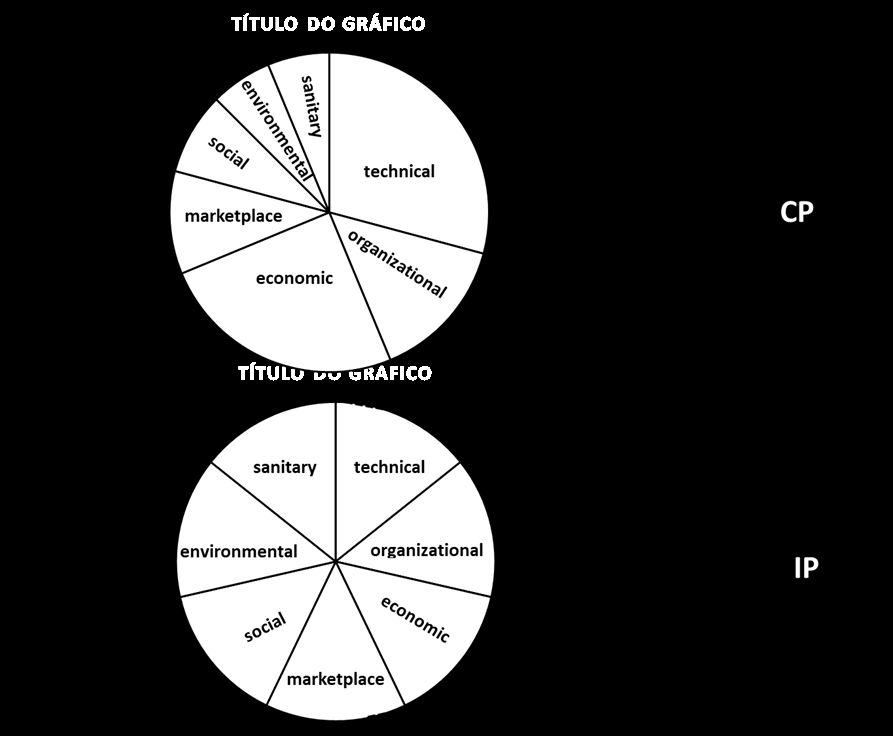
Figure 2: Schematic comparison between the equilibrium of the areas composing Conventional Production - CP (real) and Integrated Production - IP (hypothetical) in Brazilian shrimp farming. Areas with the most significant force (larger slices) and areas of greatest threat (smaller slices) are identified for the CP. In the IP, the balanced distribution (slices of the same size) indicates a more sustainable activity.
In economic and financial studies, the risks, uncertainties, and future benefits of a particular project should also be considered before an investment is chosen for capital investment [84, 85]. In this sense, when compared with CP, IP almost certainly will help in reducing the risks and uncertainties associated with the cultivation of marine shrimp in Brazil. For example, in food production in general (and shrimp farming does not tend to be different), traceability Bezerra AC, et al. [86] and the control and standardisation of data and the productive, administrative and management processes that exist throughout the production chain tend to become a rule and not the exception [75]. Such procedures facilitate proof of origin of products, the identification of problems, correction of misused techniques, prevention of risks, and a reduction in the losses and wastes that may occur throughout the production process [87].
The regularization of the enterprise is another of the direct benefits that could arise from the adoption of IP. As discussed, the difficulties for environmental licensing, which is one of the major challenges faced by most producers, is considered a limiting factor for the development of shrimp farming in Brazil [37]. The difficulties faced and the slowness of the environmental licensing process mean that most shrimp farms in Brazil are not licensed, which results in the inability of producers and entrepreneurs to access financial credits [4]. Since IP is supported by principles intrinsically related to environmental care, labour and management quality, its adoption would certainly bring efficiency to the environmental licensing process [11]. With this, the risks with fines and embargos of the enterprises can be minimised and even avoided. Additionally, the social and environmental gains provided by IP should be emphasised. By demanding the radical reduction and rational use of pesticides and fertilisers, IP reduces the exposure of the environment and people to pollutants. The construction of facilities for the correct storage of agrochemicals avoids environmental accidents and improves the ergonomic conditions of labour activity.
Notably, in the simulation carried out, social investments were proposed, such as the schooling of employees, and in provision of facilities that aim to improve working conditions, such as canteens, adequate toilets and safety equipment (PPE). All this contributes not only to reducing the risks of pesticide intoxication and loss of workers to occupational diseases but also creates more favourable conditions to the work itself and greater identification of the worker with the company.
Another point to be considered is that the current model of conventional shrimp production in Brazil is sustained by the robustness of the economic indexes of the activity. However, in this model, under which entrepreneurs face ever more difficult control and mitigation of successively more severe disease events, the lack of environmental regulation, the high level of informality, and the impossibility of access to credit lines are unlikely to be sustainable in the medium and long term. Therefore, although the IP presents lower economic and financial indicators than those of the CP, the results obtained in this study do not indicate that it is not feasible; in contrast, they indicate a path to be traced and perfected. In this sense, the results may be useful as a starting point for the reduction of economic differences between conventional and integrated projects and for the feasibility of integrated production in shrimp farming.
Acknowledgement
The authors thank National Council for Scientific and Technological Development (CNPq) for awarding the Research Productivity grant to Dr Antonio Ostrensky (process No 304633/2017-8).
References
-
Natori MM, Sussel FR, Santos ED, Previero TDC, et al. (2011) Development of marine shrimp farming in Brazil and around the world: technological advances and challenges. Economic Information 41(2): 61-73.
-
Ho TMH, Burny P (2016) Impact of value chain governance on the development of small scale shrimp farmers in Vietnam. International Journal of Business and Economic Sciences Applied Research 9(2).
-
De Alcântara AM, Bentes AP, De Barros ED, De Almeida VR (2021) Fisheries and Aquaculture-Challenges in the Amazon of Pará. In: 1st (Edn.), Itacaiúnas Publisher.
-
Rocha IP (2015) Perspectives and Opportunities for the Brazilian Aquaculture and Fisheries Sector. Magazine of the Brazilian Association of Shrimp Farmers-ABCC, Candlemas, Christmas, RN, pp: 24-27.
-
Royo F, Gironés O, Ania S (2016) Review on White Spot Disease (WSSV). Epidemiology, Diagnosis, and Fight Methods. AquaTIC: electronic journal of aquaculture 8: 2-3.
-
López‐Téllez NA, Corbalá‐Bermejo JA, Bustamante‐ Unzueta ML, Silva‐Ledesma LP, Vidal‐Martínez V M, et al. (2020) History, impact, and status of infectious diseases of the Pacific white shrimp Penaeus vannamei (Bonne, 1831) cultivated in Mexico. Journal of the World Aquaculture Society 51(2): 334-345.
-
Debaere P (2017) Fishy Issues: The US Shrimp Antidumping Case. Darden Business Publishing Cases, pp: 1-15.
-
Hernández-Palomares M, Godoy-Lugo J, Gómez-Jiménez S, Gámez-Alejo L, Ortiz R, et al. (2018). Regulation of lactate dehydrogenase in response to WSSV infection in the shrimp Litopenaeus vannamei. Fish & shellfish immunology 74: 401-409.
-
IBGE (2018) Pesquisa da Pecuária Municipal, Instituto Brasileiro de Geografia e Estatística.
-
Marques AR, Neto JSF, Ferreira F (2016) Hierarchical clustering and partitioning to characterize shrimp grow- out farms in northeast Brazil. Aquaculture 463: 106-112.
-
Stevanato DJ (2017) Environmental licensing for shrimp farming enterprises. In: Cozer AON (Ed.), Integrated production in Brazilian shrimp farming: principles and practices to cultivate marine shrimp in a more rational and efficient way. Curitiba, GIA Institute, pp: 288.
-
Gorayeb A, Mendes JDS, Meireles AJDA, Brannstrom C, Da Silva EV, et al. (2016) Wind-energy development causes social impacts in Coastal Ceará state, Brazil: the case of the Xavier Community. Journal of Coastal Research 75(1): 383-387.
-
Brannstrom C, Gorayeb A, De Sousa Mendes J, Loureiro C, De Andrade Meireles AJ, et al. (2017) Is Brazilian wind power development sustainable? Insights from a review of conflicts in Ceará state. Renewable and Sustainable Energy Reviews 67: 62-71.
-
Tenório GS, Souza-Filho PWM, Ramos EM, Alves PJO (2015) Mangrove shrimp farm mapping and productivity on the Brazilian Amazon coast: Environmental and economic reasons for coastal conservation. Ocean & Coastal Management 104: 65-77.
-
Prestrelo L, Vianna M (2016) Identifying multiple-use conflicts prior to marine spatial planning: A case study of A multi-legislative estuary in Brazil. Marine Policy 67: 83-93.
-
ABCC (2017a) Censo da Carcinicultura do Litoral Norte do Estado do Ceará e Zonas Interioranas Adjacentes. Natal - RN, Convênio ABCC/MAPA: 835850/2016.
-
ABCC (2017b) Censo da Carcinicultura do Litoral Sul do Estado de Ceará e Zonas Interioranas Adjacentes. Natal - RN, Convênio ABCC/MAPA: 835851/2016.
-
Engle CR (2016) Sustainable growth of aquaculture: The need for research to evaluate the impacts of regulatory frameworks. Journal of the World Aquaculture Society 47(4): 461-463.
-
Myhre P, Nunes AJ, Suplicy FM, Vidal EA, Rombenso AN, et al. (2017) World food giant-Brazil aiming to be one of the top five aquaculture producers in 2020. World Aquaculture 48(3): 31-37.
-
Phung HG, Pham DB (2018) Effects of Integrated Shrimp Farming in Vietnam. Journal of the World Aquaculture Society 49(4): 664-675.
-
Beltrán-Lugo L, Izaguirre-Díaz de León F, Peinado- Guevara V, Peinado-Guevara H, Herrera-Barrientos J, et al. (2023) Sustainable Innovation Management in the Shrimp Sector of the Municipality of Guasave, State of Sinaloa, Mexico. Sustainability 15(4): 3161.
-
Martínez-Cordero FJ, Sanchez-Zazueta E, Hernández C (2018) Investment analysis of marine cage culture by applying bioeconomic reference points: A case study of the spotted rose snapper (Lutjanus guttatus) in Mexico. Aquaculture Economics & Management 22(2): 209-228.
-
Walsh S, Nguyen K, Strebel L, Rhodes M, Davis DA (2022) Utilising feed effectors and automated feeders for semi‐ intensive pacific white shrimp (Litopenaeus vannamei) production. Aquaculture Fish and Fisheries 2(6): 540- 551.
-
Rego MAS, Sabbag OJ, Soares R, Peixoto S (2017) Financial viability of inserting the biofloc technology in a marine shrimp Litopenaeus vannamei farm: a case study in the state of Pernambuco, Brazil. Aquaculture international 25: 473-483.
-
Emerenciano MG, Rombenso AN, Vieira FdN, Martins MA, Coman GJ, et al. (2022) Intensification of penaeid shrimp culture: an applied review of advances in production systems, nutrition and breeding. Animals 12(3): 236.
-
Medeiros PMOC (2015) Zootechnical performance of shrimp: Litopenaeus vannamei and Macrobrachium rosenbergii in net tanks and family aquaculture in the community of Bebida-Velha, RN, Brazil.
-
Long L, Yang J, Li Y, Guan C, Wu F (2015) Effect of biofloc technology on growth, digestive enzyme activity, hematology, and immune response of genetically improved farmed tilapia (Oreochromis niloticus). Aquaculture 448: 135-141.
-
Suryakumar B, Avnimelech Y (2017) Adapting biofloc technology for use in small-scale ponds with vertical substrate. World Aquaculture pp: 1-5.
-
Rahman S, Barmon BK, Ahmed N (2011) Diversification economies and efficiencies in a ‘blue-green revolution’combination: a case study of prawn-carp-rice farming in the ‘gher’system in Bangladesh. Aquaculture International 19: 665-682.
-
Sosa BDS (2015) Identification of the most relevant physical-chemical water and climatic parameters for the productivity of shrimp (Litopeneaus vannamei) farming in a heterotrophic system.
-
Silva UATD (2017) Construção das estruturas físicas de uma fazenda de cultivo de camarões. A Produção Integrada na Carcinicultura Brasileira: Princípios e Práticas para se Cultivar Camarões Marinhos de Forma mais Racional e Eficiente. Curitiba-PR, Instituto GIA, pp: 335.
-
Emerenciano M, Cuzon G, Arévalo M, Gaxiola G (2014) Biofloc technology in intensive broodstock farming of the pink shrimp Farfantepenaeus duorarum: spawning performance, biochemical composition and fatty acid profile of eggs. Aquaculture research 45(10): 1713-1726.
-
Silva AJMD (2016) Desempenho do camarão Litopenaeus vannamei (Boone, 1931) em diferentes densidades de estocagem sem uso de alimentação artificial (Bachelor’s thesis, Universidade Federal do Rio Grande do Norte).
-
Feijó RG, Kamimura MT, Oliveira-Neto JM, Vila-Nova CM, Gomes AC, et al. (2013) Infectious myonecrosis virus and white spot syndrome virus co-infection in Pacific white shrimp (Litopenaeus vannamei) farmed in Brazil. Aquaculture 380-383: 1-5.
-
Xue S, Wei J, Li J, Geng X, Sun J (2017) Effects of total ammonia, temperature and salinity on the mortality and viral replication of WSSV‐infected Chinese shrimp (Fenneropenaeus chinensis). Aquaculture Research 48(1): 236-245.
-
Caipang CM, Trebol KMP, Fagutao F, Pakingking RV, Deocampo JE (2022) Biofloc-based nursery production system: Heeding the call towards a sustainable shrimp culture industry in the Philippines. International Journal of Biosciences 20(3): 250-259.
-
Cozer N (2017) The Brazilian shrimp farming production chain: Cultivating marine shrimp Integrated Production in Brazilian Shrimp Farming. Curitiba, pp: 352.
-
MAPA (2017) Integrated Production-How to join. Esplanade of Ministries - Block D - Brasília/DF, Ministry of Agriculture, Livestock and Supply.
-
Braga Sobrinho R (2014) Integrated production of Annonaceae in Brazil. Brazilian Journal of Fruticulture 36: 102-107.
-
Dos Santos BM, Da Silva Nóbrega D (2022) Characterization of Integrated Pineapple Production on rural properties in the municipality of Salvaterra– Pará. Rural Development and Sustainability: energy, production and new markets-ISBN 978-65-5360-120-8.
-
Junior JFP, De Mio LLM, Rodrigues GS (2009) Assessment of the social impact in the process of implementing integrated peach production in the municipalities of Araucária and Lapa-Paraná: a case study. Animal Science Academic Journal 7(1): 11-21.
-
De Souza AM, Ayub RA, Pinto CA (2022) Adaptability of peach cultivars in the Campos Gerais–Paraná region. Magazine on Agribusiness and Environment 15(3): 1-14.
-
de Mendonça TG, Lírio VS, Moura AD, Dos Santos Reis B, Silveira SDFR (2009) Assessment of the economic viability of papaya production in conventional and integrated fruit production systems. Northeast Economic Magazine 40(4): 699-724.
-
De Morais PLD, Pinheiro EB, Araujo EL, De Queiroz Ambrósio MM, Pontes FM (2014) Phytosanitary Diagnosis of Integrated Mango Production in Vale do Assu (RN). Magistra 26(2): 231-241.
-
Moreira EDS, Neto MMG, Lana ÂMQ, Borghi E, Dos Santos CA, et al. (2018) Production efficiency and agronomic attributes of corn in a crop-livestock-forest integration system. Brazilian Agricultural Research 53(4): 419-426.
-
Lima FBMD (2017) Sistema de produção integrada de frangos: percepções dos avicultores do município de Santa Cruz/RN (Bachelor’s thesis, Universidade Federal do Rio Grande do Norte).
-
Eloy LR, Dominschek R, Farias GD, Kuhn JG, Machado D, et al. (2022) Sustainability of rural properties participating in the Integrated Production in Agricultural Systems Project: use of the SAFA/FAO tool.
-
Andrigueto JR, Nasser LCB (2023) Integrated production in Brazil: Sustainable agriculture, safe food. Integrated Fruit Production and Agricultural Integrated Production Systems in Brazil. Brasília, Mapa/ACS: Ministry of Agriculture, Livestock and Supply. Secretary of Agricultural Development and Cooperatives, pp: 1008.
-
McVey JP, Stickney RR, Yarish C, Chopin T (2002) Aquatic polyculture and balanced ecosystem management: new paradigms for seafood production. In Responsible marine aquaculture, Wallingford UK: CABI Publishing, pp: 91-104.
-
De Souza GMM, Da Silva-Matos RRS, OLIVEIRA JEDM, Moreira AN, Lopes PRC (2014) Rationalization of phytosanitary products through the adoption of Integrated Grape Production in the Vale do Submédio do São Francisco region. Caatinga Magazine 27(2): 209-213.
-
Bush SR, Belton B, Hall D, Vandergeest P, Murray FJ, et al. (2013) Certify sustainable aquaculture?. Science 341(6150): 1067-1068.
-
Moher D, Liberati A, Tetzlaff J, Altman DG, Prisma Group (2010) Preferred reporting items for systematic reviews and meta-analyses: the PRISMA statement. PLoS Med 6(7): e1000097.
-
Moher D, Shamseer L, Clarke M, Ghersi D, Liberati A, et al. (2015) Preferred reporting items for systematic review and meta-analysis protocols (PRISMA-P) 2015 statement. Systematic reviews 4: 1-9.
-
Brasil BCd (2022) Foreign Exchange and International Capital.
-
CUB (2022) Basic Unit Cost of Construction.
-
SINAPI (2017) National Civil Construction Cost and Indices Research System.
-
SINDUSCON (2017) Civil Construction Industry Union.
-
CONMETRO (2002) Resolution number 4, of December 2, 2002, National Council of Metrology, Standardization and Industrial Quality, pp: 8.
-
INMETRO (2015) Ordinance No. 118, of March 6, 2015, National Institute of Metrology, Quality and Technology pp: 37.
-
Ostrensky A, Stevanato D, Pont G, Castilho-Westphal G, Girotto M, et al. (2017a) Integrated Production in Brazilian Shrimp Farming – Biological, sanitary, legal, environmental, social and operational aspects 1.
-
Ostrensky A, Stevanato D, Pont G, Castilho-Westphal G, Girotto M, Bake N, et al. (2017b) Integrated Production in Brazilian Shrimp Farming – Cultivating marine shrimp 2.
-
SEBRAE (2016) Brazilian Support Service for Micro and Small Businesses.
-
Furlan ÉF (2011) Assessment of the quality of seven- beard shrimp (Xiphopenaeus kroyeri) landed on the coast of São Paulo, Brazil. Bol Inst Pesca São Paulo 37(3): 317-326.
-
Jonell M, Henriksson PJG (2015) Mangrove–shrimp farms in Vietnam—Comparing organic and conventional systems using life cycle assessment. Aquaculture 447: 66-75.
-
Peres FC, Guimarães VA, Canziani JR (2009) Rural Entrepreneur Program: Project Preparation and Analysis. Curtiba SEBRAE/PR and SENAR/PR.
-
Matsunaga M, Bemelmans PF, Toledo PD, Dulley RD, Okawa H, et al. (1976) Production cost methodology used by the IEA. Agriculture in São Paulo 23(1): 123-139.
-
Martin NB, Serra R, Oliveira MD M, Angelo JA, Okawa H (1998) Integrated agricultural cost system - CUSTAGRI. Economic information-government of the state of São Paulo institute of agricultural economics 28: 7-28.
-
Noronha JF (1981) Agricultural projects: financial administration, budgeting and economic evaluation. FEALQ.
-
Kubitza F (2018) Efficient fertilizer in the production of marine shrimp. Aquaculture Overview pp: 66.
-
Coelho MA (2005) Cost/volume/profit analysis and investments in small shrimp farming. Costs and Agribusiness 1(1): 62-68.
-
Valderrama D, Engle CR (2001) Risk analysis of shrimp farming in Honduras. Aquaculture Economics & Management 5(1-2): 49-68.
-
Santos CLAD, Vidal JMA, Medeiro ACD, Fonseca SBD, Soares DDMA, et al. (2016) Shrimp and lobster processing in the Compescal-Comércio de Pescado Aracatiense Ltda industry. Technical Journal on Agroindustrial Systems 2(1).
-
Senten JV, Dey MM, Engle CR (2018) Effects of regulations on technical efficiency of US baitfish and sportfish producers. Aquaculture Economics & Management 22(3): 284-305.
-
Abate TG, Nielsen R, Nielsen M (2018) Agency rivalry in a shared regulatory space and its impact on social welfare: The case of aquaculture regulation. Aquaculture Economics & Management 22(1): 27-48.
-
Coelho VF, Branco JO, Dias MAH (2016) Productivity indicators applied to seabob shrimp fishing, Penha SC, Brazil. Ambiente e Agua-An Interdisciplinary Journal of Applied Science 11(1): 98-109.
-
Silva SLG, Pontes FM, Junior APB, Oliveira DM (2012) Investment analyses in shrimp farming in Rio Grande do Norte: a case study. Revista Caatinga 25(1): 168-175.
-
Brabo MF, Reis MHD, Veras GC, Silva MJ, Souza ADSLD, et al. (2015) Economic viability of producing fingerlings of rheophilic species in a fish farm in the Eastern Amazon. Fisheries Institute Bulletin 41(3): 677-685.
-
Siqueira ILDS, Carvalho RM, Marques CHP (2018) Economic evaluation of coral cultivation in the state of Ceará. Agrarian 11(41): 267-280.
-
Yamaguchi MM, Barreto LEG, Igarashi MA (2008) Strategies for the Development of Aquaculture in Brazil. UNOPAR Scientific Exact and Technological Sciences 7(1).
-
Bhandari KP, Collier JM, Ellingson RJ, Apul DS (2015) Energy payback time (EPBT) and energy return on energy invested (EROI) of solar photovoltaic systems: A systematic review and meta-analysis. Renewable and Sustainable Energy Reviews 47: 133-141.
-
Brito S, Fontenele RES, Carvalho EBS (2005) Economic- Financial Viability of Meat Farming: opportunity for small family producers. In Congress of the Brazilian Society of Rural Economics and Sociology 43.
-
Da Silva LAC, Bezerra MA (2004) Economic-financial analysis of shrimp farming in the state of Ceará: a case study. Congress of the Brazilian Society of Rural Economics Administration and Sociology-SOBER 42.
-
Caldasso LP, Costa AAD, Abdallah PR, Tagliani PRA (2005) Benefit-cost analysis: A contribution to artisanal fishing in the extreme south of Brazil.
-
Bodie Z, Kane A, Marcus A (2014) Investment fundamentals. AMGH Editor.
-
Keynes JM (2017) General theory of employment, interest and money. Saraiva Educação SA.
-
Bezerra AC, Pandorfi H, Gama RM, De Carvalho FF, Guiselini C (2017) Development of a traceability model applied to goat and sheep meat production. Agricultural Engineering 37(5): 1062-1072.
-
Da Silva JCM, De Lima AF, De Oliveira CSP, Junior APB (2018) Risk management in shrimp farming: analysis of a company in Rio Grande do Norte. Rural Scientific Journal 20(2): 326-337.
- Genetic Improvement of Nile Tilapia (Oreochromis niloticus): Advances in Selective Breeding and Genomic Approaches for Sustainable Aquaculture
- Microplastics, Contaminants, and Waste Hotspots: Divergences and Faults in Prioritizing Control Efforts
- Creating a Healthier, More Vibrant Open and Closed Aquatic Environment. A Submersible, Centrifugal Magnetically Affixed Current Changing Aquarium Pump
- An Attempt to Assess Alpha Diversity and Sample Size: Using the Ostracod Assemblages off Kumamoto Port, Japan
- Assessment of the Efficiency of Common Fishing Gears and Crafts Used at Mohananda River of Chapai Nawabganj, Bangladesh
- Fish Productivity and Biodiversity Status of Sundarban Mangrove in Bangladesh