
Effects of Dietary Aloe barbadensis (Aloeaceae) Leaves on the Intestinal Microbes of African Catfish (Clarias Gariepinus Burchell 1822)
Effects of Aloe barbadensis leaves-paste were examined in Clarias gariepinus fingerlings. Fish were fed diet supplemented with the leaves-paste to determine the effects of the leaves on the intestinal microbes of C. gariepinus fingerlings. Its effects on some growth parameters were also assessed. Experiment was conducted in 40-litre freshwater-filled plastic tanks. 120 C. gariepinus fingerlings (2.33±0.07g) were fed with 40% crude protein diets containing three concentrations of A. barbadensis leavespaste: ABL1-1%; ABL2-2%; ABL3-3%, and control-0% ad libitum twice daily for 12 weeks. Mean weight gain and percentage weight gain increased (p0.05) in the total bacterial counts (TBC) in A. barbadensis leaves-paste supplemented diets and the control having the highest TBC (23.67 ± 0.88 x 10⁵ CFU/ml). No growth of total fungal counts (TFC) was observed in ABL1 and there was a reduction in TFC as the concentration increased in the other supplemented diets, and the control having the highest TFC (7.67 ± 0.44 x 10⁵CFU/ml) The study concluded that 1% A. barbadensis leavespaste could effectively improve the growth performance, nutrient utilization, survival and thus reducing the microbial load of cultured C. gariepinus.
Introduction
Aquaculture is one of the most rapid growing food producing sectors in the world [1]. Aquaculture as is an emerging industrial sector requires continued research with scientific, technical developments and innovations [2] in different aspects of production including the search for natural alternative growth promoters to be used as feed supplements. The use of antibiotics and chemicals in production is often costly and unacceptable since they lead to antibiotics and chemical resistance, this uncontrolled and repeated uses of antibiotics to treat bacterial infections have in some cases led to the development of antibiotic resistant pathogens [3, 4]. Thus, the use of immunostimulants in feeds is considered as a modern and promising alternative to antibiotics and vaccines often employed as prophylactic measures in intensive aquaculture [5]. Immunostimulants have the competence to promote the nonspecific resistance of fish before infection of pathogens. In recent decades, many substances have been shown to enhance the nonspecific immunity of fish and the route of their administration has differential effects on the immune system.
Current advancement in immuno-nutrition studies have shown that some nutrients are linked to the immunological status of fish [6]. This has drawn the attention of fish nutritionists to the immune-protection of fish besides the growth; sustainable aquaculture depends on perfect balance between growth and health condition of fish. In aquaculture, one of the most important methods of increasing the defense mechanism and disease management in fish is through prophylactic administration of immunostimulants in the fish [7]. Also, it has been described by various authors that the use of immunostimulants seems to be an alternative to control fish diseases and enhancements of growth [8, 9]. The active principles of certain herbs have growth advancing ability and perform as appetizers, trigger the immune system, perform as wide spectrum antimicrobial and include anti-stress properties which will be of massive function in fish and shrimp cultivation.
Aloe vera (A. barbadensis) is a tropical or sub-tropical plant with turgid lance-shaped green leaves with jagged edges and sharp points [10]. It is a perennial plant belonging to the Liliaceae or Aloeaceae family and a succulent cactus- like plant, which grows in hot and dry climates [11]. Aloe vera is made up of a colourless liquid product, called gel consisting primarily water and polysaccharides, and a yellow latex representing 20-30% by weight of whole leaf with bitter taste. Seventy-five potentially active compounds like enzymes, minerals, sugars, saponins etc are present in aloe vera [12]. Active compounds present in A. barbadensis include the following: polysaccharides, accemannans, anthraquinones, lectins, salicylic acid, urea, nitrogen, amino acids, lipids, sterols, tannins, phenol and enzymes [13, 14]. Accemannan is the main functional component of aloe vera and is made up of long chain acetylated mannose [15]. A. barbadensis, a natural immunostimulant and growth promoting plant enhance some of the specific and non-specific immune responses by increasing lysozyme activity, serum bactericidal power and the total protein and immunoglobulin levels in fish [16]. Hence, this study aims at determining the growth promoting effect, nutrient utilization and anti-microbial action of C. gariepinus fed different concentrations of A. barbadensis leaves-paste.
Materials and Methods
The research work was done at the fish farm (hatchery unit) of the Department of Aquaculture and Fisheries Management, College of Environmental Resources Management, Federal University of Agriculture, Abeokuta, Ogun State, Nigeria. The feeding trial was conducted in twelve (12) rectangular plastic tanks each with a capacity of 60 litres of fresh water and each tank was two-third filled (40 litres).
Experimental Fish
African mud catfish (C. gariepinus) fingerlings of mean weight 2.33 g were used as the test fish species in this study. A total of one hundred and twenty (120) fingerlings were purchased at Motherhood Fish Farm, Abeokuta, Ogun State, Nigeria. The fish were randomly (completely randomized design) allotted into four (4) treatments in the plastic tanks at a stocking rate of ten fingerlings per tank in triplicates.
Experimental Diets
A ration of 40% crude protein (CP) containing fishmeal (72% CP), soybean meal (42% CP), groundnut cake (45% CP), using yellow maize (10% CP) as the energy source and fixed ingredients including vitamin premix (1%), lysine (0.5%), methionine (0.5%), di calcium phosphate (0.5%); salt (0.5%) and vegetable oil (4.0%). Afterwards, fresh leaves of aloe vera (A. barbadensis) were obtained from a herbarium in Sagamu, Ogun State and authenticated by a botanist. The leaves were thoroughly washed with distilled water and weighed on an electronic scale (Mettler Toledo FB602, Jenway UK), cut into pieces with a knife and blended in electric blender (Binatone, BLG 555, China) with water added at a ratio of 1:1 as described by Muhammad-Jameel, et al. [17] to give A. barbadensis leaves-paste.
The aloe vera leaves-paste prepared were added on top of the basal diet and thoroughly mixed using a mixer to formulate four iso-nitrogeneous (40% crude protein) A. barbadensis leaves-paste supplemented diets. Thus, the experimental diets are made up of three treatment diets containing different concentrations of A. barbadensis leaves- paste and the control as listed below:
Treatment 1 (Control)-0% A. barbadensis leaves-paste Treatment 2 (ABL1)-1% A. barbadensis leaves-paste Treatment 3 (ABL2)-2% A. barbadensis leaves-paste Treatment 4 (ABL4)-3% A. barbadensis leaves-paste The compounded feeds were pelletized (2mm) using the pelletizing machine from University fish farm, sun dried, allowed to cool in an open air, packed and stored in an opaque nylon bag according to the treatments. The percentage of all the feed ingredients used in formulating the four experimental diets is listed in Table 1. The proximate analyses of the four experimental diets were carried out following the procedure described by AOAC [18].
| Ingredients (%) | Control | ABL1 | ABL2 | ABL3 |
|---|---|---|---|---|
| Fishmeal | 31.2 | 31.2 | 31.2 | 31.2 |
| Soybean meal | 15.6 | 15.6 | 15.6 | 15.6 |
| Groundnut cake | 15.6 | 15.6 | 15.6 | 15.6 |
| Yellow Maize | 30.5 | 30.5 | 28.75 | 27.75 |
| Vitamin Premix | 1 | 1 | 1 | 1 |
| Lysine | 0.5 | 0.5 | 0.5 | 0.5 |
| Salt | 0.5 | 0.5 | 0.5 | 0.5 |
| Vegetable Oil | 4 | 4 | 4 | 4 |
| Methionine | 0.5 | 0.5 | 0.5 | 0.5 |
| DCP | 0.5 | 0.5 | 0.5 | 0.5 |
| A. barbadensis leaves | 0 | 1 | 2 | 3 |
| TOTAL | 100 | 100 | 100 | 100 |
| Moisture | 10.5 | 10.98 | 9.86 | 9.56 |
| Crude protein | 40.01 | 40 | 40.04 | 39.98 |
| Fibre content | 3.1 | 3.12 | 3.04 | 3.42 |
| Ash | 5.2 | 4.45 | 3.95 | 3.74 |
| Ether extract | 5.42 | 5.2 | 4.98 | 4.7 |
| Nitrogen free extract | 35.77 | 36.25 | 38.13 | 38.6 |
Table 1: Feed ingredients & Proximate Compositions of the Experimental Diets (% Dry weight).
ABL = A. barbadensis leaves paste, DCP= Di calcium phosphate. Table 1: Feed ingredients & Proximate Compositions of the Experimental Diets (% Dry weight).
Experimental Procedure
The fish were acclimated to the experimental system for a period of 14 days before the commencement of the feeding trial and were fed two times daily with a commercial diet (40% CP). The fish were weighed in batches; ten per treatments at the beginning of the experiment. Prior to the commencement of the experiment, all fish were starved for 24 hours to eliminate variation in weight due to residue food in the gut and at the same time to increase the appetite of the fish. Fish were fed with the diets at two feeding regimes, in the morning between 08:00-09:00h and evening between 17:00-18:00h, ad libitum for (84 days) 12 weeks. The proximate analyses of the fish carcasses were also carried out following procedure as described by AOAC [18].
Monitoring of Fish Growth
The fish were weighed in each tank weekly using a sensitive electronic weighing scale (Mettler Toledo FB602, Jenway UK) to monitor the fish growth and ensure adequate feed consumption. Mortality was monitored daily.
Growth parameters such as final mean body weight, survival (%), specific growth rate, (SGR, %/day), mean weight gain, percentage weight gain and feed intake were calculated according to the methods of Agbebi, et al_._ [19].
Nutrient utilization parameters such as feed conversion ratio, protein intake and apparent net protein utilization were also determined.
Determination of Intestinal Microflora of the Fish
Dissection of the midline in ventral surface of the fish was carried out to remove the gut proximal section. Hedges 2002 was used to estimating the precision of serial dilution of viable bacteria count and fungi count of the intestinal contents.
Various bacterial isolates were subjected to morphological and biochemical tests for their identification according to the methods of Buchanan, et al. [20]. The results were analyzed by cross reference to Bergey’s Manual of Systematic Bacteriology [20]. Fungal isolates were subjected to morphological characteristics according to Barnett, et al. [21] and identified according to Campbell, et al. [22].
Statistical Analysis
All data obtained were subjected to one way analysis of variance (ANOVA). Duncan Multiple Range Test was used for comparison among diets means at a significance level of 0.05 (p < 0.05) [23]. The computations were subjected to SAS statistical software version 15.
Results
Proximate Composition of Experimental Diets
Proximate compositions of the four diets formulated and prepared for the feeding trial are presented in Table 1. The crude protein contents of the diet ranged between 39.98 and 40.09%, crude fibre 3.04 and 3.42%, ether extract 4.50 and 5.42% and nitrogen free extract 35.77 and 38.60.
Carcass Compositions of Experimental Fish
The initial and final carcass compositions of the fish fed with varying levels of A. barbadensis leaves and the control is presented in Table 2. There was no significant difference (p > 0.05) in the moisture content of fish fed high doses (2% and 3%) of A. barbadensis leaves-paste supplemented diets and the control, while the fish fed 1% A. barbadensis leaves diet recorded the highest moisture content Table 5. There were also no significant differences (p > 0.05) in the crude protein and ash contents of the carcass of fish fed A. barbadensis leaves.
| Proximate components (%) | Initial | Control (0%) | ABL1 (1%) | ABL2 (2%) | ABL3 (3%) |
|---|---|---|---|---|---|
| Moisture | 11.54 | 11.84±0.23b | 12.40±0.08a | 11.61±0.08b | 12.26±0.02b |
| Crude protein | 43.5 | 47.37±0.55d | 49.84±0.21c | 49.50±0.02c | 49.50±0.39c |
| Fibre content | 0.9 | 1.23±0.02c | 1.28±0.10c | 1.27±0.04c | 1.48±0.02b |
| Ash | 0.98 | 4.18±0.31a | 3.41±0.01b | 3.47±0.01b | 3.84±0.11b |
| Ether extract | 8.5 | 12.44±0.08a | 11.93±0.23a | 10.69±0.02b | 12.33±0.08a |
| Nitrogen free extract | 34.58 | 22.95±0.09a | 21.14±0.28b | 23.47±0.04a | 20.813±0.43c |
Table 2: Proximate compositions of the fish (% Dry weight) (Mean ± SEM).
Means along the same row with same letter are not significantly different (p >0.05). Table 2: Proximate compositions of the fish (% Dry weight) (Mean ± SEM).
Growth Performance and Nutrient Utilization
The growth performance and nutrient utilization of C. gariepinus fed A. barbadensis leaves paste at three varying levels of dietary supplementation is shown in Table 3. There was significant difference (p < 0.05) in the final mean weights gain of the fish at the end of the experiment. The highest final mean weight gain recorded in fish fed 1% A. barbadensis leaves paste was significantly higher (p<0.05) than the lowest in fish fed the control diet. With respect to the values obtained in weight gain (WG) and percentage weight gain (PWG), WG and PWG increased as the level of inclusion of A. barbadensis leaves-paste increased which were significantly different (p>0.05) from the control. However, the SGR and feed conversion ratio (FCR) of fish fed A. barbadensis leaves paste were not statistically different (p>0.05) from that fed the control diet. The results showed that feed intake increased as the concentrations increased in fish fed the A. barbadensis leaves paste diets with highest value in ABL3 compared with the control. The result of this experiment showed that FCR was best in fish fed control diet which was significantly lower than in fish fed the diets supplemented groups and there were no significant differences (p>0.05) in the FCR among the fish fed the diets supplemented groups.
Nutrients were better utilized among the diets supplemented group at different significant levels (p<0.05) with highest value of ANPU in ABL1 when compared to all other treatments including the control. There was no significant difference (p>0.05) in values obtained for protein efficiency ratio (PER) in fish fed the diets supplemented groups. Fish fed the control diet recorded the highest PER value. The survival rate was highest in fish fed the control diet followed by fish fed the ABL1 and there were no statistically different (p>0.05) in values obtained between ABL2 and ABL3. Percentage survival decreases as the concentrations increases in fish fed A. barbadensis leaves paste supplemented diets.
| Parameters | Control (0%) | ABL1 (1%) | ABL2 (2%) | ABL3 (3%) |
|---|---|---|---|---|
| Initial weight (g) | 2.30±0.06a | 2.30±0.06a | 2.33±0.07a | 2.33±0.07a |
| Final weight (g) | 14.22±1.12c | 16.39±0.33cb | 18.79±0.57b | 20.28±0.72a |
| Weight gain (g) | 11.92±1.16c | 14.09±0.34c | 16.46±0.52b | 17.95±0.78a |
| Percentage Weight gain (%) | 518.3±10.21c | 613.7±22.28b | 705.6±13.93a | 772.2±54.94a |
| Feed intake (g) | 19.17±2.29c | 22.08±0.51cb | 25.66±1.25b | 27.56±1.01a |
| Feed conversion ratio | 1.40±0.07b | 1.57±0.01a | 1.56±0.05a | 1.54±0.02a |
| Protein intake | 7.67±0.92c | 9.05±0.15b | 10.27±0.50b | 11.02±0.41a |
| Specific growth rate (%/day) | 2.31±0.19b | 2.36±0.02b | 2.48±0.02a | 2.57±0.07a |
| Protein efficiency ratio | 1.80±0.09a | 1.56±0.03b | 1.61±0.05b | 1.63±0.02b |
| ANPU (%) | 50.29±1.38d | 70.08±2.51a | 63.61±4.23b | 57.12±2.19c |
| Survival rate (%) | 86.67±8.82a | 83.33±3.33b | 73.33±3.33c | 76.67±6.67c |
Table 3: Growth performance and nutrient utilization of _Clarias gariepinus_ fed _Aloe barbadensis_ leaves-supplemented diets
Means along the same row with same letter are not significantly different (p>0.05). ANPU= Apparent net protein utilization Intestinal Microflora of the Fish Table 3: Growth performance and nutrient utilization of Clarias gariepinus fed Aloe barbadensis leaves-supplemented diets (Mean ± SEM).
Microbial Count of Fish
The total bacteria count and fungal counts in the intestine of fish fed A. barbadensis leaves diets and the control are presented in Table 4. The microbial population of fish fed diet containing varying levels of A. barbadensis leaves were greatly reduced compared to the control (p<0.05). There were no significant differences (p>0.05) in the total bacterial counts (TBC) in A. barbadensis leaves-paste supplemented diets and the control having the highest TBC. No growth of total fungal counts (TFC) was observed in ABL1 and there was a reduction in TFC as the concentration increased in the other supplemented diets, and the control having the highest TFC.
| Control (0%) | ABL1 (1%) | ABL2 (2%) | ABL3 (3%) | |
|---|---|---|---|---|
| Total Bacteria Count (CFU/ml) x105 | 23.67±0.88a | 16.83±1.59b | 17.67±1.17b | 16.67±4.26b |
| Total Fungal Count (CFU/ml) x105 | 7.67±0.44a | 0.00±0.00 | 3.85±1.80b | 3.1±0.73c |
Table 4: Microbial load in the intestine of C. gariepinus fed A. barbadensis leaves (Mean ± SEM).
Means along the same row with same letter are not significantly different (p >0.05). Table 4: Microbial load in the intestine of C. gariepinus fed A. barbadensis leaves (Mean ± SEM).
Morphological Characteristics of Bacteria Colonies Isolates The cultural and colonial morphology of bacteria found in the intestine of fish fed varying level of A. barbadensis leaves and the control are shown in Table 5.
| Isolates | Color | Shape/Margin | Arrangement | Surface appearance | Elevation | Texture | Opacity |
|---|---|---|---|---|---|---|---|
| A1 | Creamy | Irregular | Cocci in chain | Smooth and Glistening | Raised | Dry | Translucent |
| A2 | Creamy | Irregular | Cocci in chain | Smooth and Glistening | Raised | Mucoid | Translucent |
| B1 | Creamy | Irregular | Cocci in pair or more | Smooth and Glistening | Raised | Mucoid and Moist | Translucent |
| B2 | Creamy | Irregular | Cocci in pair | Smooth and Glistening | Raised | Mucoid | Translucent |
| C1 | White | Entire | Cocci | Glistening | Raised | Dry | Translucent |
| C2 | Yellow | Entire | Cocci in cluster | Smooth | Raised | Moist | Translucent |
| D1 | White | Entire | Cocci in pair | Glistening | Raised | Dry | Translucent |
| D2 | Yellow | Entire | Cocci in cluster | Smooth | Raised | Moist | Translucent |
Table 5: Morphological characters of bacteria colonies isolates of _C. gariepinus_ fed _A. barbadensis_ leaves diets.
A = Control B = ABL1 C = ABL2 D = ABL3 Table 5: Morphological characters of bacteria colonies isolates of C. gariepinus fed A. barbadensis leaves diets.
Biochemical Characterization of the Bacteria Isolate
Table 6 shows the biochemical test of the bacteria isolated from the intestine of the fish showing the occurrence of the bacteria in the fish intestine. Streptococcus agalactiae, Enterococcus faecialis and Staphylococcus aureus were the bacteria found in the fish intestine. E. faecialis occurred mostly in the fish intestine, however S. agalactiae and S. aureus are the least occurred as shown in Figure 1.
| ISOLATE | GRAM | SPORES | MOTILITY | CATALASE | STARCH HYDROLYSIS | GELATIN LIQUEFACTION | OXIDASE | MANNITOL | SUCROSE | LACTOSE | GLUCOSE | SUSPECTED ORGANISM |
|---|---|---|---|---|---|---|---|---|---|---|---|---|
| A1 | + | - | - | - | - | - | - | - | + | - | + | Streptococcus agalactiae |
| A2 | + | - | - | - | - | - | - | - | + | - | + | S. agalactiae |
| B1 | + | - | - | - | + | - | - | + | - | + | + | Enterococcus faecialis |
| B2 | + | - | - | - | + | - | - | + | - | + | + | E. faecialis |
| C1 | + | - | - | - | + | - | - | + | - | + | + | E. faecialis |
| C2 | + | - | - | + | - | + | - | - | + | + | + | Staphylococcus aureus |
| D1 | + | - | - | - | + | - | - | + | + | + | + | E. faecialis |
| D2 | + | - | - | + | - | + | - | - | + | + | + | S. aureus |
Table 6: Biochemical test of the bacteria isolated from the intestine of C. gariepinus fed A. barbadensis leaves diets.
+: POSITIVE -: NEGATIVE Table 6: Biochemical test of the bacteria isolated from the intestine of C. gariepinus fed A. barbadensis leaves diets.
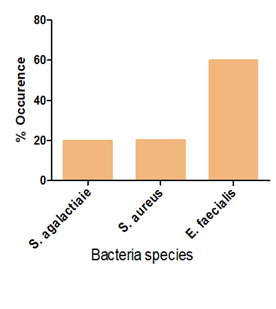
Figure1: Percentage occurrence of bacteria isolated from the intestine of fish fed A. barbadensis leaves.
Colonial Characteristics of Fungal Isolate
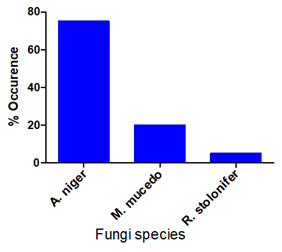
The morphological characters of fungal isolated from the intestine of C. gariepinus fed varying level of A. barbadensis leaves and the control are presented in Table 7. The prevalence of fungi in the intestine of the fish include; Aspergillus niger, Mucor mucedo and Rhizopus Stolonifer. The A. niger occurred mostly in the fish intestine followed by M. mucedo while R. stolonifer is the least occurred as indicated in Figure 2.
| Isolates | Color of spore | Appearance of mycelia | Type of Spores | Arrangement of spores | Shape of spore | Type of hyphae | Identified organism |
|---|---|---|---|---|---|---|---|
| A1 | Yellow black | Fluffy | Sporangiospore | In masses | Globuse | Aseptate | Mucor mucedo |
| A2 | Black | Grainy | Conidiosphore | In masses | Cylindrical | Septate | A. niger |
| B1 | Nil | Nil | Nil | Nil | Nil | Nil | Nil |
| B2 | Nil | Nil | Nil | Nil | Nil | Nil | Nil |
| C1 | Black | Grainy | Conidiosphore | In masses | Cylindrical | Septate | A. niger |
| C2 | Yellow black | Fluffy | sporangiospore | In masses | Globuse | Aseptate | Mucor mucedo |
| D 1 | Black | Grainy | Conidiosphore | In masses | Cylindrical | Septate | A. niger |
| D2 | Black | Caltony | sporangiosphore | In masses or singly | Irregularly round | Aseptate | Rhizopus stolonifer |
Table 7: Fungal isolated from intestine of C. gariepinus fed A. barbadensis leaves diets.
Discussion
The values of the physico-chemical parameters observed in the experimental tanks during this study were within the range recommended for C. gariepinus [24, 25]. The achievement of this was as a result of optimum water management practices.
There was a general increase in weight gain in the course of the experiment with the highest growth performance observed in fish fed 3% A.barbadensis leaves. This aligned with the work of Bello, et al_. [26] who recorded similar increase in weight gain of fish when fed diets supplemented with walnut leaf and onion bulb residues. The increase in the growth rate of _C. gariepinus in the first few weeks of culture in the study may be due to initial starvation of the fish which made them more metabolically active, which is similar to Obasa, et al. [27] observation in juvenile Heterotis niloticus. They recorded an increase in growth of the fish as they were subjected to delay in feed distribution.
The superior performances of fish fed the supplemented diets in PWG, SGR and ANPU over control diet could be due to the presence of growth promoters, stimulants or constituents in A. barbadensis leaves (glucomannans, acemannan). This is in accord with the result of Muhammed-Jameel, et al_. [17] who found that inclusion of Aloe vera leaves up to 2% in the diet showed better growth performance of Fayoumi chicks. This was corroborated by Heidahieh, et al._ [28] who demonstrated that high levels (2%) of Aloe vera had a positive effect on growth performance in rainbow trout.
However, the feed intake increased as the concentrations levels of A. barbadensis leaves increased. The increased feed intake observed in this experiment in diet supplemented groups could be attributed to change in feed taste and stimulated appetite as reported by Windisch, et al. [29]. This result is in agreement with Darabighane, et al. [30] who reported increased feed intake in the supplemented groups which were treated by 2% aloe vera gel dissolved in water The increased FCR recorded in fish fed supplemented diets than the control is similar to the report of Bello, et al_. [26] who revealed that inclusion of 1.5% walnut leaf increased FCR in the supplemented groups than the control. This was also corroborated by Abdel-Rahman, et al. [31] which showed that the addition of Propolis-ethanolic extract and crude propolis increased the FCR, FER and PER in the supplemented groups when compared with the control. The findings of Zomrawi, et al. [32] who showed that were no significant differences (p > 0.05) in FCR among all dietary ginger powder treatments which conformed to the result obtained in this study. According to De Silva, et al. [33] feed conversion ratio is between 1.2-1.8 for fish fed carefully prepared diets, and the results from the present study falls within this range. The highest PER obtained in the control diet could be attributed to the absence of tannin in the feed. Also, Davies, et al._ [34] observed that protein efficiency ratio, is a measure of how well the protein sources in a diet could provide the essential amino acid requirement of the fish fed the diet.
The better SGR recorded in the supplemented diets is in correlation with the result of Abou-Zeid, et al. [35] which showed that Allium sativum supplementation positively affected O. niloticus biomass and specific growth rate (SGR).
The reduction in survival rate in fish fed the supplemented diets as recorded in this experiment could be as a result of some phytochemicals inherent in them. This result of this present study disagreed with the findings of Farah, et al. [36] who concluded that survival rate of fish was promoted in diets supplemented with Mellisa officinalis and aloe vera.
The bacteria flora of the intestine of C. gariepinus consisted of Streptococcus agalactiae, Staphylococcus aureus, and Enterococcus faecialis. This could indicate that A. barbadensis leaves favours or promote the growth of gram positive bacteria in the intestine of C. gariepinus. This can be compared with the work of Olojo, et al. [37] who observed similar bacteria flora in the intestine of C. gariepinus. This is corroborated by Nwabueze, et al. [38] who observed similar bacteria flora from the epidermal mucus of C. gariepinus fed ginger powder. Pandy, et al. [39] also reported that all medicinal plants are able to stimulate only non-specific immune responses and suggested that vaccines might be a better way to prevent deadly diseases and as such, the medicinal plants could be used to replace the vaccine.
This microflora can also be advantageous in that they help in digestive processes of fish such as microbial breakdown of chitin, collagen, cellulose and they may also supply fatty acids and other vitamins to the host and hence promoting growth of the fish. These might have taken place in the fish fed the dietary supplements. The microflora also prevents colonization of the fish by other microbes that might otherwise be pathogenic. Tannins and saponins are present in A. barbadensis leaves, Tannins and saponins are responsible for antibacterial activity, and able to permeate cells without destroying cell morphology. Tannins inhibit microbial proliferation by denaturation of enzymes of involved in microbial metabolism [40]. This might have taken place in the intestine of fish fed the dietary supplement because majorly the bacteria flora in the intestine of C. gariepinus are mostly gram positive bacteria and thus these phytochemicals probably inhibited the growth of gram negative bacteria and promoted the growth of gram positive bacteria.
There were significant (p<0.05) a reductions in the total bacteria count of fish fed diets supplemented with varying levels of A. barbadensis leaves than the control. This is in agreement with the report of Bello, et al. [26] who observed that there was a decrease in values of the bacterial load of the supplemented groups (onion bulb and walnut leaves) as the level of inclusion (0.5%, 1.0% and 2.0%) increased and as the months increased. In this study, enterobacteriacea load in the intestine of C. gariepinus fed A. barbadensis leaves was lower than the control with significant decrease (p<0.05). This decrease in bacteria load in fish as observed in this study has been linked to the presence of antimicrobial properties in A. barbadensis leaves. This study suggests that is more effective as an antibacterial A. barbadensis leaves. Tannins also have shown potential antiviral, antibacterial properties [41].
The fungi flora of the intestine of C. gariepinus fed diets containing varying levels of A. barbadensis leaves and the control revealed the presence of Aspergillus niger, Mucor mucedo and Rhizopus stolonifer. A. niger and M. mucedo are associated to food spoilage. Their presence in the fish intestine could indicate that some of the experimental feeds might have been rancid and support the growth of these microbes.
Also, there were significant (p < 0.05) reductions in the total fungal count of fish fed diets supplemented with varying levels of A. barbadensis leaves than the control diet. Also, this study indicated that both A. barbadensis leaves could act effectively as an antifungal. This is in line with the work of Idris, et al. [42] who worked on the effect of different concentration of ginger on smoke-dried C. gariepinus, and found that ginger reduced the free fatty acid values, tri-methylamine values and reduced the fungi load of the processed fish [43, 44, 45].
Conclusion
The present study showed that dietary supplementation of A. barbadensis leaves paste is encouraged to improve the growth performance [46]; nutrient utilization and health of catfish (C. gariepinus) fingerlings, due to the growth promoting and immunostimulation properties. Based on this present study, A. barbadensis leaves paste has been shown to possess antibacterial and antifungal activities in the fish. Hence, for better growth performance, nutrient utilization and fish survival, it is inferred that 1% A. barbadensis leaves paste could be used as a supplement in the diet of fish and also, A. barbadensis leaves paste could be used as an antibacterial and antifungal in cultured fish diets. However, more research should be carried out on the uses of A. barbadensis in order to reduce the anti-nutritional factors and better utilize the plant [47, 48].
Acknowledgement
The authors appreciated the efforts of members of staff in the Hatchery unit of the Fish Farm of the Federal University of Agriculture, Abeokuta in ensuring regular supply of water for the research work. We thanked the technologist in the Fish Nutrition laboratory of the Department of Aquaculture and Fisheries Management for his assistance in the proximate analyses of the experimental diets and fish. The technical support of Mrs Olanloye in the Department of Plant Sciences, College of Biological Sciences, FUNAAB in respect of the microbiolgical analysis is also recognized.
References
-
Hamid TH, Khan AJ, Jalil MF, Azhar NS (2012) Isolation and screening of lactic acid bacteria, Lactococcus lactis from _Clarias gariepinus_ (African catfish) with potential use as probiotic in aquaculture. African Journal of Biotechnology 11(29): 7494-7499.
-
Alicia E, Toranzo T, Beatriz, Magarin OS, Romalde JL (2005) A review of the main bacterial fish diseases in mariculture system aquaculture 246: 37-61.
-
Flores IM, Olvera Novoa MA, Guzman Mendez BE, Lopez- Madril W (2003) Use of bacteria _Streptococcus faecium, L._ _acidophilis_ and yeast _Saccharomyces cervisiae)_ as growth promoters in Nile Tilapia (_O. niloticus),_ Aquaculture 206(1-4): 245-256.
-
Food and Agriculture Organization (FAO) (2006) State of World Aquaculture, Fisheries Technical paper No 500. Rome.
-
Raa J (2000) The use of Immunostimulants in Finfish and Shellfish feeds. In : Cruiz-suarez LF, Ricque - Marie D, Tapia-Salazar M, Olvera-Novoa MAY, CiverCerecedo R, et al. (Eds.), Avances en Nutricion Acuicola V. Memorias del V Simpsium International de Nutricion Acuicola Merida, Yucatan, Mexico, pp: 47-56.
-
Kumar S, Sahu NP, Pal AK, Chowdhury D, Yenkokopam S, et al. (2005) Effect of dietary carbohydrate on haematology, respiratory burst activity and histological changes in _Labio rohita_ juvelines. Fish and Shellfish Immunology 19(4): 331-344.
-
Raa J, Roerstad G, Ingested R, Robertson B (1992) The use of Immunostimulants to increase resistance of aquatic organisms to microbial infections. In: Shariff IM, Subasingbe RP, Arthur JR, et al. (Eds.), Diseases in Asian aquaculture: _International Fish health section_, Manila, Philippines: Asian Fisheries Society pp: 39-50.
-
Raa J (1996) The use of immunostimulatory substances in Fish and Shellfish farming. Reviews in Fisheries Sciences 4(3): 421-436.
-
Secombes CJ (1996) Enhancement of Fish phagocyte activity. Fish and shellfish Immunology 4: 421-436.
-
Qiao J, Li HH, Zheng Ch J, Feng ZY, Wang W (2013) Dietary supplementation with aloe vera polysaccharide enhances the growth performance and immune function of weaned piglets. Journal of Animal Feed Science 22(4): 329-334.
-
Choi S, Chung MH (2003) A review on the relationship between Aloe Vera components and their biological effects. Seminars Integrative Medicines 1(1): 53-62.
-
Surjushe A, Vasani R, Saple DG (2008) Aloe vera: A Short review. Indian Journal of Dermatology 53(4): 163-166.
-
King GK, Yates KM, Greenlee PG (1995) The effect of Acemannan Immunostimulant in combination with surgery and radiation therapy on spontaneous canine and feline fibrosarcomas. Journal of the American Animal Hospital Association 31(5): 439-447.
-
Eshun K, He Q (2004) Aloe Vera: a valuable ingredient for the food. Pharmaceutical and cosmetic industries a review. Critical review in food science and nutritional 44 (2): 91-96.
-
Lee JK, Lee MK, Yun YP, Kim Y, Kim JS, et al. (2001) Acemannan purified from aloe vera induces phenotypic and functional maturation of immature dendritic cells. International Immunopharmacology 1(7): 1275-1284.
-
Alishahi M, Ranjbar MM, Ghorbanpour M, Peyghan R, Mesbah M, et al. (2010) Effects of dietary Aloe vera on some specific and nonspecific immunity in the common carp (_Cyprinus carpio_). International Journal of Veterinary Research 4: 189-195.
-
Muhammad Jameel AK, Sohail HK, Salma M, Syeda SG, Jamila S, et al. (2014) Effect of Dietary supplementation of _Aloe vera_ leaves on growth performance and immunity of _Fayoumi_ Chicks. Pakistan Journal of Nutrition 13(4): 191-195.
-
AOAC (2011) Association of International Official Analytic Chemists. AOAC International, 18th (Edn.), Arlington, Virginia.
-
Agbebi OT, Lawal HB, Odebiyi VC (2012) Aflatoxin effect of moulded gel waste mixed with ginger and its histopathological study on _Clarias garepinus._ Global Journal of Science Frontier research 12(1): 7-15.
-
Buchanan RE, Gibbson ME (1994) Bergey’s Manual of Systematic Bacteriology. The Williams and Wilkins Company, Baltimore, USA, pp: 510-593.
-
Barnett HL, Hunter BB (1987) Illustrated General of Imperfect Fungi. 3rd (Edn.), Burgess Publishing Company, Minneapolis, pp: 241.
-
Campbell CK, Johnson EM, Warnork DW (2013) Identification of Pathogenic Fungi. 2nd (Edn.), pp: 350.
-
Duncan DB (1955) Multiple ranges and Multiple F-tests. Biometrics 11: 25-40.
-
Adekoya BB, Olunuga OA, Ayansanwo TO, Omoyinmi GAK (2004) Manual of the second annual seminar and training workshop held at Ogun State Agricultural Development Programme, OGADEP, Olabisi Onabanjo way, Idi-Aba, Abeokuta. Publisher: Fisheries Society of Nigeria (Ogun State Chapter), pp: 52.
-
Omotayo AM, Akegbejo Samsons Y, Olaoye OJ (2006) Fish Production, preservation, processing and storage, Training manual of the 2006 Joint training of fish farmers in Epe, Lagos State Agricultural media Resources and Extension Centre (AMREC), Federal University of Agriculture Abeokuta, Ogun State and BATN Foundation, Victoria Island, Lagos, pp: 19-20.
-
Bello OS, Emikpe BO, Olaifa FE (2012) The body weight changes and gut morphometry of _Clarias gariepinus_ juveniles on feeds supplemented with Walnut (_Tetracarpidium conophorum_) Leaf and Onion (_Allium_ _cepa_) Bub Residues. International Journal of Morphology 30(1): 253-251.
-
Obasa SO, Faturoti EO (2001) Growth response and serum component and yield of the African bony tongue (_Heterotis niloticus_) fed varying dietary crude protein level. ASSET Series A 1(2): 97-104.
-
Heidarieh M, Mirvaghefi AR, Sepahi A, Shiekhzadeh N, et al. (2013) Effects of dietary Aloe Vera on growth performance, skin and Gastro intestine Morphology in Rainbow trout, _Oncorhynchus mykiss_. Turkish Journal of Fisheries and Aquatic Sciences 13: 361-373.
-
Windisch W, Schedle K, Plitzner C, Kroismayr A (2008) Use of phytogenic products as feed additives for swine and poultry. Journal of Animal Science 86(S14): 140-148.
-
Durrani FR, Ullah S, Chand N, Durrani Z, Akhtar S (2008) Using aqeous extract of aloe gel as anticoccidial and immunostimulant agent in broiler production. Sarhad Journal of Agriculture 24(4): 665-669.
-
Abdel Rahman AM (2009) Antagonism of _Aeromonas_ _hydrophila_ by propolis and its effect on the performance of Nile tilapia Oreochromis niloticus. Fish Shellfish Immunology 27(3): 454-459.
-
Zomrawi WB, Abdel Atti KHA, Mahala AG (2011) Effect of ginger root powder supplementation on broiler chick performance, blood and serum constituents. Online Journal of Animal and Feed Research 1(6): 457-460.
-
De silva SS (1985) Performance of _Oreochromis niloticus_ fry maintained on mixed feeding schedules of different protein contents. Aquaculture and Fisheries 16(4): 621- 633.
-
Davies OA, Inko Tariah MB, Amachree D (2006) Growth response and survival of _heterobronchus longitilus_ fingerlings fed at different feeding frequencies. African Journal of Biotechnology 5(9): 788-787.
-
Abou Zeid SM (2002) The effect of some medical plant on reproductive and productive performance of Nile tilapia, _Oreochronis niloticus_. Ph.D Thesis Cairo, Faculty of Agriculture, Cairo University pp: 212.
-
Farah A, Kasiri M, Sudager M, Soleiman IM, Zorrieh Zahra SMJ (2012) Effect of dietary supplementation of _Mellisa_ _officinalis_ and Aloe vera on haematological traits, lipid oxidation of carcass and performance in rainbow trout (_Oncorhynchus mykiss_). Online Journal of Animal and Feed Research 2(1): 01-05.
-
Olojo EAA, Amusa NA, Osho A, Badejo VO (2010) Commensal Bacteria Flora of _Synodontis nigrita_ and _Clarias gariepinus_ from River Osun, Southwest Nigeria. Research Journal of Applied Sciences 5(3): 231-235.
-
Nwabueze AA (2014) Antimicrobial action of epidermal mucus extract of _Clarias gariepinus_ (Burchell, 1822) Juveniles-fed Ginger Inclusion in Diet. International Journal of Biology 6(2): 42-48.
-
Pandy G, Madhuri S, Mandloi AK (2012) Medicinal plants useful in fish diseases. International Research Journal of Pharmacy 12(1): 1-4.
-
Awosika F (1991) Local medicinal plants and health of consumer. Clinical Pharmacognosis Herbal Medicine 9: 28-29.
-
Akinyama H, Kazuyasu F, Yamasaki O, Oono T, Iwatsuki K (2001) Antibacterial action of several tannins against _Staphyloccus aureus._ Journal of Antimicrobial Chemotherapy 48(48): 487-491.
-
Idris GL, Omojowo FS, Omojasola PF, Adetunju CO, Ngwu EO (2010) The effect of different concentrations of ginger on the quality of smoked dried catfish (_Clarias_ _gariepinus_). Nature and Science 84(4): 59-63.
-
Adedeji OS, Farimi GO, Ameen SA, Olayemi JB (2006) Effects of bitter cola (_Garcinia kola_) as growth promoter in Broiler Chicks from day old to four weeks old. Journal of Animal and Veterinary Advances 5(3): 191-193.
-
Chandrakesan PK, Muralidharan VD, Kumar G, Ponnudurai TJ, Harikrishnan KS, et al. (2009) Efficacy of an herbal complex against caecal coccidiosis in broiler chickens. Veterinarski Archive 79(2): 199-203.
-
Denev SA (2008) Ecological alternatives of antibiotic growth promoters in the animal’s husbandry and Aquaculture. Dsc Thesis, Department of Biochemistry, Microbiology, Trakia University, Stara Zagora, Bulgaria, pp: 294.
-
Hedges AJ (2002) Estimating the precision of serial dilution and viable bacteria count. International Journal of Food Microbiology 76(3): 207-214.
-
Immanuel G, Citarasu T, Sivaram V, Micheal BM, Palavesam A (2007) Delivery of HUFA, probionts and biomedicine through biocapsulated _Artemia_ as a means to enhance the growth, survival and reduce the pathogenicity in shrimp (_Penaus monodon)_ post larvae, Aquaculture Internet 15: 137-152.
-
Olushola SE, Emipke BO, Olaifa FE (2013) The potential of medicinal plant extracts as bio-antimicrobials in aquaculture. Internal Journal of Aromatic plants 3: 404- 412.
- California Red-Legged Frog and Non-Listed Amphibians Response to Non-Native Fish Removal
- Industrial Standardization of the Bio-OS: Algorithmic Codification of Resilience Engineering Guidelines and Version V8 Architecture
- Climate Variability and the Sustainability of Snail Farming in Nigeria: Past Trends, Present Challenges and Potential Outlook
- The Evaluation of the Surveillance System of Anthrax in Gilgit-Baltistan, Pakistan, 2018
- Natural Decline to Extinction of A New Zealand Rabbit Population
- Mitochondrial Bio-Logistics: Steering Co-Enzyme Q10 and Lycopene Synergies within the Science 4.0 Bio-OS Framework