
The Ameliorative Effects of Gadolinium Chloride on Carbon Tetrachloride Induced Liver Injury in Albino Rats through Suppressing Tgfb1 Expression
Gadolinium chloride is a trace element used as a contrast agent and as a selective inhibitor of the kupffer cell in biomedical research. The current research explored the toxic effects of gadolinium chloride CCl4 mediated injury in male rats in order to better understand the protection of gadolinium chloride. Thirty-two male rats were split into four groups for six weeks: group one received 0.5 ml saline ip, group 2, group 3, and group 4 received gadolinium chloride at doses of 7 mg, 10 mg, and 20 mg /kg B.wt ip twice weekly. Furthermore, 16 male rats were divided into two subgroups: the fifth group received only CCl4 at a dose of 1 ml/kg twice per week for 6 weeks, while the sixth group was pretreated with gadolinium chloride at a dose of 7 mg /kg twice per week for two weeks, followed by carbon tetrachloride at a dose of 1 ml/kg and gadolinium chloride at a dose of 7 mg /kg twice per week. In the liver, gadolinium chloride decreased the expression of TGFB1 and IL-6 thus increasing the expression of p62. When compared to the CCl4 treated rats, gadolinium chloride pretreatment before and parallel to CCl4 treatment decreased collagen deposition as visualized by Mallory-trichrome stain. Furthermore, pretreatment with gadolinium chloride (7 mg/kg B.wt) held all biochemical parameters close to control rats, while CCl4 significantly increased them. Finally, gadolinium chloride had a protective effect in male rats against livery injury caused by CCl4.
Introduction
Gadolinium compounds have been used as a contrast agent for more than 100 million patients worldwide to help in the detection of healthy and diseased tissue using multiple imaging techniques [1]. Gadolinium compounds are widely used in biomedical research and are components of MRI contrast agents [2]. Gadolinium chloride (GdCl3) is a Kupffer cell-specific inhibitor, whereas circulating monocytes and other macrophages are less susceptible to gadolinium [3]. Also, Gadolinium chloride prevents Kupffer cell phagocytosis and increases cytokine and nitric oxide secretion after lipopolysacrides administration when administered intravenously [3]. Furthermore, Roland, et al. [4] discovered that gadolinium administration reduced experimental animal mortality, while Lee, et al. [5] discovered that gadolinium administration reduced liver disease in sepsis induction. Notably, gadolinium chloride (GdCl3) has been discovered to prevent cadmium-induced hepatotoxicity by suppressing Kupffer cells. In male wistar rats, the effect of GdCl3 pretreatment on a model of acute cadmium-induced liver injury was investigated. In young Wistar rats, gadolinium pretreatment decreases acute cadmium-induced liver injury by mechanisms other than Kupffer cell removal [6, 7, 8].
Furthermore, pretreatment with gadolinium chloride (GdCl3) decreased thioacetamide-induced liver injury and hastened post-necrotic liver regeneration [9]. Also, the treating rats with GdCl3, a selective Kupffer cell inhibitor, prevented stellate cell activation and fibrosis induction [9]. The aim of this research was to see how gadolinium chloride affected cytotoxicity, biochemistry, and pathology in male albino rats, as well as how it affected carbon tetrachloride- induced liver disorders.
Materials and Methods
The Animals
The animal house of the Medical Research Centre, Faculty of Medicine, Mansoura University, Mansoura, Egypt, given 48 male Sprague Dawley rats (Rattus norvegicus) 10-12 weeks old, weighing 100g. They were given a normal diet and water ad libitum while being kept in good ventilation and lighting conditions. Before being included in the experiment, the rats were acclimated for two weeks.
Chemicals
Both colchicine and gadolinium chloride were purchased from Sigma Aldrich Company in Egypt.
Experimental Procedures
Experiment 1: Studied the cytotoxicity of gadolinium chloride on male albino rat. Thirty-two male albino rats were divided into four groups: group one was given 0.5 ml saline twice per week ip, groups 2, 3, and 4 were given gadolinium chloride, dissolved in saline, at doses of 7, 10, and 20 mg/kg B. wt., respectively, twice per week by intraperitoneal injection [10, 11, 12]. The animals were cared for according to the guidelines in the Guide for the Care and Use of Laboratory Animals (8th edition, National Academies Press). Mansoura University’s animal welfare ethics committee gave their approval to this report.
Experiment 2: Studied the effect of gadolinium chloride on carbon tetrachloride induced liver fibrosis Sixteen male albino rats were divided into two subgroups: group 6 was given ccl4 at a dosage of 1 ml/kg, dissolved in olive oil (v/v) for six weeks [13]. While group 5 received gadolinium chloride at a dose of 7 mg/kg [14] ip twice per week for two weeks, then ccl4 at a dose of 1 ml/kg (v/v) for six weeks, followed by gadolinium chloride at a dose of 7 mg/kg ip twice per week for six weeks and gadolinium. The animals were cared for according to the guidelines in the Guide for the Care and Use of Laboratory Animals (8th edition, National Academies Press). Mansoura University’s animal welfare ethics committee gave their approval to this report.
Chromosomal Aberration Test
The chromosomal aberration test was performed on rat bone marrow cells using the method described earlier [15].
Histological Study
Specimens from the livers of rats in both experiments 1 and 2 were stored in 10% neutral buffered formalin, dehydrated in various grades of alcohol, cleared in xylol, embedded in paraffin wax, sectioned at 4 mm thickness, stained with Hematoxylin and Eosin [16], and examined microscopically.
Biochemical Analysis
Blood was collected from each rat from the heart and abdominal aorta from both experiment 1 and 2 and kept at room temperature for 20 min up to 1hr. Serum was then separated by centrifugation at 4000 rpm for 20 min. Serum levels of alanine transaminase (ALT) and aspartate transaminase (AST), alkaline phosphatase (ALP), gamma- glutamyl transferase (GGT), glucose, urea concentration, albumin, total protein, total bilirubin, triglycerides, and cholesterol were all detected in all rat groups.
RNA Isolation and RT-PCR
The levels of mRNA were measured using a Light Cycler and quantitative real-time RT-PCR (Roche, Germany). Total RNA was extracted from liver tissue pooled (5 mice) from each treatment in the BALB/c experiments using Trizol Reagent (Sigma). Two μL of total RNA were reverse transcribed for preparation of cDNA using M-MLV reverse transcriptase (Promega, Madison, WI). The cDNA was then subjected to real-time PCR according to Hunecke et al method’s (26). In information, the same primer pairs were used to amplify specific genes in the presence of 3 mM MgCl2. triplicates in a combined amount of 20 liters of Light Cycler, 5 liters of cDNA, and 5 liters of HotStart DNA SYBR Green I mix (Roche).The PCR cycle was 10 minutes at 95°C, followed by 35–50 intervals of 15 seconds at 95°C, 15 seconds at 60°C, and 15 seconds at 72°C.The following were classified as primers: for P62 Fwd:5’-TCTTTCCCAACCCCTT- 3’Rev:5’-GCTCTCCCCCACATTC-3 [17], for tgfb1 Fwd 5′-gaacccccattgctgt-3′, Rev 5′-gccctgtattccgtct-3′) [18], for IL-6 Fwd 5′ GCTCCCTACTTCACAAGTCC 3 Rev 5′ GCAGGTTTGCCGAGRAGATC 3′ [19] and for B-actin Fwd 5-ggcattgttaccaactgggacg-3,. Rev 3-ctctttgatgtcacgcacgatttc-5. All step for RT-PCR was performed as previously described [20].
Statistical Analysis
The data in this study were statistically analyzed using the computerized SPSS software version 26 and a one-way analysis for variance (ANOVA) followed by least significant difference (LSD) as defined by Snedecor, et al. [21]. P value was considered significant at ≤ 0.05.
Results
We explored the cytotoxicity, biochemical, and pathological effects of gadolinium chloride on male albino rats to choice the non-toxic dose of gadolinium chloride for protection study against carbon tetrachloride. Examination of chromosomal aberration showed the presence of gab, ring, and fragment in all rats groups treated with gadolinium chloride, but the ratio of these abnormalities increased with the highest dose 20 mg/kg (Figure 1).
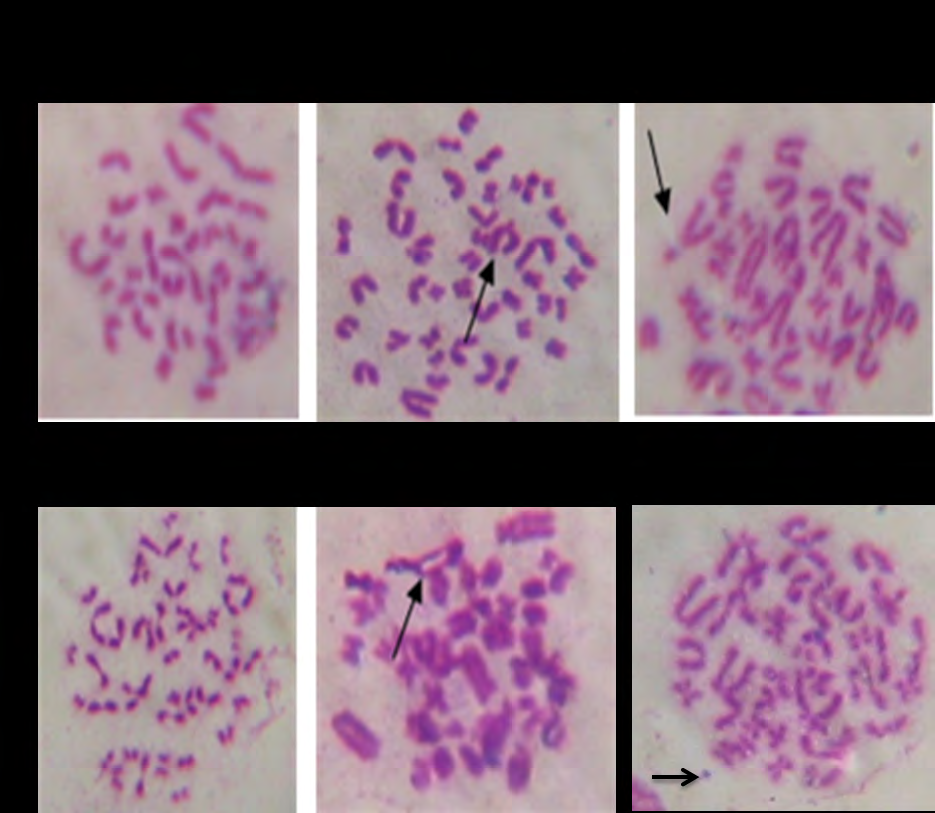
As compared to the control group, gadolinium chloride at all doses of 7, 10, and 20 mg/kg had no effect on body weight or liver to body weight ratio. Furthermore, as compared to the placebo group and the other group that was pretreated with gadolinium chloride and then treated with ccl4 for another 6 weeks, the ccl4 treated group had a lower liver to body weight ratio. Even though gadolinium chloride is selectively toxic to kupffer cells at doses of 7 and 10 mg/kg, the highest dose induces hepatocellular necrosis and increased hepatic cell apoptosis. Furthermore, rats given gadolinium chloride at doses of 7 and 10 mg/kg (groups 2,3) had normal liver architecture (Figure 2a & b).
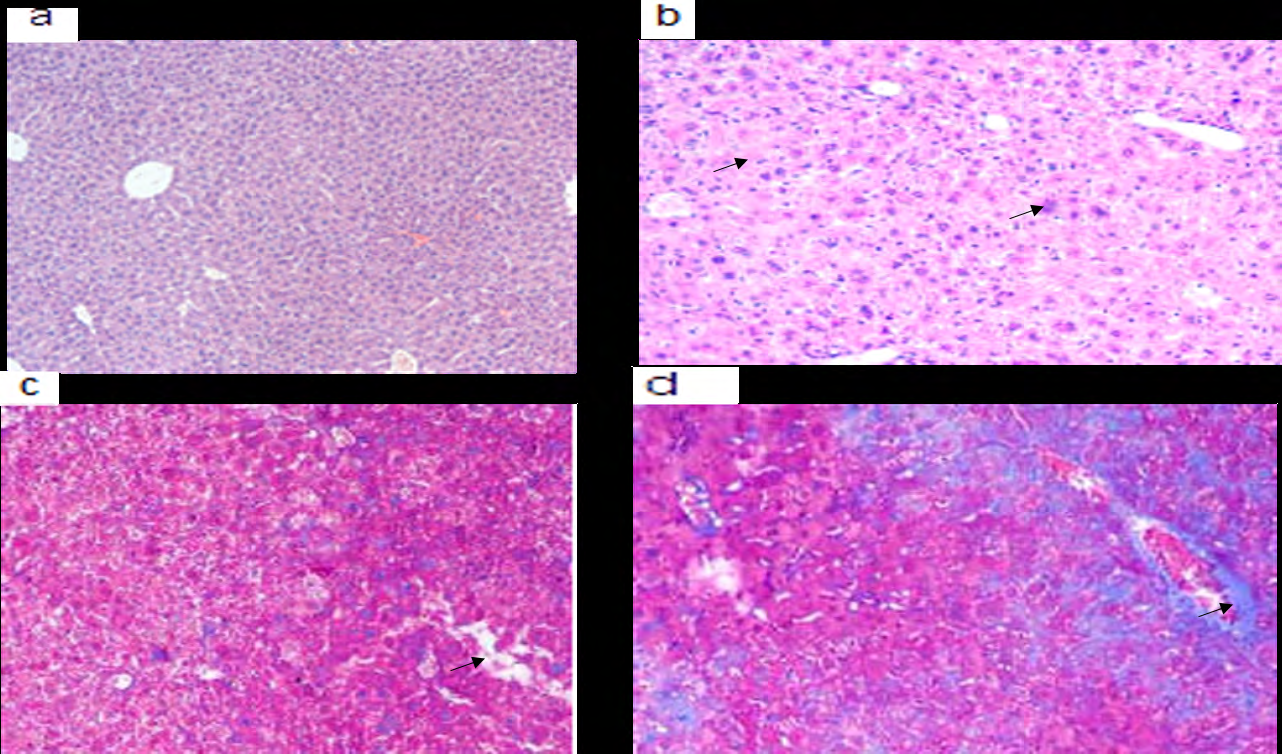
Figure 2: The depicted figure showed (a) normal liver parenchyma (b) the highest dose of gadolinium chloride induce hepatocellular necrosis and enhanced hepatic cell apoptosis (c) pretreatment of gadolinium chloride before and parallel of CCL4 treatment reduce the collagen deposition which visualized by mallory trichrome stain (d) massive collagen deposition by CCL4 stained bluish with mallory trichrome stain 100x.
As compared to the ccl4 treated group, pretreatment with gadolinium chloride before and parallel to ccl4 treatment reduces collagen deposition as visualized by the Mallory trichrome stain (Figure 3c & d).
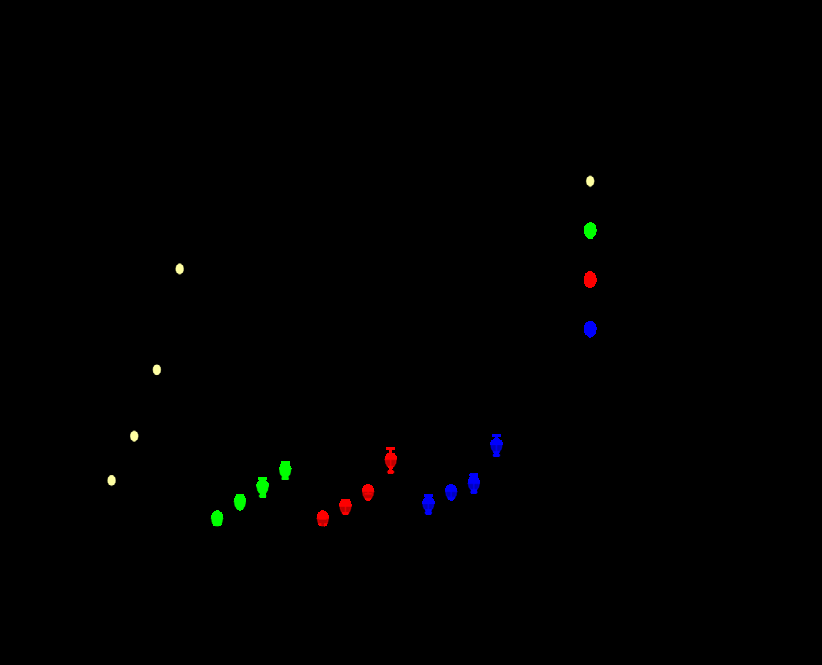
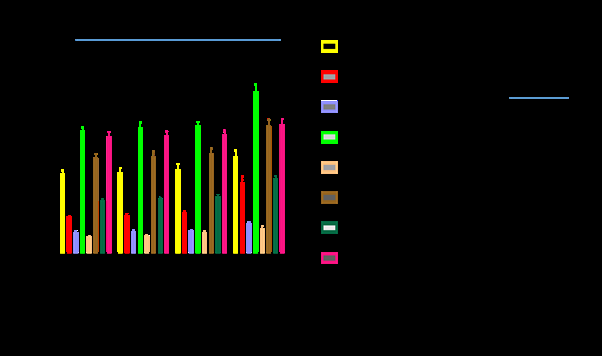
As compared to control group, gadolinium chloride at the maximum dose of 20 mg/kg increased serum liver transaminase activity, gamma-glutamyl transferase activity, alkaline phosphatase activity, urea, cholesterol, bilirubin, glucose, and triglycerides levels significantly. Furthermore, all biochemical parameters assessed in groups 2 and 3 were identical to those in the control group (Figure 4). Furthermore, when compared to all other types, gadolinium chloride pretreatment kept all measured biochemical parameters at basal levels close to control, while ccl4 significantly increased serum liver transaminases activity, gamma-glutamyl transferase activity, alkaline phosphatase activity, urea, cholesterol, bilirubin, glucose, and triglycerides (Figure 5).
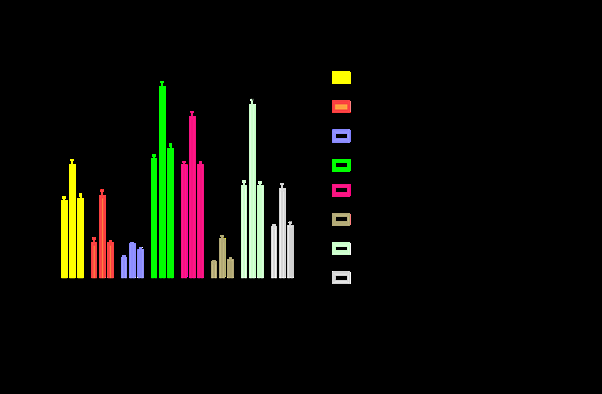
Finally, the expression of TGFB1 and IL-6 was suppressed by gadolinium chloride in rats treated with carbon tetrachloride, whereas it was high in rats treated only with carbon tetrachloride. Furthermore, gadolinium chloride preserved the antioxidant status of the liver as demonstrated by p62 expression, while carbon tetrachloride treatments decreased its expression (Figure 6).
Discussion
Gadolinium chloride is a contrast agent used in nuclear magnetic resonance imaging and a selective kupffer cell inhibitor in most tissues in medical research. Gadolinium chloride, at the maximum dose of 20 mg/kg, clearly increased hepatocellular necrosis and hepatic apoptosis. Also, Spencer, et al. [22] who found that the histopathological lesions presented in all dosages and increased in severity in a dose-related fashion. The most common lesions were hepatocellular necrosis and lymphoid depletion. As a result, for protective studies against CCL4-induced liver damage, we selected the lowest dose of gadolinium chloride at 7mg/kg.
Notably, the pretreatment of gadolinium chloride reduced CCL4 hepatotoxicity through reduction of collagen deposition and hepatocellular necrosis. This result agree with Kyriakou, et al. [6] who found that gadolinium pretreatment. minimized cadmium induced liver injury and these result revealed that gadolinium reduced hepatic necrosis induced by cadmium toxicity.
Gadolinium chloride induced chromosomal abnormalities of bone marrow cells at all doses gadolinium chloride but ratio of these abnormalities was increased with the highest dose 20 mg/kg. These results agreed with Yamazaki, et al. [23] who found that the frequency of SCE increased with the concentration of Gd-DTPA when incubated with venous blood. Additionally, our result agree with Setyawati, et al. [24] how reported that gadolinium oxide nanoparticles induced cytotoxicity in a dose dependent way on BJ cell line (human fibroblasts).
The present study showed that gadolinium chloride at highest dose (20 mg/kg) was increased significantly the liver transaminase, alkaline phosphatase, urea, cholesterol, bilirubin, glucose and triglycerides when compared with control group. This result was in consistent with Spencer, et al. [22, 25] who found that gadolinium chloride was found to increase liver enzymes, urea, cholesterol, bilirubin, and triglycerides in rats and mice in various studies. Furthermore, as compared to the control group, gadolinium chloride at doses of 7 and 10 mg/kg showed no variations.
Furthermore, when compared to all other types, pretreatment with gadolinium chloride kept all liver function parameters under investigation at basal levels close to regulation, while ccl4 increased liver transaminase, alkaline phosphatase, urea, cholesterol, bilirubin, glucose, and triglycerides significantly. These results are consistent with those of Kyriakou, et al. [6], who found that gadolinium pretreatment decreased acute cadmium-induced liver injury in young Wister rats by significantly reducing serum levels of AST and ALT. The inhibition of kupffer cells by gadolinium chloride has a function in the reduction of key cytokines such as transforming growth factor beta-1 (TGF-1) which is responsible for collagen deposition and other inflammatory and profibrogenic cytokines, according to the current report [26]. Furthermore, during CCl4 administration, treatment with GdCl3 and glycine stopped the effect of CCl4 enhancing liver fibrosis, and there was no -smooth muscle actin staining with GdCl3 and glycine treatment. Also, when comparing the LPS stimulation group to the Gd3+ group, there is a decrease in TNF- (24 h) and IL-6 (24 h) secretion in Gd3+ after long exposure as 24 hours [27].
Taken collectively, Gdch3 had a protective effect against CCl4 induced liver injury in male albino rats through suppressing expression of TGFb1 and attenuating the effect of CCl4 induced liver fibrosis.
Acknowledgments
This work was supported by grants-in-aid from academy of scientific research and technology of Egypt. The author thanks dr Mohamed Fawzy lecture of pathology department faculty of veterinary medicine Mansoura University who help me in pathological examination.
Contributions
All authors contributed equally in experimental procedures, data analysis, writing the manuscript and approved the submission.
Conflict of Interest
All author had no conflict of interest.
References
-
Kanal E, Tweedle MF (2015) Residual or retained gadolinium: practical implications for radiologists and our patients. Radiology 275(3): 630-634.
-
Yeung EW, Allen DG (2004) Stretch‐activated channels in stretch‐induced muscle damage: role in muscular dystrophy. Clinical and experimental pharmacology and physiology 31(8): 551-556.
-
Hardonk M, Dijkhuis F, Hulstaert C, Koudstaal J (1992) Heterogeneity of rat liver and spleen macrophages in gadolinium chloride–induced elimination and repopulation. Journal of leukocyte biology 52(3): 296- 302.
-
Roland CR, Nakafusa Y, Flye MW (1999) Gadolinium chloride inhibits lipopolysaccharide-induced mortality and in vivo prostaglandin E2 release by splenic macrophages. Journal of Gastrointestinal Surgery 3(3): 301-307.
-
Lee CM, Yeoh GC, Olynyk JK (2004) Differential effects of gadolinium chloride on Kupffer cells in vivo and in vitro. The international journal of biochemistry & cell biology 36(3): 481-488.
-
Kyriakou LG, Tzirogiannis KN, Demonakou MD, Kourentzi KT, Mykoniatis MG, et al. (2013) Gadolinium chloride pretreatment ameliorates acute cadmium-induced hepatotoxicity. Toxicology and industrial health 29(7): 624-632.
-
Harstad EB, Klaassen CD (2002) Gadolinium chloride pretreatment prevents cadmium chloride-induced liver damage in both wild-type and MT-null mice. Toxicology and applied pharmacology. 180(3): 178-85.
-
Sauer JM, Waalkes MP, Hooser SB, Kuester RK, McQueen CA, et al. (1997) Suppression of Kupffer cell function prevents cadmium induced hepatocellular necrosis in the male Sprague-Dawley rat. Toxicology 121(2): 155- 164.
-
Bautista M, Andres D, Cascales M, Morales González JA, Sánchez Reus MI (2010) Effect of gadolinium chloride on liver regeneration following thioacetamide-induced necrosis in rats. International journal of molecular sciences 11(11): 4426-4440.
-
Rivera CA, Bradford BU, Hunt K, Adachi Y, Schrum LW, et al. (2001) Attenuation of CCl4-induced hepatic fibrosis by GdCl3 treatment or dietary glycine. American Journal of Physiology-Gastrointestinal and Liver Physiology 281(1): G200-G207.
-
Muriel P, Escobar Y (2003) Kupffer cells are responsible for liver cirrhosis induced by carbon tetrachloride. Journal of Applied Toxicology: An International Journal 23(2): 103-108.
-
Chávez E, Alcantar LK, Moreno MG, Muriel P (2006) Gadolinium chloride inhibits the spontaneous resolution of fibrosis in CCl4-induced cirrhosis. Toxicology mechanisms and methods. 16(9): 507-513.
-
Khedr NF, Khedr EG (2014) Antioxidant and anti- inflammatory effects of curcumin on CCl4–induced liver fibrosis in rats. Am J Biomed Sci 6(3): 191-200.
-
Sarphie TG, D Souza NB, Deaciuc IV (1996) Kupffer cell inactivation prevents lipopolysaccharide‐induced structural changes in the rat liver sinusoid: an electron‐ microscopic study. Hepatology 23(4): 788-796.
-
Almeida IVD, Domingues G, Soares LC, Düsman E, Vicentini VEP (2014) Evaluation of cytotoxicity and mutagenicity of the benzodiazepine flunitrazepam in vitro and in vivo. Brazilian Journal of Pharmaceutical Sciences 50(2): 251-256.
-
Bancroft JD, Gamble M (2007) Theory and practice of histological techniques: Elsevier health sciences.
-
Wang Q, Liu W, Liu G, Li P, Guo X, et al. (2020) AMPK- mTOR-ULK1-mediated autophagy protects carbon tetrachloride-induced acute hepatic failure by inhibiting p21 in rats. Journal of Toxicologic Pathology 34(1): 73- 82.
-
Luger D, Dayan M, Zinger H, Liu JP, Mozes E (2004) A peptide based on the complementarity determining region 1 of a human monoclonal autoantibody ameliorates spontaneous and induced lupus manifestations in correlation with cytokine immunomodulation. Journal of clinical immunology 24(6): 579-590.
-
Natsume M, Tsuji H, Harada A, Akiyama M, Yano T, et al. (1999) Attenuated liver fibrosis and depressed serum albumin levels in carbon tetrachloride‐treated IL‐6‐ deficient mice. Journal of leukocyte biology 66(4): 601- 608.
-
Hunecke D, Spanel R, Langer F, Nam SW, Borlak J (2012) MYC‐regulated genes involved in liver cell dysplasia identified in a transgenic model of liver cancer. The Journal of pathology 228(4): 520-533.
-
Snedecor G, Cochran W (1989) Stadistical methods. 8th (Edn.), Ames. Iowa University Press.
-
Spencer AJ, Wilson SA, Batchelor J, Reid A, Pees J, et al. (1997) Gadolinium chloride toxicity in the rat. Toxicologic pathology 25(3): 245-255.
-
Yamazaki E, Matsubara S, Fukuda H, Shibuya H (1996) Induction of sister chromatid exchange in the presence of gadolinium-DTPA and its reduction by dimethyl sulfoxide. Investigative radiology 31(5): 284-287.
-
Setyawati MI, Khoo PKS, Eng BH, Xiong S, Zhao X, et al. (2013) Cytotoxic and genotoxic characterization of titanium dioxide, gadolinium oxide, and poly (lactic‐ co‐glycolic acid) nanoparticles in human fibroblasts. Journal of Biomedical Materials Research Part A 101(3): 633-640.
-
Spencer A, Wilson S, Harpur E (1998) Gadolinium chloride toxicity in the mouse. Human & experimental toxicology 17(11): 633-637.
-
Poli G (2000) Pathogenesis of liver fibrosis: role of oxidative stress. Molecular Aspects of Medicine 21(3): 49-98.
-
Weng TI, Chen HJ, Lu CW, Ho YC, Wu JL, et al. (2018) Exposure of macrophages to low-dose gadolinium- based contrast medium: impact on oxidative stress and cytokines production. Contrast media & molecular imaging.
- Natural Decline to Extinction of A New Zealand Rabbit Population
- Mitochondrial Bio-Logistics: Steering Co-Enzyme Q10 and Lycopene Synergies within the Science 4.0 Bio-OS Framework
- Hymenoptera Specimens from the Caño Negro Wetland, of the National Museum Collection, Costa Rica
- Science 4.0: Comprehensive Architecture of the Biological Operating System (Bio-OS) A Framework for Systemic Resilience and Industrialized Bio-Governance
- Rabbit on, or Hare Back? Understanding Climate Change
- Clinical Validation of Science 4.0: Flow Steering and Epigenetic Drift Inversion on a 76-Year-Old Hybrid System