
Unveiling the Enigmatic Plasmodium knowlesi: Insights, Challenges, and Promises in Malaria Research
Plasmodium knowlesi, a malaria parasite found in southeast Asia, can infect both primates and humans, potentially causing severe malaria. It is closely related to Plasmodium vivax, and its treatment utilizes chloroquine or artemisinin combination therapy. Plasmodium knowlesi presents significant health and economic challenges due to its zoonotic nature. However, it also serves as a valuable model for scientific research, aiding in vaccine development and understanding malaria invasion mechanisms. Its use facilitates progress in pharmaceutical investigations and the establishment of in vitro culture methods with both primate and human cells.
Editorial
Plasmodium knowlesi, a malaria parasite found in southeast Asia, can infect both primates and humans, potentially causing severe malaria. It is closely related to Plasmodium vivax, and its treatment utilizes chloroquine or artemisinin combination therapy. Plasmodium knowlesi presents significant health and economic challenges due to its zoonotic nature. However, it also serves as a valuable model for scientific research, aiding in vaccine development and understanding malaria invasion mechanisms. Its use facilitates progress in pharmaceutical investigations and the establishment of in vitro culture methods with both primate and human cells.
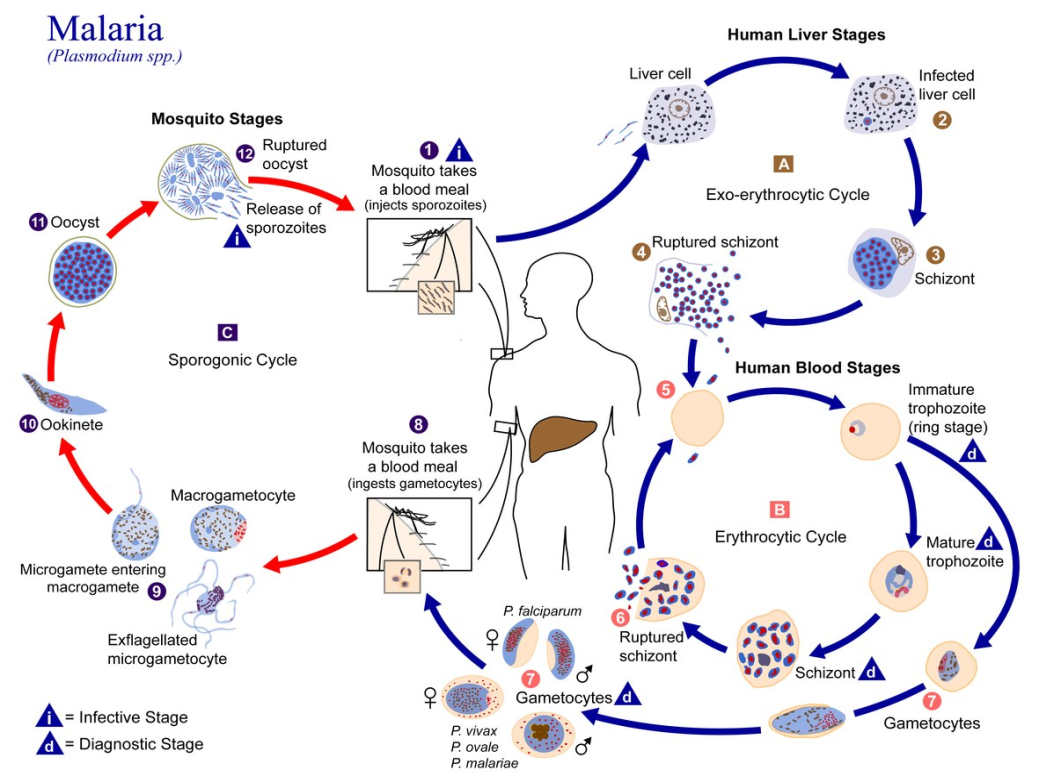
Plasmodium knowlesi is a malaria parasite that cycles between mosquitoes and primates. Its life cycle involves various stages, such as sporozoites, merozoites, and gametocytes. Asexual reproduction occurs in vertebrates, while sexual reproduction occurs in mosquitoes. Gametocytes transform into gametes, which combine to form an ookinete, penetrating the mosquito’s stomach lining [1, 2]. The ookinete matures into an oocyst, producing sporozoites via meiosis and mitotic divisions. These sporozoites migrate to the mosquito’s salivary glands for transmission. When a mosquito bites a primate, it injects sporozoites into the bloodstream, initiating the hepatic stage. After further development and schizogony, releasing merozoites invade erythrocytes, beginning the erythrocytic phase [3, 4, 5].
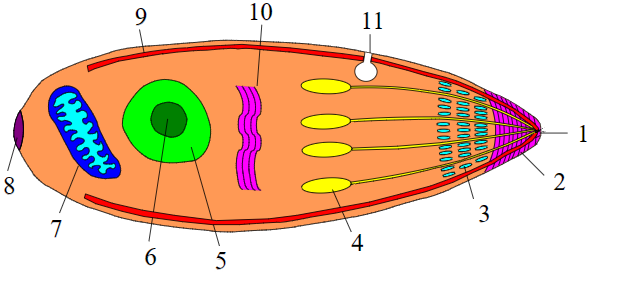
After invading primate erythrocytes successfully, merozoites undergo morphological changes, including ring stage, trophozoite, and schizonte phases (Figure 1). Schizont-containing red blood cells rupture, releasing up to 16 merozoites into the bloodstream to infect new red blood cells, perpetuating the parasitic life cycle [6, 7, 8]. Plasmodium knowlesi completes its life cycle within 24 hours but sometimes enters a sexual phase lasting about 48 hours, forming microgametocytes or macrogametocytes (Figure 2). These sexual forms wait in the bloodstream to be ingested by mosquitoes [9, 10].
Knowlesi malaria is a zoonotic disease affected by human activities and the adaptability of parasites and vectors. It is imperative to devise effective strategies for preventing, diagnosing, and treating zoonotic malaria. Rapid diagnostic tests are crucial for effectively handling Plasmodium knowlesi infections, allowing quick treatment for complications, mortality, and drug resistance. PCR is highly accurate in detecting Plasmodium knowlesi compared to conventional blood examination microscopy, which can lead to incorrect diagnoses [11, 12, 13, 14, 15, 16, 17, 18, 19, 20, 21, 22, 23, 24, 25, 26, 27, 28, 29, 30, 31].
The intricate dance between Plasmodium knowlesi, primates, and mosquitoes unveils challenges and opportunities in the fight against malaria. While this zoonotic parasite poses significant health and economic burdens, its unique biology also provides a window into understanding malaria’s complexities. Through innovative research and strategic interventions, we can harness the power of knowledge to develop effective prevention and treatment strategies, ultimately paving the way toward a malaria-free future.
Acknowledgments
The author acknowledges Mrs. Norri Zahra and Mr. Regragui Moumaris.
References
-
Pathak AK, Shiau JC, Thomas MB, Murdock CC (2018) Cryogenically preserved RBCs support gametocytogenesis of Plasmodium falciparum in vitro and gametogenesis in mosquitoes. Malar J 17(1): 457.
-
Kwon H, Simões ML, Reynolds RA, Dimopoulos G, Smith RC (2021) Additional Feeding Reveals Differences in Immune Recognition and Growth of Plasmodium Parasites in the Mosquito Host. Msphere 6(2): e00136-
-
Morais CMG, Brito RMM, Weselucha-Birczyńska A, Pereira VSS, Pereira-Silva JW, et al. (2022) Blood-stage antiplasmodial activity and oocyst formation-blockage of metallo copper-cinchonine complex. Front Cell Infect Microbiol 12: 1047269.
-
Ngotho P, Soares AB, Hentzschel F, Achcar F, Bertuccini L, et al. (2019) Revisiting gametocyte biology in malaria parasites. FEMS Microbiol Rev 43(4): 401-414.
-
Dash M, Sachdeva S, Bansal A, Sinha A (2022) Gametogenesis in Plasmodium: Delving Deeper to Connect the Dots. Front Cell Infect Microbiol 12: 877907.
-
Rosenberg R, Wirtz RA, Schneider I, Burge R (1990) An estimation of the number of malaria sporozoites ejected by a feeding mosquito. Trans R Soc Trop Med Hyg 84(2): 209-212.
-
Ramírez AL, Van den Hurk AF, Mackay IM, Yang ASP, Hewitson GR, et al. (2019) Malaria surveillance from both ends: concurrent detection of Plasmodium falciparum in saliva and ex creta harvested from Anopheles mosquitoes. Parasit Vectors 12(1): 355.
-
Krotoski WA, Collins WE, Broderson JR, Warren M, Krotoski DM (1981) The 48-hour exoerythrocytic stage of Plasmodium cynomolgi bastianellii. Am J Trop Med Hyg 30(1): 31-7.
-
Pasini EM, Zeeman AM, Voorberg-VAN DER Wel A, Kocken CHM (2018) Plasmodium knowlesi: a relevant, versatile experimental malaria model. Parasitology 145(1): 56-70.
-
Zaw MT, Lin Z (2019) Human Plasmodium knowlesi infections in South-East Asian countries. J Microbiol Immunol Infect 52(5): 679-684.
-
Moumaris M (2024) Lyme Disease: A Zoonosis Tick- Borne Borrelia Bacterium [4/4]. Int J Zoo Animal Biol 7(1): 000549.
-
Moumaris M (2023) Revolutionizing Malaria Research: CRISPR unveils New Frontiers. J Biotechnology and Bioprocessing 4 (5): 2766-2314.
-
Moumaris M (2023) Lyme Disease: A Zoonosis Tick- Borne Borrelia Bacterium [3/4]. Int J Zoo Animal Biol 6(4): 000500.
-
Moumaris M (2023) Lyme Disease: A Zoonosis Tick- Borne Borrelia Bacterium [2/4]. Int J Zoo Animal Biol 6(2): 000465.
-
Moumaris M (2022) Lyme Disease: A Zoonosis Tick- Borne Borrelia Bacterium [1/4]. Int J Zoo Animal Biol 5(6): 000425.
-
Moumaris M, Bretagne JM, Abuaf N (2020) Nanomedical Devices and Cancer Theranostics. The Open Nanomedicine and Nanotechnology Journal 6: 1-11.
-
Moumaris M, Bretagne JM, Abuaf N (2019) Biological Membranes and Malaria-Parasites. The Open Parasitology Journal 7: 1-18.
-
Moumaris M, Bretagne JM, Abuaf N (2018) Hospital Engineering of Medical Devices in France. The Open Medical Devices Journal 6: 10-20.
-
Moumaris M, Rajoely B, Abuaf N (2015) Fluorescein Isothiocyanate-Dextran can track Apoptosis and Necrosis induced by heat shock of Peripheral Blood Mononuclear Cells and HeLa Cells. Open Biological Sciences Journal 1: 7-15.
-
Moumaris M, Rajoely B, Abuaf N (2012) The Naïve B Cells are the Lymphocytes with the Highest Anionic Phospholipid Binding Ratios. The Open Immunology Journal 5: 27-35.
-
Moumaris M (2007) Magnetic resonance imaging at the Hôtel-Dieu of Paris. Paris-Descartes University, France.
-
Moumaris M (2005) Identification of a new molecule to monitor apoptosis. Sorbonne-Paris-Nord University, France.
-
Moumaris M (2003) Biomedical research, the law of bioethics relating to the donation and use of elements and products of the human body. Paris-Descartes University, France.
-
Moumaris M, Abuaf N (2002) Use of labeled dextran for in-vitro assessment of increased cell permeability, cell death and apoptosis. Bulletin officiel de la propriété industrielle (Brevet n°00/09235) 2811682: A3.
-
Moumaris M, Benoliel S, Rouquette AM, Rajoely B, Abuaf N (2000) Phospholipid binding proteins on the plasma membrane of lymphocytes. J Autoimmun 15 (2): 81-271.
-
Moumaris M, Ignoti S, Benoliel S, Oghina G, Rajoely B, et al. (1999) Characterization of B-cell adhering to the lamellar phospholipids. French Congress of Antiphospholipid Antibody, Paris.
-
Moumaris M (1996) Membranes érythrocytaires dans le paludisme: modèle d’étude: Souris- Plasmodium berghei anka. Université Pierre et Marie Curie, Paris, France.
-
Moumaris M, Sestier C, Miltgen F, Halbreitch A, Gentilini M, et al. (1995) Effect of Fatty Acid Treatment in Cerebral Malaria-Susceptible and Nonsusceptible Strains of Mice. The Journal of Parasitology 81 (6): 997-999.
-
Sabolovic D, Moumaris M, Miltgen F, Sestier C, Halbreich A (1995) A subpopulation of red blood cells induced by bleeding or mosquito sucking. Chinese National Congress of Medical Biophysics, Shanghai.
-
Sabolovic D, Moumaris M, Miltgen F, Sestier C, Halbreich A (1995) Characterisation of subpopulation of red blood cells as a preferential target for malaria invasion. French Congress of Electrophoresis, Cell Electrophoresis, Pastor Institute, Paris, USA 19(7): 1215-1219.
-
Moumaris M (1992) Lyme disease: Serological study. University of Orleans, France.
- California Red-Legged Frog and Non-Listed Amphibians Response to Non-Native Fish Removal
- Industrial Standardization of the Bio-OS: Algorithmic Codification of Resilience Engineering Guidelines and Version V8 Architecture
- Climate Variability and the Sustainability of Snail Farming in Nigeria: Past Trends, Present Challenges and Potential Outlook
- The Evaluation of the Surveillance System of Anthrax in Gilgit-Baltistan, Pakistan, 2018
- Natural Decline to Extinction of A New Zealand Rabbit Population
- Mitochondrial Bio-Logistics: Steering Co-Enzyme Q10 and Lycopene Synergies within the Science 4.0 Bio-OS Framework