
Alternative Treatments for the Cure of Dogs Infested by Demodex canis Leydig, 1859 (Arachnida: Acarina)
Demodicosis is a very common cutaneous parasitic disease that afflicts dogs, usually inflammatory, does not produce contagion and is related to the excessive proliferation of mites of different species of the genus Demodex, which are commensal hosts, in small quantities, in the skin of canids. The objective of the research work was to propose a series of alternative treatments for the cure of demodicosis in dogs, using traditional natural medicine. The diagnosis was made by direct observation of D. canis in multiple skin scrapings, trichogram, acetate tape test, skin biopsy among others. In addition, data collection and processing methods were used. A total of 25 dogs infested by D. caninus, with generalized demodicosis (12 males and 8 females) aged between 6 months and 12 years were studied. The SPSS statistical program was used for data processing. As a result of the application of alternative treatments, with the use of traditional natural medicine, it was found that 100% of the specimens of Canis familiaris Linnaeus, 1758, were cured in different periods, taking into consideration the severity of the lesions and their breed. It is considered that the use of alternative treatments can substitute the use of industrial pharmaceuticals.
Introduction
Demodicosis is a common parasitic skin disease affecting canids, usually inflammatory, non-contagious and associated with the excessive multiplication of mites of different species of the genus Demodex, which are commensal hosts, in small numbers, on the skin of dogs [1, 2, 3].
Demodicosis is a common and demanding non- contagious dermatopathy of parasitic origin, caused by the overpopulation of specific follicular mites of the species Demodex canis on the skin of the host. A group of mites that are part of the normal flora of the hair follicle and sebaceous glands of different mammals, including canines, constitute the genus Demodex [4, 5, 6].
There is evidence that humoral, cellular and immunological disorders are responsible for the excessive multiplication of the mite and consequently for the development of clinical signs [2, 7, 8]. However, the exact pathophysiology and the molecular mechanisms that allow the mite to proliferate excessively are still not known [4, 9].
Demodicosis can be classified according to its location on dermograms as localized or generalized and can occur in both young and adult animals. Localized demodicosis is in most cases self-limiting and occurs in dogs under 6 months of age; whereas generalized demodicosis, considered among the most severe dermatological diseases, can occur secondary to another underlying systemic disease or immunosuppression of various origins such as malnutrition, endoparasitism, neoplasms, chemotherapy and endocrinopathies [10, 11, 12].
Approximately 50% of all Demodex species coexist with another species on the same host. This ectoparasite is specifically restricted to hair follicles and sebaceous glands, particularly in the skin of the facial area, where they live on cellular debris and sebum. Exceptionally, Demodex is localised in other areas of the body (lymph nodes, ear canal, meibomian glands, blood, milk, preputial secretions and others) [6, 7, 13].
Most cases of canine demodicosis are caused by the mite Demodex canis; however, two other possible species have been described as causing cutaneous pathology in dogs, D. injai and D. cornei [3, 7, 14].
For the cure of demodicosis, the most commonly used drug is Ivermectin, which has proven to be one of the most effective drugs in the treatment of this disease in canids when administered daily and at very high doses (0.6 mg/ kg/d) [3, 7, 8].
Another drug used is Doramectin, but it has the risk of neurotoxicity similar to ivermectin, manifesting signs of intoxication such as blindness, restlessness, central nervous system depression, hypersalivation, tachypnoea, ataxia, disorientation and bradycardia [15, 16, 17].
It should be noted that moxidectin is another macrocyclic lactone, but it belongs to the milbemycins group and is applied orally, and isoxalines is an antiparasitic drug also used in the treatment of canids with demodicosis. However, it causes drooling, lack of appetite, vomiting and diarrhea in the dog after the first day of treatment [8, 9, 17].
Taking into consideration that most of the industrially produced drugs used for the cure of demodicosis produce some side effects in dogs, and due to the limited availability of these drugs in the national market of the Republic of Cuba, the authors of this research have considered as a fundamental objective to propose a series of alternative treatments for the cure of demodicosis in dogs, using traditional natural medicine or naturotherapy.
Materials and Methods
The research was actually carried out in the D’Yilbert Pet Shop, in its Veterinary Clinic section. This shop is located at 75 Miguel Coyulla Street between Paseo de la Paz and Alemán in the city of Santa Clara, Villa Clara province, Cuba (Figure 1).
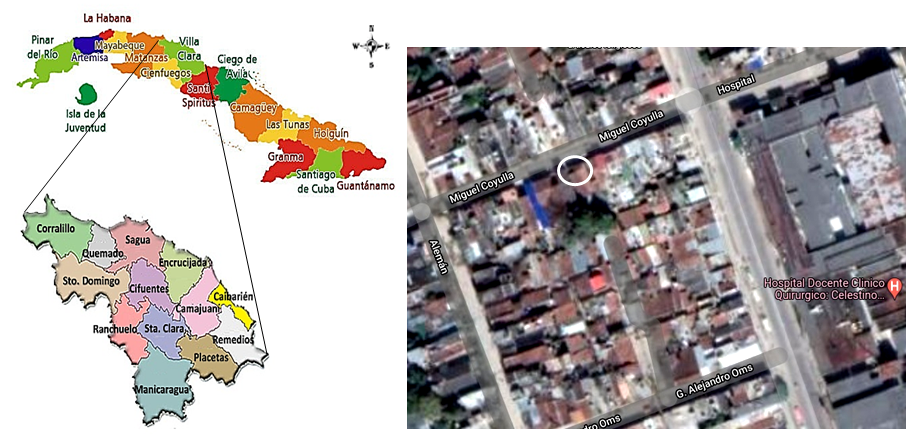
Source: Taken from Google Maps. Figure 1: Map of Cuba with its 15 provinces and the special municipality Isla de la Juventud and map of the province Villa Clara with its municipalities. Enclosed in a circle and in satellite view, place where the pet shop is located.
For the development of this research, methods of collecting information and processing the information collected were used.
Among the Data Collection Methods, the Following were Used
Observation: to detect the lesions produced by D. canis in infested dogs and the severity of demodicosis.
The Methods of Processing the Collected Information Used, in the Intellectual Category, were the Following
Analysis-synthesis: to estimate the fundamental contributions of Cuban and foreign researchers to the research topic. In addition, the reflections emanating from the sources consulted and in the analysis of the results are combined and contrasted. Inductive-demonstrative: it allowed, based on the methods applied and the bibliographical consultations carried out, to make conjectures about the real situation of dogs infested by D. canis and the way to minimise the infestation, with the application of alternative treatments.
The Methods or Techniques to be Used in Situ Were
Skin Scrapings: to observe through the microscope the species of infesting mite, as well as bacteria and fungi associated with D. canis. Scraping of the pet’s skin was the first thing to be done when the pet entered the clinic and is not a painful test. This was carried out in approximately 40 seconds on the lesions detected, this technique was undertaken with a scalpel blade number 20, which was wetted with mineral oil. The material obtained was placed on object holders with their corresponding coverslips, where mineral oil was used as a mounting medium. It was then placed under the light microscope to check for the presence of D. canis eggs or specimens, and then treated. Trichogram: to rule out the presence of associated parasitism. This method consisted of removing a few hairs with the fingertips, which were placed on a slide with a small amount of mineral oil and the orientation of the hairs was maintained. These hairs were examined under the microscope. This method was applied the same day the pet entered the clinic for the initial evaluation of the patient with dermatopathy. Acetate Tape Test: to be used in areas difficult to scrape such as the interdigital spaces, paws, labial commissures or the periocular area. This test, also known as Graham’s test, is a very simple test that also allowed the diagnosis of nematode infestation, and consisted of taking a sample from the perianal region with the help of a transparent adhesive tape in order to observe the parasite eggs and, in this way, make a comprehensive diagnosis. This test was performed one day after the pet’s admission to the clinic. Skin Biopsy: to confirm the diagnosis of demodicosis by demonstrating histopathological changes. In addition, to rule out the presence of tumors, such as melanomas and melanosarcomas associated with skin lesions. A total of 25 D. caninus infested dogs with generalised demodicosis (16 males and 9 females) aged between 4 months and 12 years were studied during the course of the year 2020, from January to December. Diagnosis was made by direct observation of mites in skin scrapings, trichogram, acetate tape test, exudate, skin biopsy and others. Cases with several body regions affected, cases with more than 5 lesions distributed over the trunk or with pododermatitis on 2 or more limbs were specified as generalised demodicosis.
Ethical Aspects
The research was subject to ethical standards that made it possible to promote and ensure respect for all participants in the study (researchers and dog owners) so that their individual criteria/opinions and rights were respected in order to generate new knowledge without violating the ethical principles of privacy and confidentiality of personal information of all research participants [18].
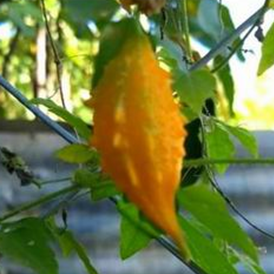
PET STORE D’Yilbert. Veterinary Section. Clinical History No: 17 General data Date: Day 12 Month 1 Year 2020 Code 000078 Home address: Estrada Palma / Paseo de la Paz and alemán Pet’s name: Joy Type of pet: Can Race: Cocker spaniel Sex: Female Age: 5 years Medical history: The owner reports that her pet has progressively lost its fur, has a bad odor and has decreased its appetite. In addition, there are areas of the skin that she says have almost completely peeled off. Physical Examination: Observation: the pet’s skin is observed with generalized demodicosis, with hair removal, thickening, erythema and hyperpigmentation on the skin of the neck. Palpation: Alopecic foci were determined, with the presence of vesicles, pustules, crusts, and erythema, the fur is easily detached, with remains of skin. There is presence of abundant purulent secretions with fetidness. Oscultations: It was not necessary because it was within the normal range of parameters. Presumptive Diagnosis: canine demodicosis Complementary Analysis: Skin sampling Techniques Used: scraping, trichogram and acetate tape test Results: Demodex canis Final Diagnosis: there is diagnostic corroboration when the following are diagnosed canine demodicosis. Treatment Applied: naturotherapy with phytopharmaceuticals, using: Aloe vera, vinegar, cundeamor, sunflower, annatto and neem. Observations: the treatment responds best at night, in the case of creams. The Treatment: For the treatment of demodicosis, the use of naturotherapy was prioritized over the use of established drugs for this pathology. The plants used for the different stages of treatment were: Cundeamor Momordica charantia L., 1753 (Figure 2). Also known as; Bitter melon, Tomaco, Mouse melon, Papayiyo, Pepinillo, Maroon cucumber, chino melao of San Caetano, Turkey bun, Santiago Liana, Cachimbos, Turkeys and Cun. This plant has hypoglycaemic, healing and antimicrobial properties.
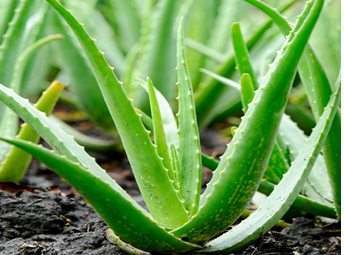
Sabila Aloe vera (L., 1753); Burm, 1768 (Figure 3). A plant to which different properties are attributed due to the presence of various sugars contained in the gel of the leaves [19], including fructose, aloeride, cellulose, neutral glucomannans, galactogalacturonans, glucogalactomannans, arabinose, mainly, and also the presence of phenolic compounds such as aloin, aloe emodin, 4-hydroxyloin, 5-hydroxyloin, allanosides A and B, aloesins A and B, aloesins A and B and 8-C-glucosyl-7-o-o-methyl-(s) aloesyl [20, 31].
Most of the properties are a product of the synergy of several of these phenolic compounds and carbohydrates.
These properties include promoting cell healing and proliferation, antifungal, antibacterial and antiviral activity, anti-inflammatory and analgesic effect, anticancer, immunomodulatory, gastroprotective and others [20].
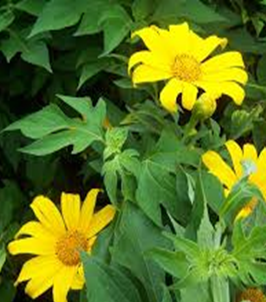
Sunflower or buttercup Tithonia diversifolia (Wihelm, 1824) A. Gray (Figure 4), is another plant used. Its bactericidal and fungicidal, antimalarial, herbicidal, insecticidal and anti- inflammatory effects have been demonstrated worldwide [21, 22].
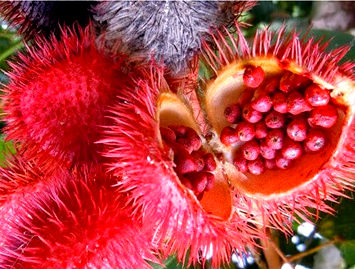
Bija Bixa orellana L., 1753 (Figure 5). Numerous medicinal properties have been attributed to this plant, both to its leaves and seeds, among which the following stand out:
anti-tumour (especially in oral cancer), as an aphrodisiac, anti-inflammatory, astringent, emollient, antiseptic, antibacterial, antioxidant, expectorant, cicatrisant, diuretic, hypoglycaemic, laxative, vermifuge, febrifuge, source of vitamins, and has been indicated in the treatment of acne, alopecia, asthma, condyloma, gonorrhoea, measles, smallpox, general bacterial infections, conjunctivitis, dermatosis, diabetes, epilepsy, glaucoma, headache, haemorrhoids, liver disorders, arterial hypertension, malaria, nephrosis, in the treatment of snake bites, stomach pain, stomatitis, tonsillitis and in the healing of wounds and burns [23].
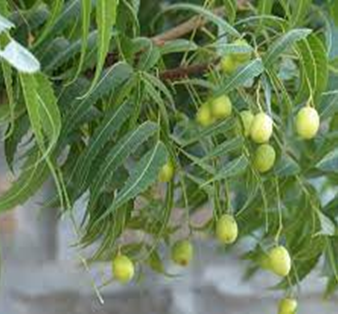
Neem o Nim Azadiracta indica L., 1753 (Figure 6). This tree has numerous properties, such as: stimulant, astringent, febrifuge, detersive, vermifuge, purgative, anthelmintic, antiseptic, antiparasitic, revitalising, antiviral, antipyretic, antianxiety, antimicrobial, anti-inflammatory, antibacterial, analgesic, detoxifying and contraceptive [24].
With the selected plants, different medicines were developed for the application of naturotherapy to dogs infested with D. canis. The methodology used is described below.
Methodology Used for the Cure of Demodicosis with Traditional Natural Medicine
First Stage: In this first stage, a cream based on aqueous Aloe vera extract and cundeamor was applied to the damaged areas daily for 15 days, after disinfecting all the areas with demodicosis with lukewarm water. This treatment was carried out between 5 and 6 p.m., due to the high concentration and increased movement and damage of the mite at that time.
Second Stage: On the 16th day, the sunflower baths were applied every other day, but between 9 and 10 a.m., and the pet was placed in the sun to dry for approximately 30 minutes, never after 11 a.m., because solar radiation has a negative effect on the skin, causing itching and local burns. This treatment was applied for 15 days before moving on to the third stage.
Third Stage: 30 days after the start of the treatment, the acaricidal phase provided by the Nim and the skin revitalising phase was applied, reinforced by the addition of annatto, which boosts the tannic action of the aloe vera. The fruits of the Nim were macerated and left to decompose for 24 hours or, failing that, an efficient maceration of the cut leaves after 5 p.m., due to their concentration of alkaloids, because of its concentration of the alkaloids nimbin and azaradictin with proven insecticidal and acaricidal action, after mixing the aqueous extract of aloe vera (skin revitalising and healing action), neem (insecticidal and acaricidal action) and annatto (healing, antiseptic and revitalising the muscle fascia). This treatment is applied for a month every third day at night.
These three stages were used in most of the dogs indistinctly, depending on the breed to be treated.
Results and Discussion
Once the naturotherapy had been applied to different infested dogs (puppies) and during the established periods, Table 1 was drawn up, showing different parameters such as; the breed of the dog treated in the cure, age, sex, the technique used, and duration of treatment, the final result and observations.
| No. | Raza | Age | Sex | Technique of Ascertainment | Duration of Treatment | Final Result | Observations |
|---|---|---|---|---|---|---|---|
| 1 | German Shepherd | 8 months | M | Scraping and Trichogram | 2 months and 8 days | Responded to treatment | Bacterial Proliferation |
| 2 | German Shepherd | 10 | F | Scraping and Trichogram | 2 months and 22 days | Responded to treatment | Fungal proliferation |
| 3 | German Shepherd | 7 | M | Scraping and Trichogram | 2 months and 3 days | Responded to treatment | Proliferation Bacterial |
| 4 | Pitbull terrier americano | 6 | M | Scraping | 2 months and 11 days | Respondió al tratamiento | Fungal proliferation |
| 5 | Pit Bull terrier americano | 9 | M | Scraping | 2 months and 7 days | Responded to treatment | Fungal proliferation |
| 6 | Cocker spaniel | 6 | M | Scraping | 2 months and 7 days | Responded to treatment | Bacterial proliferation |
| 7 | Chow-chow | 7 | M | Skin biopsy | 2 months and 7 days | Responded to treatment | Fungal proliferation, associated with melanosarcomas |
| 8 | Mestizo | 6 | H | Scraping | 2 months and 7 days | Responded to treatment | Bacterial proliferation |
Table 1: ** D. canis infestation in puppies.
Source: Own elaboration Table 1: D. canis infestation in puppies.
Table 2 shows the results obtained with the application of naturotherapy, but in adult dogs.
| No. | Raza | Age | Sex | Technique of Ascertainment | Duration of Treatment | Final Result | Observations |
|---|---|---|---|---|---|---|---|
| 1 | German Shepherd | 9 years | F | Scraping | 3 months and 9 days | Disinfested | Fungal proliferation and ticks Ripicephalus sanguineus |
| 2 | Labrador retriever | 3 | M | Scraping | 3 months and 12 days | Desinfested | Fungal proliferation, obese animal |
| 3 | Chiguagua | 2 | F | Scraping | 2 months and 15 days | Desinfested | -------- |
| 4 | Cocker spaniel | 5 | F | Scraping | 2 months and 20 days | Desinfested | Fungal proliferation |
| 5 | Argentine Dogo | 4 | M | Scraping | 2 months and 16 days | Desinfested | --------- |
| 6 | Stafford shire terrier | 5 | M | Scraping | 2 months and 18 days | Desinfested | ------ |
| 7 | Husky siberiano | 4 | M | Scraping | 2 months and 23 days | Desinfested | Fungal proliferation |
| 8 | German Braco | 3 | F | Scraping | 2 months and 12 days | Desinfested | bacterial proliferation |
| 9 | Belgian Shepherd | 5 | M | Scraping and Trichogram | 3 months and 14 days | Desinfested | --- |
| 10 | Mestizo | 11 | F | Scraping | 2 months | Desinfested | ------ |
| 11 | Chow -chow | 12 | M | Scraping tape test | 3 months and 12 days | Desinfested | Other ectoparasites |
| 12 | Shepherd mallinois | 4 | M | Scraping | 3 months and 13 days | Desinfested | ------ |
Table 2: ** D. canis infestation in adults.
Source: Own elaboration Table 2: D. canis infestation in adults.
Figure 7 shows a dog with severe D. canis infestation, with depilation, thickening, erythema and hyperpigmentation on the skin of the neck, and figure 8, the same dog after treatment.
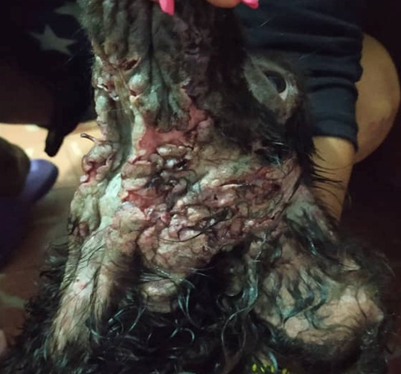
Photo: Yilbert Javier Vila Perez. Figure 7: Adult dog with generalized demodicosis, with hair removal, thickening, erythema and hyperpigmentation on the skin of the neck.
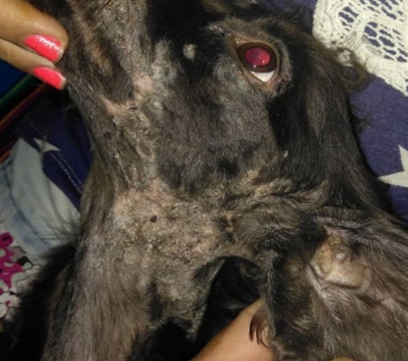
Photo: Yilbert Javier Vila Perez. Figure 8: Effects of naturotherapy in the treatment of dogs with severe demodicosis of the neck.
Duration of treatment was one of the parameters used to estimate the efficacy of the use of traditional natural medicine in the treatment of dogs infested with D. canis. However, it is necessary to clarify that this parameter is variable and depends on the extent of the disease at the start of treatment, the breed of the dog, obesity, infestation by other arthropods such as fleas and fleas, as well as bacteria and fungi, among other factors, so that estimating an average figure is of little use [9, 11, 32]. This is in agreement with Ginel PJ, et al. [25].
In the Labrador, which is a dog with a long coat, demodicosis was also associated with the presence of follicular plugs, in which sebum and keratin remains were found adhered to the base of the hair, which is consistent with Salo E [1].
A conclusive diagnosis of demodicosis could be made by microscopic identification of the parasite on observation of skin scrapings, squeezing out D. canis follicles. The adhesive tape test had to be used for the most superficial forms and the trichogram. Cytological examinations of postular exudates were performed. Biopsy was essential in the Chow chow breed due to its specific cutaneous characteristics. In this respect, it does not differ from that expressed by Scott, et al. [26].
The main treatments suggested in the literature to achieve high levels of certainty for demodicosis are Amitraz baths and the use of macrocyclic lactones such as milbemycin, oxime, moxidectin, ivermectin and doramectin [17, 27, 28]. However, the use of traditional natural medicine or naturotherapy in dogs with demodicosis was shown to be effective, as all 25 treated dogs were cured.
Drugs such as milbemycin, oxime, moxidectin, ivermectin and doramectin have a low efficacy against demodicosis in adults. This reinforces the fact that the use of traditional natural medicine is effective in both puppies and adults in the treatment of demodicosis [6, 27, 28].
The authors of this research point to the non-use of immunosuppressive drugs. This is in agreement with [29]. For this reason, among other factors, the use of plant-based anti-parasitic treatments was used.
In the opinion of the research participants, obese animals with fungal proliferation accentuate demodicosis systems such as sebaceous and seborrheic secretions, as was the case with the Labrador Retriever. It should be noted that in puppies the phases or stages were 7 to 10 days and in adults the duration was between 14 and 15 days. At the end of the stages, naturotherapy was not administered for a period of 7 to 10 days. After this time, the first two stages were repeated only in puppies, and in adults the three stages were repeated. It should be noted that the Neem treatment is administered only once to the puppies in the third stage [2, 17, 28].
According to the authors of this work and through observation over several years in the application of the techniques described, mongrels and short-haired dogs responded better to the treatment. However, those with thick coats, which are generally native to cold and temperate climates, had a slower recovery, this is in line with results obtained by other authors in this respect [9, 12, 30].
The validity of the treatment was rigorously assessed because a distinction had to be made between localised and generalized demodicosis, and the cure was linked to the application of naturotherapy.
In the 12-year-old adult Chow-chow, he was immunosuppressed and anemic at the start of treatment, because he had received repeated doses of an antiparasitic to control other ectoparasites such as ticks and fleas, but which did not eliminate Demodex. The organophosphate used was (neocidol 350 EC), which is more specific for poultry and pigs.
Conclusions
Evidently the use of traditional natural medicine, also known as green medicine or naturotherapy, had very positive effects on the cure of dogs with demodicosis, the owners of these canids treated in the clinic for months, in different seasons of the year during the year 2020 and in the middle of the COVID-19 pandemic, were very satisfied with the results obtained in the cure of their pets. One year after the start of treatment with naturotherapy, the patients remain healthy and without any clinical signs of the disease, which has been very gratifying for the researchers. We did not want to include in the research the methodology for obtaining the different creams and antiectoparasitic liquids used in the cure of the dogs, because these natural medicines have not yet been patented and also because their use in other infested patients is still being perfected.
Conflict of Interest
No conflict of interest exists among the Authors.
Contribution
All the authors contributed substantially to the concrescence of the manuscript
Funding
This research did not receive any specific grant from Funding agencies in the public, commercial, or not-for-profit sectors.
References
-
Salo E (2011) Clinical forms of canine demodicosis. It’s not all alopecia. Veterinary Clinic Small Animal 31(2): 67-75.
-
Gasparetto ND, Bezerra KS, Soares LMC, Makino H, Oliveira ACS, et al. (2018) Clinical and histological aspects of localised and generalised canine demodicosis. Brazilian Veterinary Research 38(3).
-
Kucharuk MF (2019) An updated look at canine demodicosis. Rio Negro: Publications and Scientific Exchange Service, National University of RIo Negro, pp: 52.
-
Nosach N, Blanco A, Duarte M (2018) Update on Canine Demodectic Disease: A Bibliographic Review. Revista Veterinaria Argentina 36: 366.
-
Patra G, Behera P, Ghosh S, Mohanta D, Borthakur SK, et al. (2019) Molecular Characterization of Chitin Synthase Gene of Demodex canis from Mizoram, India. Acta Parasitology 64(1): 57-62.
-
Saari S, Nareaho A, Nikander S (2019) Canine Parasites and Parasitic Diseases: Chapter 9 Arachnida. Canine Parasites and Parasitic Diseases. Academic Press pp: 187-228.
-
Mueller RS, Rosenkrantz W, Bensignor E, Karas-Tecza J, Paterson T, et al. (2020) Diagnosis and treatment of demodicosis in dogs and cats: Clinical consensus guidelines of the World Association for Veterinary Dermatology. Veterinary Dermatology 31(1): 5-27.
-
Jordan BKP, Aviles EDF, Guevara FD, Toalombo VP (2024) Canine demodicosis. Bibliographic review. Digital Anatomy 7(1): 50-59.
-
Djuric M, Milcic MN, Davitkov D, Glavinic U, Vejnovic B, et al. (2019) Efficacy of oral fluralaner for the treatment of canine generalized demodicosis: A molecular-level confirmation. Parasit Vectors 12(1): 270.
-
Chavez F (2016) Case Report of Afoxolaner Treatment for Canine Demodicosis in Four Dogs Naturally Infected with Demodex canis. International Journal of Applied Research in Veterinary Medicine 14(2): 123-127.
-
Arroyo MYJ, Hincapie GLC (2018) Canine generalized demodicosis treated with Fluralaner: a case report. Journal of Veterinary and Zootechnics 12(1): 10.
-
Yesenia PCY, Duarte C, Medina RM (2020) Literature review on the immunopathology of canine demodicosis and immunomodulatory treatments. Cooperative University of Colombia 3(5).
-
Scott DW, Miller WH, Griffin CE (2001) Parasitic skin diseases. In: Muller, Kirks (Eds.), small animal Dermatology 6th (Edn.), Philadelphia, WB Saunders, pp: 423-516.
-
Izdebska JN, Rolbiecki L (2018) The status of Demodex cornei: description of the species and developmental stages, and data on demodicid mites in the domestic dog Canis lupus familiaris. Med Vet Entomol 32(3): 346-357.
-
Manzo FC, Mosquera CD (2016) Application of doramectin for scabies in canines and its impact on public health. Caribbean Social Science Journal.
-
Basantes BJL (2020) Evaluation of Natural Apitoxin in the treatment of demodectic mange in domestic dogs (Canis lupus familiaris).
-
Defalque VE (2022) Isoxazolines for treating canine demodicosis, sarcoptic mange (scabies), and lice infestation. Can Vet J 63(11): 1159-1162.
-
DHAMM (AMM Declaration of Helsinki) (2013) Ethical Principles for Medical Research Involving Human Subjects. World Medical Association, Brazil.
-
Chang X, Chen B, Feng Y (2011) Water-soluble polysaccharides isolated from skin juice, gel juice and flower of Aloe vera Miller. Journal of the Taiwan Institute of Chemical Engineers 42(2): 197-203.
-
Radha M, Laxmipriya N (2015) Evaluation of biological properties and clinical effectiveness of Aloe vera: A systematic review. Journal of Traditional and Complementary Medicine 5(1): 21-26.
-
Ajao AA, Moteetee AN (2017) Tithonia diversifolia (Hemsl) A. Gray. (Asteraceae: Heliantheae), an invasive plant of significant ethnopharmacological importance: A review. South African J Bot 113: 396-403.
-
Lopez PBE, Arroyave SCP, Londono PDM, Lopez NDF (2018) In vitro antimicrobial activity of extracts of Tithonia diversifolia (Hemsl) A. Gray (buttercup) and Ageratum conyzoides L. (marrubio). Cuban Journal of Medicinal Plants 23(3).
-
Lourido PH, Martinez SG (2010) Bixa orellana L. in the treatment of stomatological conditions, a subject still to be studied. Revista Cubana de Farmacia 44(2): 221-234.
-
Reyes MA, Reyes MA, Aguilar GC, Carrillo IML (2017) Antioxidant properties of Neem (Azadirachta indica) infusions encapsulated with soja protein. Nova Scientia 9(18): 167-185.
-
Ginel PJ, Lucena R, Gutiérrez PL (1995) Treatment of generalised canine demodicosis with low doses of oral ivermectin. Small Animal Veterinary Clinic 18(1): 1-6.
-
Scott DW, Miller WH, Griffin CE (2013) Muller-Kirk’s Small Animal Dermatology. WB Saunders, Philadelphia, pp: 889.
-
Mueller R, Bensignor E, Ferrer L (2011) Treatment of demodicosis in dogs. Clinical practice guidelines. Veterinary Dermatology 23(2): 86-96.
-
Pinsenschaum L, Chan DHL, Vogelnest L, Weber K, Mueller RS (2019) Is there a correlation between canine adult-onset demodicosis and other diseases. Veterinary Record 185(23): 729.
-
Blanco GM (2021) Graphic manual of immunology and diseases of the dog and cat. Edra Publishers.
-
Bowden DG, Outerbridge CA, Kissel MB, Baron JN, White SD (2018) Canine demodicosis: a retrospective study of a veterinary hospital population in California, USA (2000- 2016). Veterinary Dermatology 29(1): 19-e10.
-
Dat A, Poon F, Pham K, Doust J (2012) Aloe vera for treating acute and chronic wounds. Cochrane Database Syst Rev 2012(2): CD008762.
-
Kareru P, Keriko J, Kenji G, Thiong’o G, Gachanja A, et al. (2010) Antimicrobial activities of skincare preparations from plant extracts. African Journal of Traditional, Complementary and Alternative Medicines (AJTCAM) 7(3): 214-219.
- California Red-Legged Frog and Non-Listed Amphibians Response to Non-Native Fish Removal
- Industrial Standardization of the Bio-OS: Algorithmic Codification of Resilience Engineering Guidelines and Version V8 Architecture
- Climate Variability and the Sustainability of Snail Farming in Nigeria: Past Trends, Present Challenges and Potential Outlook
- The Evaluation of the Surveillance System of Anthrax in Gilgit-Baltistan, Pakistan, 2018
- Natural Decline to Extinction of A New Zealand Rabbit Population
- Mitochondrial Bio-Logistics: Steering Co-Enzyme Q10 and Lycopene Synergies within the Science 4.0 Bio-OS Framework