
Advancements in Diagnosing and Treatments Plasmodium knowlesi: Challenges and Innovations
Diagnosing malaria, especially Plasmodium knowlesi, is challenging due to its similarity to other species, which often results in misdiagnoses. While rapid diagnostic tests are unreliable and expensive PCR methods, loop-mediated isothermal amplification (LAMP) presents an option that needs further validation.
Abbreviations
CRISPR: Clustered Regularly Interspaced Short Palindromic Repeats; LAMP: Loop-mediated Isothermal Amplification; RDTs: Rapid Diagnostic Tests; PCR: Polymerase Chaine Reaction; pfhrp2: Plasmodium falciparum Histidine Rich Protein-2; PlasmoDB: Biological Database for the Genus Plasmodium; PTMs: Pig-Tailed Macaques.
Editorial
Diagnosing malaria, especially Plasmodium knowlesi, is challenging due to its similarity to other species, which often results in misdiagnoses. While rapid diagnostic tests are unreliable and expensive PCR methods, loop-mediated isothermal amplification (LAMP) presents an option that needs further validation. Effective diagnostics are crucial for accurate treatment. Plasmodium knowlesi can be fatal if untreated and is typically managed with artemisinin-based therapies, with no observed drug resistance, highlighting the need for timely diagnosis. Plasmodium knowlesi is the main in malaria research in vaccine and drug testing. However, the focus is shifted to pig-tailed macaques, showing consistent replication and immune responses. A new CRISPR/Cas9 technique enhances chromosome segregation in rodent malaria parasites, advancing genetic research with broader applications.
Diagnosing malaria using Giemsa-stained blood films is especially difficult to differentiate Plasmodium knowlesi from other species, leading to misdiagnoses. Rapid diagnostic tests (RDTs) for Plasmodium knowlesi are generally unreliable.
Although PCR methods provide accurate results, they are costly and require specialized equipment. Loop-mediated isothermal amplification (LAMP) offers a simpler alternative but requires further validation [1]. There is a pressing need for improved, affordable, and accessible diagnostic tools to improve diagnostic accuracy, ensure proper treatment, reduce complications, and effectively control malaria. Recent progress in RDT technology has heightened the demand for cost-effective and user-friendly assays in malaria-endemic regions. Recent advancements in malaria RDT research are centered on several key areas, beginning with efforts to increase the sensitivity and specificity of tests for Plasmodium falciparum [2]. Researchers are also working to enhance RDTs for Plasmodium vivax while developing tests capable of detecting mixte infections. LAMP platforms show potential for detecting Plasmodium falciparum, Plasmodium vivax, and Plasmodium knowlesi. Future efforts should prioritize creating better RDTs for Plasmodium ovale, Plasmodium knowlesi, and Plasmodium malariae, addressing pfhrp2 gene deletions, and maintaining high-performance standards comparable to PCR and expert microscopy [3] (Figure 1).
Plasmodium knowlesi, a swiftly replicating malaria parasite, can be deadly without prompt treatment. The World Health Organization advises using artemisinin-based combination therapy (ACT) or chloroquine for uncomplicated infections. In severe cases, the treatment involves intravenous artesunate followed by ACT. Preliminary studies suggest that combinations like chloroquine with primaquine or artesunate with mefloquine might also be effective. There is currently no evidence of drug resistance, highlighting the necessity of timely diagnosis and treatment to avert severe consequences. Rapid and precise medical intervention is essential for preserving the efficacy of existing therapies [4].
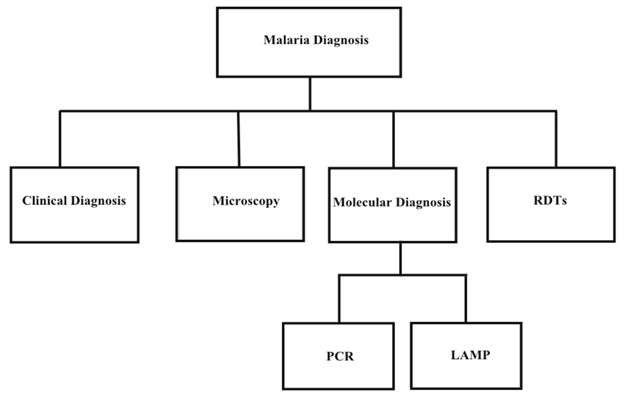
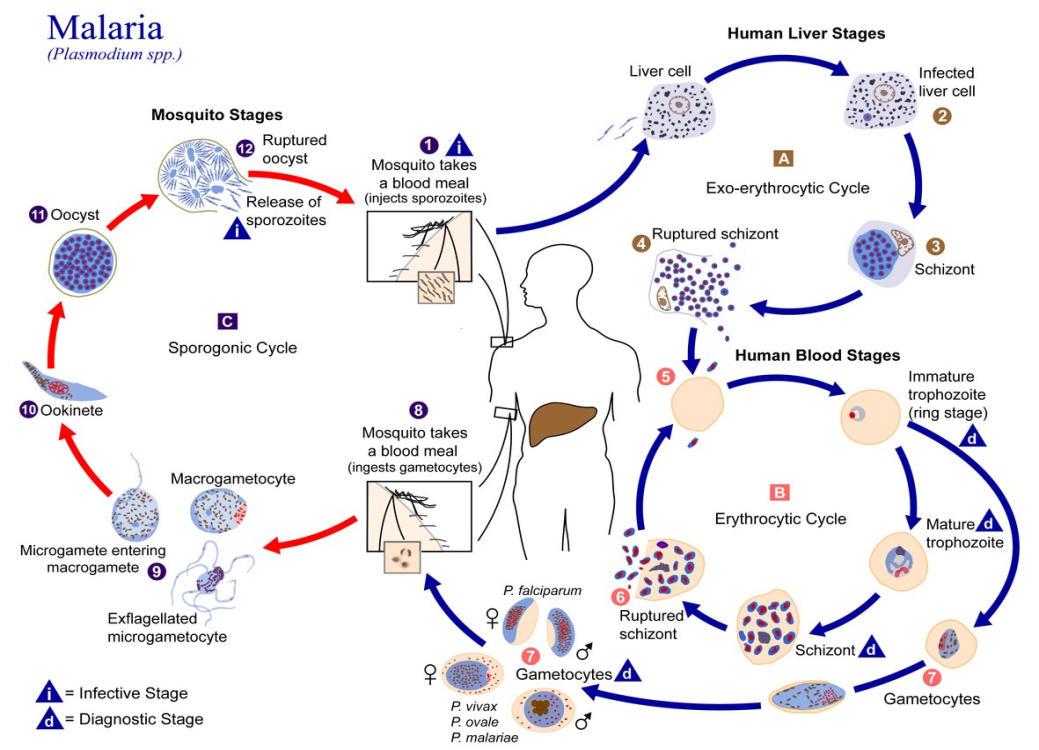
Figure 2 : The life-cycle of Plasmodium parasite. This image is licensed under creative commons attribution.
Plasmodium knowlesi is essential in malaria research due to its ability to infect rhesus macaques, which closely replicates human malaria. This feature allows for repeated studies, supports vaccine development, and is crucial for preclinical drug testing. Initially mistaken for Plasmodium malariae, Plasmodium knowlesi was overshadowed by Plasmodium falciparum until diagnostic advancements revealed its significance as a human pathogen. Maintaining Plasmodium knowlesi in continuous culture has revitalized its importance, facilitating in-depth studies on parasite biology, drug resistance, and host-parasite interactions. As a parasite that infects humans and macaques, Plasmodium knowlesi offers insights into malaria transmission and its zoonotic potential. Over the past five decades, it has contributed to our understanding of malaria pathogenesis, immunity, and drug development. Advances in diagnostics and culture techniques ensure that Plasmodium knowlesi is a focus of malaria research [5, 6] (Figure 2).
Plasmodium knowlesi is essential for malaria research, facilitating detailed studies of its lifecycle using rhesus and human red blood cells. The organism genome available on PlasmoDB provides a foundation for investigating gene function, drug resistance, and vaccine development. Additionally, Plasmodium knowlesi can be genetically modified and stored for long-term use. Although rhesus macaques have been the traditional hosts for Plasmodium knowlesi in vaccine research, they are not the parasite’s natural hosts. As natural hosts, pig-tailed macaques (PTMs) demonstrate consistent blood-stage replication, exhibit mild symptoms, and lower parasite densities upon subsequent infections, indicating partial immunity. Gene expression studies during infection have shown active immune responses, establishing PMTs as a reliable and less severe model for studying malaria vaccines. This model can lead to more effective vaccines and better malaria control [7, 8].
The CRISPR/Cas9 system integrates telomere and centromere fragments, ensures precise chromosome segregation, and maintains proper telomere function without interfering with development. This innovative approach advances malaria research by modifying chromosome arrangements, offering new insights into gene expression regulation in Plasmodium parasites. Its potential application to other organisms could transform genetic research and the study of chromosome dynamics across various species, underscoring the significance of genome editing in parasitology and molecular biology. This technique holds promise for developing new treatments for parasitic diseases and gaining a deeper understanding of genetic regulation and chromosome structure [9, 10].
In conclusion, diagnosing Plasmodium knowlesi malaria presents significant challenges, highlighting the urgent need for better and more accessible tools. While advancements in rapid diagnostic tests and loop-mediated isothermal amplification (LAMP) are promising, developing reliable assays for all malaria species is crucial, especially for Plasmodium knowlesi. Current treatment options are effective, with no evidence of drug resistance, emphasizing the need for prompt medical interventions. Research on Plasmodium knowlesi continues to enhance understanding of malaria, using traditional and innovative models like pig-tailed macaques for vaccine development. Techniques like CRISPR/Cas9 open new avenues for genetic research, providing insights into Plasmodium behavior and resistance. Collaboration among researchers, healthcare providers, and policymakers will enhance diagnostic and treatment strategies to address malaria [11, 12, 13, 14, 15, 16, 17, 18, 19, 20, 21, 22, 23, 24, 25, 26, 27, 28, 29, 30, 31, 32, 33, 34, 35].
Acknowledgments
The author acknowledges Mrs. Norri Zahra and Mr. Regragui Moumaris. The author thinks Nisen Abuaf and Said Youssouf Chanfi (Sorbonne University). The author thinks Jean-Michel Bretagne (AP-HP). The author thinks Marie- Hélène Maës and Monique Abi (16th arrondissement of Paris).
References
-
Valle-Delgado JJ, Fernàndez-Busquets X (2016) Rapid diagnostic tests for malaria: past, present and future. Future Microbiol 11: 1379-1382.
-
Mukkala AN, Kwan J, Lau R, Harris D, Kain D, et al. (2018) An Update on Malaria Rapid Diagnostic Tests. Curr Infect Dis Rep 20(12): 49.
-
Pasquier G, Azoury V, Sasso M, Laroche L, Varlet-Marie E, et al. (2020) Rapid diagnostic tests failing to detect infections by Plasmodium falciparum encoding pfhrp2 and pfhrp3 genes in a non-endemic setting. Malar J 19(1): 179.
-
Barber BE, Grigg MJ, Cooper DJ, van Schalkwyk DA, William T, et al. (2021) Clinical management of Plasmodium knowlesi malaria. Adv Parasitol 113: 45-76.
-
Butcher GA, Mitchell GH (2018) The role of Plasmodium knowlesi in the history of malaria research. Parasitology 145(1): 6-17.
-
Galinski MR (2022) Systems biology of malaria explored with nonhuman primates. Malar J 21(1): 177.
-
Shears MJ, Reynolds RA, Duncombe CJ, Watson FN, Staubus WJ, et al. (2023) Plasmodium knowlesi in pig- tailed macaques: a potential new model for malaria vaccine research. Malar J 22(1): 379.
-
Epstein JE, Richie TL (2013) The whole parasite, pre-erythrocytic stage approach to malaria vaccine development: a review. Curr Opin Infect Dis 26(5): 420- 428.
-
Shinzawa N, Nishi T, Hiyoshi F, Motooka D, Yuda M, et al. (2020) Improvement of CRISPR/Cas9 system by transfecting Cas9-expressing Plasmodium berghei with linear donor template. Commun Biol 3(1): 426.
-
Addo-Gyan D, Matsushita H, Sora E, Nishi T, Yuda M, et al. (2022) Chromosome splitting of Plasmodium berghei using the CRISPR/Cas9 system. PLoS One 17(2): e0260176.
-
Moumaris M (2024) Confronting Plasmodium knowlesi: Challenges and Strategies in Malaria Healthcare. Int J Zoo Animal Biol 7(4): 000607.
-
Moumaris M (2024) Unraveling the Enigma: Tackling Knowlesi Malaria in Southeast Asia. Int J Zoo Animal Biol 7(2): 000585.
-
Moumaris M (2024) Unveiling the Enigmatic Plasmodium knowlesi: Insights, Challenges, and Promises in Malaria Research. Int J Zoo Animal Biol 7(1): 000566.
-
Moumaris M (2024) Unlocking the Potential: Overcoming Challenges in CAR-T Cell Therapy for Cancer Treatment. J Biotechnology and Bioprocessing 5(2): 2766-2314.
-
Moumaris M (2023) Revolutionizing Malaria Research: CRISPR unveils New Frontiers. J Biotechnology and Bioprocessing 4(5): 2766-2314.
-
Moumaris M (2024) Lyme Disease: A Zoonosis Tick- Borne Borrelia Bacterium [4/4]. Int J Zoo Animal Biol 7(1): 000549.
-
Moumaris M (2023) Lyme Disease: A Zoonosis Tick- Borne Borrelia Bacterium [3/4]. Int J Zoo Animal Biol 6(4): 000500.
-
Moumaris M (2023) Lyme Disease: A Zoonosis Tick- Borne Borrelia Bacterium [2/4]. Int J Zoo Animal Biol 6(2): 000465.
-
Moumaris M (2022) Lyme Disease: A Zoonosis Tick- Borne Borrelia Bacterium [1/4]. Int J Zoo Animal Biol 5(6): 000425.
-
Moumaris M, Bretagne JM, Abuaf N (2020) Nanomedical Devices and Cancer Theranostics. The Open Nanomedicine and Nanotechnology Journal 6: 1-11.
-
Moumaris M, Bretagne JM, Abuaf N (2019) Biological Membranes and Malaria-Parasites. The Open Parasitology Journal 7: 1-18.
-
Moumaris M, Bretagne JM, Abuaf N (2018) Hospital Engineering of Medical Devices in France. The Open Medical Devices Journal 6: 10-20.
-
Moumaris M, Rajoely B, Abuaf N (2015) Fluorescein Isothiocyanate-Dextran can track Apoptosis and Necrosis induced by heat shock of Peripheral Blood Mononuclear Cells and HeLa Cells. Open Biological Sciences Journal 1: 7-15.
-
Moumaris M, Rajoely B, Abuaf N (2012) The Naïve B Cells are the Lymphocytes with the Highest Anionic Phospholipid Binding Ratios. The Open Immunology Journal 5: 27-35.
-
Moumaris M (2007) Magnetic resonance imaging at the Hôtel-Dieu of Paris. Paris-Descartes University, France.
-
Moumaris M (2005) Identification of a new molecule to monitor apoptosis. Sorbonne-Paris-Nord University, France.
-
Moumaris M (2003) Biomedical research, the law of bioethics relating to the donation and use of elements and products of the human body. Paris-Descartes University, France.
-
Moumaris M, Abuaf N (2002) Use of labeled dextran for in-vitro assessment of increased cell permeability, cell death and apoptosis. Bulletin officiel de la propriété industrielle (Brevet n°00/09235) 2811682: A3.
-
Moumaris M, Benoliel S, Rouquette AM, Rajoely B, Abuaf N (2000) Phospholipid binding proteins on the plasma membrane of lymphocytes. J Autoimmun 15(2): 81-271.
-
Moumaris M, Ignoti S, Benoliel S, Oghina G, Rajoely B, et al. (1999) Characterization of B-cell adhering to the lamellar phospholipids. French Congress of Antiphospholipid Antibody, Paris, France.
-
Moumaris M (1996) Membranes érythrocytaires dans le paludisme: modèle d’étude: Souris- Plasmodium berghei anka. Université Pierre et Marie Curie, Paris, France.
-
Moumaris M, Sestier C, Miltgen F, Halbreitch A, Gentilini M, et al. (1995) Effect of Fatty Acid Treatment in Cerebral Malaria-Susceptible and Nonsusceptible Strains of Mice. The Journal of Parasitology 81(6): 997-999.
-
Sabolovic D, Moumaris M, Miltgen F, Sestier C, Halbreich A (1995) A subpopulation of red blood cells induced by bleeding or mosquito sucking. Chinese National Congress of Medical Biophysics, Shanghai, China.
-
Sabolovic D, Moumaris M, Miltgen F, Sestier C, Halbreich A (1995) Characterisation of subpopulation of red blood cells as a preferential target for malaria invasion. French Congress of Electrophoresis, Cell Electrophoresis, Pastor Institute, Paris 19(7): 1215-1219.
-
Moumaris M (1992) Lyme disease: Serological study. University of Orleans, France.
- California Red-Legged Frog and Non-Listed Amphibians Response to Non-Native Fish Removal
- Industrial Standardization of the Bio-OS: Algorithmic Codification of Resilience Engineering Guidelines and Version V8 Architecture
- Climate Variability and the Sustainability of Snail Farming in Nigeria: Past Trends, Present Challenges and Potential Outlook
- The Evaluation of the Surveillance System of Anthrax in Gilgit-Baltistan, Pakistan, 2018
- Natural Decline to Extinction of A New Zealand Rabbit Population
- Mitochondrial Bio-Logistics: Steering Co-Enzyme Q10 and Lycopene Synergies within the Science 4.0 Bio-OS Framework