
The Behaviour of Sea Anemones (Cnidaria: Actiniaria) Like Taxonomies Tool. A Guide Lines
This paper deals about how to use the behavior of sea anemones (Cnidaria: Actiniaria) like a tool for taxonomy studies. Generally for taxonomy the morphology is employed, but sometimes the externals characters are very close between them and it is impossible to reach to a diagnostic, so the behavior is necessary and this last one can to be different such as an electrical stimuli, a water current or a behavior with another species.
Introduction
Some times the taxonomy study of sea anemones is difficult because the species analyzed are very similar and close between them and it made difficult their analysis. After it was made all morphological studies like number of mesenteries, type of mesentery, type of sphincter, type of scapus (=column), cnydocists, presence or absent of acontium, type of pedal disc, presence or not of vesicles, verrucae, type of muscles, cinclide, oral disc, etc. and it is impossible to arrive to one definition, so the researcher must go to other methodology like the behavior and like is the answer of it and compared between specimens.
The behavior will be different between specimens and this behavior can be front to electric stimuli, current water, fresh water, associations between species like mollusk, crustaceans, or reaction front to starfish. So all this answer will be useful for to know the species.
Results
Anatomical Studies
There is a pioneer work of Stephenson [1] titled “The British Sea Anemones” published by Royal Society of London where are in details the characters to be analyzed in taxonomy of sea anemones. Lately various researcher at the present time with modern criterion on cnydocists, histology, types of symmetry (longitudinal and transversal) helped to study of sea anemones.
Here will be mentioned briefly the various characters are using for determining the status of sea anemones:
- Number of mesenteries: it must to do a sectional cross to middle of body for containing the number.
- type of mesentery: once make the sectional cross, to know if each mesentery is perfect or not perfect. Perfect mesentery is when it has 4 sides (1: it is joined to wall of body; 2: it is joined to wall of pharynx; 3 y 4 : are joined to mesentery from both side). No perfect mesentery has not four sides. The number of mesenteries must to be count and to stablish the number of cycles.
- Type of sphincter: here we can found various types like: circumscribed, diffuse, diffuse-circumscribed, circumscribed-mesogloeal, circumscribed endodermal, diffuse mesogloeal and diffuse endodermal.
- Type of scapus (=column): the body of sea anemones called scapus can to be elongated or to be like a cylinder. The form of scapus is relationship with the forms of pedal disc. When the body is elongated, generally the pedal disc is a physa (= vesicle); it burrow in sand and fixed the sea anemones; when the body is cylinder, the disc is like a plate and it has adhesive muscles for fixing to substratum. **
- Cnydocist:** there are numerous papers about it and to many of them are value because show the morphological structure under light microscopy like the ultrastructure under electronic microscopy. The structure is the shape of capsule, filament, shaft. There is a definite terminology for each cnydocist because it is based upon the morphology of each one.
- Acontium: is a filament floating into the gastric cavity and it is lying on wall of mesentery. Zamponi [2] details this structure and how is his function into this cavity.
- Vesicles and Verrucae: both of them are present on column and they can distributed in regular or irregular shape. When they are distributed in regular shape, they are on regular row from pedal disc to oral disc; so when are regular distribution it must to be count. The shape of each vesicle is rounded meanwhile verrucae is irregular shape.
- Types of muscles: there are some muscles here and they are important. The retractor muscle is on each mesentery and it can be seeing to retractor of another mesentery, when it happened the two mesenteries belong to the same cycle and the space between two mesenteries is called endocoelic space, but when the retractor muscle is not seeing another retractor muscle belongs to mesentery of the same cycle, this mesentery belong another cycle and the space between them is called exocoelic space. Other is basilar muscle and it joined mesentery with wall of body. **
- CINCLIDE:** it is a small orifice present in some species of sea anemones. The origin of it can do for two process: a. the invagination of wall of body and it touch to endoderm wall and this invagination perforate to endoderm, so it will be an open cinclide where the inner of body is in contact with the environmental; through it inner water can to expel to out; b. the evagination of endoderm touch the wall of body, but it cannot perforate to ectoderm, so this cinclide is closed. These processes can to see through longitudinal histological section of body wall.
• Oral disc. : here is the mouth and the numerous cycles of tentacles. The number of cycles must to be count and around oral disc in upper scapus some species can to have some structure called acrorhagi or verrucae or vesicles. When there are acrorhagi, they must to be analyzed because it have cnydocists; this cnydocists are employed for catching food.
Behaviour Studies
There are many studies on this aspect because there is a direct relationship between sea anemones and their partner like mollusk or crustacean. This aspect of research is so important because the development behavior between both of them (sea anemone+mollusk or sea anemone+crustacean) have answer very important and sometimes this answered are useful for taxonomic problem.
So it is necessary to see how this behavior is used like help to taxonomy.
The main studies about this theme are various but the more moderns of them belongs to Ross [3] where this author done a deep study on behavior and ecology between sea anemones and invertebrates. From it can show how the relationships between two different species are necessary and both of them get beneficious for getting foods, new zone of distribution and protection when one of the partner is into an empty valve.
When there are two species very closed between them and it is impossible to know own characteristic for determine the real status taxonomy, it is necessary applied a behavioral criterion like following:
• Electric stimuli: a potential electric of very low voltage must to be applied on pedal disc and to look how is the movement of sea anemones: a. the movement can to be flexible to right and left side, and compare this movement with the other specimen and look if this last one have movement or not; b. to look if the pedal disc begin to detach from substratum or not and compare with another. Ross, et al. [4] described like sea anemone detachment from commensal hermit crabs by electric stimuli. • Current water: to applied on oral disc, specially when it is open in both specimens. To look how is the answer to this stimuli, because the oral disc can to be stablish or it can to close and the specimen can to get dome form. Look if both specimen the answer is equal or not. • Fresh water: to similar to current water, here it is applied fresh water because it has lower salinity than marine water and it is necessary to see the behavioral answer between both of species. It is possible with an oral disk close in one species and not close in another, so this is an answer for determine species. Other answer is the movement of column from side to side and then floating. • Association between species. With mollusk: this association is very variable because can to be used for transfer from one place to another, or to be used for protection and benefit for two partners.
When this association is used only for to change of place, the sea anemones used the movements of mollusk and can to change the distribution and with it, can to get other food. Now when this association is for both of them, the situation is complex. Here we can to speak of symbiosis because the mollusk can to get benefit of defense by sea anemones through their cnydocist and sea anemone can to transfer to another place (Figure 1).
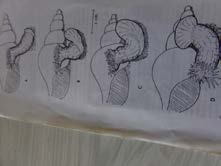
This association begin early in the life of mollusk and this relationship will be stronger than to begin because the mollusk to be greater in size it will has more predators.
It is necessary to see how is the behaviour between both species of sea anemones in relation with her partner ( mollusk) for determine the specific status.
Ates [5] in a deep studies on mollusk gastropods and sea anemones present a world distribution where there are association between them and mention some behavioural aspect and zoogeographical aspects. With crustaceans: there are some behavior patterns when begin one association between sea anemones and crabs, for example, when it association go to begin the first pairs of legs (= pereiopod) take from substratum the sea anemones and put it on the caparison. From here this relationship will be stablish for a long time because both partner are beneficiary.
This association is not obligatory because it depends of affinity between two species (crab+sea anemones), so this behavioral technique is useful for determine when two species of sea anemones are close between them.
Ross [6] has studied the relationship between crabs and sea anemones and lately [7] the same author analyzed the interactions with another animals.
Reaction front to starfish. Here the answer from sea anemones to starfish is surprising for some matter, such as swimming movements, retraction of pedal disc, undulatory movements by column and answer escape [8, 9, 10].
Here there are two species of sea anemones such as Stomphia coccinea (Muller,1776) and Stomphia didemon Siebert, 1973 both of them belongs to family Actinostolidae. Both of them are very closed and some times it is very difficult to see differences in column colour, tentacles arranged and to do anatomical studies like it was mentioned can to get some times, so the behavior studies is very fast (Figure 2).
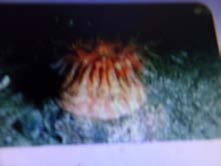
When there are specimens of this two species in an aquarium and the starfish is near of the two species both of them haven different answer. One of them begin to move side to side with movements of column and the other has retraction of pedal disc to build an internal dome, then the sea anemones with movements begin to detach of substratum and it begin to swim meanwhile the other species has an answer scape very quickly and it begin to float in the water.
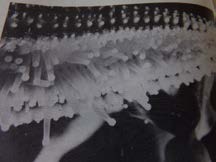
All this answer must to be relationship with the chemical composition in the marginal ossicles along the groove. It may be this chemical composition made some effects on the behavior and it must developed some answer for the sea anemones go away very fast (Figure 3).
Discussion
This guide lines is for showing the studies of sea anemones (order Actiniaria-Phylum Cnidaria) can to be under two point of view, one anatomical and other behavioural. Generally the first one is used and the second one is for complex cases where the anatomy of specimens are so closed between them, but not always two species are relationship with another invertebrates, so here it must to do other proof with some stimuli. The stimuli must to be powerful for it find an answer from the sea anemone and it can to compare between both of them.
The association between sea anemones and other invertebrates is generally found in all sea of the world but it is more frequent in American and European sea, probably in South sea is need to do study about it and perhaps some surprise one can to find.
There are abundance reference on this aspect and part of them is cited in References section of this article.
References
-
Stephenson TA (1935) The British sea anemones. Ray Society, London, UK 2: 426.
-
Zamponi MO (2024) The choanocyt cells from Phylum Porifera, nematocysts cells from phylum Cnidaria and colloblast cells from Ctenophora like analogues structure. Int, Jour Zoology and Animal Biology 7(5): 1-4.
-
Ross DM (1967) Behavioral and ecological relationship between sea anemones and other invertebrates. Oceanogr. Mar Biol Ann Rev 5: 291-316.
-
Ross DM, Sutton L (1968) Detachment of sea anemones by commensal hermit crabs and by mechanical and electrical stimuli. Natura 217: 380-381.
-
Ates RML (1995) Gastropods carrying actinians. Proc. 6th Internationa Conference on Coelenterate Biology pp: 11-20.
-
Ross DM (1974) Evolutionary aspects of association between crabs and sea anemones. Symbiosis in the sea pp: 111-125.
-
Ross DM (1974) Behavior patterns in associations and interactions with other animals. Coelenterate Biology pp: 281-312.
-
Ross DM, Zamponi MO (1982) A simbiosis between _Paracalliactis mediterránea_ N. Sp (Anthozoa-Actiniaria) and _Pagurus variabilis_ A. Milne-Edwards and Bouvier. Vie Milieu 32(3): 172-181.
-
Ross DM, Zamponi MO (1992) A descripción of Stomphia pacifica Sp. Nov. (Anthozoa: Actiniaria) and its behavioral interactions with some asteroids. Physis (Buenos Aires), Secc A 50(118-119): 7-12.
-
Meglitsch PA (1972) Invertebrate Zoology. In: 2nd (Edn.), pp: 834.
- California Red-Legged Frog and Non-Listed Amphibians Response to Non-Native Fish Removal
- Industrial Standardization of the Bio-OS: Algorithmic Codification of Resilience Engineering Guidelines and Version V8 Architecture
- Climate Variability and the Sustainability of Snail Farming in Nigeria: Past Trends, Present Challenges and Potential Outlook
- The Evaluation of the Surveillance System of Anthrax in Gilgit-Baltistan, Pakistan, 2018
- Natural Decline to Extinction of A New Zealand Rabbit Population
- Mitochondrial Bio-Logistics: Steering Co-Enzyme Q10 and Lycopene Synergies within the Science 4.0 Bio-OS Framework