
Green Synthesis of Iron Oxide Nanoparticles Using Lactobacillus Plantarum Mk-55 and In Vitro Assessment of Cytotoxic Activity
Recently, there has been a significant focus among researchers on developing efficient green chemistry methods for synthesizing metal nanoparticles. The primary objective is to discover an environmentally friendly approach to nanoparticle production. Magnetic nanoparticles have garnered considerable attention in the fields of nanoscience and nanotechnology due to their desirable physicochemical properties, small particle size, and low toxicity. This study aims to synthesize iron oxide nanoparticles using supernatant from Lactobacillus plantarum MK-55 environmentally-friendly process. In the study, iron oxide nanoparticles were synthesized by in situ method. Then, green synthesis was carried out with MK-55 bacterial supernatant. The synthesized nanoparticles were characterized by FTIR and SEM, and cytotoxicity and uptake analyzes were made. The toxic effect of green synthesis nanoparticles on cancer cells was determined according to the results of the study. According to the results obtained, it was observed that the successfully synthesized nanoparticles were effective on cancer cells. However, in vivo studies are needed in further analysis.
Introduction
Breast cancer is known as a leading type of cancer worldwide and is more commonly seen in women. Despite significant advancements in the diagnosis and treatment of breast cancer, it continues to be a significant global issue [1].
Breast cancer is a heterogeneous disease, exhibiting different clinical behaviors in each patient, along with distinct biological characteristics. It is the most well-known example of hormonally driven cancers. Research has shown that high estrogen levels in women significantly trigger breast cancer. Estrogen activates the estrogen receptor (ER) located in the nucleus, and activated ER triggers cell proliferation. The increase in cell proliferation has been associated with uncontrolled cell divisions, leading to cancer [2, 3].
Additionally, an imbalance in the gut microbiota is believed to play a role in the development of breast cancer. In this regard, the use of probiotics in breast cancer treatment has been the subject of several studies. The idea that probiotic consumption improves gut microbiota and can treat breast cancer has emerged. The utilization of green synthesis offers an environmentally friendly approach for producing metallic nanoparticles, addressing concerns about their toxic effects on living organisms. Various natural sources such as bacteria, yeasts, molds, algae, plants, diatoms, membranes, and other organic materials have been employed to produce metallic nanoparticles that are non-toxic [4]. Probiotics, which are living microorganisms known for their beneficial health effects when consumed in sufficient quantities, are primarily comprised of lactic acid bacteria (LAB).
LAB, a significant group of microorganisms found in the gastrointestinal and urogenital systems, have gained importance [5]. Lactobacillus plantarum, a species within the Lactobacillus genus, is commonly used in fermented food products and is generally recognized as safe (GRAS) by the FDA. Furthermore, L. plantarum has been investigated for its therapeutic potential in various diseases such as Alzheimer’s, Parkinson’s, obesity, diabetes, and cancer [6, 7, 8, 9]. The main objectives of this study are to explore the capabilities of green synthesized iron oxide nanoparticles and investigates their anti-cancer activities.
Material and Methods
Iron Oxide Nanoparticle Synthesis
Fe(II) and Fe(III) salts were used in the co-precipitation method to synthesize magnetic iron oxide (Fe3O4) nanoparticles. The salts underwent vigorous stirring at a temperature of 90°C while being exposed to a nitrogen (N2) gas environment. Gradually, ammonium hydroxide (NH4OH) was introduced into the system. Finally, the solution was washed with dH2O until its pH reached 9.0.
Microbial Culture Preparation
L. plantarum MK-55, isolated from feces by Kahraman [10] was incubated in MRS broth at 37°C for 48 hours. The culture was then centrifuged at 5000 g for 10 minutes, and the supernatant was transferred to a sterile Petri dish and frozen at -20°C. After one night, the frozen samples were lyophilized under vacuum at -60°C [11].
Synthesis of L. plantarum MK-55 Iron Oxide Nanoparticle
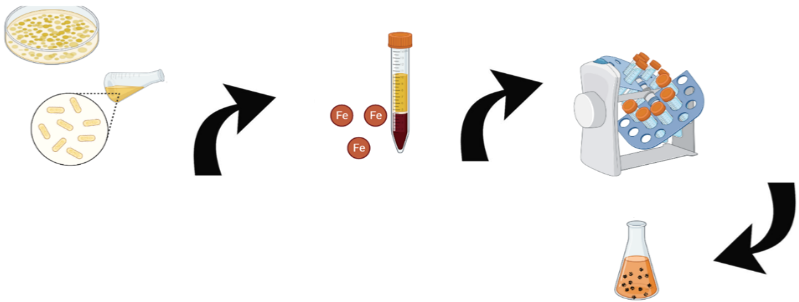
An aqueous solution of iron oxide nanoparticles (1 mM) was prepared and mixed with the L. plantarum MK-55 supernatant at a ratio of 9:1. The mixture was placed on a shaker at room temperature with continuous rotation for 24 hours (Figure 1).
Characterization of the Green Synthesized of Iron Oxide Nanoparticles
The crystal structures of the synthesized iron oxide nanoparticles were analyzed using X-ray diffraction (XRD). Fourier-transform infrared spectroscopy (FTIR) was employed to identify the chemical groups and interactions involved in both the synthesized iron oxide nanoparticles and the green-synthesized iron oxide nanoparticles. The morphological properties were observed through transmission electron microscopy (SEM) images [12].
Cytotoxicity of the Green Synthesized of Iron Oxide Nanoparticles
MCF-7 cells were employed for conducting cell studies. These cells were cultured in RPMI-1640 culture medium supplemented with 10% FBS and 1% gentamicin solution. The culture was maintained at a temperature of 37°C under a 5% CO2 atmosphere. Subculturing of cells was carried out 2-3 times per week, using 0.25% Trypsin-EDTA. To assess the antiproliferative effects of green iron oxide nanoparticles on the cells, the Cell Proliferation Kit (Biological Industries) was used according to the manufacturer’s instructions. The
absorbance of the soluble product after the addition of the XTT reagent was measured at 500 nm using a BIOTEK- ELX808, 96-well plate reader.
Results and Discussion
Nanomaterials can be categorized into two main types according to their production in synthesis: Traditional methods and Green methods. Traditional methods offer various advantages, including the production of a wide range of nanoparticles with diverse applications. These methods also provide scalability and precise control over nanoparticle morphology, enabling their use in fields such as battery technology, electronics, targeted therapy, and energy storage [13, 14, 15, 16, 17, 18, 19, 20, 21, 22, 23, 24, 25, 26]. However, the use of organic solvents in traditional synthesis methods poses significant risks to human health and the environment, including neurobehavioral and reproductive hazards [27, 28, 29]. Considering these drawbacks, the potential risks outweigh the benefits of traditional nanomaterial synthesis methods. Consequently, there has been a shift towards green synthesis methods, which offer a clean, safe, cost-effective, and environmentally friendly approach to nanomaterial production [30].
Green synthesis utilizes microorganisms such as bacteria, yeast, fungi, algae, and certain plants as substrates for nanomaterial synthesis. The final morphology and size of the nanoparticles are determined by different active molecules and precursors, such as metal salts. Green synthesis also imparts unique properties to the nanomaterials, including antimicrobial activity, natural reducing capabilities, and stabilization properties [30, 31].
This study aims to examine the potential of L. plantarum MK-55 for the environmentally friendly production of iron oxide nanoparticles and assess their effectiveness in combating cancer.
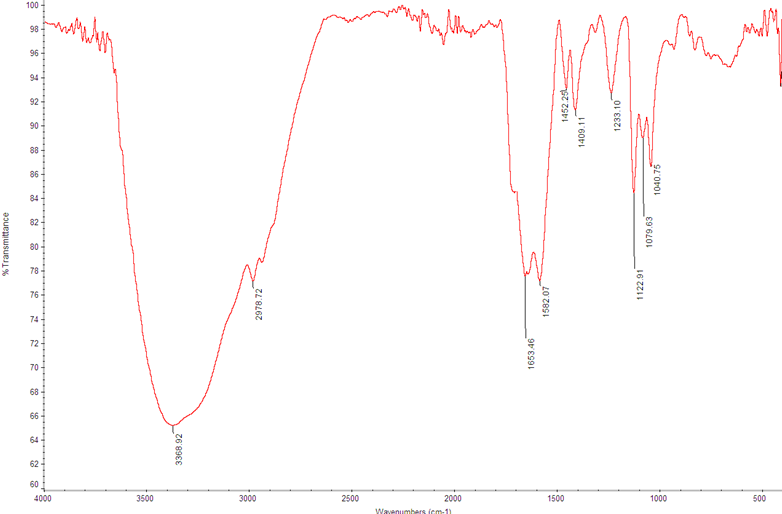
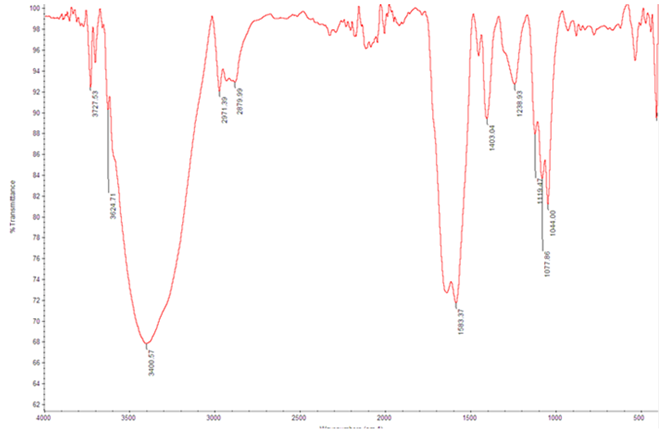
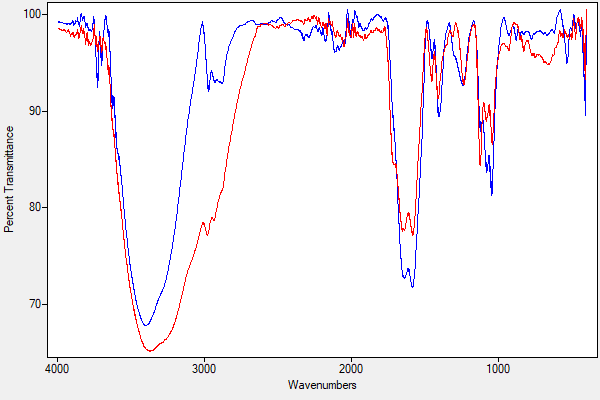
The crystal structure of the synthesized iron oxide nanoparticles was determined using XRD analysis. The observed diffraction peaks corresponded to the characteristic peaks of iron oxide crystals with an inverse cubic spinel structure, as compared to reference standards [12]. FTIR spectra were obtained to confirm the chemical composition of the synthesized nanoparticles. FTIR study showed the presence of free supernatant of L. plantarum MK55 and green synthesized iron oxide nanoparticles. A strong peak at 878, 1076, 1042, 1581, 1646 and 1403 cm-1 indicates the presence of L. plantarum MK-55. Also, the other peak obtained at 530 cm-1 is much closer to the identified peaks for iron oxide nanoparticles (Figures 2-4). In contrast to our study Vijayakumar et al. [32] recorded the FTIR analysis of AgNPs synthesized using Lactiplantibacillus plantarum within the range of 4000-400 cm−1. In the study, it was also found that the nanoparticle synthesized through green synthesis showed significant effectiveness in wound healing in fibroblast cells. The researchers highlighted that the use of probiotics in green synthesis holds promise for the treatment of various diseases.
In a study conducted by Wang et al. [33] silver nanoparticles (AgNPs) were synthesized using Bacillus sonorensis MAHUQ-74 isolated from kimchi. The nanoparticles were observed to be spherical and have a size range of 13-50 nm through TEM microscopy. The crystal structure of the nanoparticles was also observed using XRD and SAED patterns. FTIR analysis demonstrated the presence of functional groups associated with the reduction of silver ions to AgNPs. Furthermore, the study identified that the synthesized nanoparticles exhibited potential antimicrobial activity against antibiotic-resistant pathogenic E. coli O157:H7.
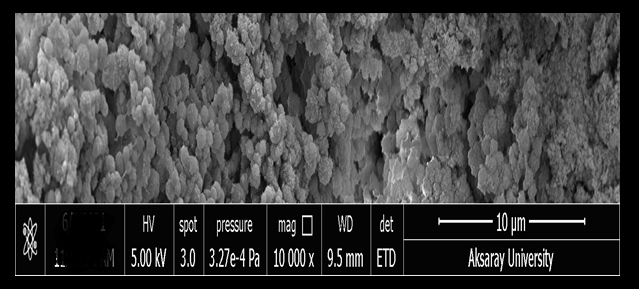
The usage of the MK-55 in the synthesis process was verified through the SEM image, which demonstrated a significant concentration of synthesized materials and provided additional evidence for the creation of iron oxide nanoparticles. Additionally, the SEM images of the nanoparticles obtained from the filtrate indicated that they possess a spherical morphology (Figure 5). In the study conducted by Prasad, et al. [34] green synthesis of titanium nanoparticles was performed using Lactobacillus sp. The synthesized nanoparticles were visualized using a TEM microscope and appeared spherical with a diameter ranging from 40 to 60 nm. In contrast, Denisa, et al. [35] determined the size of colloidal silver nanoparticles synthesized using Lactobacillus casei as 12 - 27 nm through TEM microscopy.
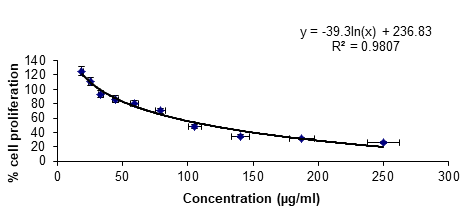
Cytotoxicity of green synthesized iron oxide nanoparticles and free iron oxide nanoparticles were investigated by cell proliferation assay. Survival rates indicated that there is no cytotoxic effect of free iron oxide nanoparticles [12]. It was found that the green synthesized iron oxide nanoparticles have the capacity to kill MCF-7 cells (IC50 value: 95 μM) (Figure 6).
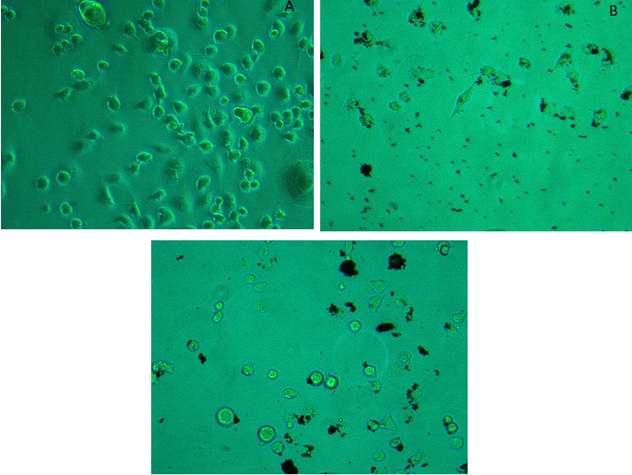
Cellular uptake of the green synthesized nanoparticles was investigated in MCF-7 cancer cells. The nanoparticles inside and surrounding the cell indicate that nanoparticles were internalized by cells, indicating efficient cellular uptake (Figure 7). At the same time, the cytotoxic effect is clearly seen on the nanoparticle applied cells when compared to the control group.
Conclusion
Green-synthesis of iron oxide nanoparticles using supernatant of L. plantarum MK-55 in vitro under controlled condition was carried out for the first time in this study. The characteristics of the green-synthesized iron oxide nanoparticles were measured by different types of equipment. The future perspectives of this work would be anti-cancer agent loading to these green synthesized nanoparticles, and performing drug release, stability and cytotoxicity studies in both in vitro and in vivo systems.
References
-
Bray F, Ferlay J, Soerjomataram I, Siegel RL, Torre LA, et al. (2018) Global Cancer Statistics 2018: GLOBOCAN estimates of ıncidence and mortality worldwide for 36 cancers in 185 countries. CA A Cancer Journal for Clinicians 68(6): 394-424.
-
Ergüç IE, Orhan GH (2019) Östrojenle indüklenen meme kanseri, tedavi yaklaşımları ve melatoninin tedavideki rolü. Hacettepe University Journal of the Faculty of Pharmacy 39(2): 113-128.
-
Fan Y, Wang Y, He L, Imani S, Wen Q (2021) Clinical features of patients with HER2-positive breast cancer and development of a nomogram for predicting survival. ESMO Open 6(4): 100232.
-
Rafique M, Sadaf I, Rafique MS, Tahir MB (2017) A review on green synthesis of silver nanoparticles and their applications. Artif Cells Nanomed Biotechnol 45(7): 1272-1291.
-
Aragón F, Perdigón G, LeBlanc AM (2014) Modification in the diet can induce beneficial effects against breast cancer. World J Clin Oncol 10 5(3): 455-464.
-
Ray RC, Joshi VK (2014) Fermented Foods: Past, present and future scenario. In: Ray RC, Montet D (Eds.), Microorganisms and Fermentation of Traditional Foods USA: CRC Press pp: 1-36.
-
Arasu MV, Al Dhabi NA, Ilavenil S, Choi KC, Srigopalram S (2016) In vitro importance of probiotic Lactobacillus plantarum related to medical field. J Biol Sci 23(1): 6-10.
-
Ricci A, Allende A, Bolton D, Chemaly M, Davies R, et al. (2017) Scientific Opinion on the update of the list of QPS‐recommended biological agents intentionally added to food or feed as notified to EFSA 5: suitability of taxonomic units notified to EFSA. EFSA Journal 15(3).
-
Behera SS, Ray RC, Zdolec N (2018) Lactobacillus plantarum with functional properties: An approach to increase safety and shelf-life of fermented foods. Biomed Res Int pp: 9361614.
-
Kahraman M (2020) Probiyotik Özellik Gösteren Bazı Laktik Asit Bakterileri ve Mayaların Tümör Baskılayıcı Etkilerinin Araştırılması. Süleyman Demirel University Institute of Science and Technology Turkey, pp: 1-15.
-
Haghshenas B, Abdullah N, Nami Y, Radiah D, Rosli R, et al. (2014) Different effects of two newly-isolated probiotic Lactobacillus plantarum 15HN and Lactococcus lactis subsp. lactis 44Lac strains from traditional dairy products on cancer cell lines. Anaerobe 30: 51-59.
-
Yalcin S, Khodadust R, Unsoy G, Ceren Garip I, Didem Mumcuoglu Z, et al. (2015) Synthesis and characterization of polyhydroxybutyrate coated magnetic nanoparticles: Toxicity analyses on different cell lines. Synth React Inorg Met-Org Nano-Metal Chem 45(5): 700-708.
-
Wegner K, Schimmöller B, Thiebaut B, Fernandez C, Rao TN (2011) Pilot plants for ındustrial nanoparticle production by flame spray pyrolysis. KONA Powder Part J 29: 251-265.
-
Ion JC (2006) Laser Processing of Engineering Materials. Principal Procedure and Industrial Application Elsevier: Oxford UK, pp: 576.
-
Zeng H, Du XW, Singh SC, Kulinich SA, Yang S, et al. (2012) Nanomaterials via Laser Ablation/Irradiation in Liquid: A Review. Adv Funct Mater 22: 1333-1353.
-
Amendola V, Meneghetti M (2013) What controls the composition and the structure of nanomaterials generated by laser ablation in liquid solution? Phys Chem Chem Phys 15: 3027-3046.
-
Kubota K, Dahbi M, Hosaka T, Kumakura S, Komaba S (2018) Towards K-ion and Na-ion batteries as beyond Li-Ion. Chem Rec 18(4): 459-479.
-
Su D, Ahn HJ, Wang G (2013) Hydrothermal synthesis of α-MnO2 and β-MnO2 nanorods as high capacity cathode materials for sodium ion batteries. J Mater Chem A 1: 4845-4850.
-
Hosono E, Saito T, Hoshino J, Okubo M, Saito Y, et al. (2012) High power Na-ion rechargeable bbattery with single-crystalline Na0.44MnO2 nanowire electrode. J Power Sources 217: 43-46.
-
Song H, Tang A, Xu G, Liu L, Yin M, et al. (2018) One-step Convenient Hydrothermal Synthesis of MoS2/RGO as a High-performance Anode for Sodium-ion Batteries. Int J Electrochem Sci 13: 4720-4730.
-
Lin B, Zhu X, Fang L, Liu X, Li S, et al. (2019) Birnessite nanosheet arrays with high K content as a high-capacity and ultrastable cathode for K-Ion batteries. Adv Mater 31(24): 1900060.
-
Walter JG, Petersen S, Stahl F, Scheper T, Barcikowski S (2010) Laser ablation-based one-step generation and bio-functionalization of gold nanoparticles conjugated with aptamers. J Nanobiotechnol 8: 21.
-
Salmaso S, Caliceti P, Amendola V, Meneghetti M, Magnusson JP, et al. (2009) Cell up-take control of gold nanoparticles functionalized with a thermoresponsive polymer. J Mater Chem 19: 1608-1615.
-
Leng J, Wang Z, Wang J, Wu HH, Yan G, et al. (2019) Advances in nanostructures fabricated via spray pyrolysis and their applications in energy storage and conversion. Chem Soc Rev 48(11): 3015-3072.
-
Aboulouard A, Gultekin B, Can M, Erol M, Jouaiti A, et al. (2020) Dye sensitized solar cells based on titanium dioxide nanoparticles synthesized by flame spray pyrolysis and hydrothermal sol-gel methods: A comparative study on photovoltaic performances. J Mater Res Technol 9(2): 1569-1577.
-
Pawinrat P, Mekasuwandumrong O, Panpranot J (2009) Synthesis of Au–ZnO and Pt–ZnO nanocomposites by one-step flame spray pyrolysis and its application for photocatalytic degradation of dyes. Catal Commun 10(10): 1380-1385.
-
Joshi D, Adhikari N (2019) An overview on common organic solvents and their toxicity. J Pharm Res Int 28(3): 1-18.
-
Tobiszewski M, Namiesnik J, Pena Pereira F (2017) Environmental risk-based ranking of solvents using the combination of a multimedia model and multi-criteria decision analysis. Green Chem 19(4): 1034-1042.
-
Akinyemi PA, Adegbenro CA, Ojo TO, Elugbaju O (2019) Elugbaju, O. neurobehavioral effects of organic solvents exposure among wood furniture makers in Ile-Ife osun state, Southwestern Nigeria. J Health Pollut 9(22): 190604.
-
Huston M, DeBella M, DiBella M, Gupta A (2021) Green synthesis of nanomaterials. Nanomaterials 11(8): 2130.
-
Sivaraj A, Kumar V, Sunder R, Parthasarathy K, Kasivelu G (2020) Commercial yeast extracts mediated green synthesis of silver chloride nanoparticles and their anti- mycobacterial activity. J Clust Sci 31: 287-291.
-
Vijayakumar G, Kim HJ, Rangarajulu SK (2023) In Vitro antibacterial and wound healing activities evoked by silver nanoparticles synthesized through probiotic bacteria. Antibiotics 12: 141.
-
Wang X, Lee SY, Akter S, Amdadul Huq Md (2022) Probiotic-Mediated Biosynthesis of silver nanoparticles and their antibacterial applications against pathogenic strains of Escherichia coli O157:H7. Polymers 14(9): 1834.
-
Prasad K, Jha Anal K, Kulkarni AR (2007) Lactobacillus assisted synthesis of titanium nanoparticles. Nanoscale Res Lett 2(248).
-
Denisa S, Pořízka J, Kulich P, Španová A, Diviš P, Rittich B (2016) Silver nanoparticles production with probiotic bacteria. Int Mater Sci Forum 851: 32-36.
- Solution-Processed Chiral Perovskites for Biomedical Applications
- Nanotechnology in Health Chemistry and Medicine: Current Challenges and Future Directions
- Human Exposure to Micro- and Nanoplastics: Pathways, Toxicity, and Intervention Strategies
- Exosome Nanomedicine for Cancer Therapy
- Micro and Nanoplastics–Plastisphere, Biotoxicity, Impact on Human Health, and Mitigation Strategies
- Process Validation of Cefixime Powder for Suspension Dosage Form, 50 mL