
A Mini Review on Polymers and their Applications
This review presents a comprehensive overview of the recent advancements and developments in polymer science and technology. The structure and classifications of polymers are discussed, highlighting their unique properties and potential for tailoring specific applications. New polymeric technologies in medical applications, including as implantation of various body parts, have grown in popularity in recent years. This review paper discusses many types of polymers and their use in various fields. Polymers have an essential function in medicine and medication delivery. Polysaccharides have also been used to target medications to the colon following oral delivery. Moulds are the type of polymers which are used by dentists during the procedure. Polymeric semiconductor like Polypyrrole (PPy), polyaniline, and polydopamine which show remarkable applications in the field of electronics. Purification of water and elimination of harmful elements found in industrial water effluent is accomplished by the use of polymer membranes.
Classification of Polymers
Polymers are categorized according to their origin, structure, and characteristics. Designing polymers with specific properties for a range of uses in sectors including packaging, textiles, medicine, and more requires a thorough understanding of these classes. Because each form of polymer has unique benefits to provide, they are useful materials in contemporary culture [5, 6, 7].
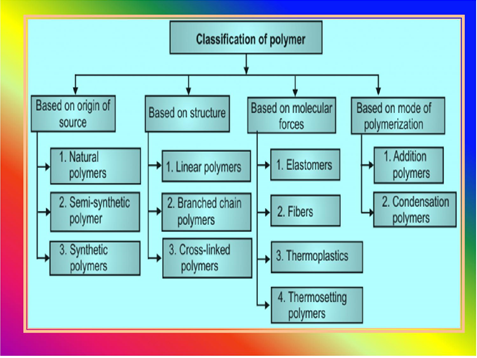
Based on the origin polymers are classified into natural, semisynthetic and synthetic polymers. Natural polymers are frequently found in nature and are generated from living organisms [8, 9, 10, 11]. These are namely proteins, nucleic acids and polysaccharides. Proteins are the polymers with amino acid monomer and peptide bonds. Examples silk, wool and enzymes. Polysaccharides include sugar molecules as monomers example cellulose and starch. Nucleotide monomers are the building blocks of nucleic acids, which include DNA and RNA [12, 13, 14, 15]. Genetic data is sent and stored by them. Natural polymers that have undergone chemical treatment to create semi-synthetic polymers [16, 17, 18, 19]. A regenerated cellulosic fibre is rayon.
Carbon disulphide and NaOH react chemically with wood pulp to produce rayon. Cellulose nitrate is made by adding nitric acid to cellulose [20, 21, 22, 23, 24].
Chemical processes are used to produce synthetic polymers, which are developed by humans. They are divided further into Polymers with Addition polymers and Condensation polymers Monomers are repeatedly added to create addition polymers, but no small molecules are removed in the process. Polypropylene (PP) and polyethylene (PE) are two examples [25, 26, 27, 28, 29].
Condensation polymers are created when the polymerization process eliminates a tiny molecule, usually water. Nylon, polyester, and polyurethane are among examples.
A polymer can be categorized based on its molecular composition. This categorization may be divided into three major groups. These polymers are known as linear polymers, having a straight chain structure with linear links connecting the monomer units. Polyethylene and polypropylene are two examples. Branched polymers have side chains or branches that originate from the main chain. Branching may be seen in polymers like low-density polyethylene (LDPE) [30, 31, 32, 33, 34]. Network polymers are sometimes referred to as crosslinked polymers because they contain strong crosslinks between their polymer chains, which gives them three- dimensional structures. Crosslinked polymers include things like rubber and thermosetting plastics. Figure 2 illustrates that, classification is based on their molecular forces and behaviour of polymers, when exposed to heat. These techniques of categorization are not mutually exclusive and that a single polymer might be classified under many headings depending on various criteria. Understanding the wide world of polymers and their uses is made easier to this overview.
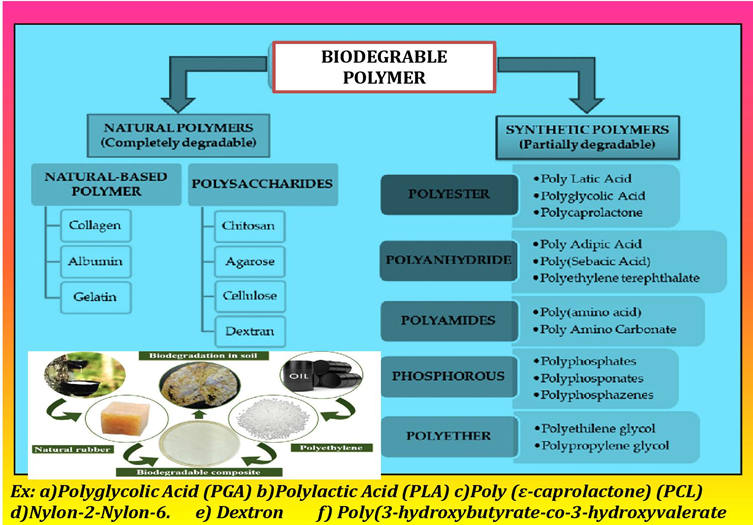
Biodegradable Polymers: These are a particular type of polymer that degrades naturally into by-products including gases (CO2, N2), water, biomass, and inorganic salts after serving its intended purpose. These are the polymers that break down due to the action of microorganisms and enzymes in either aerobic or anaerobic environments. It is developed using elements like polyesters, cellulose, and starch. The most utilized polyesters of this kind are aliphatic polyesters [35, 36, 37, 38, 39]. Figure 3 includes the classification of biodegradable polymers and its examples.
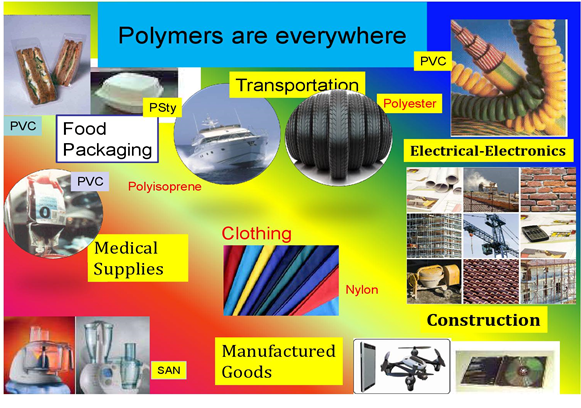
Applications of Polymers: Due to their wide range of characteristics and adaptability, polymers are essential in many sectors. Here are a few crucial application fields Applications for polymers include clothing, flooring, garbage disposal bags, and packaging. Applications for polymers used in the industrial sector include pipes, tanks, packing materials, insulation, wood substitutes, adhesives, composite matrix, elastomers, and fighter plane windscreens. Although they are somewhat industry-specific, polymers are actually a significant component of many different fields that you might be familiar with. Industries like aerospace, automotive, electronics, packaging, and medical devices all use polymer testing and consulting [40, 41, 42, 43, 44]. The use of polymers as building blocks is widespread in the engineering fields of avionics, biomedicine, drug delivery systems, tissue engineering, cosmetics, and more. Composites made from polymers are still in their early stages of development [45, 46, 47, 48, 49, 50, 51]. Novel verities of polymer materials are being introduced, each with its own special applications. The topics covered in this paper are electrical, electronic, medicine, and water treatment.
Electrical and Electronic Applications of Polymers: Electrical and Electronic fields have benefited greatly from the use of polymers, which has led to the creation of several cutting-edge technologies [52, 53]. They have a variety of uses, from flexible displays to sophisticated sensors, because to their special characteristics and process ability [54, 55, 56]. Prior to the development of conducting polymers (conjugate polymers), polymers were thought to be electrical insulators; nonetheless, these organic polymers possess distinctive electrical and optical characteristics that are comparable to those of inorganic semiconductors. Because of the distinctive way that conducting polymers combine electrical conductivity and polymer flexibility, they have attracted a lot of research [57, 58, 59]. These materials have created new opportunities for several technical applications in a variety of sectors, including sensors, biomedical equipment, electronics, and energy storage [60, 61, 62].
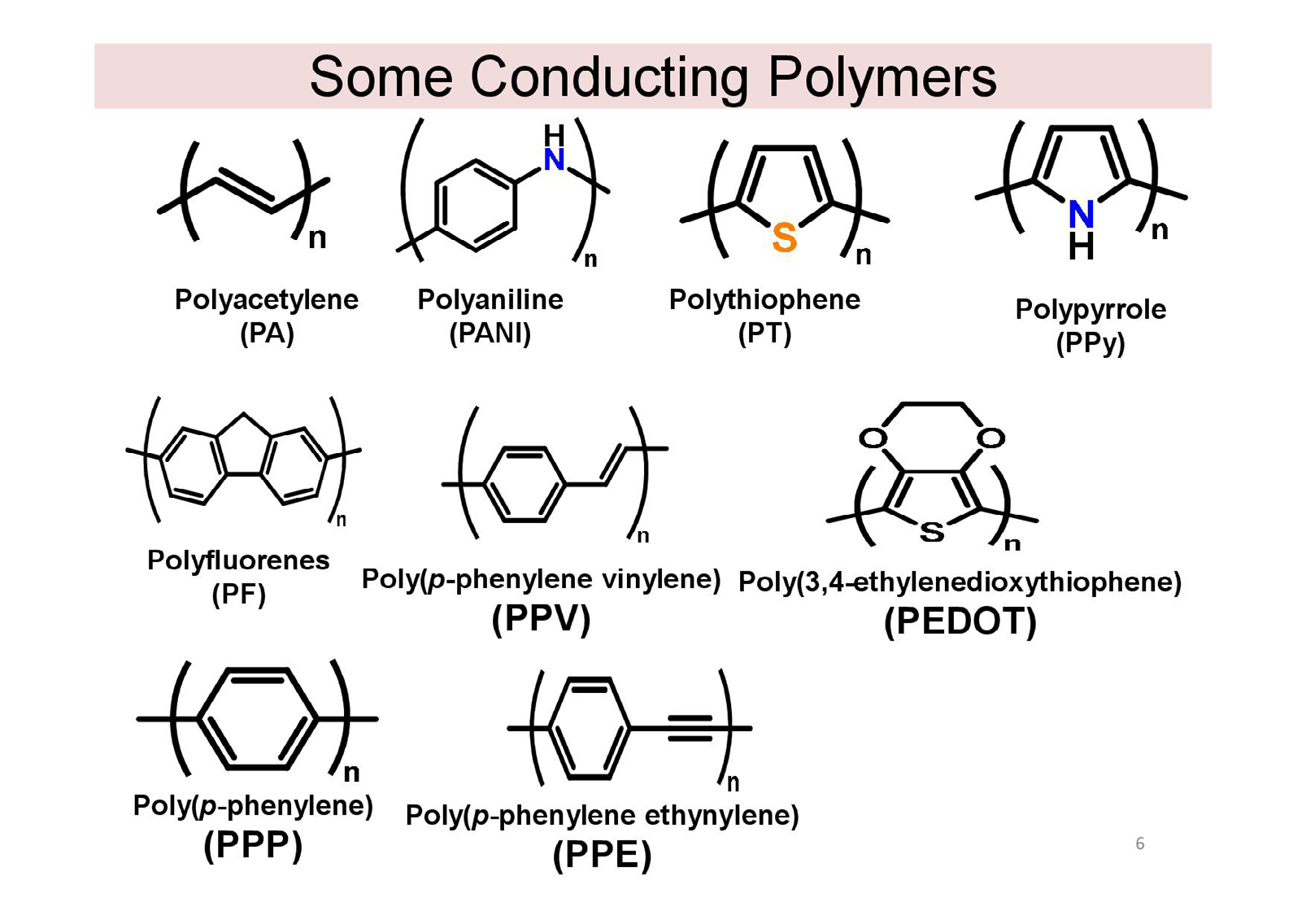
A family of organic compounds known as conducting polymers display electrical conductivity while retaining the intrinsic qualities of polymers, including flexibility, process ability, and light weight. These materials serve as a bridge between conventional insulating polymers and inorganic conductors due to the presence of pi-conjugated structures in the polymer backbone [63, 64, 65]. Some conducting polymer shown in Figure 4.
Conducting polymers are classified into two types: doped conducting polymers and non-doped conducting polymers [65, 66, 67]. The presence of a metal-like conductivity band is the two types of conducting polymers are doped conducting polymers and non-doped conducting polymers [68, 69, 70]. The presence of a metal-like conductivity band causes the conductivity of non-doped conjugated polymers. Three of the four valence electrons in a conjugated polymer form strong sigma bonds via sp2 hybridization, where electrons are closely localised. Each carbon atom’s remaining unpaired electron is still in a Pz orbital [70, 71, 72]. When it overlaps with another Pz orbital, it produces a pi bond. The pi electrons of these conjugated Pz orbitals overlap to form an extended Pz orbital system through which electrons can freely move. In the Table 2 the structure, properties and applications of one of the conducting polymer polyvinyl carbazole is illustrated.
| Properties | It has good photoconducting property, A high softening point, Excellent electrical insulating properties, High refractive index, Fair Chemical resistant |
| Structure | Chemical structure of polyvinyl carbazole |
| Applications | PVK finds extensive applications in Photocopier/image recording systems, laser printers etc, It is used in capacitors, PVK is used in multilayer light-emitting devices, also used as insulator. |
| Absorption region | 360 nm in UV region. |
Table 2: Polyvinyl carbazole conducting polymer.
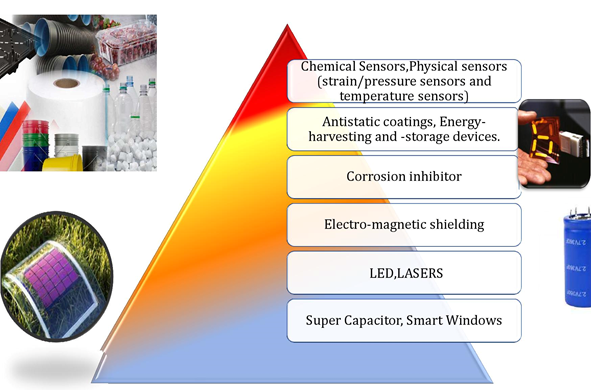
Due to their distinctive mix of electrical conductivity and polymer properties, conducting polymers have become useful materials with a variety of uses. Their application (Figure 5) in sensors, electronics, energy storage, and other areas is evidence of their ability to spur innovation and influence the course of many different sectors [71, 72, 73, 74].
Applications of Polymer Blends in Drug Delivery: Polymers are commonly employed in pharmaceutical and healthcare product development [75, 76]. Controlling medication release, delivering site-specific distribution of active pharmaceutical ingredients (APIs), and improving drug stability are some of the applications. Polymers are utilised in almost all main dosage forms, such as tablets, films, capsules, semisolids, suspensions, gels, and transdermal patches, as well as specialty delivery systems such as long-acting injections and biodegradable implants [77, 78, 79]. There are currently a number of polymers available with unique features that have been used in marketed medicine and healthcare goods. Because of this history of use, these polymers may be employed in the creation of new pharmaceutical products, as long as the levels used are below the safety limits [75, 76, 77, 78, 79]. Despite the fact that these polymers are readily available, there is a need for new and superior materials.
Utilizing polymers to encapsulate and release therapeutic chemicals, polymeric drug delivery systems provide controlled release, minimal side effects, and focused delivery [77, 78, 79, 80]. They can be found as micelles, nanoparticles, hydrogels, dendrimers, and lipid-polymer hybrids, among other things. These technologies provide targeted medication administration and regulated drug release, increasing bioavailability while reducing side effects. Biocompatibility, complicated manufacturing, and tailored treatment are difficulties. Emerging trends include biomimetic carriers, responsive systems, and nanomedicine. These systems have the potential to improve treatment results and influence the future of medication delivery.
In cancer theranostics, imaging-guided stimuli- responsive drug delivery devices have evolved as a functioning platform [76, 77, 78, 79, 80]. Throughout the last decade, the encapsulating of numerous functional nanoparticles into a single nanocarrier has been studied in order to produce effective drug delivery and cell/tissue imaging for cancer diagnosis and therapy. The most popular method is a mix of photothermal therapy (PTT), chemotherapy, and diagnostic imaging, which has a promising future. The innovative nanomedicine platform is a viable strategy for improving therapeutic efficacy while reducing negative effects [78, 79, 80]. The features of nanomaterials as contrast agents are then discussed, along with standard and new imaging systems [78, 79, 80].The imaging-guided PTT and chemotherapy are discussed in detail, with emphasis on three common materials: gold nanoparticles, carbon nanomaterials, and polymeric nanomaterials. Finally, imaging-guided synergistic photothermal and chemotherapy, which is expected to become a mainstream treatment for cancer theranostics in the future, is discussed. It will undoubtedly aid us in entering a new era of individualised cancer treatment [78, 79, 80, 81].Due to their special qualities that make them ideal for targeted medication administration and imaging applications, polymeric nanoparticles have attracted a lot of interest in the field of cancer treatment. These nanoparticles can include therapeutic agents like chemotherapeutic medicines, siRNA, or proteins and are generally made of biocompatible and biodegradable polymerslike poly(lactic- co-glycolic acid) (PLGA) and polyethylene glycol (PEG), and their sizes generally range from 10 to 200 nanometres. The capacity of polymeric nanoparticles to encapsulate several therapeutic agents, such as chemotherapeutic medicines, small interfering RNA (siRNA), and proteins, is a significant benefit. The loaded payload is shielded by this encapsulation, which also increases stability and prevents deterioration. Additionally, it enables the medicinal drugs’ regulated release, increasing their effectiveness and lowering the possibility of adverse effects [77, 78, 79, 80, 81]. With the addition of ligands or targeting molecules, polymeric nanoparticles can specifically recognize and attach to cancer cells. By limiting their distribution in healthy tissues, this tailored delivery method improves the accumulation of therapeutic medicines at the tumor site. This strategy lessens systemic toxicity while also enhancing therapy effectiveness.
For individuals with end-stage organ failure, organ transplantation is a life-saving treatment. Long-chain compounds called polymers, which feature repeating subunits, have gained popularity as potential organ transplant tools. This study intends to investigate how polymers might enhance patient outcomes and increase organ transplant success rates [78, 79, 80, 81]. Organ surfaces can be coated with polymers to reduce rejection, enhance biocompatibility, and suppress immune reactions. Anti- fouling coatings are frequently made from polyethylene glycol (PEG) and polyethylene oxide (PEO), which lowers the risk of immunological rejection and infection. These coatings can also act as mechanisms for the local release of immunosuppressive drugs to avoid rejection [77, 78, 79, 80, 81]. Future objectives include investigating tissue engineering techniques to construct completely functioning organs and creating smart polymers that can react to physiological stimuli [78, 79, 80, 81].
Polymers in Water Treatment: The top worldwide priority today is addressing environmental pollution. In this context, the remediation of contaminated water from organic pollutant is an increasingly necessary topic to be addressed, which is associated with negative impact on both public health and environment [82, 83]. One of the most chemically intensive sectors are textile dyeing and finishing industry. Removal of these pollutants from wastewater utilizing ecofriendly, inexpensive, and efficient techniques is crucial [84, 85, 86]. However, the techniques commonly utilized today eliminate the contamination without transforming pollutant to harmless products [86, 87, 88]. The complete degradation of dyes utilizing different nanocomposites can be achieved by the oxidation technology.
Organic substances that are known as polymers have a variety of exceptional qualities, including a high degree of mechanical strength, extraordinary flexibility, chemical stability, and a large surface area [89, 90, 91].Due to these characteristics, polymers were able to serve as hosts for many organic and inorganic compounds. As a result, we were able to create several composites with the desired qualities. As a result, polymer composites have received a lot of interest for the desalination and treatment of water. By blending, crosslinking, and surface functionalizing polymer- polymer composites, it was possible to adjust the adsorptive characteristics [92, 93, 94, 95, 96].Water recovery is an important proposal for human life and long-term development, and we are constantly looking for more efficient, simple-to-use, low-cost, and ecologically acceptable solutions to disinfect water bodies. We combined the benefits of -cyclodextrin (-CD), magnetite nanoparticles (MNs), and two types of quaternary ammonium salts to create two porous quaternary ammonium groups capped magnetic -CD polymers (QMCDP1 and QMCDP2) that effectively remove organic pollutants and eradicate pathogenic microorganisms through a single implementation. The porous substrate material in this case was -CD polymer (CDP), whereas MNs supplied the materials with high magnetism, boosting recyclability in real application scenarios, and the grafting of quaternary ammonium groups was useful for anionic dye adsorption and sterilising [96, 97, 98, 99, 100]. Using methyl blue (MB) and orange G (OG) as model dyes, both QMCDPs outperformed uncapped MCDPs in anionic pollutant adsorption. Furthermore, QMCDP2, which was changed with longer alkyl chains than QMCDP1, had greater bactericidal activity against Staphylococcus aureus, with a 99.47% eradication rate. As a result, our research contributes to the development of a high-performance, easily recyclable adsorbent for the simultaneous sterilisation and adsorption of impurities and waste materials present in water [100, 101, 102, 103].
| Type of Polymer membranes | Chemical structure | Properties | |
|---|---|---|---|
| 1 | Isotropic | Chemically homogeneous composition | Symmetric, determined by pore size distribution, widely used in microfiltration process. |
| 2 | Anisotropic | Chemically heterogeneous composition | Asymmetric, these are also called as thin film composite membrane, consists of single type of membrane material with different pore size and porosity in different layers. |
Table 3: Types of Polymer membranes in water purification and their properties with chemical composition.
Polymer membranes have drawn a lot of interest in recent years because of their adaptable qualities, affordability, and efficacy in eliminating different pollutants from water sources. This overview looks at the many types of polymer membranes utilized, how they are made, and how they function in various water purification processes including reverse osmosis, ultrafiltration, microfiltration, and nanofiltration. In order to develop sustainable and widely available water purification solutions, the study also addresses current developments, difficulties, and future possibilities of polymer membrane technology Table 3 focuses on type of polymer membranes used in the water purification, chemical structure and their properties [104, 105, 106, 107].
- Abbreviations: LDPE: Low-Density Polyethylene; APIs:
- Active Pharmaceutical Ingredients.
- Introduction
- The study of big molecules made up of repeated monomeric building blocks is known as polymer research.
- Due to their extensive variety of uses across several sectors, these materials have attracted a lot of interest [1-5]. The
- Sl. No
- Areas
- Applications
- 1
- In textile Industries
- Fibres, colouring fabrics, threads,
- 2
- Biomedical
- Bandages, organ implantation, fibres and threads used in the surgery, fibres used in surgical dressings.
- 3
- Protection
- Helmets,protectiveguards,bullet proof guards,diving helmets.
- 4
- Industries
- Adhesives,Man-made fibres, polymers used in suface coatings.
- 5
- Transportation
- Curvings, seat belts, seat cushions,rubber tubes and plastics.
Table 1: Applications of polymers in different areas.
Conclusions
Polymers stand as a remarkable class of materials with a multitude of applications and potential for innovation. The study of polymers has evolved from a focus on properties of types polymer to a nuanced exploration of their structure- property relationships, leading to the design of tailored materials for specific functions. Polymer chemistry is quickly advancing, and we use polymers in almost every industry. These polymers may be natural, organic, inorganic, synthetic, or semi-synthetic. All of these materials are significantly involved in the industrial applications, food, interaction, travel, irrigation, containers, clothes, historical recording, structures, and roadways. Discovering polymers and writings that are connected to them can help us to comprehend them better in our daily lives by giving us insights and new perspectives. Mastering polymers is made possible by the data gathered from the fundamental science courses.
References
-
National Research Council (1994) Polymer Science and Engineering: The Shifting Research Frontiers. Washington DC, USA the National Academies Press, pp: 1-192.
-
Sun H, Guo X, Facchetti A (2020) High-Performance n-Type Polymer Semiconductors: Applications, Recent Development, and Challenges. Perspective 6(6): 1310- 1326.
-
Sun H, Wang L, Wang Y, Guo X (2018) Imide- Functionalized Polymer Semiconductors. Chemistry – A European Journal 25(1): 87-105.
-
Eden MR, Towler G, Ierapetritou M (2018) 13th International Symposium on Process Systems Engineering (PSE 2018) 1ST (edn.).
-
McBride M, Morales C, Reichmanis E, Grover MA (2018) Process-Structure-Property Relationships for Design of Polymer Organic Electronics Manufacturing. Computer Aided Chemical Engineering 44: 2467-2472.
-
Schenning APHJ, Meijer EW (2001) Functional Conjugated Polymers, Molecular Design of: Architecture. Encyclopedia of Materials: Science and Technology pp: 3400-3407.
-
Kajzar F, Sujan GK (2016) Organic Conductors and Semiconductors, Optical Properties of. Reference Module in Materials Science and Materials Engineering.
-
Hoppe H, Sariciftci NS (2006) Chapter 10 - Nanostructure and Nanomorphology Engineering in Polymer Solar Cells. Nanostructured Materials for Solar Energy Conversion pp: 277-318.
-
Torre G, Nicolau M, Torres T (2001) Oxo-Bridged Macrocyclic Metal Complexes. Phthalocyanines: Synthesis, Supramolecular Organization, and Physical Properties. Supramolecular Photosensitive and Electroactive Materials pp: 1-111.
-
Li M, Cao Y, Zhang X (2023) Hierarchically Structured Nanoparticle-Free Omniphobic Membrane for High- Performance Membrane Distillation. Environmental Science & Technology 57(14): 5841-5851.
-
Zhang Z, Yang Z, Zhao Z, Liu Y, Wang C, et al. (2023) Multimodal Deep-Learning Framework for Accurate Prediction of Wettability Evolution of Laser-Textured Surfaces. ACS Applied Materials & Interfaces 15(7): 10261-10272.
-
Selim MS, Fatthallah NA, Shenashen MA, Higazy SA, Madian HR, et al. (2023) Bioinspired Graphene Oxide– Magnetite Nanocomposite Coatings as Protective Superhydrophobic Antifouling Surfaces. Langmuir 39(6): 2333-2346.
-
Li X, Qi J, Zhu J, Jia Y, Liu Y, et al. (2022) Low-Loss, High- Transparency Luminescent Solar Concentrators with a Bioinspired Self-Cleaning Surface. The Journal of Physical Chemistry Letters 13(39): 9177-9185.
-
Esmaeilzadeh P, Zandi A, Ghazanfari MH, Khezrnejad A, Fatemi M, et al. (2022) Selective Fabrication of Robust and Multifunctional Super Nonwetting Surfaces by Diverse Modifications of Zirconia–Ceria Nanocomposites. Langmuir 38(30): 9195-9209.
-
LaChance AM, Hou Z, Farooqui MM, Samuels NT, Carr SA, et al. (2022) Spin Coating for Forming Thin Composite Coatings of Montmorillonite and Poly (vinyl alcohol). Industrial & Engineering Chemistry Research 61(11): 4168-4177.
-
LaChance AM, Hou Z, Farooqui MM, Carr SA, Serrano JM, et al. (2022) Doctor-Blade-Assisted Casting for Forming Thin Composite Coatings of Montmorillonite and Poly (vinyl alcohol). Industrial & Engineering Chemistry Research 61(10): 3766-3774.
-
Deng L, Liu Z, Li L (2019) Chapter 5 - Hybrid nanocomposites for imaging-guided synergistic theranostics Nanomaterials for Drug Delivery and Therapy pp: 117-147.
-
Luscombe CK, Maitra U, Walter M, Wiedmer SK (2021) Theoretical background on semiconducting polymers and their applications to OSCs and OLEDs. From the journal Chemistry Teacher International 3(2): 169-183.
-
Klauk H (2011) Organic Electronics II: More Materials and Applications. Wiley-VCH, Weinheim, Germany, pp: 440.
-
Bao Z, Locklin J (2007) Organic Field-Effect Transistors 1st (edn.) CRC Press, Boca Raton, USA, pp: 1-640.
-
Brabec C, Scherf U, Dyakonov V (2014) Organic Photovoltaics: Materials, Device Physics, and Manufacturing Technologies, 2nd Edition. Wiley-VCH, Weinheim, Germany, pp: 642.
-
Hadziioannou G, Malliaras GG (2006) Semiconducting Polymers: Chemistry, Physics and Engineering, 2nd Edition, Two-Volume Set. Wiley VCH, Weinheim, Germany, 1: 768.
-
Leclerc M, Morin JF (2010) Design and Synthesis of Conjugated Polymers. Polymer Science & Technology General Wiley VCH, Weinheim, Germany, pp: 379.
-
Facchetti A (2011) π-Conjugated polymers for organic electronics and photovoltaic cell applications. Chem Mater 23(3): 733-758.
-
Beaujuge PM, Fréchet JMJ (2011) Molecular design and ordering effects in π-functional materials for transistor and solar cell applications. J Am Chem Soc 133(50): 20009-20029.
-
McCullough RD (1998) The Chemistry of Conducting Polythiophenes. Advanced Materials 10(2): 93-116.
-
Osaka I, McCullough RD (2008) Advances in molecular design and synthesis of regioregular polythiophenes. Acc Chem Res 41(9): 1202-1214.
-
Bao Z, Dodabalapur A, Lovinger AJ (1996) Soluble and processable regioregular poly (3-hexylthiophene) for thin film field-effect transistor applications with high mobility. Appl Phys Lett 69: 4108-4110.
-
Sirringhaus H, Brown PJ, Friend RH, Nielsen MM, Bechgaard K, et al. (1999) Two-dimensional charge transport in self-organized, high-mobility conjugated polymers. Nature 401(6754): 685-688.
-
McCulloch I, Heeney M , Chabinyc ML, Delongchamp D , Kline RJ, et al. (2009) Semiconducting thienothiophene copolymers: design, synthesis, Morphology, and Performance in Thin-Film Organic Transistors. Adv Mater 21(10-11): 1091-1109.
-
Sirringhaus H, Bird M, Richards T, Zhao N (2010) Charge transport physics of conjugated polymer field-effect transistors. Adv Mater 22(34): 3893-3898.
-
Jones BA, Facchetti A, Wasielewski MR, Marks TJ (2007) Tuning Orbital Energetics in AryleneDiimide Semiconductors. Materials Design for Ambient Stability of n-Type Charge Transport. J Am Chem Soc 129(49): 15259-15278.
-
De Leeuw DM, Simenon MMJ, Brown AR, Einerhand REF (1997) Stability of n-type doped conducting polymers and consequences for polymeric microelectronic devices. Synth Met 87(1): 53-59.
-
Anthopoulos TD, Anyfantis GC, Papavassiliou GC, de Leeuw DM (2007) Air-stable ambipolar organic transistors. Appl Phys Lett 90(2): 122105.
-
Ando S, Nishida JI, Inoue Y, Tokito S, Yamashita Y (2004) Synthesis, physical properties, and field-effect transistors of novel thiophene/thiazolothiazole co- oligomers. J Mater Chem 14: 1787-1790.
-
Ando S, Nishida J, Fujiwara E, Tada H, Inoue Y, et al. (2004) Characterization and field-effect transistor performance of heterocyclic oligomer containing a thiazolothiazole unit. Chem Lett 33(9): 1170-1171.
-
Ando S, Nishida J, Tada H, Inoue Y, Tokito, S, Iso Y (2005) High performance n-type organic field-effect transistors based on pi-electronic systems with trifluoromethylphenyl groups. J Am Chem Soc 127(15): 5336-5337.
-
Osaka I, Sauvé G, Zhang R, Kowalewski T, McCullough RD (2007) Novel thiophene-thiazolothiazole copolymers for organic field-effect transistors. Adv Mater 19(23): 4160-4165.
-
Osaka I, Zhang R, Sauvé G, Smilgies DM, Kowalewski T, et al. (2009) High-lamellarordering and amorphous-like π-network inn short-chainthiazolothiazole−thiophene copolymers lead to high mobilities. J Am Chem Soc 131(7): 2521-2529.
-
Osaka I, Zhang R , Liu J, Smilgies DM , Kowalewski T, et al. (2010) Highly stable semiconducting polymers based on thiazolothiazole. Chem Mater 22(14): 4191-4196.
-
Takimiya K, Osaka I, Nakano M (2013) π-Building blocks for organic electronics: revaluation of “inductive” and “resonance” effects of π-electron deficient units. Chemi Mater 26(1): 587-593.
-
Osaka I, Saito M, Mori H, Koganezawa T, Takimiya K (2012) Drastic change of molecular orientation in a thiazolothiazole copolymer by molecular-weight control and blending with PC61BM leads to high efficiencies in solar cells. Adv Mater 24(3): 425-430.
-
Osaka I, Saito M, Koganezawa T, Takimiya K (2014) Thiophene–thiazolothiazole copolymers: significant impact of side chain composition on backbone orientation and solar cell performances. Adv Mater 26(2): 331-338.
-
Wolfe JF, Loo BH, Arnold FE (1981) Rigid-rod polymers.
-
Synthesis and thermal properties of para-aromatic polymers with 2,6-benzobisthiazole units in the main chain. Macromolecules 14(4): 915-920.
-
Osaheni JA, Jenekhe SA (1992) Synthesis and processing of heterocyclic polymers as electronic, optoelectronic, and nonlinear optical materials. 1. New conjugated rigid-rod benzobisthiazole polymers. Chem Mater 4(6): 1282-1290.
-
Osaheni JA, Jenekhe SA (1995) Electroactive and photoactive rod-coil copolymers: design, synthesis, and supramolecular regulation of photophysical properties. J Am Chem Soc 117(28): 7389-7398.
-
Yaseen M, Khattak MAK, Humayun M, Usman M, Shah SS, et al. (2021) A Review of Supercapacitors: Materials Design, Modification, and Applications. Energies 14(22): 7779.
-
Poonam, Sharma K, Arora A, Tripathi SK (2019) Review of supercapacitors: Materials and devices. J Energy Stor 21: 801-825.
-
Chatterjee DP, Nandi AK (2021) A review on the recent advances in hybrid supercapacitors. J Mater Chem A 9(29): 15880-15918.
-
Omanović Mikličanin E, Badnjević A, Kazlagić A, Hajlovac M (2020) Nanocomposites: a brief review. Health Technol 10: 51-59.
-
Namsheer K, Rout CS (2021) Conducting polymers: a comprehensive review on recent advances in synthesis, properties and applications. RSC Adv 11(10): 5659- 5697.
-
Chavali MS, Nikolova MP (2019) Metal oxide nanoparticles and their applications in nanotechnology. SN Appl Sci 1(607).
-
Garrido VQ, Calle GAC, Aguilar AB, Montoya JGR, López OE, et al. (2021) Advances in the design and application of transition metal oxide-based supercapacitors. Open Chemistry 19(1): 709-772.
-
Wang X, Jiang D, Jing C, Liu X, Li K, et al. (2020) Biotemplate Synthesis of Fe3O4/Polyaniline for Supercapacitor. J Energy Storage 30: 101554.
-
Li S, Zhang L, Zhang L, Guo Y, Chen X, et al. (2021) Preparation of Fe3O4@polypyrrole composite materials for asymmetric supercapacitor applications. New J Chem 45(35): 16011-16018.
-
Ates M, Serin MA, Ekmen I, Ertas YN (2015) Supercapacitor behaviors of polyaniline/CuO, polypyrrole/CuO and PEDOT/CuO nanocomposites. Polymer Bulletin 72: 2573-2589.
-
Lu Q, Zhou Y (2011) Synthesis of mesoporous polythiophene/MnO2 nanocomposite and its enhanced pseudocapacitive properties. J Power Res 196(8): 4088- 4094.
-
Han K, Liu Y, Huang H, Gong Q, Zhanga Z, et al. (2019) Tremella-like NiO microspheres embedded with fish- scale-like polypyrrole for high-performance asymmetric supercapacitor. RSC Adv 9(38): 21608-21612.
-
Jadhav SA, Dhas SD, Patil KT, Moholkar AV, Patil PS (2021) Polyaniline (PANI)-manganese dioxide (MnO2) nanocomposites as efficient electrode materials for supercapacitors. Chemical Phys Lett 778: 138764.
-
Bahloul A, Nessark B, Briot E, Groult H, Mauger A, et al. (2013) Polypyrrole-covered MnO2 as electrode material for supercapacitor. J Power Sources 240: 267-272.
-
Liu R, Duay J, Lanea T, Lee SB (2010) Synthesis and characterization of RuO2/poly(3,4- ethylenedioxythiophene) composite nanotubes for supercapacitors. Phys Chem Chem Phys 2(17): 4309- 4316.
-
Deshmukh PR, Bulakhe RN, Pusawale SN (2016) Organic Conductors and Semiconductors. Optical Properties of. Kajzar F, Sujan GK (Eds.), Materials Science and Materials Engineering.
-
Amir SMM, Sultan MTH, Jawaid M, Ariffin AH, Mohd S, et al. (2019) Nondestructive testing method for Kevlar and natural fiber and their hybrid composites. Durability and Life Prediction in Biocomposites, Fibre-Reinforced Composites and Hybrid Composites.
-
Greene JP (2022) 12-Polymer Composites. Pp: 191-222.
-
Sarkhel R, Ganguly P, Das P, Bhowal A, Saha A (2021) 14-Industrial dye degradation bydifferent nanocomposite doped material. Photocatalytic Degradation of Dyes pp: 377-404.
-
Griggs S, Marks A, Bristowa H and McCullochab I (2021) n-Type organic semiconducting polymers: stability limitations, design considerations and applications. Journal of Materials Chemistry C 26.
-
Nezakati T, Seifalian A, Tan A and Seifalian AM (2018) Conductive Polymers: Opportunities and Challenges in Biomedical Applications. Chem Rev 118(4): 6766-6843.
-
Heeger AJ, Phys J (2001) Semiconducting and Metallic Polymers: The Fourth Generation of Polymeric Materials†. J Phys Chem B 105(36): 8475-8491.
-
(1986) Skotheim TA, “Handbook of Conducting Polymers,” Marcel Dekker, New York, USA.
-
Le TH, Kim Y, Yoon H (2017) Electrical and Electrochemical Properties of Conducting Polymer. Polymers 9(4): 150.
-
(1997) Handbook of Organic Conductive Molecules and Polymers. HS Nalwa (Ed.), Wiley, New York, 1-4.
-
(2001) TA Skotheim, RL Elsenbaumer and JR Reynolds “Handbook of Conducting Polymers Marcel,” Dekker, New York, USA, 4: 4-6.
-
Deng L, Lui Z, Li L (2019) Chapter 5 - Hybrid nanocomposites for imaging-guided synergistic theranostics. Nanomaterials for Drug Delivery and Therap pp: 117-147.
-
Imre B, Pukánszky B (2013) Compatibilization in bio- based andbiodegradable polymer blends. Eur Polym J 49(6): 1215-1233.
-
Jones A, Abhyuday M, Sharma S (2015) Protein-based bioplastics and their antibacterial potential. J Appl Polym Sci 132.
-
Shahzad M, Millhouse E, Culshaw S, Edwards CA, Ramage G, et al. (2015) Selected dietary (poly)phenols inhibit periodontal pathogen growth and biofilm formation. Food Funct 6(3): 719-729.
-
Ferlay J, Soerjomataram I, Dikshit R, Eser S, Mathers C, Rebelo M, et al. (2012) Cancer incidence and mortality worldwide: Sources, methods and major patterns in GLOBOCAN 2012 Int J Cancer 136(5): E359-386.
-
Pérez Herrero E, Fernández Medarde A (2015) Advanced targeted therapies in cancer: Drug nanocarriers, the future of chemotherapy. Eur J Pharm Biopharm 93: 52- 79.
-
Taghizadeh B, Taranejoo S, Monemian SA, Salehi Moghaddam Z, Daliri K, et al. (2014) Classification of stimuli–responsive polymers as anticancer drug delivery systems. Drug Deliv 22(2): 145-155.
-
Coelho SC, Pereira MC, Juzeniene A, Juzenas P, Coelho MAN (2015) Supramolecular nanoscale assemblies for cancer diagnosis and therapy. J Control Release 213: 152-167.
-
Fonseca AC, Ferreira P, Cordeiro RA, Mendonça PV, Góis JR, et al. (2013) Drug Delivery Systems for Predictive Medicine: Polymers as Tools for Advanced Applications. In: Mozaffari MS (Ed.), New Strategies to Advance Pre/ Diabetes Care: Integrative Approach by PPPM, Advances in Predictive, Preventive and Personalised Medicine 3.
-
Jain K (2020) Drug Delivery Systems - An Overview. Drug Delivery Systems. Methods Mol Biol 2059: 1-54.
-
Ulery BD, Nair LS, Laurencin CT (2011) Biomedical applications of biodegradable polymers. J Polym Sci B Polym Phys 49(12): 832-864.
-
Nair LS, Laurencin CT (2007) Biodegradable polymers as biomaterials. Prog Polym Sci 32: 762-798.
-
Ahmed FE, Lalia BS, Hilal N, Hashaikeh R (2017) Electrically conducting nanofiltration membranes based on networked cellulose and carbon nanostructures. Desalination 406: 60-66.
-
Al Ashhab A, Gillor O, Herzberg M (2014) Biofouling of reverse-osmosis membranes under different shear rates during tertiary wastewater desalination: microbial community composition. Water Res 67: 86-95.
-
Amy G, Ghaffour N, Li Z, Francis L, Linares RV, et al. (2017) Membrane-based seawater desalination: present and future prospects. Desalination 401: 16-21.
-
Berber MR (2020) Current Advances of Polymer Composites for Water Treatment and Desalination.
-
Liu B, Wang S, Wang H, Wang Y, Xiao Y, et al. (2022) Quaternary Ammonium Groups Modified Magnetic Cyclodextrin Polymers for Highly Efficient Dye Removal and Sterilization in Water Purification. Molecules 28(1): 167.
-
Ashoor BB, Mansour S, Giwa A, Dufour V, Hasan SW (2016) Principles and applications of direct contact membrane distillation (DCMD): a comprehensive review. Desalination 398: 222-246.
-
Ashoor BB, Fath H, Marquardt W, Mhamdi A (2012) Dynamic modeling of direct contact membrane distillation processes. Comput Aided Chem Eng 31: 170- 174.
-
Aslam M, Charfi A, Lesage G, Heran M, Kim J (2017) Membrane bioreactors for wastewater treatment: a review of mechanical cleaning by scouring agents to control membrane fouling. Chem Eng J pp: 897- 913.
-
Behboudi A, Jafarzadeh Y, Yegani R (2017) Polyvinyl chloride/polycarbonate blend ultrafiltration membranes for water treatment. J Memb Sci 534: 18-24.
-
Bereskie T, Haider H, Rodriguez MJ, Sadiq R (2017) Framework for continuous performance improvement in small drinking water systems. Sci Total Environ 574: 1405-1414.
-
Lee A, Darling SB, Jeffrey W (2016) Elam Membrane materials for water purification: design, development, and application. Environ Sci Water Res Technol pp: 17- 42.
-
Baker RW (2004) Membrane Technology and Applications. 2nd Edition, John Wiley & Sons, Ltd., Hoboken, USA.
-
Loeb S, Sourirajan S (1962) Sea water demineralization by means of an osmotic membrane Saline Water Conversion-II. ACS Publications, Washington, USA, pp: 117-132.
-
Xu GR, Xu JM, Feng HJ, Zhao HL, Wu SB (2017) Tailoring structures and performance of polyamide thin film composite (PA-TFC) desalination membranes via sublayers adjustment-a review. Desalination 417: 19-35.
-
Petersen RJ (1993) Composite reverse osmosis and nanofiltration membranes. J Membr Sci 83(1): 81-150.
-
Ismail AF, Padaki M, Hilal N, Matsuura T, Lau WJ (2015) Thin film composite membrane - recent development and future potential. lDES 356: 140-148.
-
Gohil JM, Suresh AK (2017) Chlorine attack on reverse osmosis membranes: mechanisms and mitigation. strategies J Membr Sci 541: 108-126.
-
Yu C, Li H, Zhang X, Lü Z, Yu S, et al. (2018) Polyamide thin-film composite membrane fabricated through interfacial polymerization coupled with surface amidation for improved reverse osmosis Performance. J Membr Sci 566: 87-95.
-
Kong C, Koushima A, Kamada T, Shintani T, Kanezashi M, et al. (2011) Enhanced performance of inorganic-polyamide nanocomposite membranes prepared by metal-alkoxide-assisted interfacial polymerization. J Membr Sci 366(1-2): 382-388.
-
Gohil JM, Ray P (2017) A review on semi-aromatic polyamide TFC membranes prepared by interfacial polymerization: potential for water treatment and desalination. Sep Purif Technol 181: 159-182.
-
Choi W, Gu JE, Park SH, Kim S, Bang J (2015) Lee Tailor-made polyamide membranes for water desalination. ACS Nano 9(1): 345-355.
-
Seah MQ, Lau WJ, Goh PS, Tseng HH, Wahab RA, et al. (2020) Progress of interfacial polymerization techniques for polyamide thin film (Nano)composite membrane fabrication: a comprehensive review. Polymer 12(12): 2817.
-
Xu J, Yan H, Zhang Y, Pan G, Liu Y (2017) The morphology of fully-aromatic polyamide separation layer and its relationship with separation performance of TFC membranes. J Membr Sci 541: 174.
- Solution-Processed Chiral Perovskites for Biomedical Applications
- Nanotechnology in Health Chemistry and Medicine: Current Challenges and Future Directions
- Human Exposure to Micro- and Nanoplastics: Pathways, Toxicity, and Intervention Strategies
- Exosome Nanomedicine for Cancer Therapy
- Micro and Nanoplastics–Plastisphere, Biotoxicity, Impact on Human Health, and Mitigation Strategies
- Process Validation of Cefixime Powder for Suspension Dosage Form, 50 mL