
Nuclear Fusion Rethought: Obeying the Quantum Regime is the Key to Permanent Plasma Confinement
A paradigm shift in the field of fusion energy production is heralded by the integration of quantum mechanics into the fusion technology landscape. The "Looperator" provides a reliable energy source by fusing the ionized nuclei of deuterium and tritium into helium in a timeless chain reaction within a magnetically confined plasma volume. This integration combines the continuous supply of fuel with the efficient removal of slag, ensuring sustained energy output.
Introduction
Transforming the Way Fusion Works
This remarkable technology is poised to usher in a new era of energy abundance, unlocking a million times more energy than chemical combustion by harnessing the strong nuclear binding forces [1, 2, 3, 4]. Unlike solar and wind power, which are inherently variable, fusion provides a consistent and independent energy source, free from external climate fluctuations [5, 6, 7, 8, 9, 10, 11, 12]. By achieving unlimited magnetic plasma confinement, this technology has the potential to eliminate energy scarcity, allowing humanity to thrive without the geopolitical and environmental disruptions caused by resource limitations [13, 14, 15, 16, 17, 18, 19]. Instead of diverting efforts toward colonizing distant planets, the focus should remain on preserving Earth, ensuring a sustainable and prosperous future for all.
While this potential is groundbreaking, the underlying principles and technology of achieving sustained fusion reactions are rooted in cutting-edge quantum and relativistic physics [1, 4, 10].
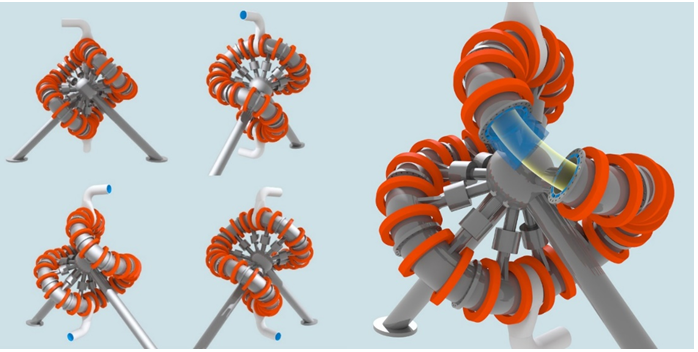
The presented fusion reactor is designed to provide a scalable, modular, and serially producible construction system that enables the rapid deployment of innovative fusion power plants at suitable locations worldwide [20, 21, 22, 23]. This modular approach integrates various essential subsystems, including a heating system for the plasma [17], a cooling system for superconducting coils [24], a hydraulic system for heat transfer to an external utility system, a support system for transmitting loads into a stable foundation, and a fuel injection system [14]. The assembly process is characterized by screw connections between prefabricated elements and components, allowing for efficient and standardized construction.
Beyond its practical construction advantages, this fusion reactor is also grounded in a novel approach to plasma confinement that aligns with the principles of quantum mechanics and general relativity [1, 4, 9]. The reactor incorporates a quantum mechanically effective induction system designed for permanent magnetic plasma confinement [6]. A newly developed magnetic field configuration enables the formation of a plasma vessel with a straightforward geometric structure, assembled from serial components in modular units corresponding to the different subsystems of the reactor [20].
The system further extends into quantum physics, defining a quantum-effective choreography for the intrinsic spin properties of charged particles with a quantum number of ½ [3, 25]. This leads to a unique form of electromagnetic induction that drives the plasma’s magneto-fluid dynamic behavior, characterized by forced ring oscillations. These oscillations establish a dynamic equilibrium that ensures stable magnetic confinement of the plasma [22].
To fully exploit the quantum properties of fermions— features that defy direct visual representation—a combination of three fundamental geometric transformations is necessary: translation, rotation, and the Lorentz transformation [10]. Collectively known as the Poincaré group, these transformations are crucial in demonstrating the validity of general relativity within the reactor’s operation [9]. A comprehensive geometric analysis reveals that within each concentric layer of the tubular plasma volume, spin-1/2 particles exhibit uniform orbital motion around transformation spheres of a fixed radius, traversing identical path lengths during each revolution [11]. In accordance with group theory, the central transformation sphere, located at the midpoint of the reactor, along with numerous off-center transformation spheres, forms a homogeneous group governed by a matrix [15, 16]. These off-center transformation spheres are positioned within a virtual globe centered on the midpoint of the central sphere. The gyration radius of each particle imposes a limit on the total number of off-center transformation spheres that can exist within the given diameter of the plasma volume, which simultaneously defines the diameter of the central virtual globe [25].
In a broader theoretical context, the double helix can be interpreted as an orbital layer model of universal space-time loops, where particles undergo wave-like oscillations that transition from an initial state back to the same spin state at a later stage—marking both an end and a new beginning [24]. These conditions provide further validation of general relativity, as they manifest in the proposed fusion reactor through the emergence of a spherical magnetic field [9, 10].
By integrating cutting-edge modular construction with a theoretical foundation rooted in both quantum mechanics and general relativity, this fusion reactor represents a groundbreaking advancement in fusion technology. It not only enables efficient assembly and deployment but also provides a deeper understanding of plasma behavior, quantum spin dynamics, and relativistic space-time transformations, paving the way for a new era in controlled nuclear fusion [19, 20, 21].
Geometric Proportions
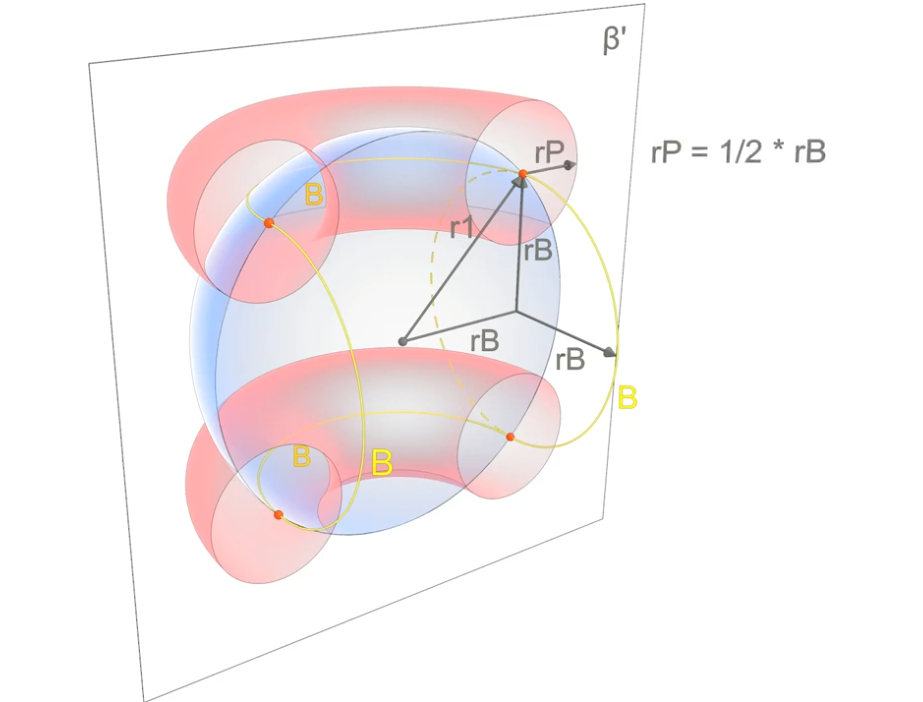
Building on the foundational principles of the fusion reactor, the geometric configuration of its magnetic field can be precisely defined using specific radius ratios (r1,rB) to estimate the dimensions of the magnetically confined plasma volume. A central magnetic field line (m1,yellow) encircles the core (M) and consists of four semicircular arcs (B) positioned on the surface of a uniform transformation sphere with radius r1 [11]. Each of these arcs defines a magnetic field plane with radius rB. Within a common torque plane (β′), the four yellow arcs are arranged such that two periods of an annularly curved oscillation appear as mirror- symmetric counterparts. These are seamlessly connected, forming an infinite loop in the shape of a double helix [23]. Additionally, the fusion reactor’s magnetic field contains numerous eccentric magnetic field lines, situated on the same transformation sphere [10]. Though not depicted here, these field lines consist of four spatially curved elliptical arcs, also connected in the torque plane (β′) and possessing the same length as the semicircular arcs (B).
Transformation Sphere
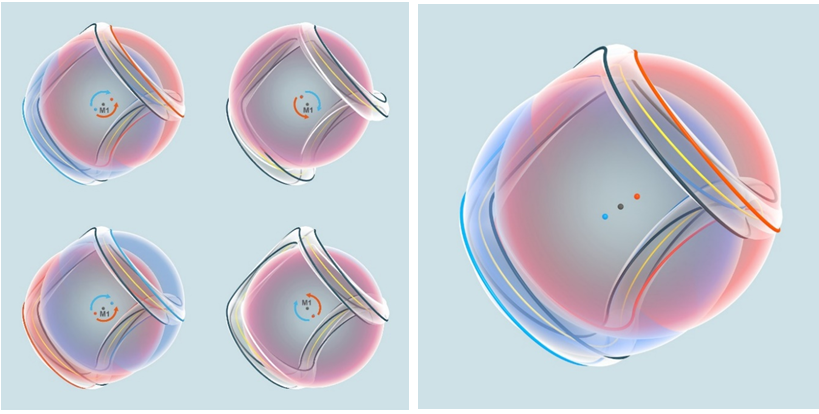
Expanding upon the geometric foundation established earlier, the fusion reactor’s plasma volume is structured concentrically around a central magnetic field line, depicted in yellow [24]. This tubular plasma volume is composed of four equally sized semicircular arcs, interconnected within a shared angular momentum plane (β′). On its outer surface, four eccentric magnetic field lines—each illustrated in distinct colors—trace elliptical space curves, maintaining a length equal to that of the central magnetic field line.
The Helmholtz coils generate a Lorentz force that induces a clockwise plasma flow, directly influencing the motion of charged particles within the confinement system [5]. This force governs the collective interaction between electrons, ions, and the magnetic field lines, which are found to lie on the surface of a transformation sphere of uniform radius. The motion of these charged particles within the plasma volume, driven by both rotation and translation, results in a fundamental transformation governed by the Poincaré group—a mathematical framework that underpins relativistic symmetries in spacetime [9, 10].
Twisting the Magnetic Field Lines
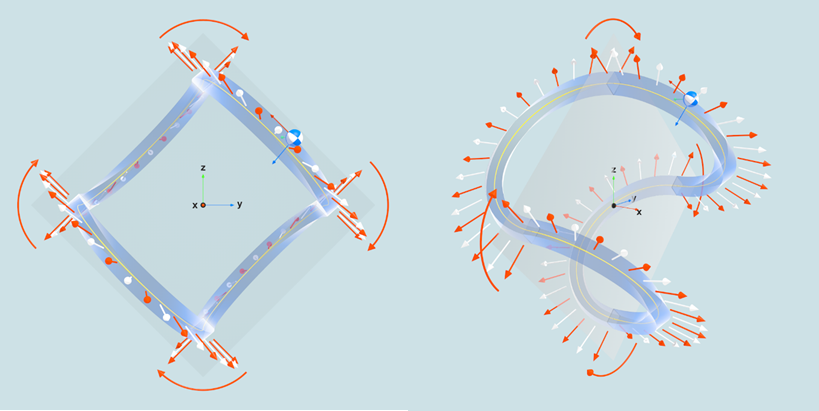
Within the angular momentum plane (β′) of the spherical double helix, a fluid-dynamic mechanism utilizes the mass of electrons and ions to induce a controlled twisting of the magnetic field lines. Accelerated by the Lorentz force, these charged particles travel at velocities of up to 1000 km/s, experiencing gravitational forces due to their mass [21]. As a result, the angular momentum plane, defined by the intersection of the four semicircular arcs of the double helix, undergoes a twisting motion of 4π/90 radians.
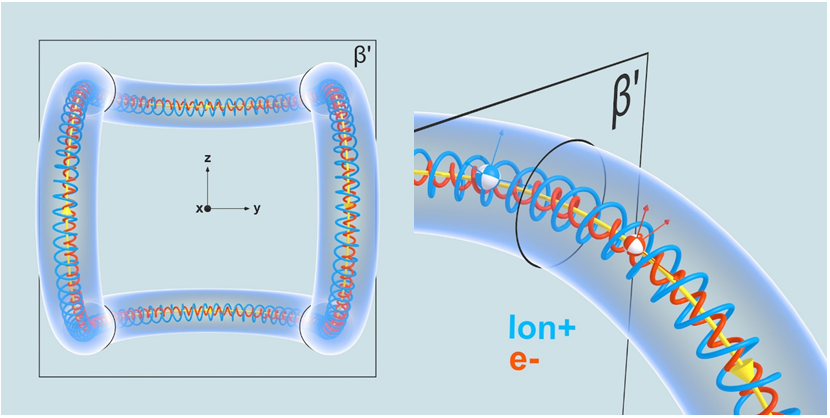
This gravitational influence generates torque on the plasma, manifesting in two key effects: (1) the twisting of the magnetic field lines and (2) a periodic modification in the direction of the particles’ spin, occurring four times per orbital revolution [3, 6]. This process stabilizes the plasma by preventing unwanted turbulence. The stabilizing mechanism arises from the centrifugal force acting on both electrons (red arrows) and ions (white arrows), as visualized in dynamic simulations. By accumulating torque in the angular momentum plane (β′), the system sustains a continuous adjustment of the field lines, thereby reinforcing plasma confinement.
A notable feature of this system is the proportionality between the orbital radius of the particles and the strength of the magnetic field [19]. This ensures that electrons and ions maintain precise trajectories around the field lines, counteracting drift effects that would otherwise destabilize the layered structure of the plasma volume. In contrast to conventional fusion reactors—where particle drift disrupts plasma integrity and limits operational duration—this design fosters the necessary track fidelity for permanent magnetic plasma confinement [5, 12].
Furthermore, in accordance with Newton’s third law, the interaction between the magnetic field generated by the Helmholtz coils and the Lorentz force, which acts in the direction of plasma flow, induces an electric vortex field perpendicular to the Lorentz force. This additional field component compels electrons and ions to orbit around the magnetic field lines, enhancing the overall stability of the system [17, 20].
Track Stability
A crucial aspect of achieving permanent magnetic plasma confinement is ensuring the precise tracking stability of electrons and ions as they spiral along magnetic field lines. This paragraph explores the mechanisms that govern this stability, particularly the role of the Helmholtz coils in shaping particle trajectories [19, 22].
Within the fusion reactor, electrons and ions follow helical paths around the magnetic field lines. However, due to the asymmetrical magnetic field—which arises from the varying distances between the Helmholtz coils—the field strength differs between the inner and outer regions of the plasma volume. The magnetic forces induced by this asymmetry act perpendicular to the Lorentz force, influencing particle motion relative to the center of each semicircular arc. As a result, charged particles experience a gyration effect, whereby their orbital radii are slightly larger on the outer half of the plasma volume than on the inner half [5, 12].
To counteract this drift tendency, the system employs a unique stabilization mechanism: within the angular momentum plane (β′), the rotational direction of electrons and ions is altered four times per orbit. This periodic reversal effectively interrupts drift, ensuring that charged particles maintain tight adherence to their respective magnetic field lines. Simulations illustrate this effect by depicting four magnetic field planes, each offset by 90 degrees. The resulting stabilization process ensures that the incipient drift of particles is arrested and reversed at regular intervals, ultimately preserving the long-term structural integrity of the plasma volume [22, 23].
By reinforcing track fidelity, this approach eliminates one of the primary limitations of conventional fusion reactors— particle drift—thereby creating the conditions necessary for time-unlimited magnetic plasma confinement [13].
Heat Transfer by Conduction
One of the key challenges in fusion reactor design is efficiently extracting heat from the plasma, which reaches temperatures exceeding 100 million degrees at its core. This paragraph explores a conduction-based heat transfer mechanism that enables thermal energy to be transferred from the plasma to an external heat exchange system [7, 12].
The reactor employs a double-shell steel plasma vessel, where water circulates between an inner and outer shell, acting as the primary heat transfer fluid. This radiator-like structure absorbs heat from the plasma and facilitates its dissipation. Integrated within the vessel are eight magnetic coils, each equipped with two transverse poles aligned with the magneto-hydrodynamic flow of the plasma. These coils can be operated using both alternating and direct current, allowing precise control over the plasma’s interaction with the vessel walls [19].
By leveraging a sophisticated circuit design, a temporary electrical contact can be established between the conductive plasma volume and the inner shell of the plasma vessel, enhancing heat transfer via thermal conduction. This process is mediated by the blanket, a specialized layer on the plasma-facing side of the inner shell. Through a carefully timed sequence of magnetic field adjustments, charged particles within the plasma respond to the attractive and repulsive forces of the coils, momentarily shifting the plasma into contact with the inner shell. This controlled interaction allows for direct thermal energy transfer, significantly improving heat extraction efficiency [14].
As Francis Bacon (1561–1626) aptly stated, “Natura non nisi parendo vincitur”—to master nature, one must obey it. This principle is embodied in the reactor’s design, which harnesses fundamental physical laws to achieve effective plasma confinement while simultaneously optimizing heat dissipation [15].
Length Determination of Magnetic Field Lines
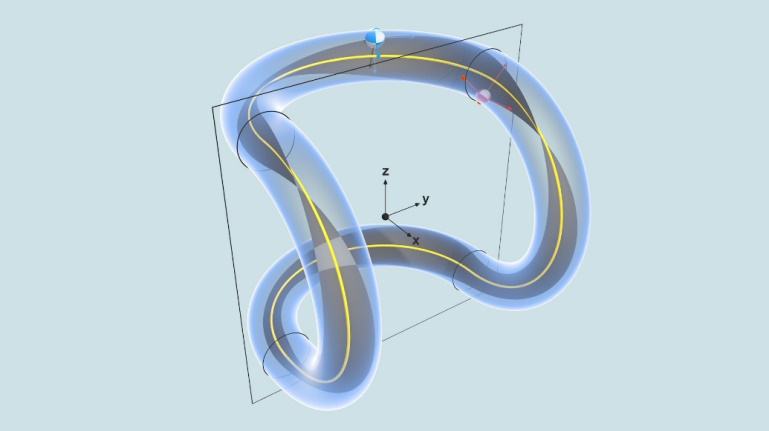
A fundamental aspect of the fusion reactor’s magnetic confinement system is the precise determination of magnetic field line lengths within the tubular plasma volume. This paragraph examines this structure by analyzing the central magnetic field line, depicted in yellow, and the outer magnetic field lines, which trace the trajectories of electrons (red) and ions (blue) [20].
The central magnetic field line consists of four semicircular arcs of uniform dimensions, arranged in four distinct magnetic field planes. These planes are each offset by 90 degrees and interconnected at four transition points within the common angular momentum plane (β’). The plane semicircular arcs are positioned on the surface of a central transformation sphere, defined by the x, y, and z axes. For a given transformation sphere radius (r1), the total length of the central magnetic field line is 4π, which is equivalent to twice the circumference of a circle with radius r1 [10].
At the outermost layer of the plasma volume, two opposing decentralized magnetic field lines reach their maximum radial distance from the reactor’s center at four vertex points. These outer magnetic field lines alternate between the interior and exterior of the plasma volume at the four connection points within the angular momentum plane (β’). Despite their displacement, the outer field lines maintain an overall length equal to that of the central magnetic field line, confirming that they also reside on the surface of a uniform transformation sphere of identical radius [21].
This precise geometric structure ensures that all magnetic field lines in the plasma volume maintain a consistent length, a critical factor in achieving stable magnetic confinement and optimizing plasma equilibrium dynamics within the fusion reactor [22].
Structural Design and Scalability
The structural design of the fusion reactor is based on a modular plasma vessel. This vessel consists of identical, concentric modules with a circular or oval cross-section, arranged around the central magnetic field line. Positioned between an inner and outer radius, these modules can be bolted or welded together to form four arc-shaped units, creating a scalable and adaptable reactor geometry [18].
The magnetic field, structured as a double helix, ensures that the plasma volume conforms to the vessel’s cross-section while maintaining a safe distance from the plasma-facing blanket layer. Helmholtz coils, assigned to individual vessel modules, are positioned at precise radial and longitudinal distances defined by sector angles around the reactor’s central axis [17].
After plasma ignition, the heavy hydrogen isotopes separate into electrons and ions, which are guided by the Lorentz force. This force dictates both the fluid dynamic behavior of the plasma and the orientation of the angular momentum axis and plane. The resulting ring oscillations are divided into mirror-image halves at a zero line between opposing connection points along the central magnetic field line. This differentiation leads to layer-specific oscillation frequencies, ranging from 50 Hz at the outer plasma layers to several kilohertz near the central magnetic field [22].
The high precision of charged particle motion along magnetic field lines enables plasma confinement within a compact vessel with a diameter of just 0.30 to 0.40 meters, sufficient for plasma ignition. This compact design allows for the construction of small-scale fusion reactors, including self-contained energy generation and conversion systems. Such reactors are not only feasible for terrestrial applications but also for space deployment and integration into vehicles, particularly watercraft [19].
A First Hint to Space-Time
The concept of relativity in time is explored through the oscillatory behavior of charged particles, where the number of oscillations per orbital revolution serves as a temporal metric. This principle aligns with the well- documented orbital structures of electrons around atomic nuclei, extending beyond atomic and molecular scales to macroscopic and even cosmic structures [9].
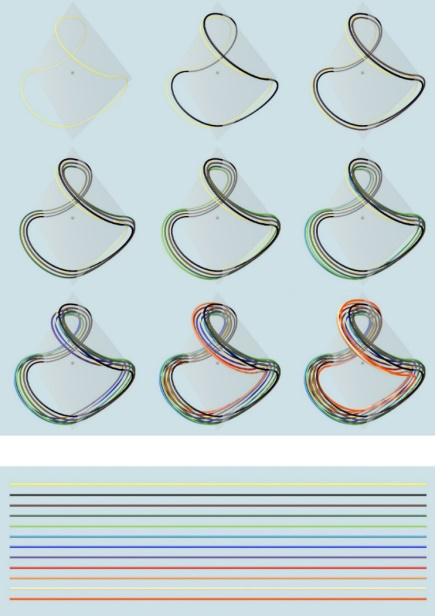
In the plasma structure of a fusion reactor, a macroscopic orbital model emerges, governed by the precise relationship between transformation sphere radii and the path lengths of electrons and ions as they follow magnetic field lines in spiral loops. The decentralized magnetic field lines of the outer plasma layer, depicted in various colors, and the central red magnetic field line, illustrate this structural regularity. The gyration radii of electrons and ions, represented by the colored lines of the outermost plasma layer, form a double- helix structure within the plasma vessel [25].
These periodic oscillations of elementary particles reveal a universal structural principle, evident not only at the atomic level but also in larger-scale cosmic phenomena. The same oscillatory behavior that governs atomic orbitals can be harnessed for the long-term magnetic confinement of plasmas, offering a deeper connection between fundamental physics and fusion reactor dynamics [24].
Conclusion
The development of a novel fusion reactor based on a geometrically optimized magnetic confinement system represents a significant advancement in plasma physics. By leveraging a double-helix magnetic field structure, the design enables precise tracking of electrons and ions, ensuring stable plasma confinement and minimizing particle drift, which has been a major limitation in conventional fusion reactors.
The integration of fluid-dynamic principles into the magnetic field configuration allows for a self-stabilizing mechanism in which centrifugal and Lorentz forces collectively enhance plasma containment. The innovative use of Helmholtz coils and sector-based magnetic field modulations further refines the layered plasma structure, preserving its integrity over extended periods.
Beyond plasma confinement, the reactor’s heat transfer mechanism—achieved through thermal conduction between the plasma and a double-shell vessel—demonstrates an efficient method for energy extraction. Additionally, the reactor’s modular design ensures scalability, making it adaptable for terrestrial and space-based applications, including propulsion systems for watercraft and spacecraft.
On a broader theoretical level, the oscillatory motion of charged particles within the fusion plasma reveals deep connections between classical mechanics, electromagnetism, and relativistic principles of space-time. The periodic motion of electrons and ions within nested transformation spheres aligns with fundamental structures observed at atomic and cosmic scales, hinting at a universal pattern governing orbital dynamics across different physical domains.
By addressing the critical challenges of plasma stability, energy extraction, and scalability, this fusion reactor concept offers a promising pathway toward sustainable, high- efficiency energy production. Its unique approach to plasma confinement and its broader implications for fundamental physics mark a significant step toward achieving practical nuclear fusion, potentially redefining the future of energy.
References
-
Dirac P (1958) The principles of quantum mechanics. Oxford.
-
Stephen Hawking (2018) A Brief History of Time. In: 23rd (Edn.), Hamburg.
-
Goudsmit GS, Uhlenbeck GE (1926) Spinning Electrons and the Structure of Spectra. Nature 117: 264-265.
-
Jammer M (1966) The Conceptual Development of Quantum Mechanics, McGraw-Hill, USA, pp: 150.
-
Spitzer L (1958) The Stellarator Concept. In: Physics of Fluids 1(4): 253-264.
-
Ganzhorn M, Klyatskaya S, Ruben M, Wernsdorfer W (2016) Quantum Einstein-de Haas effect, in: Nature Communications 7: 11443.
-
Zohm H (2020) Big Bang, Universe and Life.
-
Krause S, Herzog G, Schlenhoff A, Sonntag A, Wiesendanger R (2011) Joule Heating and Spin-Transfer Torque Investigated on the Atomic Scale Using a Spin- Polarised Scanning Tunneling Microscope. Phys Rev Lett 107.
-
Poincaré H (1906) Sur la dynamique de l’électron. In: Rendiconti del Circolo matematico di Palermo. 21: 129- 176.
-
Joos H (1962) On the representation theory of the inhomogeneous Lorentz group as the basis of quantum mechanical kinematics.In: Progress in Physics 10(3): 65- 146.
-
Tom MA (1976) Modular functions and Dirichlet series in number theory. Springer-Verlag, New York, USA 9.
-
Freidberg JP (2010) Plasma Physics and Fusion Energy.
-
Fisch NJ (1689) The Alpha Channeling Effect. AIP Conference Proceedings 020001.
-
Moiseenko VE (2020) First experiments on ICRF discharge generation by a W7-X-like antenna in the Uragan-2M stellarator. Journal of Plasma Physics 86: 905860517.
-
Nietzsche F (1906) The Will to Power CG Naumann Verlag, Leipzig.
-
Heidegger M (1963) Contributions to Philosophy.
-
Neiser TF, Jenko F, Carter TA, Schmitz L, Told D, et al. (2019) Gyrokinetic GENE simulations of DIII-D near- edge L-mode plasmas, Phy. Plasmas 26: 092510.
-
Rubel M, Widdowson A, Dittrich L, Moon S, Weckmann A, et al. (2022) Application of Ion Beam Analysis in Studies of First Wall Materials in Controlled Fusion Devices. Physics 4: 37 .
-
Degrave J, Felici F, Buchli J, Neunert M, Tracey B, et al. (2022) Magnetic control of tokamak plasmas through deep reinforcement learning. Nature 602: 414.
-
Sunn Pedersen T, Otte M, Lazerson S, Helander P, Bozhenkov S, et al. (2016) Confirmation of the topology of the Wendelstein 7-X magnetic field to better than 1:100,000. Nature Communications 7: 13493.
-
Ryutov DD, Berk HL, Cohen BI, Molvik AW, Simonen TC (2011) Magneto-hydrodynamically stable axisymmetric mirrors. Physics of Plasmas 18: 092301.
-
Zweben A, Diallo M, Lampert T, Stoltzfus-Dueck S, Banerjee S (2021) Edge turbulence velocity preceding the L-H transition in NSTX. Physics of Plasmas 28: 032304.
-
Neiser TF, Jenko F, Carter TA, Schmitz L, Told D, et al. (2019) Gyrokinetic GENE simulations of DIII-D near- edge L-mode plasmas. Physics of Plasmas 26: 092510.
-
Graham JN, Mielke C, Das D, Morresi T, Sazgari V, et al. (2024) Depth-dependent study of time-reversal symmetry-breaking in the kagome superconductor AV3Sb5. Nat Commun 15: 8978.
-
Reginald L (2015) A theory of the relativistic fermionic spinrevorbital. International Journal of Physical Sciences 10: 1-37.
- Asymmetry Irreversible Heterogeneity Quantum Cosmology Grand Mathematical PHYSICS
- Early Universe: Hadronic Crystals Coherent Micro Gravitational Wave Emitters PHYSICS Part II
- The Solar System Constraint Maze: A Scientific Dead-End Revealing the Interuniversal Machine
- Assessment of Radiofrequency Radiation from 2G and 3G Mobile Phone Handsets
- Early Universe Magneto-Gravitational Coupling Genesis Physics: Part I
- Falsifiability of the Classical Law of Gravitation and Unveiling the Time-temperature Entanglement of the Universe