
Geriatric Dental Management and Education Due to the Covid-19 Crisis; Challenges and Solutions
Objectives: Physical and mental disabilities, the existence of financial restrictions, insufficient familial support, transportation problems, and confined access to dental services can have harmful effects on the oral health and overall quality of life of the elderly. Moreover, the incidence of the Covid-19 epidemic has created an additional concern in providing appropriate dental care. Therefore, in this article, geriatric dental education and management due to the Covid-19 pandemic in both developing and developed countries are precisely discussed and compared. Methods: A complete query was carried out on PubMed, PubMed Central, Medline, EBSCO, Google Scholar, and Embase databases, and the studies published during 2010-2022 were collected using the keywords "Geriatric Dentistry," "Covid-19," "Education," "Artificial Intelligence," and "Mobile Dentistry." Ultimately, 41 relevant articles and 2 textbooks were selected and evaluated. Results: The existing crisis can be properly managed by preparing an accurate curriculum emphasizing practical preventive care and effective communication skills, holding domestic or international conferences for dental students, organizing mandatory practical dental courses in nursing homes, and evolving new theories including artificial intelligence and mobile dentistry. Conclusion: It is essential to have a multidisciplinary approach including dentistry, medicine, education, engineering, and legislation to achieve the best treatment plan for the elderly.
Introduction
In developing countries including Iran, the rapid growth of the elderly population over 60 years old brings numerous social and economic challenges to society [1]. Along with these issues, oral and dental conditions of elderlies and their management are also discussed as a new concern today. The oral health of the elderly is a principal topic that can directly or indirectly affect the general health of elders and their quality of life [2]. For this reason, there is a necessity to highlight the potential etiological factors as well as the pathogenesis of oral diseases at this age [3].
As people age, the body’s regeneration capacity decreases and the aging process begins, which causes a series of gradual, irreversible and cumulative changes in the oral cavity and ultimately leads to greater vulnerability to harmful and infectious agents [4]. Therefore, in elderly people, complications including traumatic wounds, fungal diseases, dry mouth, disorders related to taking multiple medications, discomfort caused by dental prostheses, and temporomandibular joint problems due to improper occlusion are more common [5, 6, 7].
Management of oral and dental diseases in the elderly can be challenging for several reasons. First, in a number of cases, elderly people need the aid of a third party due to diseases such as paralysis, Parkinson’s and Alzheimer’s. Consequently, these patients cannot effectively take care of their own oral and dental hygiene independently. In this circumstance, if there is no experienced personnel, rapid and complex destruction of the oral cavity is inevitable. On the other hand, medications used by the elderly often result in long-term dry mouth, which itself origin multiple oral lesions and increases the risk of caries. This problem is aggravated when dry mouth occurs as a result of systemic conditions or therapeutic interventions using radiation [8, 9].
In addition to the mentioned reasons, the lack of enough teeth to chew food or the presence of toothless conditions in elderly people elevates the possibility of malnourishment. In this condition, compromised nutritional status can weaken the integrity of the oral cavity and reduce tissue reconstruction capability [3]. Moreover, systemic conditions of the elderly involving anxiety, high blood pressure, diabetes, arthritis, asthma and thyroid disorders also require appropriate clinical guidelines for better treatment outcomes. Accordingly, there is a demand for educated specialists in the field of geriatric dentistry in order to provide an appropriate treatment plan by precise evaluation of the systemic, medicinal, nutritional and oral conditions of the elderly through a multi-disciplinary approach [1].
With the incidence of the Covid-19 epidemic, geriatric dentistry inescapably went through several changes. Since the elderly take medications, such as angiotensin-converting enzyme inhibitors and angiotensin II receptors blockers to manage their diabetes, high blood pressure and chronic kidney disease, these medicines put these patients at a higher risk of Covid-19 infection and make them the highest risk group for clinically fatal Covid-19 [10, 11]. Therefore, the number of visits of the elderly to medical centers in order to receive dental treatment during the Covid-19 epidemic was remarkably reduced [12]. Furthermore, with the closure of dental universities and clinics, the possibility of clinical training of students and learning how to properly communicate with the elderly and their problems was lost. Due to this issue, now there are concerns about the full competence of young dentists in the management of the elderly [13]. Thereby, in this article, we seek to point up the common problems of the elderly, necessary equipment and considerations in geriatric dentistry, and geriatric dental education and management in the pre, during and post Covid-19 epidemic era in both developing and developed countries.
Materials and Methods
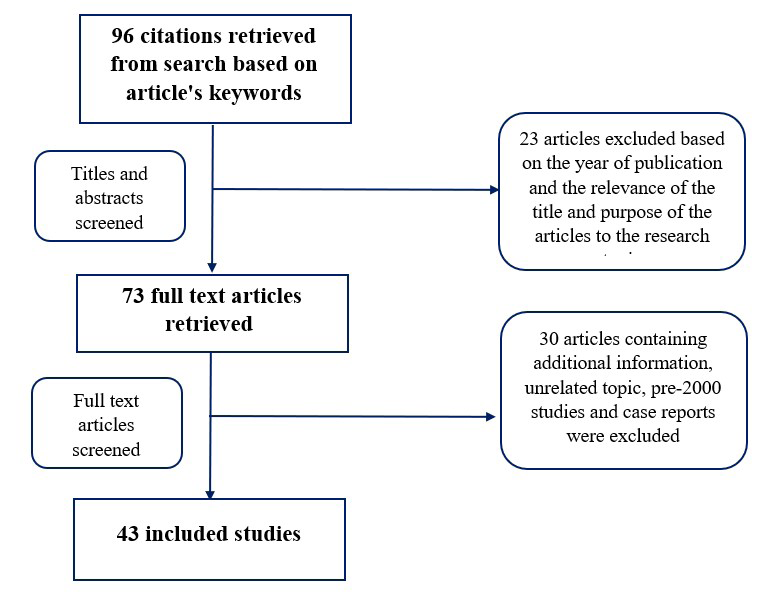
A query on some databases, such as PubMed, PubMed Central, Medline, EBSCO, Embase and Google Scholar was carried out and A number of 96 articles including 74 English articles and 22 Persian articles and 3 reference books between 2000 and 2022, which had at least one of the keywords of geriatric dentistry, Covid-19, education, artificial intelligence and mobile dentistry in their title, were selected and studied. Searches were limited to domestic and foreign journals and reference books. Then, based on the year of publication and the relevance of the title and purpose of the articles to the research topic, 73 suitable studies including 61 English articles, 12 Persian articles and 2 reference books were selected and analyzed. In other words, the focus of the searches was geriatric dentistry in the post-Covid-19 era. Further, studies with additional information, irrelevant topic, studies before 2000 and case reports were excluded from the study. Eventually, according to the mentioned criteria, 41 articles including 35 English articles, 6 Persian articles and 2 reference books were selected for final analysis and article writing. In Figure 1, the methodology of the study is summarized.
Results
After studying the articles mentioned above, the following outcomes regarding common conditions in the elderly, dental considerations, geriatric dental education and management in the pre, during and post-Covid-19 epidemic in both developing and developed societies, and finally, new technologies and methods introduced in elderly dental management including artificial intelligence and mobile dentistry were obtained.
Discussion
Prevalent Complications in the Elderly
Oral diseases are the most common chronic diseases whose prevalence, impact on individuals and society, and treatment costs are significant public health concerns. Therefore, complete assessment and management of oral health on a regular basis is crucial, especially among elderlies. Oral and dental health assessment of the elderly should focus on crown and root caries, periodontal disease, tooth wear, recurrent caries, traumatic lesions, fungal infection, sublingual varicose veins and precancerous lesions [1]. Alongside the mentioned oral complications, an edematous appearance of oral mucosa and flattened tongue with the loss of its filamentous papillae are also reported in several articles [14, 15]. However, it is stated that the most oral sign observed in the elderly is dry mouth due to acinar tissue atrophy [15].
It should be noted that there are risk factors for oral diseases including diet, hygiene, smoking, alcohol and stress along with aging. Besides, in elderly people, factors such as systemic conditions and medications can also be reported among the main risk factors in the occurrence of oral cavity lesions [16]. On the other hand, the elderly experience a wide range of lesions in the oral mucosa with or without symptoms in cases where they use dental prostheses. Regardless of the etiological factor inducing oral lesions, due to the high probability of oral cancers in the elderly, suspicious lesions should be fully investigated at the first opportunity [1].
In addition to oral and dental problems, a majority of older people suffer from more than one chronic disease. One of the frequent conditions that elderly people are dealing with is stress and anxiety. Stress raises the level of adrenaline in the body, which leads to an increase in blood pressure and heart rate. This condition can adversely affect dental management and treatment outcomes. Correspondingly, several dentists manage the situation with pre-treatment sedative drugs, for which excessive use can be associated with dry mouth alongside mental complications [17].
One of the common chronic diseases in the elderly is high blood pressure, which can ultimately bring about a cerebrovascular accident. Therefore, at the beginning of every dental appointment, routine blood pressure screening of all the elderly can crucially aid in reducing the occurrence of possible accidents [17].
Another common chronic disease in elderlies is diabetes mellitus, which commonly appears with oral symptoms including dry mouth, infection, poor healing capacity, caries, candidiasis, gingivitis, periodontal disease, and burning mouth syndrome. Accordingly, measuring blood sugar levels should be considered before any oral surgery procedures [18].
Diseases affecting the neuromuscular system also become more frequent with age. Cerebrovascular disease is one of the common neurological diseases in elderly people, which in addition to physical complications, can cause oral problems involving masticatory and facial muscles paralysis, loss of sense of taste, and difficult swallowing [1, 19].
Parkinson’s disease and Alzheimer’s disease are two other progressive neurological disorders that are frequently observed in elderly people. In these patients, poor maintenance of oral and dental hygiene, difficulty in wearing dental prostheses and inability to perform oral hygiene actions due to illness, all affect oral health. Therefore, the existence of a third party is obligatory to keep acceptable oral health [1, 20].
Due to the incidence of various chronic diseases among elderlies, a vast majority of them decide to take a multidrug regimen for a long period of time, which can be associated with serious complications. For instance, the application of antihypertensive drugs can cause salivary dysfunction and gingival enlargement, chronic use of corticosteroids predisposes patients to oral fungal infection, and long-term use of broad-spectrum antibiotics can increase the risk of oral fungal infection and antibiotic resistance. Also, continuous application of some medicines including anti-Parkinson drugs and anti-depressants can manifest dry mouth. For this reason, it is necessary for dentists to familiarize themselves with medications taken by the elderly, their potential side effects and drug interactions before starting dental procedures [15, 21].
Accompanied by all these issues, proper nutrition is also playing a vital role in improving the health and well- being of the elderly. In other words, oral health has a mutual relationship with nutrition. This means that lacking enough teeth or the presence of inappropriate dental prostheses produces difficulty in chewing and as a result reduces food consumption. This induced malnutrition causes insufficient consumption of calcium, iron and zinc and ultimately origins numerous physical and oral complications. Respectively, diet and nutrition should be considered an integral part of oral health assessment and management of the elderly [3].
Routine Dental Considerations in the Elderly
It is compulsory for all dental students to be familiarized with oral, dental and general health issues occurring with the aging process in order to deliver the best dental treatment. Moreover, nutritional status and medications being taken by elderlies should be considered in presenting the final treatment plan. Therefore, the first necessary element in geriatric dental management is gaining complete knowledge [1].
The next step in geriatric dental treatment is constructing strong communication with full trust. In order to achieve this goal, Oral health professionals must listen attentively to elderlies’ concerns and questions which requires assigning more time to these patients. Prosthetics, glasses, and hearing aids, if used normally, should be employed to help communicate better. Moreover, since older people are reluctant to disclose their symptoms on account of hospitalization fear, building this effective communication will reduce unreported issues and subsequent treatment failures. In cases of difficulty in remembering past illnesses and medications being taken by the elder, it is certain that asking family members or caregivers can help extract useful information [1].
The correct position of the elderly during dental work is also very crucial. Hence, obtaining information about age- related degenerative changes such as spine and joint injuries due to osteoarthritis and osteoporosis is consequential. Moreover, correct patient position with head and neck support is required for the elderly with cervical spondylosis [1].
On the other hand, the proper position of the patient after dental treatment is also important. For example, blood flow changes caused by carotid artery sclerosis can provoke dizziness in elderly people after treatment. In addition, brisk position changing of the elderly from supine to upright or standing position can also induce a swift drop in blood pressure and fainting. This rapid drop in blood pressure, which is also identified as postural hypotension, occurs in people who are treated with multiple drugs, such as a combination of antihypertensive drugs, diuretics, antidepressants, and alpha-blockers. Besides the mentioned group, patients with varicose veins, foot vascular disorders, untreated diabetes, Parkinson’s disease and diabetic neuropathy are also risk groups for postural hypotension. Therefore, during the dental treatment of such elders, caution should be taken against changing the position quickly to an upright position [22, 23].
Geriatric Dentistry Education in the Pre- Covid-19 Era
Along with an eminent increase in the number of elderly and the consequent elevation in the disease burden imposed on society, the essential demand for trained specialists in geriatric dentistry is witnessed. Nevertheless, unfortunately in developing countries including Iran, there is insufficient expertise and knowledge about the dental treatment and management of elderly people among dentists [24]. For instance, in the study of Alaei, et al. [24], it was reported that 88.5% of dentists had poor knowledge and 11.5% of dentists had moderate knowledge of geriatric dentistry. However, it was mentioned in this research that 97.8% of dentists had a positive attitude toward geriatric dentistry, which can be the basis for designing a standard curriculum for undergraduate dental students and implementing continuous training courses regarding geriatric dentistry [24].
Geriatric dentistry is a multidisciplinary specialty that requires students to be educated about the physiological and psychological changes associated with aging and its impact on the provision of dental services. In developing countries, due to the lack of attention to the elderly population and the allocation of limited financial resources, proper education of dental students in the management of elderlies is not achieved [1]. For instance, in Iran merely one theoretical class without any practical courses is being held to educate dental students regarding geriatric dentistry [24]. This is when in developed countries, universities take advantage of modern communication technologies and offer geriatric dentistry courses from all over the world. For example, establishing a video conference with other developed countries, sharing the experiences of experts through virtual programs and problem-based learning are beneficial methods being used in modern universities [25].
On the other hand, nursing homes can be a potential resource for geriatric dental education. Since it has been determined that dental students with practical training experience gain more self-confidence, some universities obligate students to serve in nursing centers during their study period. This approach will both train more experienced dentists and improve the oral health of the elderly in society [26].
According to mentioned content, before the Covid-19 epidemic, dental universities in developing countries put emphasis on educating dental students through few traditional courses and no practical training was applied. Nonetheless, developing countries attempt to accustom dental students to all the problems and conditions of elderly people and their management through theoretical and practical training. Furthermore, virtual classes and supplementary congresses were held in cases of students’ incompetency in treatment [24, 25, 26].
Geriatric Dentistry Education in the Covid-19 Era
Following the occurrence of the Covid-19 epidemic, dental education became complicated all over the world. According to the articles, dental education predominantly consists of three parts: first is a lecture or problem-based training section, which can simply be transformed into an online mode. Various universities around the world used several applications including ZOOM, Google Classroom, Google meets, Skype, and etc. to hold virtual classes. The second section is about improving practical skills by working on training models. Since the presence of the professor is required to check the student’s performance step by step and to solve possible problems, this section could not be held during the Covid-19 era. In the end, the third section, which is the most prominent part of training, is clinical practice. Due to direct communication between students, patients and professors in clinical practice, it is not possible to open university clinics during the epidemic period [27]. For this reason, during the Covid-19 era, programs based on the presence of students at clinics and pre-clinics were cut off and virtual training flourished in both developed and developing countries [28].
| Article title | Study population | Methodology | Results | |
|---|---|---|---|---|
| Kim, et al. [29] | Analysis of YouTube Content on Oral Disease Information about the Elderly | 150 videos uploaded on YouTube | Content analysis of videos with the help of three oral health reference books for the elderly | According to the excessive number of views by dental students, the information should be presented with many pictures of the disease only by an expert and knowledgeable dentist. |
| Sargeran, et al. [30] | Design, Implementation, and Assessment of Virtual Training of Dental Students in Elderly | 64 senior year dental students of Tehran University of Medical Sciences | Training 31 students in virtual classes and 33 students in a traditional way and completing the questionnaire before and after the exam | Average scores after the intervention of traditional and virtual education did not differ statistically from each other in the areas of knowledge and attitude toward the oral and dental health of the elderly (P<0.05). |
| Takagi, et al. [31] | Effects of dental students’ training using immersive virtual reality technology for home dental practice | 101 dental students | Filling in the questionnaire before and after watching the virtual video and performing a comparative test based on the results of the questionnaires | A significant increase was observed in the student’s knowledge confidence scores and her self-confidence in helping other students after watching the video (P<.001). |
| Antoniadou, et al. [32] | Sustainable Distance Online Educational Process for Dental Students during COVID-19 Pandemic | 131 pre-clinic students and 119 clinic students in Athens University and 85 pre-clinic students in Copenhagen University | Filling in the questionnaire of the dental electronic education process with the hybrid design | All students prefer face-to-face education compared to virtual education. However, pre-clinic students, unlike clinic students consider e-learning a suitable teaching method in dentistry. Moreover, about 60% of students believe hybrid education is the best educational method. |
Table 1: A summary of various studies regarding virtual geriatric dentistry education during the Covid-19 era.
Although; it is too early to report the final result of the virtual education efficacy, conflicting outcomes can be observed in the articles in this regard [28, 29]. For instance, Wu, et al. [28] claimed in their study that during the Covid-19 pandemic, due to holding virtual courses and the absence of students at the clinics, it was not feasible to provide correct and complete training. They suggest in their article setting up free courses and seminars for dental students in the post-Covid-19 era. On the other hand, Kim, et al. [29] declared that by closely monitoring the theoretical and practical educational content of videos uploaded on YouTube, it is probable to increase the knowledge of both ordinary people and dental students regarding the symptoms and management of oral lesions in the elderly. In other words, virtual videos and classes can be beneficial in improving the dental knowledge of students. However, it should be noted this goal is not achievable unless experienced dentists and specialists precisely look over content being uploaded on virtual media [29]. In Table 1, a summary of the results of various studies regarding virtual geriatric dentistry education during the Covid-19 era is presented [29, 30, 31, 32].
In the end, it seems that in the Covid-19 epidemic, due to the lack of face-to-face and practical training for dental students, a huge educational void appeared. Moreover, several articles have reported that virtual training methods can never replace clinical training and can merely be used as supplementary educational methods. As a consequence, it can be assumed that all societies around the world will face an educational gap in all branches of dentistry involving geriatric dentistry in the post-Covid-19 era [33].
Geriatric Dentistry Education in the Post- Covid-19 Era
Novel articles have shown that due to the advancement of technology and the Internet along with the lack of trained and experienced professors to properly educate dental students in developing societies, virtual education will definitely find a prominent place in the near future. Therefore, numerous developing countries are attempting to alleviate the problems of the poor network, educate dental students and professors in working with computers and information technology and make it possible for all people to access necessary equipment. With the enhancement of virtual education and its basis, the crisis of insufficient training of dental students and their incompetence in managing elderly patients in the post-Covid-19 epidemic and subsequent epidemics can be managed to some extent. Nevertheless, until there is not a single course to focus on practical dental skills in the field of geriatric dentistry, no one can be sure of the full competence of young dentists [27].
Future Perspectives in Geriatric Dentistry
In the event of an epidemic due to the impossibility of holding face-to-face classes, there is still a high probability that students will not receive adequate training and experience. For this reason, in developed countries, new technologies such as artificial intelligence (AI) have been introduced to help young dentists [34]. Various studies have shown that AI systems can easily integrate data collected from an elderly person, including medical and dental history, systemic and psychological conditions, medications, imaging data, patient preferences, and clinical observations, and provide a proper outcome that helps the dentist in his final diagnosis and treatment plan [35, 36, 37, 38]. Moreover, AI can aid in providing tele-assistance in cases of dental emergencies where it is not possible to contact a dental health care specialist [39].
Despite all the mentioned advantages of AI, it should be remembered that this novel technology still has three major disadvantages: First, it is not easy to use and it requires students to pass training courses in order to learn to work with AI systems. Second, the necessary equipment is very expensive and not economically viable. And finally, since the working process of AI is yet not fully identified, the results provided by the system cannot be completely trusted, and an experienced dentist must supervise its results. Hence, prior to the extensive application of AI in clinics, mentioned challenges of AI need to be overcome [40].
An important point to keep in mind is that due to the reduced access of elderly people to dental services during the Covid-19 epidemic, there may be a poorer prognosis for oral and dental health, especially in vulnerable elderly people, in the near future. Therefore, future dentists associated with geriatric dentistry will face new and greater challenges after the current Covid-19 epidemic crisis and must be prepared [41, 42]. Therefore, a new idea is now being proposed and investigated in developed countries such as Canada, which is called mobile dentistry [43]. Chung, et al. [43] proclaimed that regarding the physical and psychological limitations of the elderly and the high probability of these people contracting various infections such as the coronavirus, it is logical for dentists to go to nursing homes with the necessary equipment and treat them in their location. In this article, 2 different portable systems containing an air compressor and suction pump named DNTL Works P2000 and Aseptic were introduced. However, due to their weak suction capacity and air pressure, they are recommended to be used with NSK electronic hand piece. It is also mentioned in this article that instead of the dental unit, you can use the chairs in beauty salons which will be more cost-effective. The interesting part is that it is declared that the whole necessary equipment can be transported to the elderly centers through one station wagon. In cases where radiography is required, a portable x-ray head mounted on a monopod camera can be applied. Surgical headbands containing LED light can also be used to provide the required light for treatment. Ultimately, it appears that the costs of mobile dental equipment were negligible compared to traditional fixed practice. Therefore, it sounds rational to improve this new opinion and endeavor to find solutions for its possible problems. Nevertheless, the most difficult part of this recently introduced model is the cooperation of nursing home administrators. If the existing problems are solved, this model can be very beneficial in epidemic conditions [43].
Conclusion
In recent years, geriatric dentistry has attracted much attention worldwide due to the increasing rate of the elderly population. Since elderly management is a multidisciplinary approach, a dentist along with a doctor should be able to evaluate the physical, psychological, medicinal and nutritional conditions of the patient and determine the appropriate treatment plan. On the other hand, the necessary equipment such as a wheelchair, a comfortable unit with head and neck support, an automatic unit for slow position change and first aid should be available in the office. It is also better for the building of the workplace to have an elevator or a flat sloping ground surface instead of stairs for easier transportation of the elderly person. But all these mentioned factors are effective when they are accompanied by the correct and complete education of dental students. Even though; it was difficult to achieve complete dental education during the Covid-19 epidemic, it is expected that by holding conferences, setting up mandatory service camps in senior centers, and improving new technologies such as AI and mobile dentistry, the existing void can be filled. If this mission is accomplished in the post-Covid-19 era, it can be speculated that young dentists will be able to perform social services with high self-confidence even in remote rural nursing centers after graduation and they will not be subjected to hasty and ill- considered treatment measures.
References
-
Thomas S (2013) The Need for Geriatric Dental Education in India: The Geriatric Health Challenges of the Millennium. Int Dent J 63(3): 130-136.
-
Liu W, Chuang Y, Chien C, Tung T (2021) Oral Health Diseases among the Older People: A General Health Perspective. J Mens Health 17(1): 7-15.
-
Soini H, Routasalo P, Lauri S, Ainamo A (2003) Oral and Nutritional Status in Frail Elderly. Spec Care Dentist 23(6): 209-215.
-
Chi DL, Masterson EE (2013) A Serial Cross-Sectional Study of Pediatric Inpatient Hospitalizations for Non- Traumatic Dental Conditions. J Dent Res 92(8): 682-688.
-
Razak PA, Richard KM, Thankachan RP, Hafiz KA, Kumar KN, et al. (2014) Geriatric Oral Health: A Review Article. J Int Oral Health 6(6): 110-116.
-
Oginni AO, Oginni FO, Adekoya-Sofowora CA (2007) Signs and Symptoms of Temporomandibular Disorders in Nigerian Adult Patients with and without Occlusal Tooth Wear. Community Dent Health 24: 156-160.
-
Ghods K, Alaee A (2021) The Importance of Oral Health in the Elderly and Adolescents Covered By Nursing Homes. J Res Dent Sci 18(1): 1-4.
-
Abbas MJ, Albaaj FSO, Hussein HM, Mahmood AA (2022) Importance of Preventive Dentistry in the Elderly: A Personal Approach. Dent Res J (Isfahan) 19: 11.
-
Wynn RL, Meiller TF (2001) Drugs and Dry Mouth. Gen Dent 49(1): 10-14.
-
Zhou F, Yu T, Du R, Fan G, Liu Y, et al. (2020) Clinical Course and Risk Factors for Mortality of Adult Inpatients with COVID-19 in Wuhan, China: A Retrospective Cohort Study. Lancet 395(10229): 1054-1062.
-
Shahid Z, Kalayanamitra R, McClafferty B, Kepko D, Ramgobin D, et al. (2020) COVID-19 and Older Adults: What We Know. J Am Geriatr Soc 68(5): 926-929.
-
Lundberg A, Hillebrecht A, McKenna G, Srinivasan M (2021) COVID‐19: Impacts on Oral Healthcare Delivery in Dependent Older Adults. Gerodontology 38(2): 174- 178.
-
Iyer P, Aziz K, Ojcius DM (2020) Impact of COVID-19 on Dental Education in the United States. J Dent Educ 84(6): 718-722.
-
Jafari A, Alaee A, Rezai M, Masoudi M (2022) Evaluation of Sublingual Varices Prevalence and Its Respective Factors in Two Iranian Nursing Homes in 2019. Iran J Otorhinolaryngol 34(4): 165-169.
-
Aghaei Gh AE, Vahedi M, Alaee A (2021) A review about oral health and dental care among the aged population. J Res Dent Maxillofac Sci 6(4): 30-38.
-
Meurman JH, Hamalainen P (2006) Oral Health and Morbidity Implications of Oral Infections on the Elderly. Gerodontology 23: 3-16.
-
Buckeridge D, Huang A, Hanley J, Kelome A, Reide K, et al. (2010) Risk of Injury Associated with Opioid Use in Older Adults. J Am Geriatr Soc 58: 1664-1670.
-
Chavez EM, Borrell LN, Taylor GW, Ship JA (2001) A Longitudinal Analysis of Salivary Flow in Control Subjects and Older Adults with Type 2 Diabetes. Oral Surg Oral Med Oral Pathol Oral Radiol Endod 91(2): 166- 173.
-
Stoopler ET, Sirios DA (2008) Neuromuscular diseases. In: Greenberg MS, Glick M, Ship JA (Eds). Burkett’s Oral Medicine, 11th (Edn.), Hamilton: BC Decker Inc pp: 537- 545.
-
Turner LN, Balasubramaniam R, Hersh EV, Stoopler ET (2008) Oral Health In Alzheimer’s Disease. Oral Surg Oral Med Oral Pathol, Oral Radiol Endod 106: 467-476.
-
Odegard PS, Breslow RM, Koronkowski MJ, Williams BR, Hudgins GA (2007) Geriatric Pharmacy Education. A Strategic Plan for the Future. Am J Pharm Educ 71(3): 47.
-
Malamed Stanley F (2014) Medical Emergencies in the Dental Office. 7th (Edn.), St. Louis: Elsevier.
-
Low PA (2008) Prevalence of Orthostatic Hypotension. Clin Auton Res 18(1): 8-13.
-
Alaee A, Azizi A, Valaie N (2017) Dentist` Knowledge and Attitude about Geriatrics` Dentistry in 53rd Iranian Dental Association Congress (IDA). Journal of Medicine and Spiritual Cultivation 25(2): 57-70.
-
Shah N (2010) Teaching, Learning, and Assessment in Geriatric Dentistry: Researching Models of Practice. J Dent Edu 74(1): 20-28.
-
Vainio L, Krause M, Inglehart MR, Habil P (2011) Patients with Special Needs: Dental Students’ Educational Experiences Attitudes, and Behavior. J Dent Educ 75(1): 13-22.
-
Chang TY, Hong G, Paganelli C, Phantumvanit P, Chang WJ, et al. (2021) Innovation of Dental Education during COVID-19 Pandemic. J Dent Sci 16(1): 15-20.
-
Wu KY, Wu DT, Nguyen TT, Tran SD (2021) COVID-19’s Impact on Private Practice and Academic Dentistry in North America. Oral Dis 27(3): 684-687.
-
Kim JW, Gu H, Kwon HJ, Lim JH, Lim HJ (2022) Analysis of YouTube Content on Oral Disease Information about the Elderly. J Dent Hyg Sci 22(1): 1-8.
-
Sargeran K, Razeghi S, Khorshidi Z (2018) Design, Implementation, and Assessment of Virtual Training of Dental Students in Elderly. Iranian Journal of Ageing 13(1): 4-15.
-
Takagi D, Hayashi M, Iida T, Tanaka Y, Sugiyama S, et al. (2019) Effects of Dental Students’ Training Using Immersive Virtual Reality Technology for Home Dental Practice. Educational Gerontology 45(11): 670-680.
-
Antoniadou M, Rahiotis C, Kakaboura A (2022) Sustainable Distance Online Educational Process for Dental Students during COVID-19 Pandemic. Int J Environ Res Public Health 19(15): 9470.
-
Meng L, Hua F, Bian Z (2020) Coronavirus Disease 2019 (COVID-19): Emerging and Future Challenges for Dental and Oral Medicine. J Dent Res 99(5): 481-487.
-
Khanagar SB, Al-ehaideb A, Maganur PC, Vishwanathaiah S, Patil S, et al. (2021) Developments, Application, and Performance of Artificial Intelligence in Dentistry-A Systematic Review. J Dent Sci 16(1): 508-522.
-
Machoy ME, Szyszka-Sommerfeld L, Vegh A, Gedrange T, Woźniak K (2020) The Ways of Using Machine Learning in Dentistry. Adv Clin Exp Med 29(3): 375-384.
-
Kishimoto T, Goto T, Matsuda T, Iwawaki Y, Ichikawa T (2022) Application of Artificial Intelligence in the Dental Field: A Literature Review. J Prosthodont Res 66(1): 19- 28.
-
Pethani F (2021) Promises and Perils of Artificial Intelligence in Dentistry. Aust Dent J 66(2):124-135.
-
Reyes LT, Knorst JK, Ortiz FR, Ardenghi TM (2021) Scope and Challenges of Machine Learning-Based Diagnosis and Prognosis in Clinical Dentistry: A Literature Review. J Clin Transl Res 7(4): 523-539.
-
Khanna S, Dhaimade P (2017) Artificial Intelligence: Transforming Dentistry Today. Indian J Basic Appl Med Res 6(3): 161-167.
-
Tizhoosh H, Pantanowitz L (2018) Artificial Intelligence and Digital Pathology: Challenges and Opportunities. J Pathol Inform 9(1): 38.
-
Marchini L, Ettinger RL (2020) COVID‐19 Pandemics and Oral Health Care for Older Adults. Spec Care Dentist 40(3): 329-331.
-
Marchini L, Ettinger R, Chen X, Kossioni A, Tan H, et al. (2018) Geriatric Dentistry Education and Context in a Selection of Countries in 5 Continents. Spec Care Dentist 38(3): 123-132.
-
Chung J (2019) Delivering Mobile Dentistry to the Geriatric Population-The Future of Dentistry. Dent J (Basel) 7(2): 62.
- Diagnosis and Management of Mental Nerve Paresthesia Secondary to Apical Periodontitis of Mandibular Second Premolar: A CBCT Based Case Report
- A Randomized, Double Blinded Clinical Trial to Compare the Effect of Oral Premedication (Diclofenac Potassium or Dexamethasone) on Post-Operative Pain Following Pulpectomy
- Modified Lip Repositioning Technique for the Management of Excessive Gingival Display
- Integral Role of Non-Dental Providers and Fluoride Dissemination
- Root Canal Treatment Rate in Deciduous Teeth Among 6-Year- Olds in the Era of Discontinuing Water Fluoridation - Historical Cohort Study
- The Impact of the Notch1 on the Migratory Capacity and the Expression of E-Cadherin and CyclinD1 in Ameloblastoma Cells