
An Update on the Innovative Part of NLRP3 Inflammasome Regarding Newer Strategies for Treatment of Reproductive Conditions Possessing Greater Risk: A Systematic Review
Earlier we reviewed the role of NOD –like receptor protein (NLRP3) inflammasome in different patients presenting with various metabolic disorders is type 2 Diabetes mellitus obesity, Metabolic Syndrome (MetS), non-alcoholic fatty liver disease subjects NAFLD, non-alcoholic steatohepatitis (NASH). Thus Here we conducted a systematic review utilizing search engine PubMed, google scholar ;web of science; embase; Cochrane review library utilizing the MeSH terms like NLRP3 inflammasome; mode of action; recurrent spontaneous abortions (RSA); Gestational Diabetes mellitus(GDM); endometriosis; preterm birth; Polycystic ovary syndrome (PCOS); preeclampsia ;leaky gut;IL-1β;IL-18;caspase 1. We found a total of 150 articles out of which we selected 100 articles for this review. No meta-analysis was done. Here we have detailed the mechanism of action of NLRP3 inflammasome, their part in RSA, PCOS, GDM, PE, preterm birth, ovarian aging and newer non hormonal therapy for endometriosis& other practical applications.
Introduction
Inflammation represents a defense reaction stimulated by probably inimical stimuli which in general needs the multi protein complexes designated as inflammasome. The NOD –like receptor protein (NLRP3) inflammasome possesses the capacity of recognition of variable different pathogenic microorganisms along with stress associated endogenous signaling molecules. Its expression besides activation basically takes place in the dendritic cells along with macrophages where it plays a considerable significant part in the form of a proinflammatory factor regarding the host’s innate immune system. Numerous immune as well as metabolic condition implicate activation of the NLRP3 inflammasome [1] like atherosclerosis, Kidney disease, type2 Diabetes mellitus, obesity along with inflammatory bowel disease. Furthermore, certain studies have pointed that activation of NLRP3 inflammasome is correlated with endometriosis, polycystic ovary syndrome (PCOS), recurrent spontaneousabortions (RSA), preterm birth, Gestational Diabetes mellitus (GDM) preeclampsia. Here we reviewed the propagationn of research in the part of inflammasome in these reproductive conditions.
Mode of Activation of NLRP3
The NLRP3 inflammasome represents a member of the nucleotide binding oligomerization domain, leucine –rich repeat (LRR) containing protein family. It possesses a central nucleotide binding along with oligomerization domain, a C terminal LRR domain, besides an N terminal pyrin domain. There are 2 steps implicated in the activation of NLRP3 inflammasome i) The initial original or priming signal which causes priming is lipopolysaccharides (LPS) results in the expression of NLRP3 as well aspro interleukin-1β (IL-1β) along with pro IL-18. ii) Numerous activators constitute the 2nd signal like cholesterol, uric acid, ATP, along with exogenous stimuli like asbestos, ultraviolet light, pathogenic microorganisms along with their metabolites [2].
At the time of this step, the C terminal possesses the capacity of discerning variable kinds of endogenous stimuli along with binding to the pyrin domain (PYD) of apoptosis- correlated speck like protein possessing a caspase enrollment domain (ASC) via its N terminal PYD .The enrollment of Procaspase1 occurs for self-splicing in addition to the formation of the activated caspase 1(p10/p20 complex). The activated caspase 1 result in cleavage of pro IL-1β along with pro IL-18into mature caspase 1, IL-1β along with IL-18 subsequent to which these latter 2 get liberated from cells with theidea of activation ofthe inflammatory reaction [3].
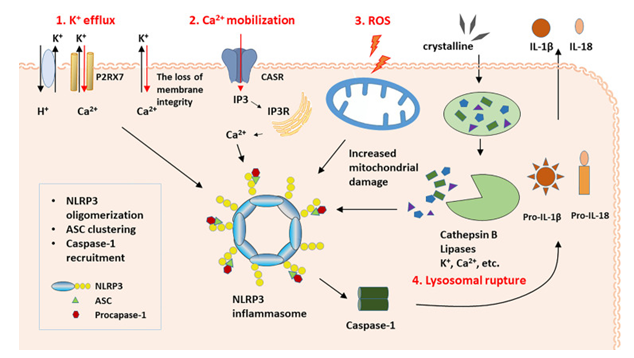
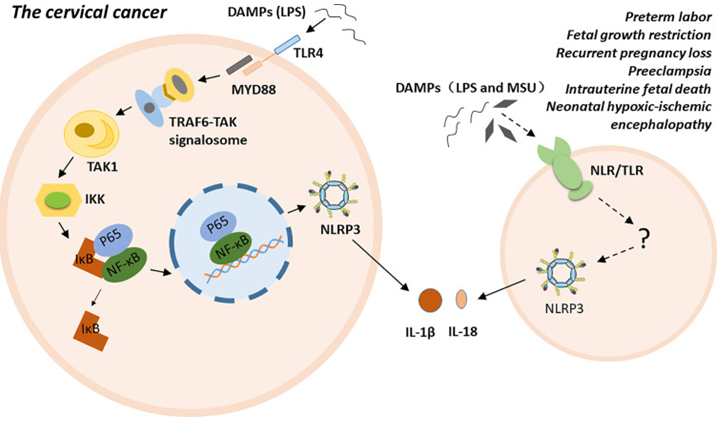
Clarification does not exist regarding the modes implicated in the activation of NLRP3 inflammasome. Probable events are inclusive of alterations in intracellular Calcium amounts [4], lysosomal Injury [5], mitochondrial Injury [6], potassium ion efflux [7] as well as Reactive oxygen species (ROS) generation [8]. The major function of this inflammasome is to start gathering of the inflammatory complex, with (ASC working in the form ofan adaptor protein of the inflammasome regarding upstream NLRP3 along with downstream caspase 1. Once over activation of NLRP3 inflammasome takes place induction of proptosis takes place by production of escalated inflammatory factors besides generation of some diseases (Figure 1 & 2 for detailed mode).
NLRP3 Along with Reproductive Conditions
NLRP3 Along with Endometriosis
Endometriosis (Em) represents a gynaecological disease having a common presentation. It afflicts around 10-15% of women of child bearing age, besides 30% of infertility patients are impacted by this disease [9]. Numerous recent studies have pointed that immune factors possess remarkably significant part in its pathogenesis. Hypothyroidism, proneness to vaginal candidiasis, autoimmune diseases, fibromyalgia, chronic fatigue syndrome, headaches, arthralgias, myalgias, asthma in addition to allergies are the usual co- morbidities correlated with women with Em in contrast to women without Em. Hence a probable association with autoimmunity has been pointed [10]. Peritoneal fluid samples procured from women with Em illustrated abnormally activated macrophages along with natural killer cells (NK cells) that change the recognition of besides clearance of endometrial cells. Macrophages liberate variable products like growth factors (GF), enzymes, prostaglandinsas well as cytokines which result in stimulation of adhesionof endometrial tissue to mesothelial cells facilitating the invasion by extracellular matrix (ECM), forming islands of endometrial cells where their proliferation is feasible [11]. Prior studies have illustrated that Inflammation is a considerably significant pathophysiological reason for Em [12].
The intraabdominal inflammatory milieus along with immune aberrations are intricately associated with ectopic endometrial hyperplasia. Inflammation represents a reaction from living tissues towards infection or Injury. Bullon, et al. [10], posited that aberrant activation of inflammasome is intricately associated with the Em generation. In the form of a considerably significant inflammatory mediator in the inflammatory reaction, the NLRP3 inflammasome is a significant constituent of inflammasomes [11]. This very study evaluated if the NLRP3 inflammasome works in pathogenesis of Em by generating an Em model where there was reduction in the amounts of inflammatory cytokines which there were hampering the formation of inflammatory cytokines [13]. Ahn, et al. [14], evaluated the genes correlated with Inflammation along with immunity in Em patients inclusive of 579 genes implicated in human Inflammation along with immunity besides 15 house keepingng genes. Their observation was upregulation of 396 genes in the ectopic endometrial tissues, inclusive of those encoding caspase 1, IL-18 along with NLRP3. NLRP3 inflammasome liberates numerous inflammatory factors like IL-1β that are correlated with the taking place along with generation of Em [15]. Bullon, et al. [10], along with Sikora, et al. [16], documented that the amounts of IL-1β in extra uterine tissues along with peritoneal fluid from Em patients were significantly greater in contrast to that from healthy women. In a different study it was pointed that IL-1β upregulated the expression of cyclooxygenase 2(COX2) besides escalated the liberationof vascular endothelial growth factors (VEGF) in endometrial stromal cells which might facilitate the generation of Em [17]. Zhao, et al. [18], observed that a great amount of inflammatory cell infiltration took place in an animal model of Em in contrast to sham treated group besides the amounts of proinflammatory cytokines (IL-1β, IL-6, Tumor necrosis factor alpha (TNFα), in the Em group were significantly greater in contrast to controls.
Occasional studies have attempted treatment of Em by targeting NLRP3 inflammasome. Hence the oncogenic astrocyte elevated gene1 (AEG1) facilitated Inflammation in Em patients by resulting in reduction of SOCS3 (Suppressor of cytokines signaling 3) amounts in addition to stimulation of the production of NLRP3 inflammasome [18]. Nevertheless, the actions of NLRP3 hampering agents on the taking place along with generation of Em, requires further evaluation.
NLRP3 Along with Polycystic Ovary Syndrome (PCOS)
Polycystic ovary syndrome (PCOS) as we all possessthe knowledge represents a common endocrine along with metabolic condition of women of child bearing age that is correlated with cardiovascular disease (CVD), hyperandrogenism, insulin resistance (IR), obesity, Metabolic Syndrome (MetS) besides reproductive aberrations. Currently the etiopathogenesis of PCOS remains contradictory with numerous studies pointing that chronic Inflammation is implicated. Observation in clinical studies have documented that factors implicated in chronic Inflammation like IL’s, TNFα, plasminogen activator inhibitor1 (PAI1), along with monocyte chemoattractant protein 1 (MCP1) are escalated in peripheral blood of PCOS patients in differing amounts [19]. Inflammatory factors can result in reconstruction of ovarian tissue subsequent to normal, follicular formation [20]. Furthermore robust corroboration regarding the rates of apoptosis of ovarian granulosa cells (GC) in antral follicles in PCOS women are significantly escalated in contrast to healthy controls [21]. Wang, et al. [22], pointed that hyperandrogenisms, the major reason of infertility with hyperandrogenism possessing the capacity of formation of NLRP3 inflammasome that causes the liberation of inflammatory mediators besides induction of chronic low grade Inflammation in mice with PCOS. Certain PCOS women apparently possesses calated amounts of and rogens, free fatty acids (FFA), oxidative stress (OS) along with high mobility group box1 (HMGB1), molecules which work in the formdanger signals for activation of the inflammasome in particular NLRP3 inflammasome pathway [23]. At the time of PCOS generation follicular impairment besides anovulation are iintricately correlated with ovarian fibrosis. Thus impacted patients manifest with escalating cystic follicles, a thickened thecal cell layer, loose placement of GC ‘s along with reduction in thecorpus luteum whose reproduction has been attained in animal models of PCOS [24]. NLRP3 inflammasome activation aggravated ovarian fibrosis in mice .Hence the NLRP3 inflammasome is believed to be probable target regarding the avoidance of ovarian fibrosis. On treatment of GC’s with in F39, a particular hampering agent of NLRP3 the indexes regarding ovarian fibrosis like α smooth muscle actin (αSMA), transforming growth factor beta (TGF-β), Connective tissue growth factor (CTGF) were repressed along with considerable reduction of ovarian interstitial fibrosis [22].
NLRP3 inflammasome activation causes activation of caspase 1, which in turn facilitates the generation of mature IL-1β along with IL-18from proIL-1β along with proIL-18 respectively. These cytokines play a considerably significantpart in the controlling of ovarian steroidogenesis, maturation of ovarian follicles in addition to other reproductive events along with significant escalation ofIL- 18was observed in PCOS women [25]. Additionally, IL- 1β is implicated in the generation of obesity correlated IR, besides macrophages-adipocytes interaction. IL-1β causes dysfunction of insulin sensitivity of adipose tissue (AT) by hampering insulin signaling, thus blocking its action or generation might escalate insulin signaling [26]. Furthermore, IL-1β causes stimulation of lipolysis along with escalation of body weight by hampering the expression of fatty acid translocase along with fatty acid transporters [27]. These studies pointed that IL-1β might be conferring protection against the initiation along with propagationn of weight accrual. Guo, et al. [28], observed that the pioglitazone-metformin complex possessed the capacity of reduction of Inflammation, hamper the activation of NLRP3 inflammasome, reduction of liberation of IL-1β in the treatment of PCOS. Nevertheless, further evaluation is required even in future regarding the clarification of part of NLRP3 inflammasome in PCOS, with these studies might pave the way for innovative treatment of PCOS.
NLRP3 Along with Recurrent Spontaneous Abortions (RSA)
The etiology of recurrent spontaneous abortions (RSA) is very complicated. Numerous factors inclusive of endocrine, anatomy, genes, immunity along with infection are believed to be implicated [29]. Just around 30% of RSA possess a definitive etiology, with numerous unappreciated patients are thought to be correlated with aberrant immune along with inflammatory reactions [30]. RSA is believed to represent an allogenic transplantation event. The balance of anti-inflammatory along with proinflammatory factors at the maternal-fetal interface possess a considerably significant part with maximum RSA patients remain unappreciated along with are implicated in the sustenance of pregnancy along with maximum inflammation needing the inflammasome to take part. A significantly escalated expression of endometrial NLRP3 inflammasome along with caspase 1 based liberation of IL-1β along with IL-18 were illustrated regarding endometrial tissues derived from women with RSA in contrast to control fertile women [31]. Hence the NLRP3 inflammasome could reflect an innovative family of marker proteins regarding endometrial receptivity. Aberrant activation of inflammasome could represent the molecular mode implicated in the generation of a non- receptive endometrium that possesses the probability of resulting in early fetal deletion. Tersigni, et al. [32], further observed regarding the escalation of Intestinal permeability in RSA women, besides which expression amounts of caspase 1, IL-1β along with NLRP3 in endometrial tissues were escalated at considerably significant amounts. Hence
they posited that RSA patients might possess a leaking gut resulting in the induction of endometrial immune reaction causing recurrent abortion. In vitro cells experiments demonstrated that the delivery of palmitic acid or anti phospholipid antibodies resulted in NLRP3inflammasome activation in the normal early gestational trophoblastic cells besides escalated theexpressionofIL-1β [33] which pointed that the aberrant inflammatory responses secondary to NLRP3inflammasome could be correlated with RSA. With the information regarding regulatory T cells (Treg) along with Th 17 cells possessing a considerably significant part in the pathogenesis of RSA [34]. Lu, et al. [35], documented that NLRP3 inflammasome takes part in the pathogenesis of RSA by controlling the balance of Treg along with Th 17 cells.
Since NLRP3 is implicated in numerous inflammatory diseases, there is considerable attention regarding the invention of advantageous therapies possessing the capacity of hampering its activation selectively. MCC950 represents a selective robust small molecule hampering agent of the NLRP3 inflammasome. It hampers the induction of ASC oligomerization in mouse as well as human macrophages [36]. β-hydroxy butyrate(BHB) reflects one more inflammasome hampering agent possessing the capacity of reduction of activation of caspase 1 besides IL-1β liberation in a mouse model ofNLRP3 modulated diseases [37]. Micro RNAS (miR’s) like miR 223 [38], as well as miR9 [39], both have been documented to hamper the activation of NLRP3 inflammasome. Moreover numerous herbal extracts along with their bioactive components are efficacious in modulation of the inflammatory reaction as a result of activation of NLRP3 inflammasome, like resveratrol [40], arglabin [41], besides extracts from Morus bombycis [42].
Nevertheless effectiveness of inflammasome hampering agents for utilization in clinical studies are just in the early stages of formation along with studies of greater quality are required regarding the evaluation as per the safety along with efficacy of these agents for RSA that is not explained.
NLRP3 Along with Preterm Birth
Human child birth represents a complicated event with no clarification regarding its initiation. Preterm birth is in general a highly common if not the maximum of the inimical obstetric syndromes. About 70% of total preterm births occur subsequent to spontaneous preterm labor [43]. Regarding all of the etiological factors attributed to spontaneous preterm labor, just intra-amnionitic Inflammation or has been etiologically correlated with preterm birth [44]. All of the pregnancy associated tissues like uterine muscle, fetal membranes, placenta express NLRP3 inflammasomes [45]. Lopez G, et al. [46], observed that women with spontaneous preterm labor along with chorioamnionitis possessed NLRP3 inflammasome that was activated in chorionic tissues besides significantly escalated active form of caspase 1 besides mature kinds of IL-1β along with IL-18, pointing that aberrant activation of NLRP3 in spontaneous preterm labor occurred secondary to acutechorioamnionitis. Upregulation of expression of inflammation genes (like the ones encoding NLRP3, caspase 1 along withIL-1β) in the chorioamnionitic membranes of women with spontaneous preterm labor in contrast to women delivering preterm without chorioamnionitis [46]. In an animal model of lipopolysaccharides (LPS) induction of intra amniotic inflammation activation of NLRP3 in the fetalmembranes occurred prior to premature delivery, besides greater IL-1β amounts in the base of fetal membranes, decidua membranes along with amniotic fluid [47].
Numerous recent studies observed that proinflammatory cytokines like IL-1β, the major cytokine liberated subsequent to activation of NLRP3 facilitates the generation of prostaglandin synthetase 2 (PGHS2) along with liberation of greater prostaglandins through the action of PGHS2. Prostaglandins are considerably significant controllers of cervical ripening along with get liberated significantly at the time of delivery. The observation of a study was that the expression amounts of IL-1β, IL-6, IL-8, and TNF α were significantly escalated in the chorionic along with amniotic membranes of women with preterm labor [48]. IL-1β, IL-6, along with TNFα mRNA along with protein amounts were significantly enhanced in the uterine muscle at the time of labor [49]. These cytokines caused stimulation of interstitial metalloproteinases in the endometrium along with amniotic sac.
Furthermore, significantly this NLRP3 inflammasome might work as a therapeutic target for the avoidance of preterm birth. A study observed that the intra amniotic deliveryof alarmin S100B possessed the capacity of the NLRP3 sensor molecules, activation of NLRP3 inflammasome in the fetal membranes, escalated the amounts of active form of caspase 1 besides mature kinds of IL-1β which subsequently resulted in the iinduction of preterm labor or preterm birth with deleterious neonatal results [50]. Hampering of the NLRP3 inflammasome through the particular hampering agent MCC950 avoided preterm labor or preterm birth along with reduction of neonatal mortality [47, 50]. That the utilization of MCC950 possessed the capacity of extension of length of gestation, along with reduction of intra amniotic inflammation stimulated preterm birth by 30%, besides might significantly escalate the neonatal survival as documented by Faro, et al. [47]. Moreover in an introductory study it was corroborated that MCC950 might be safe regarding clinical utilization in humans [51]. Nevertheless the hampering of NLRP3 inflammasome at term does not act to hamper the physiological event of parturition. Hence
it is advocated that targeting expression activation of NLRP3 inflammasome might work as one therapy reduction of preterm birth besides escalate neonatal results.
Preeclampsia (PE)
Preeclampsia (PE) represents a pregnancy particular syndrome possessing the properties of escalated blood pressure (BP), proteinuria besides fetal intra uterine growth restriction. The pathophysiological alterations in PE are inclusive of, inflammation along with immune cell activation [52]. Clarification is present regarding the central part of placenta in the context of pathogenesis of PE gets illustrated by the immediate cessation of this subsequent to delivery. Hence placenta obtained Circulating factors might result in escalated induction of Inflammation along with endothelial abnormalities, that result in PE [53]. Mulla, et al. [54], along with Xie, et al. [55], initially illustrated that NLRP3 inflammasome activation in trophoblasts along with peripheral blood were responsible for pathogenesis of PE. Subsequent to that a fast enhancement of documentations regarding the implications of NLRP3 inflammasome in the pathogenesis of PE [56, 57]. Hence, a considerably significant greater expression of NLRP3 along with correlated mediators like caspase 1 besides IL-1β along with IL18in case of samples obtained from women with PE in contrast to controls were seen [56]. Furthermore Xu, et al. [58], besides Pontillo, et al. [59], documented that particular NLRP3 gene polymorphisms were correlated with significantly greater risk for PE. Omi, et al. [60], evaluated 1911 patients (987 with hypertension, besides 924 controls) with the observation that homozygous carriers possessing greater activity regarding NLRP3 alleles which generated greater chemokines subsequent to stimulation possessed a greater risk of formation of hypertension in contrast to both hetero along with homozygote carriers possessing low activity NLRP3 alleles. These outcomes pointed that the placentas of women with pregnancy complicated by PE illustrated greater expression of NLRP3 inflammasome that might be correlated with significant upregulation of inflammation status in PE. Therefore activity of NLRP3 inflammasome possesses significant part in the generation of PE.
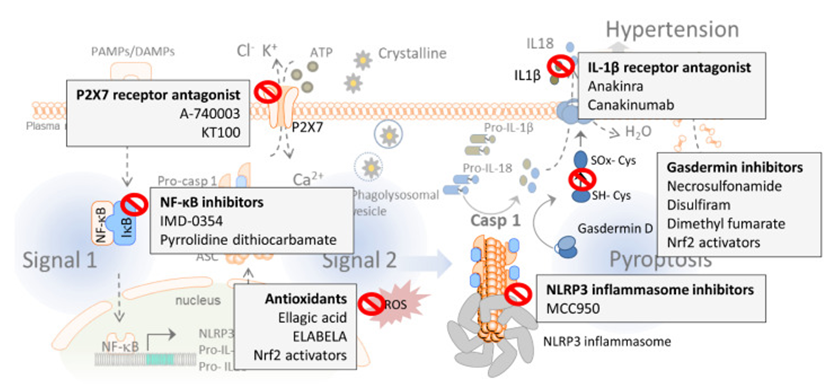
Figure 3: Courtesy ref no-79-Activation of the inflammasome and pyroptosis induce hypertension. In the first step of the inflammasome activation, pathogen-associated molecular patterns (PAMPs) and damage-associated molecular patterns (DAMPs) stimulate toll-like receptors (TLR) and the translocation of nuclear factor kappa B (NF-κB) to the cell nucleus, which, in turn, increases the transcription of the nucleotide-binding domain, leucine-rich-containing (NLR) family pyrin domain containing 3 (NLRP3) inflammasome sensor, its posttranscriptional modification, and expression of pro-interleukin (IL)-1β and pro-IL-18. The second signal such as crystalline particles or P2X purinergic receptor 7 (P2 × 7) activation via ATP induces the oligomerization of the NLRP3 inflammasome complex which leads to the activation of caspase-1. Caspase-1 cleaves gasdermin D and converts pro-IL-1β and pro-IL-18 into mature IL-1β and IL-18. Pyroptosis occurs by the insertion of the N-terminal fragment of gasdermin D into the plasma membrane, creating oligomeric pores and allowing for the release of pro- inflammatory cytokines such as IL-1β and IL-18 to the extracellular space. Pore formation also induces water influx into the cell, cell swelling, and osmotic cell lysis which induce further inflammation and hypertension by releasing more inflammatory products from the intracellular space. HMGB1: high mobility group box 1; IκB: inhibitor of κB; LDH: lactate dehydrogenase.
Is there any role of certain particular triggers at the time of NLRP3 inflammasome activation in PE? In case of patients afflicted with PE, numerous endogenous danger/ damage– associated molecular patterns (DAMP), like cholesterol, uric acid crystals, extracellular DNA, HMGB1proteins, extracellular debris, free fatty acids (FFA), advanced glycation end-products (AGE), have been found at greater amounts in the peripheral blood along with placenta work in theform of NLRP3 inflammasome activators [55, 61, 62, 63, 64]. DAMP’s result in induction of cytosolic leaking of cathepsin B through rupture of lysosomes [65]. Cathepsin B leakage further results in potassium efflux along with mitochondrial Injury. Efflux of potassium along with reduction of intracellular potassium amounts lead to activation of NLRP3 inflammasome [66] (see Figures 3 & 4 for details of mode in hypertension & treatment).
![Figure 4: Role of NLRP3 in PE. Performance of an in vitro human placental explant experiment that were treated with cholesterol crystals illustrated escalation of the liberation of IL-1β considerably significantly along with was repressed by MCC950 treatment [61]. Negi, et al. [67], documented that allopurinol, a xanthine oxidase hampering agent that hampers uric acid along with Reactive oxygen species (ROS) generation possessed the capacity of hampering significantly the trophoblastic liberation of IL-1β along with caspase 1 activity. Hence utilization of allopurinol might be possible for avoidance of placental impairment besides inimical pregnancy results like PE. Furthermore, Matias, et al. [68], along with Park, et al. [69], observed that anti-oxidants like resveratrol along with N-acetyl cysteine possessed the capacity of hampering the expression of NLRP3 protein along with caspase 1 activation in trophoblast cells. Thus they might reflect appropriate therapeutic approaches regarding the treatment ways for therapy of inflammation correlated pregnancy complications.](/fulltextimages/9083/fig_4.png)
Figure 4: Role of NLRP3 in PE. Performance of an in vitro human placental explant experiment that were treated with cholesterol crystals illustrated escalation of the liberation of IL-1β considerably significantly along with was repressed by MCC950 treatment [61]. Negi, et al. [67], documented that allopurinol, a xanthine oxidase hampering agent that hampers uric acid along with Reactive oxygen species (ROS) generation possessed the capacity of hampering significantly the trophoblastic liberation of IL-1β along with caspase 1 activity. Hence utilization of allopurinol might be possible for avoidance of placental impairment besides inimical pregnancy results like PE. Furthermore, Matias, et al. [68], along with Park, et al. [69], observed that anti-oxidants like resveratrol along with N-acetyl cysteine possessed the capacity of hampering the expression of NLRP3 protein along with caspase 1 activation in trophoblast cells. Thus they might reflect appropriate therapeutic approaches regarding the treatment ways for therapy of inflammation correlated pregnancy complications.
These observations pointed that the NLRP3 inflammasome is a robust actor regarding the generation of PE, thus its hampering agents might prove to be highly efficacious treatments. Nevertheless greater research is the requirement regarding corroborating the feasiability of avoidance of generation along with treatment by targeting NLRP3.
NLRP3 Along with Gestational Diabetes Mellitus(GDM)
Gestational Diabetes mellitus (GDM) represents metabolic conditions in pregnant women possessing the properties of impaired glucose tolerance in the 2nd or 3rd trimester of pregnancy [70]. GDM might prove to be deleterious regarding pregnancy results in addition to the longer time health besides well being of the fetus [71]. In full hyperglycemic situations, maternal plasma besides placental amounts of inflammatory factors likeIL-1β IL-6, along with MCP enhanced besides ASC, caspase 1 , NLRP1, as well as NLRP3 were up regulated in case of all hyperglycemic groups [72]. Chronic proinflammatory cytokines are believed to be pathological stimulators of Diabetes provoking metabolic conditions, correlated with insulin resistance (IR), pancreatic islets cells demise [73]. In case of patients presenting with GDM a correlation amongst NLRP3 inflammasome besides IR has been corroborated [74]. Greater amounts of glucose escalate activation of NLRP3 inflammasome in contrast to the induction, hyperglycemia secondary to normal or low glucose amounts [75]. Knowledge is present regarding hyperglycemic or Diabetes at the time of pregnancy possessed the capacity of induction of NLRP3 inflammasome activation as well as liberation of numerous inflammatory cytokines that lead to robust inimical pregnancy complications.
Hence the strategy of hampering inflammasomes that are activated might be considerably significant on hyperglycemia management along with avoidance of deleterious pregnancy results. Glombik, et al. [76], found that maternal Diabetes results in NLRP3inflammasome signaling activation by escalating the NLRP3 protein subunit, besides glyburide in the form of NLRP3inflammasome hampering agents results in reduction of NLRP3 protein as well as caspase 1 subunit, along with possesses specific the rapeutic significance in antimetabolic correlated inflammation. It was observed by Zhang, et al. [77], that astragolide IV (AS IV) was an efficacious treatment GDM in a mouse model via hampering NLRP3 inflammasome in the pancreas. Moreover Negi, et al. [67], documented that allopurinol hampered significantly NLRP3inflammasome activation, hampered trophoblasticliberation of inflammatory IL-1β along with caspase 1 activity, caused reduction of greater proinflammatory reactions in addition to antiangiogenic reactions towards enhanced glucose, avoidance of placental impairment, along with inimical results in GDM patients. Hence this specific inflammasome reflects an attractive therapeutic target for treating GDM. Furthermore a deficiency of hydrogen sulfide has been reported in GDM [78, 79, 80].
Conclusions Along with Future Directions
Having reviewed earlier numerousarticles regarding obesity with role of NLRP3 inflammasome, besides treatment of T2DM, NAFLD [81, 82, 83, 84] besides NLRP1 /NLRP3 in NASH, here we attempted to review the part of these inflammasomes in reproductive conditions [85]. Furthermore, we reviewed numerous articles regarding Em [86, 87, 88, 89, 90, 91, 92, 93], PE [94, 95], RSA [96]. Hence, the NLRP3inflammasome possesses a significant part in case of reproductive conditions with greater risk, besides can result in infertility, recurrent spontaneousabortions (RSA), Gestational Diabetes mellitus (GDM), preeclampsia along with innumeraber able other pregnancy complications. Getting an insight regarding the way NLRP3 inflammasome controls pregnancy complications, besides the manner that enhanced NLRP3 inflammasome activation is necessary for identifying innovativetherapies for reproductive impairment. Therefore NLRP3 inflammasome complex hampering agents possess some therapeutic strategies regarding the safe treatment of correlated disease [97]. Murakami, et al. [98], illustrated in a murine model of Em reduction in Ovarian Endometrioma (OE) occurred with use of MCC950, thus we might get a nonhormonal therapy for treatment of Em in future. Furthermore applications of NLRP3 inflammasome were shown in ovarian ageing [99].
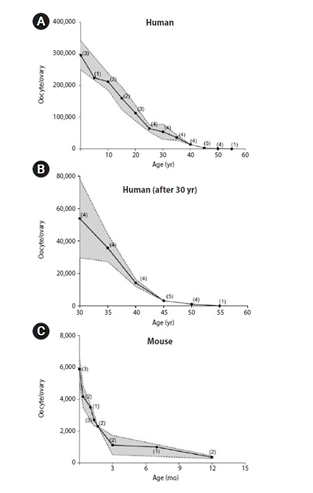
As an extension it has been utilized for evaluation of normal inflammatory control of oocyte development [100] (Figure 5). MiR1224-p attenuates was seen to influence PCOS via NLRP inflammasome through FOXO1. Nevertheless, greater research is warranted regarding getting insight in the generation of mode particular treatment of reproductive conditions.
References
-
Jo EK, Kim JK, Shin DM, Sasakawa C (2016) Molecular mechanisms regulating NLRP3 inflammasome activation . Cell Mol Immunol 13(2): 148-159.
-
Wang Y, Kong H, Zeng X, Liu W, Wang Z, et al. (2016) Activation ofNLRP3 inflammasome enhances the proliferation and migration of A549 lung cancer cells. Oncol Rep 35(4): 2053-2064.
-
Latz E, Xiao TS, Stutz A (2013) Activation and regulation ofthe inflammasomes. Nat Rev Immunol 13(6): 397-411.
-
Rossol M, Perer M, Raulien N, Quandt D, Measch U, et al. (2012) Extra cellular Ca2+ is a danger signal activatingthe NLRP3 inflammasome through G- protein coupled Calcium sensing receptors. Nat Commun 3: 1329.
-
Hornung V, Latz E (2010) Critical functions of priming and lysosomal damage for NLRP3 activation. Eur J Immunol 40(3): 620-623.
-
Lyu JJ, Mehta JL, Li Y, Ye L, Sun SN, et al. (2018) Mitochondrial autophagy and NLRP3 inflammasome in pulmonary tissues from severe combined immune deficient mice after cardiac arrest and cardiopulmonary resuscitation. Chin Med J (Engl) 131(10): 1174-1184.
-
Petrilli V, Papin S, Dostert C, Mayor A, Martinon F, et al. (2007) Activation of NLRP3 inflammasome is triggered by low intra cellular potassium concentrations. Cell Death Differ 14(9): 1583-1589.
-
Zhou R, Yasch AS, Menu P, Tschopp J (2011) A role for mitochondria in NLRP3 inflammasome activation. Nature 469: 221-225.
-
Practice Committee of the American Society of Reproductive Medicine (2004) Endometriosis and infertility. Fertil Steril 82(Suppl 1): S40-S45.
-
Bullon P, Navarro JM (2017) Inflammasome as a key pathogenic mechanism in Endometriosis. Curr Drug Targets 18(9): 997-1002.
-
Bulun SE, Monsavaies D, Pavone ME, Dyson M, Xue Q, et al. (2012) Role of estrogen receptor β in Endometriosis. Semin Reprod Med 30(1): 39-45.
-
Yilmaz BD, Bulun SE (2019) Endometriosis and nuclear receptors. Human Reprod Update 25(4): 473-485.
-
Mezzasoma I, Angronelli C, Talesa VN (2017) A novel role for brain natriuretic peptide inhibition of IL-1β secretion via downregulation of NFκB/Erk1/2and NALP3/ ASC/ caspase 1 activation inhuman THP1 monocytes. Mediators Inflamm 2017: 5858315.
-
Ahn SH, Khalaj K, Young SL, Lessey BA, Kori M, et al. (2016) Immune-Inflammation gene signatures in Endometriosis patients. Fertil Steril 106(6): 1420-1431.
-
Patel BG, Lenk EE, Lebovic DL, Shu Y, Yu J, et al. (2018) Pathogenesis of endometriosis: interactions between endocrine and inflammatory pathways. Best Pract Res Clin Obstet Gynaecol 50: 50-60.
-
Sikora J, Palacz AM, Anasz ZK (2012) Imbalance in cytokines from interleukin-1 family role of in Pathogenesis of endometriosis. Am J Reprod Immunol 68(2): 138-145.
-
Huang F, Cao J, Liu Q, Zou Y, Li H, et al. (2013) MAPK/ERK signal pathway involved expression of COX2 and VEGF) in human endometrial stromal cells in vitro. Int Clin J Exp Pathol 6(10): 2129-2136.
-
Zhao J, Ma W, Chen W, Gao J, Li C, et al. (2019) AEG 1 aggravates inflammation via promoting inflammasome formation in murine Endometriosis lesions. Anim Cells Syst (Seoul) 23(6): 407-413.
-
Jamiliam M, Foroozanford F, Kaviossian E, Aghadavod E, Amirani E, et al. (2019) Carnitine and Chromium co- supplementation affects mental health, hormonal, Inflammatory genetic and Oxidative stress parameters in women with Polycystic ovary syndrome. J Psychosom Obstet Gynaecol 1-9.
-
Kanalchian M, Esmailzadeh S, Mahjoub S, Rahsepar M, Ghazemi M (2020) Status of serum Copper, Magnesium and total antioxidant capacity in patients with Polycystic ovary syndrome. Biol Trace Elem Res 193(1): 111-117.
-
Paixao L, Ramos RB, Lavanda A, Morsh DM, Spritzer PM (2017) Animal models of hyperandrogenism and ovarian morphology changes as features of polycystic ovary syndrome: a systematic review**.** Reprod Biol Endocrinol 15(1): 12.
-
Wang D, Weng Y, Zhang Y, Wang R, Wang T, et al. (2020) Exposure to hyperandrogen drives ovarian dysfunction and fibrosis by activating the NLRP3 inflammasome in mice. Sci Total Environ 745: 141049.
-
Rostamtabar M, Esmailzadeh S, Karkhah A, Amiri M, Rahman A, et al. (2020) Elevated expression of IL-18 but not IL-1β gene is associated with NALP3 and AIM2 in Polycystic ovary syndrome. Gene 731: 144352.
-
Zhang S, Tu H, Zhu J, Liang A, Huo P, et al. (2020) Dandrobium nobile Lindl. polysaccharides improves follicular development in PCOS mice. Int J Biol Macromol 149: 826-834.
-
Salmassi A, Fattahi A, Nouri M, Hedderich J, Schmuzzler AG (2017) Expression of mRNA and protein of IL-18 and its receptor in human follicular granulosa cells. J Endocrinol Invest 40(4): 447-454.
-
Gao D, Madi M, Ding C, Fok M, Steele T, et al. (2014) Interleukin-1β mediates macrophages induced impairment in insulin signaling in human primary adipocytes. Am J Physiol Endocrinol Metab 307(3): E289-E304.
-
Bing C (2015) Is Interleukin-1βa culprit in macrophages - adipocytes crosstalk in obesity? Adipocyte 4(2): 149- 152.
-
Guo QJ, Shan J, Xu YF, Hu YY, Huo CL, et al. (2020) Pioglitazone-metformin complex improves Polycystic ovary syndrome comorbid psychological distress via inhibiting NLRP3 inflammasome activation in prospective clinical study. Mediat Inflamm 2020: 3050487.
-
Homer HA (2019) Modern management of recurrent miscarriage. ANZJOG 59(1): 36-44.
-
Christiansen OB, Larsen EC, Egerup P, Lunoce L, Egestad L, et al. (2015) Intravenous immuoglobulin treatment for secondary recurrent miscarriage :a randomized double blind, placebo controlled trial. BJOG 122(4): 500-508.
-
D’Ippolito S, Tersigni C, Marana R, Nicuolo FD, Gaglione R, et al. (2016) Inflammasome in the human endometrium: further evaluation of the ‘’maternal side’’. Fertil Steril 105(1): 111-118.
-
Tersigni C, D’Ippolito S, Nicuolo FD, Marana R, Valenza V, et al. (2018) Recurrent pregnancy loss is associated with leaky gut: a novel Pathogenic model of endometrium Inflammation. J Transl Med 16(1): 102.
-
Shirasukana K, Takano H, Seno K, Ohtsu A, Karasawa T, et al. (2016) Palmitic acid induces interleukin-1 β secretion via NLRP3 inflammasomes and Inflammatory responses through ROS production **i**nhuman placental cells. J Reprod Immunol 116: 104-112.
-
Reig AJ, Melnychuk T, Gris JM (2015) Regulatory T cells, maternal -fetal immune tolerance and recurrent miscarriage: new therapeutic challenging opportunities. Medicina Clínica 144(6): 265-268.
-
Lu M, Ma F, Xiao J, Yang J, Chen D, et al. (2019) NLRP3 inflammasomes as the potential target mechanism and therapy in recurrent spontaneous abortions. Mol Med Rep 19(3): 1935-1941.
-
Perregaux DG, McNiff P, Lalibertte R, Hawryluk N, Peurano H, et al. (2001) Identification and characterization of a novel class of interleukin-1post-translational processing inhibitors. J Pharmacol Exp Ther 299(1): 187-197.
-
Coll RC, Robertson AAB, Chae JJ, Higgins SC, Planillin RM, et al. (2015) A small molecule inhibitor of the NLRP3 inflammasome for the treatment of Inflammatory diseases. Nat Med 21(3): 248-55.
-
Neudecker V, Haneklaus M, Jensen O, Khailova L, Masterson JC, et al. (2017) Myeloid derived miR 223 regulates interstitial Inflammation via repression of NLRP3 inflammasome. J Exp Med 214(6): 1737-1752.
-
Wang Y, Han Z, Fan Y, Zhang J, Chen K, et al. (2017) Micro RNA-9 inhibits NLRP3 inflammasome activation in human atherosclerosis Inflammation cell models through the JAK/STAT signaling pathway**.** Cell Physiol Biochem 41(4): 1555-1571.
-
Chang YP, Ka SM, Hsu WH, Chen A, Chao LK, et al. (2015) Resveratrol inhibits NLRP3 inflammasome activation by preserving mitochondrial integrity and augmenting autophagy. J Cell Physiol 230(7): 1567-1579.
-
Abderrazak A, Conchie D, Mahmood DF, Elhoge R, Vindis C, et al. (2015) Anti-inflammatory and antiatherogenic effects of the NLRP3 inflammasome inhibit arglabinin ApoE2.Ki mice fed a high-fat diet. Circulation 131(12): 1061-1070.
-
Oh NH, Han JW, Shim DW, Sim FJ, Koppula S, et al. (2015) Anti-inflammatory of Morus bombycis Koidzumi via inhibiting IFNβ signaling and NLRP3 inflammasome activation. J Ethnopharmacol 176: 424-428.
-
Goldenberg RL, Culhane JF, Iams JD, Romero R (2008) Epidemiology and causes of preterm birth. Lancet 371(9606): 175-184.
-
Oh KJ, Hong JS, Romero R, Yoon BH (2019) The frequency and Clinical significance of intra-amnionitic Inflammation in twin pregnancies with preterm labor and intact membranes. J Matern Fetal Neonatal Med 32(4): 1527-1541.
-
Koga K, Mor G (2008) Expression and function of toll like receptors at the maternal -fetal interface. Reprod Sci 15(3): 231-242.
-
Lopez NG, Romero R, Xu Y, Plazyo O, Unkel R, et al. (2017) A role of the inflammasome in spontaneous preterm labor with acute histologic chorioamnionitis. Reprod Sci 24(10): 1382-1401.
-
Faro J, Romero R, Schwenkel G, Flores VG, Hernandez MA, et al. (2019) Intra-amniotic inflammation induces preterm birth by activating the NLRP3 inflammasome †. Biol Reprod 100(5): 1290-1305.
-
Young A, Thomson AJ, Ledmgham M, Jordan F, Greer IA, et al. (2002) Immunolocalization of proinflammatory cytokines in myometrium, cervix and fetalmembranes during human parturition at term. Biol Reprod 66(2): 445-459.
-
McLaren J, Taylor DJ, Bell SC (2000) Prostaglandin E2- dependent production of latent matrix metalloproteinase9 in cultures of human fetal membranes. Mol Hum Reprod 6(11): 1033-1040.
-
Lopez NG, Romero R, Flores VG, Leng Y, Miller D, et al. (2019) Inhibition of the NLRP3 inflammasome can prevent sterile intra-amnionitic Inflammation, preterm labor/ birth and adverse neonatal outcomes †. Biol Reprod 100(5): 1306-1318.
-
Marchetti C, Swartzwelter B, Gamboni F, Neil CP, Richter K, et al. (2018) OLT1177, a β-sulfonyl nitrile compound, safe in humans, Inhibits the NLRP3 inflammasome and reverses the metabolic cost of Inflammation. Proc Natl Acad Sci USA 115(7): E1530-E1539.
-
Lau SY, Guild SJ, Barrett CJ, Chen Q, McCowan L, et al. (2013) Tumor necrosis factor alpha (TNFα), interleukin-6, and interleukin-10 levels are altered in preeclampsia: a systematic review and meta-analysis. Am J Reprod Immunol 70(5): 412-427.
-
Roberts JM, Taylor RN, Musci TJ, Rodgers CM, Hubel CA, et al. (1989) Preeclampsia: an endothelial disorder. Am J Obstet Gynaecol 161(5): 1200-1204.
-
Mulla MJ, Myrtolli K, Potter J, Boeras C, Kavathas PB, et al. (2011) Uric acid induces trophoblast IL-1β production via the inflammasome: implications for the pathogenesis of preeclampsia. Am J Reprod Immunol 65(6): 542-548.
-
Xie F, Hu Y, Turvey SE, Magee LA, Bruham RM, et al. (2010) Toll like receptor 2and 4 and the cryopyrin inflammasome in normal pregnancy and preeclampsia. BJOG 117(1): 99-108.
-
Weel IC, Veiga MR, Matias ML, Fiorani EG, Peracoli JC, et al. (2017) Increased expression of NLRP3 inflammasome in placentas from pregnant women with severe preeclampsia. J Reprod Immunol 123: 40-47.
-
Tamura K, Ishikawa G, Yoshie M, Ohneda W, Nakai A, et al. (2017) Glibenclamide inhibits the NLRP3 inflammasome mediated IL-beta secretion in human trophoblasts. J Pharmacol Sci 135(2): 89-95.
-
Xu L, Li S, Liu Z, Jiang S, Wang J, et al. (2019) The NLRP3 rs10754558 polymorphism is a risk factor for preeclampsiain Chinese Han population. J Matern Fetal Neonatal Med 32(11): 1792-1799.
-
Pontillo A, Reis EC, Bricher PN, Vianna P, Diniz S, et al. (2015) NLRP1 L155H polymorphism is a risk factor for preeclampsia development. Am J Reprod Immunol 73(6): 577-581.
-
Omi T, Kuniada M, Kamesaki T, Ohnida H, Munkhnilga L, et al. (2006) An intronic variable number of tandem repeat polymorphism of the cold-induced autoinflammatory syndrome (CIASI) gene modifies gene expression and is associated with essential hypertension. Eur J Hum Genet 14(12): 1295-1305.
-
Stodle GS, Silva GB, Tangeras LH, Gierman LM, Nervik I, et al. (2018) Placental Inflammation in preeclampsia by Nod –like receptor protein (NLRP3) inflammasome activation in trophoblasts. Clin Exp Immunol 193(1): 84- 94.
-
Pan J, Ou Z, Cai C, Li P, Gong J, et al. (2018) Fatty acid activates NLRP3 inflammasome in mouse Kupffer cells through mitochondrial DNA release. Cell Immunol 332: 111-120.
-
Yao X, Jiang Q, Ding W, Yue P, Wang J, et al. (2019) Interleukin 4 inhibits high mobility group box1 protein mediated NLRP3 inflammasome formation by activating Peroxisome Proliferator activated receptors in astrocytes. Biochem Biophys Res Commun 509(2): 624-631.
-
Kim EJ, Park SY, Back SE, Jang MA, Lee WS, et al. (2018) HMGB1 Increases IL-1β Production in Vascular Smooth Muscle Cells via NLRP3 Inflammasome. Front Physiol 9: 313.
-
Martinon F, Petrilli V, Mayor A, Tardivel A, Tschopp J (2006) Gout associated uric acid crystals activate the NLRP3 inflammasome. Nature 440(7081): 237-241.
-
Strowig T, Mejia JH, Elinav E, Flavell R (2012) Inflammasomes in health and disease. Nature 481(7381): 278-286.
-
Negi M, Mulla MJ, Han CS, Abrahams VM (2020) Allopurinol inhibits excess glucose association induced trophoblast IL-1βand ROS production. Reproduction 159(1): 73-80.
-
Matias ML, Gomes VJ, Veiga MR, Ribeiro VR, Nunes PR, et al. (2019) Silibin downregulates the NFκB pathway and NLRP1/NLRP3 inflammasomes in monocytes from pregnant women with preeclampsia. Molecules 24(8): 1548.
-
American Diabetes Association (2013) Standards of medical care in Diabetes-2013. Diabetes Care 36 Suppl 1(Suppl 1): S11-S66.
-
American Diabetes Association (2004) Gestational Diabetes mellitus. Diabetes Care 27(1): S88-S90.
-
Silva SC, Alencar AP, Moreli JB, Borbely AU, Lima LDS, et al. (2018) Hyperglycemia induces inflammatory mediators in human chorionic villous. Cytokine 111: 41-48.
-
Zamd H, Morshedzadeh N, Nagashian F (2017) Signaling pathways linking inflammation to insulin resistance. Diabetes Metab Syndr 11(1): S307-S309.
-
Stienstra R, Diepen JAV, Tack CJ, Zaki MH, Veerdonk FLVD, et al. (2011) Inflammasome is a central player in the induction of obesity and insulin resistance. Proc Natl Acad Sci USA 108(37): 15324-15329.
-
Ward R, Erkul A (2016) Relationship of endothelin 1 and inflammasome activation in HT22 hippocampal cells in diabetes. Life Sci 159: 97-103.
-
Ghombik K, Trojan E, Kurek A, Budziazewska B, Kaim AB (2019) Inflammatory consequences of maternal diabetes on the offspring brain: a Hippocampal Organotypic Culture Study. Neurotox Res 36(2): 357-375.
-
Zhang R, Zhang X, Xing B, Zhao J, Zhang P, et al. (2019) Astragolide IV attenuates gestational diabetes mellitus via targeting NLRP3 inflammasome in genet mice. Reprod Biol Endocrinol 17(1): 77.
-
Fang X, Wang Y, Zhang Y, Li Y, Kim JK, et al. (2021) NLRP3 inflammasome and its critical role in gynaecological Disorders and obstetric complications. Front Immunol 11: 555826.
-
Miguel CD, Pelegrin P, Mazos AB, Cuevas S (2021) Emerging role of inflammasome in pyroptosis and hypertension. Int J Mol Sci 22(3): 1064.
-
Wu W, Tan QY, Xi FF, Ruan Y, Wang J, et al. (2022) NLRP3 inflammasome activation in gestational diabetes mellitus placenta is associated with hydrogen sulfide deficiency. Exp Ther Med 23(1): 94.
-
Kaur KK, Allahbadia G, Singh M (2021) Therapeutic potential and epigenetic alterations of plant phytochemicals (as epi-drugs) for the treatment of type 2 diabetes mellitus: a systematic review. Adv Obes Weight Manag Control 11(6): 195-206.
-
Kaur KK, Allahbadia GN, Singh M (2021) Targeting macrophage polarization for therapy of diabesity–the feasibility of early improvement of insulin sensitivity and insulin resistance-a comprehensive systematic review. J Diab Metab Disorder Control 8(1): 6-25.
-
Kaur KK, Allahbadia GN, Singh M (2021) How can we optimize therapy of Non Alcoholic Fatty Acid Liver Disease-A Short Communication on role of Astragaloside IV and other prospective agents”. Clinical Research and Clinical Case Reports 1(3): 1-4.
-
Kaur KK, Allahbadia GN, Singh M (2022) An Update on the Therapeutic Potential of Herbal Preparations with regards to Molecular & Biochemical Mechanisms in the Management of Diabetes Mellitus :a Systematic Review. World Journal of Advance Healthcare Research 6(3): 1-17.
-
Kaur KK, Allahbadia GN, Singh M (2022) De Novo Lipogenesis Inhibitors: as the other Innovative agents for therapy of Metabolic Diseases (Obesity, NAFLD/ NASH, CVD). Advances in Obesity, Weight Management & Control 12(3): 78-93.
-
Kaur KK, Allahbadia GN, Singh M (2022) An update on the Association of Gut-Liver Axis with Gut Microbiome Dysbiosis Correlated NAFLD along with NAFLD- HCC with Potential Therapeutic Approaches: a systematic review. Accepted for publication in Hepatology @ clinical medicine 2022.
-
Kaur KK, Allahbadia GN (2016) An Update on Pathophysiology and Medical Management of Endometriosis. Adv Reprod Sci 4(2): 53-73.
-
Kaur KK, Allahbadia GN, Singh M (2017) Meeting the Challenges of Endometriosis Associated Pain-Newer Options for Future and Research Directions. BAOJ Bioinfo 1: 9.
-
Kaur KK, Allahbadia GN, Singh M (2019) An Update on Diagnosis and Management of Adolescent Endometriosis - A Short Communication. Acta Scientific Paediatrics 2(5): 48-50.
-
Kaur KK, Allahbadia GN (2016) An Update on Pathophysiology and Medical Management of Endometriosis. Adv Reprod Sci 4(2): 53-73.
-
Kaur KK, Allahbadia GN, Singh M (2020) Dilemna regarding preference of surgery or medical treatment incase of tubal blockade, endometriosis or adenomyosis and pelvic adhesion prevention once surgery is contemplated –a systematic review.
-
Kaur KK, Allahbadia GN, Singh M (2018) Advances in Adenomyosis Diagnosis Utilizing Transvaginal Ultrasonography-A Short Summary. Open Acc J Reprod & Sex Disord 2(1): 154-155.
-
Kaur KK, Allahbadia GN, Singh M (2021) Medical treatment in Uterine Adenomyosis management –A systematic Review. Archives of Clinical Case Studies and Case Reports 2(3): 189-198.
-
Kaur KK, Allahbadia GN, Singh M (2021) How does Epigenetics Regulate Development of Placenta and Placental Pathologies like PreEclampsia (PE), Intrauterine growth Restriction( IUGR)-With Main emphasis on PE. Advances in Bioengineering and Biomedical Science Research.
-
Kaur KK, Allahbadia GN, Singh M (2021) Greater chances of Hypertensive disorders of pregnancy association with Frozen Embryo Transfer(FET)-Probable Implications of absent Corpus Luteum-What needs to be done to avoid in future (FETs)-A Systematic Review. J Gyn Ob Adv 1(1): 1-7
-
Kaur KK, Allahbadia GN, Singh M (2020) Review in recurrent spontaneous observation. J Gynaecol 2020.
-
Ahn H, Kwon HM, Lee E, Kim PH, Jeung EB, et al. (2018) Role of inflammasome regulation on immune modulators. J Biomed Res 32(5): 401-410.
-
Murakami M, Osuka S, Muraoka A, Hayashi S, Kusahara Y, et al. (2022) Effectiveness of NLRP3 inhibitor as a non hormonal treatment for ovarian endometriosis. Reprod Biol Endocrinol 20(1): 58.
-
Pando JMN, Gómez EA, Vega BC, Villarán EN, Hervás MC, et al. (2021) Inhibition of NLRP3 inflammasome in ovarian aging. Sci Adv 7(1): eabc 7409.
-
Park CJ, Oh JE, Feng J, Cho YM, Qiao H, Ko CM (2022) Life time changes of the oocyte pool: contributing factors with a focus on the ovulatory inflammation. Clin Exp Reprod Med 49(1): 16-25.
-
Li Y, Yao N, Gao Y, Wang Y, Bai L, et al. (2021) MiR1224-p attenuates Polycystic ovary syndrome through Inhibiting NOD –like receptor protein via targeting Forkhead box O1. Bioengineered 12(1): 8555- 8569.
- Postpartum Maternal Mental Health - A Narrative Review
- Beta HCG in Cervico-Vaginal Secretion as a Predictor of Preterm Delivery
- Successful Management of Mid Trimester Foetal Death with Major Placenta Previa by Expectant Management Followed by Induction of Labour
- To Evaluate the Expression of Egr2 Gene in Term Low Birth Weight Newborns
- Impact of Maternal Obesity on Maternal and Foetal Outcomes: A Prospective Cohort Study from Northern India
- ‘’Benefit of Pulsatile GnRH Therapy in Treatment of Functional Hypothalamic Amenorrhea (FHA) and Congenital Hypogonadotropic Hypogonadism(CHH) in Infertile Patients Over Canonical Gonadotropins with IVF –A Short Communication’’