
Biological Activities of Laetiporus Species as a Functional Food
Mini Review
In recent years, the increasing interest in human health, nutrition and prevention of diseases led to the popularity of functional foods among consumers. Several researchers attempt to obtain potential natural bioactive components from various natural sources using different methods [1, 2, 3, 4]. Mushrooms, which are rich in organic and inorganic content, are also natural products that have various effects. As a result of metabolic and physiological processes, secondary metabolites produced continuously in organisms lead to various biological activities both for the organisms they are synthesized in and for other groups of living organisms that consume these natural products [5, 6]. Mushrooms create a strong defense mechanism in their organism due to the secondary metabolites they synthesize. Furthermore, they have a high nutritional value and bioactive potential both in the defense mechanism and as nutrients in the organisms that consume these natural materials [7, 8, 9]. Cosmopolitan macro-mushrooms are considered to span 53-110 thousand species in nature [10]. Since ancient times, humans have collected and consumed several mushroom species that were available in their natural habitat as nutrients. In addition to their nutritional properties, natural mushrooms contain many various active biological compounds. Due to these properties, they are also considered important medical and pharmacological sources [11, 12, 13].
Previous studies reported various biological activities of mushroom species such as anti-inflammatory, DNA damage protective, antioxidant, anti-androgenic, antimicrobial, cytotoxic, ant-cancer, antiemetic, antiallergic, antiparasitic, sedative, anti-cholinesterase, hepatoprotective, and acute toxicity, anti-mutagenic, cardiovascular and anti-tumor effects [14, 15, 16, 17, 18, 19, 20, 21, 22, 23, 24, 25, 26, 27, 28, 29].
The studies conducted on these living organism groups with pharmaceutical significance, are still very few and the knowledge on their chemical profiles and bioactivity potential is very limited. In the present paper, biological activity data for Laetiporus species, which exhibit cosmopolitan distribution in natural ecosystems, are presented.
Laetiporus species
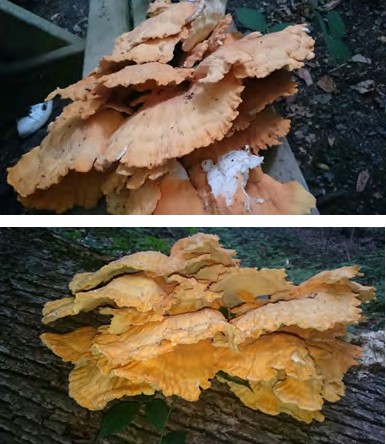
Laetiporus name is a combination of two words “laeti” (Lat.) and “por” (Lat.) and refers to a hymenial layer and the size of the specifically shaped fruiting bodies [30]. The genus Laetiporus was described by Murrill (1904) and typified by Agaricus speciosus [=Polyporus sulphureus (Bull.) Fr.] as a monotypic genus [30, 31]. It causes decay especially in oak (Quercus sp.) trees, hardwood and conifers. The mature mushroom is yellow-orange [32].
Biological Activities
In previous studies conducted on Laetiporus species, several biological activity tests were conducted using different methods and solvents. These studies reported antioxidant, antimicrobial, anticancer, hepatoprotective, antiproliferative, antitumor, immune-stimulating, mutanase, enzymatic, anti- hypercholesterolemic, anti-inflammatory, DNA protective, anticoagulant, acetylcholinesterase inhibition activities, reverse transcriptase of HIV-virus inhibitors, anti-thrombin effects and hypoglycemic activities in Laetiporus species [33, 34, 35, 36, 37, 38, 39, 40, 41, 42, 43, 44, 45, 46, 47, 48, 49, 50, 51, 52, 53, 54, 55, 56, 57, 58, 59, 60, 61, 62, 63, 64, 65, 66, 67, 68, 69, 70, 71] (Table 1).
| Laetiporus species | Biological Activity | Extraction |
|---|---|---|
| L. sulphureus | Antioxidant [33,35,38,39,41,43,44,46,51,55,59- 61,69,70], Antimicrobial [33,36,38- 41,44,45,50,52,53,55,61,70], Anticancer [34], Hepatoprotective [35], Antiproliferative [38,39,48,64,65,67,68], Antitumor [42,57], Immunostimulating Activity [42], Mutanase activity [47], Enzymatic activity [49], Anti- hypercholesterolemia [56], Anti-inflammatory [57, DNA protective activity [61], Anticoagulant [62], Acetylcholinesterase inhibition [69], Reverse transcriptase of HIV-virus inhibitors [71] | Ethanol [33,34,41,44,60,51,61,69], Aqueous [36], Cyclohexane [38], Dichloromethane [38,40,53,71], Methanol [38-41,44,55,60,70,71], Polysaccharidic extract [35,39,42,43,46-48], Acetone [40], Water [41], Strains [45,49], Hot water extract [46,56], Hydroalcoholic extract [52], Heptane [53], Diethylether [53], Chloroform [53,70], Ethyl acetate [53,59], Metabolites [57,64, 65,67,68], Crude extract [62] |
| L. sulphureus var. miniatus | Anti-inflammatory [37], Anti-oxidative [54], Anti- thrombin effects [54], Antiproliferative [54,66], Hypoglycemic [63] | Polysaccharidic extract [37,63], Hexane [54], Chloroform [54], Metabolites [66] |
| L. baudonii | Antimicrobial [58] | Dichlormethane [58], Methanol [58], Water [58] |
Table 1: Biological Activity of _Laetiporus_ species.
Conclusion
In addition to being a source of nutrients for human beings, mushrooms are also used in supplamentary and supportive therapies in medicine due to their carious biological profiles and pharmacological properties in their chemical profiles. In the current study, biological activities of Laetiporus species are presented. In this context, it was suggested that Laetiporus species could be used as supplementary agents in treatment of various diseases in addition to their nutritional properties and they would occupy an important place in the development of new pharmacological new agents due to their active components. The potential of Laetiporus species for use in design of modern medicines by determination of their phytochemical content and isolation of these compounds is noteworthy. Furthermore, it can be stipulated that the adverse effects of current medical drugs could be eliminated as a result of the above-mentioned designs. In conclusion, it was considered that the use of Laetiporus species in complementary medicine is very important and the mushrooms have a significant potential as important natural agents in development of pharmacological drugs.
References
-
Nasri H, Baradaran A, Shirzad H, Kopaei RM (2014) New concepts in nutraceuticals as alternative for pharmaceuticals. International journal of preventive medicine 5(12): 1487-1499.
-
Sevindik M (2019) Wild edible mushroom Cantharellus cibarius as a natural antioxidant food. Turkish Journal of Agriculture-Food Science and Technology 7(9): 1377- 1381.
-
Ozaltun B, Sevindik M (2020) Evaluation of the effects on atherosclerosis and antioxidant and antimicrobial activities of Agaricus xanthodermus poisonous mushroom. The European Research Journal 6(6): 539- 544.
-
Gurgen A, Sevindik M, Yıldız S, Akgul H (2020) Determination of antioxidant and oxidant potentials of Pleurotus citrinopileatus mushroom cultivated on various substrates. Kahramanmaras Sutcu Imam Universitesi Tarım ve Doga Dergisi 23(3): 586-591.
-
Akgul H, Sevindik M, Coban C, Alli H, Selamoglu Z (2017) New approaches in traditional and complementary alternative medicine practices: Auricularia auricula and Trametes versicolor. J Tradit Med Clin Natur 6(2): 239.
-
Mushtaq W, Baba H, Akata I, Sevindik M (2020) Antioxidant potential and element contents of wild edible mushroom Suillus granulatus. Kahramanmaras Sutcu İmam Universitesi Tarım ve Doga Dergisi 23(3): 592-595.
-
Cheung LM, Cheung PC, Ooi VE (2003) Antioxidant activity and total phenolics of edible mushroom extracts. Food chemistry 81(2): 249-255.
-
Bal C, Sevindik M, Akgul H, Selamoglu Z (2019) Oxidative stress index and antioxidant capacity of Lepista nuda collected from Gaziantep/Turkey. Sigma J Eng & Nat Sci 37(1): 1-5.
-
Sevindik M, Akgul H, Akata I, Altuntas D, Bal C, et al. (2016) Macrolepiota procera (Scop.) Singer. Mantarının Agır Metal Iceriklerinin ve Oksidatif Stres Durumunun Belirlenmesi. Suleyman Demirel Universitesi Fen Bilimleri Enstitusu Dergisi 20(3): 504-508.
-
Mueller GM, Schmit JP, Leacock PR, Buyck B, Cifuentes J, et al. (2007). Global diversity and distribution of macrofungi. Biodiversity and conservation 16(1): 37-48.
-
Sevindik M (2020) Antioxidant and antimicrobial capacity of _Lactifluus rugatus_ and its antiproliferative activity on A549 cells. Indian Journal of Traditional Knowledge 19(2): 423-427.
-
Krupodorova T, Sevindik M (2020) Antioxidant potential and some mineral contents of wild edible mushroom Ramaria stricta. AgroLife Sci J 9(1): 186-191.
-
Akgul H, Nur AD, Sevindik M, Dogan M (2016) Tricholoma terreum ve Coprinus micaceus’ un bazı biyolojik aktivitelerinin belirlenmesi. Artvin Coruh Universitesi Orman Fakultesi Dergisi 17(2): 158-162.
-
Fujita R, Liu J, Shimizu K, Konishi F, Noda K, et al. (2005) Anti-androgenic activities of Ganoderma lucidum. J Ethnopharmacol 102(1): 107-112.
-
Guillamon E, Lafuente AG, Lozano M, Rostagno MA, Villares A, et al. (2010) Edible mushrooms: role in the prevention of cardiovascular diseases. Fitoterapia 81(7): 715-723.
-
Suseem SR, Saral M, Gregory M, Reddy NP (2011) Evaluation of the analgesic activity of ethyl acetate, methanol and aqueous extracts of Pleurotus eous mushroom. Asian Pacific journal of tropical medicine 4(2): 117-120.
-
Kang MY, Rico CW, Lee SC (2012) In vitro antioxidative and antimutagenic activities of oak mushroom (Lentinus edodes) and king oyster mushroom (Pleurotus eryngii) byproducts. Food Science and Biotechnology 21(1): 167- 173.
-
Sevindik M, Akgul H, Bal C, Altuntas D, Korkmaz AI, et al. (2018) Oxidative stress and heavy metal levels of Pholiota limonella mushroom collected from different regions. Current Chemical Biology 12(2): 169-172.
-
Sevindik M, Akgul H, Gunal S, Dogan M (2016) Pleurotus ostreatus’ un doğal ve kültur formlarının antimikrobiyal aktiviteleri ve mineral madde iceriklerinin belirlenmesi. Kastamonu Universitesi Orman Fakultesi Dergisi 16(1): 153-156
-
Arroyo IJS, Acevedo RR, Perez AA, Clemente PL, Cubano LA, et al. (2013) Anti-tumor effects of Ganoderma lucidum (reishi) in inflammatory breast cancer in in vivo and in vitro models. PloS one 8(2): 57431.
-
Soares AA, de Sa Nakanishi AB, Bracht A, da Costa SMG, Koehnlein EA, et al. (2013) Hepatoprotective effects of mushrooms. Molecules 18(7): 7609-7630.
-
Elsayed EA, El Enshasy H, Wadaan MA, Aziz R (2014) Mushrooms: a potential natural source of anti- inflammatory compounds for medical applications. Mediators of inflammation.
-
Sevindik M, Pehlivan M, Dogan M, Selamoglu Z (2018) Phenolic content and antioxidant potential of Terfezia boudieri. Gazi University Journal of Science 31(3): 707- 711.
-
Haque MA, Sarker AK, Paul RK, Khan SS, Islam MAU (2015) Screening for antiparasitic activity of crude extracts of Pleurotus highking, a Bangladeshi edible mushroom. Bangladesh Pharmaceutical Journal 18(1): 38-41.
-
Sevindik M, Akata I (2019) Antioxidant, oxidant potentials and element content of edible wild mushroom Helvella leucopus. Indian Journal of Natural Products and Resources 10(4): 266-271.
-
Rahi DK, Malik D (2016) Diversity of mushrooms and their metabolites of nutraceutical and therapeutic significance. Journal of Mycology.
-
Eraslan EC, Altuntas D, Baba H, Bal C, Akgul H, et al. (2021) Some Biological Activities and Element Contents of Ethanol Extract of Wild Edible Mushroom Morchella esculenta. Sigma 39(1): 24-28.
-
Bal C, Akgul H, Sevindik M, Akata I, Yumrutas O (2017) Determination of the anti-oxidative activities of six mushrooms. Fresenius Envir Bull 26(10): 6246-6252.
-
Sevindik M, Rasul A, Hussain G, Anwar H, Zahoor MK, et al. (2018) Determination of anti-oxidative, anti-microbial activity and heavy metal contents of Leucoagaricus leucothites. Pak J Pharm Sci 31(5): 2163-2168.
-
Ziaja SK, Muszynska B, Gawalska A, Sałaciak K (2018) Laetiporus sulphureus-Chemical Composition and Medicinal Value. Acta Sci Pol Hortorum Cultus 17(1): 87- 96.
-
Ota Y, Hattori T, Banik MT, Hagedorn G, Sotome K, et al. (2009) The genus Laetiporus (Basidiomycota, Polyporales) in East Asia. Mycological research 113(11): 1283-1300.
-
Ginns JH (2017) Polypores of British Columbia (Fungi: Basidiomycota). Province of British Columbia.
-
Turkoglu A, Duru ME, Mercan N, Kivrak I, Gezer K (2007) Antioxidant and antimicrobial activities of Laetiporus sulphureus (Bull.) Murrill. Food Chemistry 101(1): 267- 273.
-
Lovy A, Knowles B, Labbe R, Nolan L (2000) Activity of edible mushrooms against the growth of human T4 leukemic cancer cells, HeLa cervical cancer cells, and _Plasmodium falciparum_. Journal of herbs, spices & medicinal plants 6(4): 49-57.
-
Zhao H, Lan Y, Liu H, Zhu Y, Liu W, et al. (2017) Antioxidant and Hepatoprotective Activities of Polysaccharides from Spent Mushroom Substrates (_Laetiporus sulphureus_) in Acute Alcohol-Induced Mice. Oxidative medicine and cellular longevity.
-
Šiljegović JD, Stojković DS, Nikolić MM, Glamočlija JM, Soković MD, et al. (2011) Antimicrobial activity of aqueous extract of _Laetiporus sulphureus_ (Bull.: Fr.) Murill. Zbornik Matice srpske za prirodne nauke (120): 299-305.
-
Jayasooriya RGPT, Kang CH, Seo MJ, Choi YH, Jeong YK, et al. (2011) Exopolysaccharide of _Laetiporus_ _sulphureus_ var. _miniatus_ downregulates LPS-induced production of NO, PGE2, and TNF-α in BV2 microglia cells via suppression of the NF-κB pathway. Food and chemical toxicology 49(11): 2758-2764.
-
Kolundzic MD, Grozdanic NO, Stanojkovic TP, Milenkovic MT, Dinic MR, et al. (2016) Antimicrobial and Cytotoxic Activities of the Sulphur Shelf Medicinal Mushroom, _Laetiporus sulphureus_ (Agaricomycetes), from Serbia. International Journal of Medicinal Mushrooms 18(6): 469-476.
-
Petrović J, Stojković D, Reis FS, Barros L, Glamočlija J, et al. (2014) Study on chemical, bioactive and food preserving properties of _Laetiporus sulphureus_ (Bull.: Fr.) Murr. Food & function 5(7): 1441-1451.
-
Petrović J, Glamočlija J, Stojković DS, Ćirić A, Nikolić M, et al. (2013) _Laetiporus sulphureus_, edible mushroom from Serbia: Investigation on volatile compounds, in vitro antimicrobial activity and in situ control of _Aspergillus_ _flavus_ in tomato paste. Food Chem Toxicol 59: 297-302.
-
Petrović J, Papandreou M, Glamočlija J, Ćirić A, Baskakis C, et al. (2014) Different extraction methodologies and their influence on the bioactivity of the wild edible mushroom _Laetiporus sulphureus_ (Bull.) Murrill. Food & function 5(11): 2948-2960.
-
Kang CY, Lee CO, Chung KS, Choi EC, Kim BK (1982) An antitumor component of _Laetiporus sulphureus_ and its immunostimulating activity. Archives of Pharmacal Research 5(2): 39.
-
Lung MY, Huang WZ (2012) Antioxidant properties of polysaccharides from _Laetiporus sulphureus_ in submerged cultures. African Journal of Biotechnology 11(23): 6350-6358.
-
Popa G, Cornea CP, Luta G, Gherghina E, Israel-Roming F, et al. (2016) Antioxidant and antimicrobial properties of _Laetiporus sulphurous_ (Bull.) Murrill. AgroLife Scientific Journal 5(1): 168-173.
-
Ershova E, Tikhonova OV, Lur’e LM, Efremenkova OV, Kamzolkina OV, et al. (2003) Antimicrobial activity of Laetiporus sulphureus strains grown in submerged culture. Antibioti khimioter 48(1): 18-22.
-
Klaus A, Kozarski M, Niksic M, Jakovljevic D, Todorovic N, et al. (2013) The edible mushroom Laetiporus sulphureus as potential source of natural antioxidants. Int J Food Sci Nutr 64(5): 599-610.
-
Wiater A, Pleszczyńska M, Szczodrak J, Janusz G (2012) Comparative studies on the induction of Trichoderma harzianum mutanase by α-(1→3)-glucan-rich fruiting bodies and mycelia of Laetiporus sulphureus. Int J Mol Sci 13(8): 9584-9598.
-
Zhang JW, Wen GL, Zhang L, Duan DM, Ren ZH (2015) Sulphureuine B, a drimane type sesquiterpenoid isolated from _Laetiporus sulphureus_ induces apoptosis in glioma cells. Bangladesh Journal of Pharmacology 10(4): 844- 853.
-
Sack U, Günther T (1993) Metabolism of PAH by fungi and correlation with extracellular enzymatic activities. J Basic Microbiol 33(4): 269-277.
-
Petrović J, Glamočlija J, Ćirić A, Zoumpoulakis P, Soković M (2015) The comparative study of antibacterial activity from edible mushroom _Laetiporus sulphureus_ (Bull. Fr.) Murill from three localities using bioautographic method. Food & Function 5: 1441-1451.
-
Kovács D, Vetter J (2015) Chemical composition of the mushroom _Laetiporus sulphureus_ (Bull.) Murill. Acta alimentaria 44(1): 104-110.
-
Pârvu M, Andrei AŞ, Roşca-Casian O (2010) Antifungal activity of _Laetiporus sulphureus_ mushroom extract. Contributii Botanice 45: 65-70
-
Demir MS, Yamaç M (2008) Antimicrobial activities of basidiocarp, submerged mycelium and exopolysaccharide of some native basidiomycetes strains. Journal of Applied Biological Sciences (3): 89-93.
-
Kim EJ, Yoo KH, Kim YS, Seok SJ, Kim JH (2017) Hexane and Chloroform Fractions of _Laetiporus_ _sulphrueus_ var. _miniatus_ Inhibit Thrombin-treated Matrix Metalloproteinase-2/9 Expression in Human Oral Squamous Carcinoma YD-10B Cells. The Korean Journal of Mycology 45(3): 175-187.
-
Ramesh C, Pattar MG (2010) Antimicrobial properties, antioxidant activity and bioactive compounds from six wild edible mushrooms of western ghats of Karnataka, India. Pharmacognosy Res 2(2): 107.
-
Aryantha INP, Kusmaningati S, Sutjiatmo AB, Sumartini Y, Nursidah A, et al. (2010) The effect of _Laetiporus_ sp. (Bull. ex Fr.) Bond. et Sing.(Polyporaceae) extract on total blood cholesterol level. Biotechnology 9(3): 312-318.
-
Wang J, Sun W, Luo H, He H, Deng W, et al. (2015) Protective effect of eburicoic acid of the chicken of the woods mushroom, _Laetiporus sulphureus_ (Higher Basidiomycetes), against gastric ulcers in mice. Int J Med Mushrooms 17(7): 619-626.
-
Al-Fatimi M, Wurster M, Kreisel H, Lindequist U (2005) Antimicrobial, cytotoxic and antioxidant activity of selected basidiomycetes from Yemen. Pharmazie 60(10): 776-780.
-
Olennikov DN, Tankhaeva LM, Agafonova SV (2011) Antioxidant components of _Laetiporus_ _sulphureus_ (Bull.: Fr.) Murr. fruit bodies. Prikl Biokhim Mikrobiol 47(4): 419-428.
-
Gąsecka M, Siwulski M, Mleczek M (2018) Evaluation of bioactive compounds content and antioxidant properties of soil‐growing and wood‐growing edible mushrooms. Journal of Food Processing and Preservation 42(1): e13386.
-
Sevindik M, Akgul H, Dogan M, Akata I, Selamoglu Z (2018) Determination of antioxidant, antimicrobial, DNA protective activity and heavy metals content of _Laetiporus sulphureus_. Fresenius Environmental Bulletin 27(3): 1946-1952.
-
Okamura T, Takeno T, Dohi M, Yasumasa I, Hayashi T, et al. (2000) Development of mushrooms for thrombosis prevention by protoplast fusion. J Biosci Bioeng 89(5): 474-478.
-
Hwang HS, Lee SH, Baek YM, Kim SW, Jeong YK, Yun JW (2008) Production of extracellular polysaccharides by submerged mycelial culture of _Laetiporus sulphureus_ var. _miniatus_ and their insulinotropic properties. Appl Microbiol Biotechnol 78(3): 419-429.
-
Lear MJ, Simon O, Foley TL, Burkart MD, Baiga TJ, et al. (2009) Laetirobin from the Parasitic Growth of _Laetiporus sulphureus_ on _Robinia pseudoacacia_. Journal of natural products 72(11): 1980-1987.
-
Wiater A, Paduch R, Pleszczyńska M, Próchniak K, Choma A, et al. (2011) α-(1->3)-d-Glucans from fruiting bodies of selected macromycetes fungi and the biological activity of their carboxymethylated products. Biotechnol Lett 33(4): 787-795.
-
Yoshikawa K, Bando S, Arihara S, Matsumura E, Katayama S (2001) A benzofuran glycoside and an acetylenic acid from the fungus _Laetiporus sulphureus_ var. _miniatus_. Chem Pharm Bull 49(3): 327-329.
-
Léon F, Quintana J, Rivera A, Estévez F, Bermejo J (2004) Lanostanoid triterpenes from Laetiporus sulphureus and apoptosis induction on HL-60 human myeloid leukemia cells. J Nat Prod 67(12): 2008-2011.
-
He JB, Tao J, Miao XS, Bu W, Zhang S, et al. (2015) Seven new drimane-type sesquiterpenoids from cultures of fungus _Laetiporus sulphureus_. Fitoterapia 102: 1-6.
-
Orhan I, Üstün O (2011) Determination of total phenol content, antioxidant activity and acetylcholinesterase inhibition in selected mushrooms from Turkey. J Food Compost Anal 24(3): 386-390.
-
Karaman M, Jovin E, Malbaša R, Matavuly M, Popović M (2010) Medicinal and edible lignicolous fungi as natural sources of antioxidative and antibacterial agents. Phytother Res 24(10): 1473-1481.
-
Mlinaric A, Kac J, Pohleven F (2005) Screening of selected wood-damaging fungi for the HIV-1 reverse transcriptase inhibitors. Acta pharm 55(1): 69-79.
- Diversity of Candida sp and Antifungal Susceptibility Patterns in Digestive Candidiasis among People Living with HIV in CHU of Libreville, Gabon
- Vulvovaginal candidiasis: Retrospective study (2019- 2021) at the Centre Hospitalier National de Pikine, Suburban Dakar, Senegal
- Identification of Environmental Fungal Species in Clinical Services of University Hospital of Angre, Abidjan (Cote d’Ivoire)
- New Location of some Gasteroid Basidiomycetes in Western Kazakhstan
- Evaluation of Various Extracellular Enzymes of Ectomycorrhizal Mushrooms
- Morphology and Phylogeny of Lactarius Wallichianae sp. nov and Xerula magnispora sp. nov. from India