
Epidemiology and Implications of Ocular Trauma Admitted to a Tertiary Care Hospital in North India
Purpose: To study the aetiology, epidemiological profile of patients presenting with ocular trauma and compare the visual outcomes of early versus late presentation. Study Design: Prospective observational study performed over a fifteen month interval. Materials and Methods: Patients’ epidemiological characteristics were evaluated along with cause of trauma, place of injury, time lag post injury and postoperative management. Injuries were classified by Birmingham Eye Trauma Terminology (BETT). Final visual and anatomical outcome after providing tailored surgical management was evaluated. All patients had a minimum follow up of 6 months. Statistical Analysis: All the data collected was analysed using SPSS version 17.0 software. Results: One hundred and three cases of incident ocular injury were included in the study. Open globe: closed globe injuries were 78:22% respectively with intraocular foreign body present in 14%. Actively working adults younger than 25 years of age were the commonest age group affected at 62%.The commonest place of injury was at home (32%) followed by outdoor (29%) and workplace environment (26%). Good outcome (vision of >6/60 Snellen) could be achieved in 50% cases, of which 53% had anterior segment injury and 20% concomitant retinal injury. Good outcome had a direct correlation with early presentation in 56% and poor outcome with late presentation seen in 38% cases. Conclusion: Serious ocular trauma frequently occurs at home with the younger population maximum at risk. Good visual acuity is associated with early intervention and pure anterior segment injuries.
Kirti S#, Mainak B*, Ankush M and Sonal D
Guru Nanak Eye Centre, Delhi, India
91-9891348130; Email: drmainakb@gmail.com
visual outcomes of early versus late presentation.
Study Design: Prospective observational study performed over a fifteen month interval.
All patients had a minimum follow up of 6 months.
Statistical Analysis: All the data collected was analysed using SPSS version 17.0 software.
acuity is associated with early intervention and pure anterior segment injuries.
Keywords: Epidemiology; Ocular trauma; Home injury; Workplace; Visual outcome
Key Messages
Ocular trauma remains a significant cause of monocular vision loss in all age groups with younger patients bearing the brunt; resulting in increased lifetime of disability years. The study highlights home environment as a common place of injury which requires a re-think on adoption of safe behavior in home environs. Early intervention has re emerges as a major determinant in restoring functional vision.
Introduction
Ocular trauma is an important worldwide cause of preventable morbidity and accounts for half a million cases of monocular blindness worldwide [1, 2, 3, 4, 5]. Paucity of epidemiological data regarding ocular trauma in the developing world is a major factor in implementing effective health policy measures. The only national estimate in Indian subcontinent is from survey conducted in 1971-1974 where ocular trauma accounted for 1.2% of national blindness [6]. An ideal data collection system for ocular injury should incorporate population based comparisons using a known denominator; demographic data, details of injury and visual acuity at presentation; and final outcome after appropriate management [7]. Factors that have been found to correlate significantly with visual outcome post ocular trauma include age [8], type or mechanism of injury [2, 9, 10, 11, 12, 13], initial V.A [2, 11, 12, 13], presence of RAPD [8, 11, 12, 13, 14], extent of wound and size of open globe injury [2, 11, 12, 13], location of open globe wound [2, 10, 11, 12, 13], lens damage [2, 11, 12, 13], hyphema [11, 13, 15], vitreous hemorrhage [2, 11, 13, 15, 16], retinal detachment [17], and presence and type of intraocular foreign body [18]. This study was conducted keeping these parameters in mind and assessing the requisite denominators.
Materials and Methods
This study was a prospective observational study of all patients admitted in a tertiary hospital with ocular trauma between December 2012 and March 2014.
Inclusion/exclusion criteria
Since this was an epidemiological study; all patients irrespective of their age, mode of injury, time since injury, presenting visual acuity, reporting to the emergency services of the hospital were included in the study after the requisite consent to be a part of the study and willingness for follow up. Data collected was demographic profile, type and mode of injury, first aid received, complete ophthalmic evaluation including appropriate investigations (X-ray Orbit, Ultrasonography, CT scan wherever applicable). All patients were graded from A-E based on presenting visual acuity as per BETT (Birmingham Eye Trauma Terminology) [19]. The zone of injury was graded from II- III for open as well as closed globe injuries. Ocular Trauma Scoring System (OTSS) was computed to assess the prognosis of final visual outcome of the patient [20]. All patients with vision equal to or worse than grade D, zone II & III injuries, hyphaema on initial presentation, subluxated lens, relative afferent pupillary defect, intraocular foreign body, vitreous haemorrhage retinal detachment and endophthalmitis at presentation were classified as “severe” injuries. For injuries with multiple diagnoses, those with a “severe” component were categorized as severe [4]. All patients were managed as per standard management protocol, whether surgical or medical, followed by appropriate medical management. Ultrasound was conducted after 48 hours of surgical intervention whenever preoperative ultrasound had not been performed. This was to confirm or exclude posterior segment involvement. Secondary intervention like cataract extraction, intraocular foreign body removal and retinal detachment surgery were planned and performed at appropriate time intervals. All patients were followed up for 6 months and evaluated for visual acuity (near and distance), inflammation (anterior segment or retrolental) in both injured and non-injured eye. The latter was done keeping in mind the propensity of sympathetic ophthalmitis and assess requirement of any further intervention in both the injured and normal eye. All patients received two broad spectrum systemic antibiotics for at least seven days, two topical fortified antibiotics (vancomycin + ceftazidime or cephazolin + tobramycin) for at least six weeks after the injury. Oral steroids were administered in cases with potential risk of sympathetic ophthalmitis (ciliary body injury, mutilating iris trauma, non- infected perforations). Good outcome was defined best corrected visual acuity of > 6/60 Snellen (Log MAR 1.00). All the procedures followed were in accordance with the ethical standards of the responsible committee on human experimentation (institutional or regional) and with the Helsinki Declaration of 1975, revised in 2000. All the data collected was analyzed using SPSS version 17.0 software. Routine statistics, including means, proportions and Chi-square tests were carried out. Odds ratio (OR) and 95% confidence intervals (CI) were computed to evaluate the strength of association between various factors.
Results
A total of 103 patients were evaluated during the duration of study over a period of 15 months. All patients were followed up for a minimum duration of 6 months.
Demographics
Maximum patients (64%) were younger than 25 years of age and most injuries (74%) were unrelated to work or patient occupation (Table 1).
| Age( in years): | |||||
|---|---|---|---|---|---|
| <15 | 40 | ||||
| 16-25 | 26 | ||||
| 26-55 | 23 | ||||
| >55 | 14 | ||||
| Sex | |||||
| Male | 80 | ||||
| Female | 23 | ||||
| Place of Injury | |||||
| Home | 33 | ||||
| Domestic worker | 7 | ||||
| Children at home | 11 | ||||
| Infants and pre-school children | 15 | ||||
| Workplace | 30 | ||||
| Factory worker | 17 | ||||
| Farmer | 3 | ||||
| Ironsmith | 1 | ||||
| Fisherman | 1 | ||||
| Electrician | 1 | ||||
| Self-employed | 4 | ||||
| Driver | 3 | ||||
| Unrelated to work and home | 26 | ||||
| Children | 18 | ||||
| Infants and pre-school children | 8 | ||||
| Festival related | 13 | ||||
| Occupation | |||||
| Mode of injury | |||||
| Metallic | 32 | ||||
| Iron rod | 30 | ||||
| Nail | 2 | ||||
| Non-metallic | 39 | ||||
| Glass | 7 | ||||
| Wood | 25 | ||||
| Stone | 7 | ||||
| Others | 32 | ||||
| Pen | 2 | ||||
| Assault | 7 | ||||
| Road traffic accident | 6 | ||||
| Fire cracker | 6 | ||||
| Unknown | 11 | ||||
| Catchment Area | |||||
| Delhi | 61 | ||||
| Outside Delhi | 42 | ||||
| UP | 21 | ||||
| Bihar | 6 | ||||
| Haryana | 7 | ||||
| Punjab | 5 |
Initial clinical presentation
Seventy six patients had poor visual acuity of Grade D or E on initial presentation. The proportion of open globe to closed globe injury was 78:22; 77.5 % open globe injuries being penetrating. 17 patients had globe rupture and 1 patient had globe perforation. Injury grade was zone I in 43 patients, Zone II and III injuries in 34 and 3 patients respectively (Table 2).
| Type of Injury | |||
|---|---|---|---|
| Open globe | 80 | ||
| Type | |||
| Penetrating | 62 | ||
| Rupture | 18 | ||
| Perforation | 1 | ||
| Zone | |||
| I | 43 | ||
| II | 34 | ||
| III | 3 | ||
| Closed globe | 23 | ||
| Blunt | 19 | ||
| Chemical | 2 | ||
| Lid laceration | 2 | ||
| Zone | |||
| I | 7 | ||
| II | 9 | ||
| III | 7 | ||
| Time since presentatio | n | ||
| <6 hrs | 29 | ||
| 6-48 hrs | 38 | ||
| 2-7 days | 15 | ||
| 7-14 days | 6 |
trauma singly or in combination with anterior segment injuries. (Table 3)
| Hyphaema | 27 | |||
|---|---|---|---|---|
| Anterior chamber | ||||
| Hypopyon | 5 | |||
| Subluxation/Dislocation | 8 | |||
| Lens | ||||
| Cataract | ||||
| Mydriasis | 8 | |||
| RAPD | 3 | |||
| Pupil | Sluggishly reacting | 16 | ||
| Fixed | 25 | |||
| Details not visible | 51 | |||
| Vitreous haemorrhage | 20 | |||
| Retinal detachment | 16 | |||
| Posterior segmen | t | |||
| Foreign body | 9 | |||
| Endophthalmitis | 5 |
Follow up
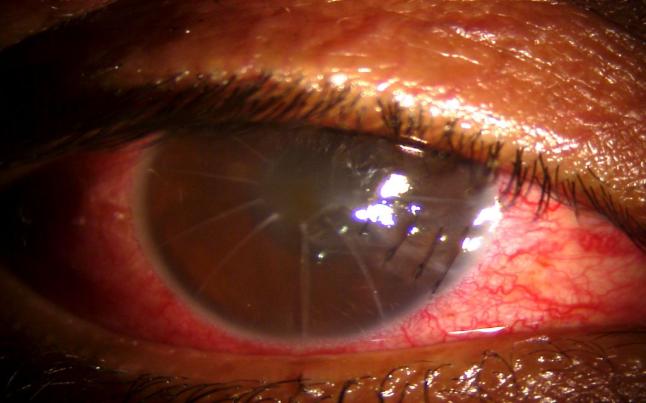
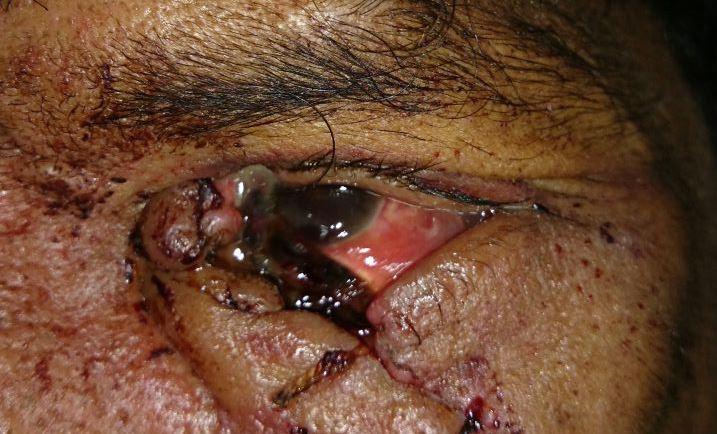

| Good visual outcome | 52 |
|---|---|
| Anterior segment | 48 |
| Posterior segment | 44 |
| Time of presentation (<48hrs) | 40 |
| Time of presentation (>48hrs) | 12 |
| Poor visual outcome | 51 |
| Anterior segment | 44 |
| Posterior segment | 48 |
| Time of presentation (<48hrs) | 30 |
| Time of presentation (>48hrs) | 21 |
| Grade A: | ≥ 20/40 |
|---|---|
| Grade B: | 20/50-20/100 |
| Grade C: | 19/100-5/200 |
| Grade D: | 4/200-Light Perception |
| Grade E: | No Light Perception |
Discussion
This prospective, hospital based study provides data on the current pattern of serious ocular injuries in patients admitted to a tertiary care center in the emergency department. Most of the patients who sought health care for ocular trauma were males (77.7%). This could be explained by the health seeking behavior of the population studied where males are given preferential treatment. Previous studies have highlighted this aspect citing increased vulnerability of male gender in being exposed to outdoor work activities in agriculture and industry [10, 11]. However, this was not borne out in our study, where home related injuries predominated. Children and young adults were commonest age group to be afflicted, because of their adventurous activities and treatment being sought more often compared to neglected elderly. Studies from both developed and developing worlds have confirmed this aspect of ocular trauma [1, 2, 3, 5, 21]. Restricted mobility of the elderly leading to inability in accessing medical facilities situated at distances could be another reason for this disproportionate statistic. A significant proportion of patients (42 of 103) had travelled from neighboring states to avail of adequate and economically viable treatment facilities. This reflects the large catchment area and adequate access to tertiary hospitals providing subsidized treatments. The high proportion of “serious” ocular trauma observed in this study at 79.6% could be due to weeding out of less serious cases treated at peripheral health care facilities. The study revealed that maximum injuries occurred at home and lack of basic safety precautions was the common denominator. This is at variance with previous studies reporting work related injuries to be more common [4, 22, 23]. These findings have implications for health and safety strategies in prevention of serious eye injuries. The currently emphasis on safe work environment has to be expanded to include home environment. Inculcating awareness of hazardous activities involving domestic tool and use of specific protective eye wear needs to be highlighted. Probably the magnitude of domestic ocular injuries is even higher and the reported statistics are just the tip of the iceberg. A significant number of injuries (13%) were festival related like bow and arrow injuries and fire cracker injury during Dussehra and Diwali. As most of these injuries occurred in children, it underscores lack of awareness among parents about hazards of leaving children unattended during these popular festivals of our country. Further government policies need to be directed towards increasing awareness among parents about health hazards of these festivals and implementing safe use of firecrackers and water pistols traditionally used to celebrate these festivals. The reporting time of majority (68%) of patients was within 48 hours of injury, highlighting increased awareness among people to seek early medical intervention for ocular trauma. This reflects success of mass awareness campaigns initiated for preventing avoidable blindness. Good visual outcome defined as final best corrected visual acuity greater than 6/60, could be attained in 52 cases, out of which 53% had anterior segment injury alone and 20% had concomitant retinal injury. The cutoff of 6/60 was taken keeping in mind the definition of blindness to be < 6/60 as per Indian NPCB guidelines [24]. Chi-square values without Yates correction equaled s 15.73 with one degree of freedom and two-tailed P value < 0.0001, make the association between anterior segment injury and visual outcome to be extremely significant. A determinant for good visual outcome was early presentation within 48 hours of injury, seen in 56% patients. Conversely poor outcome was associated with late presentation beyond 48 hours and was seen in 41.2% cases. Statistical test of Chi-square without Yates correction, equaled 3.87 with one degree of freedom found two-tailed P value to be 0.049, implying statistically significant correlation between early presentation and better visual prognosis. The statistical significance was diluted due to confounders like early endophthalmitis and auto evisceration which had nil visual prognoses. Ocular trauma in developing countries has not been studied extensively. This study in a developing country like ours underscores that trauma remains a significant cause of monocular vision loss in all age groups with a large proportion affecting younger patients thereby entailing increased lifetime of disability years. The need for adoption of safe behavior in home environment traditionally envisaged as safe and early intervention are other aspects highlighted by this study.
References
-
Parver LM (1986) Eye trauma: The neglected disorder. Arch Ophthalmol 104(10): 1452-1453.
-
De Juan EJ, Sternberg PJ, Michels RG (1983) Penetrating ocular injuries: Types of injuries and visual results. Ophthalmology 90(11): 1318-1322.
-
Thylefors B (1992) Epidemiological patterns of ocular trauma. Aust N Z J Ophthalmol 20(2): 95-98.
-
Soliman MM, Macky TA (2008) Pattern of ocular trauma in Egypt. Graefes Arch Clin Exp Ophthalmol 246(2): 205-212.
-
Khatry SK, Lewis AE, Schein OD, Thapa MD, Pradhan EK, et al. (2004) The epidemiology of ocular trauma in rural Nepal. Br J Ophthalmol 88(4): 456-460.
-
(2014) Indian Council of medical Research: collaborative study on blindness in India 1971-1974.
-
Schein OD, Hibberd PL, Shingleton BJ, Kunzweiler T, Frambach DA, et al. (1988) The spectrum and burden of ocular injury. Ophthalmology 95(3): 300-305.
-
Sternberg P, de Juan E, Michels RG, Auer C (1984) Multivariate analysis of prognostic factors in penetrating ocular injuries. Am J Ophthalmol 98(4): 467-472.
-
Esmaeli B, Elner SG, Schork A, Elner VM (1995) Visual outcome and ocular survival after penetrating trauma: A clinicopathologic study. Ophthalmology 102(3): 393-400.
-
Pieramici DJ, Mathew W, MacCumber MW, Humayun MU (1996) Open globe injury: Update on types of injuries and visual results. Ophthalmology 103(11): 1798–1803.
-
Rao LG, Ninan A, Rao KA (2010) Descriptive study on ocular survival, visual outcome and prognostic factors in open globe injuries. Indian J Ophthalmol 58(4): 321–323.
-
Gupta A, Srinivasan R, Babu KR, Setia S (2010) Comparison of the clinical presentation and visual outcome in open globe injuries in adults and children over 30 months. Eur J Ophthalmol 20: 590-595.
-
Shah M, Shah S, Khandekar R (2008) Ocular injuries and visual status before and after their management in the tribal areas of western India: A historical cohort study. Graefes Arch Clin Exp Ophthalmol 246(2): 191-197.
-
Rahman I, Maino A, Devadason D, Leatherbarrow B (2006) Open globe injuries: factors predictive of poor outcome. Eye 20(12): 1336-1341.
-
Barr CC (1983) Prognostic factors in corneoscleral laceration. Arch Ophthalmol 101(6): 919-924.
-
Pieramici DJ, Au Eong K, Sternberg PJ, Marsh MJ (2003) Prognostic significance of a system for classifying mechanical injuries of the eye (globe) in open globe injuries. J Trauma 54(4): 790-794.
-
Gilber CM, Soong HK, Hirst LW (1987) A two- year prospective study of penetrating ocular trauma at the Wilmer Ophthalmological Institute. Ann Ophthalmol 19(3): 104-106.
-
Brinton GS, Aaberg TM, Reeser FH, Topping TM, Abrams GW (1982) Surgical results in ocular trauma involving the posterior segment. Am J Ophthalmol 93(3): 271-278.
-
Kuhn F, Morris R, Witherspoon CD, Mester V (2004) The Birmingham Eye Trauma Terminology system (BETT). J Fr Ophtalmol 27(2): 206-210.
-
Kuhn F, Maisiak R, Mann L, Mester V, Morris R, et al. (2002) The ocular trauma score (OTS). Ophthalmol Clin North Am 15(2): 163-165.
-
Cao H, Li L, Zhang M (2012) Epidemiology of patients hospitalized for ocular trauma in the Chaoshan region of China, 2001-2010. PLoS One 7(10): e48377.
-
Danneberg AL, Parver LM, Brechner RJ, Khoo L (1992) Penetrating eye injuries in the work place. The national eye trauma system registry. Arch Ophthalmol 110(6): 843-848.
-
Canavan YM, O Flaherty MJ, Archer DB, Elwood JH (1980) A 10-year survey of eye injuries in Northern Ireland, 1967-76. Br J Ophthalmol 64(8): 618-625.
-
Ministry of Social Justice and Empowerment. Guidelines for other disabilities. Notification dated 1st June, 2001. The Gazette of India extraordinary. Part 1. Section 1. No 154.
- Screening of Hospital Staff During World Glaucoma Week in a Tertiary Eye Care Centre
- Angioid Streaks with Macular Neovascularization: Clinical Insights from Two Cases
- Giant Kissing Naevus: An Oculoplastic Challenge
- Why Freedom of Vision Should Not Cost the Freedom of Feeling - LASIK in the Climate of Change
- Asymmetric Optic Nerve with Small Disc and Large Cup: A Rare and Challenging Case of Unilateral Optic Nerve Hypoplasia
- Large Angle Exotropia in a Child: A Case Report