
Assessment of the Value of Astigmatism Generated by Two Models of Spherical Multifocal Lenses: Panoptix® by Alcon® and Acunex® Variomax® by Teleon® using the Toric Alignment Check Module of the Itrace Analyser
Purpose: Assessment of the value of astigmatism generated by spherical multifocal lenses. Methods: Patients (39 eyes) after implantation of two models of spherical lenses with a different multifocal structure, i.e. PanOptix® by Alcon® and Acunex®VARIOMAX® by Teleon® were examined using the iTrace analyser, the Toric Alignment Check module. Results: In each case, patients undergoing implantation of spherical multifocal lenses were diagnosed with astigmatism generated by these lenses. Astigmatism ranged from 0.15 Dcyl to 1.82 Dcyl and differed in the value and axis from corneal astigmatism. Conclusion: Spherical multifocal lenses generate astigmatism, independently of the structure of the lens. The Toric Alignment Check module of the iTrace analyser should not be used to analyse visual defects in eyes with spherical lenses implanted due to the possibility of misinterpretation of the obtained results.
Introduction
Astigmatism of the optical system of the eye is mainly generated by its two elements, i.e. the cornea and the lens [1]. In the case of surgery to remove the lens due to opacification or in the process of refractive exchange, only corneal astigmatism can be corrected as a permanent element of the optical system. If you want to estimate the actual value of corneal astigmatism, its anterior and posterior surfaces should be considered. According to most of the available studies, the value of posterior corneal astigmatism does not exceed the value of 0.5-0.75 Dcyl. Posterior corneal astigmatism can correct with the rule astigmatism observed in younger patients due to its negative value. Conversely, its presence may increase the value of astigmatism in the elderly, if the astigmatism axis is against the rule [2]. If the value of anterior corneal astigmatism is not greater than 1.0-1.25 Dcyl, it is likely that it may be partially corrected by the posterior surface of the cornea. It has been adopted as a rule that postoperative aphakia is corrected with the use of a spherical lens when the value of total corneal astigmatism does not exceed 0.75 Dcyl.
Internal astigmatism of the optical system mainly comes from the lens. Its value changes with increasing lens opacification. The value and axis of lenticular astigmatism is often different from astigmatism generated by the cornea. As already mentioned, lenticular astigmatism is neglected in the calculation of the intraocular lens due to its intraoperative removal. Total corneal astigmatism reaching values above 0.75 Dcyl is corrected intraoperatively, among others, with the use of toric intraocular lenses. Uncorrected astigmatism mainly affects vision to far and intermediate distances. This is of particular importance in patients after implantation of multifocal lenses, in which the very structure of the lens causes some defects in the quality of postoperative vision [3]. Hayashi, et al. noted a significant decrease in visual acuity to far distances in the case of experimental implantation of a toric lens in front of the eye with a power greater than 1.0 Dcyl, which is synonymous with the need to correct such astigmatism [4].
Hasegawa et al., after analysing over 1,500 eyes, found that despite the use of toric intraocular lenses, which corrects corneal astigmatism, the patients still deal with residual astigmatism after the procedure. Low values of residual astigmatism and with the rule astigmatism have a smaller influence on visual acuity to far distances, assessed without correction, in relation to eyes with astigmatism against the rule and oblique astigmatism [5]. In the next study (involving over 12,800 eyes), the value of postoperative residual astigmatism was analyzed considering the preoperative value of the corrected spherical defect and eye astigmatism. It was found that lower values of corrected astigmatism were accompanied by smaller, residual postoperative astigmatism. The value of overcorrected astigmatism has increased with the value of corrected astigmatism. Larger differences between the intended astigmatism correction and the obtained correction were found in the group with lower, preoperative astigmatism values. In the study group, the effect of overcorrection in the range of cylindrical values was much higher than overcorrection in the range of spherical values, which indicates greater difficulties in the perfect selection of a toric lens [6]. In the case of toric lens implantation and the lack of the expected good postoperative visual acuity, one of the methods to assess its position in relation to the axis of corneal astigmatism is the examination using the iTrace analyser, the Toric Alignment Check (TAC) module [7]. The TAC module shows with high precision the values and axis of corneal astigmatism, axis, and cylindrical power of the implanted toric lens (Toric lens Power & Axis®) as well as the value and axis of residual, uncorrected astigmatism. Most importantly, when both axes do not coincide (improper positioning of the toric lens in the eye), the result of the values by which the lens should be shifted and the value by which the refraction of the optical system changes is also shown in Figure 1.
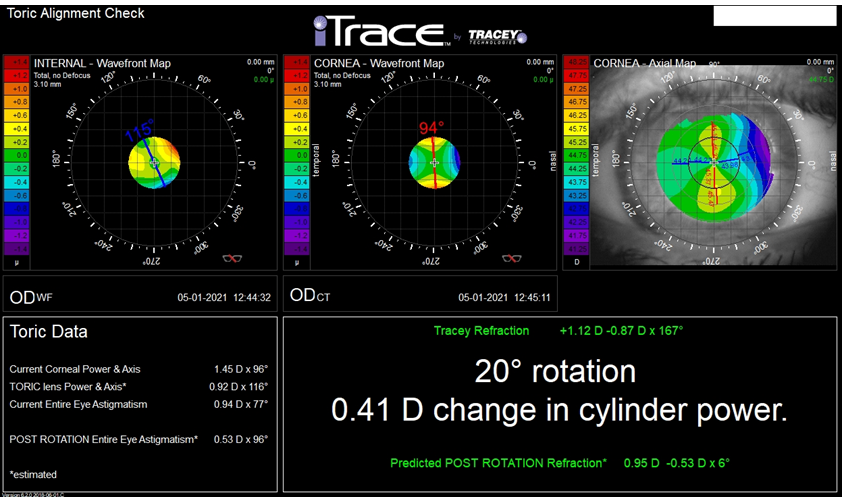
Figure1: The result of the eye examination after toric lens implantation using the Toric Alignment Check module. The result shows the axes of astigmatism generated by the cornea and the implanted toric lens, as well as the value of uncorrected residual astigmatism. It also shows how the astigmatism value can change after the repositioning of the artificial toric lens.
When analyzing the above case of a patient who did not achieve the expected values of postoperative visual acuity to far distances after implantation of the spherical multifocal lens, the diagnosis of possible causes considered, among others, the presence of higher-order aberration values generated in the optical system of the eye. Because of the presence of internal astigmatism, visible in the refractometry examination, which differed from the value generated by the anterior surface of the cornea, the eye was examined using the TAC module of the iTrace analyser. The result was surprising and would indicate a company error in the provided lens. There was a suspicion that instead of a spherical lens, the patient was unknowingly implanted a toric lens. The examination result did not differ from that obtained after the examination in the eye after a toric lens implantation Figure 2.
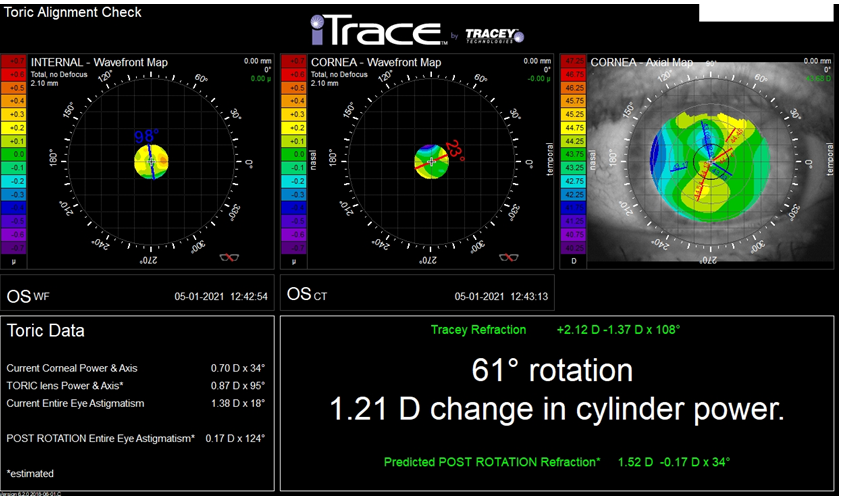
Due to the above result, diagnostics with the use of the TAC module was performed in another three patients who had a spherical lens implanted. As the obtained results confirmed certain assumptions, the examination with the use of this module included a larger group of patients who had two different models of spherical multifocal lenses implanted.
Objective
Retrospective analysis of the obtained results in terms of the value and axis of postoperative astigmatism are generated by intraocular lenses. The study includes patients after implantation of two different models of multifocal spherical lenses, i.e. PanOptix® by Alcon® (PanOptix) and Acunex®VARIOMAX® by Teleon® (AcunexVariomax). The iTrace analyser, the Toric Alignment Check module, was used to assess postoperative astigmatism generated by lenses.
The values of toric lens Power & Axis® were analysed. Examinations were performed one month after the removal of the patient’s natural lens, because of diagnosed cataract, or in the process of refractive lens exchange.
Materials and Methods
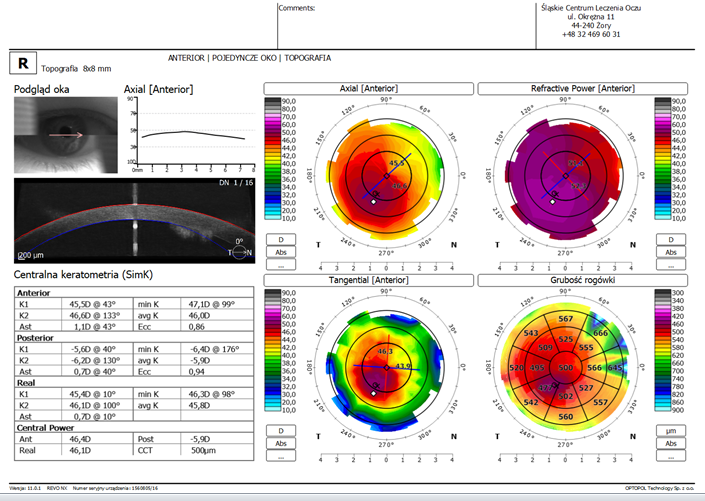
Only people diagnosed with complete corneal astigmatism not greater than 0.75 Dcyl were included in the study. In one person (eye), due to the astigmatism value exceeding 1.5 Dcyl, a combined procedure was performed including cataract removal and a Limbal Relaxing Incision relaxation procedure which allows reducing corneal astigmatism. This group also included patients, who were diagnosed with anterior corneal astigmatism ranging from 1.0 to 1.25 Dcyl, but reduced by posterior surface of the cornea to the values ≤ 0.75 Dcyl Figure 3.
Each patient was implanted with a spherical lens. The choice of two quite different lenses to be implanted considered the differences in their structure. An analysis should be performed to answer the question whether the structure itself had an impact on the value of astigmatism generated by the lens. The PanOptix lens has a concentric, diffractive structure with an addition for vision to near distances at the level of + 3.5 Dsph [8].
AcunexVarioMax is an asymmetric lens that uses EDOF technology, with an addition for vision to near distances at the level of + 3.0 Dsph. Both lenses are made of a hydrophobic material. The implantation was performed unilaterally or bilaterally. Routine preoperative examinations included corneal assessment for the presence of higher order aberration (iTrace), endothelial cell count, angles kappa, alpha and pupil size measurement, macular condition assessment, eye dominance, intraocular pressure measurement and visual acuity measured to far and near distances. The examination with the use of the TAC module and the iTrace analyser was performed before and one month after surgery. The examination was repeated three times at intervals of several minutes. Statistical analysis included the assessment of the axis and value of astigmatism generated by intraocular lenses (Toric lens Power & Axis®) and its possible dependence on the structure of the eye and the scope of the preoperative defect.
Results
Information on the number of people (eyes) participating in the study, gender, type of preoperative eye defect, values of mean pupil size, angles kappa and alpha, eye dominance, number of eyes where cataract and refractive lens exchange were done, is presented in Table 1.
| Panoptix (eyes) | Acunex (eyes) | |||
|---|---|---|---|---|
| Age | Total number of eyes | 18 | 21 | |
| Age | male | 5 | 12 | |
| Age | female | 13 | 9 | |
| Age | Min. | 48 | 45 | |
| Age | average | 62 | 62 | |
| Age | Max. | 75 | 81 | |
| Age | Unilateral implantation | 6 | 5 | |
| Age | Bilateral implantation | 6 | 8 | |
| Age | cataract | 15 | 10 | |
| Age | Refractive lens exchange | 3 | 11 | |
| Age | Hyperopia before surgery | 6 | 16 | |
| Age | Myopia before surgery | 11 | 5 | |
| Age | Angle kappa before surgery [mm] | Astigmatism | 1 | 0 |
| Dominant eye | Angle kappa before surgery [mm] | 8 | 12 | |
| Non dominant eye | Angle kappa before surgery [mm] | 10 | 9 | |
| Angle alpha before surgery [mm] | Min. | 0.08 | 0.14 | |
| Angle alpha before surgery [mm] | average | 0.263 | 0.416 | |
| Angle alpha before surgery [mm] | Max. | 0.565 | 0.644 | |
| Angle alpha before surgery [mm] | Min. | 0.024 | 0.112 | |
| Angle alpha before surgery [mm] | average | 0.335 | 0.458 | |
| Angle alpha before surgery [mm] | Max. | 0.694 | 0.688 | |
| Pupil size before surgery [mm] | Min. | 3 | 2.1 | |
| Pupil size before surgery [mm] | Average | 4.1 | 4.5 | |
| Pupil size before surgery [mm] | Max. | 5.3 | 6.5 |
Table 1: Information on the number of people (eyes) participating in the study.
In total, 39 spherical lenses were implanted. The PanOptix model was implanted in 18 eyes, including 8 dominant eyes. The AcunexVarioMax model was implanted in 21 eyes, including 12 dominant eyes. The preoperative eye defect ranged from -17.25 Dsph to + 4.0 Dsph. Information that a toric lens had been implanted, together with an indication of the value and the axis (Toric lens Power & Axis® value) of astigmatism was found in each case implanted with a spherical lens. Astigmatism values ranged from 0.15 Dcyl to 1.82 Dcyl. Values of preoperative, corneal-generated astigmatism and postoperative astigmatism obtained with the use of the above module, including also number of implanted lenses are included in Table 2.
| Astigmatism-source | Astigmatism (dioptres) | Number of eyes and name of implanted lens | Number of eyes and name of implanted lens |
|---|---|---|---|
| Preoperative, generated by cornea | PanOptix | Acunex VARIOMAX | |
| From 0 to 0.5 | 10 | 8 | |
| From 0.75 to 1.75 | 8 | 13 | |
| Smallest value | 0.25 | 0 | |
| Postoperative, generated by lens | From 0.15 to 0.5 | 8 | 4 |
| (TORIC lens Power & Axis®) | From 0.5 to 1.82 | 10 | 17 |
| Smallest value | 0.15 | 0.27 | |
| Highest value | 1.82 | 1.78 |
Table 2: Include values of preoperative, corneal-generated astigmatism and postoperative astigmatism like also number of implante
The correlations between postoperative astigmatism, generated by the artificial lens (Toric lens Power & Axis®) and the values obtained in the preoperative period, includes: corneal astigmatism, preoperative refractive error, angles kappa and alpha, pupil size, visual acuity too far and near distances were statistically analysed. Additionally, the values obtained in the group of patients who underwent PanOptix and AcunexVARIOMAX lens implantation were compared, noting the difference in the lens structure. Another comparison concerned the values obtained in the dominant eyes in relation to the non-dominant eyes, as well as the axes of astigmatism generated by the cornea and postoperative astigmatism obtained from the inside of the eye. When analysing the statistical research, the correlation coefficient was considered. Then it was checked whether this coefficient is statistically significant. No statistically significant correlations were observed between the above- mentioned values and the values of astigmatism generated by the lens (Toric lens Power & Axis®).
There were no statistical differences in the obtained astigmatism values between the group implanted with the AcunexVARIOMAX model and the group after PanOptix lens implantation.
The axis of astigmatism generated before and after surgery by the cornea in no case coincided with the axis of postoperative lenticular astigmatism. The values of astigmatism generated by the lens and the number of eyes, including the type of implanted lens and the percentage of astigmatism, are presented in the form of Figure 4a (AcunexVARIOMAX) and Figure 4b (PanOptix).
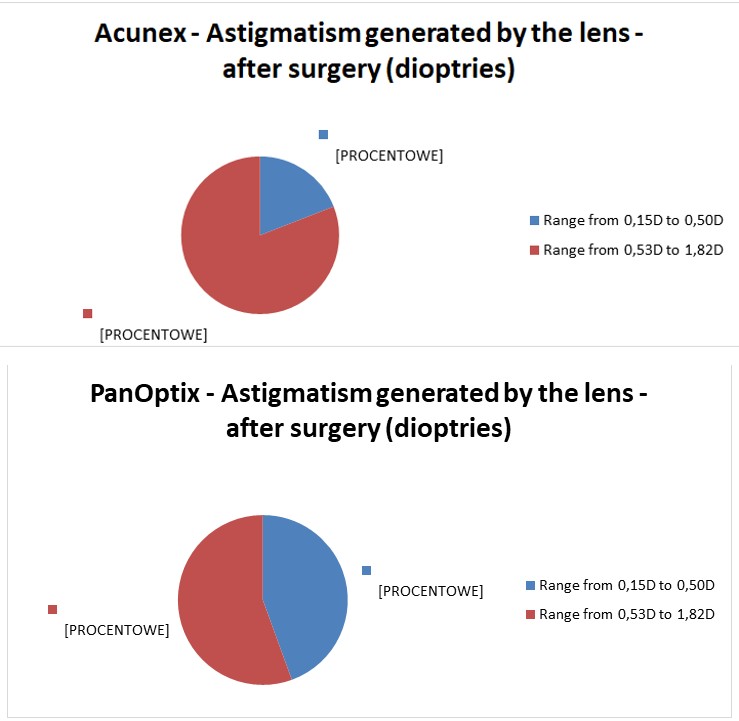
Figure 4a: Values of astigmatism generated by the spherical multifocal lens AcunexVARIOMAX and the number of eyes, including the type of implanted lens and the percentage of astigmatism.
Figure 4b: Values of astigmatism generated by the spherical multifocal lens PanOptix and the number of eyes, including the type of implanted lens and the percentage of astigmatism.
In the group of patients implanted with the Acunex VARIOMAX lens, the number of eyes with astigmatism over 0.5 dioptres exceeds 80%. In the case of the PanOptix lens, values above 0.5 Dcyl were found in 56% of cases. An average value of astigmatism generated by the cornea preoperatively and postoperatively, generated by the artificial lens (Toric lens Power & Axis®) in the groups who underwent AcunexVARIOMAX and PenOptix lens implantation, including the number of dominant and non-dominant eyes are presented, below, in Table 3.
| Panoptix | Corneal Astigmatism (mean value) [D] | Lenticular astigmatism, postoperative, mean value [D] | |
|---|---|---|---|
| Number of eyes (whole group) | 18 | 0.67 | 0.75 |
| Dominant eye | 8 | 0.66 | 0.92 |
| Non-dominant eye | 10 | 0.68 | 0.61 |
| Acunex | |||
| Number of eyes (whole group) | 21 | 0.68 | 0.74 |
| Dominant eye | 12 | 0.5 | 0.74 |
| Non-dominant eye | 9 | 0.92 | 0.75 |
Table 3: An average value of astigmatism generated by the cornea preoperatively and postoperatively.
The number of eyes and the values of preoperative corneal astigmatism and postoperative lenticular astigmatism, including also the type of the implanted lens are presented in the form of Figure 5a (preoperative corneal astigmatism) and Figure 5b (postoperative lenticular astigmatism).
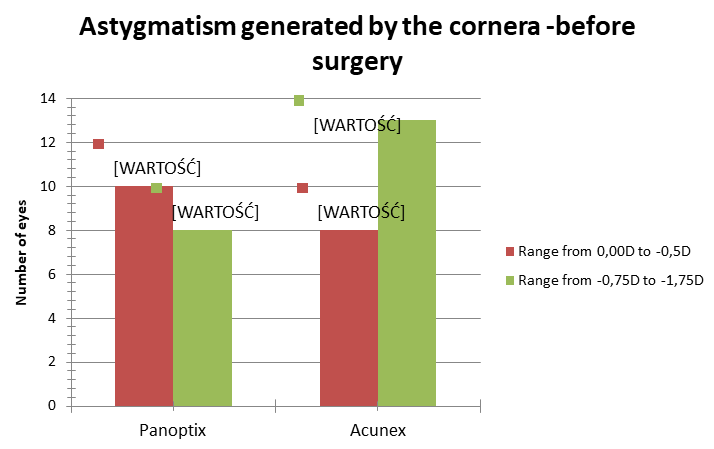
Figure 5a: The number of eyes and the values of preoperative corneal astigmatism also including the type of the implanted lens.
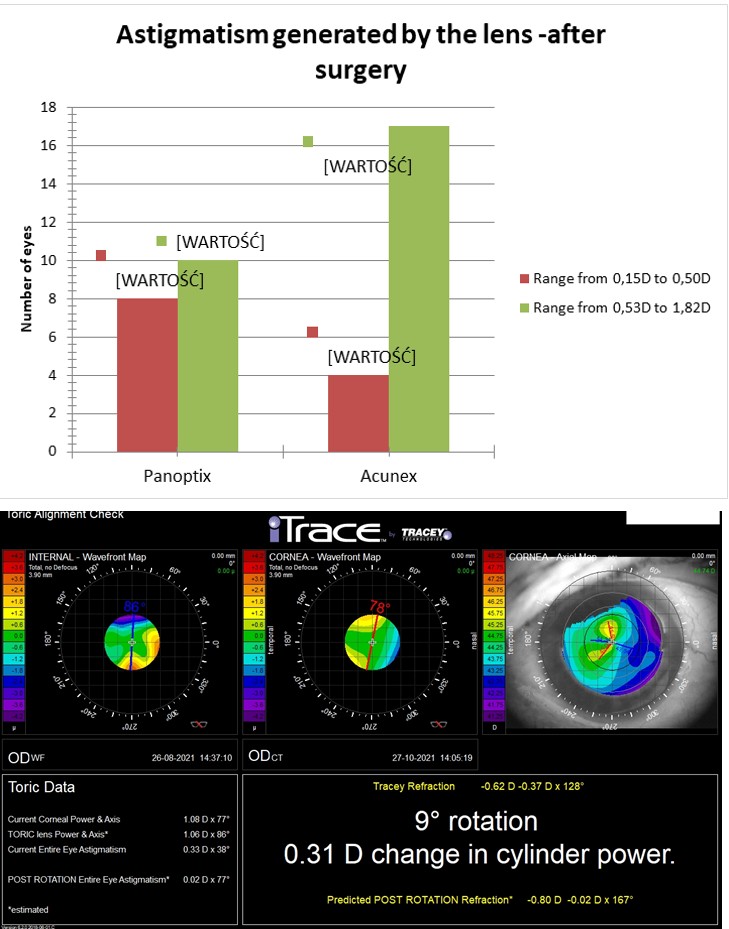
Figure 5b: The number of eyes and the values postoperative lenticular astigmatism, also including the type of the implanted lens.
In the group who underwent Acunex VARIOMAX lens implantation, a larger number of eyes with lenticular astigmatism greater than 0.5 Dcyl draws attention. Presented below is the exemplary result of the examination of the patient who underwent implantation of Acunex VARIOMAX, performed using the TAC module. Woman, age 73, diagnosed with cataract. Preoperative corneal astigmatism: RE: 0.25 Dcyl 126°, angle alpha RE: 0.112, angle kappa RE: 0.140, pupil size RE: 3.1 mm. Postoperative result of Toric lens Power & Axis ® = 1.06 Dcyl x 86º suggests an implantation of toric lens Figure 6.
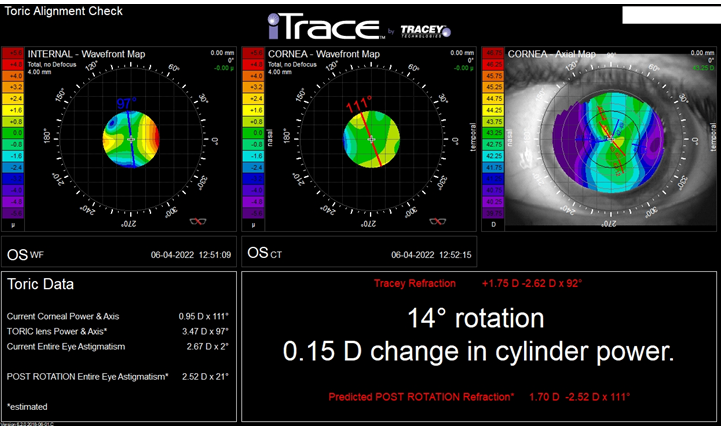
For comparison, the examination result obtained with the same module, but after implantation of a toric lens is presented. The value of the Toric lens Power & Axis® is
3,47Dycyl 97°. This result, apart from showing different values, does not differ in any way from that obtained after implanting a spherical lens Figure 7.
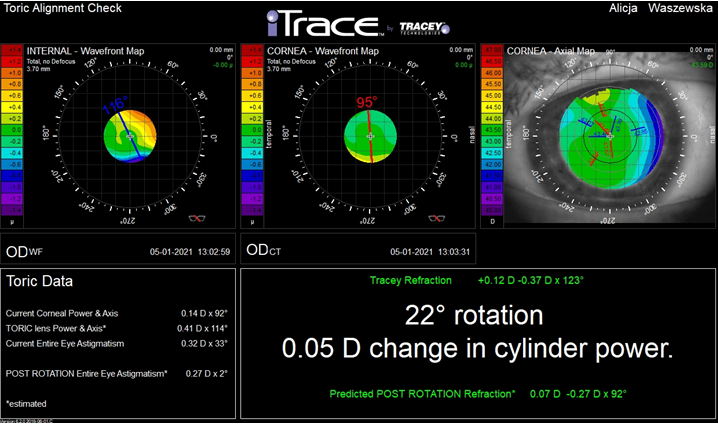
Another example concerns the unilateral implantation of the PanOptix spherical lens. The obtained result also does not differ in any way from the above examples, except for the values of the parameters shown. The obtained value for the Power & Axis® toric lens, although very small, may still suggest the presence of a toric lens in the eye Figure 8.
Discussion
Implantation of a spherical intraocular lens assumes the elimination of astigmatism generated by the patient’s natural lens.
Therefore, diagnostic devices (e.g. autorefractometer) assessing the size of the eye defect, including the value of astigmatism, should only show the presence of corneal astigmatism, if such was generated. Taking into account not only my own experiences, but the presence of astigmatism also generated by both, the cornea and the spherical artificial lens is nothing new. Virtually every examination using an autorefractometer shows the presence of internal astigmatism, the value and the axis of which often differ from the values of astigmatism generated by the cornea of the eye.
The presented results of this study show that every implanted spherical lens generated astigmatism. The presence of astigmatism was clearly confirmed using the Toric Alignment Check module. In the absence of knowledge about the type of the lens implanted into the eye (toric or spherical), this examination could mislead the physician as to the alleged cause of postoperative visual impairment. Another important result of this study is the statement that the value of the generated astigmatism is not unequivocally dependent on the structure of the artificial intraocular lens. The axis and value of astigmatism generated by the lens virtually never coincided with the axis of corneal astigmatism. Although the value of astigmatism generated by the lenses does not exceed 1.0 Dcyl, there is a noticeable greater number of eyes in the AcunexVARIOMAX group, where the astigmatism value exceeds 0.5 Dcyl. On the other hand, the PanOptix group had a higher mean value of lenticular astigmatism compared to the AcunexVARIOMAX group.
So, what causes a spherical lens to induce astigmatism? Analyzing the obtained results, no statistically significant correlations were found between astigmatism induced by the artificial lens and its structure. Therefore, among others, the complexity of the structure of the intraocular lens itself, the presence of a slightly wrinkled posterior bag, and perhaps all the parameters assessed in this study can be considered as putative causes of the appearance of internal astigmatism.
Conclusion
In the group of patients who underwent implantation of spherical multifocal lenses an examination using the iTrace analyser, Toric lens Power & Axis® module, unequivocally showed the presence of astigmatism generated by those lenses. Both, the value and the axis of astigmatism generated by the lens differed from those generated by the cornea. Therefore, the Toric Check Alignment module available in the iTrace analyser should not be used in the diagnosis of visual impairments after implantation of spherical lenses. The different structure of multifocal lenses, i.e. concentric, typical for the PanOptix (Alcon) lens and asymmetrical used in the AcunexVARIOMAX (Teleon) lens, did not show statistically significant differences in the value of lenticular astigmatism generated.
References
-
Whitney S (2021) Astigmatism. Webmd.
-
Braga-Mele R, Christakis PG, Christakis TJ (2014) Review of Posterior Corneal Astigmatism. CRSTEurope.
-
Hayashi K, Hayashi H, Nakao F, Hayashi F (2000) Influence of astigmatism on multifocal and monofocal intraocular lenses. Am J Ophthalmol 130(4): 477-482.
-
Hayashi K, Manabe S, Yoshida M, Hayashi H (2010) Effect of astigmatism on visual acuity in eyes with a diffractive multifocal intraocular lens. J Cataract Refract Surg 36(8):1323-1329.
-
Hasegawa Y, Honbo M, Miyata K, Oshika T (2022) Type of residual astigmatism and uncorrected visual acuity in pseudophakic eyes. Sci Rep 12(1): 1225.
-
Berdahl JP, Hardten DR, Kramer BA, Potvin R (2017) The Effect of Lens Sphere and Cylinder Power on Residual Astigmatism and Its Resolution After Toric Intraocular Lens Implantation. J Refract Surg 33(3): 157-162.
-
Yongyi Niu, Hong Liang Lin, Yong Jie Qin, Cheng Yang, Yanlei Chen, et al. (2021) Three-Random-Point Marking Method for Toric Intraocular Lens Alignment Using the iTrace Aberrometer. Journal of Ophthalmology 2021: 1-4.
-
Cywinski A, Bloch D, Lubczyk A (2021) Visual Acuity after AcrySoft®IQ PanOptix®/PanOptix® TORIC Lens Implantation in Relation to Preoperative Pupil Size Values, Angles Alpha and Kappa Examined using the iTrace Analyzer. Open Access Journal of Ophthalmology Vol 6(2): 000229.
- Screening of Hospital Staff During World Glaucoma Week in a Tertiary Eye Care Centre
- Angioid Streaks with Macular Neovascularization: Clinical Insights from Two Cases
- Giant Kissing Naevus: An Oculoplastic Challenge
- Why Freedom of Vision Should Not Cost the Freedom of Feeling - LASIK in the Climate of Change
- Asymmetric Optic Nerve with Small Disc and Large Cup: A Rare and Challenging Case of Unilateral Optic Nerve Hypoplasia
- Large Angle Exotropia in a Child: A Case Report