
Perceptions of a Drug: An Investigation into Understanding the Current Role and Future Integration of Cannabidiol (CBD) into Canine Veterinary Care
This research aims to give insight into to the opinions, experiences, and ideas of stakeholders of the veterinary industry regarding current use and integration of cannabidiol (CBD) into canine veterinary care in the UK. Including identifying and evaluating indications, demand and barriers from the perspective of stakeholders of the industry. Semi-structured interviews were conducted with 3 veterinary surgeons, 2 veterinary physiotherapists and 4 owner participants. Grounded theory was used in combination with thematic analysis to identify trends. Results suggested a positive current use of CBD for canines including first-hand experience by all owners. All experiences were positive with no adverse reactions reported. Identified barriers included stigma, lack of research, and issues with product standardization and dosage. Demand for CBD was high by all owners and interest was indicated by professionals. However, professionals expressed reservations more prevalently with the unknown pharmacokinetics of CBD, whereas owners expressed confidence and lower perceived risk. This research is a preliminary investigation into canine focused veterinary CBD use in the UK. Veterinary consumer opinion is also explored where there is currently little existing.
Introduction
A Brief History
CBD is extracted for the Cannabis plant. The past decade has seen a rapid expanse of the global industry and predicts the market to reach USD 13.4 billion by 2028, expanding at a CAGR of 21.2% from 2021 to 2028 [1]. Changing attitudes and awareness of health benefits are a key driving force of this. In the UK, demand for cannabis has recently sored resulting in changes to government laws and regulations surrounding the accessibility of products for UK patients based on a growth of evidence-based research [2]. Confusion surrounding CBD use and its classification as nutraceutical, supplement or medicine, is clear appraisal of human use, with apparent exacerbation in the veterinary field.
The cannabis plant has a long history of criminalization through the misuse of Drugs Act, 1971 [3]. This is largely due CBD’s counterpart derivative of cannabis being THC, which is associated with the plant’s psychoactive effects. Similarities of the ECS of mammals have since been recognized and explored in including canines [4, 5]. Similarities in the metabolism of CBD are also recognized [6] with further canine studies recently emerging.
The ECS can be found in almost all animals excluding Insecta and Phyla Protozoa [5]. It is comprised of two key cannabinoid receptors; CB1, being located mainly in the brain and central nervous system (CNS) and neural tissues, and CB2, more commonly found in non-neural tissues throughout the body including immune cells [4, 7]. These receptors bind to naturally occurring endogenous ligands known as endocannabinoids. Those first identified being Anandamide (AEA) and 2-arachidonoyl glycerol (2-AG) [8]. These “on demand” substances exist as common spare molecular parts until CB1 receptors or CB2 receptors increase in the body [9]. The ECS can also be affected by phytocannabinoids derived from the cannabis plant, such as CBD and THC. Either directly by binding to CB¬1 and CB2 receptors or indirectly. CBD is believed to have multiple and complex pathways equating to its effects, including inhibiting enzyme pathways that metabolize AEA, thereby increasing its availability [9, 10, 11].
Current Canine CBD Research
Current research suggests large involvement of cannabinoid receptors in regulating the immune mediated response including in dogs [6, 12, 13, 14]. This includes interaction of endogenous ligands with numerous cells of the immune system as summarized in a review by Silver [5]. Activation of CB¬2 is known to diminish the release of proinflammatory factors that enhance the secretion of anti- inflammatory cytokines [14, 15, 16]. In 2017 Freundt-Revilla et al. [4] studied the spatial distribution of CB1 receptors in the CNS and peripheral nervous system (PNS) and were the first to confirm extensive presence in dogs. Further investigation of canine steroid-responsive Meningitis-arthritis (SRMA) and Intraspinal spirocercosis (IS) using immunohistochemistry also identified expression of CB2 receptors. Freundt-Revilla, et al. [14] results of Cerebrospinal fluid (CSF) and serum analysis additionally support the idea that endocannabinoids receptors are involved in immunomodulation, neuroprotection and control of inflammation in the CNS. Significant increase in CB2 expression was found, where in healthy dogs there was none before. In all dogs with SRMA there were consistent findings of CB2 expression on infiltrating leukocytes. In IS dogs, strong expressing CB2 leucocytes were found adjacent to the parasite or parasite tracts and glial cells stained moderate to strongly positive for CB2 receptors near the lesions. Whilst glial cells in the white and grey matter distant from the lesion expressed low CB2 immunoreactivity.
Studies into the potential for CBD use in treating canine conditions are limited. Dogs with osteoarthritis were perceived to be more comfortable and mobile with decreased pain scores following oral CBD administration compared those without [6, 17]. Carry over effect was also found with significant CBD effect 14 days after dosage ceased [6]. Idiopathic epileptic dogs treated daily with CBD were found to have reduced seizure frequency (median of 33%) over 12 weeks [18]. A significant negative correlation was found between the percentage change in frequency of seizures and the CBD concentration in plasma samples, suggesting the increased levels are linked to this reduction. Aggressive behaviors of shelter dogs towards humans decreased significantly over time in dogs treated with CBD according to statistical analysis, however other stress indicative behaviors such as stereotypes, didn’t reduce [19].
Knowledge of dosage method, efficacy and safety is deficit. Some suggest the bioavailable half-life of CBD in oil carrier form to be 4.2 hours [17] or 1hr from maximum concentration being at 1.4 hrs. on fasted dogs [20]. This would suggest a limit of CBD affect, which could be due to limiting endogenous factors [11, 21]. Importance of dosage for efficacy is clear. Pain scores and mobility in dogs with OA were not significantly improved when dosed with either placebo or 20-mg naked CBD, in contrast to significant effect observed in those groups receiving 50-mg/day naked CBD [6]. Bioavailability has also been suggested to be improved by liposomal packaging of oral CBD compared to the same naked CBD [6] and greater plasma concentrations when compared with CBD infused transdermal cream and oral microencapsulated oil beads [22]. In mice topical application of CBD was found to reverse the clinically induced odema and inflammation by 80%. Supporting uptake of CBD through the dermis. Immunoreactivity has been found showing homogenous distribution of both CB1 and CB2 receptors in all epidermal layers consistently among canine samples [12]. Quantification and further studies are needed.
Concerns for Canine CBD Use
Consideration should be given to the unknown potential interactions of the endocannabinoid system including the additional 144 known cannabinoids and at least 540 phytochemicals [2] as well as the possibility of further receptors aside from CB1 and CB2 being involved [16]. Therefore, alongside the consideration of CBD concentration through extraction, is that exact product composition extracted is likely unique to the plant. This raises concerns for lacking product standardization and therefore effect variation. Cannabis plant extracts also include THC which pose risk of causing static ataxia in dogs due to distribution of receptors through the motor cortex [5, 9]. Other signs of poisoning include vomiting, bradycardia, ptyalism, hyperesthesia with morbidity rate estimated high, yet mortality in dogs is low [23]. Quantification of prevalence has not yet been determined in the UK. CBD has been perceived to be well tolerated by dogs [17, 18, 19, 24]. More understanding of tolerance and possible intoxication is needed, and no studies exist for knowledge of long-term dosage or effects. Elevated Alkaline phosphate (ALP) enzyme levels from serum.
The P450 pathway, by which CBD is metabolized [5], is a concern for potential drug interactions and undetermined consequences on the liver. This is a regular measure of assessment with elevated levels of ALP activity recorded [24]. Other studies report no significant alterations to ALP or alanine aminotransferase values [6, 20]. A lack of long- term studies also means it is not known how stable CBD concentrations are over time, which is important for dosing.
Market Demands
There is a constant demand for the best options to be available and responsibility under the Animal Welfare Act 2006, s 9(2) (e) [25]. Indications for improved treatment options are present in the number of reported adverse effects of pharmaceuticals in animals [26]. As well as conditions such as epilepsy seizure control by conventional pharmaceuticals is considered unsatisfactory [27]. NSAIDs also have a considerable potential to induce adverse reactions in dogs [28]. NSAID use includes concerns of gastric lesions with long term use [29]. This risk is a concern for both veterinary surgeons (VS) and owners of dogs with OA in the UK according to qualitative data collected by focus groups and interviews respectively [30]. Independent searching for solutions to pet issues has also been found [31]. Very few studies have explored owner perceptions regarding canine veterinary care in the UK. None have explored their opinion regarding CBD.
As of 2019 CBD has been classified as a novel food, regulated under the FSA. This has permitted CBD products to be available for purchase. The CBD market in the UK has since seen a considerable and sudden rise, despite concerns for a lack of a regulatory standard for CBD including quality testing methodology [32]. The growth shown in the UK medical cannabis market indicates increasing demand [33]. Although for human use, this indicates changing attitudes and demand, however this is not specifically the CBD market. Furthermore, through UK survey, majority respondents agreed they would consider using CBD product, with a negative correlation with increasing age [34].
Rapid classification changes CBD create potential for confusion, including perception as a pet nutraceutical. The Europe Pet Food Nutraceuticals Market is predicted to have a CAGR of 4.3% in the period of 2016 to 2026, indicating demand [35]. Additionally, a survey at the Veterinary college of the University of Georgia (USA) found that VS’s are familiar with nutraceuticals and that they regularly recommend nutraceuticals to clients [36]. This has limited generalizability to the UK. Demand for “natural” products is indicated by global growth in the natural and organic pet food market [37]. No research exists for indicating UK or pet owner preferences for the value of natural products, although this is indicated in US consumers [38].
America and Canada have been subject to earlier changes in legislation permitting CBD use than the UK regarding the regulation of CBD. Clinical experience of CBD use for dogs in America and Canada has been explored [39, 40]. This is indicative of the integration of CBD into veterinary practice in the US following changes to legislation. However, currently no similar data exists for the UK in line with UK legislation and generalizability of predicting changing of attitudes towards CBD in the UK is limited due to cultural differences.
The VMD considers that veterinary products containing CBD are veterinary medicines and should be regulated as such according to the veterinary medicinal products directive [41]. This means that they should only be given to canines under prescription from a veterinary surgeon following the prescribing cascade, administration outside of this is an offence under The Veterinary Medicines Regulations 2013 [42]. However, current integration of CBD into the pet market is indicated, including CBD containing dog treats, launched into the UK market [43]. This demonstrates targeted selling of CBD for canine use in the UK.
Method and Materials
Semi structured interviews were chosen with the aim of understanding reasoning behind responses [44]. Sampling method was purposive with a mixture of convenience and snowball. The target population were stakeholders of the veterinary industry. Owners were sourced via social media from the private Facebook group Herbal Health Pets UK/EU [45]. Email was used to reach out to participants. Interviews were conducted via video call over Microsoft teams, chosen based on accommodating Covid-19 restrictions. No time limit was enforced for validity. Iterative analysis was used to continually improve interview technique. Grounded theory was used to identify emerging themes subjectively from answers and adapt the lines of enquiry through areas of interviewee led focus and interest according to methods discussed by Charmaz [46]. Interviews were recorded and transcribed. Manual coding was conducted using NVIVO software. Codes were based on thematic analysis technique achieved through familiarization with the data, as well as text search and word frequency via NVIVO software. Ethical approval was granted by the research ethics review committee at Harper Adams University, prior to conducting interviews.
Results and Discussion
Current experiences and opinions of stakeholders towards CBD and reasoning for this Interview took a mean time of 48 minutes with a range of 28 minutes to 68 minutes.
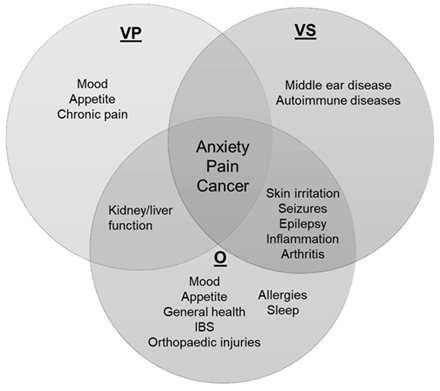
The sample included four O’s, three VS’s and two VP’s. A total of 7 dogs were recorded as first-hand canine CBD experiences, 2 of which were from veterinary professionals. Only one VS interviewed had prescribed CBD. A total of 10 dogs of second-hand experiences were recorded 6 of which were recorded by veterinary professionals. 3 of which were by VS2. Of note is the use for liver function, as this in a concern indicated by research into ALP levels [18, 22].
| Owners (O) | Veterinary surgeons (VS) | Veterinary Physio therapists (VP) | |||||||
|---|---|---|---|---|---|---|---|---|---|
| Participant | O1 | O2 | O3 | O4 | VS1 | VS2 | VS3 | VP1 | VP2 |
| First-hand uses in dogs | Anxiety (firework related), Pain and mobility (osteoarthritic), Cancer | Anxiety, Seizures, Dermatitis, Aggressive behaviour, Growing injury | Hip dysplasia, Kidney and liver function, Post cruciate injury recovery, Dementia, Sleep | Anxiety (transport related), Irritable bowel syndrome (IBS) | Cancer | Pain | |||
| Second-hand uses in dogs | Arthritis, Seizures | Arthritis, Cancer | Anxiety related aggression, Allergies | Middle ear disease, Skin problems, Arthritis | Epilepsy, Pain, Anxiety | Epilepsy | |||
| Methods of dose | Oral paste rubbed into gums, Topical balm | Oil drops rubbed into gums, Topical balm | Paste, Oil drops, Balm | Topical balm, Oral paste in food | Oral capsule | Oral capsule | Oral capsule |
Table 1: Experiences of uses of CBD as described by participants.
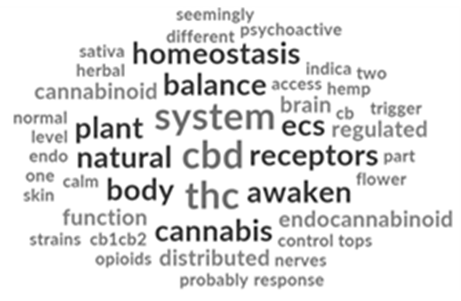
All recalled canine based experiences were positive across participants. There were no mentions of adverse reactions by any participants. The effect equated to CBD was held in a high regard by all O participants. Opinions of Veterinary practitioners regarding CBD experiences were interpreted as more reserved although still positive. Only VS2 mentioned the dosage they used. Stating this was lower than current research suggests, which from the literature review can be confirmed. Interestingly satisfaction with the results is expressed, this suggests further investigation is needed for real life application efficacy of CBD for dogs. All Owner participants described having some knowledge of CBD. In contrast to the veterinary professionals where only VS2 felt they had adequate knowledge of CBD. In asking for knowledge regarding the ECS there was common mention of receptors and the idea of a regulatory role or homeostasis (see Figure 5). All participants recognized a lack of research and expressed a demand for it. A large transfer of ideas from human research being applied to canines was also insinuated, despite limited validity of this. However, O1 and O3 expressed a considerable level of understanding of critical evaluation of scientific studies.
O2 expressed a belief in the limited value of clinical trials as opposed to anecdotal evidence. O1 and O3 also mentioned valuing anecdotal evidence. Conversely, VS2 and VS1 mentioned their opinions of anecdotal evidence with circumstantial importance. All participants interviewed indicated an inclination to learn more about CBD. All participants expressed a belief that CBD has a role in the veterinary industry for canine care that they could see developing. This belief was however subject to barriers. All participants described the use of oral CBD in a lipid-based carrier. O1 described a paste form, and all owners described a process of rubbing into gums. This isn’t a method of administration that any of the literature flagged, so opens another possible avenue of future exploration. Balms and topical application were identified 5 times (see Table 1). This method is only theoretically supported by research for canines [6, 12]. Transdermal pain relief was hypothetically discussed by VS3 who made comparison to fentanyl patches.
Os inferred a poor grasp of veterinary regulations. No awareness was demonstrated regarding the classification of CBD as an unlicensed veterinary medicine by any O participants. Only 2VS, VS3 and only 1 VP explicitly stated their knowledge of this and that owners shouldn’t be giving their dogs this of their own accord. This is a serious concern regarding safety for canines given the lack of evidence- based knowledge including unknown long-term effects. VS3 admitted to feeling conflicted as to welfare responsibilities on being informed of a client self-administering. In contrast VS2 distinctly articulated concern regarding owner administration of CBD. They also expressed their concern of companies selling CBD for animals. All participants identified a separation of CBD from THC. However, of the O’s only O1 expressed knowledge of a limitation to the amount of THC.
O2 gave no indication of awareness that legally purchasable human CBD products contain any THC.
Identifying any Demand for CBD Integration into Canine Veterinary Care
O1, O2 and O4 reported first learning and considering CBD through online researching for treatment options in support of Kogan, et al. [31]. This supports an idea that veterinary clients are actively seeking better treatment options. This demand was recognized in interviews by veterinary professionals. Drawback and limitations of current treatment options were acknowledged by VS2 and VS3 of veterinary surgeons. This is supported by previous work recognizing unsatisfactory management of canine epilepsy [27]. As well as potential adverse reactions of NSAIDs [28, 29]. Only O4s interview was absent of expressed concerns or dissatisfaction with another or multiple veterinary medications. O1 expressed a negative disposition towards some veterinary treatments including chemotherapy. O2 expressed similar disposition towards pharmaceuticals for dogs. This has been similarly indicated in concerns of OA medication as found by Belshaw, et al. [30]. Owner 3 discussed her dog currently being on Galliprant, however expressed a desire to for assured pain management perceived as having increased guarantee from use of CBD in combination with pharmaceuticals. This does raise the concerns of possible drug interactions being unknown. This was closely linked with the mention of preference for a product labelled as “natural” which was highlighted in US research [38]. This preference was indicated as shared across participant groups as were circumstantial considerations of this label to varying degrees. With word occurrence 12 times in O interviews. Interestingly “natural” also had 19 mentions in veterinary professional interviews, indicating interest and preference on their part. This should be investigated further for benefiting UK consumer demands. Awareness of owner concerns and incompliances regarding medication was also identified indicating this aversion of owner toward pharmaceuticals is a concern in veterinary care. This has not yet been explored in prior studies in the UK.
This study has also highlighted the importance of cost regarding canine veterinary care. Cost had a total of 17 mentions in owner participant interviews. Notably 13 of these were by O2 suggesting a possible anomaly. Responses of O’s suggest CBD is viewed as more affordable than pharmaceuticals or other current treatment options offered. Additionally, O2’s response raises a concern of substitution of veterinary care for non-prescription CBD administration. Similarly concerns regarding this were voiced by Veterinary professionals regarding CBD product standards with an emphasis suggesting cheaper product may have reduced quality or efficiency. Variation of different levels in products in an additional concern for accurate dosing.
Identifying Possible Barriers to the Integration of CBD into Canine Veterinary Care
The main barrier identified across groups was current absence of applicable CBD research and its accessibility, including demand for dosage guidance across participants. This was often linked to both VPs, VS1 and VS3 positions on being inadequately knowledgeable to advising CBD use. In contrast all O’s responded that they would or have recommend CBD. This supports the idea of word of mouth from owners contributing to demand. Interestingly social media was only recognized as an issue for misinformation and as a potential cause of increasing both awareness and demand by VP2, VS2 and VS3. Despite owner participants being sourced from social media group. Furthermore, the accessibility to research was highlighted particularly by owners who provided their insight into other owners. Including concerns with interpretation and understanding.
American origin of research was commonly identified by all Veterinary practitioners and by O1, O2. This is confirmed by the literature review [6, 17, 18, 20, 22]. This highlights a lack of generalizability due to geographical location as well as sample size, and/or lack of CBD product standardization. Limited generalizability was expressed by VS3 and VP2 although lack of this understanding was not confirmed for other participants, so absence is not assumed. All participants expressed their belief that CBDs cannabis plant origin is a cause of a negative stigma surrounding use. This was most strongly identified in owners. However, no participants identified this as a barrier to research. A potential fear of uncertainty of legislation was identified, likely due to the recent and rapid changes in this surrounding CBD. Changing UK opinions of CBD are indicated [32].
Commonalities and Discrepancies between Stakeholders
Interactions with vets were suggested to be positive by all owners regarding CBD use, although no owners stated that vets recommended CBD to them. Only owner O3 stated that it was mentioned by their vet. These experiences suggest that these VS aren’t discouraging the use of CBD for canines without prescription. There appears to be a blurred line regarding veterinary recommendation and variation on veterinary advice received by owners as well as how much owners listen to this. However, comments on VS affinities toward/against CBD are subject to owner interpretation and recall and therefore lack reliability. All responded positively when asked if they felt happy to discuss treatment options including their CBD use with their VS and discussion indicated holding their VS’s willingness to discuss CBD in high regard. In contrast VS1, VS2 and VS3 expressed concerns as to owners not disclosing CBD related information with them.
All owner participants stated some understanding as to why VS’s don’t recommend CBD, however no owners voiced any knowledge of the legal restrictions to giving their pet CBD themselves. It is apparent their interactions with vets have also not broached this, although this is subject to bias of owner disclosed information.
Results support that canine CBD research deficit is prominent. Including unknown canine secondary health consequences, as supported by the absence of long-term studies in the literature review. Veterinary practitioners all voice reservations regarding CBD for canine use, most strongly by VS2 and VS3. Control of product quality was a concern noted in all participants. All expressed desire for standardization and regulation, except O2 who only expressed concern for misuse. There appeared to be an interesting argument made across participants between concern for underdosing as much as there were concerns for toxicity and drug interactions stated by VS2. Both concerns highlight the issue of potential content and guidance variation in readily available CBD products in the UK. This is a similar issue experienced in the lack inter-reliability and replicability of current research found by literature review, as well as concerns of toxicity [24, 47]. Owners were queried regarding their ideas of risks of CBD misuse for dogs. There was a common idea of minimal consequences of overdosing or a lack of knowledge by O4.
The use of CBD in humans also provides interesting comparison as to inclination towards the use of CBD as a transfer of effects may be desired by owners who have experienced benefits. O1 and O2 stated use of CBD on themselves. O3, O4 and VP2 described a family member who had used CBD. This use may impact their perception of risk or reflect it. Overall risk of CBD was perceived as low by all owners. O2 showed a complete confidence in CBD. However, the idea of a last resort was identified in O2 and O3. Despite stating current confidence, this may have influenced their initial willingness to try CBD when considering risk at the time. Although potential for this not being the case was indicated by the exception of O4. Similarly, end of term care or limited treatment options were discussed by VP1, VS2 and VS3. This is in line with the purpose of the cascade allowing for CBD use when other options are not appropriate. Other supplements were mentioned frequently, and supplements were discussed in all interviews with a total of 50 word mentions by participants. Comparatively, neither owners nor veterinary professionals inferred particular value to supplements. Although, recommendation of some supplements to clients was confirmed by VP1, VS1 and VS3. This is comparable to findings in the US by Elrod and Hofmeister [36]. O1 expressed a disinterest in supplements with mention of a lack of belief in effectiveness despite market reports suggesting demand by owners [35, 48, 49, 50, 51].
Limitations
Limited conclusions can be drawn from the experiences of owners and interpretations of veterinary discussions as these are subjective, as are the effects of CBD. However, perception is still valid, relevant to demand. An improvement of this study would have been to interview the Veterinary practitioners of clients for corroboration. Secondly, limitation of interview conduct are such as spontaneous answers might not be a true reflection of knowledge. Memory also has limited reliability as well as being subject to participant bias. Project constraints also limited this study in sample size and depth therefore generalizability. Covid -19 is a further limitation of this study as current restrictions from 2020 have limited the level of contact between vets and clients during consultations. This could reduce the temporal generalizability of this study. Additionally, UK lockdown has arguably resulted in digital fatigue which was believed to hinder the number of participants and may have reduced participant engagement. Table of Quotations
Conclusion
The findings suggest a considerable current integration and the demand for CBD expressed by both owners and veterinary professionals. Overall experiences of CBD recorded in interviews were positive and with high prevalence despite the lack of research, including current veterinary use identified in this study. Suggesting belief in CBD potential is not misplaced, supporting potential utilization of the canine ECS for therapeutic benefit indicted by literature.
Recommendations of CBD across all owners were also identified, suggesting an increasing awareness and use of CBD by the public. Low perceived risk of owners is likely related to this and a further concern. Accessibility of correct, comprehensible knowledge is also in demand by owners, this is a concern for veterinary practitioners supported by knowledge deficits found in this study. There is a moral and professional duty for vets to be able to advise their clients. There is a welfare responsibility to advance research in the UK to meet client demands in line with legislation regarding CBD. It is apparent canine welfare is currently at risk due to unknown consequences of CBD use. Product standardization is highlighted as a contributor to this including toxic risks of potential THC content. Overall, the results strongly support reason to deepen consideration and knowledge of CBD.
Additional to objectives this study has provided insight into how a rapidly introduced novel nutraceutical such as CBD is accepted into canine veterinary care and allowed for the voicing of concerns, demands and ideas by stakeholders of the veterinary industry in line with the studies objectives.
The additional identified barrier of its cannabis stigma provides further insight regarding this novel consideration. Furthermore, this study provides some insight into UK consumer demands of the veterinary industry where currently very little research exists.
Recommendations
It is recommended that steps are taken to increase awareness in both owners and veterinary professionals alike of the potential and unknown risks to canine through CBD use. It is advisable that measures of CBD standardization are carried out with increased integrity from governing bodies. Awareness also needs to be raised via responsible parties to address deficits of CBD knowledge and information, for both O’s and veterinary professionals. Clear segregation of animal and human CBD is a priority. This is vital to avoid illegal misuse and improve canine veterinary care. Further research is a priority by responsibility to investigate the potential of CBD use for veterinary patient benefit with emphasis on specific conditions. Generalizable knowledge on the pharmacokinetics of CBD, including dosage and long- term effects, should be more prevalently supplied by UK veterinary research for safe CBD use.
References
-
Research and Markets (2021) Cannabidiol Market Size, Share & Trends Analysis Report by Source Type (Hemp, Marijuana), by Distribution Channel (B2B, B2C), by End- use (Medical, Personal Use), by Region and Segment Forecasts, 2021-2028.
-
King D, More A (2020) The UK Review of Medicinal Cannabis: The needs of a nation. Part A the Current Landscape. Conservative Drug Policy Reform Group.
-
Cahal (1974) Misuse of Drugs Act 1971 1(5897): 70-72.
-
Revilla JF, Kegler K, Baumgärtner W, Tipold A (2017) Spatial distribution of cannabinoid receptor type 1 (CB1) in normal canine central and peripheral nervous system. PLOS 12(7): e0181064.
-
Silver RJ (2019) The Endocannabinoid System of Animals. Animals (Basel) 9(9): pp: 686.
-
Verrico CD, Wesson S, Konduri V, Hofferek CJ, Perez JV, et al. (2020) A randomized, double-blind, placebo- controlled study of daily cannabidiol for the treatment of canine osteoarthritis pain. Pain 161(9): 2191-2202.
-
Pertwee RG (2001) Cannabinoid receptors and pain. Prog Neurobiol 63(5): pp 569-611.
-
Mechoulam R, Shabat SB, Hanus L. Ligumsky M, Kaminski NE, et al. (1995) Identification of an endogenous 2-monoglyceride, present in canine gut, that binds to cannabinoid receptors. Biochem Pharmacol 50(1): 83- 90.
-
Leinow L, Birnbaum J (2017) North Atlantic Books: Berkley, California.
-
Howlett AC (2005) Cannabinoid receptor signalling. Handb Exp Pharmacol (168): 53-79.
-
Massi P, Valenti M, Vaccani A, Gasperi V, Perletti G, et al. (2008) 5‐Lipoxygenase and anandamide hydrolase (FAAH) mediate the antitumor activity of cannabidiol, a non‐psychoactive cannabinoid. JNeurochem 104(4): 1091-1100.
-
Campora L, Miragliotta V, Ricci E, Cristino L, Marzo VD, et al. (2012) Cannabinoid receptor type 1 and 2 expression in the skin of healthy dogs and dogs with atopic dermatitis. Am J Vet Res 73(7): 988-995.
-
Cannabis Act (Canada) 2018.
-
Revilla JF, Heinrich F, Zoerner A, Gesell F, Beyerbach M, et al. (2018) The endocannabinoid system in canine Steroid-Responsive Meningitis-Arteritis and Intraspinal Spirocercosis. PLOS 13(2): e0187197.
-
Howlett AC, Barth F, Bonner TI, Cabral G, Casellas P, et al. (2002) International Union of Pharmacology. XXVII. Classification of cannabinoid receptors. Pharmacol Rev 54(2): 161-202.
-
Turcotte C, Chouinard F, Lefebvre J, Flamand N (2015) Regulation of inflammation by cannabinoids, the endocannabinoids 2‐arachidonoyl‐glycerol and arachidonoyl‐ethanolamide, and their metabolites. J Leukoc Biol 97(6): 1049-1070.
-
Gamble LJ, Boesch JM, Frye CW, Schwark WS, Mann S, et al. (2018) Pharmacokinetics, Safety, and Clinical Efficacy of Cannabidiol Treatment in Osteoarthritic Dogs. Front Vet Sci 5: 165.
-
McGrath S, Bartner LR, Rao S, Packer RA, Gustafson DL (2019) Randomized blinded controlled clinical trial to assess the effect of oral cannabidiol administration in addition to conventional antiepileptic treatment on seizure frequency in dogs with intractable idiopathic epilepsy. J Am Vet Med Assoc 254 (11): 1301-1308.
-
Corsetti S, Borruso S, Malandrucco L, Spallucci V, Maragliano L, et al. (2021) Cannabis sativa L. may reduce aggressive behaviour towards humans in shelter dogs. Sci Rep 11(1): 2773.
-
Deabold KA, Schwark WS, Wolf L, Wakshlag JJ (2019) Single-dose pharmacokinetics and preliminary safety assessment with use of CBD-rich hemp nutraceutical in healthy dogs and cats. Animals (Basel) 9 (10): 832.
-
Deutsch DG (2016) A Personal Retrospective: Elevating Anandamide (AEA) by Targeting Fatty Acid Amide Hydrolase (FAAH) and the Fatty Acid Binding Proteins (FABPs). Front Pharmacol 7: 370.
-
Bartner LR, McGrath S, Rao S, Hyatt LK, Wittenburg LA (2018) Pharmacokinetics of cannabidiol administered by 3 delivery methods at 2 different dosages to healthy dogs. Can J Vet Res 82(3): 178-183.
-
Brutlag A, Hommerding H (2018) Toxicology of Marijuana, Synthetic Cannabinoids, and Cannabidiol in Dogs and Cats. Vet Clin North Am Small Anim Pract 48(6): 1087-1102.
-
McGrath S, Bartner LR, Rao S, Kogan LR, Helly PW (2018) A Report of Adverse effects Associated with the Administration of Cannabidiol in Healthy Dogs. AHVMA 52: 34-38.
-
Animal Welfare Act 2006.
-
EMA (European Medicines Agency) (2018) Veterinary pharmacovigilance 2017.
-
Monteiro R, Adams V, Keys D, Platt SR (2012) Canine idiopathic epilepsy: prevalence, risk factors and outcome associated with cluster seizures and status epilepticus. J Small Anim Pract 53(9): 526-530.
-
Steagall BPM, Steagall PVM, Lascelles BDX (2013) Systematic Review of Nonsteroidal Anti-Inflammatory Drug-Induced Adverse Effects in Dogs. J Vet Intern Med 27(5): 1011-1019.
-
Luna SPL, Basílio AC, Steagall PVM, Machado LP, Moutinho FQ, et al. (2007) Evaluation of adverse effects of long-term oral administration of carprofen, etodolac, flunixin meglumine, ketoprofen, and meloxicam in dogs. Am J Vet Res 68(3): 258-264.
-
Belshaw Z, Asher L, Dean RS (2016) The attitudes of owners and veterinary professionals in the United Kingdom to the risk of adverse events associated with using non-steroidal anti-inflammatory drugs (NSAIDs) to treat dogs with osteoarthritis. Prev Vet Med 131: 121- 126.
-
Kogan LR, Tacher RS, Simon AA, Viera AR (2009) The Internet and Pet Health Information: Perceptions and Behaviors of Pet Owners and Veterinarians. Int J Vet Med 8(1).
-
Gibbs B, Yates A, Liebling J (2019) CBD in the UK: Towards a responsible, innovative and high-quality cannabidiol industry. The Centre for Medicinal Cannabis.
-
Prohibition Partners (2019) Annual Medical cannabis market revenue in the United Kingdom (UK) from 2019- 2024.
-
Mikulic M (2020) Attitudes towards future use of cannabidiol (CBD) in Great Britain in 2019, by age.
-
Mordor Intelligence (2020) Europe Pet Food Nutraceuticals Market - Growth, Trends, Covid-19 Impact, and Forecasts (2022 - 2027).
-
Elrod SM, Hofmeister EH (2019) Veterinarians’ attitudes towards use of nutraceuticals. Can J Vet Res 83 (4): 291- 297.
-
International Market and Research Company (IMARC) (2021) Organic and Natural Pet Food Market: Global Industry Trends, Share, Size, Growth, Opportunity and Forecast 2021-2026.
-
Scott SE, Rozin P, Small DA (2020) Consumers Prefer “Natural” More for Preventatives than for Curatives. J CR 47(3): 454-471.
-
Kogan L, Tacher RS, Hellyer P, Rishniw M (2019) (a) US veterinarians’ knowledge, experience, and perception regarding the use of cannabidiol for canine medical conditions. Front Vet Sci 5: 338.
-
Kogan LR, Hellyer PW, Silcox S, Tacher RS (2019) (b) Canadian dog owners’ use and perceptions of cannabis products. Can Vet J 60(7): 749-755.
-
European Commission Directive (EC) No. 82/2001 of the European Parliament and of the Council (EC) of 6 November 2001 on the Community code relating to veterinary medicinal products.
-
The Veterinary Medicines Regulations SI 2013/2033.
-
Mintel (2018) Pet Food- UK - August 2018.
-
Vogt WP, Gardner DC, Haeffele LM (2012) When to Use What Research Design. Guilford Publications, New York.
-
Herbal Health Pets UK/EU (2021) Facebook.
-
Charmaz K (2014) Constructing Grounded theory. 2nd (edn.), Dorchester: Sage Publications, pp: 416.
-
Chicoine A, Illing K, Vuong S, Pinto KR, Alcorn J, et al. (2020) Pharmacokinetic and Safety Evaluation of Various Oral Doses of a Novel 1:20 THC: CBD Cannabis Herbal Extract in Dogs. Front Vet Sci 7: 583404.
-
Farm Bill (United States) 2018.
-
FSA (Food Standards Agency) (2021) Cannabidiol (CBD) guidance.
-
FSA (Food Stands Agency) (2020) Cannabidiol (CBD).
-
Misuse of Drugs Regulations SI 2001/3998.
- The Digital Stethoscope: Harnessing AI in Veterinary Medicine Without Losing Our Healing Touch
- Meningoencephalomyelitis of Unknown Etiology: Short-Term Effect of Two Treatment Protocols on Cerebrospinal Fluid
- Safety and Efficacy of the HomeoPet Cough in Domestic Pets –A Clinical and Correction Analysis Based Upon User Response Survey
- Non Human Animals Responses to Social Loss
- Owner Reported Clinical Outcomes of a Homeopathic Proprietary Preparation for the Treatment of Upper Respiratory and Nasal Disorders in Companion Animals
- Effects and Diagnostic Approach of Ultrasound in Veterinary Practice: A Systematic Review