
Canine Urinary Incontinence Successfully Treated by Homeopathic Medicine: A Real-World Clinical Evidence Panel Study
Background: Urinary incontinence (UI) in pets is among a group of social problems, which often leads to discomfort to the pets along with distress and financial problems to the owner. It is among the causes of requests from owners for euthanasia of their pets. The current treatments available for UI include drugs and surgery, both of which have limited efficacy, while still entailing high economic and safety concerns. Methods and Findings: This study reports the safety and effectiveness of the homeopathic medicine ‘Leaks No More’ in UI. The study reported 16 neutered dogs in an older age group with a mean age of 11.15±4.40 years and percentile of max; 64.51±19.99) with heavy body weight (44.5±37.3 lb; percentile of 109.1 ± 63.8). Most dogs were females (n=12; 75%). The median dose rate was 2 drops (range 1-6) and was given to 6 (37.5%) animals through water, to 8 (50%) animals with food and to 2 (12.5%) animals by oral administration. In all, 3 (18.75%) animals were given the medicine once a day, 5 (33.33%) were dosed twice a day and 1 (6.25%) was dosed thrice a day. All 16 animals demonstrated improvement. The median time to improvement was 3 [1 - 6.25] days with a relapse reported by 2 (12.5%) owners. This relapse may be a proving of the homeopathic medicine due to excess repetition after relief of symptoms. As the sample showed significant variety, agreement analysis (Cohen’s Kappa) was performed among the demographics and results from each breed viz. Mixed, Greyhound, Doberman, and Shih Tzu. The agreement analysis demonstrated inter-record agreement in most cases (Effect size = 0.71, p=0.12). Conclusion: In conclusion, the proof of concept established evidence of safety and efficacy of the homeopathic medicine 'Leaks No More', with statistics demonstrating the unbiasedness, impartiality, and reliability of the data, despite a small and high-variation sample
Introduction
Background Medical Condition and Epidemiology
Urinary incontinence (UI) or involuntary discharge of urine is mainly due to insufficient closure of the urinary sphincter. UI in animals, mainly in companion species, such as cats and dogs, is a main concern in veterinary healthcare. There are multiple reasons for UI in pets including stress (emotions), higher age, structural and functional problems of the bladder or the ureter, increased bodyweight, immobility, and surgical neutering of the animal [1, 2, 3]. While UI is affected by age and body weight it is not related to the age at the time of neutering surgery [2]. However, there is a greater prevalence in some breeds [3]. The above four causes together are minor contributors (< 1%) to the reported incidence of urinary incontinence [4], while its major contributor (20%) is incontinence following neutering of pets, especially of females [1]. However, there is gross underreporting of the problem, as deduced from the comparison between institutionalized animals with the overall population. Most notably non-iatrogenic UI is grossly underestimated, especially in smaller veterinary practices [5]. Due to the requirements of care and other associated challenges, UI is among the common causes for requesting euthanasia [6]. The cost of UI treatment ranges from approximately $20 to $150 per week as per analysis of the cost of bladder control medicines available online. As UI is not a terminal illness and is not time-bound, the main concern for pet owners concerning treatment may be cost, which in turn adds to socioeconomic challenges.
Landscape of Current Therapies
The major focus of treatment of UI has been on post- neutering UI, because only about one fifth of animals with UI have causes other than neutering surgery [3]. While the major contributing factor is still surgical neutering [1, 2, 3], overactive bladder syndrome, stress incontinence, and overflow incontinence [3] also have a role to play. Another possible reason for this focus is a relatively clear understanding of pathophysiology of post-neutering iatrogenic UI, as compared with other complex mechanisms of urethral sphincter mechanism incompetence (USMI)[7]. In post-neutering UI reduced bladder responsiveness to muscarinic stimulation and increased collagen in the bladder wall in females are predominant mechanisms [8]. It is well understood that in post-neutering UI, the muscarinic receptor effector pathways are a more easily identified therapeutic target for acquired urinary incontinence treatment. Hence, this challenge is easier to treat using various agents like gonadotrophins [8].
The current therapy for UI can be broadly divided into three major groups that include medicinal therapy, surgical treatment, supportive and conservative therapies, and a few other approaches, including increasing urethral bulk. While multiple studies performed on small samples are published towards justification of efficacy on particular causes, most of these studies focus only on the hormonal (senile or post- neutering) causes of urinary leakage. Among the medicines used, alpha-adrenergic agents, phenylpropanolamine hydrochloride is the most common and this treatment has been approved by US FDA for once daily medication [9]. However, there are limitations for this therapy in many causes, such as ectopic ureters and prostatic cysts, also the cost of therapy is extremely high. The surgical management of the condition is the second most common therapy, however this therapy is also expensive and includes a risk of disability [10].
Rationale of the Current Research
Considering the current landscape of medical and surgical therapy for canine urinary incontinence the major concerns are wide-spread applicability of the therapy, ease of availability, higher cost and in surgical cases, higher risk of disability. Hence, there is a need for a safer, cost effective and easy to handle medication. Commonly, homeopathic medicines are used either as complementary, or as an alternative to the current therapy and is observed to reduce the treatment time in humans [11]. There have been multiple rejections of homeopathic efficacy in the treatment of UI with such rejections being cited as due to the lack of scientific evidence. However, potential exists for homeopathic medicines to be the treatment of choice in various veterinary conditions [12, 13].
Principally the homeopathic medicines used are simple single medicines [14]. Whereas, the use of complex or combined (mixed) remedies is often favored when there is a lack of subjective symptoms that generally makes the selection of a simple single remedy unviable. Hence, despite being a deviation from principles, pragmatic use of combinations has become popular in a few critical conditions and in veterinary use with mixed outcomes [15], mandating the generation of evidence for every combination product in the given indication. There is subset-based evidence of homeopathy improving UI from a large canine and feline study [16]. Hence, this study was conducted to determine the efficacy and safety of 'Leaks No More' combination homeopathic medicine in canine UI.
Methods and Materials
This study included prescribing 'Leaks No More' with a follow-up survey of a similar questionnaire for two independent groups of 6 to 10 dogs of both sexes. This was followed by a prospective survey, an agreement analysis of these two surveys and an interim agreement analysis of the results within the surveys (Cohen’s κ). The survey included consecutive dogs, without any exclusion criteria imposed. The survey was supervised by veterinarians at Australian Pesticides and Veterinary Medicines Authority (APVMA) (10 dogs) and a large university college of veterinary medicine, based in New York (6 dogs). The homeopathic medicines indicated for urinary incontinence include approximately 254 different medicines in Robin Murphy’s repertory under symptom B; Bladder; URINATION, general; involuntary, urination. Some of these medicines are combined in the proprietary formula of 'Leaks No More' by HomeoPetTM [17] used as a medication for this study.
Questionnaire Design and Response Collection
The questionnaire used for collection of the data included species, breed, age, sex, whether or not neutered, weight (lb), diagnosis, tenure of incontinence (months), dose, frequency, mode of dispensing, relief time, relapse, previous treatment, efficacy of previous treatment, and was the medicine continued. Of these, the last three questions were optional. Methodologically, most studies, referenced by this paper, have owner reported outcomes with continence improvement as the parameter of therapy efficacy [18-
25]. This study also included owner reported outcomes of continence improvement as the primary response of the study. The study was a patient-centric design, where the owner of the pet was asked to respond to a supervised survey directly. In all, 16 responses were collected from the two surveys.
Results
The analysis of the surveys was performed in two phase’s viz. (a) data standardization with respect to breed and (b) statistical analysis of the outcomes. In addition, three Radar Plots of individual subjects (two for individual groups and one for overall) was plotted using Excel for panel analysis and interim agreement analysis.
Demographics Data Panel Presentation
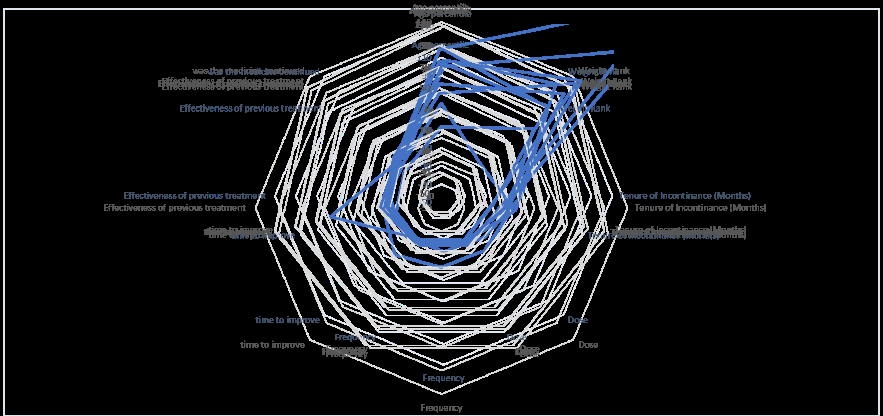
For APVMA respondents the precursors of urinary incontinence viz. age percentile, body weight percentile, tenure of incontinence, and effectiveness of the prior medication was taken as plotting axes (Figure 1). All the ten panels of the APVMA responses were overlapped. The responses showed concentric circles of similar effective area. From this, it can be inferred that the effect of 'Leaks No More' in control of urinary incontinence is similar in all types of predisposing risk factors.
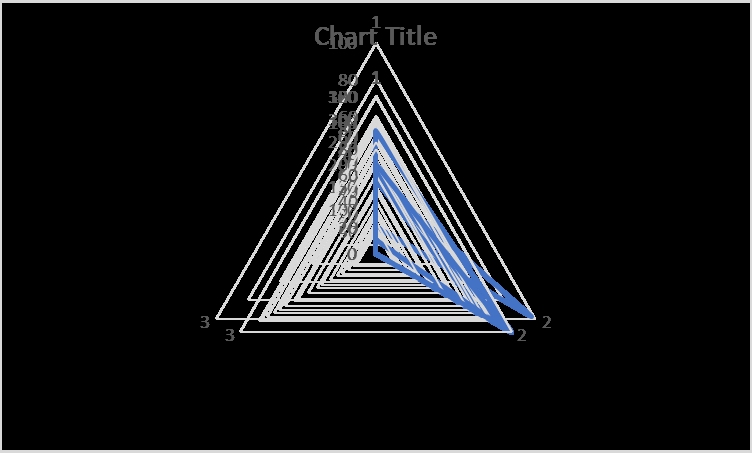
Similar analysis was done for responses from the university college, with fewer data points available viz. age percentile, weight percentile and effectiveness of previous treatment. The effect area of the graph in all these overlapped panels was similar in magnitude (Figure 2).
The data missing at random was reconstructed using the sample means. The interim Cohen’s Kappa for the APVMA group was on average of 0.7, for the university group was 0.6 and the interim between the two groups was 0.63 (χ2= 0.14, Pearson R = 0.98) p<0.03), meaning that there is an agreement between the two groups of surveys. Hence, these two surveys were merged for collective analysis, with use of overall mean wherever required for reconstruction of data missing at random.
The age of animals was 11.5±4.40 years. However,
considering the variability among the lifespans of different breeds, the age was considered with a percentile rank of the upper normal limit of the confidence interval of breed population [18]. The mean weight of the sample was 44.5±37.3. However, variability of weight is significantly higher among various species. Hence, percentile of weight (109.1±63.8) against the upper normal limit was taken for determination, which revealed that a significant population was overweight. 100% population of dogs were neutered and most (75%) of the population was female, making the group overall challenging for treatment (Table 1).
| Variable | Mean | St Dev | Minimum | Maximum |
|---|---|---|---|---|
| Age | 11.15 | 4.40 | 6.00 | 19.00 |
| Age percentile | 64.51 | 19.99 | 33.30 | 88.20 |
| Weight (lb) | 44.5 | 37.3 | 5.5 | 105.0 |
| Weight percentile | 109.1 | 63.8 | 0.0 | 244.4 |
| Variable | Count | Percentage | ||
| Females | 12 | 75% | ||
| Neutered dogs | 16 | 100% |
Table 1: Overall demographic precursors of UI
| Pattern of incontinence | N | % |
|---|---|---|
| Nocturnal incontinence | 13 | 81.25 |
| Senile incontinence | 9 | 56.25 |
| Random leaks | 7 | 43.75 |
| Senile and nocturnal | 13 | 81.25 |
| Previous treatment | ||
| Any previous treatment | 8 | 50% |
| High effect of previous treatment | 1 | 12.5% |
| Low effect of previous treatment | 2 | 25% |
| No effect | 2 | 25% |
| Mean | SD | |
| Tenure of incontinence | 12.55 | 9.11 |
Table 2: Pattern and tenure of the UI and previous treatment details.
Primarily, the incontinence was a nocturnal type (81.25%) and among the remaining group as well, the nocturnal incontinence was observed with senile incontinence of random leaks. The overall tenure of leak was 12.55 ± 9.11 months. The median value of the dataset (12) was taken to reconstruct the data missing at random. While this value could be used in the data completely missing at random from the University College dataset, to avoid bias, the dataset was excluded from the analysis of tenure, as there was no major effect of this parameter on severity of disease or on the outcomes (Table 2).
In 6 (37.5%) animals the medication was given in water, in 8 (50%) medication was given in food and in 2 (12.5%) oral administration was done. The median dose given was 2 drops, with a maximum of 5 drops and minimum of 1 drop given once a day (3, 18.75%), twice a day (5, 33.33%) thrice a day (1, 6.25%). The data of daily frequency was not available for the University College dataset, hence the data missing completely at random was excluded. (Table 3).
| Posology | Median | Q1, Q3 |
|---|---|---|
| Dose | 2 | [2, 3] |
| Frequency / repetition | N | % |
| Once a day | 3 | 18.75 |
| Twice a day | 5 | 31.25 |
| Thrice a day | 1 | 6.25 |
| Unknown frequency | 6 | 37.5 |
| Dispensing details | N | % |
| Given in water | 6 | 37.5 |
| Given in food | 8 | 50 |
| Given by oral administration | 2 | 12.5 |
Table 3: Posology of 'Leaks No More' in the study group.
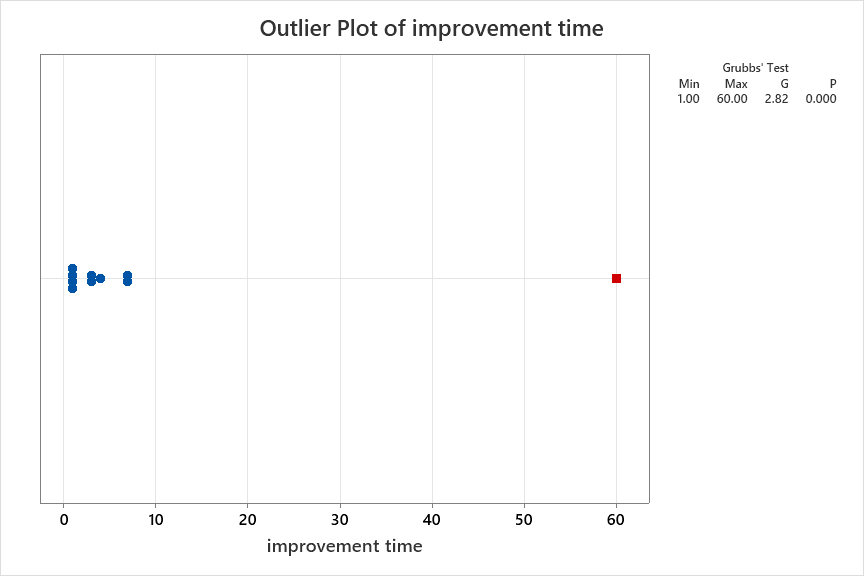
All owners reported improvement of urinary leakage in the 16 (100%) participating animals, with only 2 (12.5%) animals having a relapse of symptoms. Most of the animals (15, 93.75%) improved within a week and the median time to relief was 3 [1. 6.5] days. Only one (6.25%) extreme outlier was observed where the improvement time was 60 days. This value appears to be a real outlier as Grubb’s G in the given data set is less than 5 and P-value is less than 0.0001 (Figure 3). Considering this and the strength of statistics of correlation of the data parameters (κ=0.63, χ2= 0.14, Pearson R = 0.98, p<0.03) for this analysis, the missing data for University College was reconstructed using median time to improvement (3 days) (Table 4).
In the entire group, no adverse event was reported by the owners of the pets. In 7 out of 10 (70%) APVMA respondents, the owners continued medication to their pets despite improvement. The data of continuation of medication in the University College dataset was not available.
| Efficacy outcomes | ||
|---|---|---|
| Events | N | % |
| Improvement | 16 | 100 |
| Relapse | 2 | 12.5 |
| Time | Median | IQR |
| Time to improvement | 3 | 1,6.25 |
Table 4: Efficacy outcomes of the study
Analysis of Bias By Agreement Of Outcomes By Breed
The analysis of co-agreement among various dog breeds did not give significant analysis of agreement. The only significance observed between the overall results with Mixed, Greyhound, Doberman, and Shih Tzu had limited statistical significance. These results are in agreement with the anticipated outcomes of a proof-of-concept study. Hence, this is evidence of unbiasedness, impartiality, and reliability of the data (Effect size = 0.71, p=0.12).
| Count | Age Rank | Females | Neutered | Weight Rank | Time to improvement | Relapse | Kappa | Chi- SQ | P | |
|---|---|---|---|---|---|---|---|---|---|---|
| Overall | 16 | 0.655 | 0.75 | 1 | 117.196 | 8.8 | 0.125 | |||
| Mixed | 4 | 0.677 | 1 | 1 | 103.51 | 31.5 | 0.25 | 1 | 0.00 | 0.94 |
| Dalmatian | 1 | 0.466 | 1 | 1 | 0 | 7 | 0 | 0 | 0.00 | 0.29 |
| Chinese Crested | 1 | 0.777 | 0 | 1 | 170 | 4 | 0 | 0 | 0.00 | 0.60 |
| Newfoundland | 2 | 0.833 | 1 | 1 | 81.82 | 5 | 0 | 0 | 0.00 | 0.18 |
| West highland White Terrier | 1 | 0.909 | 0 | 1 | 244.44 | 1 | 0 | 0 | 0.00 | 0.46 |
| Chihuahua | 1 | 0.941 | 1 | 1 | 80 | 1 | 0 | 0 | 0.00 | 0.16 |
| Greyhound | 1 | 0.5 | 0 | 1 | 116.67 | 1 | 0 | 1 | 0.00 | 0.16 |
| Dachshund | 3 | 0.462 | 0.66 | 1 | 169.44 | 3.5 | 0.33 | 0 | 0.00 | 0.57 |
| Doberman | 1 | 0.6 | 1 | 1 | 101.33 | 3 | 0 | 1 | 0.00 | 0.11 |
| Shih Tzu | 1 | 0.71 | 1 | 1 | 116.67 | 1 | 0 | 1 | 0.00 | 0.19 |
Table 5: Analysis of Bias By Agreement of Outcomes By Breed
Discussions
Various independent factors are responsible for the induction of canine urinary incontinence. Pegram, et al. conducted a study of 2135 cases (427 having incontinence and 1708 controls). The study reported an association of increasing age and increasing bodyweight and spaying with increased odds of urinary incontinence (odds ratio: 3.01; 95% CIs: 2.23 to 4.05). However, the study revealed that the age at spay was not associated with urinary incontinence [2]. O’Neill conducted a study on 100,397 bitches from 119 clinics in England and identified 3108 with urinary incontinence (prevalence 3·14%). The study confirmed the association of the above average adult bodyweight (odds ratio: 1·31) and age range of 9 to 12 years (odds ratio: 3·86) as the risk factors. It added another risk factor viz. neuter status (odds ratio: 2·23)[19]. These risk factors were also confirmed in the current study where all the animals were neutered, most animals were older than breed average and all animals had weight more than 80% of the upper confidence interval.
Among the treatments of UI, medication and surgery are most common. Delisser, et al. included eleven spayed female dogs with a preoperative median continence score of 3. The
scores at two weeks, three and six months improved to 8 (4 to 10), 9 (4 to 10) and 8 (4 to 10), respectively. Complete continence was achieved in 36·4% of dogs [20]. Bryan, et al. published a study of artificial urethral sphincter implantation (AUS) in dogs and demonstrated a significant increase in continence score after the procedure. Dogs without additional medication had a mean 16.4±15.2 months of continence, as compared to 5.2±4.3 months in dogs needing additional medical therapy [21]. Similar outcomes are observed by Reeves et al. in 27 dogs with 24 females and 3 males undergoing AUS implantation. Causes of incontinence include urethral sphincter mechanism incompetence (n = 18), continued incontinence after ectopic ureter repair (6), and pelvic bladder weakness (3). Medical therapy was unsuccessful in 25 dogs before AUS implantation. At a median follow-up of 12.5 months, significant improvement of continence score from median 2 to median 9 was observed (P < .0001). This study reported complications such as partial urethral obstruction after 5 and 9 months [22]. Similar complications were found, with a few additional problems viz dysuria, bacterial cystitis, longer urination time, urinary retention, haematuria, pain, and incisional seroma, in the study by Delisser, et al. [22] This study reported no safety concerns in the animals. Both these studies also reported significant customer satisfaction, which was achieved by this study too.
Medical therapy is another option for treatment of UI [23]. Incontex (phenylpropanolamine) 1.5 mg/kg body weight twice daily was reported by Burgherr, et al., which included 24 female dogs. Of these, 21 (88%) achieved continence, 2 (8%) had partial improvement and 1 (4%) did not respond to the medication. In all, 5 (21%) animals showed reported side effects [24]. In the Bryan et al. study of 9 spayed dogs treated with Pseudoephedrine, the study reported clinical improvement in urodynamic variables with owner reported continence scores showing improvement. However, the major concern of Pseudoephedrine prescribing is adverse effects [25].
Cost or safety are the main concerns for phenylpropanolamine and Pseudoephedrine with some loss of efficacy [24, 25]. Hence, the use of homeopathic medicine is a potential option for treatment of UI of all types in all breeds. Mathie et al. published a study of 1904 pets having various chronic conditions treated with the single remedy approach. The total group included 400 cats and 1504 dogs. In the subgroup of chronic cases with incontinence, urinary incontinence cases totalled 28 with an improvement score of 26.3% showing some improvement, and 73.7% a major improvement after homeopathic treatment [16]. In the current study using combined remedies, 100% improvement was recorded with owner-reported outcomes for improvement of continence in dogs of all breeds.
The outcomes are clinically significant and statistically viable with reference to the Incontex Study [25]. The range of margin of error of the sample of the study was 10.94 to 25.85% (confidence interval 85% vs. 80%). The post-hoc power for recurrence events was >80% for incidence of 12.5% (2 /16) for 'Leaks No More' as compared with 12% of Incontex [25]. With this reference and analysis, this study demonstrated a reliable statistical significance as a proof-of- concept study.
Conclusions
‘Leaks No More’ homeopathic combination medicine has demonstrated efficacy in control of canine urinary incontinence, as indicated by the owner reported continence improvement outcomes.
Acknowledgments
The authors acknowledge HomeoPet™ for allowing the conduct of the survey on their products. The authors also acknowledge Dr. Ashish Indani for helping to writing this publication.
Funding
This study was completed through an unconditional educational grant from HomeoPet LLC.
Authors Conflict of Interest
Nothing to declare
References
-
Thrusfield MV, Holt PE, Muirhead RH (1998) Acquired urinary incontinence in bitches: its incidence and relationship to neutering practices. J Small Anim Pract 39(12): 559-566.
-
Pegram C, O’Neill DG, Church DB, Hall J, Owen L, et al. (2019) Spaying and urinary incontinence in bitches under UK primary veterinary care: a case-control study. J Small Anim Pract 60(7): 395-403.
-
Arnold S, Arnold P, Hubler M, Casal M, Rüsch P (1989) Urinary incontinence in spayed female dogs: frequency and breed disposition. Schweiz Arch Tierheilkd 131(5): 259-263.
-
Timmermans J, Van Goethem B, Rooster H, Paepe D (2019) Medical treatment of urinary incontinence in the bitch. Vlaams Diergeneeskundig Tijdschrift 88(1): 3-8.
-
Knight-Klimas TC (2004) Current Management of Urinary Incontinence. Journal of Pharmacy Practice 17(2): 103-114.
-
Cecilia Stilwell, Simon Tappin (2016) Approach to canine urinary incontinence, Companion Animal 21(12): 692- 699.
-
Byron JK, Taylor KH, Phillips GS, Stahl MD (2017) Urethral sphincter mechanism incompetence in 163 neutered female dogs: diagnosis, treatment, and relationship of weight and age at neuter to development of disease. J Vet Intern Med 31(2): 442-448.
-
Coit VA, Gibson IF, Evans NP, Dowell FJ (2008) Neutering affects urinary bladder function by different mechanisms in male and female dogs. Eur J Pharmacol 584(1): 153- 158.
-
White RA, Pomeroy CJ (1989) Phenylpropanolamine: an alpha-adrenergic agent for the management of urinary incontinence in the bitch associated with urethral sphincter mechanism incompetence. Vet Rec 125(19): 478-480.
-
Davidson AP, Westropp JL (2014) Diagnosis and management of urinary ectopia. Vet Clin North Am Small Anim Pract 44(2): 343-353.
-
Thinesse-Mallwitz M, Maydannik V, Keller T, Klement P (2015) A Homeopathic Combination Preparation in the Treatment of Feverish Upper Respiratory Tract Infections: An International Randomized Controlled Trial. Forsch Komplementmed 22(3): 163-170.
-
Vickers A, Zollman C (1999) ABC of complementary medicine. Homoeopathy. BMJ 319(7217): 1115–1118.
-
Reilly D, Taylor MA, Beattie NG, Campbell JH, McSharry C, et al. (1994) Is evidence for homoeopathy reproducible? Lancet. 344 (8937):1601-1606.
-
Hahnemann SCF(1921) Organon of Medicine, (Edn 6), Aphorisms 272-274.
-
Jennifer J, Brandon L. Guthrie, Gustavo Avila Montes, Laurel E. Jacobs, Noah Mickey-Colman, et al. (2006) Homeopathic Combination Remedy in the Treatment of Acute Childhood Diarrhea in Honduras, The Journal of Alternative and Complementary Medicine 12(8): 723- 732.
-
Mathie RT, Baitson ES, Hansen L, Elliott MF, Hoare J (2010) Homeopathic prescribing for chronic conditions in feline and canine veterinary practice. Homeopathy 99(4): 243-248.
-
Daniel Farrington, Thomas Farrington, US10286074B2, Homeopathic complex.
-
Teng KTy, Brodbelt DC, Pegram C, David B Church, Dan GO (2022) Life tables of annual life expectancy and mortality for companion dogs in the United Kingdom. Sci Rep 12: 6415.
-
O’Neill DG, Riddell A, Church DB, Owen L, Brodbelt DC, et al. (2017)Urinary incontinence in bitches under primary veterinary care in England: prevalence and risk factors. J Small Anim Pract 58(12): 685-693.
-
Byron JK, Chew DJ, McLoughlin ML (2011) Retrospective evaluation of urethral bovine cross-linked collagen implantation for treatment of urinary incontinence in female dogs. J Vet Intern Med 25(5): 980-984.
-
Reeves L, Adin C, McLoughlin M, Ham K, Chew D (2013) Outcome after placement of an artificial urethral sphincter in 27 dogs. Vet Surg 42(1): 12-18.
-
Delisser PJ, Friend EJ, Chanoit GP, Parsons KJ (2012) Static hydraulic urethral sphincter for treatment of urethral sphincter mechanism incompetence in 11 dogs. J Small Anim Pract 53(6): 338-343.
-
Reichler I, Hubler M (2014) Urinary Incontinence in the Bitch: An Update. Reprod Dom Anim 49: 75-80.
-
Burgherr T, Reichler I, Hung L, Hubler M, Arnold S, (2007) Efficacy, tolerance and acceptability of Incontex in spayed bitches with urinary incontinence. Schweiz Arch Tierheilkd. 149(7): 307-313.
-
Byron JK, March PA, Chew DJ, DiBartola SP (2007) Effect of phenylpropanolamine and pseudoephedrine on the urethral pressure profile and continence scores of incontinent female dogs. J Vet Intern Med 21(1): 47-53.
- The Digital Stethoscope: Harnessing AI in Veterinary Medicine Without Losing Our Healing Touch
- Meningoencephalomyelitis of Unknown Etiology: Short-Term Effect of Two Treatment Protocols on Cerebrospinal Fluid
- Safety and Efficacy of the HomeoPet Cough in Domestic Pets –A Clinical and Correction Analysis Based Upon User Response Survey
- Non Human Animals Responses to Social Loss
- Owner Reported Clinical Outcomes of a Homeopathic Proprietary Preparation for the Treatment of Upper Respiratory and Nasal Disorders in Companion Animals
- Effects and Diagnostic Approach of Ultrasound in Veterinary Practice: A Systematic Review