
Assessment on Indigestible Foreign Bodies of Cattle and Associated Risk Factors at Selected Slaughtere House of East Hararghe Zone, Ethiopia
A cross-sectional study was conducted from April 2023 to March 2024 with the aim of assessing the prevalence of indigestible foreign bodies and associated risk factors in cattle slaughtered at selected districts of east Ararghe municipal abattoirs. A total of 384 cattle were selected randomly and examined to check for the presence of indigestible foreign bodies in the rumen and reticulum of study animals. Among them, 109(28.39%) were found positive for the occurrence of indigestible foreign bodies in rumen and reticulum. Age, body condition and origin of the animals were determined during ante mortem examination while animals were examined for indigestible foreign bodies during postmortem examination. Age, body condition score and origin of animals had significant (P<0.05) effect on the prevalence of foreign bodies. Foreign bodies were highest in cattle old age groups 58(36.71%) followed by young 28(23.53%) and adult 23(21.50%). The prevalence rate recorded in poor, medium, and good body condition of cattle were 62(68.89%), 34(32.69%) and 13(6.84%), respectively. The significantly (P=0.000) higher foreign bodies in rumen and reticulum were found in cattle originated from Babile 58(60.42%) followed by kombolcha 24(25.00%) and Girawa 17(17.71%) and the lower prevalence were observed in Gorogutu 10(10.42%). Out of 109 (28.39%) total positive cases of foreign bodies 56(14.58%), 35(9.11 %) and 18(4.69 %) prevalence rate of foreign bodies were observed in rumen, reticulum and both rumen and reticulum, respectively. Rumen harbored mostly non-metallic foreign materials while reticulum was the major site for the retention of metallic objects. Plastic 38(9.90%) were recovered as the most common foreign bodies followed by rope 16(4.17%), cloth and plastic 16(4.17%), Nail 13(3.39%), wire 12 (3.13%), cloth 7(1.82 %), and rope and plastic 7(1.82 %). Presence of the foreign bodies in the rumen and reticulum of the current study area was expose cattle to health associated problems and contribute for reduction in production. Consequently, appropriate solid waste disposal system need to implement in the study area to prevent health risk of ruminants and also to protect the environment.
Introduction
The livestock sector is increasingly organized in long market chains that employ at least 1.3 billion people globally and directly support the livelihoods of 600 million poor smallholder farmers in developing world. Keeping livestock is important risk reduction strategy for vulnerable communities. Globally livestock are important providers of nutrients and contribute 17% to kilo calorie consumption and 33% to protein consumption [1].
Africa is Livestock rich continent represent one-third of the world Livestock population. Across the continent, livestock is considered as one of the most valuable assets for the rural and urban poor, especially women and pastoralists. Livestock sector accounts for about 40% of agricultural GDP, ranging from 30% to 80% in individual countries. East Africa’s livestock sector generates more than US$1 billion annually through exports [2].
Ethiopia has the largest livestock population in Africa, with 65 million cattle, 48.9 million sheep, 51 million goats, 8.6 million equine and 59 million poultry [3]. East Ararghe zone is one of the richest livestock population in Ethiopia having 1,775,404 cattle, 385,098 Sheep, 353,385 Caprine, 137,926 (Donkey, Horse and Mule), 2,066,678 Poultry and 620,397 Bee colonies [4].This Livestock provides high-quality food for human consumption and contributes to the country’s economic development by producing hides, skins, manure as fertilizer, income, and foreign exchange, as well as drought power in working agriculture to help smallholder farmers increase their output [5]. However, livestock contributions to the country’s economic development are below their predicted potential due to frequent livestock diseases, poor management systems, poor genetic performance, appropriate veterinary services, lack of government attention, and recurring drought [6, 7].
Gastrointestinal foreign bodies are among the most common surgical emergency in veterinary medicine. Cattle are more susceptible to foreign body syndrome than small ruminants because cattle do not use their lips for prehension, they are more likely to ingest foreign bodies than small ruminants as they are more likely to eat chopped feed in which foreign bodies may be incorporated [8].
Environmental pollution is one of the growing problems for grazing animals due to absence of recycling industries, cleaning of environment cultures, improper disposal of plastic bags; free grazing animals eat plastic bags especially in towns and villages [9, 10]. These plastic bags are indigestible and their accumulation in the rumen of grazing animals may lead to adverse effect on health [11]; plastic bags resist to biodegradation and pollute for decades and centuries and pose great risk to human health and environment [12]. Feed shortage usually occurs at specific time of the year in most part of Ethiopia. Moreover, most owners do not provide supplementary feed to animals. These in turn may predispose the animals to negative energy balance and force them to feed on unusual materials including plastics, clothes, ropes and even metallic substances [6, 9].
The ingestion of foreign bodies causes various problems in different organ of the animal mainly in rumen and reticulum. The problem that are caused vary with the duration that the foreign body has been present, the location of foreign body, the degree of obstruction that is caused as well as problems associated with the material of the foreign body. Glossitis, esophagitis, ruminitis, impaction of rumen, traumatic pericarditis (TP) and traumatic reticulo peritonitis (TRP) are the possible health problems which can be caused by the ingestion of foreign bodies by the cattle [6].Traumatic reticulo-peritonitis disease in cattle is caused by the ingestion of foreign bodies in the reticulum swallowed metallic objects such as nail or pieces of wire fall directly on the reticulum or pass into the rumen and subsequently carried over the rumeno -reticular folds into the cranioventral part of the reticulum [13, 14]. There is no published information on prevalence and associated risk factor of foreign bodies in the rumen and reticulum of cattle slaughtered at selected district of east ararghe zone municipal abattoirs. Therefore, the objective of this study was:-
- To estimate the prevalence and occurrence of foreign bodies in the rumen and reticulum of cattle slaughtered at selected districts of east ararghe Municipal Abattoir.
- To identify common foreign bodies in the rumen and reticulum of cattle in the study area
Materials and Methods
Study Area
The study was conducted in four randomly selected districts of east Ararghe zone (namly, Babile, Girawa, Gorogutu, and Kombolcha of East Ararghe zone. The zone was located at 400km from Adis Aba, the capital city of the country to the east. Eastern Hararghe have 19 districts, out of which four districts are pastoral and the rest 15 are mixed crop-livestock systems [15]. Kombolcha is one of the eighteen districts (woredas) in the east Hararghe zone which is located about 514 km from Addis Ababa and 14 km northwest of Harar town, the capital of the Harare people Regional state. The district is bordered by the Dire Dawa City Administration to the North, Harari Regional State to the South, Jarso district to the East, and Haramaya district to the West [16]. Kombolcha district has 86,942 cattle, 79,804 sheep, 82,873 goats, 273 camels, 228 poultry, 23,905 donkeys and 2552 Horses [17].
Babile is one of the districts in the East Hararghe Zone of Oromia Region in Ethiopia. The area located 561km away from the capital city (Addis Ababa) at 8°39’5999” N latitude and 42°24’5999” E longitude and the elevation is ranges from 1450- 1700 meters above sea level. The weather conditions characterized by semi-arid and arid climate with average annual temperature and the annual rain falls is ranged from 24 to 28 °C and 410 to 800mm respectively. Agro pastoral and pastoral is the main occupation of the population of the area. According to Teferi A, et al. [18] report, the livestock population estimated as 76,161 cattle, 11,470 sheep, 20,644 goats, 7,393 donkey, 15,430 camel and 21,114 poultry.
Girawa (also called Girawa Meyu Mulike) is one of the Districts in the Oromia of Ethiopia. Part of the East Hararghe Zone, Girawa is bordered on the south by Gola Odana Meyu Muluke, on the west by Bedeno, on the north by Kurfa Chele, and on the east by Fedis. The administrative center of the woreda is Girawa. The district has 66,942 cattle, 59,709 sheep, 52,754 goats, 462 camels, 5428 poultry, 2,905 donkeys and 2565 Horses [17].
Goro Gutu is one of the districts in the East Hararghe Zone and is bordered on the south by Deder, on the west by the West Hararghe Zone, on the north by the Somali Region, and on the east by Meta. The administrative center is Karamile. The livestock population estimated as 98,314 cattle, 13,673 sheep, 34,436 goats, 32,659 donkey, 20,546 camel and 45, 468 poultry (Gorogutu livestock and fishery resource development, 2023).
Study Animals
The study was conducted on all apparently healthy cattle slaughtered at Babile, Gorogutu, Girawa, and Kombolcha municipal Abattoirs.
Study Design
A cross-sectional study was conducted from March April 2023 to March 2024 to estimate the prevalence and associated risk factor of foreign bodies in the rumen and reticulum of cattle slaughtered at selected districts of east ararghe zone municipal abattoirs.
Sample Size determination
The study was carried out by determining the sample size according to Thrusfield [19], for an infinite population with 95% confidence level, 5% desired absolute precision by considering 50% expected prevalence of the rumen and reticulum foreign bodies in cattle in the study area. Based on the following formula 384 of the cattle were tested during this study.
n= Z2 * P exp*(1-Pexp) d2 Where: n = required sample size; Z=reliability coefficient (1.96), Pexp= expected prevalence (50%); d2= desired absolute precision (0.05). Therefore the minimum of 96 samples were collected from each districts (Babile, Gorogutu, Girawa and Kombolcha).
Sampling Technique
Systematic random sampling technique was used to select study animals. This was based on giving an equal chance or probability of selecting each unit from the population with corresponding to their identification number. In such a way that study animals were selected at equal intervals with the first animal being selected randomly. All days of the week’s visit was made for ante mortem and postmortem examination of slaughtered animals. The visiting days of the abattoirs was continues until the sample size reached the required number. The study area was purposively selected based on the availability of cattle population and facility structure of the abattoirs.
Animals of different, age, sex, origin and body condition was recorded. The body condition score was according to the rule of Hersom M, et al. [20]. Animals were divided into three categories based on their body condition, good, medium, and bad. The study animals were grouped into three age groups as young (< 5 years), adult (5-10 years) and old (> 10 years) [21].The age of the animal was also scored according to Mccurnin DM, et al. [22] based on dentition. Merchant of the animals were interviewed using a semi-structured questionnaire about the origin of the study animals and recorded on data record book.
Study Methodology
Ante Mortem Examination
Ante-mortem inspections were conducted on individual animals while the animals were entering into the lairage and after they entered in to the lairage in mass. Both sides of the animals were inspected at rest and in motion. The general behaviour, reflexes, fatigue, excitement, gait, posture; vital parameter (temperature, heartbeat, pulse rate, respiratory rate) was recorded. Evidence of cruelty, level of nutrition, symptoms of diseases, or any other abnormalities should be closely observed and registered according to the standard ante mortem inspection procedures [23].
Post-Mortem Examination
During post-mortem examination, the stomach was removed from the abdominal cavity and rumen and reticulum were examined by visual inspection and palpation which were followed by incision and examination of the whole contents for the presence of foreign bodies. When foreign bodies are encountered, they were removed, washed and the location and type of the foreign bodies was recorded otherwise recorded as negative in post-mortem record sheet.
Data Management and Analysis
Data collected from each study animal and laboratory analysis were coded and entered in a Microsoft Excel spreadsheet. All statistical analyses were performed using STATA 14 software (Stata Corp. 4905 Lake way drive College Station, Texas 77845, USA). The point prevalence was calculated for all data as the number of positive individuals divided by the number of individuals sampled x 100. The association between prevalence of indigestible foreign bodies in rumen and reticulum of study animals and different risk factors (origin, age, sex and BCS) was analyzed using Pearson chi square (χ2) test. For (χ2) test, p-value < 0.05 were considered significant whereas p-value > 0.05 considered non-significant.
Results
Overall Prevalence of Foreign Body in Rumen and Reticulum of Cattle
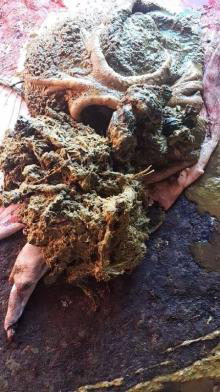
From the total of 384 cattle examined for the presence of indigestible foreign bodies in their rumen and reticulum, 109(28.39%) were found to be positive. Of this 56(14.58%) of foreign bodies were found in the rumen while 35(9.11 %) were found in the reticulum and the rest 18(4.69 %) were found in both rumen and reticulum. The types of foreign bodies detected were plastic 38(9.90%), rope 16(4.17%), cloth and plastic 16(4.17%), Nail 13(3.39%), wire 12 (3.13 %), cloth 7(1.82 %), rope and plastic 7(1.82 %).
Occurrence of Foreign Bodies In Relation to Risk Factor
Occurrence of Foreign Bodies With Regard to Age
From 384 animals examined in different age groups the higher prevalence of foreign body was observed in old age groups 58(36.71%) and the lowered prevalence was recorded in adult 28(23.53%) flowed by young 23(21.50%). The variation in the foreign body prevalence was significancantly difference (p = 0.010) among the age group.
Prevalence of Foreign Bodies in Relation to Origin
Animals slaughtered at study area during this study were come from four different peasant association. The highest and lowest prevalence was observed in cattle brought from Babile 58(60.42%) and Gorogutu 10(10.42 %) districts respectively. The result revealed that there was statistically significant difference (p= 0.000) in the prevalence or occurrence of the foreign bodies in the study animals that were brought from the different areas of the district.
Prevalence of Foreign Bodies in Relation to Body Condition
The animals brought to the abattoir to be slaughtered were comprised of good, medium and poor in body condition score. From those animals examined with good, medium and poor body conditions,13(6.84%), 34(32.69%) and 62(68.89%) were positive for foreign bodies, respectively. There was statistically significant difference (P=0.000) between different body condition scores and foreign body distribution in the rumen and reticulum of the study animals (Table 1).
Occurrence of Foreign Bodies in Relation to Sex
From 109(28.39%) positive animals, 70(34.48%) and 39(21.55%) were detected in female and male animals, respectively. There was statistically significant association (P=0.005) in the occurrence of the disease between male and female (Table 1).
| No. of animals examined | No. of Positive | Chi-square (X²) | P-value | |
|---|---|---|---|---|
| Age | ||||
| Adult | 107 | 23(21.50%) | 9.264 | 0.01 |
| Young | 119 | 28(23.53%) | ||
| Old | 158 | 58(36.71%) | ||
| Sex | ||||
| Male | 181 | 39(21.55%) | 7.8765 | 0.005 |
| Female | 203 | 70(34.48%) | ||
| Body condition | ||||
| Good | 190 | 13(6.84%) | 116.9606 | 0 |
| Medium | 104 | 34(32.69%) | ||
| Poor | 90 | 62(68.89%) | ||
| Origin | ||||
| Babile | 96 | 58(60.42%) | ||
| Gorogutu | 96 | 10(10.42 %) | 69.626 | 0 |
| Girawa | 96 | 17(17.71%) | ||
| Kombolcha | 96 | 24(25.00%) |
Table 1: Prevalence of foreign bodies in relation to risk factor.
Discussion
The current study revealed that overall foreign bodies prevalence was 109(28.39%) in cattle slaughtered at study districts. This finding was agreement with the study of Duresa LA, et al. [24] who reported the prevalence of 30.68% foreign bodies in the rumen and reticum at Bishoftu Elfora export abattoir. The present prevalence rate was higher than the finding of 17.16% by Bassa K, et al. [25], the report of 17.07% by Rahel M [26] and reports of 13.22% by Tesfaye D, et al. [6] who indicated the prevalence of foreign bodies in wolaita sodo, Hawasa, and Jimma municipal abattoir of r.
The increased frequency of foreign bodies in the current study region is most likely due to the extensive usage and incorrect disposal of plastic bags and other indigestible materials. The scarcity of grazing pasture in this research area is exacerbated by the fact that tiny rural agricultural land is nearly entirely filled by chat (known locally as “Jimaa”), and shortage of animal feed. Because of these conditions, animals were more likely to consume indigestible foreign stuff that was strewn over the area. Specifically, nutritional deficits calcium, phosphorus, and other micronutrients cause animals to eat indigestible foreign material indiscriminately [27].
However, the result obtained from this study is substantially low compared to previous studies by Gonenci R, et al. [28] who reported prevalence of 73.4% cattle slaughtered at Iskenderun slaughter house in turkey. These regional variations in the distribution of foreign bodies may be due to differences in animal management setup and the origin of animals presented for slaughter and the presence of negligent disposal of less biodegradable wastes like plastics, as well as lack of mineral and vitamin supplementation, especially during less available feedstuffs such as the dry season. Similarly, in Ethiopia, there is a feed scarcity, particularly during the prolonged dry season, and most small ruminant owners do not provide extra feed to their animals.
In present study, the higher prevalence 70(34.48%) of foreign bodies was detected in female cattle than male
39(21.55%). These results are in agreement with the findings of Vanitha V, et al. [29] stating that, the foreign bodies were found more frequently in female cattle than male in their study. Similarly, Zegeye B [30] reported that higher level of occurrence of foreign bodies in female cattle in retrospective study of clinical cases of farm animal in three years period in University of Gondar Veterinary Clinic. Mussa MM [31] Have also reported that higher degree of occurrence of foreign bodies was found in female 80/160 (50%) ruminants compared to male 56/224(25%). In present study, the higher prevalence in female cattle, may be due to female animals are more exposed to the environmental pollution as they kept for production purpose for longer period of time and there might be increased appetite of female animals due to the nutritional demands during pregnancy and lactation.
The highest frequency of occurrence of rumen and reticulum foreign bodies were detected in animals of old age groups 58(36.71%) followed by young 28(23.53%) and the lower prevalence was detected in adult 23(21.50%). The highest prevalence of foreign bodies in old age groups was also stated in other studies by Duresa L [24] who reported the higher prevalence 33/84 (39.3%) of foreign bodies was found in old and the lower 39/127(30.71%) in young and 46/174 (26.59%) were in adult age groups. Rahel M [26] also reported higher frequency of foreign bodies in rumen and reticulum in the old age groups than other age. The highest frequency of occurrence of rumen and reticulum foreign bodies in the current study may be a result of the gradual accumulation of indigestible materials ingested over a prolonged period of time. In the present study there was a statistically significant difference (P=0.010) between age of cattle and prevalence of foreign bodies in the rumen and reticulum.
This study also identified the highest prevalence of rumen and reticulum foreign bodies were detected in animals with poor body condition 62(68.89%) followed by medium 34(32.69%) and good body condition 13(6.84%) score animals. This finding was similar with the work of Tesfaye and Mersha, [6] who recovered foreign body at higher prevalence from the rumen and reticulum of poor body conditioned animal 8(72.72%) than medium 23(35.94%) and good 30(7.33%) body condition. Poor body condition by itself might be due to the contribution of the foreign body that is the animal loss weight after it has been exposed or it might be due to the interference of foreign body with the absorption of volatile fatty acid (VFA) and thus causes reduced weight gain reported by Rahel M [26].
In this study, the highest prevalence of foreign body was observed in animals that were originated from Babile 58(60.42%) and the lowest was in those originated from Gorogutu 10(10.42 %). This finding was similar with other studies by Igbokwe IO, et al. [32] Tesfaye, et al. [6] who reported as prevalence of foreign body in the rumen and reticulum were associated with the origin of animals. The differences in the prevalence rate might be due to the differences in the origins of the animals presented for slaughter and the types and waste management systems between the sites (Urban and rural). In urban areas, pieces of metallic materials from old fences, from construction of buildings and also materials used for packaging of commodities are usually left or disposed unwisely. Thus animals in such areas have more chance of acquiring foreign bodies than the rural ones.
The highest frequency of occurrence of rumen and reticulum foreign bodies was detected in rumen 56(14.58%) while 35(9.11%) were detected in reticulum and the rest 18(4.69 %) were found in both rumen and reticulum. This is in agreement with the report of Ame MM [33] who stated the highest occurrence of foreign bodies in the rumen 131(68.0) flowed by reticulum 17(18.1%) and lower12 (12.0%) were observed in both rumen and reticulum. The highest occurrence of foreign bodies in the rumen of the current study may be due to the fact that many ingested feed goes to the rumen. This study also indicated that Metallic foreign bodies were most frequently recovered from reticulum, while nonmetallic foreign bodies were detected from rumen. Metallic foreign bodies were most frequently recovered from reticulum due to retention of foreign bodies by the honey comb structure of the reticular mucosa and their heavy weight result in gravitational attraction force of these heavy foreign bodies to the ventral part of the fore stomach.
In the present study the prevalence of plastics foreign body 38(9.90%) is higher followed by rope 16(4.17%) and cloth and plastic 16(4.17%) among the examined foreign body. The lower prevalence observed in the current study was Nail 13(3.39%), wire 12(3.13%), cloth 7(1.82 %), and rope and plastic7 (1.82%). This study is in line with the report of at Assosa municipal abattoir, western Ethiopia who stated the prevalence of plastics foreign body 54(36.7%) is higher followed by rope 40(16.8%) and cloth and plastic 34(10.5%) and disagreement with the finding of Ducharme NG and Fubini FL [34, 35, 36, 37, 38, 39, 40], they have reported that wires account for approximately 70% of ingested foreign bodies and nails and other objects make up the other 30%. The difference in the prevalence rate might be due to differences in the origin of animals presented for slaughter and type of waste management system between the study areas [41, 42, 43, 44, 45, 46, 47, 48].
Conclusion and Recommendations
The current prevalence (28.39%) of indigestible rumen and reticulum foreign bodies of selected districts of east ararge zone municipal abattoirs indicates ingestion of foreign bodies, particularly plastic materials, rope and cloth by animals due to lack proper waste management and shortage of feed in urban area increases the likelihood of ingestion of foreign bodies. Those foreign bodies have great economic significance associated with reduced production and productivity of animals. Sex, age, origin and body condition of animals are considered as a risk factors for the occurrence of foreign bodies in the rumen and reticulum of animals. The following recommendation should be forwarded based on the preceding conclusions:
- To eliminate plastics and other indigestible environmental contaminants, the community should promote the use of biodegradable paper bags, and the responsible government and community should focus on preventing the situation from getting worse.
- To prevent pollution of the environment, the government should enact rules regarding proper trash disposal from families and factories, as well as require factories to replace non-biodegradable plastics with biodegradable plastic paper.
- Farmers must correctly manage their animals.
- Animals should be supplied with sufficient feed to reduce the problems of ingestion of foreign bodies.
- Further research should be made to emphasize the importance of the problem and address the prevention and control measures were recommended.
References
-
Thornton PK (2010) Livestock production: recent trends, future prospects. Philos Trans R Soc Lond B Biol Sci 365(1554): 2853-2867.
-
Panel MM (2020) Meat, milk and more: Policy innovations to shepherd inclusive and sustainable livestock systems in Africa. IFPRI, pp: 94.
-
CSA (Central Statistical Agency). Central Statistics Agency, agricultural sample survey (2019/18). Statistical bulletin 585, Addis Ababa, Ethiopia, 2020.
-
Abera Z, Degefu H, Gari, G, Kidane M (2015) Sero- prevalence of lumpy skin disease in selected districts of West Wollega zone, Ethiopia. BMC vet Res 11: 1-9.
-
CSA (Central Statistical Agency) (2015) Federal Democratic Republic of Ethiopia. Agricultural sample Survey 2010 (2001 E.C). Report on livestock and livestock characteristics (Private peasant holding), Addis Abeba.
-
Tesfaye D, Chanie M (2012) Study on rumen and reticulum foreign bodies in cattle slaughtered at Jimma Municipal Abattoir, South West Ethiopia. American- Eurasian Journal of Scientific Research 7(4): 160-167.
-
Nejash A, Kula J (2016) Impact of climate change on livestock health: A review. Global Veterinaria 16(5): 419-
-
Bayne JE, Edmondson MA (2020) Diseases of the gastrointestinal system. Sheep, goat, and cervid medicine, pp: 63-96.
-
Reddy MVB, Sasikala P (2012) a review on foreign bodies with special reference to plastic pollution threat to livestock and environment in Tirupati rural areas. International Journal of Scientific and Research Publications 2(12): 1-8.
-
Reuters (2019) Govt shelves plan on countrywide ban on single-use plastic products: Report.
-
Ghurashi MAH, Seri HI, Bakheit AH, Ashwag E A M (2009). Effect of surgical removal of foreign body from goat’s rumen with special reference to the prevalence of foreign body in goats in Southern Darfur. Australian Journal of Basic and Applied Sciences 3(2): 664-668.
-
Ramaswamy V, Sharma HR (2011) Plastic bags–Threat to environment and cattle health: A retrospective study from Gondar City of Ethiopia. IIOAB J 2(1): 6-11.
-
Radostits OM, Gay CC, Hinchcliff, KW, Constable PD (2007) Veterinary medicine: a textbook of the diseases of cattle, sheep, pigs, goats and horses.
-
Braun U, Warislohner S, Torgerson P, Nuss K, Gerspach C (2018) Clinical and laboratory findings in 503 cattle with traumatic reticuloperitonitis. BMC veterinary research 14(1): 1-9.
-
Negasa BG, Sisay TB (2016) Assessment of livestock feed resources and feeding systems in Haramaya district, Eastern Ethiopia. International Journal of Livestock Production 7(11): 106-112.
-
Derara DD (2020) Lice Infestations in Sheep and Goats in Kombolcha District, East Hararghe Zone, Oromia Regional State, Ethiopia. Vet Med Int pp: 8889755.
-
CSA (2007) Population census of Ethiopia, Population and Housing Census Report-Country- 2007, Central Statistical Agency, Addis Ababa, Ethiopia.
-
Atlaw T, Girma Y (2019) Sero-Prevalence of Caprine Brucellosis in Babile Woreda, Eastern Hararghe, EthiopiaDairy and Vet Sci J 10(3): 555789.
-
Thrusfield M (2018) Veterinary epidemiology. John Wiley & Sons.
-
Hersom M, Thrift T, Yelich J (2015) Implications of Cow Body Condition Score on Productivity. UF 15(7): 1-6.
-
Reddy YR, Latha PA, Reddy S (2014) Review on metallic and non-metallic foreign bodies: A threat to livestock and environment. Agriculture and Veterinary Sciences 4(1): 6-14.
-
Mccurnin DM, Bassert JM (2006) Clinical textbook for veterinary technicians. 6th (Edn.), St. Louis Elsever Saunders, pp: 224-244.
-
Herenda DC, Chambers PG (2007) Manual on meat inspection for developing countries 119. Food & Agriculture Org, pp: 1-486.
-
Duresa LA, Kitessa JD, Feyissa CT (2022) Prevalence of indigestible foreign bodies and its associated potential risk factors in rumen and reticulum of domestic ruminants at Bishoftu Elfora Export Abattoir. Vet Med Sci 8(6): 2623-2630.
-
Bassa K, Tesfaye W (2017) Study on Rumen and Reticulium foreign bodies in cattle slauthered at WolaitaSodo municipal Abattoir, Ethoipia. Int J Adv Multidiscip Res 4(1): 11-19.
-
Rahel M (2011) Study on fore stomach foreign body in cattle Slaughtered Hawassa Municipal Abattoir. DVM thesis Gondar University, pp: 3-9.
-
Hailat N, Nouh S, Darraji A, Lafi S, Ani F (1997) Prevalence and pathology of foreign bodies (plastics) in Awassi sheep in Jordan. Small Ruminant Research 24(1): 43-48.
-
Gönencİ R, Yıldırım M (2008) Investigation of foreign bodies and their complications in rumen and reticulum of the cattle brought to Iskenderun Slaughterhouse. Yüzüncü yıl Üniversitesi Veteriner Fakültesi Dergisi 19(2): 31-36.
-
Vanitha V, Nambi AP, Gowri B, Kavitha S (2010) Rumen impaction in cattle with indigestible foreign bodies in Chennai. Tamilnadu Journal of Veterinary and Animal Sciences 6(3): 138-140.
-
Zegeye B (2011) Retrospective Study on Disease of Farm Animals. Senior Paper, Presented to Gondar University of Gondar Ethiopia.
-
Mussa MM ( 2022) Study on assessment of foreign body in rumen and reticulum of Cattle slaughtered at boko town slaughter house of fedis District, eastern Ethiopia. IRJMETS 4(10): 1599-1605.
-
Igbokwe IO, Kolo MY, Egwu GO (2003) Rumen impaction in sheep with indigestible foreign bodies in the semi- arid region of Nigeria. Small Ruminant Research 49(2): 141-146.
-
Ame MM, AHA MU, Mokria E, Abdella M (2022) Study on prevalence of indigestible foreign bodies in rumen and reticulum of cattle slaughtered at Bedeno Woreda Municipal Abattoir, Eastern Ethiopia. International Journal of Veterinary Sciences and Animal Husbandry 7(3) 01-05.
-
Ducharme NG, Fubini SL (2004) Farm Animal Surgery. Elsevier Health Sciences ISBN, pp: 624.
-
Hewot Y (2008) Occurrence of rumen foreign bodies in sheep and goats slaughtered at Addis Ababa municipal abattoir. Ethopian Veterinary Journal 14(1): 91-100.
-
Amin I, Fentahun T (2020) Postmortem study on indigestible foreign bodies in rumen and reticulum of cattle (case: Haramaya and Awaday municipal abattoirs, Eastern Ethiopia). Online Journal of Animal and Feed Research 10(4): 172-179.
-
CSA (2013) Central Statistics Agency of FDRE. Agricultural Sample Survey and Report on Livestock and Livestock Characteristics, Addis Ababa, Ethiopia, Part 2, pp: 8-50.
-
CSA (2020) Federal Democratic Republic Of Ethiopia, Central Statics Agency, and Agricultural Sample Survey: Report of Livestock and Livestock Characteristics. Addis Ababa, Ethiopia.
-
EHOARD (2013) Eastern Hararghe Office of Agriculture and Rural Development, Annual plan.
-
HDAO (2011) Haru District Livestock production and Productivity Report, pp: 3-8.
-
Mushonga B, Habarugira G, Musabyemungu A, Udahemuka JC, Jaja FI, et al. (2015) Investigations of foreign bodies in the fore-stomach of cattle at Ngoma Slaughterhouse, Rwanda. J S Afr Vet Assoc 86(1): 1-6.
-
Osei-Somuah A, Agyei AD, Otsyina HR, Kumi SG (2004) Stomach impaction of sheep with plastic materials. Bulletin of Animal Health and Production in Africa 52(3): 212-214.
-
Adewunmi RBD, Gyang EO, Osinowo AO (2004) Abattoir survey of foreign body rumen impaction small ruminants. Nigerian Veterinary Journal 25(2): 32-38.
-
Roman T, Hiwot T (2010) Occurrence of rumen fibrinogen for the diagnosis of traumatic foreign bodies in Sheep and Goat slaughtered at Addis Ababa Municipal Abattoir. Ethiopia Veterinary Journal 14: 91-100.
-
Tesfaye D, Chanie M (2012) Study on rumen and reticulum foreign bodies in cattle slaughtered at Jimma Municipal Abattoir, South West Ethiopia. American- Eurasian Journal of Scientific Research 7(4): 160-167.
-
Tesfaye D, Yismaw S, Demissie T (2012) Ruminal and reticular foreign bodies in small ruminants slaughtered at Jimma Municipal Abattoir, Southwestern Ethiopia. Journal of Veterinary Advances 2(8): 434-439.
-
Tiruneh R, Yesuwork H (2010) Occurrence of rumen foreign bodies in sheep and goats slaughtered at the Addis Ababa Municipality Abattoir. Ethiopian Veterinary Journal 14(1): 91-100.
-
Yohannes H, Mulusew K, Ahemed M, Senayt Z (2019) Prevalence of rumen and reticulum foreign bodies and its associated risk factors in cattle slaughtered at Assosa municipal abattoir western Ethiopia. Journal of American Science 16(10): 83-89.
- The Digital Stethoscope: Harnessing AI in Veterinary Medicine Without Losing Our Healing Touch
- Meningoencephalomyelitis of Unknown Etiology: Short-Term Effect of Two Treatment Protocols on Cerebrospinal Fluid
- Safety and Efficacy of the HomeoPet Cough in Domestic Pets –A Clinical and Correction Analysis Based Upon User Response Survey
- Non Human Animals Responses to Social Loss
- Owner Reported Clinical Outcomes of a Homeopathic Proprietary Preparation for the Treatment of Upper Respiratory and Nasal Disorders in Companion Animals
- Effects and Diagnostic Approach of Ultrasound in Veterinary Practice: A Systematic Review