
Efficacy of Homoeopathic Treatment in Canine Leptospirosis: A Case Study
Leptospirosis is a zoonotic bacterial disease with a worldwide distribution, besides an emerging infectious disease in humans and dogs. Disease in dogs caused primarily by Leptospira interregna’s and Leptospira kirschneri which results in illness of varying severity, depending on the infecting strain, geographical location, and host immune response. Some dogs display mild or no signs of disease, whereas others develop severe illness or death, often as a result of renal injury too. In general, it is suspected in dogs with signs of renal or hepatic failure, uveitis, pulmonary haemorrhage, acute febrile illness, or abortion. A case of Tommy appears with fever, sluggishness, dullness, weakness, loss of appetite and thirst more than 2 weeks. On laboratory examination the serum creatinine level was elevated. The dog was prescribed with Eel serum 30, Vesicaria Q, Veratrum album and followed by Cinchona. The dog bared with rapid improvement with reduced creatinine levels within 2 weeks. The study concludes by highlighting the effectiveness of individualized homeopathy in treating renal injury which could have resulted from canine leptospirosis. This suggests the consumption of Eel serum 30, Vesicaria Q, Veratrum album and followed by Cinchona, steered to significant improvement and completes resolution of the symptoms.
Introduction
Leptospirosis is a disease caused by aerobic Gram- negative, (spirochete). In dogs, the clinical signs of leptospirosis are most commonly attributed to infection with the serovars Ictero haemorrhagiae, Canicola, Grippotyphosa, Pomona and Bratislava. Besides diminutive or no cross- immunity between Leptospira serovars (and no vaccination protocol, at present provided protection against these new serovars. Leptospires are spread by maintenance hosts that don’t more often do not show clinical signs. They carry the bacteria primarily within the proximal renal tubules and shed them in the urine for a few months or all through life, driving to the direct or roundabout infection of other creatures and human beings. The survival of Leptospires within the environment is variable, depending on the nearness of water, soil, warm and dampness. Stagnant water gives a reasonable living space in which Leptospires
can stay infectious for more than six months. 1In a few geographic districts, infection happen in dogs that are exposed to or drink from waterways, lakes, or streams, or dogs meandering on provincial properties. In others, rural terrace mutts may be exposed after contact with urbanized wild creature in developing countries, access to sewage increments chance of the infection in dogs. Contact with rodents moreover may pose a hazard to these dogs, as well as dogs dwelling within cities. The incubation period for leptospirosis may be a few days, the organisms circulate rapidly inside the blood as early as 1 day after contamination and replicate in many days in tissues. Shorter incubation periods can happen with large inoculate, and longer incubation periods may happen after low-grade, persistent contaminations of the renal tubules or hepatocytes, with clinical sickness not being recognized until a few time after renal or hepatic injury [1].
Fever occurs early in the course of illness, and may be accompanied by shivering, generalized muscle tenderness, and reluctance to move. Dogs presenting with acute renal failure may show polyuria, polydipsia, dehydration, vomiting, diarrhoea, in appetence, lethargy, or abdominal pain or some combination of these signs. Oliguria or anuria also may occur. Dogs may present with signs of hepatic failure, including icterus. Other reported manifestations of infection include conjunctivitis, uveitis, and tachypnea or dyspnoea because of acute respiratory distress syndrome or Leptospira pulmonary haemorrhage syndrome (LPHS) Changes suggestive of pancreatitis have been detected in some dogs by abdominal ultrasonography. Haematuria can occur after natural and experimental infection. Bleeding tendencies also may be manifested as hematemesis, haematochezia, haemoptysis, melena, epistaxis, and petechial haemorrhages. Renal tubular infection by Leptospires is associated with acute interstitial nephritis and tubular dysfunction, although acute tubular necrosis can occur in naturally infected dogs. Findings on CBC may include neutrophilia, sometimes with a left shift, lymphopenia, and mild to moderate, non-regenerative anaemia. Thrombocytopenia is present in up to 58% of affected dogs, and when accompanied by evidence of acute kidney damage with or without hepatic injury, can help increase suspicion for a diagnosis of leptospirosis [2]. Increased serum urea and creatinine concentrations may be present in >80–90% of dogs, a combination of azotaemia and increased liver enzyme activities should markedly increase suspicion for leptospirosis. Electrolyte abnormalities may be a consequence of gastrointestinal or renal fluid losses.
Hyponatremia, hypochloridemia, marked hypokalaemia, and hyperphosphatemia occur in many cases, Antibody detection is the most widely used method for diagnosing leptospirosis, and the microscopic agglutination test (MAT) is the most commonly used serological test in veterinary medicine. This test provides an estimate of the antibody titre against Leptospires present in the serum of the dog. The treatment of leptospirosis consists of both supportive and specific therapy. Antimicrobial therapy is directed initially at clearing the leptospiraemic phase, and subsequently at clearing the leptospiruric phase. High doses of penicillin, ampicillin and amoxicillin can clear the leptospiraemic phase. The treatment should be started as early as possible and preferably before the 5th day after the onset of clinical signs. Early treatment inhibits multiplication of the bacteria and reduces the damage to organs such as the liver and kidney. Doxycycline is also effective at clearing leptospiraemic. To eliminate Leptospira organisms from the Fluid therapy is one of the first considerations for the treatment of acute renal failure caused by leptospirosis. The urine output should be assessed and, if necessary, diuretics such as furosemide or mannitol can be administered. Once hydration is restored, metabolic acidosis should be treated if the blood pH remains below 7·2 or the serum bicarbonate concentration is less than 16 mmol/l renal tubules, tetracycline’s, amino glycosides or macrolides are recommended [3].
Materials and Methods
Case Presentation
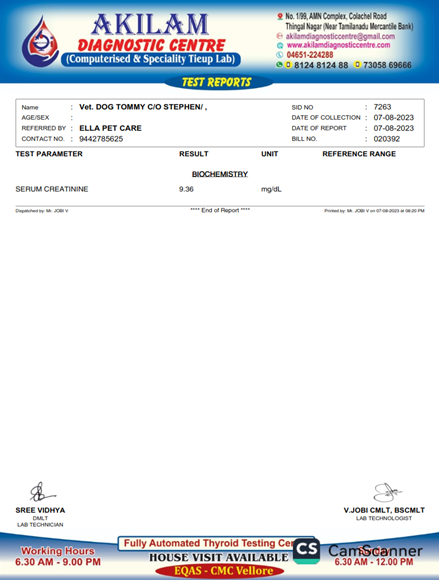
A case of tommy, a 3-year-old dog is studied for canine leptospirosis. The dog presented with fever, extreme prostration, diarrhoea, profuse vomiting and loss of thirst and appetite since 2 weeks. Serum creatinine was 9.36 mg/dl. Initially it was under Inj. Dextrose Normal Saline as supportive therapy, Inj. Amoxicillin sulbactum for 5 days but there was no progress. Hence on the advice of the consultant veterinarian the dog was referred to homeopathy. Diagnosis occurs on the core of strong detached history, physical examination and creatinine levels tested. After diagnosis of the cases based on clinical presentation the determination of symptoms was analysed. In this case prescription is based on the individual symptoms and chronic totality ensuing a consequence to resolve the comprehensive benefits of a standardized case taking constructed from the clinical appearances by evaluating and enhancing through regular follow up. Follow-ups done for a minimum period of 4 months. The results will be assessed with the pre-treatment, during treatment and intensity of post. Treatment with the portrait. Administration of appropriate Homoeopathic similimum besides with amendable dose and potency through the approach of Homoeopathic moralities execute the further follow up of patient [4, 5, 6, 7].
| Presenting complaint | Laboratory values | Prescription | ||||
|---|---|---|---|---|---|---|
| 7/8/2023 | Fever | Serum Creatinine 9.36 mg/dL | Rx | |||
| 7/8/2023 | Extreme prostration | Serum Creatinine 9.36 mg/dL | 1. Chincona 30 (10 drops in 500 ml if drinking water once a day) | |||
| 7/8/2023 | Lethargy | Serum Creatinine 9.36 mg/dL | 2. Eel serum 30 -10 drops in drinking water daily QDS | |||
| 7/8/2023 | Profuse vomiting and Diarrhoea | Serum Creatinine 9.36 mg/dL | 3. Vesicaria tincture – 10 drops in 500 ml water BD | |||
| 7/8/2023 | Oedema of whole body | Serum Creatinine 9.36 mg/dL | 3. Vesicaria tincture – 10 drops in 500 ml water BD | |||
| 7/8/2023 | Decreased urination | Serum Creatinine 9.36 mg/dL | 3. Vesicaria tincture – 10 drops in 500 ml water BD | |||
| 7/8/2023 | Moaning while urinating | Serum Creatinine 9.36 mg/dL | 3. Vesicaria tincture – 10 drops in 500 ml water BD | |||
| 7/8/2023 | Loss of thirst and appetite | Serum Creatinine 9.36 mg/dL | 3. Vesicaria tincture – 10 drops in 500 ml water BD | |||
| 7/8/2023 | 17-08-23 | Serum Creatinine 9.36 mg/dL | 3. Vesicaria tincture – 10 drops in 500 ml water BD | Oedema of whole body persists | Serum Creatinine 8.03 mg/dL | Rx |
| Lethargy | 17-08-23 | 1. Veratrum album 30 -10 drops in 500 ml of drinking water | ||||
| Vomiting occasionally | 17-08-23 | 2. Eel serum 30 -10 drops in drinking water daily QDS | ||||
| Decreased urination | 17-08-23 | 3. Vesicaria tincture – 10 drops in 500 ml water BD | ||||
| Moaning while urinating | 17-08-23 | 3. Vesicaria tincture – 10 drops in 500 ml water BD | ||||
| Loss of thirst and appetite | 17-08-23 | 3. Vesicaria tincture – 10 drops in 500 ml water BD | ||||
| 2/9/2023 | Lethargy better but persists | Serum Creatinine 4.64 mg/dL | Rx | |||
| 2/9/2023 | Urination quantity slightly increased | Serum Creatinine 4.64 mg/dL | 1. Eel serum 30 -10 drops in drinking water daily BD | |||
| 2/9/2023 | Moaning while urinating | Serum Creatinine 4.64 mg/dL | 3. Vesicaria tincture – 10 drops in 500 ml water BD | |||
| 2/9/2023 | Able to feed without support | Serum Creatinine 4.64 mg/dL | 3. Vesicaria tincture – 10 drops in 500 ml water BD | |||
| 2/9/2023 | {Fig:2} thirst slightly better | Serum Creatinine 4.64 mg/dL | 3. Vesicaria tincture – 10 drops in 500 ml water BD | |||
| 25-09-23 | Urination quantity slightly increased | Serum Creatinine 2.55 mg/dL | Rx | |||
| 25-09-23 | Loss of appetite and thirst better | Serum Creatinine 2.55 mg/dL | Eel serum 30 -10 drops in drinking water daily BD | |||
| 25-09-23 | Loss of appetite and thirst better | Serum Creatinine 2.55 mg/dL | 2. Vesicaria tincture – 10 drops in 500 ml water BD | |||
| 29-11-23 | Urination quantity increased-better | Serum Creatinine 2.26 mg/dL | Eel serum 30 -10 drops in drinking water daily BD | |||
| 29-11-23 | appetite and thirst better | Serum Creatinine 2.26 mg/dL | Eel serum 30 -10 drops in drinking water daily BD | |||
| 29-11-23 | active | Serum Creatinine 2.26 mg/dL | Eel serum 30 -10 drops in drinking water daily BD | |||
| 5-2-2024 | Complaints relieved | Serum Creatinine 2.0 mg/dL | Eel serum 30 -10 drops in drinking water daily BD |
Table 1: Progress and follow up of the case.
Results and Discussion
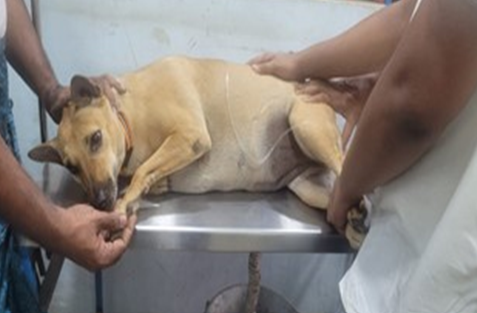
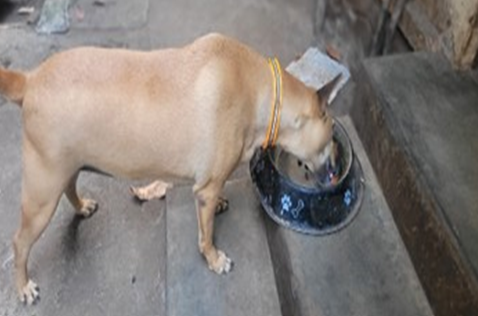
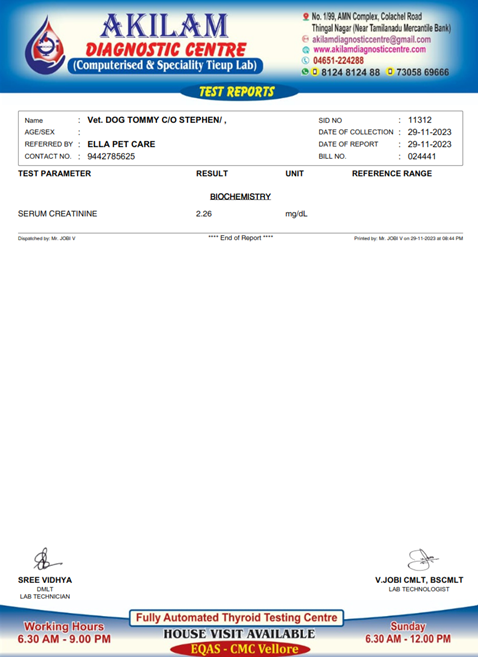
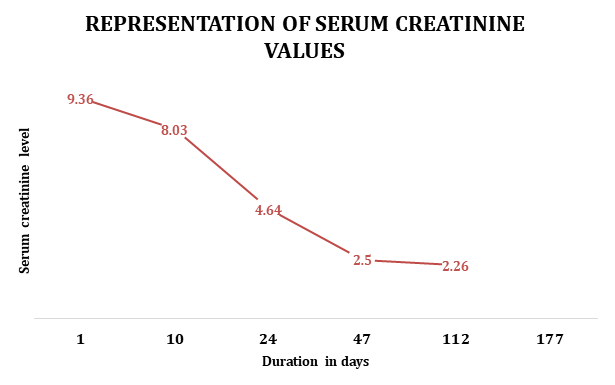
The results seen in 177 days of treatment with Eel serum, Vesicaria tincture, Veratrum album and China of a 3-year dog suffering from Fever, extreme prostration, lethargy, Profuse vomiting and diarrhoea, oedema of whole body, decreased urination, moaning while urinating, Loss of thirst and appetite with a picture of collapse (Figure 1) was seen to reduce from serum creatinine level of 9.36 mg/dl gradually to 2.0 mg/dl while also showing a marked improvement symptomatically (Figure 2).
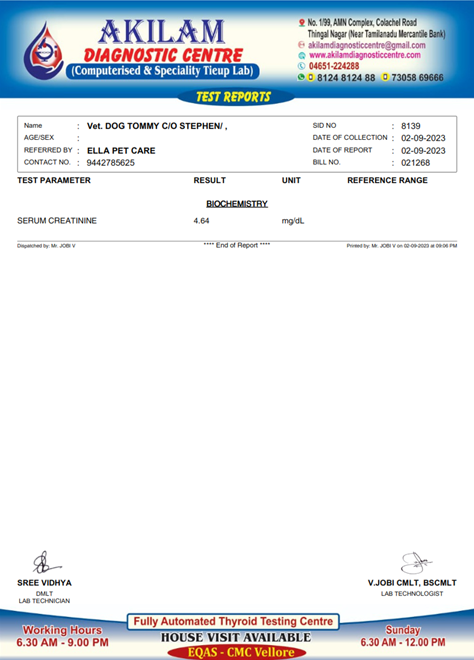
The outcome of the study is seen through the symptomatic improvement of the dog within 10 days along with lowering of the serum creatinine levels. It is clearly observed that the remedies given for their specific indications gradually lowered the intensity of the symptoms caused possibly due to acute kidney injury by leptospirosis, while eventually improving the overall health of the dog. The drug eel serum is a renal remedy which is highly specific whenever the kidney becomes acutely infected or intoxicated characterised by oliguria, anuria and /or albuminuria [8]. Vesicaria mother tincture is a common tincture always used for urinary and renal affections and seen exclusively effective in anuria, oliguria, albuminuria etc. 4 Veratrum album characteristically aids in profuse violent retching and vomiting while cinchona is indicated here for debilitating discharges and loss of vital fluids Acute kidney injury (AKI) is frequently caused by the multiorgan disease leptospirosis in both people and canines. Typically, leptospiral AKI results in structural parenchymal damage, which in turn creates intrinsic AKI (iAKI), which is linked to acute interstitial nephritis affecting the proximal tubule. in a study, Dogs with leptospirosis showed significantly greater serum creatinine concentration than dogs with AKI caused by other aetiologies.5The main way to interpret the creatinine concentration in blood, is in reference to renal elimination (Figure 3). Hypercreatinemia, or elevated blood creatinine concentration, is the result of renal function declining below a particular threshold. This is typically accompanied by elevated urea concentration even upto 88-92% of normal levels (Figure 4). Although MAT is gold standard for diagnosis for leptospirosis various studies have found serum creatinine to be high and add significance to the diagnosis the common symptoms of high creatinine levels in dogs include vomiting, loss of appetite, lethargy (tiredness), anaemia, increased thirst and urination, weight loss, dehydration [9, 10].
Conclusion
Leptospirosis is one of the most common diseases in dogs which is spread through contact with infected faces, urine or soil. The most common indicator for leptospirosis in dogs symptomatically is lethargy, dehydration, loss of appetite, vomiting, oliguria along with high creatinine levels and positive MAT test. Homeopathy has seen to be highly effective as prophylaxis and cure for leptospirosis amongst humans in various studies. 10 with the following case it has been not only established that homeopathy is effective in leptospirosis with acute kidney injury but it has been proven to be effective in animals. Multiple studies and reviews have time and again proved that homeopathy is highly effective in veterinary practices and the cure witnessed is not by chance but due to the specialised skill of the practitioner. In the given case the guidelines for treatment of dog is done according to the standardised guidelines established by academy of veterinary homeopathy namely Utilizing of conventional medical practices to assess patients before starting a homeopathic treatment plan. A study of the patient’s medical records that are readily available, a physical examination (either in-person, via telemedicine, or by a consulting veterinarian), laboratory testing, and medical imaging treatments are a few examples of these. A key component of homeopathic prescribing is identifying the patient’s objective symptoms. This is achieved by getting a complete history at the onset of a case and by closely monitoring the patient while they are receiving treatment. Medication should only be chosen and given to patients if it is homeopathic for their condition. The selection of the homeopathic remedy is dependent upon the patient’s symptoms and presentation, as well as knowledge about the medications (such as from a Materia Medica). Homoeopathically prepared medicines should only be used if their pure action (primary effect) in the healthy body has been determined by careful study [11].
Homeopathic medicines should preferably be given by mouth. The potency scale (e.g. centesimal versus LM) should be selected according to the patient’s vitality and responsiveness, the intensity of the disease signs and any threat posed by a possible aggravation. Homeopathic medicines should be allowed to act without interference, avoiding repetition of the medicine prior to evaluating the response. Early repetition may cause excessive or violent reaction in the patient. There are exceptions, including acute crises, in which an accelerated response may be needed. Patient evaluation is to be based on a careful elucidation of the signs on the physical, emotional and mental levels. Physical and ancillary examinations may be used, together with the client’s and veterinarian’s observations [12].
Author consent
I Dr. Shimmal Chenthik J.P, certified that I have participated sufficiently in the conception and design of this work and the analysis of data (wherever applicable), as well as writing of this manuscript, to take public responsibility for it. I believe the manuscript represents valid work. I have reviewed final version of the manuscript and approve it for publication. Neither has the manuscript nor one with substantially similar content under my authorship been published nor is being considered for publication elsewhere, except as described in an attachment. Furthermore, I attest that I shall produce the data upon which the manuscript is based for examination by the editors or their assignees, if required.
References
-
Maele V, Claus A, Haesebrouck F, Damien S, Dacvim CA (2008) Leptospirosis in dogs: a review with emphasis on clinical aspects. Veterinary Record 163(14): 409-413.
-
Goldstein RE (2010) Canine Leptospirosis. Veterinary Clinics of North America: Small Animal Practice 40(6): 1091-1101.
-
Boericke W (1999) Homeopathic Materia Medica with Repertory.
-
Clarke JH (1902) Materia Medica by John Henry Clarke. Remedial Homeopathy.
-
Zamagni S, Troia R, Zaccheroni F, Monari F, Grisetti C, et al. (2020) Comparison of clinic pathological patterns of renal tubular damage in dogs with acute kidney injury caused by leptospirosis and other aetiologies, The Veterinary Journal 266: 105573.
-
Kohn B, Steincke K, Arndt G, Gruber AD, Guerra B, et al. (2010) Pulmonary Abnormalities in Dogs with Leptospirosis. Journal of Veterinary Internal Medicine 24(6): 1277-1282.
-
Gomes LR, Gabriela RS, Fernanda MS, Martins MA, Martins GA, et al. (2023) Altercates clínico-patológicas, diagnostic serologic e molecular emergency com suspeita de leptospirosis. Semina: Ciências Agrárias 44(2): 823-840.
-
Onlinects (2018) Creatinine level-Canine. Glencoe Animal Hospital. Para 9.
-
Prescott JF, McEwen B, Taylor J, Woods JP, Abrams OA, et al. (2002) Resurgence of leptospirosis in dogs in Ontario: recent findings. The Canadian Veterinary Journal 43(12): 955-961.
-
Bracho G, Varela E, Fernandez R, Ordaz, Marzoa N, et al. (2010) Large-scale application of highly-diluted bacteria for Leptospirosis epidemic control. Homeopathy 99(3): 156-166.
-
Wynn SG (1998) Studies on use of homeopathy in animals. AVMA 212(5): 719-724.
-
Standards of Practice. The Academy of Veterinary Homeopathy. 6 (Edn.).
- The Digital Stethoscope: Harnessing AI in Veterinary Medicine Without Losing Our Healing Touch
- Meningoencephalomyelitis of Unknown Etiology: Short-Term Effect of Two Treatment Protocols on Cerebrospinal Fluid
- Safety and Efficacy of the HomeoPet Cough in Domestic Pets –A Clinical and Correction Analysis Based Upon User Response Survey
- Non Human Animals Responses to Social Loss
- Owner Reported Clinical Outcomes of a Homeopathic Proprietary Preparation for the Treatment of Upper Respiratory and Nasal Disorders in Companion Animals
- Effects and Diagnostic Approach of Ultrasound in Veterinary Practice: A Systematic Review