
Owner Reported Outcomes of Homeopathic Proprietary Preparation for Gastrointestinal Disorders of Companion Pets
Background: Gastrointestinal derangements in domestic and companion pets specifically dogs and cats, are among the most common clinical conditions in a veterinarian’s clinic. Its large prevalence and impact on health concerns, has obviously prompted the number of primary and secondary research carried out in the field. Materials and Methods: The animals included had a range or co-morbidities and consequently animals included were concurrently on medications for these and no adverse drug interactions were reported as expected with ultra dilute medications. Results: The study included 86 real-world small animal patients, across 3 species 51 (59.3%) Cats, 34 (39.53%) Dogs and 1 (1.16%) Rabbit. It included both, males and females, with average age across species of 6.80 year and a very wide body mass range due to the species and breed mix. Ten (37.04%) animals had reported important comorbidities including hypothyroidism and heart complaints, hypertension, diabetes, weight loss, cancer, arthritis / chronic Pains, Irritable Bowel Syndrome, and birth defect. In 21 (24.41%) animals other medicines were used similar complaints. Out of 86, 69 (80.23%) cases reported successful relief, 2 (2.33%) reported no relief or worsening, 1 (1.16%) reported partial relief while 14 (16.28%) respondents skipped this question. Majority 53 (61.63%) considered average recovery, 18 (20. 94%) considered above average and 15 (17.44%) considered it could be faster. All results are clinically (Effect size Cohen’s D = 0.9 Clopper Pearson Exact CI 0.2 – 0.3] and statistically (p < 0.005 in all cases) significant. The exploratory analysis revealed inverse relationship between frequency of dose and response time and between symptom constancy and relief. Meaning that relief will be faster and produce better outcomes with intermittent symptoms and less frequent dosage (2-3 per day) [statistically significant with Fischer’s Exact p
Joseph FT¹* and Isabel S²
¹Pets and People homeopathy, Ireland ²Smith’s Veterinary Homeopathic Consultant, Ireland *Corresponding author: Farrington Thomas Joseph, Pets and People Homeopathy, Cork, Ireland, Tel: +353 872494059, Email: farrington.vet@gmail.com
Abbreviations
GIT: Gastrointestinal Tract; IBD: Inflammatory Bowel Disease; FRE: Food-Responsive Enteropathy; ARE: Antibiotic- Responsive Enteropathy; IRE: Immunosuppressant- Responsive Enteropathy.
Introduction
Gastrointestinal derangements in domestic and companion pets specifically dogs and cats, are among the most common clinical conditions in a veterinarian’s clinic. Its large prevalence and impact on health concerns obviously prompted the number of primary and secondary research carried out in the field. The phrase gastrointestinal derangements or simply digestive upsets represents a spectrum of gastrointestinal tract (GIT) manifestations, typically characterized by one or more clinical signs such as Vomiting, Diarrhoea, Anorexia, Constipation, Excessive drooling, Colitis, Bloat, Gastritis or sometimes more serious such as dehydration, acute gastrointestinal obstruction ulcers or shock, etc. These symptoms can be acute or chronic, depending on the developmental pathophysiology [1]. While the aetiology of many of the chronic GIT conditions like inflammatory bowel disease (IBD) and chronic enteropathies (CE) are still enigmatic the most prominently discussed causal factors include role of gut microbiota and its modulation, and the genetics [2, 3, 4, 5]. Other commonly cited causes, especially for relatively recent and acute conditions include dietary indiscretion, (mainly the low protein diets), and even abrupt dietary changes. The environmental factors, certain infections such as viral e.g. Canine parvovirus, bacterial or parasitic e.g. roundworms, hookworms, and coccidia, food allergies, complex chronic conditions, psychosomatic conditions like stress etc [6, 7]. Antibiotics and drugs in general can also alter the gut microbiome unfavourably in some cases [8, 9], and also affect organ and system function thus novel approaches such as used in the investigational product could be a valuable addition to the therapeutic approaches for managing gastroenteritis. Any realistic estimates of prevalence trends of all GIT disorders of pets lack comprehensive evidence, currently [10].
However, empirically considering high prevalence of occurrence, the absolute number of animals with GIT disorders has an obvious proportionate surge with overall increase in the per population of the world [11, 12, 13]. The US Pet Products Association report 2023 that states that about 86.9 million households (66% of US population) have pets, mainly dogs and cats [14]. Increasing number of pet ownerships is reported in many other countries such as Brazil, Korea, China and Europe [15, 16, 17]. These numbers suffice to deduce indicative health-economic impact of companion per digestive problems. Hence, not surprisingly, many studies of the acute infective GIT problems, IBD, and CE including food-responsive enteropathy (FRE), antibiotic- responsive enteropathy (ARE), and immunosuppressant- responsive enteropathy (IRE) have their primary research focus diagnostic approach and the cost of therapy. The most focused strategies include gene therapy, microbiome and diet-based strategies including probiotics and prebiotics and fluid replacement strategy [18, 19, 20, 21, 22, 23]. Despite all research, cost of therapy and access to medicines for pets is a raising concern among the pet owners [24]. A Forbes Advisor survey has summarized the overall impact of the expensive medical therapy on the pet owners and their inability to afford the medical bills of their pets [25]. This survey partially explains why Over-the-Counter medical products and complementary and homeopathic medicines are progressively being preferred by the pet owners, despite raised concerns and scepticism24. Patient reported outcomes (PROs) are the most modern, methodologically important and highly popular clinical evidence type, which is also well accepted by regulators in human evidence-based medicine [26]. The PROs are validated questionnaire-based surveys, which are directly accessible to the patients to provide their inputs in the stipulated format. The same methodology is applied and widely accepted as Patient Owner Surveys in small animal medicine practice [27, 28].
Homeopathic medicines have been popular among pet owners, despite significant criticism primarily due to incomplete or missing evidence of its pharmacokinetic pathways [29]. The mode of action while useful to know and understand does not stop it working as; collective evidence has established the effect of homeopathic medicines in human chronic GIT disorders, mainly the IBD [30]. In the veterinary use of homeopathy, a significant number of randomized clinical studies establish its effective use despite diversity in size and species [31, 32]. A database of over 200 clinical studies of veterinary use of homeopathic medicines is also indicative of scientific evidence of effectiveness of homeopathy [33]. The owner-response based surveys of other homeopathic preparations have demonstrated safety and efficacy of those preparations in their respective indications in the recent publications [34]. Considering the cost, reach and safety advantage of homeopathic medicines, it is important to support its use with real world outcomes.
Materials and Methods
This study was done on data collected via an internet questionnaire-based facilitator driven survey similar to previous studies [35]. The participant selection process was consistent with prior owner surveys. The survey, a was conducted with a validated assessment tool. IT reports on the safety and effectiveness of the novel# homeopathic medicinal complex “Digestive Upsets” (aka “Digestive+”
in Canada). The study included 86 real world small animal patients in total, across 3 species. The HomeoPet™ Digestive Upsets survey employed Participants had purchased either HomeoPet™ Digestive Upsets (which is one of the 3 brand names viz. HomeoPet™ Digestive Upsets, HomeoPet™ Feline Digestive Upsets— HomeoPet™ Digestive+).It examined the product’s efficacy for a variety of gastrointestinal issues, different methods of administration, and diverse patient types, including those with pre-existing health conditions or concurrent medications. Results indicated positive outcomes.
| Question No. | Question Text |
|---|---|
| i | Respondent ID (Auto generated) |
| ii | Collector ID (Auto generated from the link sharing) |
| iii | Start Date and time (Auto captured) |
| iv | End Date and time (Auto captured) |
| v | IP Address (Auto captured) |
| vi | Email Address (disabled) |
| vii | First Name (disabled) |
| viii | Last Name (disabled) |
| 1 | Pet Type |
| 2 | Pet Breed |
| 3 | Pet Gender |
| 4 | Is your pet neutered? |
| 5 | Pet Age |
| 6 | Pet Weight in lbs |
| 7 | Response time to ‘Leaks No More’: Fast (5) – Slow (1) |
| 8 | How dosed? |
| 9 | How many times dosed daily? |
| 10 | In your opinion did ‘Leaks No More’ work? |
| 11 | Would you recommend ‘Leaks No More’? |
| 12 | Does your pet go to the veterinarian? |
Table 1: Demographics of the respondent cohort.
The Investigational Medicine: “Digestive Upsets” (“Digestive+” Canada).
“Digestive upsets” is a combination Homoepathic medicine, that comprises multiple homeopathic ingredients in a range of potencies from low 5x through high to ultra- high (200c.). The medicine is marketed in United States of America, Canada, and Australia as a Homeopathic medicine.
Results
In all, 86 animals were enrolled in this survey, including 51 (59.3%) Cats, 34 (39.53%) Dogs and 1 (1.16%) Other genre (Rabbit). Even if not truly relevant due to large interim variation, the average age of all animals was calculated.
Average age was 9.67 ± 6.12 years in cats’ group, 10.24 ± 5.23 in the dogs’ group and the rabbit was 6 months, thus overall average age was 6.80 years. In the group 51 (59.3%) male and 35 (40.7%) female animals were distributed as 30 (58.82%) male and 21 (41.18%) female cats, 21 (61.76%) and 13 (38.24%) dogs and 1 (100%) Rabit. Weight of the animals has a broad range due to wide range of species. The average weight was 15.23 pounds overall, 11.08 ± 17.38 of cats and 31.62 ± 28.55 of the dogs. The weight of Rabbit was 3 pounds. In all 77 (89.53%) [48 (94.12%) cats and 29 (85.29%) dogs] were neutered (Table 1).
| Demographics | ||||
|---|---|---|---|---|
| Cat | Dog | Other | Overall | |
| Species Count | 51 (59.3%) | 34 (39.53%) | 1 (1.16%) | 86 (100%) |
| Age | 9.67 ± 6.12 | 10.24 ± 5.23 | 0.5 | 6.8 |
| Male | 30 (58.82%) | 21 (61.76%) | 0 (0%) | 51 (59.3%) |
| Female | 21 (41.18%) | 13 (38.24%) | 1 (100%) | 35 (40.7%) |
| Weight | 11.08 ± 17.38 | 31.62 ± 28.55 | 3 | 15.23 |
| Neutered | 48 (94.12%) | 29 (85.29%) | 0 (0%) | 77 (89.53%) |
Table 2: Demographics of the respondent cohort.
Ten (37.04%) animals had reported important comorbidities. The comorbidities included hypothyroidism and heart complaints with hypertension in two (2.33%) animals each and diabetes, weight loss, cancer, arthritis / chronic Pains, Irritable Bowel Syndrome and birth defect in one (1.16%) animal each (Table 2).
| Medical History | |
|---|---|
| Diabetes | 1 (1.16%) |
| Hypothyroidism | 2 (2.33%) |
| Blood Pressure / Heart complaints | 2 (2.33%) |
| Weight loss | 1 (1.16%) |
| Cancer | 1 (1.16%) |
| Arthritis / Chronic Pains | 1 (1.16%) |
| Irritable Bowel Syndrome | 1 (1.16%) |
| Birth defect | 1 (1.16%) |
Table 3: Distribution of comorbidities in the respondent cohort.
In all, 21 (24.41%) animals received some other medicines for similar complaints. However, their concomitancy relations were not mentioned in any of the records. Records of other medicines include other homeopathic medicines in 8 (14.04%) animals [7 (12.28%) cats and 1 (1.75%) dog,], Nutraceuticals in 4 (7.02%) animals [3 (5.26%) cats and 1 (1.75%) dog], antidiarrheal and antiemetic in 2 (3.51%) dogs each and antacid, antibiotic, Enzymes, Steroid in 1 (1.75%) animal each (table 3). Of these 21, 9 (33.33%) animals had a complete relief, 10 (37.04%) had a partial relief, 6 (22.22%) had no relief and 2 (7.41%) animals had a relapse. In all, 4 animals had adverse events of the previous therapy including Travel Anxiety, Stomatitis, Hair pulling and Diarrhoea & Vomiting in one patient each (Table 3).
| Concomitant and past Medication | Overall | Cat | Dog |
|---|---|---|---|
| Antacid | 1 (1.75%) | 0 (0%) | 1 (1.75%) |
| Antibiotic | 1 (1.75%) | 1 (1.75%) | 0 (0%) |
| antidiarrheal | 2 (3.51%) | 0 (0%) | 2 (3.51%) |
| Antiemetic | 2 (3.51%) | 0 (0%) | 2 (3.51%) |
| Anthelminthic | 1 (1.75%) | 1 (1.75%) | 0 (0%) |
| Enzymes | 1 (1.75%) | 1 (1.75%) | 0 (0%) |
| Other homeopathic | 8 (14.04%) | 7 (12.28%) | 1 (1.75%) |
| Nutraceutical | 4 (7.02%) | 3 (5.26%) | 1 (1.75%) |
| Steroid | 1 (1.75%) | 1 (1.75%) | 0 (0%) |
| Previous Medication Effectiveness for Digestive problems | |||
| Complete | 9 (33.33%) | ||
| Partial | 10 (37.04%) | ||
| 6 (22.22%) | |||
| Relapse | 2 (7.41%) | ||
| Adverse Events | |||
| Travel Anxiety | 1 (1.16%) | ||
| Stomatitis | 1 (1.16%) | ||
| Hair pulling | 1 (1.16%) | ||
| Diarrhoea and Vomiting | 1 (1.16%) |
Table 5: Concomitant and past medication and its effects.
In the group, the main presenting symptoms were Bloating in 66 (76.74%), Inappetence in 52 (60.47%), vomiting in 37 (43.02%), Diarrhoea in 33 (38.37%), Jelly like stool in 27 (31.4%), Poor digestion in 19 (22.09%), over indulgence in 18 (20.93%), Flatulence in 11 (12.79%), Colic in 10 (11.63%), retained flatus and older pets digestive problem in 9 (10.47%) each and Constipation in 6 (6.98%) animals. All animals had more than 2 presenting symptoms.
In 37 (43.02%) animals, there were other additional symptoms. The symptoms were constant in 17 (19.77%) animals while in 49 (56.98%) animals the symptoms were reported to be Intermittent. The data of intermittency was missing in 20 (23.26%) animals. Half of the group [43 (50%) animals] were in the supervision of a veterinarian (Table 4).
| Medical Support | |
|---|---|
| Attended By Vet | 43 (50%) |
| Presenting Symptoms | Baseline Frequency |
| Vomiting | 37 (43.02%) |
| Diarrhoea | 33 (38.37%) |
| Jelly like stool | 27 (31.4%) |
| Flatulence | 11 (12.79%) |
| Retained gas | 9 (10.47%) |
| Constipation | 6 (6.98%) |
| Poor digestion | 19 (22.09%) |
| Over indulgence | 18 (20.93%) |
| Older pets | 9 (10.47%) |
| Colic | 10 (11.63%) |
| Bloat | 66 (76.74%) |
| Inappetence | 52 (60.47%) |
| Other additional Symptoms | 37 (43.02%) |
| Intermittency of Symptoms | |
| Constant | 17 (19.77%) |
| Intermittent | 49 (56.98%) |
| PRB:17-09-2023:12:50 |
Table 4: Presenting Symptoms and Intermittency.
All animals received ‘Homeopet™ Digestive Upsets’ (Feline or multispecies). Most animals [22 (25.58%)] received one dose per day, 16 (18.6%) animals received two doses per day, 9 (10.47%) animals received 3 doses per day. Another 9 (10.47%) animals received more than 3 doses a day. The medicine was directly dropped in Mouth of 20 (23.26%) animals, 31 (36.05%) received medicine with food and 17 (19.77%) received with water. The owners of 69 (80.23%) animals think that they followed dispensing Instructions and used and dosed the medicine correctly while 17 (19.77%) reported that there was a probability of errors (Table 5).
Outcomes
The analysis of outcomes of treatment with ‘Homeopet™ Digestive Upsets’ was performed on two aspects viz. score-based analysis of relief of symptoms before and after the treatment and the patient (Owner) reported product success and outcomes.
| Frequency per day | |
|---|---|
| 1 | 22 (25.58%) |
| 2 | 16 (18.6%) |
| 3 | 9 (10.47%) |
| >3 | 9 (10.47%) |
| Mode of Dispensing | |
| In Mouth | 20 (23.26%) |
| With Food | 31 (36.05%) |
| With Water | 17 (19.77%) |
| Patient Reported Compliance with dispensing Instructions | |
| Used and dosed correctly | 69 (80.23%) |
| Have / May have errors | 17 (19.77%) |
Table 6: Posology of Homeopet™ Digestive Upsets in the study group.
Analysis of Efficacy Outcome on Patient (Owner) Reported Symptomatology
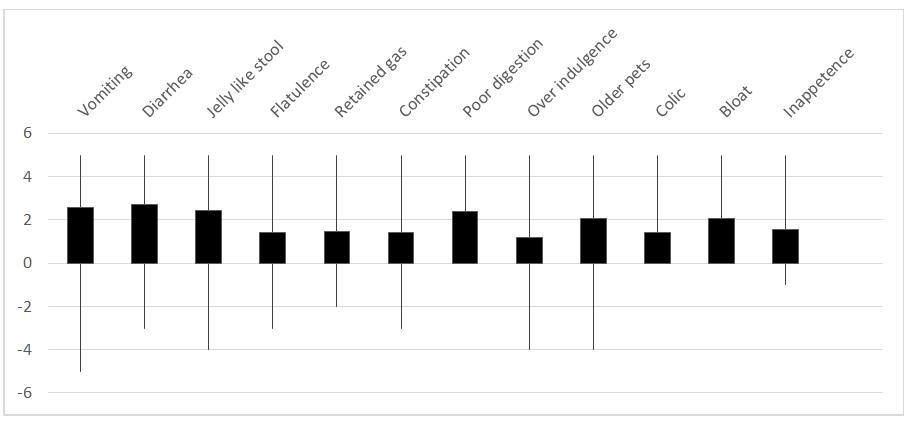
The primary parameter of efficacy was mean difference from the baseline. The score at baseline was considered as Zero and the Outcome at the follow-up was considered on a scale of 10 with -5 being worst as compared with original and 5 considered to be completely recovered as compared with the original. Considering that average of zero would mean that there was no change from the baseline, negative average was considered as product’s failure to produce relief and an average less than 1 was considered as clinically marginal relief, between 1 and 2 was considered clinically significant and more than 2 was considered as clinically highly significant relief. In all the symptoms, the group demonstrated significant to highly significant relief. In several symptoms such as Vomiting, Diarrhoea, stool characteristics, and poor digestion the relief was significantly high, despite first three demonstrating a negative score in one case each. Other symptoms have significant relief which is also statistically significant (p = 0.0044) (Figure 1).
Analysis of Efficacy Outcomes on Patient (Owner) Reported Direct Outcomes
Out of 86, 69 (80.23%) pet owners reported that the product was successful in producing significant relief in their pet’s digestive complaints while 2 (2.33%) reported no relief or worsening of the symptoms and 1 (1.16%) owner reported partial relief. Fourteen respondents skipped this question.
Majority of the owners [53 (61.63%)] considered that the recovery was at an average pace while 18 (20. 94%) considered it above average and 15 (17.44%) thought it should have been faster (table 6). All results are clinically (Effect size Cohen’s D = 0.9 Clopper Pearson Exact CI 0.2 – 0.3] and statistically (p < 0.005 in all cases) significant (Table 6).
| Response to Symptoms | |
|---|---|
| Quick | 9 (10.47%) |
| Fast | 9 (10.47%) |
| Average | 53 (61.63%) |
| Slow | 15 (17.44%) |
| P (t-Test for average = 80%) | 0.029311 |
| Patient Reported Medicinal Efficiency Outcomes | |
| Success | 69 (80.23%) |
| Failure | 2 (2.33%) |
| Partial Relief | 1 (1.16%) |
| Missing | 14 (16.28%) |
| P (t-Test for Success = 99%) | 0.000051 |
Table 7: Analysis of Patient (Owner) Reported Direct Outcomes.
In all, 69 (80.23%) owners were satisfied with the product success and 62 (72.09%) wanted to recommend it to others. Among the reported areas of dissatisfaction, one each was in the categories - Dosing Frequency and Adverse event / Failure of Product (Table 7).
| Customer Satisfaction | |
|---|---|
| Owner Reported Product success | 69 (80.23%) |
| Owners’ Recommendation for use | 62 (72.09%) |
| Reason for Dissatisfaction | |
| Dosing Frequency | 1 (1.16%) |
| Adverse event / Failure of Product | 1 (1.16%) |
Table 8: Analysis of Patient (Owner) Satisfaction.
Analysis of Safety
In the overall group, only 1 (1.16%) animal had two adverse events viz. Aggravation of the symptoms and constipation. Overall, ‘Homeopet™ Digestive Upsets’ appears to be safe as no SAE is otherwise reported (Table 8).
| Adverse Events after Digestive Upset | |
|---|---|
| Overall | 1 (1.16%) |
| Aggravation | 1 (1.16%) |
| Constipation | 1 (1.16%) |
| P (T-Test for proportion of AE = 0.05) | < 0.00001 |
Table 10: Analysis of Adverse Events.
Exploratory Analysis
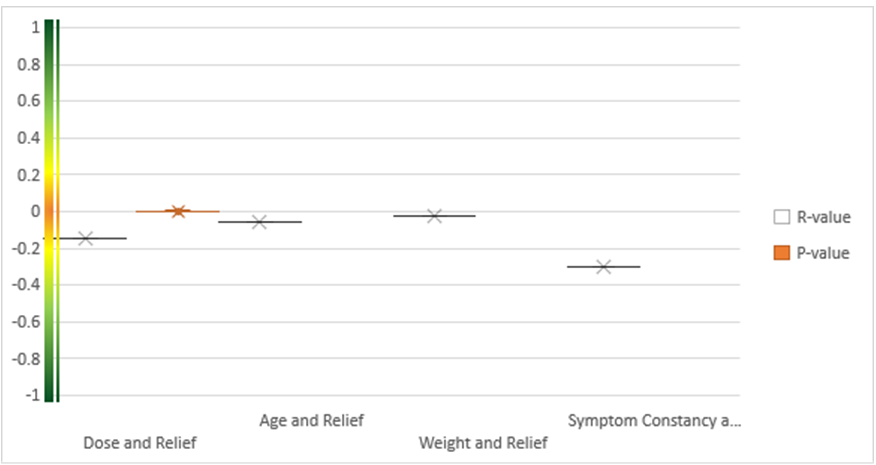
An exploratory analysis was performed for identifying relationships (Pearson R-values) between Relief and Dose frequency, Age, Weight and Symptom Constancy. The relationships with age and weight demonstrated a downhill as anticipated, meaning that increased weight and age slow down the relief time and outcomes. The relationship with dosing frequency was unanticipatedly found downhill, meaning that excess dosing slows down the relief time and outcomes. All these were non-significant relationships (R value < 0.2) with a statistically significant p-value. A moderately significant relationship was identified between Symptom constancy and relief (R=-0.3) meaning that the intermittent symptoms are quicker to be relieved and produce better outcomes. The finding was statistically significant (Fischer’s Exact Test: p<0.000000001); (Figure 2 & Table 9).
| Relationships | R-value | P-value | Test |
|---|---|---|---|
| Dose and Relief | -0.14916 | 0.005076 | Paired t test |
| Age and Relief | -0.05266 | <0.000000001 | Paired t test |
| Weight and Relief | -0.02265 | <0.000000001 | Paired t test |
| Symptom Constancy and Relief | -0.30266 | <0.000000001 | F Test |
Table 9: Relationship Analysis between Influencing factors and Relief of symptoms.
Discussion
Canine and feline gastrointestinal upsets is a range of simple to complex manifestations from diarrhoea, vomiting and bloating to inflammatory bowel disease (IBD). In particular, Diarrhea is the most common morbidity affecting kennelled dogs that also adversely affects standard of care and finances of the shelter. While there is still inadequate understanding of the etiopathogenesis of most of these conditions, the treatment and diagnosis has major focus on treatment of IBD, including diet, enteric macrobiotic manipulation and pharmacological interventions.
Focus of Research
The therapy of Gastrointestinal Upsets is evolving, and the two main components of treatment include conventional therapy and the alternative (complementary) treatments [36]. There is a major focus upon three main areas viz. gastrointestinal reflex related (GER) symptoms like nausea, vomiting, and retching, Intestinal conditions like diarrhoea and anorectal bleeding diarrhoea and Inflammatory Bowel Diseases. The conventional therapy is focused upon the groups such as antidiarrheals, antiemetics and dopamine receptor antagonists (metoclopramide, ondansetron and maropitant), and phenylalanine derivatives (Tyrosine). Alternative treatments mainly include probiotic therapy.
Conventional Therapy
Tyrosine is considered the benchmark of chronic diarrhoea therapy, which bifurcates the chronic diarrhoea into Tyrosine-responsive and non- Tyrosine-responsive. Among the prominent research the studies of Maropitant and metoclopramide in effective control of nausea and vomiting in various conditions are commonly focused by the research. Lorenzutti et al. published a study with nausea from apomorphine in dogs. The study demonstrated that reduction of morphine/acepromazine- induced signs of GER, mainly nausea (ptyalism, lip licking, and increased swallowing) and vomiting [37]. Another study reported that Maropitant prevented vomiting, retching and nausea associated with intramuscular hydromorphone administration in dogs undergoing orthopaedic Surgery [38]. Another study by Yalcin et al. reported a comparative efficacy of metoclopramide, ondansetron and maropitant in preventing parvoviral enteritis-induced vomiting in dogs. This randomized, prospective clinical study demonstrated that maropitant metoclopramide and ondansetron were equally effective in reducing the frequency and severity of vomiting [39]. In another study, Fietcher et al. reported study of diarrhoea in Giardia infections of the dog in a pilot study. This study reports positive effect of 4-chlorine-M-cresol disinfection, oral treatment with ronidazole (30-50mg/kg BW bid for 7 days) and two chlorhexidine shampooing’s [40]. While most studies focused on the three groups of drugs, Cerquetella et al. reported efficacy of an enterovaccinein a pilot study [41].
Alternative Therapy
Probiotics: Jensen et al. concluded from 165 studies that probiotics are safe alternatives to conventional treatments. Rose et al. tested a hypothesis “supplementing dogs entering an animal shelter with a probiotic-prebiotic, known as a symbiotic, will decrease the incidence of diarrhea” with an experiment with 773 dogs in United Kingdom, entering an animal shelter. This prospective double-blind, randomized, placebo-controlled trial established three mainly epidemiological outcomes of the shelter admitted dogs in favour of symbiotic [42]. A double blind study with probiotics Lactobacillus fermentum VET 9A, L. rhamnosus VET 16A, and L. plantarum VET 14A (2×10⁹cfu/ml), or placebo also demonstrated similar results [43]. However, there is a flip-side of the probiotic use data. A randomized, placebo-controlled field trial demonstrated that a 3-week course of probiotics lacked a clinical effect and benefit, and had potential adverse effects. Another case series reported outcomes from 108 Saccharomyces fungemia cases treated with S. boulardii probiotics (67.6%), versus 35 (32.4%) no probiotic therapy. This study concluded that the probiotic therapy in debilitated critical care patients may have contributed to increased Saccharomyces fungemia cases. In the probiotic group, the risk factors associated with were intensive care unit stay (31.5%), total parenteral nutrition or enteral feeding (29.6%), gastrointestinal symptoms such as diarrhoea (21.3%), and diabetes mellitus (13.0%) while the other group mainly had immunosuppression (13.0%), gastrointestinal surgery (4.6%), and intravenous drug use (4.6%) as the risk factors. The all-cause mortality rate of the total cohort was 36.1%.
The Current Research
The landscape of current research clearly indicates that most of the research in both conventional and probiotic, prebiotic or symbiotic therapies is focused on one or more fragments of the problem. Thus, the therapy in most cases may include more than one drug to control the overall health problem. However, the overall problem is wider and requires a therapy that covers wider symptomatology. This study has demonstrated safety and efficacy of the homeopathic proprietary combination ‘Homeopet™ Digestive Upsets’ has significantly improved on wider symptomatology vomiting, diarrhoea, jelly like stool, flatulence, retained gas, constipation, poor digestion, overindulgence, colic, bloat and Inappetence etc. Hence, we tried identifying the effect size and significance of the group versus the overall mean outcomes of probiotic studies. The Cohen’s d was 2.134748, Glass’s delta was 1.687667 and Hedges’ g was 2.240951, meaning that these results were clinically significant too.
Conclusion
Data analysis from this study supports the safety and efficacy of the investigational homeopathic complex medicine ‘Homeopet™ Digestive Upsets’ for managing gastroenteritis symptoms, despite comorbidities. This multi-ingredient, multi-potency remedy demonstrated positive responses when administered as per label., The analysis also revealed a faster overall response time and better outcomes in animals with intermittent symptoms and that the excess repetition of medicines could delay the cure.
Acknowledgements
The Authors acknowledge HomeoPet™ LLC for allowing the conduct of the survey on their products. The surveyor Ms Jenny Doran Halcyon Days Ltd. The authors also acknowledge and thank Dr. Ashish Indani for Analysis of data and support in writing this article.
References
-
Shima FK, Omotosho OO, Apaa TT, Omobowale TO, Nottidge HO (2021) A retrospective study of the prevalence of gastroenteritis in dogs attending some veterinary clinics in Nigeria. Revue Veterinaire Clinique 56(4): 170-176.
-
Jones K (2000) The Gut Microbiota and Its Implications in Gastrointestinal Disorders of Companion Animals. Veterinary Microbiome 4(1): 67-80.
-
Allenspach K (2011) Clinical immunology and immunopathology of the canine and feline intestine. Vet Clin Small Anim Pract 41(2): 345-360.
-
Dubinsky MC, Wang D, Picornell Y, Wrobell I, Katzir L, et al. (2007) IL-23 receptor (IL-23R) gene protects against pediatric Crohn’s disease. Inflamm Bowel Dis 13(5): 511-515.
-
Honneffer JB, Minamoto Y, Suchodolski JS (2014) Microbiota alterations in acute and chronic gastrointestinal inflammation of cats and dogs. World J Gastroenterol 20(44): 16489-16497.
-
Mueller RS, Unterer S (2018) Adverse food reactions: Pathogenesis, clinical signs, diagnosis and alternatives to elimination diets. Veterinary journal 236: 89-95.
-
Adams J, Smith R (20EE) Efficacy of Homeopathic Remedies for Gastrointestinal Issues in Companion Pets: A Review. Journal of Veterinary Homeopathy 10(3): 121- 135.
-
Vich VA, Collij V, Sanna S, Sinha T, Imhann F, et al. (2020) Impact of commonly used drugs on the composition and metabolic function of the gut microbiota. Nat Commun 11(1): 362.
-
Patangia DV, Anthony RC, Dempsey E, Paul RR, Stanton C (2022) Impact of antibiotics on the human microbiome and consequences for host health. Microbiology open 1(1): e1260.
-
Trotman TK (2015) Gastroenteritis. Small Animal Critical Care Medicine pp: 622-626.
-
Freeman LM, Abood SK, Fascetti AJ, Fleeman LM, Michel KE, et al. (2006) Disease prevalence among dogs and cats in the United States and Australia and proportions of dogs and cats that receive therapeutic diets or dietary supplements. J Am Vet Med Assoc 229: 531-534.
-
Lund EM, Armstrong PJ, Kirk CA, Kolar LM, Klausner JS, et al. (1999) Health status and population characteristics of dogs and cats examined at private veterinary practices in the United States. J Am Vet Med Assoc 214: 1336-1341.
-
(2022) Global State of Pet Care: Stats, Facts and Trends. Health for Animals.
-
(2023) APPA National Pet Owners Survey. American Pet Products Association.
-
European Pet Food Industry (2022) European Statistics.
-
Sullivan F (2019) Chinese pet owners spend an average of RMB3, 969 per year. PR Newswire.
-
Hwang EK, Sohn KP (2021) Companion animal in Korea report. Seoul: KB financial group.
-
Schmitz SS (2021) Value of Probiotics in Canine and Feline Gastroenterology. Small animal practice 51(1): 171-217.
-
Tello LH, Mariana AP (2022) Fluid and Electrolyte Therapy during Vomiting and Diarrhea. Veterinary clinics: Small animal practice 52(3): 673-688.
-
Allenspach K, Wieland B, Grone A, Gaschen F, Boisclair J, et al. (2006) Chronic enteropathies in dogs: evaluation of risk factors for negative outcome. Journal of Veterinary Internal Medicine 20(3): 222-231.
-
Craven M, Simpson, JW, Ridyard AE, Chandler ML (2018) Canine inflammatory bowel disease: retrospective analysis of diagnosis and outcome in 80 cases (1995- 2002). Journal of Small Animal Practice 44(7): 336-342.
-
Jergens AE, Simpson KW, Schreiner CA (2010) Results of endoscopic examination and colonoscopy in 23 cats with chronic gastrointestinal disease. Journal of the American Veterinary Medical Association 217(4): 547-550.
-
Heilmann RM, Steiner JM (2009) Clinical utility of assays for the detection of serum concentrations of cobalamin and folate in dogs. Journal of the American Veterinary Medical Association 235(10): 1206-1212.
-
FVE, UEVP, FECAVA (2016) Working towards Responsible Dog Trade: A Joint Position Paper.
-
Megna M (2023) Pet ownership statistics 2023. Forbes Advisor.
-
Jacobson RP, Kang D, Houck J (2020) Can Patient- Reported Outcomes Measurement Information System® (PROMIS) measures accurately enhance understanding of acceptable symptoms and functioning in primary care?. J Patient Rep Outcomes 4: 39.
-
Taylor S, Caney S, Bessant C, Gunn MD (2022) Online survey of owners’ experiences of medicating their cats at home. Journal of Feline Medicine and Surgery 24(12):1283-1293.
-
Treese JS, Nolte I, Bach JP (2021) Patient owner surveys in small animal medicine - importance, benefits and pitfalls in planning, execution and analysis. Tierarztliche Praxis. Ausgabe K, Kleintiere/heimtiere 49(1): 14-21.
-
Lees P, Pelligand L, Whiting M, Chambers D (2017) Comparison of veterinary drugs and veterinary homeopathy: part 2. The Veterinary record vol. 181(8): 198-207.
-
Peckham EJ (2019) Homeopathy for treatment of irritable bowel syndrome. The Cochrane database of systematic reviews 9: 9.
-
Saxton J (2007) The Diversity of Veterinary Homeopathy. Homeopathy 96(1): 3.
-
Mathie RT, Hacke D, Clauseen J (2012) Randomised controlled trials of veterinary homeopathy: characterising the peer-reviewed research literature for systematic review. Homeopathy 101(4): 196-203.
-
Farrington TJ, Smith I (2022) Canine Urinary Incontinence successfully treated by Homeopathic Medicine: A Real-world Clinical Evidence Panel Study. J Vet Sci Res 7(1): 000223.
-
Westermarck E, Skrzypczak T, Harmoinen J, Steiner JM, Ruaux CG, et al. (2005) Tylosin-responsive chronic diarrhea in dogs. J Vet Intern Med 19(2): 177-186.
-
Lorenzutti AM, Martin FM, Litterio NJ, Himelfarb MA, Invaldi SH, et al. (2017) A comparison between maropitant and metoclopramide for the prevention of morphine-induced nausea and vomiting in dogs. Can Vet J 58(1): 35-38.
-
Kraus BL (2013) Efficacy of maropitant in preventing vomiting in dogs premedicated with hydromorphone. Vet Anaesth Analg 40(1): 28-34.
-
Yalcin E, Keser GO (2017) Comparative efficacy of metoclopramide, ondansetron and maropitant in preventing parvoviral enteritis-induced emesis in dogs. J Vet Pharmacol Ther 40(6): 599-603.
-
Fiechter R, Deplazes P, Schnyder M (2012) Control of Giardia infections with ronidazole and intensive hygiene management in a dog kennel. Vet Parasitol 187(1-2): 93- 98.
-
Cerquetella M, Laus F, Speranzini F, Carnevali C, Spaterna A, et al. (2012) Efficacy of an enterovaccine in recurrent episodes of diarrhea in the dog: a pilot study. Rev ESP Enferm Dig 104(2): 65-68.
-
Rose L, Rose J, Gosling S, Holmes M (2017) Efficacy of a Probiotic-Prebiotic Supplement on Incidence of Diarrhea in a Dog Shelter: A Randomized, Double-Blind, Placebo- Controlled Trial. J Vet Intern Med 31(2): 377-382.
-
Gallego C, Junnila J, Mannikko S, Hameenoja P, Valtonen E, et al. (2016) A canine-specific probiotic product in treating acute or intermittent diarrhea in dogs: A double- blind placebo-controlled efficacy study. Vet Microbiol 197: 122-128.
-
Schoster A, Staempfli HR, Abrahams M, Jalali M, Weese JS, et al. (2015) Effect of a probiotic on prevention of diarrhea and Clostridium difficile and Clostridium perfringens shedding in foals. J Vet Intern Med 29(3): 925-931.
-
Vinayagamoorthy K, Pentapati KC, Prakash H (2023) Epidemiology of Saccharomyces fungemia: A systematic review. Med Mycol 61(2): myad014.
- The Digital Stethoscope: Harnessing AI in Veterinary Medicine Without Losing Our Healing Touch
- Meningoencephalomyelitis of Unknown Etiology: Short-Term Effect of Two Treatment Protocols on Cerebrospinal Fluid
- Safety and Efficacy of the HomeoPet Cough in Domestic Pets –A Clinical and Correction Analysis Based Upon User Response Survey
- Non Human Animals Responses to Social Loss
- Owner Reported Clinical Outcomes of a Homeopathic Proprietary Preparation for the Treatment of Upper Respiratory and Nasal Disorders in Companion Animals
- Effects and Diagnostic Approach of Ultrasound in Veterinary Practice: A Systematic Review