
Evaluation of Village Chicken Welfare during Transport and Stocking at Live Bird Markets: A Case Study From Maiduguri, Borno State, North-eastern Nigeria
This case study investigates the welfare conditions of village chickens during transportation and stocking in live bird markets in Maiduguri, Borno State, Nigeria. The study focuses on the observations and clues surrounding the transportation process, including the overcrowding of chickens from various sources, the mixing of different age groups and health statuses, and the subsequent overstocking in cramped cages within the markets. Additionally, the study examines the inadequate provision of feed, water, and healthcare, along with the lack of proper housing and environmental enrichment facilities for the chickens. The study aims to provide insights into the current welfare issues faced by village chickens in the live bird markets and highlights the need for improved practices to ensure their well-being. The transportation and stocking of village chickens from neighboring states to live bird markets in Maiduguri, Borno State, raise several welfare concerns. During transportation, the chickens are crowded and tied with other poultry species on moving vehicles, leading to potential heat stress, injuries, and disease transmission. At the live bird markets, the birds are overstocked in small cages with little space to move, leading to aggressive behavior, stress, and unsanitary conditions. Mixing different age groups and healthy and sick chickens further exacerbates welfare issues and disease spread. The lack of proper attention to water, feed, and health care, as well as inadequate housing and environmental enrichment facilities, also negatively impact the well-being of the village chickens. To address welfare challenges in village chicken transportation and stocking, collaborative efforts are essential among farmers, traders, government authorities, and animal welfare organizations. Key recommendations include implementing transportation guidelines to prevent overcrowding and stress, introducing market reforms with species-specific stocking densities, providing education and awareness workshops on proper handling and healthcare, conducting training sessions for best practices, promoting improved housing in live bird markets, establishing and enforcing regulatory measures, fostering partnerships and support, encouraging collaboration and networking, advocating for infrastructure development, and setting up a monitoring and evaluation system to track progress and inform future initiatives.
Lawal JR¹*, Ibrahim UI¹, Mshelia SH² and Balami AG¹
¹Department of Veterinary Medicine, University of Maiduguri, Nigeria ²Veterinary Teaching Hospital, University of Maiduguri, Nigeria *Corresponding author: Jallailudeen Rabana Lawal, Department of Veterinary Medicine, University of Maiduguri, Borno State, Nigeria, Email: rabana4real@unimaid.edu.ng Keywords: Animal Welfare Issues; Live Bird Markets; Transportation Stocking; Village Chicken
Introduction
The village poultry production system in developing countries including Nigeria, has long been a vital component of the local economy and food security of the nation [1, 2]. However, in Maiduguri, Borno state of Northeastern Nigeria, the emergence of insurgency has significantly disrupted the village poultry production system [3]. Insurgent groups have occupied and destabilized the rural areas that traditionally served as major centers for chicken rearing [4]. Consequently, the village chicken production has experienced a severe decline, leaving a supply gap that needs to be filled through external sources [4]. Due to the insurgency, the region now heavily relies on village chickens sourced from live bird markets in neighboring states [5]. Bauchi, Gombe, and parts of Kano have become major suppliers of chickens to meet the demand in Maiduguri [4]. This shift in supply not only increases the logistical challenges but also affects the local economy, as resources that were once invested within the region are now directed to other states [4, 6]. Transporting village chickens from neighboring states to Maiduguri involves long-distance travel and exposes the birds to harsh handling conditions. The welfare of chickens during transportation and in live markets is crucial for their physiological and psychological well-beings [7]. The conditions under which village chickens are transported, stocked, and managed in live bird markets can have profound implications for their welfare [8, 9]. Furthermore, during transportation, various age groups and birds with different health statuses are mixed together. This mixing practice poses a significant risk of disease transmission among the birds, exacerbating their health conditions and potentially leading to the spread of infectious diseases within the markets [5].
Once the chickens arrive at the live bird markets in Maiduguri, they are subjected to further welfare challenges. Overstocking is a common occurrence, with chickens confined to small cages without adequate space for movement. This overcrowding further intensifies the stress experienced by the birds, compromising their well-being and potentially increasing the likelihood of injury or disease [5]. Moreover, the welfare of the chickens is neglected in terms of proper feed, water, and healthcare. Limited access to sufficient food and water sources can result in malnutrition and dehydration, further compromising the health and welfare of the chickens [10]. Additionally, the absence of appropriate healthcare measures in these markets leaves the birds vulnerable to diseases and injuries without the necessary medical attention [11]. Furthermore, the housing conditions provided for the chickens are inadequate, lacking basic environmental enrichment facilities. The absence of enrichments, such as perches or nesting areas, limits the chickens’ ability to engage in natural behaviors, leading to increased stress and reduced welfare [12, 13].
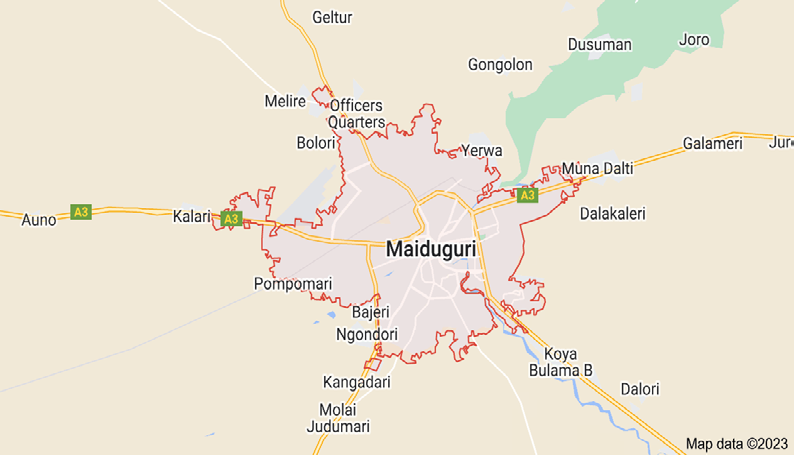
This case study aims to shed light on the welfare challenges faced by village chickens during transportation and stocking in live bird markets in Maiduguri, Borno State, Nigeria. By examining the observed practices and clues, the study seeks to raise awareness about the current shortcomings in the management and care of these chickens. The findings of this study will contribute to the development of effective interventions and improvements in practices to enhance the welfare of village chickens in live bird markets and promote sustainable poultry production in the region Figure 1.
The Case History
Maiduguri is the capital and largest urban city of Borno State, Northeastern Nigeria. The region has its major live birds markets situated in main markets such as the Monday Market, Custom Market, Bama park Market, Baga park Market, Bolori Market, Gamboru Market, and Bakassi Market. These markets play a crucial role in the local economy, as they supply a wide variety of poultry products, particularly village chickens. These markets receives the arrival and supplies of live birds from neighboring states for onward sales to farmers or buyers who meant to restock their chicken flocks or slaughter them for meat. However, concerns have been raised regarding the welfare of these birds during transportation and stocking processes. All the live bird markets within the above mentioned major markets within Maiduguri were considered and visited during the present case study. This case study aims to assess the conditions and welfare of village chickens at various stages, from transportation to stocking in Maiduguri’s live bird markets.
Methodology
Observation and Live bird markets visits
Our research team conducted unannounced visits to seven major live bird markets in Maiduguri, including Monday Market, Custom Market, Bama park Market, Baga park Market, Bolori Market, Gamboru Market, and Bakassi Market. The researchers observed the transportation and stocking procedures of village chickens during peak trading hours.
Data Collection
Our research team collected quantitative data on the number of chickens transported, the duration of transportation, and stocking densities in the markets. Additionally, we recorded qualitative data on bird behavior, physical condition, and any signs of stress or injuries.
Interviews
Our team interviewed village poultry traders, transporters, and market managers to gain insights into their practices and understand the challenges faced in maintaining chicken welfare.
Our Findings
The welfare concerns identified during the transportation and stocking of village chickens from neighboring states (Bauchi, Yobe, Gombe, Adamawa and Kano States) to these live birds markets within Maiduguri, Borno State include:
Crowded and Transportation Challenges
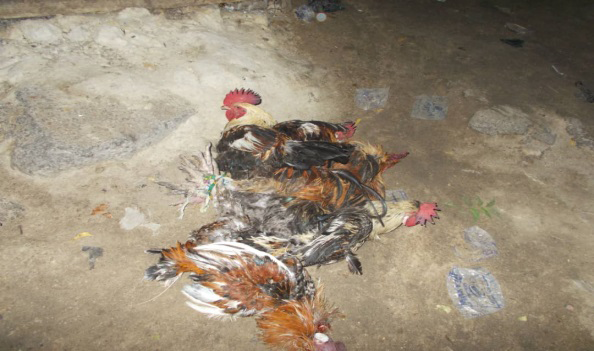
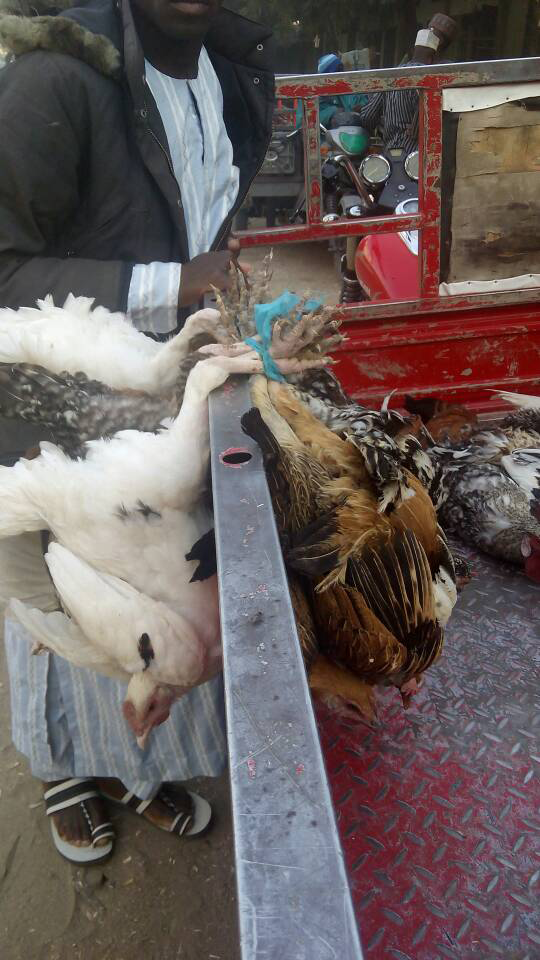
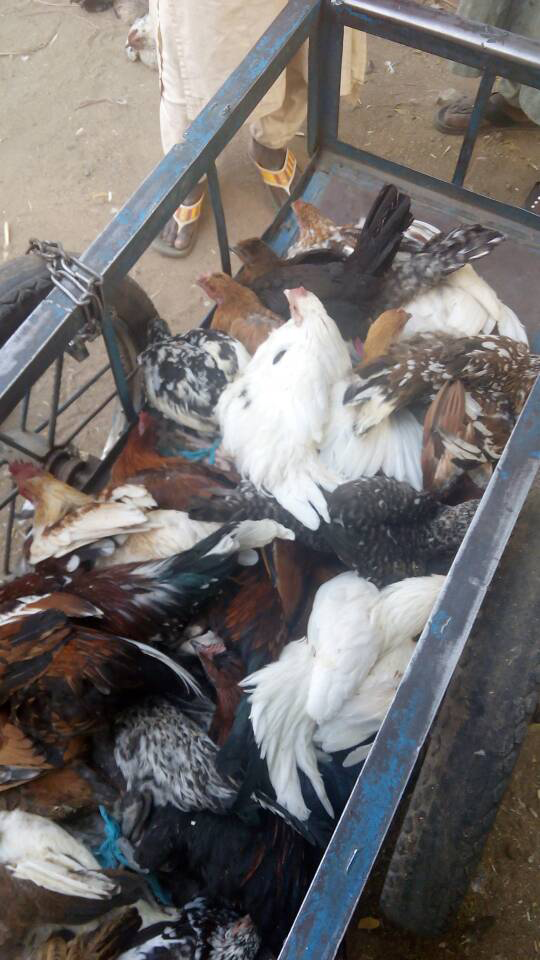
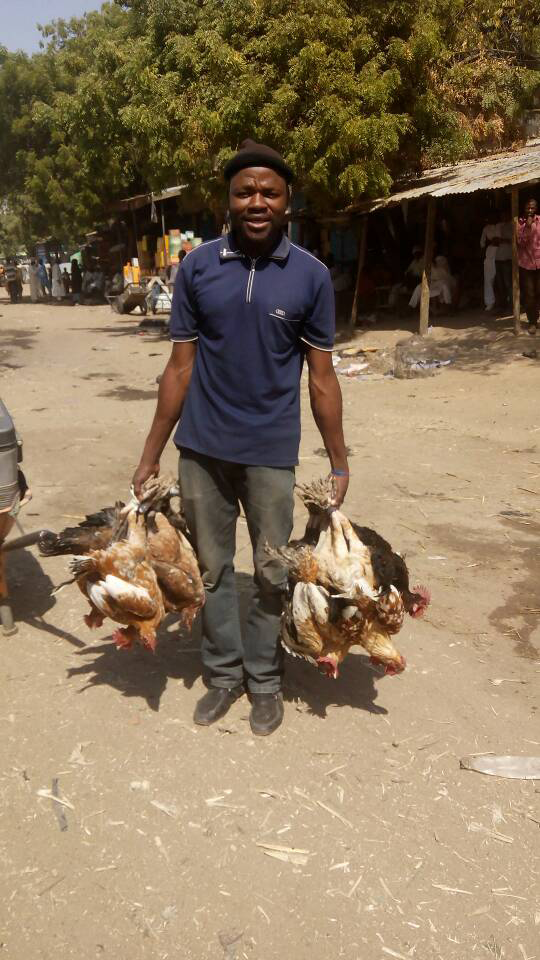
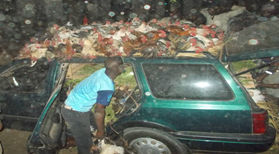
One of the first challenges observed is the transportation of village chickens from far and near neighboring states to Maiduguri, tied and crowded with other poultry species in bunches that are hung on top of moving vehicles. Village chickens were primarily transported in open trucks or wooden crates without adequate protection from extreme weather conditions. High temperatures and humidity during transit were evident, leading to potential heat stress in the birds. This method might pose several risks, including injury, unnecessary stress, and even death due to overcrowding and exposure to harsh environmental conditions. Additionally, the mixing of different age groups, as well as healthy and sick birds, during transportation could increase the likelihood of disease transmission, further compromising the welfare and health of these chickens.
Stocking Densities and Stocking Conditions in Live Bird Markets
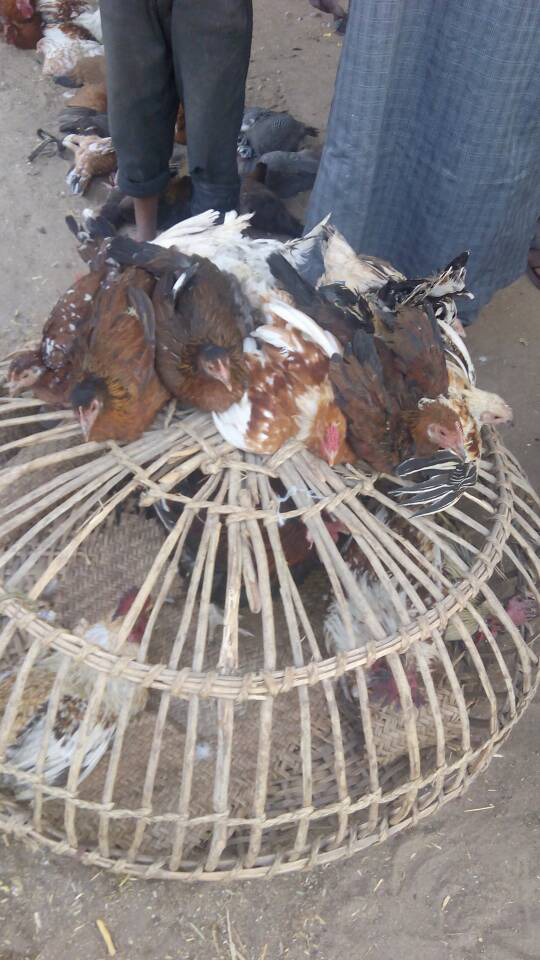
Upon arrival at live bird markets, village chickens are often overstocked in small cages with other birds. The stocking densities were considerably high, with little space for the birds to move around. This situation is detrimental to their welfare, as overcrowding could lead to aggressive behavior, hinders their movement, increases stress levels, injuries, and creates an unsanitary environment. Furthermore, the mixing of various bird species may increase susceptibility to diseases and contribute to the spread of infectious diseases and parasites.
Mixing of Different Age Groups
The practice of mixing different age groups of village chickens during transportation and stocking can result in increased aggression, competition for resources, and vulnerability to diseases. It is essential to recognize the need for separation based on age to ensure the well-being of these birds.
Combining Healthy and Sick Chickens
The mixing of apparently healthy and sick village chickens during transportation and stocking poses significant health risks. Sick chickens can easily transmit diseases to healthy ones, leading to the spread of infections and potentially compromising the entire population.
Lack of Proper Attention to Water, Feed and Health Care
Another crucial concern discovered was the insufficient and inadequate provision of water, feed and health care for village chickens during transportation and when stocked in live birds markets. The absence of regular feeding schedules, proper nutrition, and access to clean water negatively impacts the birds’ health and well-being leading to dehydration and malnutrition. Furthermore, the lack of veterinary care and disease prevention measures exacerbate the risk of infectious diseases, which can rapidly spread in such crowded conditions.
Inadequate Housing and Environmental Enrichment Facilities
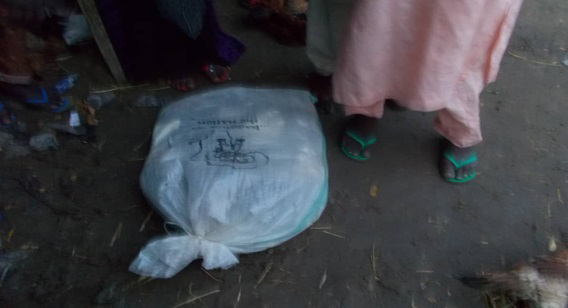
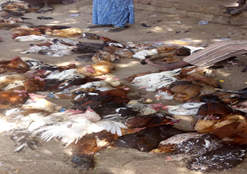
Village chickens supplied to live bird markets in Maiduguri also suffer from inadequate housing conditions that frequently lack environmental enrichment facilities. They are often confined to small, cramped cages that restrict their movement and space to exhibit natural behaviors which are essential for their physical and psychological well- being. Moreover, the absence of environmental enrichment facilities, such as perches, dust-bathing areas, deprives the birds of essential activities and contributes to their overall distress and compromised welfare Figures 2-9.
The Way Forward, Potential Solutions and Assessments
Addressing the welfare challenges associated with the transportation and stocking of village chickens in live bird markets in Maiduguri, Borno state, Nigeria requires a collaborative effort involving various stakeholders, including farmers, traders, government authorities, and animal welfare organizations. To address these challenges and improve the production and welfare of village chickens, we suggest the following measures:
Restoring security
To mitigate the negative impacts of insurgency on the village chicken production system in Maiduguri, efforts should be directed towards restoring peace and stability in the affected rural areas, enabling farmers to resume village chicken production.
Transportation Guidelines
Introduce regulations that prohibit the transportation of live birds in overcrowded and inhumane conditions. Encouraging the use of appropriate crates or containers for transportation, implement guidelines that ensure proper ventilation, appropriate spacing to reduce overcrowding, and minimal stress during transportation.
Improved Housing
Encourage the establishment of well-designed housing facilities in live bird markets, incorporating adequate space, proper ventilation, and environmental enrichment provisions. These facilities should prioritize the birds’ comfort and natural behaviors.
Market Reforms
Develop and enforce regulations that limit the number of birds per cage and promote species-specific stocking densities in live bird markets. Regular monitoring and inspections should be conducted to ensure compliance.
Education and Awareness
Conduct workshops and training programs for poultry farmers, traders and transporters, emphasizing the importance of proper handling, nutrition, and healthcare practice and emphasizing the negative consequences of overcrowding, mixing age groups, and combining sick and healthy chickens. Encourage them to adopt humane and sustainable methods of transportation and stocking.
Training and Capacity Building
Conduct training sessions and workshops to educate poultry farmers, traders, and transporters on best practices for handling, transportation, and stocking of village chickens. Emphasize the importance of appropriate housing, feed, healthcare, and environmental enrichment.
Regulatory Measures
Collaborate with relevant government agencies and local authorities to establish and enforce regulations that promote the welfare of village chickens during transportation and stocking. These regulations should address issues such as maximum stocking densities, separation by age groups, and mandatory veterinary inspections.
Partnerships and Networking
Foster collaborations between poultry farmers, traders, transporters, government agencies, poultry associations, veterinarians, and animal welfare organizations to exchange knowledge, share experiences, provide technical assistance, veterinary care, and welfare support for village chickens throughout the transportation and stocking processes.
Infrastructure Development
Advocate for the development of improved infrastructure in live birds markets, including larger and better-designed cages, separate enclosures for different age groups, and the provision of environmental enrichment facilities.
Monitoring and Evaluation
Establish a monitoring and evaluation system to assess the progress and effectiveness of interventions aimed at improving the welfare of village chickens. Regular inspections, feedback collection, and data analysis will help identify areas of improvement and inform future initiatives.
Conclusion
This survey sheds light on the challenges faced by village chickens during transportation and stocking in Maiduguri’s live bird markets. Ensuring the welfare of village chickens during transportation and stocking is of utmost importance to promote their well-being and prevent the spread of diseases. By addressing the observed concerns and implementing the recommended measures will contribute to improving the welfare of these birds, enhance their market value, and promote ethical practices within the poultry industry. Additionally, raising awareness among stakeholders about the importance of animal welfare will foster a compassionate live bird market environment, creating a more humane and sustainable poultry industry in Maiduguri, Borno State, Nigeria.
Funding
This study did not receive any grant from funding agencies in the public, commercial, or non-profit sectors.
Acknowledgments
The authors would like to acknowledge the support and cooperation of the village poultry transporters, live bird sellers and the markets’ union public relation officers for permission allowing our research team to carry out the survey and take some photographs snap shots. The security cover we enjoyed and approval from the Nigerian Army, Nigeria Police and Nigerian Civil Defense Corps during the period of our market visits are also acknowledged.
Conflict of Interest
The authors declare no conflicts of interest regarding the publication of this manuscript.
References
-
Alders RG, Pym RAE (2009) Village poultry: still important to millions, eight thousand years after domestication. Worlds Poultry Science Journal 65(2): 181–190.
-
Idamokoro EM, Hosu YS (2022) Village chicken production and food security: a two-decade bibliometric analysis of global research trends. Agriculture and Food Security 11: 40.
-
Hassan T, Lawan S (2023) Assessment of the Impact of Boko Haram Insurgency on Infrastructure for Monitoring and Evaluation of Agricultural Activities in Yobe State, Nigeria. International Journal of Innovative Food, Nutrition & Sustainable Agriculture 11(1): 16-27.
-
Sheikh AM, Onyiche ET, Chul SA, Yunus H (2023) A Preliminary Study on Poultry Production and the Effects of Boko Haram Insurgency in Maiduguri. Sahel Journal of Veterinary Sciences 19(4): 16-19.
-
Haile B, Fentie T (2020) The role of live chicken markets as a source of replication and dissemination of Newcastle disease virus in chickens, northwest Ethiopia. Poultry Science 99(11): 5415-5421.
-
Yakubu A, Baba BA, Thlawu P, Gadzama AA (2021) Assessment of the Effect of Boko Haram Insurgency on Crop Production in Hawul Local Government Area, Borno State, Nigeria. Journal of Agricultural Economics, Environment and Social Sciences _7_(1): 266-277.
-
OIE (2009) World Organization for Animal Health, Newcastle Disease, Etiology, Epidemiology, Diagnosis, Prevention and Control.
-
Chaka H, Goutard F, Bisschop SPR, Thompson PN (2012) Seroprevalence of Newcastle disease and other infectious diseases in backyard chickens at markets in Eastern Shewa zone, Ethiopia. Poultry Science 91(4): 862-869.
-
Ipara BO, Otieno DO, Nyikal RA, Makokha SN (2019) The role of unregulated chicken marketing practices on the frequency of Newcastle disease outbreaks in Kenya. Poultry Science 98: 6356-6366.
-
Abeyesinghe SM, Nicol CJ, Hartnell SJ, Wathes CM (2005) Can domestic fowl, Gallus gallus domesticus show self- control. Animal Behavior 70: 1-11.
-
Whittington JK (2011) Public health concerns associated with care of free-living birds. Veterinary Clinics of North America_:_ Exotic Animal Practice 14(3): 491-505.
-
Weeks CA, Lambton SL, Williams AG (2016) Implications for welfare, productivity and sustainability of the variation in reported levels of mortality for laying hen flocks kept in different housing systems: A meta-analysis of ten studies. PLoS One 11: 014639.
-
Campbell DLM, Haas EN, Lee C (2019) A review of environmental enrichment for laying hens during rearing in relation to their behavioral and physiological development. Poultry Science 98(1): 9-28.
- The Digital Stethoscope: Harnessing AI in Veterinary Medicine Without Losing Our Healing Touch
- Meningoencephalomyelitis of Unknown Etiology: Short-Term Effect of Two Treatment Protocols on Cerebrospinal Fluid
- Safety and Efficacy of the HomeoPet Cough in Domestic Pets –A Clinical and Correction Analysis Based Upon User Response Survey
- Non Human Animals Responses to Social Loss
- Owner Reported Clinical Outcomes of a Homeopathic Proprietary Preparation for the Treatment of Upper Respiratory and Nasal Disorders in Companion Animals
- Effects and Diagnostic Approach of Ultrasound in Veterinary Practice: A Systematic Review