
Status of Covid-19 Vaccination among Students of Tertiary Education Institutions in Ibadan, Nigeria
Background: The COVID-19 pandemic has had extremely detrimental effects on worldwide business, education, health, and tourism. Students in tertiary institutions of learning are also confronted with new challenges, and tertiary institutions host a large population of young people. Hence, any vaccine reluctance among this group could be disastrous and increase the probability of COVID-19 infection in society. This therefore necessitates the need for the study as the study seeks to assess the status of COVID-19 vaccination among students in tertiary educational institutions. Methods: This is a descriptive cross-sectional study aimed to assess the status of COVID-19 vaccination among undergraduates in the University of Ibadan and The Polytechnic, Ibadan, Nigeria. Through multi-stage sampling, 348 students from both institutions were recruited into the study. A self-administered questionnaire was adopted. Data was analyzed by the use of Statistical Package for Social Sciences (SPSS) software version 25.0. Results: Only 52.6% of the participants have received one or more doses of COVID-19 vaccine. Only 30.3% of those who have been vaccinated are females, while 60.7% are males. A total of 56% of the participants are positively disposed to the COVID-19 vaccine. Half of the respondents opined that COVID-19 might have unwanted side effects, while 24.1 perceived the vaccine is unsafe. A total of 91.6% of those who have been vaccinated did so because it is free of charge, while 60.3% of those who refused to be vaccinated reported being worried about the effectiveness of the vaccine. Conclusion: Many of the students in tertiary education institutions are yet to receive the COVID-19 vaccine. Despite their positive disposition to the vaccination, majority of them refused to be vaccinated for various reasons. It is therefore recommended that effective interventions to promote the uptake of vaccination among this group should be planned and implemented.
Abbreviations
WHO: World Health Organization; SPSS: Statistical Package for Social Sciences.
Introduction
The Coronavirus disease 2019 (COVID-19), is an infectious respiratory disease caused by a strain of coronavirus that causes human illness [1]. The new strain called severe acute respiratory syndrome coronavirus 2(SARS-COV-2; formerly called 2019-nCoV), was first identified during an outbreak of respiratory illness cases in Wuhan City, Hubei Province, China. It was initially reported to the World Health Organization (WHO) on December 31, 2019. By airborne droplets that are released when coughing and sneezing, the disease is transferred from one person to another. Moreover, it can spread when people come into contact with infected hands or surfaces and then touch their eyes, nose, or mouth. Most infected individuals may only experience mild to moderate respiratory symptoms and will recover without the need for special care. On the other hand, some people will get quite sick and need medical care. The likelihood of developing a major illness is higher among older persons and those with underlying medical disorders including cancer, diabetes, cardiovascular disease, or chronic respiratory diseases. With COVID-19, anyone can become ill and could pass away at any age or become extremely ill [2]. A psychosocial impact on humanity has resulted from this severe acute respiratory disease, which necessitates preventive and mandatory social isolation. The disease is characterized by rapid transmission, high mortality rate and resulting complications among humans globally [3]. Since the outbreak of the disease, various countries worldwide have been putting these steps in place to stop the spread of COVID-19. Guidelines and protocols for COVID-19 were released by the World Health Organization and approved by national health ministries.
These protocols include information about COVID-19 symptoms, prevention, and preventative actions. The Centers for Disease Control and Prevention emphasized that everyone should take precautions for their own safety and the safety of others to stop the spread of disease. These precautions include good hand hygiene, appropriate distance, the use of a mask, appropriate coughing and sneezing behavior, isolation, and surface decontamination [1]. The success of the measures implemented is based on the people’s adherence to prevention controls, which is largely influenced by knowledge, perception, and preventive behavior against COVID-19 [4]. The COVID-19 pandemic caused a sense of threat and worry that has surged globally at an alarming pace. According to WHO [2], there have been a total of 630,387,858 confirmed cases and 6,583,163 confirmed deaths in the year 2022.
One of the greatest advancements in public health in human history has been deemed to be vaccination. Yet, vaccine hesitancy is a public health issue that has continually thwarted coordinated attempts by health officials to stop the spread of infectious illnesses like COVID-19 in nations like Nigeria. It is crucial to assess public perception in order to increase the adoption of the COVID-19 vaccine through focused initiatives. Herd immunity is frequently attempted in order to control a disease that can be prevented by a vaccination. Herd immunity is the term used when a large enough population has acquired immunity to a contagious illness, either by prior infection or immunization [5]. The purpose of immunizations is herd immunity, and the greater the threshold needed for herd immunity, the more contagious the disease. According to scientists, to develop herd immunity for COVID-19, 70–90% immunity will be needed. The challenge with the vaccine is its availability and accessibility to people around the world. However, it has been reported that 68.2% of the world has received at least one dose of the COVID-19 vaccine, 23.6% in low-income countries, and 42% in Nigeria [6]. Sub-Saharan Africa continues to have lower COVID-19 vaccination rates than other low and middle-income regions. This is partly linked to vaccination hesitancy which is mostly caused false information regarding the origin, effectiveness and safety of vaccines, political influences, religious beliefs, low perceived risk [7].
COVID-19 vaccination in Nigeria began in 2021, and after a year, about 13.8% of the country’s population have been fully vaccinated [8] which is less than the amount required for herd immunity. It was therefore concluded that further research be carried out to address the magnitude of COVID-19 hesitancy.
The pandemic has had extremely detrimental effects on worldwide business, education, health, and tourism. Students in tertiary institutions were also confronted with new challenges. Tertiary institutions host a large population of young adults. A previous study reported 20.5% COVID-19 vaccination coverage among young adults in Nigeria. Hence, any vaccine reluctance in this community could be disastrous and increase the probability of COVID-19 infection. This therefore necessitates the need for the study as the study seeks to assess the perception and status of COVID-19 vaccination among students in tertiary institutions in Ibadan, South West Nigeria.
Methodology
Study Design and Study Population
A descriptive study among undergraduates in the University of Ibadan and The Polytechnic, Ibadan. Male and female undergraduates of the randomly selected faculties were selected to participate in the study. Ethical Approval and Consent of the Participants Ethical approval was obtained from the UI/UCH Health Ethical Review Committee with IRB Research approval number: 23/0302. Data was collected after informed consent was obtained from each participant. Questionnaire Design and Distribution A 38-item self-administered questionnaire were designed using both open and close-ended questions to provide information about the socio-demographic characteristics of the participants, their perception of the COVID-19 vaccine, their status of vaccination, and their reasons for the acceptance and refusal of the vaccine. Questions on perception towards COVID-19 vaccination were adapted from a study [9]. A study was carried out in a Nigerian university with a reliability coefficient of 0.75. Questions on status and reasons for acceptance and refusal were also adapted from a study among healthcare workers across a sectional survey in China with a reliability coefficient of 0.869. Informed consent was obtained from all participants before the administration of the questionnaire [10].
Data Analysis
The analysis of this research focused on examining demographic factors that can influence the perception of students in Nigeria’s tertiary institution about the COVID-19 vaccine and it also assessed the level of vaccination of the students in the tertiary institutions. Data was analyzed using Statistical Package for Social Sciences (SPSS) version 25.0. P-value of <0.05 was considered statistically significant. Results Table 1 shows the demographic characteristics of respondents in this study, with regard to their gender, age, religion, ethnicity, marital status, institution, and year of study. A large percentage of them (60.9%) are between 21- 24 years. The majority (52.6%) of the respondents are males.
| Variables | Frequency | Percentage |
|---|---|---|
| Gender | ||
| Male | 183 | 52.6 |
| Female | 165 | 47.4 |
| Age | ||
| 17-20 years | 90 | 25.9 |
| 21-24 years | 212 | 60.9 |
| 25-28 years | 39 | 11.2 |
| 29-32 years | 7 | 2 |
| Religion | ||
| Christianity | 257 | 73.9 |
| Islam | 39 | 25.8 |
| 1 | 0.6 | |
| Ethnicity | ||
| Yoruba | 281 | 80.7 |
| Igbo | 47 | 13.5 |
| Hausa | 14 | 4 |
| Others | 6 | 1.7 |
| Marital status | ||
| Single | 336 | 96.6 |
| Married | 12 | 3.4 |
| Institution | ||
| UI | 169 | 48.6 |
| Poly | 179 | 51.4 |
| Level of study | ||
| 100 level | 20 | 10.9 |
| 200 level | 35 | 19.1 |
| 300 level | 40 | 21.9 |
| 400 level | 51 | 27.9 |
| 500 level | 37 | 20.2 |
| ND 1 | 89 | 48.1 |
| ND 2 | 96 | 51.9 |
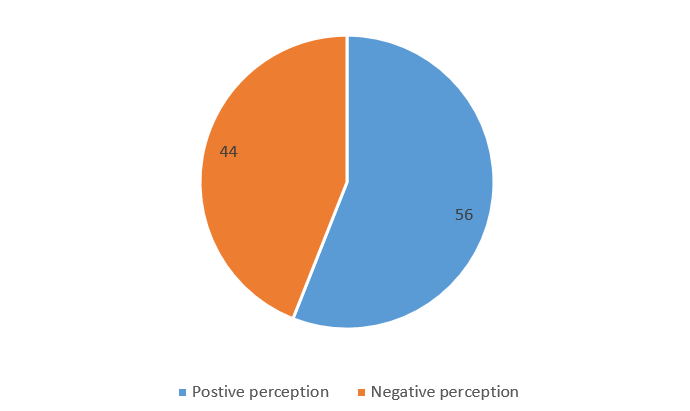
Table 1: Perception of COVID-19 vaccine. Overall, 56% of the participants have a positive perception to the COVID-19 vaccine (Fig
- As shown in Table 2, 60.7% of the total male respondents have been vaccinated, while only 43.6 percentage of the female respondents have been vaccinated.
- Gender
- Male
- 111
- 60.7
- Female
- 72
- 39.3
Table 2: Vaccination status of the participants.
| Perception of COVID-19 vaccine | SA (%) | A (%) | U (%) | D (%) | SD (%) |
|---|---|---|---|---|---|
| COVID-19 vaccines should be made compulsory for the general population | 25.1 | 34.6 | 16.8 | 15.4 | 8.1 |
| COVID-19 vaccines are unsafe | 7.3 | 16.8 | 26 | 38.3 | 11.7 |
| The vaccines are not necessary, the immune system is enough | 6.4 | 16.2 | 23.7 | 44.1 | 9.5 |
| I am afraid that the vaccines might have unwanted side effects | 12.6 | 36.9 | 24 | 22.1 | 4.5 |
| I believe the vaccines will have future medical implications | 10.9 | 24.9 | 31.3 | 26.8 | 6.1 |
Table 3: Perception of COVID-19 vaccine. Overall, 56% of the participants have a positive perception to the COVID-19 vaccine (Fig
The results as presented in Table 3 show that 34.6% of the respondents agreed that COVID-19 vaccines should be made compulsory for the general population, while only 16.8% of them agreed that the vaccines are not safe.
Factors associated with COVID-19 vaccination
Results presented in Table 4 show that 69.3% of the participants were vaccinated because vaccines are the most effective way to prevent diseases, while 91.6% were vaccinated because it is free.
| Items | Yes (%) | No (%) |
|---|---|---|
| Vaccines are the most effective way to prevent diseases | 183(69.3) | 45(19.7) |
| Worried about contracting the COVID-19 virus | 66(28.8) | 163(71.2) |
| The vaccine is free | 206(91.6) | 19(8.4) |
| People around are willing to vaccinate | 141(62.4) | 85(37.6) |
| Travel frequently | 74(32.9) | 151(67.1) |
Table 4: Factors associated with COVID-19 vaccination.
Reasons for not taking the vaccine
Some of the reasons identified by the participants for not taking the vaccine include; worry about the effectiveness of the vaccine (60.3%), and fear of injection (39.6%), (Table 5).
| Reasons for not taking the vaccine | Yes N(%) | No N(%) |
|---|---|---|
| The vaccine has just started to be used, it takes time to wait and see | 191(63) | 112(37) |
| Worried about the safety of the vaccine | 189(61.4) | 119(38.6) |
| Worried about the effectiveness of the vaccine | 185(60.3) | 122(39.7) |
| There are vaccine contraindications not suitable for vaccination | 170(56.1) | 133(43.9) |
| Doubts about the authenticity of the vaccine | 184(60.5) | 120(39.5) |
| Good physique, no need for vaccination | 74(24.7) | 225(75.3) |
| COVID-19 vaccine is a conspiracy | 107(35.5) | 194(64.5) |
| I don’t need the vaccine because I follow | 138(45.4) | 166(54.6) |
| Preventive measures seriously I don’t need the vaccine because I am young, | 131(43.5) | 170(56.5) |
| healthy and immune I am afraid of needles and injections | 120(39.6) | 183(60.4) |
Table 5: Reasons for not taking the vaccine.
Discussion
Coronal virus disease 2019 has been what it is and has brought a lot of predicaments to the world at large. Its outbreak has sensitized different nations to put measures in place to curb its menace as stated by the World Health Organization (WHO). However, the vaccine’s effectiveness depends on its uptake. It is therefore imperative to investigate factors influencing its hesitancy. WHO named vaccine hesitancy as one of the 10 topmost threats to global health in 2019 [2]. The WHO declared Nigeria free of wild polio virus in the year 2020 through vaccination [11].
In Nigeria, vaccination against COVID-19 began in 2021, and it was documented that only 13.8% of the country’s population have been fully vaccinated after a year [8] which is less than the amount required for herd immunity. It was therefore concluded that further research be carried out to know the status of COVID-19 vaccination among students in various tertiary institutions in Ibadan to address the magnitude of COVID-19 hesitancy.
In this study majority of participants believed that vaccination is the most effective way of preventing the disease. This was emphasized by the Centre for Disease Control [12]. The CDC informed the public through a publication that getting a COVID-19 vaccine is a safer, more reliable way to build protection than getting sick with COVID-19. COVID-19 vaccination helps protect people by creating an immune response without the potentially severe illness or post- COVID conditions that can be associated with COVID-19 infection. However, hesitancy has been identified as a major problem in COVID-19 vaccination, especially among students of tertiary institutions. This is consistent with another study in Nigeria by Dunkwu-Okafor, et al. [13], who reported that only 9.2% of the 677 students had ever taken the COVID-19 vaccine.
However, about one-quarter of the respondents opined that the vaccine is unsafe, while half opined that the vaccine might have unwanted side effects. This could have a strong impact on the uptake of the vaccine. Hence, many refused to be vaccinated. Many studies Amer SA, et al. [14, 15, 16] have reported side effects related to COVID-19 vaccination. Nevertheless, the uptake of the vaccine is recommended for all age groups, especially among young people. Similarly, most of the respondents in this study refused to be vaccinated because of the vaccine’s newness, exercising doubt about its efficacy, side effects, and possible consequences of taking it soon. Also, a greater percentage doubted the authenticity of the vaccine, this is in agreement with the findings of Uzochukwu, et al. [17] who claimed that low uptake of the vaccine was associated with concerns about vaccine safety, efficacy, and side effects. Hence, there is a need for an awareness campaign about the vaccines.
In addition, the perception of the respondents was influenced by their genders. This is in agreement with other findings in developed nations. It was also found that a greater percentage of male students accepted the vaccine than females, same was recorded by Kayanda, et al. [18] that acceptance of the vaccine was lower among female students.
Conclusion
The perception and uptake of COVID-19 vaccine varies within different groups of students, depending on their gender and different opinions. More research will be needed to investigate lower uptake among female gender than their male counterparts. It is therefore recommended that healthcare providers should provide information to disabuse young people’s minds on the myths surrounding the COVID-19 vaccine to control the low uptake of the vaccines. This could be achieved by organizing tertiary institution- based intervention programs targeted at promoting COVID-19 vaccine uptake. Subsequently, this will improve the health of all. Funding This research was mostly self-financed by the authors. No contribution came in from any other individuals or organization.
References
-
(2020) Africa Centers for Disease Control and Prevention
-
World Health Organization. COVID-19 Report.
-
Al-Hanawi MK, Mwale ML, Alshareef N, Qattan AMN, Angawi K, et al. (2020) Psychological distress amongst health workers and the general public during the COVID-19 pandemic in Saudi Arabia. Risk Management and Healthcare Policy 13: 733-742.
-
Ajilore K, Atakiti I, Onyenankeya K, (2017) College students’ knowledge, attitudes and adherence to public service announcements on Ebola in Nigeria: Suggestions for improving future Ebola prevention education programmes. Health Education Journal 76(6): 648-660.
-
Roberts HA, Clark DA, Kalina C, Sherman C, Brislin S, et al. (2022) To vax or not to vax: Predictors of anti- vax attitudes and COVID-19 vaccine hesitancy prior to widespread vaccine availability. PloS One 17(2): e0264019.
-
Mathieu E, Ritchie H, Ortiz-Ospina E, Roser M, Hasell J, et al. (2021) A global database of COVID-19 vaccinations. Nature Human Behaviour 5(7): 947-953.
-
Kabakama S, Konje ET, Dinga JN, Kishamawe C, Morhason- Bello I, et al. (2022) Commentary on COVID-19 vaccine hesitancy in sub-Saharan Africa. Tropical Medicine and Infectious Disease 7(7): 130.
-
Federal Ministry of Health Nigeria (2022) COVID-19 Update.
-
Orok E, Ndem E, Daniel E (2022) Knowledge, attitude and perception of medical students on COVID-19 vaccines: A study carried out in a Nigerian University. Frontiers in Public Health 10: 942283.
-
Li Q, Guan X, Wu P, Wang X, Zhou L, et al. (2020) Early transmission dynamics in Wuhan, China, of Novel Coronavirus-infected pneumonia. N Engl J Med 382(13): 1199-1207.
-
WHO (2023) Experts accede to Nigeria’s progress, highlight areas of focus for maintaining polio-free status.
-
CDC (2024) Benefits of Getting Vaccinated. COVID-19.
-
Dunkwu-Okafor A, Elimian KO (2023) COVID-19 Vaccine Uptake and Hesitancy amongst University Students in a Tertiary Institution in Edo State, Nigeria. J Appl Sci Environ Manage 27(6): 1271-1279.
-
Amer SA, Al-Zahrani A, Imam EA, Ishteiwy EM, Djelleb IF, et al. (2024) Exploring the reported adverse effects of COVID-19 vaccines among vaccinated Arab populations: a multi-national survey study. Sci Rep 14(1): 4785.
-
Wise J (2024) Covid-19: Two rare vaccine side effects detected in large global study. BMJ 384: q488.
-
Yaamika H, Muralidas D, Elumalai K (2023) Review of adverse events associated with COVID-19 vaccines, highlighting their frequencies and reported cases. J Taibah Univ Med Sci 18(6): 1646-1661.
-
Uzochukwu IC, Eleje GU, Nwankwo CH, Chukwuma GO, Uzuke CA, et al. (2021) COVID-19 vaccine hesitancy among staff and students in a Nigerian tertiary educational institution. Ther Adv Infect Disease 8: 20499361211054923.
-
Kanyanda S, Markhof Y, Wollburg P, Zezza A (2021) Acceptance of COVID-19 vaccines in sub-Saharan Africa: evidence from six national phone surveys. BMJ Open 11(12): e055159.
- Measuring What Matters: Data Gaps, Certificate of Need Reform, and Pediatric Psychiatric Inpatient Capacity in North Carolina
- Intersecting Epidemics and Climate Vulnerabilities in Conflict- Driven Displacement: Epidemiology, Systemic Challenges, and One Health Gaps in South Sudan
- Advancing Domestic Health Financing for Community Health System Sustainability in South Sudan: The Boma Health Initiative Model (2025–2035)
- Prevalence and Correlates of Post-Exposure Prophylaxis Uptake among Men Who Have Sex with Men in Kisumu County, Kenya
- Medical, Ethical, and Legal Conflicts Surrounding Euthanasia in Argentina. Its Global Implications
- Knowledge and Attitude on Menstrual Hygiene among Adolescent Girls Studying in Secondary Level in Public Schools of Chitwan District, Nepal