
Synthetic Microbial Community for the Bioremediation of Petroleum Contamination
Editorial
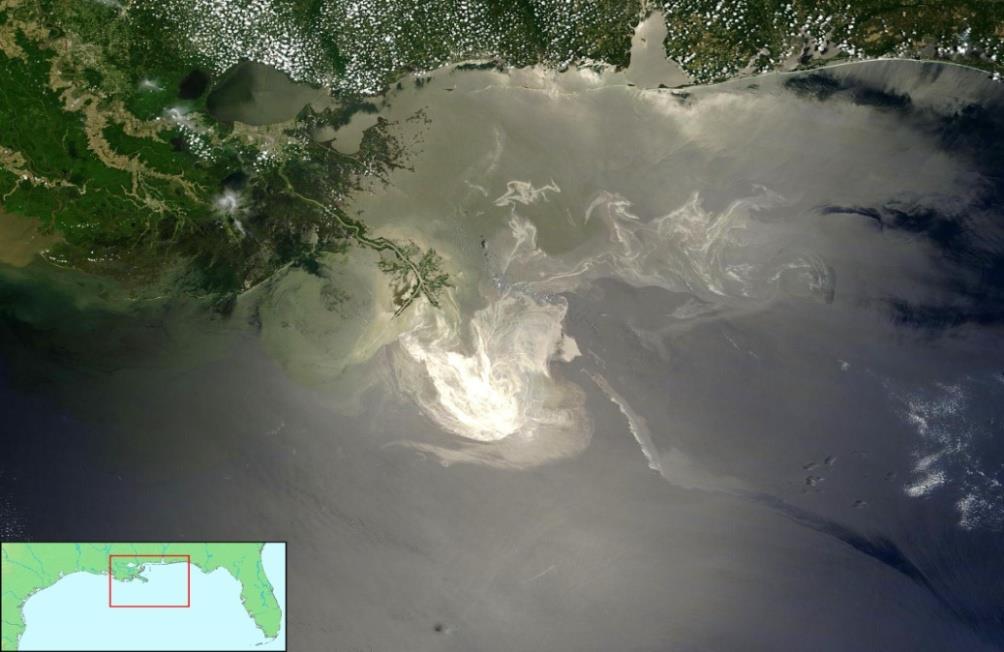
Environmental contamination is always a research topic in petroleum industry, because it is hard to totally avoid oil spill in the field ground and during the transportation. Sometimes, the contamination scale can be huge and significant in the worst case, like the massive Deepwater Horizon Oil Spill in 2010 [1]. This oil spill [Figure 1] resulted in 4.1 million barrels of oil input into the Gulf of Mexico and serious contamination of waters, estuaries, beaches and wetlands, which led to an ecological disaster to the indigenous species [2, 3, 4, 5, 6]. BP, the company responsible for this, agreed to pay $18.7 billion in fines in July, 2015.
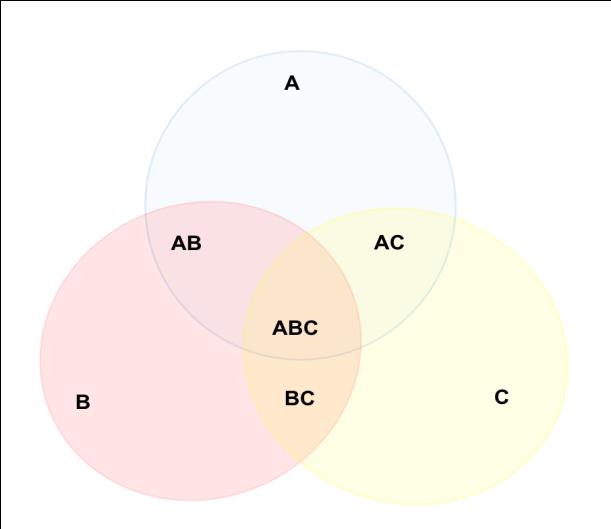
large areas [7, 8]. A key element in bioremediation is the active species that plays a role in the biodegradation of hydrocarbons. Sarkar applied next generation sequencing approach to analyse the composition of indigenous microbial community for bioremediation of petroleum refinery sludge [9]. Based on the contamination levels and types, the microbial community structure would shift or response accordingly [10, 11]. Because the fractions of light crude oil and heavy oil vary a lot, a microbial community that are specific to degrade certain oil fraction or general hydrocarbons will be more cost-effective in dealing with the oil contamination based on the contamination types. Synthetic microbial community can be considered as a model system for understanding the natural communities by focussing on its determined function and key metabolic interactions [12]. When several microbes (specific for degrading the main hydrocarbons in the contaminated field) are combined in the application, the competition for other nutrients with non-active microorganisms can be avoided, therefore the efficiency of bioremediation can be increased. However, the selection and application should be based on the understanding of the synthetic communities. As shown in Figure 2, it is necessary to understand the capacity of each species and the interactions between two/ among the three microorganisms to stimulate the degradation ability of the constructed community and to minimize any potential competition. Chen isolated seven crude oil degrading bacteria and constructed a synthetic microbial community specific for degrading viscous oil using three microorganisms out of seven. A mixed microbial consortia was applied to degrade phenol using 22 phenol degraders [13, 14]. Tao used an indigenous bacterial co-culture with exogenous Bacillus subtilis to enhance the biodegradation of crude oil [15].
This editorial highlights the necessity of research on petroleum bioremediation and the importance of the strategy of synthetic microbial community to enhance bioremediation.
References
-
Michel J, Owens EH, Zengel S, Graham A, Nixon Z, et al. (2013) Extent and degree of shoreline oiling: Deepwater Horizon oil spill, Gulf of Mexico, USA. PloS One 8(6): e65087.
-
Mason OU, Scott NM, Gonzalez A, Robbins-Pianka A, Baelum J, et al. (2014) Metagenomics reveals sediment microbial community response to Deepwater Horizon oil spill. ISME J 8(7): 1464-1475.
-
Lamendella R, Strutt S, Borglin S, Chakraborty R, Tas N, et al. (2014) Assessment of the Deepwater Horizon oil spill impact on Gulf coast microbial communities. Front Microbiol 5: 130.
-
White HK, Hsing PY, Cho W, Shank TM, Cordes EE, et al. (2012) Impact of the Deepwater Horizon oil spill on a deep-water coral community in the Gulf of Mexico. Proc Natl Acad Sci U S A 109(50): 20303- 20308.
-
Goovaerts P, Wobus C, Jones R, Rissing M (2016) Geospatial estimation of the impact of Deepwater Horizon oil spill on plant oiling along the Louisiana shorelines. J Environ Manage 180: 264-271.
-
Husseneder C, Donaldson JR, Foil LD (2016) Impact of the 2010 Deepwater Horizon oil spill on population size and genetic structure of horse flies in Louisiana marshes. Sci Rep 6: 18968.
-
Azubuike CC, Chikere CB, Okpokwasili GC (2016) Bioremediation techniques-classification based on site of application: principles, advantages, limitations and prospects. World J Microbiol Biotechnol 32(11): 180.
-
El Fantroussi S, Agathos SN (2005) Is bioaugmentation a feasible strategy for pollutant removal and site remediation? Curr Opin Microbiol 8(3): 268-275.
-
Sarkar J, Kazy SK, Gupta A, Dutta A, Mohapatra B, et al. (2016) Biostimulation of Indigenous Microbial Community for Bioremediation of Petroleum Refinery Sludge. Front Microbiol 7: 1407. Jing Chen. Synthetic Microbial Community for the Bioremediation of Petroleum Contamination. Pet Petro Chem Eng J 2017, 1(3): 000119.
-
Rodriguez RL, Overholt WA, Hagan C, Huettel M, Kostka JE, et al. (2015) Microbial community successional patterns in beach sands impacted by the Deepwater Horizon oil spill. ISME J 9(9): 1928-1940.
-
Sutton NB, Maphosa F, Morillo JA, Abu Al-Soud W, Langenhoff AA, et al. (2013) Impact of long-term diesel contamination on soil microbial community structure. Appl Environ Microbiol 79(2): 619-630.
-
Grosskopf T, Soyer OS (2014) Synthetic microbial communities. Curr Opin Microbiol 18: 72-77.
-
Chen J, Yang Q, Huang T, Zhang Y, Ding R (2011) Enhanced bioremediation of soil contaminated with viscous oil through microbial consortium construction and ultraviolet mutation. World J Microbiol Biotechnol 27(6): 1381-1389.
-
Poi G, Shahsavari E, Aburto-Medina A, Ball AS (2017) Bioaugmentation: an effective commercial technology for the removal of phenols from wastewater. Microbiology Australia 38(2): 82-84.
-
Tao K, Liu X, Chen X, Hu X, Cao L, et al. (2017) Biodegradation of crude oil by a defined co-culture of indigenous bacterial consortium and exogenous Bacillus subtilis. Bioresour Technol 224: 327-332. Jing Chen. Synthetic Microbial Community for the Bioremediation of Petroleum Contamination. Pet Petro Chem Eng J 2017, 1(3): 000119.
- Nigeria’s Vulnerability in the Face of Global Energy Policy
- A Simulation Study of Investigation of Optimum Oil Production Performance by Applying Various Gas Injection Methods in Oil Reservoir
- Characterization of Permo-Triassic Reservoirs through Thermal Maturity Assessment of Westphalian Source Rocks in the Cheshire Basin
- Influence of Microwax on the Rheological and Thermal Behaviour of a Wax Crude Oil
- Real-Time Monitoring and Performance Optimization of Steam Injection in Heavy Oil Reservoirs Using Fiber Optic Sensing and Integrated Predictive Simulation Models
- Rapid On-Site Determination of the Total Petroleum Hydrocarbon Content of Soils by Handheld Fourier Transform Near-Infrared Spectroscopy: Development of a Global, Site- and Scanner- Independent Calibration Model