
Evaluation of Waterflooding; Experimental and Simulation Overview
Water flooding is very important in the oil field, therefore the research is designed to evaluate the water flooding design for oil reservoir in order to monitor the impact of water flooding on reservoir performance and consequently the efficiency of different types of water flooding patterns to specify the best efficient pattern for an oil reservoir. The simulation model is carried out to build water flooding pattern with different types of patterns and monitor the performance of reservoir under each type of pattern and the impact of the pattern of water flooding on the reservoir pressure maintenance finally will determine the recovery efficiency of different types of water flooding.
Introduction
Background
Water flooding in Oil reservoir is considered one of the main objectives to reach the maximum ultimate recovery from the reservoir with optimum cost. Therefore, in order to perform waterflooding for any reservoir, there are some considerations have to be taken into account. These parameters are specified to the type of reservoir and reservoir pressure related to bubble point pressure. Oil Recovery can be started by Primary recovery with a natural or artificial lift then followed by secondary recovery by water injection or gas injection then the residual oil can be recovered by Tertiary recovery, in other words, Enhanced Oil Recovery (EOR) [1].
EBOOK
Primary Recovery of Oil
In primary recovery, there are two types of oil recovery. Both types have no support for external energy for the reservoir. This source of pressure due to the drive mechanism of the reservoir that maintains the reservoir pressure depends on which mechanism in the reservoir that may be depletion, gas cap, water drive reservoir, combination reservoir or gravity drainage reservoir. The two types of primary recovery are Natural Flow or Artificial Lift [2].
Secondary Recovery for Oil
Secondary recovery is used to support pressure and improve oil recovery by two types of secondary recovery water injection or gas injection. This type o secondary depends on the drive Mechanism of the reservoir.
Gas Injection: Injection of gas used to sustain reservoir pressure and sweep more oil by increasing mobility of oil and reduce viscosity. Therefore, this will increase the maximum recovery of oil. Water Flooding: This is the objective of this research. Waterflooding in oil reservoir that can displace more oil to the surface and sustain pressure enough to improve recovery after primary depletion in some cases of reservoirs can start waterflooding from day one due to high decline in reservoir pressure. The evaluation of waterflooding to select the optimum time for water flooding depends on several factors that should be considered such as PVT properties. Rock physics, depth, and temperature of the reservoir. The geometry of reservoir and locations of producing wells that needed to support, amount of oil needed to be recovered and capacity of surface facilities [3]. Water Injection: Water injectors differ from water flooding because injection will be in water zone that can support pressure more enough but this type of secondary recovery (Water Injectors) used in some driving mechanism while in others like strong water drive reservoir cannot be used because it will be negligible [4]. Types of Water Flooding Patterns There are several types of water flooding patterns such as:
- Peripheral Pattern for waterflooding.
- Crystal and Basal Pattern for Waterflooding.
- Irregular Pattern for water Injection.
- Regular Pattern for Waterflooding. 1. Direct line pattern. 2. Staggered line pattern. 3. Regular four spot pattern 4. Skewed four spot pattern. 5. Five spot pattern. 6. Seven-spot pattern. 7. Inverted seven spot pattern. 8. Normal Nine spot pattern. 9. Inverted nine-spot pattern. EOR (Tertiary Recovery): Enhanced oil recovery is used for residual oil remaining in the reservoir after primary and secondary recovery has been achieved. Enhanced oil recovery plays on the interfacial tension between oil and water and also between fluid and rock. This tertiary recovery will decrease the viscosity of oil by increasing its mobility to get it to the surface. There are a lot of types for tertiary recovery such as chemical, thermal, Miscible and Microbial that all plays on the rock and fluid properties to enhance more oil and improve recovery of oil [5].
Literature Review
Reservoir Simulation
Luo, et al. [6] studied viscous fingering of water flooding project that has a great impact on all works in the reservoir later. Therefore, this fingering which occurred by water flooding will cause the displacement of oil is insufficient due to not all oils is displaced because the distribution of water in the reservoir is not uniform. Mohammadi, et al. [7], built a simulation model for the water flooding of the reservoir in order to show the distribution of water in the reservoir. The study proves that history matching for the water flooding fingering is not easy and an accurate history matching will effect on the future performance of water flooding. Chen, et al. [8], presents a simulation model for fractures reservoir has three phases of water, oil, and gas. The simulation model describes the dual porosity in the fractured heterogeneous reservoir. The results proved that the reservoir porosity distribution van effect greatly on the recovery of the reservoir. Also, have a great impact on the prediction performance of the reservoir. Rahman, et al. [9], studied the impact of edge water drive on the reservoir performance. The wells in the reservoir differ in properties and performance from location to another due to the reservoir heterogeneity. The static and dynamic data proved these heterogeneous effects. By studying the field on reservoir simulation proved that zones with higher permeability will be affected by the peripheral water flooding from edge aquifer from the boundary of the reservoir while the lower permeability zones did not influence by the water aquifer from the boundary of the reservoir. The simulation study result is there are tight zones that will not be affected by water which is the lower zone in the field while. The upper zones have high permeability that can be influenced by the support from the aquifer. Khan and Mandal, [10] make a simulation model for the patterns of water flooding and presents the performance of five spot water flooding in an oil reservoir has non-uniform properties in all locations. The research also discussed gas injection instead of water in order to compare the effect of two fluids on reservoir performance and oil recovery from the reservoir. Gharbi, et al. [11], studied that the heterogeneity of the reservoir has a great impact on the horizontal well and has little impact on the vertical wells. Saboorian-Jooybari, et al. [12] studied this study by applying the simulation model on heavy oil in the heterogeneous reservoir that undergoes to Copyright© El-hoshoudy AN, et al.
waterflooding and present the performance of the reservoir due to waterflooding project. The results proved that waterflooding has no effect on the reservoir due to the tight formation of great heterogeneity and due to heavy oil properties in the reservoir. Hadia, et al. [13] studied the impact of water injection project by the reservoir simulation modeling on horizontal wells by shows the ultimate recovery and performance of reservoir after applying the waterflooding project. The results showed that the pressure declined very rapidly in the horizontal wells that mean the efficiency of waterflooding is very bad and therefore, the study proved that the impact of waterflooding is better for the vertical wells than horizontal wells. Saper, et al. [14], built a simulation model for the effect of the reservoir and fluid parameters on the water coning time, by make simulation prediction runs for the time of breakthrough and the critical oil rate in order not to exceed this rate. The simulation model is carried out on horizontal and vertical wells. Therefore, the results showed that the vertical wells will effect by breakthrough faster than horizontal wells and the life of the vertical well is very short compared to horizontal well in the presence of water flooding project and consequently will impact on the cumulative production of oil. Also, the results of this study are as the length of horizontal interval increases, the breakthrough will come faster.
The Importance of Simulation Modelling on Waterflooding Project
Water flooding is a secondary recovery technique which is used to improve the oil recovery from the reservoir to reach to the maximum recovery of oil under economic conditions. Water flooding is considered the alternative technique to the primary recovery which is applied after the well is depleted from the primary recovery is carried. Water flooding sometimes carried out from the first day of production due to the reservoir pressure is declining very rapidly in the reservoir from the analogue of offset reservoirs in the same area.
The Importance of Water Flooding Due to the Following Considerations
1. Maintain the reservoir pressure and prevent the rapid decline of pressure with time. 2. Displace more oil from the reservoir and increase the ultimate recovery of oil.
The success of water flooding relied on the amount of data available for the reservoir and the degree of heterogeneity of the reservoir which reflects on the extension of the sand channel in the reservoir. In addition, the well test data available in the reservoir, the rock and core properties and fluid properties measured in the laboratory experiments. The first field applying water flooding is located in United States of America “USA” where the water produced from the reservoir and back again to the reservoir as injecting it to displace oil and maintain the reservoir pressure. In 1960, the technique of water flooding become very familiar in all world and a lot of fields used a waterflooding technique in their reservoirs in order to get more and more oil from the reservoir, also the reservoir engineers become very familiar with water flooding technique. Then, the history matching is carried out to simulate the existing old producing wells with the new injection wells in order to match the reservoir history and predict the optimum location of wells in the reservoir. The first authors that discussed the performance of the field due to water flooding were Lake and Jensen [15], they predict the performance of reservoir production without the impact of heterogeneity of the reservoir. Then Dykstra built a graphical technique to evaluate the performance of the reservoir. Turta, et al. [16], proved the several factors that will influence on the performance of water flooding and reservoir such as saturation of oil, a saturation of water, production volume and amount of injected water with the sweep efficiency that depend on the shape and heterogeneity of reservoir. The study proved that the problems of water flooding coming from the early production of water that starts at the time of breakthrough and ensures that stimulation job such as hydraulic fracturing and other techniques will increase the water production and will cause the breakthrough of water earlier that will cause a lot of problems due to the water production. Kopaska-Merkel and Mann [17], studied there are several types of water flooding patterns that can be applied for any field of oil depending on the surface and subsurface topography with the geometry of reservoir that control the shape of patterns that can be applied from water flooding patterns such as irregular pattern, direct line spot, staggered line spot, peripheral pattern, crestal and basal pattern, regular pattern (four spot, five-spot pattern, inverted five spot, nine-spot pattern). These different patterns are applied depends on the shape of the reservoir and the available area in connection to the producing wells also, the surface topography in order to specify the shape of a pattern which can be used. The pattern of water flooding differs in recovery efficiency from the type of reservoir to another and depending on the location of wells in the reservoir that control on the efficiency of each pattern. In addition, Copyright© El-hoshoudy AN, et al.
there are some patterns will not apply for certain reservoirs due to the location of wells or due to the in availability in area of the reservoir. Water flooding is the widely used technique in secondary recovery methods in the oil industry that can affect any reservoir when applied it. The efficiency of improvement of the recovery on the reservoir when water flooding is applied will depend on the following parameters
Depth of Reservoir
The depth of the reservoir can affect the water flooding greatly. So, as the reservoir depth increases, the pressure required for injection increases.
Fluid Saturation
Water flooding depends on the amount of oil existed in the reservoir. As the saturation of oil is high in the reservoir, the water flooding can apply in order to get more oil and increase the ultimate recovery of oil. While, as the saturation of oil in the reservoir is low, water flooding design will be unsuccessful.
Reservoir Geometry
The geometry and shape of formation have a great effect on the water flooding efficiency. Because the reservoir geometry can indicate how many wells can be drilled, where the location of wells and the type of pattern is for the reservoir that will control the recovery efficiency.
Uniformity of Reservoir and Continuity of Reservoir
The success of water flooding technique is determined by the extension of the reservoir and the length of san channel in the reservoir.
Fluid Properties
Properties of reservoir fluid in order to know the type of fluid in the reservoir and the quality of oil; heavy oil or light oil, these properties will be measured and make the experimental analysis for the reservoir fluids before starting waterflooding technique to be capable to displace oil from the reservoir and ensure the success of project.
Rock Properties and Reservoir Criteria
The rock properties effect on the efficiency of water flooding. Core data such as rock porosity, rock permeability with fluid saturation can affect greatly on project success. In addition, the capillarity, shale volume and net pay thickness will influence the type of water flooding pattern and amount of oil recovered by water flooding. Special core data in some cases must be measured to estimate the movement of water and oil with the saturation of water in order to estimate the time to the breakthrough that will be happened in the design of water flooding. Asadollahi and Naevdal [18], discussed the effect of water flooding project on the horizontal wells depending on the value of the productivity index of wells. In the research used different flow rate distribution to monitor the effect of water flooding. Brouwer and Jansen [19], used the last research to extend their work by showing the effect of water flooding on heterogonous producing and injection wells in order to increase the recovery of oil. They present two controllers for the well; the first controller is the bottom hole pressure and the second controller is the well rate. The research proves that any of these controllers will be used has a great effect on water production and the performance of water flooding. When understanding the controller in order to change its value will reduce the produced water and consequently increase the oil production from wells. Lien, et al. [20], continued his research in 2002 by using optimal theory to detect the effect of water flooding by determining the production and injection rates. The research proves the enhancement of oil recovery by water flooding with known permeability. This theory still used until recently in most of water flooding works. Seright [21], discussed the water flooding project for the heavy oil reservoir. Studied the effect of viscosity ratio and the water mobility on the performance of water flooding. The results showed that the optimum time for waterflooding is above the bubble point pressure and directly after the primary recovery of the reservoir. In order to let the reservoir pressure declines below the bubble and release the gas from oil in the reservoir that will make reservoir loss most of its recovery. Weijermars and van Harmelen [22], studied the waterflooding performance on heavy oil reservoir by streamline in the simulation model of the location of wells in order to monitor the quantity of oil and water in production and injection. The study proved that there are a lot of factors that can change the location of wells such as the amount of water cut in the wells, fluid loss from the aquifer, amount of injected water and heterogeneity of reservoir. The study proves that to get the accurate performance of water flooding in the reservoir can be monitored very clear by simulation modeling if an excellent history matching is carried out for the reservoir model. Brice and Renouf [23], proved the importance of waterflooding on the heavy oil recovery from the reservoir. The importance of waterflooding effected by the amount of data available. So, the success of Copyright© El-hoshoudy AN, et al.
water flooding project will depend on the accuracy of data available from the reservoir that will influence the recovery and production of oil from the reservoir. Cheng, et al. [24], complete the research of Brice and Renouf [23] by make a comparison between different heavy oil fields in Canada by fixing the amount of water injected and the volume of oil in the reservoir (OOIP) and gather the results of all fields that gas oil ratio will affect greatly on the recovery and performance of the reservoir, as the gas separates from oil in the reservoir, the decline in pressure increases. Torrez Camacho [25], carry a study of water flooding in oil reservoir has heterogeneous properties and horizontal wells are drilled. The study proves that there are a lot of parameters in order to predict an accurate water flooding performance in the reservoir such as well location, perforation intervals, and its length and sand channel. The research illustrates that the water flooding has a great effect on the performance of horizontal well if they are in the same sand channel by carried different amount of water injected, the result shows differ in the amount of oil produced depending the volume injected and consequently more injection water will make more oil produces from the reservoir. Brice and Renouf [23], collected a lot of data for reservoirs have the same characteristics and properties for this reservoir in order to evaluate the performance of water flooding in heavy oil reservoir and he concluded that the amount of injection has a vital role on the performance of water flooding and as the amount of data available is more, the oil recovery will be improved from the reservoir. Alvarado and Manrique [26], discussed the simulation model for heavy oil reservoir with waterflooding y different injection models. The injection of water is carried by different steps to enhance the production of oil. The output of simulation model proved that the maximum recovery from the reservoir can get by increase water flooding rapidly then decrease it slowly to get high production of oil and consequently will impact on the efficiency of the reservoir. Dai, et al. [27], built a water flooding simulation model for the oil reservoir. In this reservoir, the breakthrough is already happened in the first years of production and increases with production at a high rate until reach to 80 % of total production. The aim of water flooding simulation is to understand the reservoir from the geological and engineering side by studying the Petrophysical and dynamic data that will give a good indication on the reason of movement of water that will influence on the performance of the reservoir. The prediction of a simulation study for the water flooding is not preferable for this case due to the high movement of water and the high water production that already existing before the application of water flooding. Sheng [28], built a simulation model for heavy oil is affected by water flooding project. Nandez discussed the influence of capillarity on the performance of the reservoir with water flooding. The results appeared that fingering is carried before the time of breakthrough and when the breakthrough occurred the capillarity enhance the oil recovery and has a great impact on oil mobility. Al- Kandari, et al. [29], present if the waterflooding technique will be needed to apply for an oil reservoir has a great heterogeneity in its properties and the reservoir data and properties are very limited. Therefore, it is better to apply a pilot pattern on the part of the reservoir and understand the heterogeneity of reservoir effectiveness. Then id the project is successful and enlarges the water flooding model for all the reservoir. This way of water flooding technique can save more money will not expenses and the time of injection to test the project. Qi and Hesketh [30] recommended the application of this way for any heterogeneous reservoir with a limited amount of data available for the reservoir. Klemm, et al. [31], showed the learning lessons from the application of water flooding project on the oil reservoir that undergoes for the water flooding project for 50 years. Klemm, et al. [31], studied the recovery from water flooding technique after the primary recovery will be finished. All the results proved that water flooding is very important and the best method applied for an oil reservoir after primary depletion. The water flooding can get most of the oil existed in the reservoir with a lower cost than other techniques. A project of water flooding in the reservoir are subdivided into two steps the first step ib before breakthrough when there is no water in the production and the second step is after water breakthrough, this will allow evaluating the reservoir more accurate and can predict the time of breakthrough in the reservoir. Sheng, et al. [32], discussed the importance of residual oil saturation on the application of water flooding project. The residual saturation of oil has a vital role not only for water flooding but for any another recovery such as enhanced oil recovery. Sheng et al. [32] studied the oil rates of wells in order to study the residual saturation of oil and also the effect of this saturation on capillary pressure. The amount residual oil saturation has the decision in starting secondary recovery such as water flooding or gas injection and also, the tertiary recovery is started depending on the value of residual oil that evaluate the economics of water flooding project or enhanced oil recovery technique. The most parameter that has a great effect on the residual oil saturation is the effective permeability of residual oil in the reservoir that specifies the value of residual saturation is high or not. The result of research that if the water flooding project is applied in Copyright© El-hoshoudy AN, et al.
a high volume of water injection in order to get a high volume of produced oil. Therefore, the residual oil saturation will be decreased very rapidly and the final value after applying the waterflooding project will be very small. At this time, the amount of oil remaining in the reservoir is very low to apply enhanced oil recovery after that. Hence, there is no need for further recovery of the reservoir using tertiary recovery because will cost more money with little oil will be recovered which is not economic. Therefore, applying enhanced oil recovery “EOR” project will be unsuccessful. Khorsandi Kouhanestant [33], discussed a special technique from water flooding which is called low salinity water “LSW” and proved that the results of low salinity water is much better than results of water flooding itself and ensures that on the performance of reservoir the oil recovery can get it from the oil reservoir. Low salinity water has the main parameter is the wettability reversal that will enhance the recovery of oil from the reservoir. Low salinity water is considered a special type of enhanced oil recovery “EOR” such as chemical flooding to get much more oil and better reservoir performance. Yu, et al. [34], studied a water flooding model on an oil reservoir has very homogeneous properties in all locations of the reservoir. The water flooding is distributed in late reservoir directions with two patterns in order to displace the amount of oil and to maintain the reservoir pressure with time. Two five spot predict the characteristics of the reservoir with time and showed that as the injection rate of water increases, the oil production increases rapidly and the reservoir properties can enhance the distribution of water flooding due to the homogeneous characterization of the reservoir. Also, the reservoir simulation is the most accurate technique to evaluate the water flooding project in the reservoir and can predict all the pattern of water injection in order to select the best pattern with better reservoir performance in the future that impact on the cumulative oil recovery.
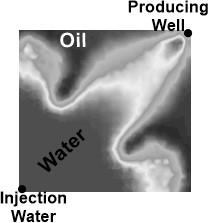
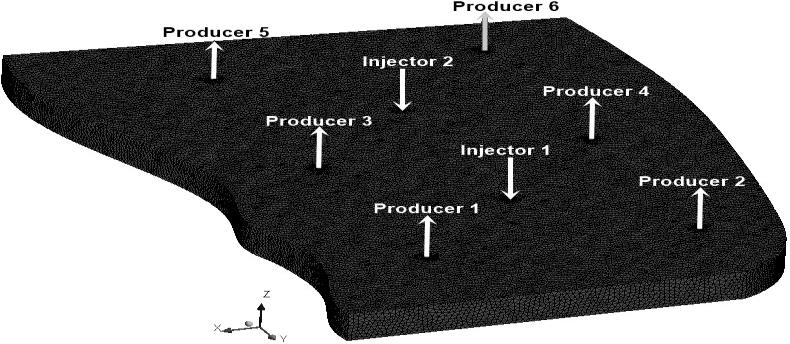
Reservoir Simulation
Reservoir Modelling
Petrel software is the development of the petroleum industry in the world that changes the life of the reservoir in the world. It connects between the geologist and engineers in building the model. Petrel is the extension of ECLIPSE software. Eclipse is used as the processing software while petrel is the preprocessing and post- processing. By petrel can build the static model by geology and geophysicist. Then after that, the engineers used a static model to convert it into a dynamic model by importing all the dynamic parameters such as production rate, reservoir fluid properties and rock properties. History matching is the first step in petrel simulation after importing all data related to the reservoir. Once, reach to the accurate history matching of the reservoir. The prediction is carried out to the reservoir to predict the future performance of reservoir for the next years when applying waterflooding project on the reservoir can predict the performance of reservoir and which type of water flooding is more efficient. In addition, the ultimate recovery from the reservoir due to water flooding and the optimum location of injection wells for better performance. The success of water flooding pattern depends on reservoir simulation model in order, not to lose money and time in applying waterflooding project then failed. So, build the design of water flooding by the reservoir simulation. To build an accurate model, it is required accurate history matching for the reservoir parameters.
Petrel Interface
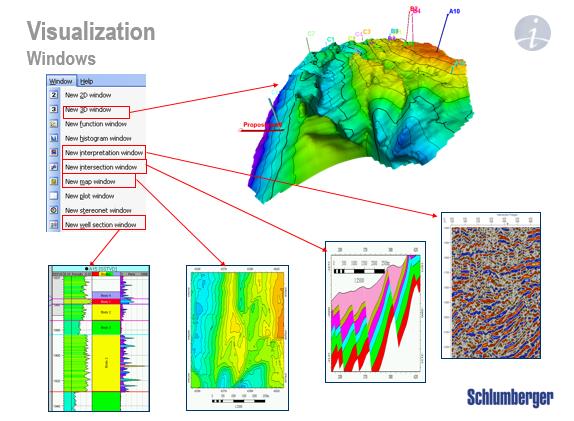
Petrel composed of several windows in order to display the type of parameter is required. It contains also Copyright© El-hoshoudy AN, et al.
different panes with separate duties for input data there is input pane when creating the model, it will appear in the model pane, while, the cases that run in eclipse appear in the cases pane and the results of the case will appear in the results pane.

Petrel is composed into two parts one for geology and the other for engineers. Petrel ties two models together into one model from static data a zero time to the dynamic data until the day of building simulation model concludes all the history of wells.
Copyright© El-hoshoudy AN, et al.
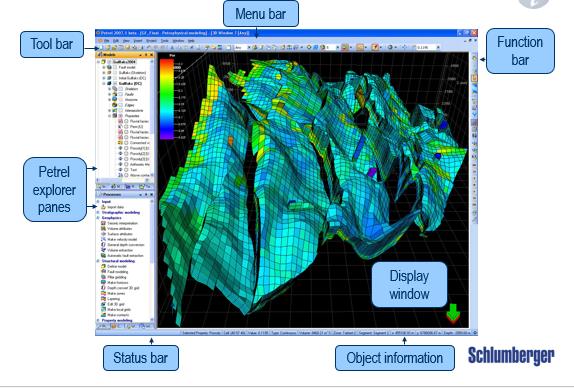
Petrel software can display different functions for the reservoir, can display different horizons with their lithology, the figure below shows all the components of petrel which used to display or build any property in the model. Function bar one of the most important in reservoir simulation that differs depending on the property will build or the function that selected to be built.
Reservoir Wells
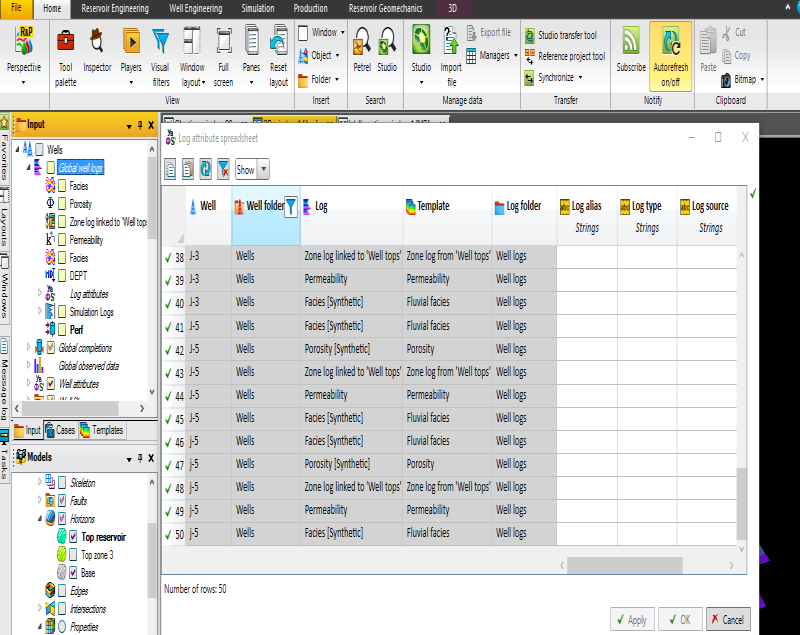
Firstly the geologist import all the wells, logging for all wells, deviation survey for all wells and intersection of each well with all the formation that saw when drilling the wells, which called well tops. In order to can build the static model by building a structural model and property modeling in order to calculate the volume of the reservoir.
Copyright© El-hoshoudy AN, et al.
Dynamic Modelling
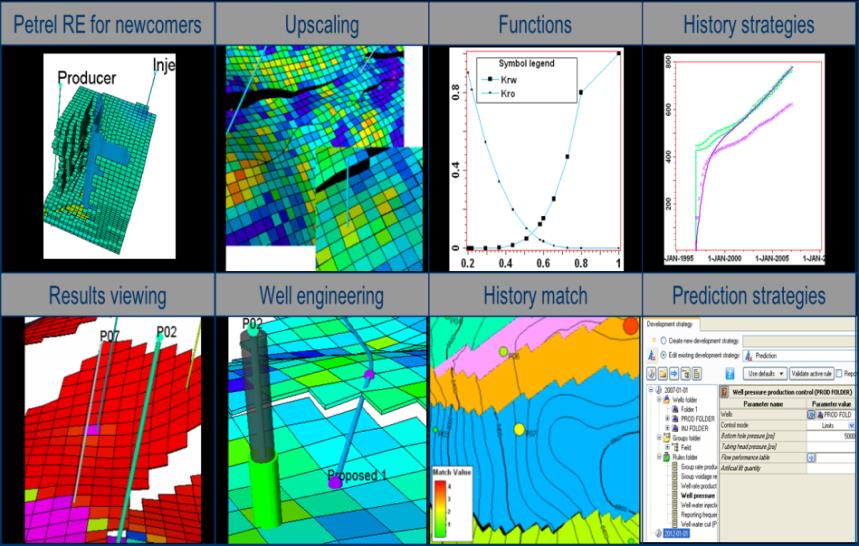
It is the section for engineering data that will import all dynamic data to petrel in order to be able to build a history match for the reservoir parameters and consequently will predict the performance of reservoir than can design waterflooding technique or any other prediction scenarios. The figure below illustrates the different sections in Dynamic modeling that are required to prepare before starting the dynamic model to upload it in Petrel.
Rock Physics
Core data that are carried out in lab experiments are imported in petrel to evaluate the movement of water, oil, and gas in the reservoir and evaluate the time to breakthrough.
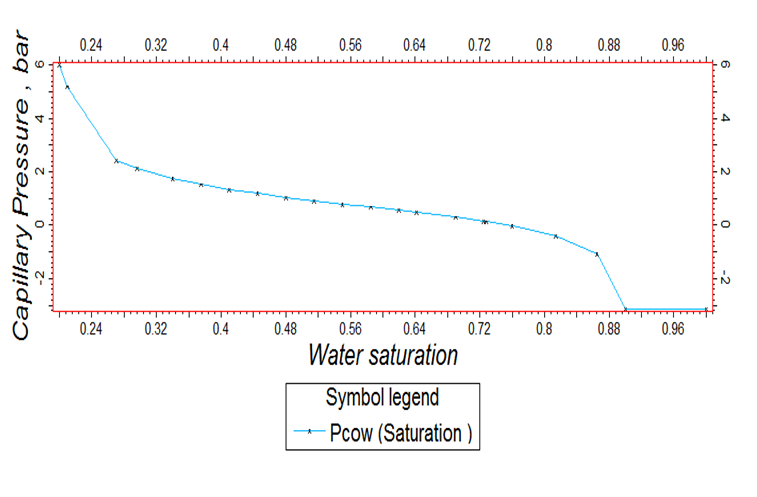
There are Two Types of Data Imported 1. Relative Permeability data for oil water and gas oil permeability. 2. Capillary pressure data that a relationship between water saturation and capillary pressure to estimate the value of connate water and free water zone in the reservoir.
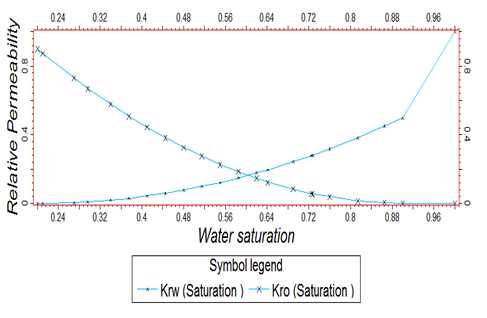
Capillary pressure data is capable of detecting the water-oil zone and the volume of the transition zone in the reservoir. In petrel is very important that calculate the saturation for every cell then can distribute the relative permeability for all cells in the reservoir. By the knowledge of absolute permeability from static data can get the effective permeability for oil and water at each cell for every change in water saturation.
Copyright© El-hoshoudy AN, et al.
the interval of producing from each well. When there is any events happened during the time of history for any well, it has to be imported in the model in order to get accurate history matching. In addition to that, any well test data for any well can be imported to enhance the productivity of well [3].
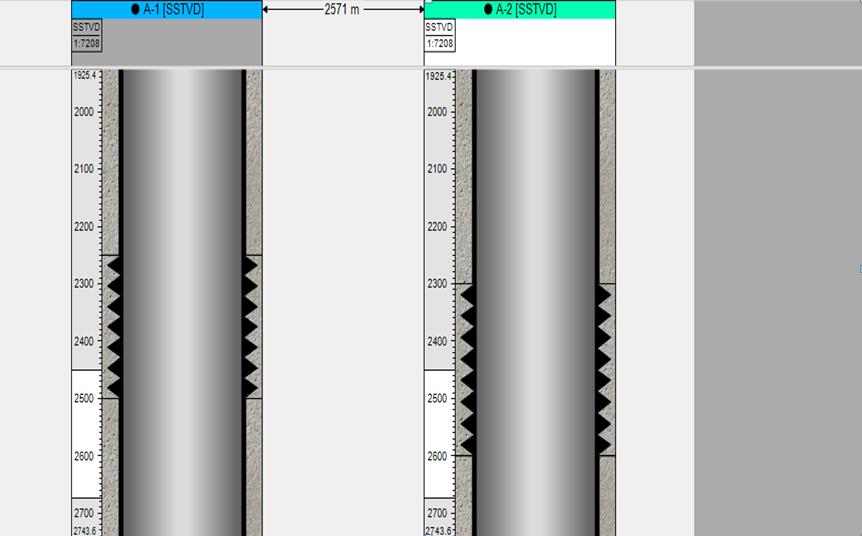
Design Water Flooding Project
Water Flooding Model for Oil Reservoir
An oil reservoir has a large potential of oil that needed to recover most of the oil in the reservoir but the reservoir pressure is declining very rapidly. So, it is required to perform a water flooding project that enhances the reservoir pressure and in addition, can displace more oil towards the wells in order to get most of the oil in the reservoir. Before applying waterflooding project it is required to build a prediction model in the reservoir simulation to ensure which type of pattern can get the maximum amount of oil in the reservoir and remaining only small amount of oil that can get it later by enhanced oil recovery techniques. Therefore, oil reservoir had built a static model to build the structural and property modeling, then a dynamic model is built with all parameters and reservoir characterization through reservoir production data, reservoir fluid properties and rock properties that make an accurate history matching for the oil and water. Now, this reservoir is ready for Water Flooding prediction design for the reservoir. There are different types of water flooding patterns that can be applied for oil reservoirs but not all pattern can be Copyright© El-hoshoudy AN, et al.
applied for the same reservoir due to the location of wells in the reservoir and the topography and geometry of reservoir is not able to put injectors in any location [35]. In addition, the presence of faults that make the communication between wells is partially and in some locations, there is no communication between wells. However, the types of water flooding patterns are:
- Irregular Pattern of Waterflooding.
- Peripheral Pattern of Water Flooding
- Direct Line Spot Water Flooding
- Staggered Line Spot Water Flooding
- Five Spot Water Flooding
- Nine Spot Water Flooding Irregular water flooding pattern is considered the typical water flooding which not requires a plan to design.
This type of water flooding can be applied for any type of reservoir which did not depend on the topography of surface locations and also, did not depend on the lithology of sand rock in the reservoir. This is the simplest type in which can put injection wells in any locations of the reservoir. Any location that is suitable for water injection and can support producing wells around it without thinking of pattern or the next location of injectors. Irregular pattern is injection wells are put in the reservoir in a location suitable for you to can manage the reservoir in a perfect way. All reservoirs that have more than three wells are available for the irregular waterflooding project. This type is highly recommended in case of money is not sufficient to build a model of water flooding pattern or the reservoir potential is not required due to low potential or low residual oil saturation. In this case, three injectors are applied for producing wells in the reservoir in order to monitor the performance of the reservoir during prediction for the design of these injection wells. Each pattern will Design in the simulation model will monitor the oil production rate of the field and the amount of oil that cannot be recovered which represent the remaining reserve of oil not recovered from these types. Finally will compare between different types of water flooding are applied for this reservoir from the reservoir pressure decline with time and from the amount of oil cannot be recovered which means remaining reserve of oil in the reservoir. By reservoir simulation model the result of an irregular pattern of water flooding as the following:
Due to the reservoir description and the properties of faces and rock lithology distribution. There are two patterns cannot be applied in this reservoir which is five spot and nine spot patterns due to the area of the reservoir is divided by faults and sand channels that divide reservoir into four compartments which there is no large spacing between wells in the same area in order to build five or nine spot pattern. These two patterns need enough area to design the pattern. While, the upper four patterns of water flooding is ready to be applied in these reservoirs in order to evaluate the prediction of each pattern separately from its performance on the reservoir, reservoir production rate, the impact of each pattern of water flooding on the reservoir and finally the reservoir pressure during time is declining or it is maintained with the time. All these parameters control the efficiency of each pattern in order to select which pattern of water flooding is better in this reservoir that gets the highest recovery of oil from the reservoir. Therefore, can recommend building the best water flooding design in the reservoir based on this model.
Irregular Pattern
Copyright© El-hoshoudy AN, et al.
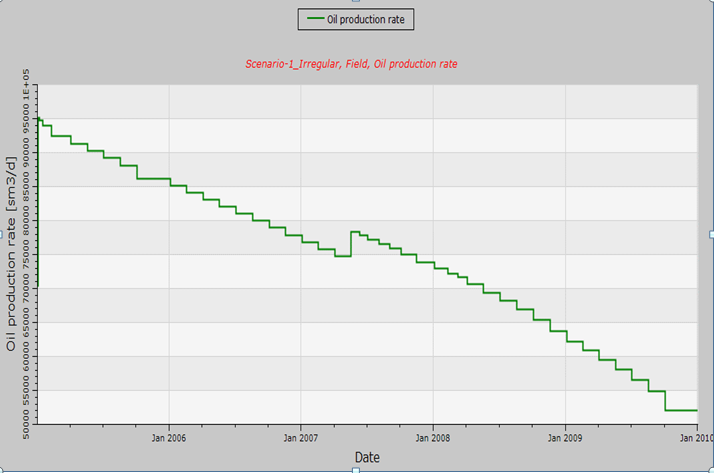
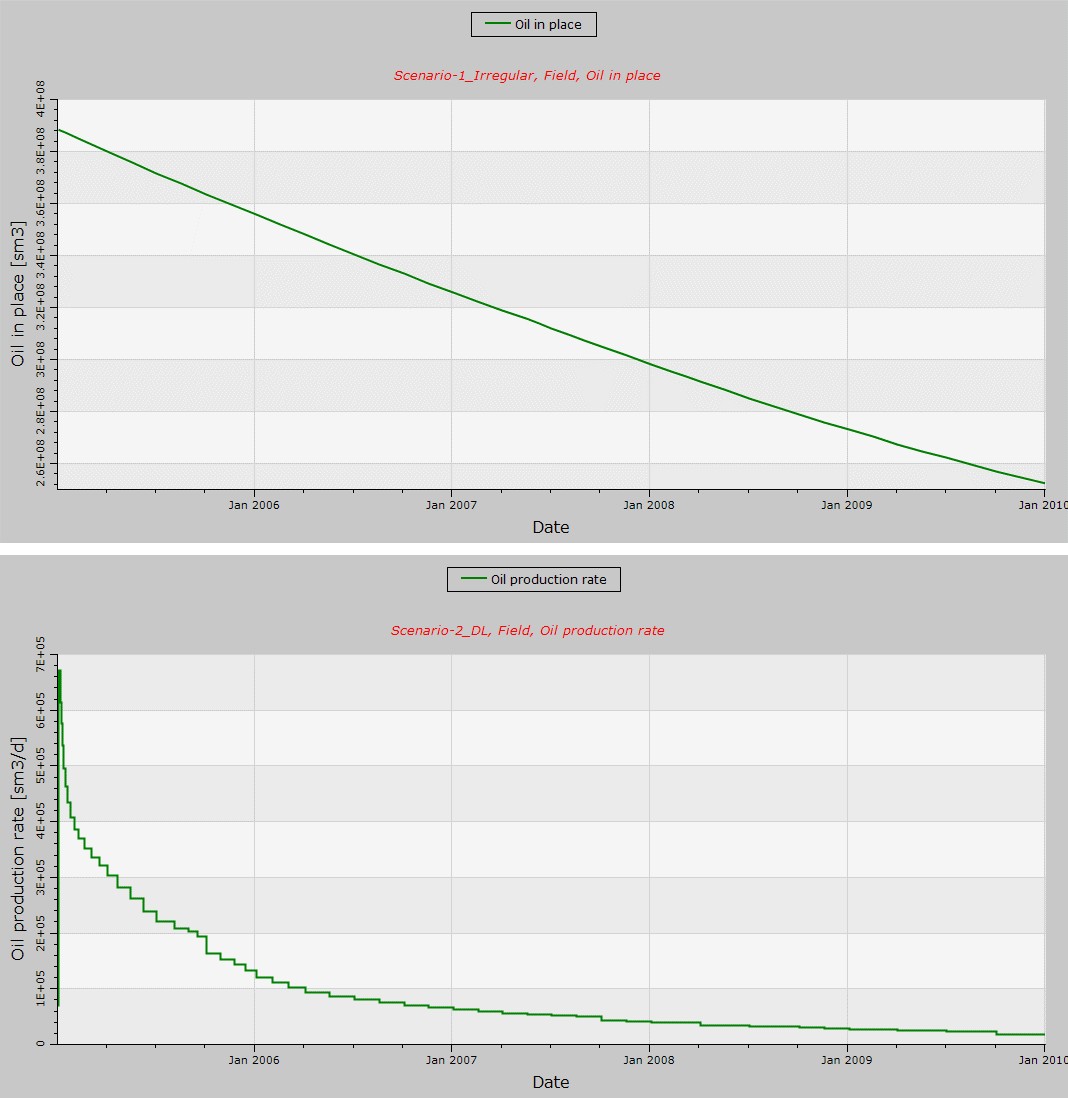
The figure shows the oil production rate with time during applied irregular water flooding pattern in the reservoir which means the oil production rate decreased rapidly during prediction. Therefore, the amount of oil produced is not great enough which will impact on the recovery efficiency of the reservoir. The Figure below display the amount of oil is not recovered from the reservoir due to irregular water flooding pattern. The recovery efficiency from the irregular pattern of water flooding is 46 %.
Direct Line Spot
Direct line spot is considered the highest cost from these patterns of water flooding because it depends on building a line of injection wells to each line of producing wells. This means that for every producing well there is an injector well to support this producing well [36]. On this model an injector well is put for each producing well. The figure below shows the decline in production rate with time is less than the decline in production due to irregular type of water flooding, which means the direct line spot supports the producing wells better than irregular water flooding pattern due to small decline in production rate of field that will impact on the recovery efficiency of pattern. To evaluate the performance of this type of water flooding pattern by comparing the decline in production rate with all other patterns of water flooding. Also, display the recovery efficiency of Direct Line Spot Pattern [37].
Copyright© El-hoshoudy AN, et al.
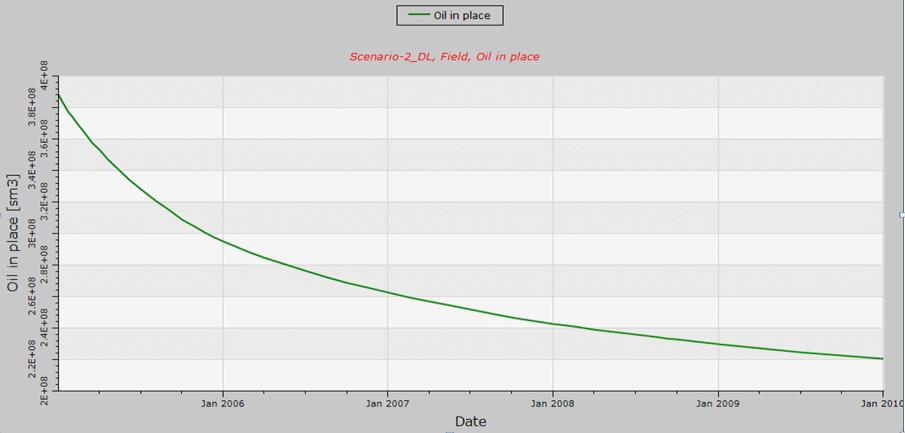
The figure shows the performance of direct line Spot Pattern is better than an irregular pattern that gives better support for the producing wells. The Figure below display the amount of oil is not recovered from the reservoir due to direct line spot which lower than the amount of oil is not recovered by Irregular pattern of water flooding. The recovery efficiency from Direct Line Spot pattern of water flooding is 63 %.
Staggered Line Spot
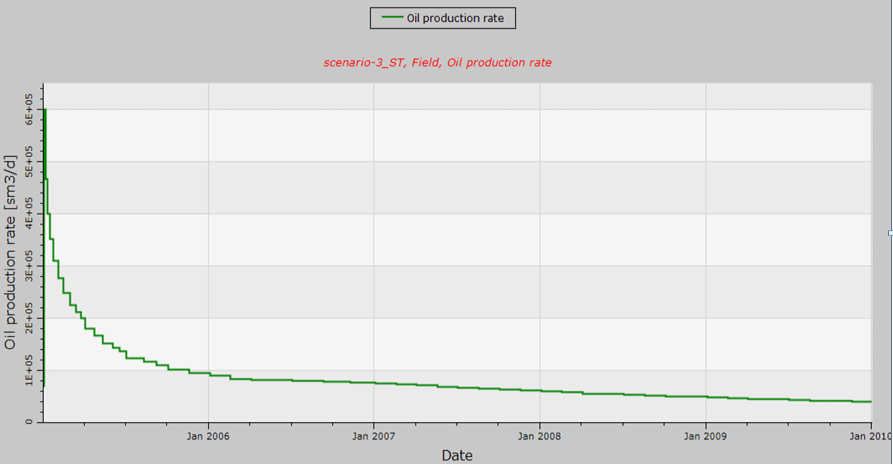
Staggered Line Spot is slightly similar to Direct Line Spot but the difference that in direct line spot there is an injection well in an opposite position for each producing well. While in staggered line pattern the injection well is in between two producing well, therefore the line of producing is parallel to the injection wells but the injectors are in between for each producer [38]. This type of water flooding pattern is highly cost also, due to a number of wells but in some cases, it cannot be applied in the whole reservoir due to not all producers in the same line. Hence, staggered line pattern of water flooding is not widely used in the petroleum industry but it sometimes carried out for a pilot of field not a pattern for the whole field. The performance of this pattern of water flooding is evaluated by displaying the oil production rate with time and the efficiency of staggered pattern through displaying the remaining reserve in the reservoir that cannot be recovered by water flooding pattern. The following patterns will display the performance of the reservoir due to the Staggered Line Pattern of Water Flooding technique. The figure shows the performance of the staggered line Spot Pattern is less than direct line pattern that gives lower support for the producing wells. That appeared from the following figure as the production rate of oil decreased more rapidly than the direct line pattern.
Copyright© El-hoshoudy AN, et al.
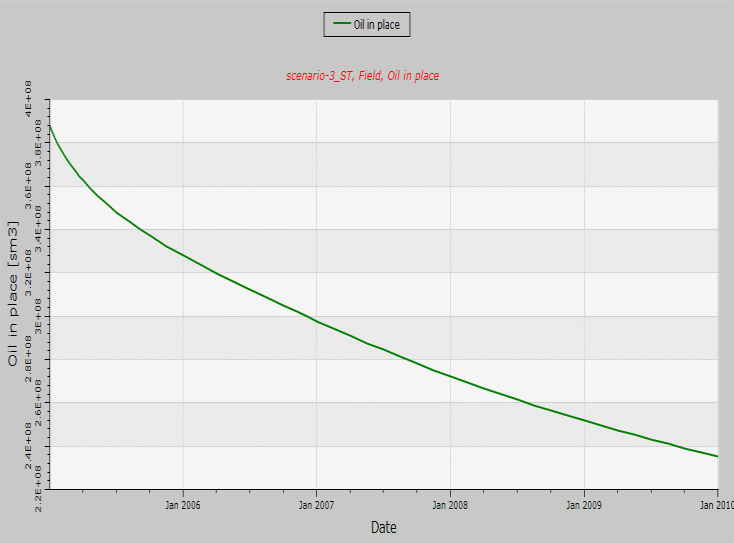
The Figure below display the amount of oil is not recovered from the reservoir due to the staggered line spot which higher than the amount of oil is not recovered by direct line spot pattern of water flooding. Which means the remaining reserve from staggered line spot is higher than the remaining reserve from direct line spot pattern. The recovery efficiency from Staggered Line Spot pattern of water flooding is 55 %.
Peripheral Pattern
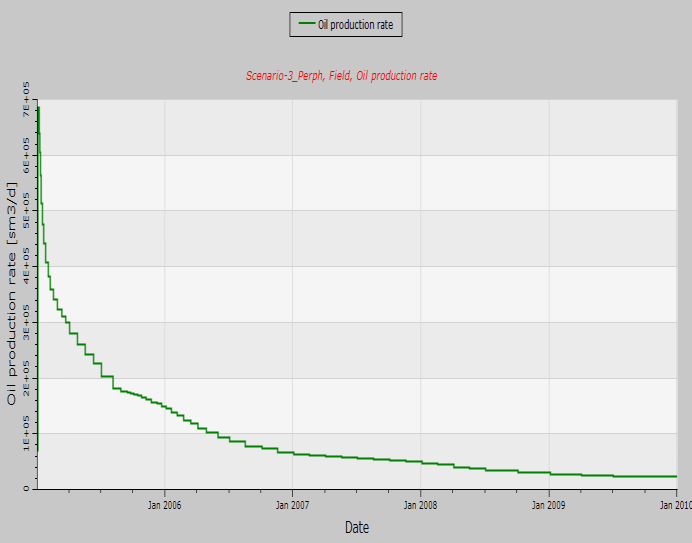
The peripheral pattern of water flooding is widely used in oil reservoirs especially when the reservoir is like anticline which the crest is in the center of reservoir therefore, the water will be in the lower part of the reservoir [39]. However the advantage of this pattern that it is designed to drill injection wells around the boundary of the reservoir with producing wells in the central area. Which means the injection wells is designed to surround the producing wells to move water from the boundary of the reservoir towards the center of the reservoir which the producing wells are existing. The benefits of the peripheral pattern are the breakthrough time in this type of water flooding pattern is too late and consequently will impact on the performance of reservoir during water flooding technique, which means the peripheral water flooding pattern is more efficient in most of the cases with better efficiency and reservoir performance. The performance of this pattern of water flooding is evaluated by displaying the oil production rate with time and the efficiency of Peripheral pattern through displaying the remaining reserve in the reservoir that cannot be recovered by water flooding pattern [26]. The following patterns will display the performance of the reservoir due to Peripheral Water Flooding Pattern technique.
The figure shows the performance of Peripheral Water Flooding Pattern is better than Direct line pattern and staggered Line Spot and irregular pattern that gives high support for the producing oil wells. That appeared from the following figure as the production rate of oil decreased lower than other patterns of water flooding applied for this reservoir.
Copyright© El-hoshoudy AN, et al.
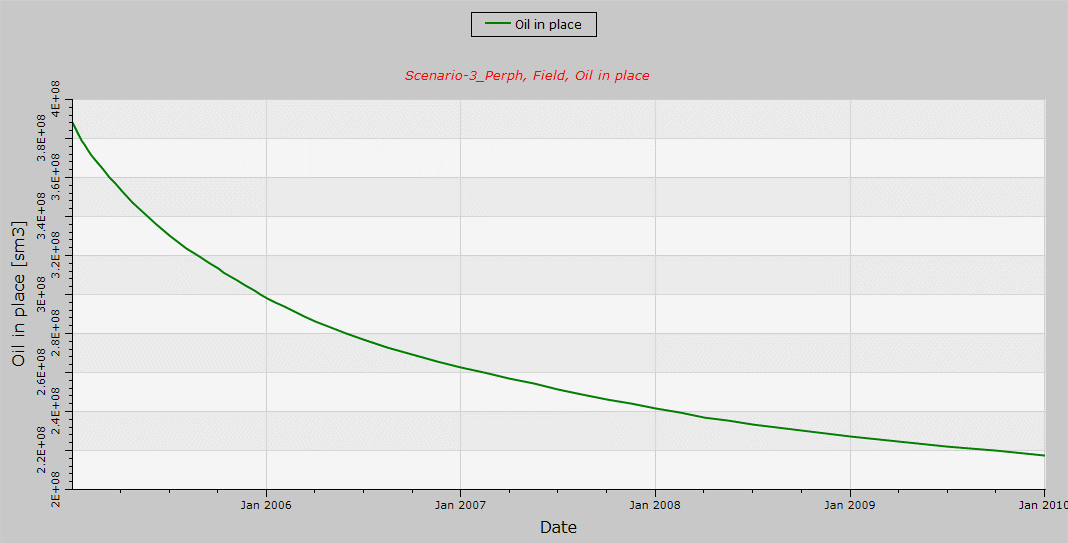
The Figure below display the amount of oil is not recovered from the reservoir due to Peripheral Pattern of water flooding which very low compared to the amount of oil is not recovered by direct line spot pattern of water flooding, staggered line spot, and irregular pattern. Which means the peripheral pattern has the lowest remaining reserve in the reservoir due to applying Peripheral Water Flooding Pattern? The recovery efficiency from Peripheral pattern of water flooding is 65 %.
Comparison of Efficiency between Different Types of Water Flooding Pattern
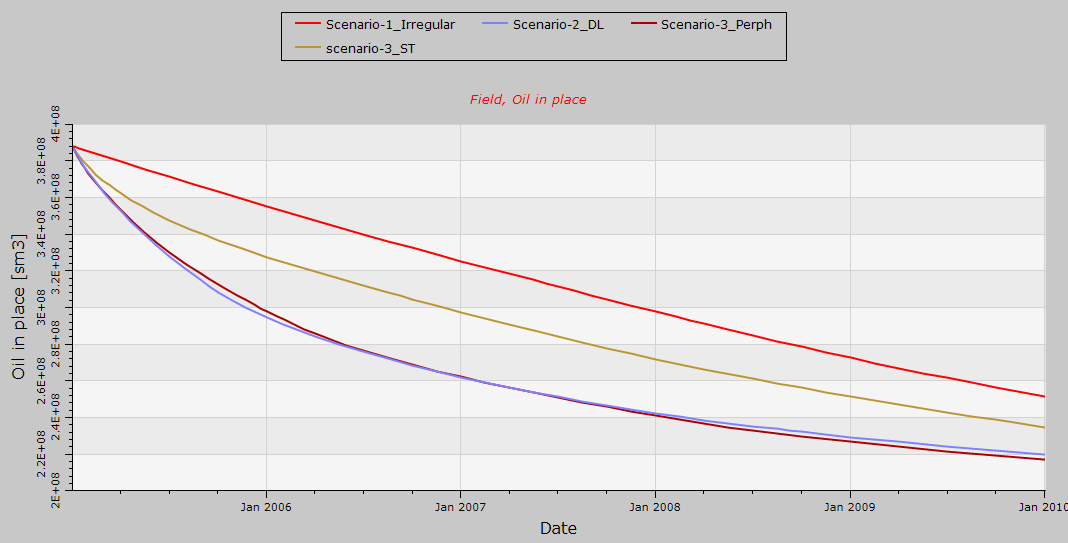
The efficiency of each pattern in water flooding project for the oil reservoir appears from the figure below for the amount of remaining reserve in the reservoir that already not recovered after applying waterflooding project for each type separately on the reservoir [40].
Copyright© El-hoshoudy AN, et al.
The above figure shows that peripheral water flooding pattern is more efficient than others due to the lower remaining reserve will be in the reservoir. The peripheral pattern has recovered most of the oil in the reservoir with a recovery factor equal to 65%. The recovery efficiency from an irregular pattern of water flooding is 46%. The recovery efficiency from Staggered Line Spot of water flooding is 55%. The recovery efficiency from Direct Line Spot of water flooding is 63%. The recovery efficiency from Peripheral Pattern of water flooding is 65%. Therefore, the peripheral better than others in oil recovery.
Comparison of Reservoir Pressure between Different Types of Water Flooding Pattern
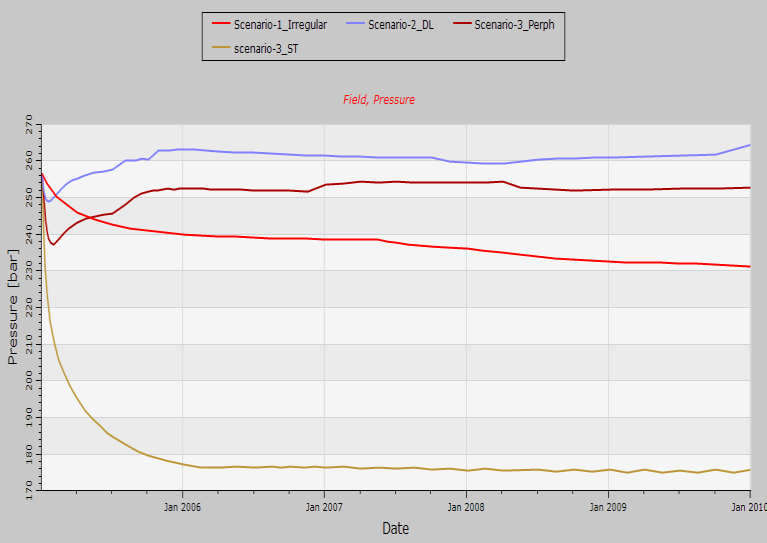
The figure below shows that the reservoir pressure is still maintained with relatively no decline in reservoir pressure in direct line spot pattern and in the peripheral pattern of water flooding. While in an irregular pattern and in staggered line spot the reservoir pressure is declined very rapidly with no support for the producing wells. Therefore, from pressure maintenance, the direct line spot and peripheral pattern of water flooding are the best
References
-
El-hoshoudy AN, Desouky SM, Betiha MH, Alsabagh AM (2017) Hydrophobic Polymers Flooding, Application and Characterization of Surfactants, IntechOpen.
-
El-hoshoudy AN, Desouky SM, Gomaa S (2019) Application of Acrylates in Enhanced Oil Recovery. Journal of New Development in chemistry 2(3): 1-17.
-
Gomaa S, Attia A, Abdelhady A, Khaled S, Elwageeh M, et al. (2019) Well Testing Analysis of Unconventional Gas Reservoirs: Real Case Study of Tight Gas Carbonate Reservoir, Apollonia Formation, Western Desert, Egypt. International Journal of Petroleum and Petrochemical Engineering 5(1): 1-5.
-
El-hoshoudy AN, Desouk SEM, Elkady MY, Alsabagh AM, Betiha MA, et al. (2017) Hydrophobically associated polymers for wettability alteration and enhanced oil recovery. Egyptian Journal of Petroleum 26(3): 757-762.
-
5. El-Hoshoudy AN, Desouky SEM, Betiha MA, Alsabagh AM (2016) Use of 1-vinyl imidazole based surfmers for preparation of polyacrylamide–SiO2 nanocomposite through aza-Michael addition copolymerization reaction for rock wettability alteration. Fuel 170: 161-175.
-
Luo H, Delshad M, Pope GA, Mohanty KK (2017) Interactions between viscous fingering and channeling for unstable water/polymer floods in heavy oil reservoirs. SPE Reservoir Simulation Conference, Society of Petroleum Engineers, USA.
-
Mohammadi H, Delshad M, Pope GA (2009) Mechanistic modeling of alkaline/surfactant/polymer floods. SPE Reservoir Evaluation & Engineering 12(4): 518-527. Copyright© El-hoshoudy AN, et al.
-
Chen W, Wasserman ML, Fitzmorris RE (1987) A thermal simulator for naturally fractured reservoirs. SPE Symposium on Reservoir Simulation, Society of Petroleum Engineers.
-
Rahman A, Happy FA, Ahmed S, Hossain ME (2017) Development of scaling criteria for enhanced oil recovery: a review. Journal of Petroleum Science and Engineering 158: 66-79.
-
Khan MY, Mandal A (2019) Vertical transmissibility assessment from pressure transient analysis with integration of core data and its impact on water and miscible water-alternative-gas injections. Arabian Journal of Geosciences 12(8): 261.
-
Gharbi RB, Peters EJ, Garrouch AA (1997) Effect of heterogeneity on the performance of immiscible displacement with horizontal wells. Journal of Petroleum Science and Engineering 18(1-2): 35-47.
-
Saboorian-Jooybari H, Dejam M, Chen Z (2016) Heavy oil polymer flooding from laboratory core floods to pilot tests and field applications: Half-century studies. Journal of Petroleum Science and Engineering 142: 85-100.
-
Hadia N, Chaudhari L, Mitra SK, Vinjamur M, Singh R (2007) Experimental investigation of use of horizontal wells in waterflooding. Journal of Petroleum Science and Engineering 56(4): 303-310.
-
Saper MMM, Adam AAM, Bashar AAAS, Ali AAHAA (2018) A Computer Program for Excess Water Production Diagnosis Case Study–Heglig Oil Field– Sudan. sudan university of science & technology.
-
Lake LW, Jensen JL (1989) A review of heterogeneity measures used in reservoir characterization. Society of Petrolium Engineers pp: 40.
-
Turta AT, Wassmuth F, Maini BB, Singhal AK (2000) Evaluation of IOR Potential of Petroleum Reservoirs. 16th World Petroleum Congress, World Petroleum Congress, Canada.
-
Kopaska-Merkel DC, Mann SD (1992) Regional variation in microscopic and megascopic reservoir heterogeneity in the Smackover Formation, southwest Alabama 42: 189-212.
-
Asadollahi M, Naevdal G (2009) Waterflooding optimization using gradient based methods. SPE/EAGE Reservoir Characterization & Simulation Conference, Society of Petroleum Engineers, UAE.
-
Brouwer DR, Jansen J (2002) Dynamic optimization of water flooding with smart wells using optimal control theory. European Petroleum Conference, Society of Petroleum Engineers, UK.
-
Lien ME, Brouwer DR, Mannseth T, Jansen JD (2008) Multiscale regularization of flooding optimization for smart field management. SPE Journal, Society of Petroleum Engineers 13(2): 195-204.
-
Seright R (2010) Potential for polymer flooding reservoirs with viscous oils. SPE Reservoir Evaluation & Engineering, Society of Petroleum Engineers 13(4): 730-740.
-
Weijermars R, Van Harmelen A (2017) Advancement of sweep zones in waterflooding: conceptual insight based on flow visualizations of oil-withdrawal contours and waterflood time-of-flight contours using complex potentials. Journal of Petroleum Exploration and Production Technology 7(3): 785-812.
-
Brice BW, Renouf G (2008) Increasing oil recovery from heavy oil waterfloods. International Thermal Operations and Heavy Oil Symposium, Society of Petroleum Engineers, Canada.
-
Cheng H, Shook GM, Malik T, Varadarajan D, Smith BR (2012) Interwell tracer tests to optimize operating conditions for a surfactant field trial: design, evaluation, and implications. SPE Reservoir Evaluation & Engineering 15(2): 229-242.
-
Torrez Camacho LD (2017) Methodology for the development of carbonate reservoirs with CO2-WAG= Metodologia de desenvolvimiento de campos de petróleo carbonáticos com CO2-WAG.
-
Alvarado V, Manrique E (2010) Enhanced oil recovery: field planning and development strategies. Gulf Professional Publishing.
-
Dai Z, Viswanathan H, Middleton R, Pan F, Ampomah W, et al. (2016) CO2 accounting and risk analysis for CO2 sequestration at enhanced oil recovery sites. Environmental science & technology 50(14): 7546- 7554. Copyright© El-hoshoudy AN, et al.
-
Sheng JJ (2014) A comprehensive review of alkaline– surfactant–polymer (ASP) flooding. Asia‐Pacific Journal of Chemical Engineering 9(4): 471-489.
-
Al-Kandari I, Al-Jadi M, Lefebvre C, Vigier L, De Medeiros M, et al. (2012) Results from a Pilot Water Flood of the Magwa Marrat Reservoir and Simulation Study of a Sector Model Contribute to Understanding of Injectivity and Reservoir Characterization. SPE Kuwait International Petroleum Conference and Exhibition, Society of Petroleum Engineers, Kuwait.
-
Qi D, Hesketh T (2005) An analysis of upscaling techniques for reservoir simulation. Petroleum science and technology 23(7-8): 827-842.
-
Klemm B, Picchioni F, Raffa P, Van Mastrigt F (2018) Star-Like Branched Polyacrylamides by RAFT polymerization, Part II: Performance Evaluation in Enhanced Oil Recovery (EOR). Industrial & engineering chemistry research 57(27): 8835-8844.
-
Sheng JJ, Leonhardt B, Azri N (2015) Status of polymer-flooding technology. Journal of Canadian Petroleum Technology 54(2): 116-126.
-
Khorsandi Kouhanestant S (2016) Mathematics of multiphase multiphysics transport in porous media.
-
Yu W, Lashgari H, Sepehrnoori K (2014) Simulation study of CO2 huff-n-puff process in Bakken tight oil reservoirs. SPE Western North American and rocky mountain joint meeting, Society of Petroleum Engineers, Colorabo.
-
El-hoshoudy AN, Mohammedy MM, Desouky SM, Ramzi M, Attia AM (2019) Experimental, modeling and simulation investigations of a novel surfmer-co- poly acrylates crosslinked hydrogels for water shut- off and improved oil recovery. Journal of Molecular Liquids 277: 142-156.
-
Sanchez NL (1999) Management of water alternating gas (WAG) injection projects. Latin American and Caribbean petroleum engineering conference, Society of Petroleum Engineers, Venezuela.
-
Craig Jr, Geffen T, Morse R (1955) Oil recovery performance of pattern gas or water injection operations from model tests.
-
Agca C, Pope GA, Sepehrnoori K (1990) Modelling and analysis of tracer flow in oil reservoirs. Journal of Petroleum Science and Engineering 4(1): 3-19.
-
Tiab D, Donaldson EC (2015) Petrophysics: theory and practice of measuring reservoir rock and fluid transport properties. Gulf professional publishing.
-
Latil M (1980) Enhanced oil recovery, Éditions Technip. Copyright© El-hoshoudy AN, et al.
- Nigeria’s Vulnerability in the Face of Global Energy Policy
- A Simulation Study of Investigation of Optimum Oil Production Performance by Applying Various Gas Injection Methods in Oil Reservoir
- Characterization of Permo-Triassic Reservoirs through Thermal Maturity Assessment of Westphalian Source Rocks in the Cheshire Basin
- Influence of Microwax on the Rheological and Thermal Behaviour of a Wax Crude Oil
- Real-Time Monitoring and Performance Optimization of Steam Injection in Heavy Oil Reservoirs Using Fiber Optic Sensing and Integrated Predictive Simulation Models
- Rapid On-Site Determination of the Total Petroleum Hydrocarbon Content of Soils by Handheld Fourier Transform Near-Infrared Spectroscopy: Development of a Global, Site- and Scanner- Independent Calibration Model