
Petroleum Industries and Its Impact of Petroleum Extraction on the Environment
The petroleum sector has prioritized reducing the environmental effect of its activities in response to the growing environmental conservation movement. Personnel in the sector need to be properly educated and trained in order to safeguard the environment. The environmental effects of petroleum operations and strategies to reduce them are the subject of a wealth of valuable information. However, this information is dispersed throughout thousands of books, reports, and papers, making it challenging for industry personnel to find specific details on mitigating the environmental effects of specific operations. The breadth and complexity of environmental concerns confronting the petroleum sector can be daunting for many engineers. While a large number of outstanding papers have been given on particular environmental topics, there is still a need for overview papers that set the stage for those more in-depth investigations. This review article examines the main upstream petroleum industry waste sources, the effects those wastes have on the environment, waste management, treatment, and disposal strategies, and contaminated site cleaning techniques.
Introduction
Petroleum Industries Overview
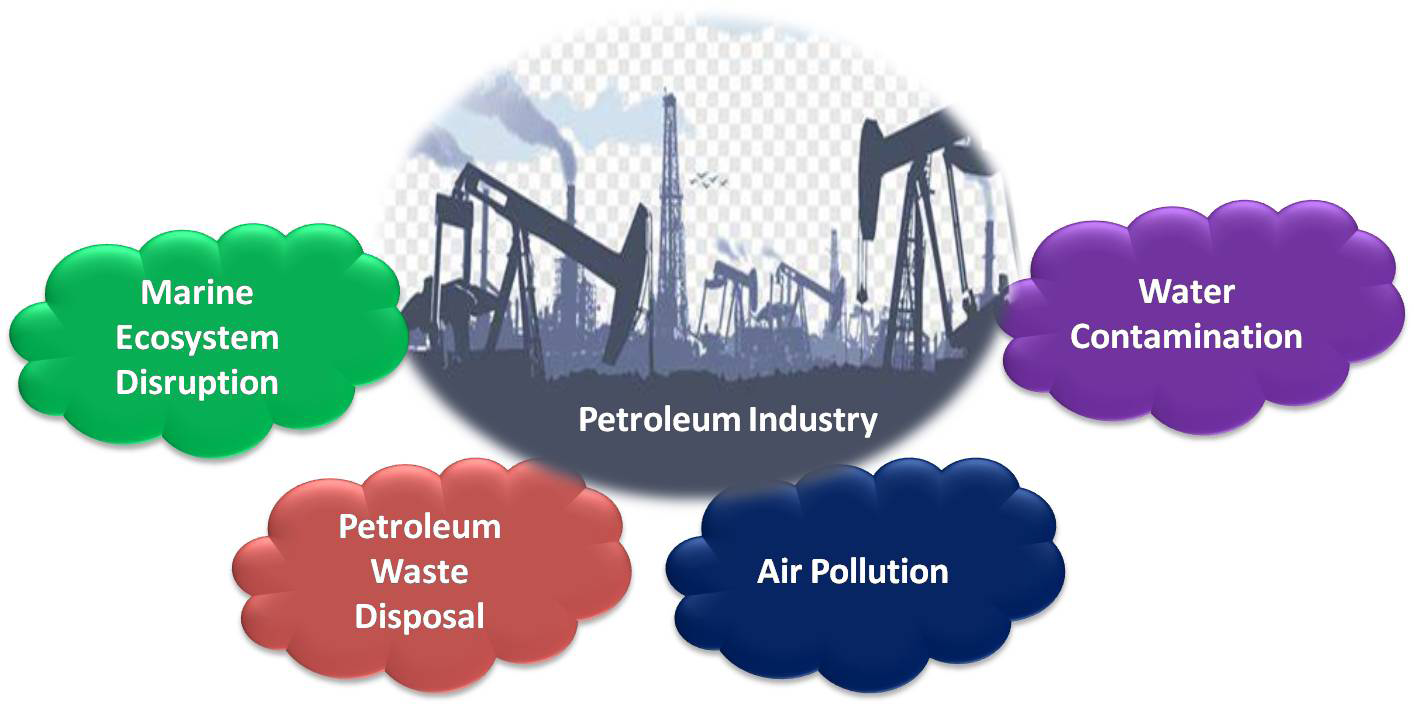
Oil and gas exploration and production, along with associated energy infrastructure projects, occur worldwide in various environmental and socio-economic conditions. These activities are complex and carry inherent risks, requiring careful management of environmental, health and safety issues, as well as social considerations [1]. In addition to the environmental and health concerns, there are also a wide range of social issues that need to be addressed in the petroleum industry. These include matters such as human rights, revenue management, ethics, governance, and corruption. The petroleum industry must strive for higher levels of environmental and social performance to meet the demands of stakeholders [2]. Moreover, the development of the oil and gas industry is influenced by various factors such as economic, social, technological, ecological, and political factors [3]. These factors, combined with the global expansion of the industry, pose challenges in ensuring the health, safety, and environmental aspects of petroleum operations. Environmental pollution is one of the significant effects of petroleum industries. The petroleum industry, through its activities such as oil extraction and transportation, contributes to environmental pollution. The industry’s use of machinery, extractive processes, and transportation methods can cause water pollution [4]. The main objective of this review is to explain how petroleum extraction affects the environment and marine ecosystem with strategies for reducing the environmental footprint of petroleum industries. Figure 1 shows the schematic representation of effects of the petroleum industry on the environment.
Properties of Petroleum
Crude oil can appear as thick, semisolid solids or as extremely fluid, volatile liquids. Its hue is often either black or black with a hint of green. It can occasionally be translucent, light yellow, reddish, or greenish-yellow. Natural gas has no colour and no smell. In addition to cyclohexenes, aromatic hydrocarbons, and more complex hydrocarbons like asphaltenes, the main constituents of petroleum are alkanes. Petroleum is made up of two fundamental elements: carbon and hydrogen. Due to the above constituents’ intricate combinations, crude oils have a wide range of chemical compositions. Petroleum comes in a wide range of characteristics, including density, colour, boiling point, and viscosity. In comparison to saturated and aromatic fractions, heavier fractions such as asphaltenes have higher concentrations of metals. Sulphur and nitrogen can be found in tiny amounts in light petroleum, and their concentration increases in heavier or extra-heavy crude oil (Table 1).
| Hydrogen | 11-14 % |
|---|---|
| Carbon | 84-87 % |
| Metals | 0-0.14 % |
| Nitrogen | 0.1-2 % |
| Oxygen | 0.1-0.2 % |
| Sulfur | 0.06-2 % |
Table 1: Basic Composition of Petroleum.
Impact of Petroleum Extraction on the Environment
Petroleum extraction, particularly offshore oil and gas development, has significant ecological impacts on coastal ecosystems [5]. These impacts include the toxicity of spilled oil, changes in hydrology, and alterations to marine habitats and fish populations. Furthermore, the proximity of offshore oil and gas activities to areas rich in biodiversity leads to a high spatial overlap, with approximately 85% of assessed species being affected by hydrocarbon activities. Additionally, petroleum extraction can have detrimental effects on small-scale fisheries and coastal communities. These effects can range from the displacement of fishers from their traditional fishing grounds due to increasing coastal traffic and infrastructure, to the catastrophic impacts of oil spills on fisheries and coastal economies. Furthermore, the economic impacts of petroleum extraction can also be negative. For example, an oil spill in the Gulf of Mexico in 2010 caused significant economic damage and highlighted the complexities of assessing the full range of economic impacts arising from offshore oil and gas development. Therefore, it is crucial to carefully consider and mitigate the environmental risks associated with petroleum extraction to protect marine biodiversity, fisheries, and coastal communities. Petroleum extraction activities, especially offshore oil and gas development, have a detrimental impact on the environment [6].
Oil Spills and Marine Ecosystem Disruption
Oil spills have the potential to cause significant disruption and damage to marine ecosystems. This disruption can occur in various ways. Firstly, oil spills can directly harm marine organisms. The toxic chemicals in crude oil can contaminate the water, making it difficult for marine organisms to survive and thrive. This can lead to the death of fish, shellfish, and other species that rely on clean water for survival. Additionally, the oil can coat the fur or feathers of marine mammals and birds, impairing their ability to swim or fly, making them more vulnerable to predators and reducing their chances of survival [7]. Furthermore, oil spills can also disrupt the food chain in marine ecosystems. The oil can contaminate and kill the primary producers, such as phytoplankton and algae, which are at the base of the food chain. As a result, the entire ecosystem can be affected, with cascading effects on higher trophic levels. This disruption can also extend to marine habitats. Oil spills can heavily impact sensitive habitats such as coral reefs, mangroves, and salt marshes. These habitats provide crucial breeding grounds, nurseries, and feeding areas for many species. The destruction of these habitats can lead to the loss of biodiversity and a decline in population sizes [8, 9].
Air Pollution from Petroleum Refineries
Air pollution from petroleum refineries is a growing concern due to the significant impact it has on air quality and public health [10]. Petroleum refineries are industrial facilities that process crude oil into various products, such as gasoline, diesel fuel, and jet fuel. During this refining process, emissions of harmful pollutants can be released into the air these pollutants include volatile organic compounds, nitrogen oxides, sulfur oxides, particulate matter, carbon monoxide, and greenhouse gases. These pollutants can have detrimental effects on both human health and the environment. Additionally, the refining sector of the petroleum industry is a major contributor to air pollution. As such, it is crucial for petroleum refineries to implement effective pollution control measures to reduce their emissions and mitigate the negative impacts on air quality [11]. Some of the measures that can be implemented by petroleum refineries to reduce air pollution include utilizing advanced technologies and equipment for emission control, such as catalytic converters, scrubbers, and flue gas desulfurization systems. These technologies can help to remove or reduce the emissions of pollutants from refinery operations [10].
Water Contamination and Petroleum Waste Disposal
Water contamination and petroleum waste disposal are significant environmental challenges that need to be effectively addressed. These issues not only pose immediate threats to human health and the environment but also have long-term consequences that can persist for generations. Effective management and treatment of water contamination and petroleum waste is crucial to ensure the protection of surface and groundwater resources, as well as the overall ecological balance. By employing modern methods and techniques such as peat sorbent production and physicochemical/ biological treatment methods, the detrimental effects of oil spills and chemical spills can be mitigated. In addition to minimizing the environmental impact, these approaches also contribute to ensuring the safety of drinking water sources and preserving delicate aquatic habitats [11]. Furthermore, the development and implementation of innovative wastewater treatment approaches are essential to address emerging contaminants in water resources. Furthermore, comprehensive understanding of the complex processes involved in managing contaminated sediments is necessary for effective risk management. This includes considering physical, chemical, biological, and socioeconomic factors. Adopting integrated approaches that consider the various aspects of water contamination and petroleum waste disposal is key to addressing these challenges. Moreover, it is crucial to invest in the development of advanced treatment technologies that can effectively remove potentially toxic compounds which traditional processes may not be able to eliminate [12].
Strategies for Reducing Environmental Footprint of Petroleum Industries
Strategies for reducing environmental footprint of petroleum industries include replacing conventional oil feeds tocks with bio based or recycled-plastic materials, using renewable energy in the refining process, and transitioning to renewable feed stocks or alternative methods of plastics production. By implementing these strategies, petroleum industries can significantly reduce their environmental footprint and contribute to a more sustainable future. These strategies not only help reduce greenhouse gas emissions but also promote a circular economy by reducing waste and dependence on finite resources. By adopting these strategies, petroleum industries can transition towards a more sustainable and environmentally-friendly approach to production. Additionally, exploring CO2-based chemistry as a novel feedstock can further contribute to reducing the environmental impact of chemical production in all relevant sectors [14, 15]. Furthermore, the potential benefits of utilizing green energy sources in the plastics industry have been largely unexplored. By considering the potential of green energy sources, such as renewable energy, and implementing strategies to reduce emissions through the use of bio based or recycled feeds tocks, the petroleum industry can take significant steps towards reducing its environmental footprint. Overall, there are various strategies available for petroleum industries to reduce their environmental footprint. By implementing these strategies, petroleum industries can significantly reduce their environmental footprint and contribute to a more sustainable future [16, 17].
Conclusion and Future Outlook on Petroleum Industry’s Environmental Impact
Oil and gas exploration and production, along with associated energy infrastructure projects, have a widespread presence across diverse environmental and socio-economic settings worldwide [18, 19]. As stakeholders increasingly demand higher levels of environmental and social performance from the industry, there is a growing need for careful management of environmental, health and safety issues the global society is threatened by the amount of plant level asset exploitation needed to satisfy the growing energy demand. The oil and gas industry will continue to play a major role in the global energy mix for many years, until alternative sources of energy become economically viable during this transition period, it is essential for the oil and gas industry to prioritize sustainable practices in order to minimize its impact on the environment and society. By implementing HS&E processes similar to those in North America and challenging regulatory bodies in different countries, global oil and gas producers and service companies can contribute to the reduction of the petroleum industry’s environmental impact and promote sustainable development In conclusion, the future outlook for the petroleum industry’s environmental impact is dependent on the industry’s ability to prioritize sustainability and incorporate relevant Sustainable Development Goals into their businesses and operations.
Petroleum production, while essential for powering much of the world’s economy, carries significant environmental impacts that can have far-reaching consequences. Here’s an overview of some of the key environmental impacts and problems associated with petroleum production: Air Pollution: One of the most immediate and visible impacts of petroleum production is air pollution. Extraction processes, such as drilling and fracking, release volatile organic compounds (VOCs), nitrogen oxides (NOx), and particulate matter into the atmosphere. These pollutants contribute to smog formation, respiratory illnesses, and climate change [14]. Water Pollution: Petroleum production can contaminate both surface water and groundwater. Spills and leaks from drilling operations can release crude oil and toxic chemicals into waterways, harming aquatic ecosystems and affecting drinking water supplies for both humans and wildlife. Additionally, wastewater from drilling processes, known as produced water, often contains high levels of salts, heavy metals, and radioactive materials, posing serious environmental risks if not properly managed. Habitat Destruction: The infrastructure associated with petroleum production, such as well pads, roads, and pipelines, can fragment and disrupt natural habitats, leading to loss of biodiversity and disruption of wildlife migration patterns. Deforestation and land clearing for oil exploration and extraction further exacerbate habitat destruction, particularly in sensitive ecosystems like rainforests and wetlands [15]. Climate Change: Petroleum production and consumption are major contributors to greenhouse gas emissions, primarily carbon dioxide (CO2) and methane (CH4). The combustion of petroleum products releases CO2 into the atmosphere, contributing to global warming and climate change. Additionally, methane, a potent greenhouse gas, can leak during extraction and transportation processes, further exacerbating the environmental impact of petroleum production. Soil Contamination: Spills, leaks, and improper disposal of drilling waste can lead to soil contamination, affecting soil quality and fertility. Petroleum hydrocarbons and toxic chemicals can persist in the soil for years, impairing plant growth and posing risks to human health if agricultural land becomes contaminated [5]. Indigenous and Community Impacts: Petroleum production often occurs in or near indigenous lands and communities, leading to conflicts over land rights, cultural heritage, and environmental justice. Indigenous communities may face disproportionate health risks and social disruptions due to pollution, loss of traditional livelihoods, and displacement from their ancestral lands [7].
References
-
Stevens NP (1956) Origin of Petroleum--A Review. AAPG Bulletin 40(1): 51-61.
-
Onyije FM, Hosseini B, Togawa K, Schüz J, Olsson A (2021) Cancer Incidence and Mortality among Petroleum Industry Workers and Residents Living in Oil Producing Communities: A Systematic Review and Meta- Analysis. Int J Environ Res Public Health 18(8): 4343.
-
Varjani S, Joshi R, Srivastava VK, Ngo HH, Guo W (2019) Treatment of wastewater from petroleum industry: current practices and perspectives. Environ Sci Pollut Res Int 27(22): 27172-27180.
-
Ajarem JS, Hegazy AK, Allam GA, Allam AA, Maodaa SN, et al. (2022) Heavy Metal Accumulation, Tissue Injury, Oxidative Stress, and Inflammation in Dromedary Camels Living near Petroleum Industry Sites in Saudi Arabia. Animals (Basel) 12(6): 707.
-
Jafarinejad S (2017) Pollutions and Wastes from the Petroleum Industry. Petroleum waste treatment and pollution control, Amsterdam, Netherlands, pp: 19-83.
-
Jafarinejad S (2017) Environmental Impacts of the Petroleum Industry, Protection Options, and Regulations. Petroleum waste treatment and pollution control, Amsterdam, Netherlands, pp: 85-116.
-
Sojinu SO, Ejeromedoghene O (2019) Environmental Challenges Associated with Processing of Heavy Crude Oils. Processing of Heavy Crude Oils - Challenges and Opportunities.
-
Hrnčević L (2014) Petroleum Industry Environmental Performance and Risk. Advances in environmental engineering and green technologies, pp: 358-387.
-
Langston J (1970) Petroleum and the Environment. The APPEA Journal 10: 16-18.
-
Wu CM, Motora KG, Kuo DH, Lai CC, Huang BR, et al. (2021) Cesium tungsten bronze nanostructures and their highly enhanced hydrogen gas sensing properties at room temperature. International Journal of Hydrogen Energy 46(50): 25752-25762.
-
Wu CM, Motora KG, Chen GY, Kuo DH, Gultom NS (2022) Highly efficient MoS2/CsxWO3 Nano composite hydrogen gas sensors. Frontiers in Materials 9: 831725.
-
Wu CM, Motora KG, Chen GY, Chu JP, Cheng Y, et al. (2023) Development of p-type zinc oxide Nano rods on zirconium-based metallic glass nanotube arrays by facile hydrothermal method for gas sensing applications. Chemical Engineering Journal 463: 142381.
-
Wu CM, Motora KG, Chen GY, Kuo DH, Gultom NS (2023) Highly efficient reduced tungsten oxide-based hydrogen gas sensor at room temperature. Materials Science and Engineering: B289: 116285.
-
Damian C (2014) Environmental pollution in the petroleum refining industry. Ovidius University Annals of Chemistry 24(2): 109-114.
-
Sui X, Wang X, Li Y, Ji H (2021) Remediation of Petroleum-Contaminated Soils with Microbial and Microbial Combined Methods: Advances, Mechanisms, and Challenges. Sustainability 13(16): 9267.
-
Unimke AA, Mmuoegbulam OA, Anika OC (2018) Microbial Degradation of Petroleum Hydrocarbons: Realities, Challenges and Prospects. Biotechnology Journal International 22(2): 1-10.
-
Speight JG (2017) Petroleum Refining and Environmental Control and Environmental Effects. Encyclopedia of Sustainability Science and Technology, pp: 1-32.
-
Chukwuma C (2018) Paradigm on Sustainable Human Health, Environment and Petroleum-contamination: Constraints and Challenges. Environmental and earth sciences.
-
Ossai IC, Ahmed A, Hassan A, Hamid FS (2020) Remediation of soil and water contaminated with petroleum hydrocarbon: A review. Environmental Technology and Innovation 17: 100526.
- Nigeria’s Vulnerability in the Face of Global Energy Policy
- A Simulation Study of Investigation of Optimum Oil Production Performance by Applying Various Gas Injection Methods in Oil Reservoir
- Characterization of Permo-Triassic Reservoirs through Thermal Maturity Assessment of Westphalian Source Rocks in the Cheshire Basin
- Influence of Microwax on the Rheological and Thermal Behaviour of a Wax Crude Oil
- Real-Time Monitoring and Performance Optimization of Steam Injection in Heavy Oil Reservoirs Using Fiber Optic Sensing and Integrated Predictive Simulation Models
- Rapid On-Site Determination of the Total Petroleum Hydrocarbon Content of Soils by Handheld Fourier Transform Near-Infrared Spectroscopy: Development of a Global, Site- and Scanner- Independent Calibration Model