
Role of Insulin in Prevention of Hypertrophic Scars
Hypertrophic scars are pathological scars resulting from abnormal responses to trauma. They can be painful and itchy. They can cause functional difficulties especially, in the joint region. They can have cosmetic implications along with functional problems. There have been various options available for the treatment. We would like to discuss regarding the role of insulin in the prevention of hypertrophic scars.
Introduction
Hypertrophic scars are an abnormal response to trauma. Hypertrophic scars (HTSs) are defined as visible and elevated scars that do not spread into surrounding tissues and that often regress spontaneously [1]. The delicate balance of the deposition and degradation of ECM proteins is disrupted when either excessive production of collagen, proteoglycans and, fibronectin by fibroblasts or deficient degradation and remodeling of the ECM occur [2]. This leads to hypertrophic scars or keloids.
Numerous methods have been described for the treatment of abnormal scars, but to date, the optimal treatment method has not been established. A wide variety of treatments have been advocated for hypertrophic scars. Among these treatments are surgical excision with or without grafting [1], pressure therapy [3], intralesional interferon [4], topical and intralesional corticosteroids [5], intralesional leomycin [6], laser therapy [7], silicone gel sheeting [8], onion extract gel and other therapies directed at collagen synthesis [9]. One of the newer modalities available is the injection of insulin in the wound at the time of repair to prevent scar formation [10].
Methodology
It’s a retrospective analysis of 5 patients for whom insulin was given in wound management and the patient followed up upto 1-year post wound healing. The details of the patients are in Table 1.
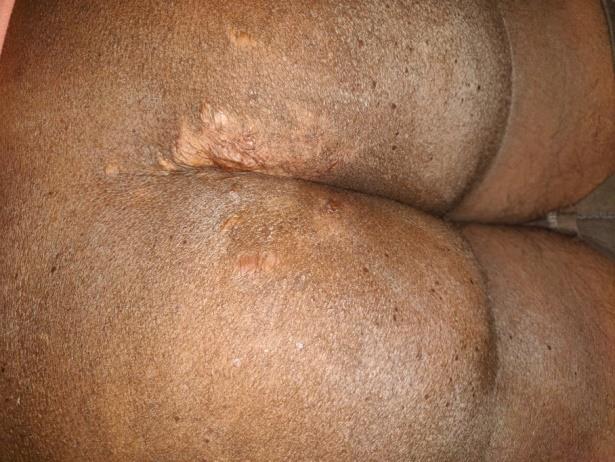
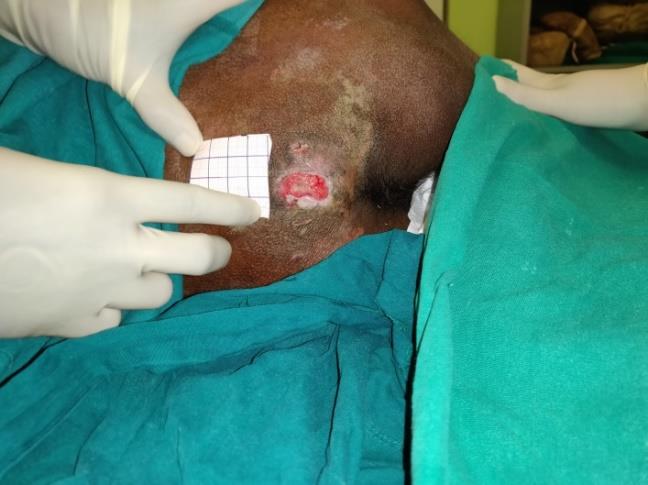
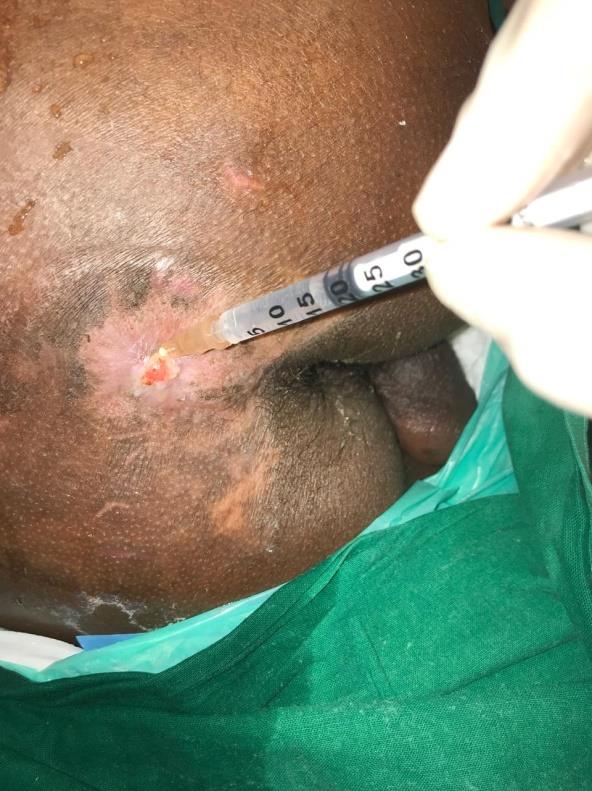
0.1ml of regular insulin is either injected or sprayed onto every 1cm2 of the wound (Figure 1-2) during the regular dressing of the wound as a part of the multimodal treatment of wounds. This was repeated once every 3-5 days when the dressing was changed depending on the soakage. The patients were followed up to 1 year after complete healing of the wound (Figure 3).
| S.No | Age | Sex | Diagnosis | ||||||||
|---|---|---|---|---|---|---|---|---|---|---|---|
| 1 | 18 | Male | 30% electrical burns | ||||||||
| 2 | 21 | Male | Grade 2 sacral bed sore | ||||||||
| 3 | 56 | Female | Diabetic foot ulcer | ||||||||
| 4 | 63 | Male | Post traumatic non healing ulcer | ||||||||
| 5 | 24 | Female | 30% thermal burns |
Results
All the patients in whom insulin therapy was given have not developed hypertrophic scars. No systemic effects of insulin were noted in any of the patients.
No recurrence or break down of wounds was seen at 1 year.
Discussion
The role of topical insulin in wound healing has been under scrutiny in literature since 1970s [11]. Various studies have been done in animal models and humans and it has been found that topical Insulin therapy exerts its effects via IGF 1 receptor. The use of topical insulin in diabetic foot has shown to produce faster epithelization rates. Insulin has been known to stimulate keratinocytes and the rate of endothelial proliferation leading to faster neovascularization and formation of granulation tissue [12].
However, its effect on scarring has recently come under review. Hallam et al have used low dose insulin in the prevention of scars in breast surgery [10].
We have retrospectively analysed the scars of the patients in whom insulin therapy was given as a part of treatment for wound healing. All our patients have not developed hypertrophic scars after 1 year of follow up. The mechanism of scar prevention is not definitively known. However in vitro studies have shown that there is 25% increased DNA synthesis and also there is reduced my fibroblasts concentration. This leads one to speculate that wound modulation during the healing process might prevent the abnormal responses leading to hypertrophic scar formation. It was found in animal studies that there is a decrease in α-smooth muscle actin fibers in the areas treated with insulin suggesting that my fibroblast concentration is inhibited.
Conclusions
Insulin therapy may be efficacious in preventing hypertrophic scars and in improving the scar quality. However, large randomized control trials are required to definitively establish its efficacy.
Declarations
Authors’ Contributions
All authors made contributions to the article.
Availability of Data and Materials
Not applicable.
Financial Support and Sponsorship
None.
Conflicts of Interest
None.
Consent for Publication
Not applicable.
Copyright
© The Author(s) 2019.
References
-
English RS, Shenefelt PD (1999) Keloids and hypertrophic scars. Dermatologic Surgery 25(8): 631- 638.
-
Wang J, Ding J, Jiao H, Honardoust D, Momtazi M, et al. (2011) Human hypertrophic scar-like nude mouse model: characterization of the molecular and cellular biology of the scar process. Wound Repair Regen 19(2): 274-285.
-
Anzarut A, Olson J, Singh P, Rowe BH, Tredget EE (2009) The effectiveness of pressure garment therapy for the prevention of abnormal scarring after burn injury: a meta-analysis. J Plast Reconstr Aesthet Surg 62(1): 77-84.
-
Leventhal D, Furr M, Reiter D (2006) Treatment of keloids and hypertrophic scars: a meta-analysis and review of the literature. Arch Facial Plast Surg 8(6): 362-368.
-
Jalali M, Bayat A (2007) Current use of steroids in management of abnormal raised skin scars. Surgeon 5(3): 175-180.
-
Naeini FF, Najafian J, Ahmadpour K (2006) Bleomycin tattooing as apromising therapeutic modality in large keloids and hypertrophicscars. Dermatol Surg 32(8): 1023-1029.
-
Leclère FM, Mordon SR (2010) Twenty-five years of active laser prevention of scars: what have we learned. J Cosmet Laser Ther 12: 227-234.
-
O Brien L, Pandit A (2013) Silicon gel sheeting for preventing and treating hypertrophic and keloid scars. Cochrane Database Syst Rev 9: CD003826.
-
Shih R, Waltzman J, Evans GR (2007) Plastic Surgery Educational Foundation Technology Assessment Committee Review of over-the-counter topical scar treatment products. Plast Reconstr Surg 119(3): 1091-1095.
-
Hallam MJ, Pitt E, Thomas A, Nduka C (2018) Low- Dose Insulin as an Antiscarring Therapy in Breast Surgery: A Randomized Controlled Trial. Plastic and reconstructive surgery 141(4): 476e-85e.
-
Belfield WO, Golinsky S, Compton MD (1970) The use of insulin in open-wound healing. Vet Med Small Anim Clin 65(5): 455-460.
-
Scimeca CL, Bharara M, Fisher TK, Kimbriel H, Mills JL, et al. (2010) Novel use of insulin in continuous- instillation negative pressure wound therapy as “wound chemotherapy”. J Diabetes Sci Technol 4(4): 820-824.
- Gallic and Citric Acid Present in the Peels of Tropical Fruits as an Alternative in the Fight against Cancer
- Treating the Forehead Lines with Combination of Forehead and Glabellar Botulinum Toxin Among Japanese Patients
- Clinical Evaluation of Patients Suffering from Breast Cancer & Determination of Treatment Therapies and Better Strategies Related to Breast Cancer
- Medieval Recipes by Al-Zahrāwī for Heart Palpitations Treatment
- Etiology and Prescription Errors of Myocardial Infarction in Different Health Care Systems of Azad Kashmir
- Early Diagnosis and Multidisciplinary Management of Turner Syndrome: A Paediatric Case Study