
Chemical Profile of Polyphenolic Compounds Present in the Red and White Varieties of Tunillo (Stenocereus stellatus) Fruit
Tunillo is a pre-Hispanic fruit native to the Mixtec region of Mexico. This fruit has been shown to have an antihyperglycemic effect, an effect associated with the content of total polyphenols; however, the chemical profile of this type of compounds present in the juice is not known, For this reason, the objective of this work was to determine the polyphenols present in the juice of tunillo (Stenocereus stellatus) of the red and white varieties by means of high performance liquid chromatography techniques and the presence of the main functional groups by infrared spectroscopy. It was found that gallic acid is the most abundant simple polyphenol in the white tunillo juice while chlorogenic acid is the most abundant in the red tunillo juice, being the white tunillo juice the one containing the highest amount of rutin and catechin. In conclusion, the chemical profile of the tunillo fruits shows differences in the content of polyphenols and flavonoids, so the routes of secondary metabolism and functional activity must be different.
Introduction
Tunillo is a pre-Hispanic fruit of Mexican origin which grows in the Mixtec region, this fruit that can be of different color is considered a delicacy by the inhabitants of the region and is associated with various functional properties, our research group has demonstrated the antihyperglycemic effect in an in vivo model of male Wistar rat [1], with the purpose of contributing to the search for functional foods that help us to modulate blood glucose levels, since glucose intolerance and diabetes are considered a health problem in Mexico and in the world [2]. The antihyperglycemic effect of this fruit can be associated to the presence of total polyphenols [1]. This type of compounds derived from the Shikimic acid pathway can be determined by the Folin- Ciocalteu (FC) reagent, using a semiquantitative technique that yields the content of this type of compounds based on the gallic acid equivalents that react with the FC reagent [3, 4], However, it is necessary to know the specific content of this type of compounds by finer analytical techniques, in this sense, high performance liquid chromatography is a viable alternative, so the main objective of this work was to determine the specific polyphenols and flavonoids in red and white tunillo juices using high performance liquid chromatography.
Materials and Methods
Biological Material
Tunillo fruits were harvested and collected in orchards of San Juan Joluxtla, municipality of Chazumba, State of Oaxaca, Mexico. The harvested fruits, which had a thick red and green peel and thorns, were transported to Mexico City to the Universidad Autónoma de la Ciudad de México and stored at 11°C until further use.
Determination of Total Phenol Content
The content of total phenols in the juices was determined by Folin-Ciocalteu (FC) reagent according to the method described by Pawar, et al. [3]. The results were expressed as milligram equivalents of gallic acid in 1 liter of juice (mg EAG/L juice).
Determination of Specific polyphenols
The identification and quantification of phenolic compounds present in the tunillo juices were determined by high performance liquid chromatography (HPLC, Agilent Infinity series 1260, Technologies, USA) according to the methodology described by Aarland, et al. [4, 5]. The results were quantified using calibration curves of the standards; gallic acid, caffeic acid, chlorogenic acid, rutin and catechin. Results were expressed as mg of compound in 1 liter of juice (mg compound/L juice).
Infrared (IR) Spectroscopy
The freeze-dried juices obtained by vacuum dehydration in a Labconco Model 6 freeze-dryer (Labconco Corporarion, USA) were used for infrared spectroscopy in a Cary 630 FTIR apparatus (Agilent Technologies, USA). Statistical analysis Excel 2013 for Windows was used to calculate the mean and standard deviation of the sample.
Results and Discussion
The content of total polyphenols determined by FC was statistically higher in red tunillo juice compared to white prickly pear juice (Table 1), this agrees with what is reported in the literature for this group of chemical compounds [1], as for the content of specific polyphenols, we found that gallic acid is the most abundant simple polyphenol in white tunillo juice while chlorogenic acid is the most abundant polyphenol in red tunillo juice (Table 1), It is important to mention that the three simple polyphenols quantified by HPLC which were gallic acid, caffeic acid and chlorogenic acid are associated with the ability to lower capillary glucose, so they may be responsible for the antihyperglycemic effect [2], an effect previously reported by our research group in a male Wistar rat model [1].
In both juices the most abundant flavonoid was rutin (Table 1) which is called vitamin P, it is important to mention that this compound is associated with various functional properties among which we find the anti-inflammatory and anticarcinogenic capacity [6, 7], so it may be interesting to evaluate the cytotoxic capacity of lyophilized juice of both tunillos in an in vitro model, the other flavonoid found was catechin which can be associated with the antihyperglycemic effect (Table 1).
| Juices | Compound | |||||
|---|---|---|---|---|---|---|
| Gallic acida | Caffeic acida | Chlorogenic acida | Rutina | Catechina | Total Phenolsb | |
| Tunillo white | 6.99 ± 0.26 | 1.69 ± 0.05 | 3.83 ± 0.07 | 8.72 ± 0.21 | 5.63 ± 0.05 | 38.91 ± 0.03 |
| Tunillo red | 3.73 ± 0.10 | 2.80 ± 0.05 | 7.31 ± 0.22 | 7.83 ± 0.03 | 2.04 ± 0.01 | 104.73 ± 0.79 |
Table 1: Quantification of polyphenols present in white and red prickly pear juice.
aPhenolic compound content in milligrams of compound per liter L of juice (mg of compound/L of juice) bTotal phenol content: A= mg gallic acid equivalents in 1 L of juice (mg EAG/L of juice) Table 1: Quantification of polyphenols present in white and red prickly pear juice.
The difference in the profile of polyphenolic compounds in the juice indicates differences in the biosynthesis of secondary metabolites, this result agrees with that reported by Cervantes, et al. [1], where the differences in the metabolites present in the juice of four varieties of tunillo are reported, It is important to mention that this work is the first report where the specific polyphenols gallic acid, caffeic acid, chlorogenic acid, rutin and catechin are quantified. The IR spectrum obtained for these fruits can be used as a chemical fingerprint, being interesting to mention the differences in the bands observed at approximately 1,700 to 1,600 cm-1 (Figure 1), which may correspond to a lactone system [8], showing a higher transmittance in the white tunillo, which agrees with the higher content of flavonoids quantified by high performance liquid chromatography (Table 1).
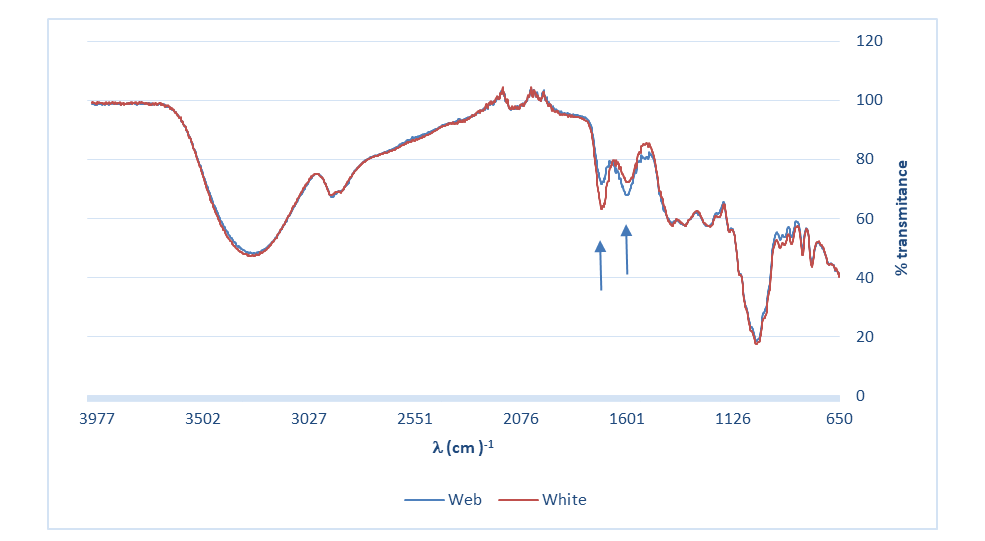
Figure1: Infrared spectrum of red and white tunillo juice.
Conclusion
The polyphenols gallic acid, caffeic acid, chlorogenic acid, rutin and catechin were quantified for the red and white tunillo varieties. Gallic acid was the most abundant simple polyphenol in white tunillo juice while chlorogenic acid was the most abundant in red tunillo juice, being rutin the most abundant flavonoid in both juices. Differences in polyphenol and flavonoid content indicate differences in secondary metabolism and thus in functional properties.
References
-
Clara CA, Angelica RG, Hugo OCB, Fernando DLS, Lorena ARE, et al. (2020) Chemical characterization, antioxidant capacity, and anti-hyperglycemic effect of Stenocereus stellatus fruits from the arid Mixteca Baja region of Mexico. Food Chem 328: 127076.
-
Sanchez CP, Chan VHO, Ramirez ELA, Cansino RG, Garcia ALZ, et al. (2023) Chemical Profile and Study of the Antidiabetic Effect of Annona squamosa L peel. Waste and Biomass Valorization.
-
Pawar SS, Dasgupta D (2018) Quantification of phenolic content from stem-bark and root of Hugonia mystax Linn Using RP-HPLC. King Saud Univ Sci 30(3): 293-300.
-
Aarland RC, Hernández AEB, Serrano MF, Palacios ECS, Sánchez FDL, et al. (2017) Studies on phytochemical, antioxidant, anti-inflammatory, hypoglycaemic and antiproliferative activities of Echinacea purpurea and Echinacea angustifolia extracts. Pharm Biol 55(1): 649- 656.
-
Pellati F, Epifano F, Contaldo N, Orlandini G, Cavicchi L, et al. (2011) Chromatographic methods for metabolite profiling of virus and phytoplasma infected plants of Echinacea purpurea. J Agric Food Chem 59(19): 10425- 10434.
-
Satari A, Amini SA, Raeisi E, Lemoigne Y, Heidarian E (2019) Synergetic impact of combined 5-fluorouracil and rutin on apoptosis in PC3 cancer cells through the modulation of P53 gene expression. Adv Pharm Bull 9(3): 462-469.
-
Sghaier MB, Pagano A, Mousslim M, Ammari Y, Kovacic H, et al. (2016) Rutin inhibits proliferation, attenuates superoxide production and decreases adhesion and migration of human cancerous cells. Biomed Pharmacother 84: 1972-1978.
-
Modarresi F, Azizi O, Shakibaie MR, Motamedifar M, Mansouri S (2016) Cloning and expression of quorum sensing N-acyl-homoserine synthase (LuxI) gene detected in Acinetobacter baumannii. Iran J Microbiol 8(2): 139-146.
- Gallic and Citric Acid Present in the Peels of Tropical Fruits as an Alternative in the Fight against Cancer
- Treating the Forehead Lines with Combination of Forehead and Glabellar Botulinum Toxin Among Japanese Patients
- Clinical Evaluation of Patients Suffering from Breast Cancer & Determination of Treatment Therapies and Better Strategies Related to Breast Cancer
- Medieval Recipes by Al-Zahrāwī for Heart Palpitations Treatment
- Etiology and Prescription Errors of Myocardial Infarction in Different Health Care Systems of Azad Kashmir
- Early Diagnosis and Multidisciplinary Management of Turner Syndrome: A Paediatric Case Study