
Long-Term Changes in Winter SST, Wind Stress and Anchovy Fishery in Relation to Climatic Indices along the South-Eastern Black Sea
A 47-year time series of winter Sea Surface Temperature (SST), wind stress and anchovy landing data from 1970 to 2016 was examined to assess long-term changes in these variables along the south-eastern coasts of the Black Sea in relation to the North Atlantic Oscillation (NAO), East Atlantic West Russia (EAWR) and Atlantic Multi-Decadal Oscillation (AMO) indices. An increase in winter SST at a rate of 0.02°C (r = 0.60; p<0.001) was observed over the period. Cumulative sums of the SST anomalies showed that there was a decrease in winter SST from 1985 to 1999, followed by an increase in SST from 2000 to 2014. Wind stress decreased throughout the time series, and it was inversely correlated with winter SST. Significant correlations detected between winter SST, wind stress, anchovy landings and winter values of the climate indices suggested that climate change is causing a decline in anchovy along the south-eastern coasts of the Black Sea.
Introduction
The Black Sea ecosystem experienced the most dramatic changes ever encountered over the past four decades [1, 2, 3, 4, 5, 6]. These changes induced community shifts in plankton to fish throughout the food web Shushkina, et al. Mills, et al. The majority of the research indicated that overfishing was the main driver of community change [7, 8]. In addition to overfishing, a range of environmental factors (e.g. eutrophication, climate change, water column structure, nutrient dynamics, and introducing invasive/alien species) can also contribute to changes in the community at different trophic levels [3, 8, 9]. Due to dramatic changes in these occurred in the Black Sea ecosystem, pelagic fish stocks have undergone large fluctuations since the 1960s [3, 8, 10, 11, 12, 13, 14, 15, 16]. The Black Sea has vital role in commercial fishery for countries that border the basin [3, 16]. Today a large proportion of the Turkish fish yields in the Black Sea are obtained from anchovy [16, 17], which makes up 60% of the total yield [18] that originates from the southern coasts of the Black Sea [19].
Overfishing has caused a sharp decrease and sometimes a temporary depletion of medium and large pelagic fish in the Black Sea [19, 20]. This shifted the fishing effort to European anchovy [15], and therefore the exploitation of anchovy stocks doubled by the end of the 1970s [5, 21]. This lead decrease in anchovy catch and during the 1980s the fishing effort then shifted towards newly recruited, small- sized fish species [1, 6, 7, 19, 20]. On the other hand, outburst of invasive species (e.g. Mnemiopsis leidyi), and high forage fish stocks caused a collapse in fish stocks at the end of 1980s in the Black Sea [19]. However, some signs of recovery of the fishery in the region have been recorded in recent years [12, 22, 23], although the reasons for these have not been properly quantified.
The Black Sea has also experienced the climate-induced changes in SST over inter-annual to inter-decadal time series, which can have deleterious effects on the ecosystem [12, 20, 24, 25, 26, 27, 28] from primary producers to top predators [29, 30, 31]. This warming may also accelerate introducing of many exotic species in the region [32], which cause displacement of other populations [33]. As a result of global warming, a 0.2°C increase in SST per decade has been reported along many tropical and subtropical seas [34]. Though climate-model simulations, the IPCC [35] reported that from 1998 to 2012 there was a warming trend in SST which was not detected in in situ observations. Increasing temperatures and fluctuations in SST has a cascade of effects throughout water column stratification, vertical mixing, phytoplankton community composition, primary production, nutrient cycling, prey- predator interactions, spawning periods, larval-juvenile growth rates and recruitment success [5, 33]. Moreover, climate change can also affect the geographical distribution of species, through local extinctions and / or alterations in community structure Hickling et al. The socio-economic consequence of this on commercial fish can be substantial. The effects of climate change on the ecosystem are therefore a major challenge for the sustainable management of the marine systems and resources Cheung, et al.
The European anchovy (Engraulis encrasicolus) is a small pelagic fish that plays a crucial role in both ecology and economics of the European coastal ecosystem Cury, et al. It is one of the world’s most traded fish species, and contributes significantly to the global fishery capture worldwide comprising over 10% of landings alone [18]. The European anchovy is the third most widely harvested species of the Engraulidae family of which approximately 40% comes from the Black Sea FAO. For the last 50 years after the depletion of fish stocks, anchovy experienced a major stock collapse at the end of 1980s. During this period, south-eastern part of the Black Sea became the only region that sustained a relatively high anchovy catch [36]. To understand the environmental mechanisms behind fluctuations in the anchovy fishery, we investigated the potential influence of climate-induced changes on the European anchovy along the south-eastern coast of the Black Sea, using nearly 50 years of SST, wind stress and anchovy landing data as well as climate indices including North Atlantic Oscillation (NAO), East Atlantic West Russia (EAWR) and Atlantic Multi-Decadal Oscillation (AMO) data.
Materials and Methods
Data
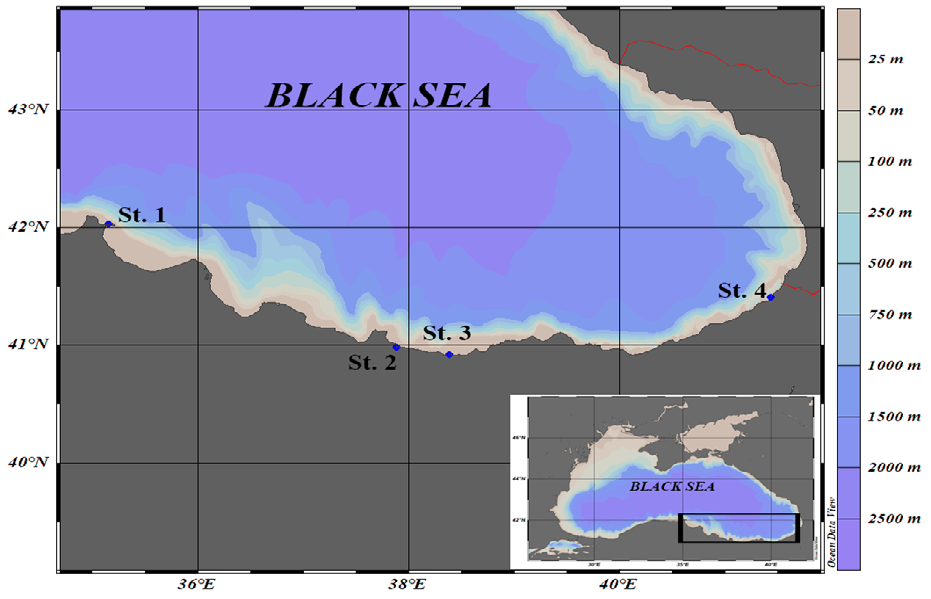
Monthly SST and wind speed data (from 1970 to 2016) for selected stations in the Black Sea along the south-eastern coast (Sinop, Ordu, Giresun and Hopa) were obtained from the Turkish Meteorological Office (Figure 1). Wind speed was converted to wind stress, which is a function of wind speed, non-dimensional drag coefficient and boundary layer air density Pond, et al. Wind stress was calculated from:
2 air ô=ñ *Cd*W (1) Where τ is wind stress (N/m2), ρair is air density (1.22 kg/ m3), Cd is the wind-drag coefficient and W is wind speed (m/s). Cd was calculated following Smith SD, et al. [37].
European anchovy landing data for the study area was taken from the Food and Agriculture Organization FAO- Global Capture Production from 1970-2016 (http://www.fao.org/fishery/statistics/software/ fishstatj/en). The winter (December-March) NAO (https:// climatedataguide.ucar.edu/climate-data/hurrell-north- atlantic-oscillation-nao-index-station-based), EAWR (ftp:// ftp.cpc.ncep.noaa.gov/wd52dg/data/indices/eawr_index. tim) and AMO (http://www.esrl.noaa.gov/psd/data/ correlation/amon.sm.data) indices were obtained from the NOAA .
Statistical Analyses
Winter SST data were obtained by averaging the December-March SST data for each year. Anomalies were calculated by subtracting from each monthly value the corresponding monthly average for the time series from 1970 to 2016. Linear regression was fitted to the anomalies to assess inter-annual trends, and Pearson rank correlation coefficients (r) and levels of significance (p) were used to evaluate significant trends among years [38].
Results and Discussion
SST Time Series and Climatic Indices
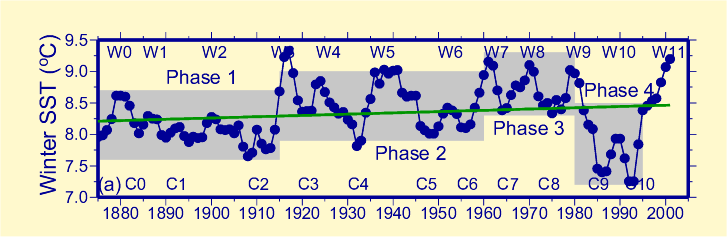
There was significant warming trend (0.02°C; r=0.33; p <0.05) in yearly averaged winter SST (December-March) along the south-eastern coasts of the Black Sea (Figure 2). From 1985 to 1999, there was a decrease in winter SST followed by a pronounced increase in winter SST from 1999 to 2005 (Figure 2). Monthly cumulative sums of the SST anomalies were used to de-trend the time series, which showed a cumulative increase in winter SST from 1970 to 1985, followed by a decrease from 1985 until 1999 (Figure 2). This was followed by a significant increase in the monthly cumulative sum of winter SST was observed from 1999 to 2014 along the study area (Figure 2). Long term increases in winter SST in the Black Sea (1880-2000) have also been also reported by Oguz T, et al. [28], which can fluctuate hugely over time (Figure 3). Over this long time series, there was a general pattern of warming trend in the basin, except during phases 1 from 1885 to 1915 and 4 from 1980 to 1990, when winter SST decreased [28]. The warming trend after the 1990s was the most pronounced along the time series. The general pattern of winter SST detected in this study concurs with Oguz T, et al. [28], but with the time series extended to 2016, we detect that the increase in winter SST was from 7 to 12°C, whereas up to 2000, Oguz T, et al. [28] reported that the increase ranged from 7 to 9.5°C. Using a longer winter SST time series in the Black Sea, Oguz T, et al. [36] also indicated a decrease in winter SST from 1960 to 1980, and more pronounced decrease from 1980 to 1993. After this period, there was a subsequent increase in winter SST Oguz T, et al. [36], which we also detected in this study. These fluctuations in SST are reported to cause changes in the flow, water column stratification, nutrient enrichment and mixing characteristics of the Black Sea Oguz T, et al. [36], which could affect the physiological and behavioural characteristics of anchovy.
A recent study of SST over the past 25 years showed that the global average linear trend amounts to 0.014°C/year with warming trends persistent around the globe Good, et al. On the other hand, a decrease of the Cold Intermediate Layer (CIL) thickness, and in upper ocean heat content due to global warming affecting adversely the thermohaline balance and ecosystem function of the Black Sea during the same period detected in the studies along the Black [39, 40, 41].
The warming pattern observed in winter SST was compared with winter NAO, winter EAWR and winter AMO index (Figure 4). There was a statistically significant negative correlation between winter SST and winter NAO (Pearson rank correlation=-0.36, p<0.05) indicating a tele-connection between NAO and winter SST in the south-eastern Black Sea (Figure 4). The relationship was particularly strong between 1970 and 1990, when winter SST increased, which can be explained by decreasing pressure of the NAO index to 2010. The coupling between the variations in winter SST and NAO over long time-series has been linked to the atmospheric conditions and the thermal hydrographic dynamics of the Black Sea basin [42]. In addition, a linkage between the NAO, AMO and the increase in temperature up to 2000 has been reported [43]. After 2000, correlations between these variables are less clear [44]. Large scale ecosystem dynamics can oscillate quasi-synchronously over inter-annual ( 1 to 5 years), decadal (10 to 12 years) and inter-decadal ( 20 to 30 years) time periods Daskalov GM, et al. [26]. Oguz T, et al. [7, 28] also reported that the 10-year fluctuations in the NAO can explain partially the Black Sea climate signal. The Black Sea regime-shifts appear to be sporadic events forced by strong transient decadal perturbations and differ from pelagic ocean ecosystems under low-frequency climatic forcing [8]. Moreover, the Black Sea hydro-meteorological properties are sensitive not only to the phase of the NAO but also to the exact location of its center of action. Some inconsistencies point possibly to the more predominant contributions from other atmospheric systems controlling the region at particular [28].
The EAWR index was generally found to have a similar pattern as the NAO index with a statistically significant negative correlation (Pearson rank correlation=-0.38, p<0.05) (Figure 4). The winter mean EAWR system indicates a quasi-persistent high and low surface pressure anomaly centres over the Western Europe and the Caspian region
12 Winter SST Winter NAO
which represents the second strongest mode of the North Atlantic climate Molinero et al. and regulates the NAO over the Eurasian continent [28]. Winter SST time-series was also compared with winter AMO index (Figure 4). A statistically significant positive correlation was observed between winter SST and winter AMO (Pearson rank correlation=0.66, p<0.001). A combination of the NAO, EAWR and AMO can therefore explain a large proportion of the variability in winter SST in the Black Sea.
Following a large body of research reporting an increase in hypoxia in the Black [45, 46]. However, McQuatters Gollop A, et al. [47] reported a recent recovery in the Black Sea ecosystem with an increase in the number of diatoms and reduction in hypoxia was has possibly been influenced by climatic changes. Moreover, global fluctuations in ocean circulation, a coupling between the physico-chemical structure, phytoplankton community composition and primary production have been implied between both local meteorological forcing, and changes in the large-scale climatic variations [48, 49].
-6 -4 Winter NAO
0,3 Figure 4: Relationship of winter SST with winter NAO (A), winter EAWR (B), and winter AMO (C).
Wind Stress
Variations in wind stress were great along the south- eastern coast of the Black Sea, and revealed a significant decrease trend over the time series (r = 0.79; p<0.001) (Figure 5). A consistent decrease in wind stress from 1970 until the mid-1990s was followed by a slight increase until 2005. The concurrently, decrease in wind stress between
1970 and 1985 coincided with an increase in winter SST (Figures 2 & 5). Similarly, an increase in wind stress between 1995 and 2005 coincided with decrease in winter SST, which likely resulted in vertical mixing of water column, and an increase in nutrients for phytoplankton. This scenario would theoretically be beneficial to fish recruitment.
Warm and stratified conditions reduce vertical mixing and nutrients in the euphotic zone, resulting from low wind stress have been shown to alter the patterns and magnitude of phytoplankton blooms in the Black Sea [47]. In addition, studies conducted in the 1980s and 1990s revealed that extensive spring and summer blooms in the Black Sea due to windy and cold winters conditions and high vertical mixing processes [5]. Rising wind stress leads to increase in the concentration of nutrients within the euphotic zone, which is favourable for phytoplankton; however, the lack of winds (especially at the end of spring and in the beginning of summer) provides the formation of seasonal thermocline Silkin VA, et al. [50] leading to decrease in phytoplankton productivity and alterations in bloom patterns of phytoplankton [19, 47]. By contrast, the magnitude and extent of spring and summer phytoplankton blooms is depressed during warm winters [5, 8]. In recent years, mild winters and low wind speeds in the open Black Sea are thought to have caused the disappearance of the spring bloom [5, 47, 50].
**Anchovy**
There was significant fluctuation in anchovy landings over the past four decades with a gradual increase from 1970 to 1988. At the end of 1980s, an abrupt decrease in the anchovy catch was recorded in the Black Sea. A similar decrease in the anchovy catch was also observed worldwide (Figure 6). In general, Turkey has a large share of the fishery among the Black Sea bordering countries, which has been seriously affected by the decline in anchovy fishery. Fisheries and especially anchovy, is an important economical income for the Black Sea countries [18, 51]. A collapse or decrease in the anchovy fishery in the region will have unfavourable economic consequences [17]. Intensive fishing operations [7, 19, 52], excessive nutrient and pollutant input from the rivers, eutrophication Zaitsev YU, et al. [12], the introduction of invasive ctenophore species Mnemiopsis leidyi [1, 2, 3, 5], regional climate [7, 28], and changes in the ecosystem Mee LD, et al. [23] have fundamental role on the Black Sea anchovy stocks and fisheries. Fisheries constitute a significant part of sustainable use of marine resources, and the management regulation of the fishery is another important issue affect fishery stocks. Especially, the CFP (EU Common Fisheries Policy) have put into several actions to ensure sustainable fisheries since 1970s. Hence, changes in regulation factors such as the minimum landing size, mesh size, duration of fishing season, protected areas, reduction in fishing fleet, and fishing capacity are essential for the sustainable fishery. This is important, because landing data cover an extensive period from 1970 to 2016, in which Mediterranean fisheries and polices (both at the national and European levels) changed significantly [53].
Figure 6: The relationship between Black Sea Anchovy production along the south-eastern coast of Turkey (blue circles) and worldwide production (red circles).
The decrease in anchovy landings clearly indicates that the Black Sea ecosystem has shifted over the decades. Earlier studies indicated that both anthropogenic (overfishing, fishing fleet etc.) and climatic variation play a major role in the changes observed in the anchovy fishery [19, 25, 26, 27, 28].
To assess the effect of climatic tele-connections on anchovy landings, the data were compared with winter values of SST, NAO, EAWR, AMO and wind stress along the south-eastern Black Sea (Figure 7). A significant correlation between anchovy landings and winter SST (Pearson rank correlation= 0.33; p=0.03), except for the end of 1980s, indicated that this is a major factor in the anchovy stocks (Figure 7A). Anchovy is a warm water species that spawns during summer and autumn seasons [28], and can therefore be vulnerable to perturbations in SST compared to other colder water, pelagic species [28, 54]. Marginal seas such as the Baltic, Black and Mediterranean Sea have experienced more dramatic changes in physics and biology than the open ocean over recent decades due to small changes in the frequency of inflow and temperature had a strong effect on large parts of these enclosed ecosystem [6]. Hence, longer time-series of SST fluctuations could affect fishery, and causes regime shifts, which have significant economic consequences [55]. Increases in summer SST have been shown to benefit anchovy due to an increase in the duration of spawning, higher larval and juvenile growth rates, and overwinter survival of juveniles [33]. A decrease in SST during spawning periods is therefore expected to be unfavourable for anchovy recruitment. At this stage, the authors do not have anchovy egg or larvae data for summer periods to evaluate this further.
![Figure 3: Long-term variations of winter (December- March) SST (oC) along the interior basin of the Black Sea [28].](/fulltextimages/9204/fig_3.jpeg)
Relationship between climatic indices (e.g. NAO, EAWR and AMO) and anchovy landing fluctuations has already been reported in the Black Sea [5, 8, 24, 28], Mediterranean [56, 57], North Pacific [58, 59], and North Sea [33]. After the 1970s, anthropogenic-based alterations caused increases in nutrient concentrations, phytoplankton biomass and pelagic fish stocks in the Black Sea ecosystem [28]. In addition to anthropogenic changes, climatic forcing for driving the dramatic ecosystem changes observed during the 1980s and 1990s. These factors led to the collapse in anchovy fishery throughout the Black Sea [5, 28]. During the same period, a coincidence between the collapse of the anchovy fishery, simultaneous outbreak of Mnemiopsis and similar adverse ecosystem changes in the North Sea at the end of the 1980s was also reported by Niermann U, et al. [24]. Especially, during the late 1980s and the first half of the 1990s, NAO played significant role in promoting lower trophic level biological [8]. Hence, detecting possible tele-connection mechanisms with climatic fluctuations is important for the ecosystem structure, functioning, sustainable use of marine living resources as well as put in place effective management policies in the Black Sea, [28].
We found that, positive phases of NAO for the period of 1980-1987 and 1991-1998 coincided with high anchovy landing values, which indicate of the effect of climate variability on anchovy recruitment (Figure 7). The period from 1987 to 1991, was the lowest anchovy landing recorded and did not coincide with positive phases of NAO. This indicates that other factors (such as overfishing, pollution, oil prices for fishing vessels, fishing fleet etc.) also play an important role on anchovy recruitments and population dynamics along the south-eastern coast of the Black Sea. Similarly, Niermann U, et al. [24] observed at the end of 1980s in the Black Sea, that changes in the NAO cause spikes in the ctenophore Mnemiopsis leidyi, which lead to decreases in anchovy stocks and concluded that there is a long-term connection between climate-plankton-anchovy induced by the NAO. Such dramatic fluctuations in anchovy landings eventually cause significant economic losses [18]. High anchovy catch also coincided with (mostly) positive phases of the EAWR index (Figure 7). The AMO index was also significantly correlated with anchovy landings (Pearson rank correlation= 0.52; p<0.01); (Figure 7). The relationship between positive AMO and anchovy landings was particularly strong after the 1990s (Figure 7). Similar relationship between anchovy and climatic indices (e.g. AMO) in the North Sea have also been reported [33].
The strong negative correlation that we found between wind stress and anchovy landings (Pearson rank correlation=-0.67; p<0.001) suggest that climatic fluctuations may have crucial role on anchovy stocks (Figure
7). Earlier studies report that wind-driven mixing affects the variability of young Engraulis mordax larvae Peterman, et al. The high wind speeds provide nutrient input through mixing which in turn enhances the primary productivity, and consequently the numbers of small pelagic fishes [60]. A positive relationship between wind speed and recruitment of pelagic species for anchovy, sardine, sprat, and horse mackerel was previously reported [60]. Conversely, mortality in fish larvae may also increase with strong wind-driven mixing due to spread of key nutrients [61, 62, 63]. In the present study, the inverse relationship between wind stress and anchovy landing values clearly indicates that a decrease in wind stress positively affects recruitment of anchovy stock in this area (Figure 7).
Conclusion
A 47-year time-series of winter SST, wind stress, anchovy landings and climate indices from the south-eastern Black Sea was analysed for potential connectivity between climatic variability and anchovy catch. Data from 1970 to 2016 illustrated that the region is undergoing a warming trend that has coincided with periodic negative phases of the winter NAO and EAWR index oscillations. From to there has been a consistent increase in winter SST which is significantly correlated with EAWR. We also found he significant relationships between anchovy landing data and the climate indices including winter SST, winter NAO, winter EAWR, winter AMO and wind stress along the south-eastern Black Sea. However, the inconsistencies for particular periods between anchovy landing data and climatic indices emphasis other factors (e.g. over-fishing, outbreak of the ctenophore Mnemiopsis leidyi, eutrophication, river runoff, nutrient input, primary production, phytoplankton community composition etc.) that induce some control over the region. The decline in anchovy stocks along the south-eastern coasts of the Black Sea may results from the cumulative effects of climatic fluctuations. The alteration of anchovy abundance regionally may trigger a wider response in the marine food web. The fluctuations and especially the decrease in anchovy also have regional economic impacts. For sustainable fishery management of the Black Sea ecosystem also needs to consider climatic fluctuations which impact anchovy on stock quotas and landings.
Acknowledgements
We would like to thank the Turkish Meteorological Office for the providing SST and wind speed data. Fishery data were obtained from FAO. Some parts of this work were funded by the Scientific and Technological Research Council of Turkey (TUBITAK, Project No: 112T924).
References
-
Shiganova TA (1998) Invasion of the Black Sea by the ctenophore Mnemiopsis leidyi and recent changes in pelagic community structure. Fish Oceanogr 7(3-4): 305-310.
-
Kideys AE, Romanova Z (2001) Distribution of gelatinous macrozooplankton in the southern Black Sea during 1996-1999. Mar Biol 139: 535-547.
-
Kideys AE (2002) Fall and Rise of the Black Sea Ecosystem. Science 297(5586): 1482-1484.
-
Kopelevich OV, Sheberstov SV, Yunev O, Basturk O, Finenko ZZ, et al. (2002) Surface Chlorophyll-a in the Black Sea over 1978-1986 Derived from Satellite and in situ data. J Marine Syst 36(3-4): 145-160.
-
Oguz T (2005) Black Sea Ecosystem Response to Climatic Teleconnections. Oceanography 18(2): 122-133.
-
Anadon R, Danovaro R, Dippner JW, Drinkwater KF, Hawkins SJ, et al. (2007) Impacts of Climate Change on the European Marine and Coastal Environment. Marine Board Position 9: 1-84.
-
Daskalov GM (2002) Overfishing drives a trophic cascade in the Black Sea. Mar Ecol Prog Ser 225: 53-63.
-
Oguz T, Gilbert D (2007) Abrupt transitions of the top- down controlled Black Sea pelagic ecosystem during 1960-2000: Evidence for regime-shifts under strong fishery exploitation and nutrient enrichment modulated by climate-induced variations. Deep Sea Research Part I: Oceanographic Research Papers 54(2): 220-242.
-
Shiganova T, Mirzoyan Z, Studenikina E, Volovik S, Siokou Frangou I, et al. (2001) Population development of the invader ctenophore Mnemiopsis leidyi, in the Black Sea and in other seas of the Mediterranean basin. Marine biology 139(3): 431-445.
-
Zaitsev YP (1992) Recent changes in the trophic structure of the Black Sea. Fish Oceanogr 1(2): 180-189.
-
Vinogradov ME, Shushkina EA, Bulgakova YV, Serobaba II (1996) The consumption of zooplankton by the comb jelly Mnemiopsis leidyi and pelagic fishes in the Black Sea. Oceanology (Mosc) 35: 569-573.
-
Zaitsev YU, Mamaev V (1997) Marine Biological Diversity in the Black Sea: A Study of Change and Decline. GEF Black Sea Environmental Programme. United Nations Publications New York, pp: 208.
-
Sorokin YI (2002) The Black Sea: ecology and oceanography. Backhuys Publishers, Leiden, pp: 875.
-
Bilio M, Niermann U (2004) Is the comb jelly really to blame for it all? Mnemiopsis leidyi and the ecological concerns about the Caspian Sea. Mar Ecol Prog Ser 269: 173-183.
-
Oguz T, Salihoglu B, Fach B (2008) A coupled plankton- anchovy population dynamics model assessing nonlinear controls of anchovy and gelatinous biomass in the Black Sea. Mar Ecol Prog Ser 369: 229-256.
-
Agirbas E, Seyhan K, Kasapoglu N, Feyzioglu AM, Ustundag E, et al. (2010) Recent changes of the Turkish anchovy fishery in the Black Sea with special reference to climate change. J Environ Prot Ecol 11(4): 1495-1503.
-
Kideys AE (1994) Recent Dramatic Changes in the Black Sea Ecosystem: The Reason for the Sharp Decline in Turkish Anchovy Fisheries. J Marine Syst 5(2): 171-181.
-
Gucu AC (2002) Can overfishing be responsible for the successful establishment of Mnemiopsis leidyi in the Black Sea? Estuarine, Coastal and Shelf Science 54(3): 439-451.
-
Oguz T, Akoglu E, Salihoglu B (2012) Current state of overfishing and its regional differences in the Black Sea. Ocean and Coastal Management 58: 47-56.
-
Prodanov K, Mikhaylov K, Daskalov G, Maxim K, Ozdamar E, et al.(1997) Environmental management of fish resources in the Black Sea and their rational exploitation. General Fisheries Council of the Mediterranean Studies and Reviews 68: 1-178.
-
Espino DC, Hoyo JJGD, Metreveli K, Bilashvili M (2014) Fishing capacity of the southeastern Black Sea anchovy fishery. J Marine Syst 135: 160-169.
-
Yunev OA, Vedernikov VI, Basturk O, Yilmaz A, Kideys AE (2002) Long-term variations of surface chlorophyll a and primary production in the open Black Sea. Mar Ecol Prog Ser 230: 11-28.
-
Mee LD (2006) Reviving dead zones. Scientific American 295(5): 78-85.
-
Niermann U, Kideys AE, Kovalev AV, Melnikov V, Belokopytov V (1999) Fluctuations of pelagic species of the open Black Sea during 1980-1995 and possible tele connections. In: Besiktepe S, et al. (Eds.), Environmental Degredation of the Black Sea: Challenges and Remedies. NATO ASI Series-B: Environmental Security, Dordrecht, The Netherlands: Kluwer Academic Publishers 56: 147- 174.
-
Konovalov SK, Murray JW (2001) Variations in the chemistry of the Black Sea on a time scale of decades (1960-1995). J Marine Syst 31(1-3): 217-243.
-
Daskalov GM (2003) Long-term changes in fish abundance and environmental indices in the Black Sea. Mar Ecol Prog Ser 255: 259-270.
-
Oguz T, Cokacar T, Malanotte-Rizzoli P, Ducklow HW (2003) Climatic warming and accompanying changes in the ecological regime of the Black Sea during 1990s. Global Biogeochem. Cycles 17(3): 1088.
-
Oguz T, Dippner JW, Kaymaz Z (2006) Climatic regulation of the Black Sea hydro-meteorological and ecological properties at interannual-to-decadal time scales. J Marine Syst 60(3-4): 235-254.
-
Beaugrand G (2004) The North Sea regime shift: Evidence, causes, mechanisms and consequences. Prog. Oceanogr 60(2-4): 245-262.
-
Genner MJ, Sims DW, Wearmouth VJ, Southall EJ, Southward AJ, et al. (2004) Regional climatic warming drives long-term community changes of British marine fish. Proc R Soc Lond B 271(1539): 655-661.
-
Richardson AJ, Schoeman DS (2004) Climate impact on plankton ecosystems in the northeast Atlantic. Science 305(5690): 1609-1612.
-
Stachowicz JJ, Terwin JR, Whitlatch RB, Osman RW (2002) Linking climate change and biological invasions: ocean warming facilitates non-indigenous species invasion. Proc Nat Acad Sc USA 99(24): 15497-15500.
-
Petitgas P, Alheit J, Peck MA, Kristina, Raab K, et al. (2012) Anchovy population expansion in the North Sea. Mar Ecol Prog Ser 444: 1-13.
-
IPCC (2007) Climate Change 2007-The Physical Science Basis, Contribution of Working Group I to the Fourth Assessment Report of the IPCC, pp: 996.
-
IPCC (2014) Climate Change 2014: Synthesis Report. Contribution of Working Groups I, II and III to the Fifth Assessment Report of the Intergovernmental Panel on Climate Change. Core Writing Team, In: Pachauri RK et al. (Eds.). IPCC, Geneva, Switzerland, pp: 151.
-
Oguz T (2017) Controls of Multiple Stressors on the Black Sea Fishery. Front Mar Sci 4:110.
-
Smith SD (1988) Coefficients for sea surface wind stress, heat flux, and wind profiles as a function of wind speed and temperature. J Geophys Res 93(C12): 15467-15472.
-
Sokal, Rohlf, Biometry WA (1969) Freeman and Company. San Francisco, pp: 340.
-
Lima L, Penama E, Ciliberti S, Masina S, Lemieux B, et al. (2020) Ocean heat content in the Black Sea. In: Karina von Schuckmann KV, et al. (Eds.), Copernicus Marine Service Ocean State Report (Edn.), Journal of Operational Oceanography 4: 41-48.
-
Nadezhda V, Marinova V, Peneva E, Lima L, Ciliberti S, et al. (2020) Spatio-temporal variability of the Black Sea Cold Intermediate Layer properties derived from in situ data. In: Karina von Schuckmann KV, et al. (Eds.), Copernicus Marine Service Ocean State Report, Journal of Operational Oceanography, (4): 33-41.
-
Piotukh VB, Zatsepin AG, Kazmin AS, Yakubenko VG (2011) Impact of the winter cooling on the variability of the thermohaline characteristics of the active layer in the Black Sea. Oceanology 51: 221-230.
-
Nardelli BB, Colella S, Santoleri R, Guarracino M, Kholod A (2010) A re-analysis of Black Sea Surface Temperature. J Marine Sys 79(1-2): 50-64.
-
Sutton RT, Hodson DLR (2005) Atlantic forcing of North American and European summer climate. Science 309(5731): 115-118.
-
Dippner JW, Moller C, Kroncke I (2014) Loss of persistence of the North Atlantic Oscillation and its biological implication. Frontiers in Ecology and Evolution 2(57): 1-8.
-
Capet A, Beckers JM, Gregoire M (2014) Hypoxia in the Black Sea northwestern Shelf: from Eutrophication to Climatic. The 46th Liege International Colloquium, Liege Belgium, pp: 1.
-
Friedrich J, Gomoiu MT, Naeher S, Secrieru D, Teaca A (2013) Causes and consequences of hypoxia on the Western Black Sea Shelf. Geophysical Research Abstracts.
-
McQuatters Gollop A, Mee LD, Raitsos DE, Shapiro GI (2008) Non-linearities, regime shifts and recovery: The recent influence of climate on Black Sea chlorophyll. J Marine Syst 74(1-3): 649-658.
-
Mackey DJ, Parslow JS, Griffith FB, Higgins HW, Tilbrook B (1997) Phytoplankton productivity and the carbon cycle in the western Equatorial Pacific under El Nino and non-El Nino conditions. Deep Sea Res Part II : Topical Studies in Oceanography 44(9-10): 1951-1978.
-
Behrenfeld MJ, OMalley RT, Siegel DA, McClain CR, Sarmiento JL, et al. (2006) Climate-driven trends in contemporary ocean productivity. Nature 444(7120): 752-755.
-
Silkin VA, Pautova A, Lifanchuk V (2013) Physiological regulatory mechanisms of the marine phytoplankton Community Structure. Russ J Plant Physiol 60: 541-548.
-
Samsun O, Samsun N, Karamollaoglu AC (2004) Age, Growth, and Mortality Rates of the European Anchovy (Engraulis encrasicolus L. 1758) off the Turkish Black Sea Coast. Turk J Vet Anim Sci 28(5): 901-910.
-
Samsun O, Samsun N, Kalayci F, Bilgin S (2006) A study on recent variations in the population structure of European anchovy (Engraulis encrasicolus L. 1975) in the southern Black Sea. Ege Univ J Fish Aquat Sci 23(3): 301-306.
-
STECF (2015) Scientific, Technical and Economic Committee for Fisheries (STECF) - Black Sea assessments (STECF-15-16). Publications Office of the European Union, Luxembourg, pp: 284.
-
Guraslan C, Fach BA, Oguz T (2014) Modeling the impact of climate variability on Black Sea anchovy recruitment and production. Fish Oceano 23(5): 436-457.
-
Steele JH (1998) Regime shifts in marine ecosystems. Ecol Appl 8(1): 33-36.
-
Grbec B, Dulcic J, Morovic M (2002) Long–term changes in landings of small pelagic fish in the Eastern Adriatic - possible influence of climate oscillations over the Northern Hemisphere. Climate Research 20(3): 241- 252.
-
Katara I, Pierce GJ, Illian J, Scott BE (2011) Environmental drivers of the anchovy/sardine complex in the Eastern Mediterranean. Hydrobiologia 670: 49-65.
-
Yasuda I, Sugisaki H, Watanabe Y, Minobe SS, Oozeki Y (1999) Interdecadal variations in Japanese sardine and ocean/climate. Fish Oceanogr 8(1): 18-24.
-
Yatsu A, Watanabe T, Ishida M, Sugisaki H, Jacobson LD (2005) Environmental effects on recruitment and productivity of Japanese sardine Sardinops melanostictus and chub mackerel Scomber japonicus with recommendations for management. Fish Oceanogr 14(4): 263-278.
-
Bakun A, Parrish RH (1991) Comparative studies of coastal pelagic fish reproductive habitats: the anchovy (Engraulis anchoita) of the southwestern Atlantic. ICES J Mar Sci 48(3): 343-361.
-
Mee LD (1992) The Black Sea in crisis: The need for concerted international action. Ambio 21(4): 278-286.
-
Bergeron JP (2000) Effect of strong winds on the nutritional condition of anchovy (Engraulis encrasicolus L.) larvae in the Bay of Biscay, Northeast Atlantic, as inferred from an early field application of the DNA/C index. ICES Journal of Marine Science 57(2): 249-255.
-
Hansen J, Sato M, Ruedy R, Lo K, Lea DW, et al. (2006) Global temperature change. PNAS 103(39): 14288- 14293.
- Genetic Improvement of Nile Tilapia (Oreochromis niloticus): Advances in Selective Breeding and Genomic Approaches for Sustainable Aquaculture
- Microplastics, Contaminants, and Waste Hotspots: Divergences and Faults in Prioritizing Control Efforts
- Creating a Healthier, More Vibrant Open and Closed Aquatic Environment. A Submersible, Centrifugal Magnetically Affixed Current Changing Aquarium Pump
- An Attempt to Assess Alpha Diversity and Sample Size: Using the Ostracod Assemblages off Kumamoto Port, Japan
- Assessment of the Efficiency of Common Fishing Gears and Crafts Used at Mohananda River of Chapai Nawabganj, Bangladesh
- Fish Productivity and Biodiversity Status of Sundarban Mangrove in Bangladesh