
Beware of the Silver-Cheeked Toadfish!
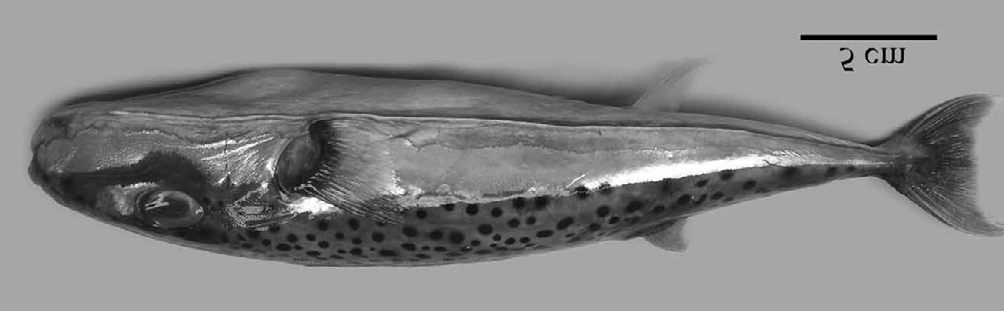
Nowadays, the Silver-cheeked toadfish became the interest point for talking in different meeting and conferences. This fish scientifically known with puffer fish particularly Lagocephalus sceleratus (Gmelin, 1789) (Figure 1).
Editorial
Nowadays, the Silver-cheeked toadfish became the interest point for talking in different meeting and conferences. This fish scientifically known with puffer fish particularly Lagocephalus sceleratus (Gmelin, 1789) (Figure 1).
What is Lagocephalus Sceleratus?
Lagocephalus sceleratus (Gmelin, 1789) belonging to family Tetraodontidae, the scientific name, Tetraodontidae, refers to the four large teeth, fused into an upper and lower plate, which are used for crushing the shells of crustaceans and mollusks, it reached to 110 cm SL [1]. Max. Published weight: 7,000g [2]; its environment is marine, reef- associated; live at depth from 18 - 100 m [3]. Greenish with brown or black spots above; silver band from mouth to caudal fin; belly white; silver blotch in front of eye; pectoral base black [2]. Infiltrates its body by air or water as a defense mechanism (Figure 2).
![Figure 2: Concerning its distribution: Indo-West Pacific, Red Sea and suez Gulf [2].](/fulltextimages/10484/fig_2.png)
Story of Puffer Fish in Red Sea
This species has an old history since its toxicity was detected by Clark in the Red Sea [4]. This species is considered as toxic fish attributed to its ability to produce neurotoxins that known as “tetrodotoxin”. The latter is a potent marine toxic substance which can cause many symptoms that appear according to dose taken such as: dizziness, sweating, numbness, itching, vomiting, as a form of the primary symptoms. The severe ones appear in the form of: muscle pain, respiratory problems, and a drop in blood pressure and ultimately paralysis that can lead to death due to suspension of the respiratory functions.
By the time and after many poisonous accidents thought eating these fishes in hurghada & suez gulf, many scientists were attracted to study this species due to its danger for human health [5, 6, 7, 8, 9, 10, 11, 12]. Most of them stated that this toxin is concentrated in the general viscera (gonads, liver, kidney, gut) and can reach the flesh. Sometimes, some fishermen eat this species and are not subjected to death, however, Mohamed 2003 stated that (13% of fishes have toxins in its flesh) that means 13 individuals from each 100 specimens, the toxin can reach to its flesh in the Gulf of suez, hence we can’t consider this species safe for eating as it represents a threat to our health.
Migration to Mediterranean
These species migrated from Red Sea to Mediterranean via Suez Canal from few years ago; rapidly it distributed along the Egyptian Mediterranean waters as well as it extended to other Mediterranean countries as Aegean sea, Greece [13]; day after day these species became famous migratory danger particularly after the poisonous accident in Marsa Matrouh 2011; however, there were no detailed documented data about such species in the Egyptian Mediterranean water, it is only recorded by Halim Y, et al. [14], this attracted many scientists to study it, hence there is a cooperation between National Institute of Oceanography & Fisheries and Faculty Of Science, Al-Azhar University (Assiut branch) to study fisheries, biology and toxicity of these puffer fish in the Egyptian Mediterranean waters.
Attentions & Conclusion
- Not all migratory fishes have negative effect as puffer fish as it contains toxic substances. More than Hundreds of species traversed the Suez Canal and settled in the Mediterranean, forming successful populations along the Levantine coasts; a lot of them are harmless & economic species such as Round herrin Etrumeus teres which studied by Farrag in the Egyptian Mediterranean waters [15].
- Many fishermen & other people thought that the danger of these fishes concentrated in its general viscera (Liver, gonads, kidney and intestine) although many scientists mentioned that the toxicity can reach to its flesh.
- From the above points we concluded the avoidance of this fish should be done especially with the presence of other harmless & economic species to avoid any poisonous action resulted from the eating of such species.
- These species need to be subjected to a lot of studies in the different fields (Science, pharmacy, veterinary) and other fields to utilize it as human foods or other industrial applications as drugs.
References
-
Masuda H, Amaoka K, Araga C, Uyeno T, Yoshino T (1984) The fishes of the Japanese Archipelago. Tokai University Press 1: 437.
-
Smith MM, Heemstra PC (1986) Tetraodontidae. In: Smith MM, et al.(Eds.), Smiths’ sea fishes. Springer- Verlag, Berlin, pp: 894-903.
-
Randall JE (1995) Coastal Fishes of Oman. Honolulu: University of Hawai i Press, pp: 439
-
Clark E, Gohar HA (1953) The fishes of the Red Sea: order Plectognathi. Publ of the mar Bioi St 8(8-12): 52-54.
-
Mansour MAA (1973) Physiological study on the toxic effects of a Red Sea fish, Arothron. hispidus (linn) M Sc. Thesis Faculty of Science, Tanta University, pp: 25-29.
-
Mansour MAA (1975) Physiological and biochemical study on the effects of crudeextracted from the fish Arothron hispidus. Ph.D. Thesis Faculty of Science, Tanta University.
-
Mansour MAA (1979) Physiological indices underlying mammalian Toxication. Tetrodotoxin J Fac Education 2: 153-162.
-
Mansour MAA (1980) Disorders in the mammalian mechanism of blood coagulation, caused by tetrodotoxin toxication. Annals of Zoology 16: 1-12.
-
Kotb SM (1998) Biochemical studies on toxicity of Pleuroacanthus sceleratus El-Karad in the Red Sea. Ph. D, Thesis Fac of Science Alex Univ, pp: .47-62.
-
Yossef NM (2000) Biochemical studies on the effect of tetrodotoxin on the rat. MSc. Thesis, Ain Shams University, pp: 166.
-
Mohamed AS (2003) Ecotoxicological studies on pufferfish in the north western part of the red sea. Ph. D, thesis Zool Dep Fac Sci Tanta University, pp: 167.
-
Sabra MM, El Ganainy AA, Zaky MA (2006) Biology and toxicity of the pufferfish Lagocephalus sceleratus (Gmelin, 1789) from the Gulf of Suez. Egyptian journal of Aquatic research 32(1): 283-279.
-
Kasapidis P, Peristeraki P, Tserpes G, Magoulas A (2007) First record of the Lessepsian migrant Lagocephalus sceleratus (Gmelin 1789) (Osteichthyes: Tetraodontidae) in the Cretan Sea (Aegean, Greece). Aquatic Invasions 2(1): 71-73.
-
Halim Y, Rizkalla S (2011) Aliens in Egyptian Mediterranean waters. A chick-list of Erythrean fish with new records. J Medit Mar Sci 12 (2): 479-490.
-
Farrag MMS (2010) Fishery biology of Red Sea immigrant Etrumeus teres (family: Clupeidae) in the Egyptian Mediterranean water, off Alexandria. M.S. Thesis Al- Azhar University (Assiut branch), Assiut, Egypt.
- Genetic Improvement of Nile Tilapia (Oreochromis niloticus): Advances in Selective Breeding and Genomic Approaches for Sustainable Aquaculture
- Microplastics, Contaminants, and Waste Hotspots: Divergences and Faults in Prioritizing Control Efforts
- Creating a Healthier, More Vibrant Open and Closed Aquatic Environment. A Submersible, Centrifugal Magnetically Affixed Current Changing Aquarium Pump
- An Attempt to Assess Alpha Diversity and Sample Size: Using the Ostracod Assemblages off Kumamoto Port, Japan
- Assessment of the Efficiency of Common Fishing Gears and Crafts Used at Mohananda River of Chapai Nawabganj, Bangladesh
- Fish Productivity and Biodiversity Status of Sundarban Mangrove in Bangladesh