
Water Quality Plays an Important Role in the Socio-Economic Condition of the Local Community: A Study on the Kushiara River
In Bangladesh around 7.5% of the fish is harvested from the rivers, being one of the main sources of fish in the country. The water quality of the river must be within standard values to maintain aquatic biodiversity. In this study, water quality, available spaces for fish, and socio-economic status of fishermen were analyzed to find their relationships in Kushiara River, Fenchuganj, Sylhet. Samples of water quality and fish species were collected from August 2017 to September 2021. At the same time, fishermen were surveyed to find out their economic status. The water quality analysis showed all the parameters analyzed (pH, Dissolved Oxygen (DO), Biochemical Oxygen Demand (BOD), Chemical Oxygen Demand (COD) and Total Dissolved Solid (TDS)) are within the range of international and Bangladesh standards for surface water. The pH, DO, BOD, COD, TDS was respectively 7.1-7.99, 5.5 mg/l to 8.4 mg/l, 1 to 4.6 mg/l, 17 to 32 mg/l, 30 to 70 mg/l. Where the local standard is 6.5-8.5, more than 5 mg/l, less than 6 mg/l, 17 to 32 mg/l for pH, DO and BOD. The international standard is less than 34.2 mg/l. and 30 to 70 mg/l for COD and TDS in that order. A total of 40 species of fish are recorded in 2017 and 49 in 2021. The average income of a local fisherman was 3 USD to 15 USD in the off pick season (December- February), and 7 USD to 30 USD in the peak season (September-November). The fish merchant’s daily income was 4 USD to 20 USD in the off-peak season and 7 USD to 30 USD in the peak season. So all fisher man, fish traders can spend their life by fish catching and fish trading. Due to fish production those people can earn money and can fulfill their daily needs. It is concluded that the water quality was adequate for fish diversity and to sustain the socioeconomic condition of the fishermen and fish traders in the Kushiara River.
Introduction
As Bangladesh is one of the largest freshwater fish producing countries in the world, there are large wetlands, rivers, lakes, ponds which are suitable for fish production. According to FAO [1], Bangladesh becomes the 2nd largest freshwater fish producing country in the world. Fish production is a 3.61% contributor to the Bangladesh National GDP. The Kushiara River is one of the many distributary rivers between Bangladesh and India. It is created as a branch of the Barak River on the Bangladesh-India border where the Barak were divided into the Kushiara River and the Surma River. The Kushiara river water originate in the Nagaland state in India and pick up tributaries from different state of India like Asam, Miziram, and Monipur. Kushiara River is also one of the important fish sources in the Sylhet region of Bangladesh. Study shows that water quality is an essential part for fish production [2, 3, 4]. According to Bangladesh Environmental Rules [5], the water pH level should be 6.5 to 8.5 for fish production. The other important river water quality parameters are BOD, COD, DO, and TDS [6]. A study from Davis AP, et al. [7] asserted that freshwater fish require high- quality water to thrive. Water quality requirements for finely suspended particulates and pH values; water temperature; ammonia effect; phenolic wastes, dissolved oxygen; chlorine chemistry and toxicology; and zinc, copper, and cadmium toxicity are some of these features [8]. Standard surface water quality parameters is suitable for aquatic biodiversity by Sun F, et al. [9]. So, surface water quality is very important for fish and fisheries industries. Some people are engaged for craft and gear selling to fisherman. The fisherman, fish traders, and craft traders’ income is directly linked with fish production quantity in the river. Those people are earning money and maintain their family expenditure. They are contributing to the family and society development. Without fish production those people cannot earn money and they cannot contribute to their family and society. So, family will face trouble for arranging food, medical, education, and many other vital elements of life. It will affect the development of the local society. Some unethical activity include theft, smuggling, kidnap will be increased. Thus, fish production is very important for the society. According to a study conducted by Islam MM, et al. [10] about fisheries in the Kushiara River, total 34 kind of fishes has been recorded. On the bank of the Kushiara River, there are many people lives who are engaged for fishing, fish trading and craft and gear making. In this study, we tried to identify the economic condition of people who are connected with fish related profession. On the same time, river water quality was measured for four years period and compared with local and international standard of surface water quality. We tried to find out a relation between river water quality and socio- economic condition of a local community. Without fish production, those people will lose their earning source, and it will create a negative impact on the local community.
Numerous studies have been done on issues such as water pollution, river water quality, fish species, and the social effects of fish production locally and globally. A study conducted by Islam MR, et al. [11] found that the Kushiara river water quality metrics including dissolved oxygen, pH, temperature, turbidity, electrical conductivity, total dissolved solids, and sodium chloride are within the acceptable range for supporting aquatic life. Six phytoplankton groups of 19 genera, as well as three zooplanktons groups (4 Rotifers genera, 3 Copepod genera, and 5 Cladoceras genera), are recorded in the current study. At the same perspective, this study also find pH, DO, BOD, COD, and TDS value are in acceptable range in the period of August 2017 to September 2021. While, fish species identified 40 and 49 numbers within study time. This suggests that the river water is in good ecological condition. Additionally, nine groups of benthos were discovered in the study, demonstrating a stable environment for benthos in the river [11]. Another study conducted by Shamsuzzaman MM [12] revealed the economic impact of Bangladesh’s fisheries trade and production on the nation. Bangladesh’s economy can grow by giving the fisheries sector greater attention.
River and lake provide freshwater, which is essential for human life, rivers serve as the cornerstone of human civilization. One of the key concerns in managing water resources is water quality. Physical, chemical, and biological are the three primary categories that can be used to categorize water quality, and each category has a number of parameters [13]. The water quality of a river, which is impacted by contaminants, determines the river’s health. A variety of parameters that express the physical, chemical, and biological composition of water are typically used to evaluate the quality of water [14]. One of the most pressing issues that humanity has been dealing with since the beginning of the industrial revolution is the degradation of river water quality [15]. Chemicals are among the most significant pollutants because of their detrimental effects on ecosystems and human health, which worry regulatory bodies, protection organizations, and the general public [16]. Various hazards effect to the peoples health and freshwater ecosystems contaminate numerous metals, metalloids, and solutes, such arsenic and sulfates [17, 18, 19]. Water temperature and pH are additional crucial physical factors since they serve as indications of the ecological health of rivers [20]. Development has been widely acknowledged as a significant factor in the decline of aquatic habitats and water quality in the Pacific Northwest [21]. It was observed that there was no study conducted to identify impact of Kushiara river water quality in the fisherman and fish trader community.
The key objective of this study is to observe impact of river water quality on socio-economic status of fishermen at the study area. To address the objectives of this study, we conducted the field study to access the presence of different types of fishes including critical habitats. River water quality for 4 years was analyzed and identification of the fish quantity and fish quality with seasonal variation in the study area was conducted. Also, available fish spaces in the study area and the socio-economic condition of fishermen, fish trader and craft seller in the dry and wet season were identified. Finally, we tried to find the link between water quality, fish species, and socio-economic impact in the local community.
Materials and Method
Study Area and Sampling Period
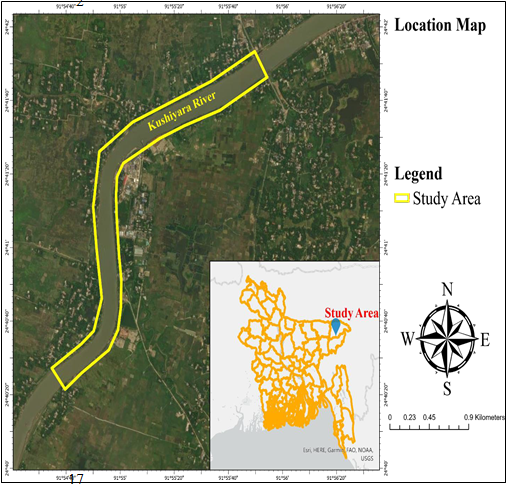
This study was conducted in the Kushiara River on Fenchuganj Upazila which is under Sylhet District of Bangladesh. The sampling point was nearby Shahajalal Fertilizer Factory jetty. The place is about 3.5 km from Sylhet-Moulvibazar Road to the west, about 28 km south- east of Sylhet and about 8 km road from Fenchuganj Upazila. The sampling location is nearby fenchuganj rail bridge to fenchuganj power plant point. Geographically between 24°41’25.54”N; 91°55’7.80”E to 24°41’25.69”N; 91°55’6.72”E and 24°41’19.28”N; 91°55’6.80”E to 24°41’21.21”N. The study team carried out river water sampling, fish spaces survey, and fisherman survey during 2017 to 2021 and River water sample collected total 8 times from 2017 to 2021, conduct lab test to understand the season deviation effect in the river water quality ArcGIS Pro 2.9.0 was used to create the study map shown in Figure 1 where the yellow solid line indicated the sampling location.
Conflict of Interest
The authors whose names are listed certify that they have NO affiliations with or involvement in any organization or entity with any financial interest (such as honoraria; educational grants; participation in speakers’ bureaus; membership, employment, consultancies, stock ownership, or other equity interest; and expert testimony or patent- licensing arrangements), or non-financial interest (such as personal or professional relationships, affiliations, knowledge or beliefs) in the subject matter or materials discussed in this manuscript.
Sampling Procedure
River Water Sampling
New and clean disposable hand gloves were worn during sampling in all different sample points. The hand gloves didn’t contact with media and proper cleanness was maintain at the sample collection time. Sample containers for samples suspected of containing high concentrations of contaminants always stored separately. All background or control samples were collected and placed in separate ice chests or shipping containers. A sampling team member collected samples, and the other sampling team member wrote down all the information and took photographs of all sampling as evidence. During sampling time, procedure from American Public Health Association (APHA) was followed. The sampled river water samples were analyzed total 8 times from august 2017 to September 2021 shown in Table 1. It would be better if river water quality sample analysis could be done more frequently. But due to lack of funding, Covid-19 restrictions, and lack of resource it was not possible to conduct more examination. In future, we will try to conduct more rigorous research with sufficient resources.
| S.L | Sampling Period | Sampling Date |
|---|---|---|
| 1 | Aug-17 | 25-08-2017 |
| 2 | Nov-19 | 23-11-2019 |
| 3 | Jun-20 | 30-06-2020 |
| 4 | Oct-20 | 28-10-2020 |
| 5 | Dec-20 | 26-12-2020 |
| 6 | Mar-21 | 29-03-2021 |
| 7 | Jun-21 | 30-06-2021 |
| 8 | Sep-21 | 28-09-2021 |
Table 1: River water Sampling Date.
Sample Handling and Preservation Requirements
Surface water samples are collected by directly filling the container from the surface water body. There are several steps to collection the water sample.
- Sample Collection: Ensure clean, sterile containers for sample collection. Collect samples in containers that match the analysis requirements. Follow proper sampling techniques to prevent contamination. Rinse containers three times with the water to be sampled before collecting the actual sample. Record important information such as location, date, time, and any other relevant details.
- Sample Preservation: Depending on the parameters need to add preservatives to the sample. Common preservatives include acid (for pH control) or chemical additives to stabilize the sample.
Transportation: Keep the samples cool and in the dark during transportation to the lab to minimize changes in sample composition.
Laboratory Analysis: Deliver the samples to a certified laboratory for analysis. The laboratory will use various methods and instruments to test for specific parameters.
pH: Measure the acidity or alkalinity of water using a pH meter. Dissolved Oxygen (DO): Use a dissolved oxygen meter or chemical titration to determine oxygen levels.
Biochemical Oxygen Demand (BOD): Collect a 300 mL water sample in a BOD bottle.
Measure the initial DO concentration (DOi).
Incubate the bottle at 20°C in the dark for 5 days.
Measure the final DO concentration (DOf).
Calculate BOD as BOD = DOi - DOf (mg/L or ppm).
Chemical Oxygen Demand (COD): Collect a water sample and add specific reagents, such as potassium dichromate and sulfuric acid.
Heat the sample in a reflux apparatus for 2 hours.
After cooling, titrate the remaining dichromate with ferrous ammonium sulfate.
Calculate COD in mg/L or ppm.
Total Dissolved Solids (TDS): Calculate the total amount of dissolved solids in water using gravimetric or conductivity methods.
Regulatory Compliance: Ensure that the testing and reporting comply with local, state regulations.
pH
The balance between hydrogen ions (H+) and hydroxide ions (OH-) in water is represented by pH, which describes the acidity or alkalinity of water. The pH measured scale is within 0 to 14, where 0 is the lowest and 14 is the highest. pH level is less than 7 means Acidic solutions and contain more H+ than OH- in the solution. Basic, or alkaline solutions have pH greater than 7 and there are more OH- ions than H+ ions. pH of a solution is 7 means it is neutral, meaning it is neither acidic nor alkaline. It’s important to know that the pH scale is logarithmic. Water with pH 5 means there are ten times of H+ ions and ten times more acidic with a pH of 6. Usually, water is used for the various purpose. Several national and international organizations set standard pH value according to purpose of use. Some standards are as follows. Recommended pH standards for drinking, fisheries, irrigation, or industrial cooling water is 6.5 to 8.5 mg/L. In the Table 2, there are some national and international organizations mentioned standard pH value for surface water.
Dissolved Oxygen (DO)
For most aquatic species, dissolved oxygen (DO) is the most essential gas. Dissolved oxygen, or DO, is needed for respiration of aquatic animals. DO levels below 1 ppm are insufficient to sustain fish; most fish populations need levels of 5 to 6 ppm. The average DO level (6.5mg/l) indicates the river water’s average consistency. Standard DO level is different according to purpose of using. Standard for dissolved oxygen for fisheries is mentioned in the following Table 2.
Biochemical Oxygen Demand (BOD)
The Biochemical Oxygen Demand (BOD) provides an index for assessing the impact of discharged wastewater on the ecosystem so it is an important water quality metric in a water body. The higher the BOD number indicate there are more organic matter or food for oxygen-consuming bacteria to devour. When the amount of dissolved oxygen (DO) consumed by bacteria exceeds the amount of DO produce by aquatic plant photosynthesis or diffused from the air then an adverse situation arises in the aquatic environment. Surface waters with a BOD of 5 mg/l means there are unpolluted water, but rivers with a lower BOD have higher dissolved oxygen. If the source water has a lot of BOD, especially at high temperatures, microbial growth will be increased. This microbial development and the ensuing breakdown of organic matter would result in the absorption of oxygen. This can cause a lack of oxygen in the river, which can be fatal to fish. BOD has a direct impact on the amount of dissolved oxygen present in rivers and streams. The faster the oxygen in the stream is drained, the higher the BOD. Unpolluted natural water typically has a BOD of 5 mg/l or less. As a result, higher types of aquatic life will have less oxygen available. As a result of high BOD, aquatic animals become stressed, suffocate, and perish. BOD can be found in leaves and woody debris, dead plants and livestock, animal wastes, effluents from pulp and paper mills, wastewater treatment plants, feedlots, and food processing factories, failed septic systems, and urban storm water runoff. The higher the BOD, the faster the oxygen in the river gets depleted. This means that higher stages of the aquatic lifecycle have less oxygen available to them. The consequences of a high BOD are the same as for a low dissolved oxygen level: aquatic creatures become stressed, quash, and die. Leaves and woody fragments, dead animals and plants, animal manure, effluents from paper mills or pulp mills, wastewater treatment plants, feedlots, food processing plants, malfunctioning septic systems, and urban storm water overspill are also sources of BOD.
**Chemical Oxygen Demand (COD)**
The chemical oxygen demand (COD) is a measure of water quality that indicate the amount of oxygen consumed by reactions in a measured solution. By COD value we can easily understand quantify of organics in specific water. Application of the COD value is most common in quantifying the amount of oxidizable pollutants found in surface water (e.g., lakes and rivers) or wastewater. The higher the COD value indicate there are more inorganic pollutant for oxygen- consuming bacteria. Surface waters with a COD of 20 mg/l means there are unpolluted water. Surface water for fisheries typically has a COD of 20 mg/l or less. As a result of high COD, aquatic animals become stressed, suffocate, and perish. COD value can be increase if inorganic materials rise in the water body. Most of the case, human waste, high level of decaying plant matter, and industrial wastewater is the main cause of COD increase. The higher the COD value means the river water oxygen faster gets depleted. So, it is very important parameter for river water quality measurement.
TDS
The term “total dissolved solids,” or “TDS” refers to the total concentration of dissolved materials in water. TDS is primarily composed of inorganic salts, with a trace quantity of organic material. Inorganic salts that are frequently found in water include the cations calcium, magnesium, potassium, and sodium as well as the anions carbonates, nitrates, bicarbonates, chlorides, and sulfates. Anions have a negative charge while cations have a positive charge. Higher TDS value indicate more concentration in the water. Changes in the number of dissolved solids can be harmful to the fish because the density of TDS determines the flow of water in and out of an organism’s cell. Concentrations that are too high or low can affect the fish’s growth or cause death. A level of 400ppm is recommended for most freshwater fish. • Standard for pH, DO, BOD, COD and TDS for river water body. In the Table 2, standard for pH, DO, BOD, COD and TDS are mentioned.
| Parameter | Standard (mg/l) | Reference |
|---|---|---|
| pH | 6.5 to 8.5 | FAO [1] |
| DO | Minimum 6 mg/l | FAO [1] |
| BOD | 10 mg/1 | ECR [5] |
| COD | 6 mg/l | ECR [5] |
| TDS | 400ppm | James |
Table 2: Standard for pH, DO, BOD, COD and TDS
Fish Species and Fisheries Status Sampling
Fish species sampling entailed collecting samples from various study locations with the assistance of locals, fishermen, and a trip to the fish market. Fishermen use traditional fishing methods and a variety of nets, including gill nets, cast nets, and dragnets. Locals were also able to buy fish from the fishermen on the spot. The study team also visited local fish markets located on the banks of the river to monitor and look for the presence of any species which were not available during our experimental fishing. The study team using some questioner for various information collection. As the study objective is to identify the impact of river water quality among the fisherman and fish traders, the questioner was included how long they are involved in fishing, is they are professional or amateur, how much fish can catch in lean season and peak season, average income in lean season and peak season, family condition on fisherman and fish traders, etc. All questioners are included in the annexure 5.
Results
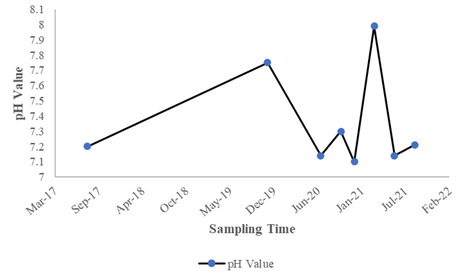
pH value in study area was observed 7.1 to 7.99 in between 2017 to 2021. Bangladesh standard river water quality for fisheries is 6.5-8.5. The study finds that pH value of Kushiara River is within Bangladesh standard and suitable for fish production. In Figure 2, pH values are given as different sampling time between the years of 2017 to 2021.
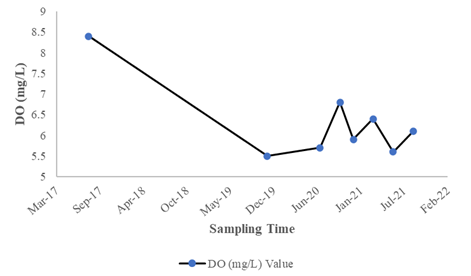
Dissolved Oxygen (DO) value observed in the study area in between 5.5mg/l to 8.5 mg/l. River water quality Bangladesh standard for fisheries is 5mg/l or more. The study find that DO value of Kushiara River is within Bangladesh standard, and suitable for fish production (DoE, water quality standard for fisheries). In the Figure 3, DO values are given as different sampling time between the years of 2017 to 2021.
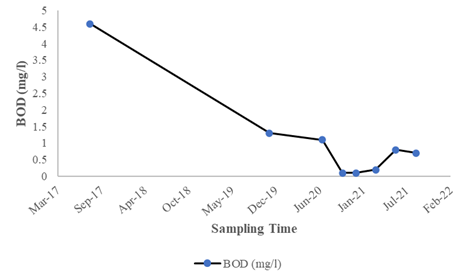
Biological Oxygen Demand (BOD) value observed in the study area is 0.1 to 4.6. According to DoE, river water quality Bangladesh standard for fisheries is 6 or less. The study finds that BOD value of Kushiara River is within Bangladesh standard and suitable for fish production. In the Figure 4, some BOD values has given as different sampling time between the years of 2017 to 2021.
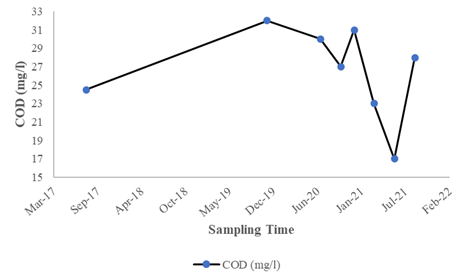
Chemical Oxygen Demand (COD) value observed in the study area is 17mg/l to 32mg/l. River water quality Bangladesh standard for fisheries is undefined. For surface water COD should be within 34.2 mg/l. So, COD value is within range of surface water quality and suitable for fish production. In the Figure 5, some BOD values are given as different sampling time between the years of 2017 to 2021.
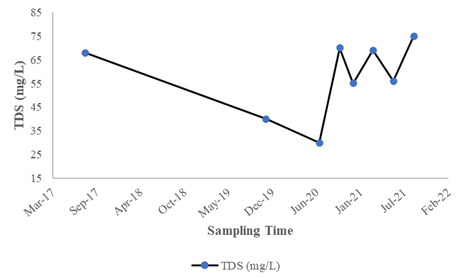
Total Dissolved Solid (TDS) value observed in the study area is 30 to 70. River water quality Bangladesh standard for fisheries is not yet started. The standard value is 165 mg/l. The study finds that TDS value of Kushiara River is within Bangladesh standard and suitable for fish production. In the Figures 6 & 7 some TDS values are given as different sampling time between the years of 2017 to 2021.
Status and Diversity of Fish at the Study Area 2021
During the field visit, a total 49 species of fishes were recorded from the Kushiara River which are shown in annexure 02. The common fish species found were Chapila (Gudisia chapra), Tengra (Mystus tengra), Kalbaosh (Labeo kalbasu), Rui (Labeo rohita), Mrigel (Cirrhinus cirrhosis), Ayre (Sperata aor) etc. The highest catches of species were Poa (Panna microdon), Kavashi Tengra (Mystus cavasius), and Bacha (Eutropiichthys vacha). The catches have been calculated through boat-to-boat survey, FGDs and with relevant respondents.
Kalo Pabda (Ompok pabo) and Baga Ayre (Bagarius bagarius) recorded during market survey are Considered as Critically Endangered species whereas Pabda (Ompok pabda), Gozar (Channa marulius), Shal Baim (Mastacembelus armatus), Bengal Loach (Botia Dario), Chital (Chitala chitala) and Rita (Rita rita) are considered as Endangered species Bangladesh (IUCN Red List of Bangladesh 2015) [22]. Chapila (Gudusia chapra), Boal (Wallago attu), Ayre (Sperata aor), Guttum (Lepidocephalus annandalei), Foli (Notopterus notopterus) and Bamosh (Anguilla bengalensis) are considered as Vulnerable species. Deshi Sharpunti
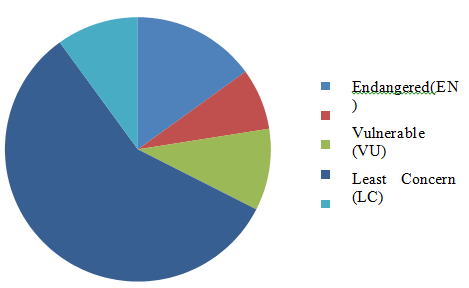
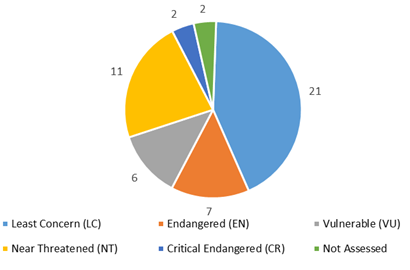
(Puntius sarana), Gangetic Leaffish (Nandus nandus), Tara Baim (Macrognathus aculeatus), Mrigal (Cirrhinus cirrhosis), Gang Tengra (Gagata youssoufi) and Gonia (Labeo gonius) are considered as Near Threatened according to IUCN Red List of Bangladesh (2015). As per the following Figure 8, the maximum diversity (21) is included as Least Concern (LC), 11 are Near Threatened (NT), 6 Species are Vulnerable, 7 species are Endangered, 2 species are Critically Endangered (CR), 2 species were Data deficient (DD) following the IUCN Red List of Bangladesh (2015).
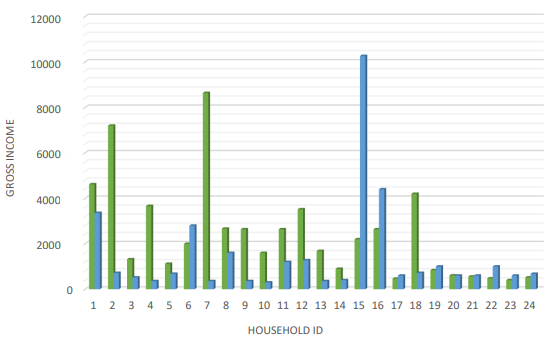
After comparison of fish species available during the two surveys in 2017 and 2021 it is identifying that number if fish species increase from 40 to 49. Socio-Economic Condition September-November (Ashwin-Kartik) is the peak season for fishing while winter (December- February) is the lean season for fishing in the study area. Fishing intensity for Regular fishermen varies for peak season and off- peak/lean season. The study has completed of the field study covering both peak and lean season. From interviews, consultation, and focus group discussion, group discussion with the fishermen the study team found that fish catch for regular fishermen ranges from highest of 9 kg to lowest of 3 kg during the peak season resulting an average fish catch of 5 kg at the study area. Associated daily earning during the peak season ranges from 3 USD to 27 USD depending on the type and size of fish. During the lean-season fish catch from the river ranges in between 1 kg to 5 kg with an average catch of 2 kg. Daily earning during the lean- season ranges from 100 to 15 USD. Almost all the regular fishermen have their own fishing gears e.g., fishing boat, fishing net. Total investment on fishing gears ranges from 25000 to 300 USD. The timing for fish catch starts usually from 3:00-4:00 am till 12:00 pm for majority of the fisherman. Gross income for fishermen during peak season ranges from 400 USD to 864000 with an average of 2380 USD, whereas in lean season that ranges from 300 USD to 1000 USD with an average of 1440 USD (Figure 9).
The net income of the fishermen surveyed during the peak-season ranges from 160 USD to 8400 USD, whereas in lean-season that ranges from 148 USD to 1000 USD.
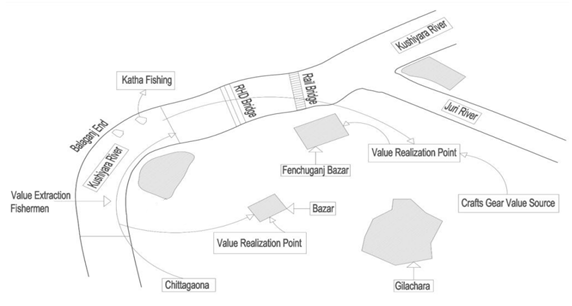
Almost all the fish traders surveyed are full-time fish trader. The mean years of engagement into the fish trading is 14 years among the surveyed fish traders. Out of nine fish traders, six of them (67%) engaged into the fish trading more than 10 years. Usually, the fish traders collect fish from the fishermen or fishermen sell their fish to fish-traders. The nearest fish market is the Fenchuganj Purba-Bazar which is located approx. 2 km upstream from the study area. There is a designated fish selling point in the Fenchuganj Bazar near the MSC Ghat where primarily buying and selling of cultured fishes occur. For buying and selling of fishes caught from the Kushiara River there is no permanent fish trading spot. The traders customarily sit beside the road near the Fenchuganj Purba Bazar and thereby sell their fishes. Trading volume varies from peak season to off-peak/lean season. Peak- season identified/reported by fish traders is Ashwin- Kartik in Bengali Calendar which is equivalent as the time period of June to Mid-October in Georgian Calendar. The off-peak/ lean season reported by fish traders is Falgun-Chaitra in Bengali Calendar which is equivalent as the time period of March to May in Georgian Calendar. Trading volume deviates from peak-season to lean-season. While in peak- season trade volume reaches maximum close to twenty (20) kg whereas off-peak season’s maximum trade volume reaches a maximum of thirteen (13) kg. Trade price for fish does not vary dramatically from peak-season to lean-season. However, for some fish traders, trading price in peak season reaches a maximum of 7-8 USD/ kg whereas in lean-season maximum trading price becomes 4-500 USD/kg.
The maximum difference found in gross income from peak- season to lean-season for fish traders is USD 1540 whereas the minimum difference is USD 60. On an average yearly gross income of fish traders is around USD 2540. Therefore, on an average the yearly net income of surveyed fish traders is USD 2300. Seasonal variation in net income from peak-season to lean-season follows the similar pattern of gross income as shown in the following Figure 10 & Table 3.
| Sl. No | Average Monthly Income | Yearly Income | Yearly Expenditure | Yearly Net Income |
|---|---|---|---|---|
| 1 | 250 | 3000 | 428 | 2571 |
| 2 | 178 | 2142 | 142 | 2000 |
| 3 | 157 | 1885 | 357 | 1528 |
| 4 | 64 | 771 | 71 | 700 |
| 5 | 178 | 2142 | 357 | 1785 |
| 6 | 178 | 2142 | 285 | 1857 |
| 7 | 571 | 6857 | 2285 | 4571 |
| Average | 225 | 2706 | 561 | 2144 |
| Maximum | 571 | 6857 | 2285 | 4571 |
| Minimum | 64 | 771 | 71 | 700 |
Discussion
The study shows that the water quality of Kushiara River is within suitable for fisheries [5]. pH found in the river water was within 7.1mg/l to 7.75mg/l. Where Bangladesh standard is 6.5mg/l to 8.5mg/l According to DoE. DO was found 5.5mg/l to 8.4mg/l. According to DoE Bangladesh standard for fisheries, DO label in water is minimum 5mg/l. BOD was found 0.1mg/l to 4.6mg/l. According to DoE Bangladesh standard for fisheries, BOD label is required 6mg/l or less. The COD value of Kushiara River is found 24.5 mg/l to 32mg/l, though Bangladesh standard of COD value is not yet started. The TDS value of Kushiara River is found 30 to 68. Bangladesh standard of TDS value is not yet started. River water quality is directly associated to fish production in a water body [23]. Fish species found 40 in the year of 2017 and 49 species found the year of 2020. The study represents river water and aquatic environment is suitable for fisheries. There are various types of species as Least Concern (LC), Near Threatened (NT), Vulnerable, Endangered, Critically Endangered (CR), Data deficient (DD) following the IUCN Red List of Bangladesh (2015). In can be noted that another study was conducted in the Kushiara river in the year 2015 to 2016 [24]. The study also found a total of 74 fish species in the Kushiara River. Local people are engaged for professional fishing and amateur fishing both. Some people are professional fisherman, and they earn money from the river by catching fish. Their yearly income is around 1372 USD to 2268 USD. Fish trader also related to fish from Kushiara River. Their monthly income is 138 USD to 952 USD. The craft and gear manufacturer and trader also related to the fish production [25]. Their average income is monthly 65 USD. The fish from Kushiara River have a great impact in the local economy. Many people are involved in fishing which is a very important in their daily life. Not only that many people are involved in the fish trading at the local market.
Along with these, some people are engaged for craft selling, boat making and repairing. People involved in all these works, earning money for their daily needs and they can maintain their family expense. There are a great impact in the local community and socio economic condition. All of those activity is directly related to fish production as well as river water quality. Fish production sector is a contributor in the economy growth in Bangladesh [11].
Conclusion
Fresh water fish is an important contributor as protein source in Bangladesh. The Fish is not only an element in our daily protein intake but also economically important part of our society [26, 27, 28, 29]. The study found that there are 40 to 49 fish species are found in the river so many people are involved in fish catching, fish treading and craft and gear selling. By the fish catching and selling fish they are contributing to their family expenditure average 138 USD to 952 USD depends on peak and off peak season and by selling crafts and gear they are contributing to their family expenditure average 2145 USD yearly and there has an impact in the society. Without good water quality, aquatic fish cannot survive in a water body. Then people are related to fish catching and trading cannot earn money. It will create an economical problem in the local community. So, we can see that river water quality is directly related to economic and social condition. To keep river water quality as good, we must avoid any pollution in the river and its surrounding area. We must monitor all kind of industrial pollution, wastewater discharge in the water, household waste, and boat waste in river water. Then the river water can be in suitable condition, and it can keep a role in our food intake and socio-economic condition. The concern government authority, media, researcher, environmentalist should focus on this and should keep our aquatic environment is suitable for fish and flora and fauna [30, 31, 32, 33, 34, 35, 36].
Limitation
First, budgetary constraints significantly affected the scope of this research. Limited financial resources restricted the ability to conduct extensive fieldwork, purchase specialized equipment, and access certain data sources, potentially influencing the comprehensiveness of the study.
Second, time constraints were a substantial limiting factor. The need to adhere to project deadlines and the urgency of responding to rapidly evolving conditions, such as the COVID-19 pandemic, constrained the duration available for data collection, analysis, and interpretation. This limitation may have affected the depth and breadth of the investigation.
Additionally, the COVID-19 pandemic introduced unforeseen disruptions, including restrictions on in-person data collection, access to certain sites, and changes in participant behavior, which may have introduced biases or limitations in the data.
Despite these limitations, the study strives to provide valuable insights within the given constraints, and its findings should be interpreted with an awareness of these inherent limitations.
Recommendation for Further Study
Given the limitations of this research stemming from constraints in time, area, and funding, there is a clear opportunity for further investigation with expanded resources. A more comprehensive study, backed by increased funding, could delve deeper into the subject matter, covering a broader geographic area, and allowing for a more extensive data collection process. Moreover, a more extensive budget would facilitate the use of advanced technology, larger sample sizes, and more sophisticated data analysis methods, enhancing the rigor and accuracy of the study. These enhancements could not only provide a more nuanced perspective but also yield practical recommendations that are more robust and transferable. Therefore, further research with expanded resources is recommended to address the current study’s limitations and to contribute significantly to the field.
Data Availability Statement
The data that support the findings of this study are available on request from the corresponding author. The data are not publicly available due to their containing information that could compromise the privacy of research participants.
Author Contribution Statement
Monjur Morshed: Conduct study physically. Abdullah Al Fatta: Conduct entire study. Binay Kumar Chakraborty: Review entire study and documentation. Tanvir Rahman: Prepare table and figure for the study.
Funding Statement
No funding from any organization.
Ethics Approval Statement
Hereby, I am Monjur Morshed consciously assure that for the manuscript “WATER QUALITY PLAYS AN IMPORTANT ROLE IN THE SOCIO-ECONOMIC CONDITION OF THE LOCAL COMMUNITY: A STUDY ON THE KUSHIARA RIVER” the following is fulfilled:
- This material is the authors’ own original work, which has not been previously published elsewhere.
- The paper is not currently being considered for publication elsewhere.
- The paper reflects the authors’ own research and analysis in a truthful and complete manner.
- The paper properly credits the meaningful contributions of co-authors and co-researchers.
- The results are appropriately placed in the context of prior and existing research.
- All sources used are properly disclosed (correct citation). Literally copying of text must be indicated as such by using quotation marks and giving proper reference.
- All authors have been personally and actively involved in substantial work leading to the paper, and will take public responsibility for its content. The violation of the Ethical Statement rules may result in severe consequences.
Informed Consent Statement
I am Monjur Morshed, agree to participate in the research project titled WATER QUALITY PLAYS AN IMPORTANT ROLE IN THE SOCIO-ECONOMIC CONDITION OF THE LOCAL COMMUNITY, conducted by Mr. Monjur Morshed, Abdullah Al Fatta, Binay Kumar Chakraborty, Tanvir Rahman who has (have) discussed the research project with me.
I have received, read and kept a copy of the information letter/plain language statement. I have had the opportunity to ask questions about this research and I have received satisfactory answers. I understand the general purposes, risks and methods of this research. I consent to participate in the research project and the following has been explained to me:
- The research may not be of direct benefit to me
- My participation is completely voluntary
- My right to withdraw from the study at any time without any implications to me
- The risks including any possible inconvenience, discomfort or harm as a consequence of my participation in the research project
- The steps that have been taken to minimize any possible risks
- Public liability insurance arrangements
- What I am expected and required to do
- Whom I should contact for any complaints with the research or the conduct of the research
- I am able to request a copy of the research findings and reports.
- security and confidentiality of my personal information.
- My photograph can be used to research documentation.
In addition, I consent to:
- audio-visual recording of any part of or all research activities (if applicable)
- Publication of results from this study on the condition that my identify will not be revealed.
References
-
(FAO) Food and Agriculture Organization (2020) The State of World Fisheries and Aquaculture 2020. Sustainability in action, Italy.
-
Dos Santos Simoes F, Moreira AB, Bisinoti MC, Gimenez SMN, Yabe MJS (2008) Water quality index as a simple indicator of aquaculture effects on aquatic bodies. Ecological indicators 8(5): 476-484.
-
Huet M (1965) Water quality criteria for fish life. Biological Problems in Water Pollution. US Public Health Service Publication, pp: 160-167.
-
Svobodová Z, Lloyd R, Máchová J, Vykusová B(1993) Water quality and fish health. Food & Agriculture Org.
-
Environmental conservation rules (1997) Bangladesh Department of Environment.
-
Morshed M, Hosen M, Asaduzzaman M (2021) A review on ph, DO and BOD of the sitalakhya river during last four decades. Asian Journal of Fisheries and Aquatic Research 14(1): 25-42.
-
Davis AP, McCuen RH (2005) Water Quality Parameters. Stormwater Management for Smart Growth, pp: 12-36.
-
Alabaster JS, Lloyd R (1982) Finely divided solids. Water quality criteria for freshwater fish. In: 2nd (Edn.), Butterworth, London, UK, pp: 1-20.
-
Sun F, Mu Y, Leung KM, Su H, Wu F, et al. (2021) China is establishing its water quality standards for enhancing protection of aquatic life in freshwater ecosystems. Environmental Science & Policy 124: 413-422.
-
Islam MM, Akhi SA, Faruque MH (2019) Limnology and Fisheries of the Kushiyara River, Bangladesh. Journal of Scientific Research 11(1): 65-82.
-
Shamsuzzaman MM, Mozumder MMH, Mitu SJ, Ahamad AF, Bhyuian MS (2020) The economic contribution of fish and fish trade in Bangladesh. Directory of Open Access Journals 5(4): 174-181.
-
Meybeck M, Helmer R (1989) The quality of rivers: From pristine stage to global pollution. Palaeogeography Palaeoclimatology Palaeoecology 75(4): 283-309.
-
Shweta T, Bhavtosh S, Prashant S (2013) Water Quality Assessment in Terms of Water Quality Index. American Journal of Water Resources 1(3): 34-38.
-
Landrigan PJ, Fuller R, Acosta NJ, Adeyi O, Arnold R, et al. (2018) The Lancet Commission on pollution and health. The lancet 391(10119): 462-512.
-
Schwarzenbach RP, Egli T, Hofstetter TB, Von Gunten U, Wehrli B (2010) Global water pollution and human health. Annual review of environment and resources 35(1): 109-136.
-
Neumann K, Fischer HE, Kauertz A (2010) From PISA to educational standards: The impact of large- scale assessments on science education in Germany. International Journal of Science and Mathematics Education 8(3): 545-563.
-
Harvey L (2002) Employability and diversity, pp: 1-12.
-
Smedley PL, Kinniburgh DG (2002) A review of the source, behaviour and distribution of arsenic in natural waters. Applied geochemistry 17(5): 517-568.
-
Caissie D (2006) The thermal regime of rivers: a review. Freshwater biology 51(8): 1389-1406.
-
Gregory SV, Bisson PA (1997) Degradation and loss of anadromous salmonid habitat in the Pacific Northwest. In Pacific salmon & their ecosystems, pp: 277-314.
-
Updated Species Bangladesh (2015) International Union for Conservation of Nature (IUCN).
-
Keskin Ç, Ünsal N (1998) The fish fauna of Gökçeada Island, NE Aegean Sea, Turkey. Int J Zool 65(1): 299-302.
-
Hossain MA, Akter M, Iqbal MM (2017) Diversity of Fish Fauna in Kusiara River (Fenchungonj Upazilla), Northeast Bangladesh. Journal of Aquaculture in the Tropics 32(1): 1-13.
-
Bene C (2006) Small-Scale Fisheries: Assessing Their Contribution to Rural Livelihoods in Developing Countries. FAO Fisheries Circular. No. 1008. FAO, Itly, pp: 46.
-
Ahatun S, Islam MS, Kabir MH, Rehnuma M, Hoq ME (2020) Water quality and fish diversity in Korotoa River of Bogura, Bangladesh. Bangladesh Journal of Fisheries 32(1): 60-72.
-
Aziz MSB, Hasan NA, Mondol MMR, Alam MM, Haque MM (2021) Decline in 518 fish species diversity due to climatic and anthropogenic factors in Hakaluki Haor, an ecologically critical wetland in northeast Bangladesh. Heliyon 7(1): e05861.
-
Begum S, Islam MS, Rehnuma M, Kabir MH, Tusher TR (2019) Water quality and fish diversity status in Meghna River at Narsingdi in Bangladesh. Bangladesh J Environ Sci 37: 25-31.
-
David Cline (2019) Water quality in aquaculture. Fresh Water Aquaculture.
-
Gulshan AL, Majumder AK, Kabir MH, Arnab C (2019) Water quality and fish diversity of Chengi river of Khagrachari district. Bangladesh Journal of Zoology 47(2): 343-353.
-
Hossain MD, Hossain MK, Rahman MH (2011) Water quality parameters and incidence of fish diseases in some water bodies in Natore, Bangladesh. Journal of Life and Earth Science 2(2): 27-30.
-
Islam MR, Kunda M, Pandit D, Rashid AHA (2019) Assessment of the ichthyofaunal diversity in the Juri River of Sylhet district, Bangladesh. Archives of Agriculture and Environmental Science 4(4): 488-496.
-
Mahabub AM, Kudrat-E-Zahan M, Habibur RS, Mostofa Z (2020) Water Quality Assessment of Shitalakhya River. Asian Journal of Fisheries and Aquatic Research 6(1): 9-20.
-
Mohammad N, Haque MM (2021) Impact of Water Quality on Fish Production in Several Ponds of Dinajpur Municipality Area, Bangladesh. (IJESIR) International Journal of Science and Innovative Research 2(4): 1-6.
-
Pettersson UT, Ingri J (2001) The geochemistry of Co and Cu in the Kafue River as it drains the Copperbelt mining area, Zambia. Chemical Geology 177(3-4): 399-414.
-
River Water Quality Report (2015) DoE, Bangladesh.
-
Steffens W (2006) Freshwater fish-wholesome foodstuffs. Bulgarian Journal of Agricultural Science 12(2): 320-328.
- Genetic Improvement of Nile Tilapia (Oreochromis niloticus): Advances in Selective Breeding and Genomic Approaches for Sustainable Aquaculture
- Microplastics, Contaminants, and Waste Hotspots: Divergences and Faults in Prioritizing Control Efforts
- Creating a Healthier, More Vibrant Open and Closed Aquatic Environment. A Submersible, Centrifugal Magnetically Affixed Current Changing Aquarium Pump
- An Attempt to Assess Alpha Diversity and Sample Size: Using the Ostracod Assemblages off Kumamoto Port, Japan
- Assessment of the Efficiency of Common Fishing Gears and Crafts Used at Mohananda River of Chapai Nawabganj, Bangladesh
- Fish Productivity and Biodiversity Status of Sundarban Mangrove in Bangladesh