
Induction Spawning of Endangered Kuria Labeo, Labeo gonius (Hamilton-Buchanan, 1822) under Hatchery System
Efficacy of two inducing hormones (PG and Ovaprim) was conducted on induced breeding of endangered Kalibaus (Labeo gonius). Induced breeding of L. gonius was carried out from April to July, 2022. Male and female brood fish weighing between 0.85±0.43kg and 0.88±0.50 kg in case of male and 0.97±0.641.4kg to 0.99±0.802.5kg in case of female were selected for the induced breeding and sex ratio were maintained 1:1 for the breeding purpose. The experiment was designed with the month of April, May, June and July with PG and LHRH-A. Two hormonal sources were tested to evaluate their efficacy on ovulation, fertility and hatching rate of L. gonius under controlled conditions. Double doses of PG (an initial dose of 1.5mg/kg body weight and final dose of 4.0mg/kg body weight) and single dose of Ovuline® (LHRH-A) (0.4 -0.45ml/kg body weight) showed better results in case of females. Bothe PG and LHRH-A had shown better results of ovulation, fertility and hatching rate of L. gonius in the month of May-June. Males were administered with a single dose of Ovuline® (LHRH-A) 0.15 ml/kg body weight and PG 1.5 mg/kg body weight showed better results of spermiation. Highest GSI value (22.24%) and fecundity (300411±7.16) were found in 0.90±0.80kg body weighted fish and the lowest value of GSI (20.01%) and highest fecundity (380822±9.11) were found in 1.10±0.96kg body weighted fish. The highest fertilization rates (98.40±1.17%), hatching rates (88.03±2.76%) were recorded in treatment of PG and highest fertilization rates (98.64±0.84%), hatching rates (89.55a±0.88%) were recorded in treatment of LHRH-A. This experiment recommends Ovaprim and PG both are efficient for inducing ovulation, fertilization and hatching of L. calbasu. The hatchery operators may be used both PG and LHRH-A for induction of spawning better performance of L. gonius breeding.
Introduction
Labeo gonius, (Hamilton-Buchanan, 1822) is an indigenous cyprinid of Bangladesh, which is locally known as Goni, Kurchi, Ghannya, Ghonia or Ghainna in different places of Bangladesh [1]. It is known for its excellent taste and market value. It is a freshwater fish species belonging to the family Cyprinidae under the order Cypriniformes. It is a popular food fish having good taste, less intramuscular bones and high protein content [2]. This fish species supports an important commercial fishery in rivers and reservoirs of different countries mainly in the Indian subcontinent [3, 4]. This fish species was abundantly available in our open water system of rivers, streams, haors and beels of Bangladesh [5]. The natural populations of this fish species has seriously declined due to overfishing, habitat degradation, aquatic pollution, dam construction and several other anthropological reasons which are affecting its feeding migration and spawning [6, 7, 8, 9]. Like tropical cyprinids, it normally breeds in streams, rivers and floodplains. However, in very recent years, due to overfishing, prolonged drought, siltation, construction of flood control measures and drainage structure, habitat degradation, aquatic pollution, dam construction, and several other anthropological reasons this species is affecting its feeding migration and spawning [6, 7, 8, 9]. These not only destroyed the breeding grounds but also caused havoc to the availability of brood fish including fry and fingerlings of open water. Recent studies suggest that worldwide 20% of all freshwater species are extinct, endangered or vulnerable [10]. International Union of Conservation of Nature (IUCN) Bangladesh Anwarul IM, et al. [11] enlisted L. gonius one of the endangered minor carp in Bangladesh.
Aquaculture contributes to national income, employment generation. Artificially produced fish seed at hatchery plays a role in socio economic development and food security of Bangladesh [12, 13]. Artificially produced fish seed at hatchery supports the carp’s culture of the country [14, 15]. Many hormonal treatments such as carp pituitary extract (PG), human chorionic gonadotropin (HCG) or different luteinizing hormones have been used to induce spawning in different fish species.
Availability of L. gonius in indigenous waters, culture suitability with other carp species, great market demand and high nutritional quality makes it a good table fish [16, 17]. Akhtar J, et al. [18] observed the effect of two inducing agents, PG and DOM+SGnRH on the induced breeding of L. gonius. The effect of ovaprim on the induced breeding of L. gonius is not yet observed. Besides, most of the hatchery operators in our country have no clear knowledge about effective hormone and its optimum dose. Considering the above facts, the present investigation was done to study the effective dose of Pituitary gland extract and ovaprim hormone on the breeding performance of L. gonius.
Therefore, it is the most important time to save the species from extinction through development of appropriate breeding, nursing and rearing techniques of spawn, fry and fingerlings of L. gonius [1]. This technology will prevent the fish from being extinct and at the same time, the general people will have the opportunity to catch and consume this delicious fish if the culture practice is developed in both closed and open water bodies. This fish has enormous aquaculture potential and it could be easily grown in fish ponds along with other polyculture species. In order to do so, a large quantity of fry and fingerlings would be required which could be met through successful rearing of fry and fingerlings.
Materials and Methods
The experiment was conducted in the Foijuddin hatchery, Sibpur, Gouripur, Mymensingh. The induced breeding experiments were conducted during April to July 2023. The mature male and female brood fishes were caught from the rearing pond with a seine net and they were placed in the separate breeding tank. The ripe fish were selected based on physical and visual examination of the pectoral fin, abdomen and genital opening [19]. Matured brood stocks of L. gonia were selected based on their maturity condition. Males oozing milt on slight pressing of abdomen was selected and female with distinct bulging of abdomen with a pinkish colour with egg. Intramuscular injection was done below the dorsal fin. Twenty four female fishes divided into eight groups were injected with PG extract Figure 1 and Ovuline® (LHRH-A) Figure 1 placed in separate spawning tanks at different times.
The doses of PG extract in females at 1.0 to 2.0 mg/kg body weights were required for first injection. At the time of 2nd injection male fishes were injected with PG extract at 2.0 mg/kg body weight and female fishes were injected with PG extract at 4.0-05 mg/kg body weight. Again Hormone Ovuline® (LHRH-A) at dose 0.3-0.4 ml/kg of female spawner and 0.15 ml/kg male was administered to the selected brood.
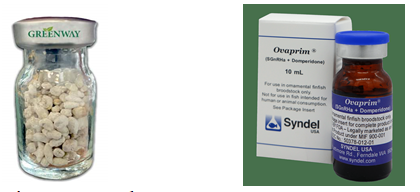
Three male and three female fishes were released in the separate tank for one trail. Twelve trials (six for PG and six for Ovuline®, LHRH-A) were completed for identifying accurate hormone doses of L. gonius in the months of April, May, June and July. The weight of the fish ranged from 0.82kg to 0.90 kg male and 0.94kg to 1.01kg female was used in every trial. About 36 males and 36 females were used for breeding purposes. Breeding behavioral changes and spawning activities were observed up to ovulation time.
Eggs were fertilized by a dry stripping method. Female fishes were stripped to collect eggs in an enamel tray or plastic bowl. Milt from the male fish was collected by applying slight pressure on male’s abdomen. The eggs and milt were mixed thoroughly in the plastic bowl with a soft and clean feather. A few drops of water were added in the bowl and was stirred continuously for 5-6 mins. The eggs were washed several times with freshwater and swollen eggs were transferred to different hatching jars under continuous water circulating systems. The flow of water (600-800ml/min) in the jar was regulated during the incubation period. The eggs hatched out within 22 to 25 hrs at a temperature range of 26 to 31oC. After 22 to 25 hrs of fertilization, hatchlings started to come out from the egg shell and hatching was completed within 2.0 to 4.0 hrs. Unfertilized eggs and egg-shells were cleaned from the hatchling jar within an hour of hatching to protect larvae from fungal infection.
The GonadoSomatic Index (GSI) fertilization rate and hatching rate were calculated by the following formula:
( ) 100 Weight of gonad Gonado Somatic Index GSI Weight of fish = × [20]
100 Number of fertilized eggs Fertilization rate Number of total eggs = × [21]
0 10 Number of hatchlings Hatching rate Number of fertilized eggs = ×
An early developmental stage of L. gonia was observed upto 68.0 to 72.0 hrs starting from egg fertilization as like L. rohita. The eggs were collected randomly from the hatching jar.
Boiled chicken egg yolk mixed with water and sieved through a glass nylon cloth. After hatching, the fine egg yolk emulsion was then spreaded in water to feed the hatchlings. Larvae from different pairs of parents were collected from hatching jars and released in the previously prepared different nursery ponds. The water temperature was recorded during the experimental period.
The data were analyzed by one way ANOVA using MSTAT Software (Version) followed by Duncan’s Multiple Range Test to find out whether any significant difference existed among treatment means [22].
Results and Discussion
Gonadosomatic Index (GSI) and Fecundity: Estimation of gonadal maturity and spawning season of any species is possible by using the Gonadosomatic index of that species. The GSI value of L. gonius in this experiment was varied from 20.01to 22.40% and the obtained fecundity were varied from 300411±7.16 to 380822±9.11 (Table 1). Highest GSI value (22.40%) and fecundity (350561±7.76) were found in 0.92±0.88kg body weighted fish and the lowest value of GSI (20.01%) and fecundity (380822±9.11) were found in 1.10±0.96kg body weighted fish which is a very similar study of Chondar 1970. Mean ovarian weight of L. gonius was observed around 20.10% of the body weight. Mishra S, et al. [23] found that the ovarian weight was almost 20% of the body weight of full mature fishes. Reproductive cycle of the L. gonius is more or less similar to the study of the Mud eel, Monopterus cuchia [24, 25].
| Body wt. (kg) | Gonad wt. (g) | GSI (%) | Fecundity |
|---|---|---|---|
| 0.90±0.80 | 200.23±1.70 | 22.24 | 300411±7.16 |
| 0.93±0.86 | 203.43±1.76 | 21.87 | 341544±8.19 |
| 1.10±0.96 | 220.08±1.66 | 20.01 | 380822±9.11 |
| 0.92±0.88 | 206.10±1.46 | 22.4 | 350561±7.76 |
| 0.95±0.86 | 200.48±1.38 | 21.1 | 351301±8.96 |
| 1.00±0.78 | 213.80±1.34 | 21.18 | 364110±9.24 |
Table 1: Gonadosomatic index and fecundity of _Labeo gonius_.
In this experience, it was found that L. gonius was bred in the month of April to July 2023 where May and June was the peak. Commencement of the breeding season for L. gonius as observed in the present investigation agrees with the report of Ahmed N [26] and Chakraborty BK, et al. [27]. Breeding of L. gonius was performed at an ambient water temperature of 26.0 to 28.8oC. This range of temperature is suitable for breeding of most indigenous small fishes [28]. L. gonius seemed to have a similar temperature requirement of Indian major carps. Male and female brood fish weighing between 0.82kg to 0.90 kg male and 0.94kg to 1.01kg female respectively, in good condition were selected for the induced breeding carried out during April to July 2023 [3].
Pertinent data regarding the time of injection and ovulation, fertilization rate, time of hatching, hatching rate and temperature are furnished in Table 2. In the present experiment, injection of pituitary extract of 2.0mg/kg body weight at first and of 4.0-4.5mg/kg body weight of second injection of the L. gonius showed better ovulation, fertility and hatchability success [29, 30, 31]. In the case of male, the amount of PG required to promote spermatogenesis was found to be 1.5-2.5 mg/kg of body weight administered at the time of application of second injection to the females.
Best spawning occurred in the month of mid-May to mid- June under dual hormonal regime at the PG dose of 2.0 and 4.0mg/kg body weight in the case of females.
| Hor mone | Mo nths | Body weight | Doses of 1st injection (ml/kg or mg/kg) | Doses of 2nd injection ((ml/kg or mg/kg) | Ovula- tion period (hr) | Fertili- zation rate (%) | Hatching period (hr) | Hatching rate (%) | Incuba tion tempe rature (oC) | |||
|---|---|---|---|---|---|---|---|---|---|---|---|---|
| Male (kg) | Female(kg) | Male | Female | Male | Female | |||||||
| PG (Double dose) | April | 0.85±0.43 | 0.98±0.80 | - | 2.0±0.01 | 2.0±0.02 | 4.5±0.05 | 6-8 | 82.02c±3.02 | 18.0-24.0 | 73.22c±3.86 | 26.2- 29.4 |
| May | 0.88±0.50 | 0.97±0.64 | - | 2.0±0.01 | 1.5± 0.01 | 4.0±0.03 | 5-6 | 98.10a±1.17 | 18.0-22.0 | 88.33a±2.76 | ||
| June | 0.87±0.34 | 0.99±0.80 | - | 2.0±0.01 | 1.5±0.01 | 4.0±0.02 | 5-6 | 98.44a±1.02 | 18.0-22.0 | 88.80a ±2.33 | ||
| July | 0.88±0.25 | 0.97±0.72 | - | 2.0±0.01 | 2.5±0.01 | 4.4±0.02 | 6-7 | 87.11b±1.22 | 18.0-24.0 | 76.01b ±3.03 |
Table 2: Effect of different doses of hormone on the spawning of Labeo gonius. Figures with different superscripts in the same co
Table 2: Effect of different doses of hormone on the spawning of Labeo gonius. Figures with different superscripts in the same column varied significantly (P < 0.01). In the months of early April and July, administration of PG extract in females at a dose of 2.0 and 4.5mg/kg body weight showed lower fertilization and hatching rate. Ovulation occurred after 6-8 hrs of 2nd injection and hatchings occurred after 16 to 18 hrs. of fertilization. Under the same PG doses highest fertilization and hatching rates were found to be 98.44±1.02% and 88.80±2.33%, respectively with significant differences with other doses. Thus the doses of PG have been optimized to 2.0 mg (Table 3).
| Horm one | Mon ths | Body weight | Doses of 1st injection (ml/kg or mg/kg) | Doses of 2nd injection ((ml/kg or mg/kg) | Ovu lation period (hr) | Fertili zation rate (%) | Hatching period (hr) | Hatching rate (%) | Incuba tion tempe rature (oC) | |||
|---|---|---|---|---|---|---|---|---|---|---|---|---|
| Male (kg) | Female (kg) | Male | Female | Male | Female | |||||||
| Ovuline® (LHRH-A) | April | 0.82±0.44 | 0.96±0.72 | - | - | 0.15±0.01 | 0.50±0.02 | 6-9 | 81.10d±2.02 | 18.0-24.0 | 72.04d±1.06 | 26.2-28.8 |
| May | 0.83±0.48 | 1±0.55 | - | - | 0.12±0.01 | 0.45 ±0.01 | 6-7 | 98.64a±0.84 | 18.0-21.0 | 89.05a ±0.88 | ||
| June | 0.9±0.44 | 1.02±0.83 | - | - | 0.12±0.01 | 0.44±0.01 | 6-7 | 97.18b±1.02 | 18.0-22.0 | 86.11b±1.68 | ||
| July | 0.86±0.28 | 0.98±0.82 | - | - | 0.15±0.01 | 0.50±0.02 | 6-9 | 87.13c±1.80 | 18.0-24.0 | 77.11c±2.02 |
Table 3: Effect of different doses of hormone, Ovuline (LHRH-A)) on the spawning of Labeo gonius.
Figures with different superscripts in the same column varied significantly (P<0.01) and 4.0-4.5 mg/kg body weight at first and second injection, respectively, for female of L. gonius at an interval of 6 hrs, which was more or less similar to breeding of Labeo rohita and Cirrhinus cirrhosus Menon VR, et al. [32], Cirrhinus reba Hossain QZ [33] and Puntius sarana Chakraborty BK, et al. [27].The all fishes of Labeo rohita were ovulated administered with Ovaprim-C [34].
In the month of May, best spawning occurred at the dose of 0.45ml/kg body weight in case of female and 0.12ml ovaprim/kg bodyweight in case of male injected at the same time. In the month of April and July, with increase in the amount of hormone i.e. a dose of 0.50ml/kg body weight showed good fertilization and hatching rate. Ovulation occurred after 6.0-9.0 hrs of hormonal injection and hatchlings came out after 18 to 24 hrs of fertilization. In June better spawning occurred at the dose of 0.44ml/kg body weight in case of female and 0.12ml Ovulin (LHRH-A)/ kg body weight in case of male injected at the same time. Best fertilization and hatching rates were found to be at 98.64±0.96% and 89.05±0.88%, respectively in the month of 2rd week of May to 2nd week of June.
The result is in agreement with the work of Yeasmin SM, et al. [2] where all female brood fishes injected with ovaprim and the fishes were successfully spawned. The result of the current work was similar with the result found by Jamroz M, et al. [35] when ovaprim-c was used for L. gonius. Naeem M, et al. [34] conducted an experiment on induced breeding of Silver carp (Hypophthalmichthys molitrix), where all the 30 female fishes were injected with Ovaprim-c at the rate of 0.6 ml/kg body weight and 100% ovulation were found.
Ovulin (LHRH-A) at 0.44 to 0.50 ml/kg body weight gave rise to complete ovulation of L. gonius in the stipulated time (6-9hr) which was very much similar to carp breeding [31]. The effective doses of Ovulin (LHRH-A) for induction of spawning have been optimized to 0.50-0.60 ml/kg body weight at single doses of injection for female of Labeo calbas_u, which was more or less similar to breeding of _Catla catla, Labeo rohita and Cirrhinus cirrhosus (0.40-0.50 ml, 0.30-0.40 ml and 0.25-0.30 ml/kg body weight), respectively [36]. A slightly increased amount of Ovulin (LHRH-A) as required in case of L. gonius seemed to be related with the species specificity phenomenon.
Better fertilization and hatching rates (98.44±1.02 and 98.64±0.84%) were found in fishes injected with PG and ovaprim. The fertilization rate and hatching rate of ovaprim treated fishes were not significantly (P>0.05) different from PG treated fish respectively with (2.0 mgPG/kg 1st dose and 4.0mgPG/kg 2nd dose; 0.45 ovaprim/kg). Behera BK, et al. [30] and Yeasmin SM, et al. [2] found that the rate of fertilization and hatching percentage are partially higher with Ovaprim at 0.45 ml/kg dose but the rates were decreased in 0.5ml/kg dose in induced breeding of common carp. Indira T, et al. [37] observed better ovulation, fertilization and hatching rates in the Indian major carp which were treated with Ovaprim than PG. Nandeesha MC, et al. [38] recommended ovaprim than PG hormone in the breeding of carps considering economic viability, farmer uses and ovulation, fertilization rate and hatching rate of carp fishes.
Labeo gonius is a seasonal breeder; it breeds in monsoon months [39, 40, 41]. The breeding season used to vary in different regions coinciding with the monsoon floods of those regions. Bhuiyan AS, et al. [42] have reported April- August as its breeding season while Kabir MA, et al. [43] have documented peak spawning in July in Bangladesh. Chakraboty BK, et al. [9] and Khan HA, et al. [44] noted that the success of induced breeding depends largely on proper selection of brood fishes, which has proved very true in the present experiment. Accomplishment of successful spawning depends on selection of suitable recipient fish at the proper stage of ovarian development and creation of congenial spawning conditions Nash CE, et al. [45] which is very accurate in the present experiment. The egg capsule and yolk sphere are yellowish brown in color. The ovulated eggs of L. gonius further increased around 0.2 mm in size after incubation of fertilized eggs in hatchery, which might be due to hydration of the eggs. The fertilized eggs were found in clutches among the eggs during egg incubation in the hatchery. The egg membrane got separated giving birth to the uniform perivitelline space. The yolk sphere pushed towards the vegetable pole as the embryonic development proceeded. This could be due to providing more space for the divisional activities of blastomeres at the animal pole. The clarity of blastomeres as in 2-4 cell stages was gradually reduced as the cleavage proceeded for 64 cell stages onwards. The identity of blastomeres was completely lost at the morula and blastula stage. After hatching 71-72hrs, yolk sacs were totally absorbed and the hatchlings were found to perform horizontal movement with sign of commencement of first feeding. Chicken egg yolk emulsion was fed for 200,000 hatchlings/one egg/day to meet up the dietary requirement. At that time the spawn was released in the nursery pond or sold to the nursery owner. The purpose of this was to start the alimentary canal functioning before transferring them in the nurseries (Price, 1989). The water temperature was the main key factor for ovulation and hatchling. Temperature was recorded 26.2-28.50C during the experimental period [46].
Conclusion
The findings of the present study show that both PG extract and Ovulin (LHRH-A) are equally effective in induction of spawning in L. gonius under controlled hatchery condition. The hatchery operators may use any of the two sources of reproductive hormones as per their choice. But considering the ease of hormone administration, cost and easy availability, both pituitary gland (PG) and Ovulin (LHRH-A) seems to be same advantageous for artificial propagation of L. gonius.
Acknowledgements
The author acknowledge to Faizuddin hatchery, Sibpur, Gouripur, Mymensingh for financial help and research facilities.
References
-
Chakraborty BK, Mirza MJA (2009) Effect of stocking density on survival and growth of endangered Kuria labeo, Labeo gonius (Hamilton-Buchanan, 1822), in nursery ponds. Bangladesh Journal of Life Science 22(1): 25-133.
-
Yeasmin SM, Rahman MA, Haq M, Hossain MMM, Rahman MH (2013) Effects on hormone on ovulation, fecundity, fertilization and hatching of common carp (Cyprinus carpio). Int J anim fish Sci 1(1): 1-7.
-
Chondar SL (1999) Biology of Finfish and Shellfish. SCSC Publishers, India, pp: 514.
-
Dwivedi AC, Tewari NP, Singh KR (2004) Present structure of capture and culture fishery of the Faizabad district (U.P.). Bioved 15: 95-98.
-
Nautiyal P, Shivam A, Rawat G, Singh KR, Varma J, et al. (2004) Longitudinal variation in structure of benthic communities in the upland Vindhyan and Himalayan: River continuum concept approach. National Journal of Life Sciences 1: 85-88.
-
CAMP (1998) Conservation assessment and management plan for freshwater fishes of India. In: Molur S, Walker S, et al. (Eds.), ZooOutreach Organization, Coimbatore/ CBGS and NBFGR, Lucknow, India, pp: 158.
-
Hossain MAR, Nahiduzzaman M, Saha D, Khanam MUH, Alam MS (2010) Landmark based morphometrics of an endangered carp kalibaus,Labeo calbasu stocks. Zoological Studies 49(4): 556-563.
-
Hasan I, Khalil I, Adnan A, Hossain MB, Ali MM (2015) Perception on Climate Change Impacts and Responses of People Living in a Coastal District of Bangladesh. Middle- East Journal of Scientific Research 23(10): 2424-2428.
-
Chakraborty BK, Momi M (2022) Status of aquatic resources and production of Kongsha River in northern Bangladesh. International Journal of Biological Innovations 4(1): 1-15.
-
Moyle PL, Leidy RA, (1992) Loss of biodiversity in aquatic ecosystems: Evidence from Fish Fauna. In: Fielder PL, Jani HL, et al. (Eds.), Conservation of biology: the theory and practice of nature conservation, preservation and management. Chapman and Hall, New York, USA, pp: 562.
-
Anwarul IM, Mahmud-ul A, Ainun N (2000) Red Book of Threatened Fishes of Bangladesh. In: Munjurul Hannan KSM, Monirul HKM, et al. (Eds.), IUCN-The World Conservation Union, pp: 116.
-
Hossen S, Sharker MR,Ferdous A, Ghosh A, Hossain MB, et al. (2020) Pearson’s Correlation and Likert Scale Based Investigation on Socio-Economic Status of Fisher’s Community in Kirtonkhola River, Southern Bangladesh. Middle-East Journal of Scientific Research 28(3): 160- 169.
-
Kubra K, Hoque MS, Hossen S, Husna AU, Azam M, et al. (2020) Fish Drying and Socio- Economic Condition of Dried Fish Producers in the Coastal Region of Bangladesh. Middle-East Journal of Scientific Research 28(3): 182-192.
-
Debnath S, Hossen S, Sharker MR, Ghosh A, Ferdous A, et al. (2020) Fish Seed Producing Hatcheries in Southern Bangladesh: An Overview. Middle-East Journal of Scientific Research 28(3): 199-206.
-
Sabuj MAI, Bappa SB, Ali MM, Hasan-Uj-Jaman M, Rahamn MA (2015) Present Status of the Fish Seed Producing Hatcheries in the Jessore Region, Bangladesh. International Journal of Current Research in Life Sciences 4(3): 151-155.
-
Haldar R, Hossen S, Hossain MM, Ali MM, Roy P, et al. (2020) Fish Availability and Marketing System of a Fish Market in Manikganj, Bangladesh. World Journal of Fish and Marine Sciences 12(1): 16-23.
-
Ali MM, Rahman MM, Hossain MY, Rahman MZ, Hossen MA, et al. (2014) Fish Marketing System in Southern Bangladesh: Recommendations for Efficient Marketing. Our Nature 12(1): 28-36.
-
Akhtar J, Bhuiyan AS (2012) Efficacy of two inducing agent’s PG and DoM+ SGnRH in the induced breeding of the major carp, Kalibaus (Labeo calbasu). University Journal of Zoology 31: 23-26.
-
Jhingran VG, Pullin RSV (1985) A hatchery manual for the common carp, Chinese and Indian major carps. ICLARM studies and reviews 3: 191.
-
Lagler KF (1956) Freshwater Fishery Biology. In: 2nd (Edn.), W. M. C. Brown Company Bubque, UK, pp: 541.
-
Okomoda VT, Chukoh IV, Hussain A, Amornsakun T, Sheriff SM (2017) Performance and characteristics of the progenies from the reciprocal crosses of Pangasianodonhypophthalmus (Sauvage 1878) and Clarias gariepinus (Burchell 1822). Aquaculture 489: 96-104.
-
Zar JH (1984) Biostatistics. Prentice-Hall, Inc. Englewood Cliffs, New Jersey, USA, pp: 718.
-
Mishra S, Saksena DN (2012) Gonadosomatic index and fecundity of an Indian major carp Labeo calbasu in Gohad reservoir. The Bioscan 7(1): 43-46.
-
Chakraborty BK (2018) Reproductive Cycle of the Mud eel, Monopterus Cuchia (Hamilton-Buchanan, 1822) in Bangladesh. International Journal of Oceanography & Aquaculture 2(2): 000132.
-
Chondar SL (1970) A study on the fecundity of _L. gonius_ (Ham.). J Asiat Soc Bengal 12: 115-125.
-
Ahmad N (1944) The spawning habits and early stages in the development of the carp, Labeo gonius (Ham) with hints for distinguishing eggs, embryos and larvae of Labeo gonius, Cirrhina mrigala and Wallago attu. Proc Nat Inst Sci 10: 343-354.
-
Chakraborty BK, Mirza MJA, Miah MI, Habib MAB, Chakraborty A (2007) Reproductive cycle of the Endangered Sarpunti, Puntius sarana (Hamilton, 1822) in Bangladesh. J Asian Fish Sci 20(2): 145-164.
-
Islam Z, Chowdhury AQ (1976) Induced spawning of major carp commercial production of fry in the fish seed farm. Bangladesh J Zool 4: 51-61.
-
Chakraborty BK (2022) Induced Breeding Practices of the Freshwater Fish Hatcheries in Bangladesh. International Journal of Oceanography & Aquaculture 6(2): 000225.
-
Behera BK, Das P, Singh NS (2009) Breeding and seed production of Labeo gonius (Hamilton) under Captive condition in Manipur. J Aqua 17:1-6.
-
Nandeesha MC, Rao KG, Jayanna R, Parker NC, Varghese TJ, et al. (1990) Induced spawning of Indian major carps through single application of Ovaprim-C. Asian Fisheries Society, pp: 581-585.
-
Menon VR, Ramadass D, Rajagopal S (1971) Problems on induced fish breeding in Tamil Nadu State. Workshop on induced breeding (hypophysation) of carps. Held at the Central Institute of Fisheries Education 12:1.
-
Hossain QZ (2001) Induced breeding of the fish Cirrhinus reba by pituitary gland extract and survival of spawn in nursery ponds. J Asiat Soc Bangladesh Sci 27: 205-213.
-
Naeem M, Zuberi A, Ashraf M, Ahmad W, Ishtiaq A, et al. (2013) Induced breeding of Labeo rohita through single application of ovaprim-C at Faisalabad hatchery, Pakistan. African Journal of Biotechnology 12(19): 2722-2726.
-
Jamroz M, Kucharezy D, Hakuc-Blazowska A, Krejszeff S, Kujawa R, et al. (2008) Comparing the effectiveness of Ovopel, Ovaprim and LH-RH analogue used in the controlled reproduction of ide, Leuciscus idus (L.). Fisheries & Aquatic Life 16(4): 363-370
-
Peter RE, Lin HR, Krack GV (1988) Induced ovulation and spawning of cultured freshwater fish in China: Advances in application of GNRH analogues and dopamine antagonists. Aquaculture 74: 1-10.
-
Indira T, Damodaran R, Priyadarshini R (2013) Comparative study of synthetic hormones Ovaprim and carp pituitary extract used in induced breeding of Indian major carp. Advanced Biotech 12(7): 49-52.
-
Nandeesha MC, Keshavanath P, Varghese TJ, Shetty HPC, Rao GK (1990) Alternate inducing agents for carp breeding: Progress in research. Proc. Worksorp carp seed production technology. Asian Fish Soc, India branch. Mangalore, India, pp: 12-15.
-
Qasim SZ, Qayyum A (1961) Spawning frequencies and breeding seasons of some freshwater fishes with special reference to those occurring in the plains of Northern India. Indian Journal of Fisheries 8(1): 24-43.
-
Bhuiyan AL (1964) Fishes of Dacca. Asiatic Society of Pakistan, Dacca, pp: 148.
-
Natarajan V (1971) Biology and fishery of Labeo calbasu (Hamilton) in Bhavanisagar reservoir. Madras Journal of Fishery 6: 14-56.
-
Bhuiyan AS, Akhter J, Noor AM (2013) Efficacy of two inducing agents, PG and DOM+sGnRH on the induced breeding of the major carp, Kalibaus (_Labeo Calbasu_). Our Nature 11(1): 17-24.
-
Kabir MA, Quddus MMA (2013) Fecundity and Gonado Somatic Index of Labeo calbasu (Hamilton)from a pond of a hatchery at Faridpur, Bangladesh. Bangladesh Journal of Zoology 41(1): 43-48.
-
Khan HA, Mukhopadhyay SK (1975) Poduction of stocking material of some air breathing fishes by hypo- physation. J of Inland Fish Soc India 7: 156-161.
-
Nash CE, Shehadesh ZH (1980) Review of breeding and Propagation Techniques for Grey Mullet, Mugil Cephalus L. ICLARM Studies 3. ICLARM, Manila, Philippines, pp: 87.
-
Rahman AKA (2005) Freshwater fishes of Bangladesh. Zoological Society of Bangladesh, Dhaka, Bangladesh, pp: 263.
- Genetic Improvement of Nile Tilapia (Oreochromis niloticus): Advances in Selective Breeding and Genomic Approaches for Sustainable Aquaculture
- Microplastics, Contaminants, and Waste Hotspots: Divergences and Faults in Prioritizing Control Efforts
- Creating a Healthier, More Vibrant Open and Closed Aquatic Environment. A Submersible, Centrifugal Magnetically Affixed Current Changing Aquarium Pump
- An Attempt to Assess Alpha Diversity and Sample Size: Using the Ostracod Assemblages off Kumamoto Port, Japan
- Assessment of the Efficiency of Common Fishing Gears and Crafts Used at Mohananda River of Chapai Nawabganj, Bangladesh
- Fish Productivity and Biodiversity Status of Sundarban Mangrove in Bangladesh