
The Approach of Traditional and Modern Fish Farmers under the Background of Socioeconomic Attributes for Sustainable Fish Production in Nigeria
The study was conducted in Baga Fishing Community of Lake Chad Basin area of Kukawa Local Government Area, Borno North, Jere and Konduga Local Government Area Borno Central in Borno State of Nigeria. The study focused on the approach of traditional and modern fish farmers under the background of socioeconomic attributes for sustainable fish production in Nigeria. Data for the study was collected within the period of thirty-one (31) days from 14th March, to 13th April 2022. Both primary and secondary sources of data were employed, primarily qualitative method of data collection was employed. The study revealed that traditional fish farmers engage in fulltime and part-time fish farming and other agricultural activities unlike the modern fish farmers that engage in fish farming on part-time basis, although both the traditional and the modern fish farmers earns monthly income of more than forty thousand (N40,000) naira. Majority of the traditional fish farmers are married with no contact with extension agents. The traditional fish farmers have higher family sizes. Ninety nine percent of the traditional fish farmers have not undergone formal system of education, with very low infrastructural support and other social services unlike the modern fish farmers. Recommendations were made for the upliftment of the general wellbeing of the fish farmers in the fishing communities for sustainable fish production.
Introduction
The fish industry provided direct and indirect employment for fishers, fish processors, marketers, retailers, and many other actors earned their living from fish production and its value chains in small-scale fishing communities. There are other alternatives livelihoods which are supported by the sorts of capital that are particular to them and which are likewise integrated in the community’s alternative livelihoods support and complement one another, with community members collectively having more security by virtue of there being more alternatives available to them. But it is also possible that some of the alternative livelihoods may compete for the various sorts of capital that support fishing livelihoods. Income from the industry contributed significantly to the market performance of other goods and services like food items, household needs, school fees etc [1].
Currently at a global level aquaculture employs at least 26 million workers in production alone, in addition to millions of jobs generated in input supply chains, food/fish processing, distribution and trade. Overall, the contribution of aquaculture to food system transformation can be significant but yet to realize the maximum contributions of the sector towards achieving the targets set by the Sustainable Development Goals (conserve and sustainable use the oceans, and marine resources for sustainable development) and Agenda 2030 (aim to end all forms of poverty, reduce inequality and tackle climate change).The rapid but uneven development of aquaculture in recent decades, warrant a need to review a current practices and policies for a better understanding of gaps and challenges that could be addressed through enhanced investment, policy, technology, innovation, partnership, education and knowledge to overcome global challenges such as the impacts of climate change, risk to biodiversity or assurance of economic viability and social equity together the action of all stakeholders will take a coordinated and global effort in order to enhance the contribution of aquaculture for food and sustainable development to benefit people and planet [2].
Worldwide since 2016 aquaculture has been the main source of fish available for human consumption, a remarkable increase considering that this share was only 4 percent in 1950, 9 percent in 1980 and 19 percent in 1990. In 2018, this share was 52 percent, a figure that can be expected to continue to increase in the long term. It is also important to mentioned that these figures do not refer to the quantity effectively eaten. If the edible amount is taken in to account (e.g. excluding shells and other inedible parts, which can differ also according to traditions), capture fisheries should be still the main source of the fish eaten due to the higher share of farmed bivalves and crustaceans compared with wild ones but the gap is narrowing [3].
The livelihoods of fishing communities in the Southern African Development Community region are among the most insecure and vulnerable in the African region. The Southern African Development Community and Food and Agricultural Organization of the United Nation (FAOa) are promoting sustainable development in aquaculture and fisheries sectors. Fish is the most affordable source of dietary animal protein and therefore of over whelming importance for food and nutrition security within Southern African Development Community [4].
The growing population of the region is dependent on its fisheries resources with an overall increasing tendency towards an over-exploited status of marine and inland fisheries resources. Lack of management actions have resulted in an increasing tendency of depletion of resources, tremendous waste of the value and income of these resources to this region. The consequences are most devastating for the poorest communities of the Southern African Development Communities of the region. Appropriate measures were used by member states to monitor progress and actions towards toward implementation of the regional protocol on fisheries [5].
Best Practices Guide Lines for Aquaculture Management in the region were developed by Southern African Development Community Technical Committee on Fisheries which addresses key environmental and social impacts issues to all aquaculture activities which is very vital for the development and management of the fisheries sector and protocol on fisheries implementation monitoring to help monitor the implementation of the best practices Guide Lines for Aquaculture Management in the region. These best practices cover several sub-sectors such as the aquaculture management and protection of aquatic environment, trade and investment and science and technology for achieving a more sustainable management of the fisheries sector [4].
Fisheries have suffered due to a combination of upstream damming, shrinkages of the lake, drought and overfishing. Lake Chad’s fisheries are one of the largest and most productive inland fisheries in Africa. Traditionally, they have been providing income, food and nutritional security to the region’s populace. But their production has now come down to 100,000 tonnes to 220, 000 tonnes in 1974. Two commercially important fish species; Nile perch (Lates nilotias) and Labeo (Labeoina) became in the Lake by the 1980’s. The lake has faced a significant biodiversity loss despite Nigeria introducing fishery conservation policies in the 1960’s soon after its independence [6].
Nigeria is one of the top aquaculture producers in Africa with numerous opportunities for large – scale production and 80% of production is from small – scale farmers who are involved in brackish and freshwater cultivation except Mari- culture which has several setbacks. Nigeria’s aquaculture production systems are in the forms of extensive system, integrated agriculture – aquaculture, sewage - fish culture, intensive systems and others which includes; race ways, silos, tanks in addition to the use of ponds, pens, tanks, cages etc [7].
About 8 million people are employed by the Small – scale Fisheries in Nigeria for livelihood and income generation, provides social and cultural value and women plays dominance role in the post-harvest sector thus Nigerian Small-scale Fisheries industry is a safety net from poverty, although it contributes to deforestation and the impact fall disproportionally on women. Improvement in governance and stewardship of Small-scale Fisheries, access to services, credit and social protection are important to deepen the contributions of Nigeria’s Sustainable Development Goals [8].
The fish stock of the Nigeria portion of the Lake Chad has declined as a result of climate change which has affected the fishing activities and the quality of life of the fishers. Thousands of people that had fled conflict affected zone of Borno State of Nigeria resettled at the Lake Chad Area for fishing has brought about overfishing in the Lake Chad as a result of lack of effective fisheries management system. With the emergence of the conflict of Boko Haram Insurgents in the Lake Chad Area the entire fishing communities located in the shores of the Lake Chad Basin were displaced until recently few of the members of the fishing communities resettled back in Baga town of Kukawa Local Government of Borno State of Nigeria a town known for its high productivity of fisheries resources and other agricultural products [9].
Problem Setting and Objectives
Borno State of Nigeria is one of the states that met environmental requirement for fish production, but majority of the fish farmers engaged in small-scale fish production regardless of the state natural resources endowment to compete with other leading fish producers in the country. The practice of fish farming in the state is not technological advanced which contributed for underutilization of the fisheries resources. The state of insecurity in the state resulted to the displacement of many fishing communities and restriction of fishing in many fishing zones as a result of security trait that hinders access to lake for fishing. Consequently, Maiduguri Metropolitan Council, Jere and Konduga local government areas located in the mid of Borno Central were densely populated considered safe for livelihood compared to the insecurity affected zones. This has aggravated to a very serious problem on the level fish production in the state as the displaced traditional fish farmers from the various fishing communities need to be transformed from cultural mode of fish production to modern aquaculture system of fish farming and to tackle the problems associated with the existing aquaculture fish production system in the mid of Borno Central. Furthermore, to close the literature gap of limited research work carried out; if any? that integrate the socioeconomic attributes of both the traditional and modern fish farmers with the main aim of identifying and remedying the farmers socioeconomic problems. Thus, to accomplished this objective the need for the transformation of the traditional fish farmers and to equitable integrate the fish farmers in to modern aquaculture system of fish farming for sustainable fish production through an approach of the traditional and modern fish farmers under the background of socioeconomic attributes for sustainable fish production in the study area through examination and enabling the establishment of policy framework and the provision based line information based on the farmers prevailing socioeconomic status with the aim of finding solution to the problems bedeviling both the traditional and modern fish farmers in the study area to ensure effective and efficient utilization of the state fisheries resources for the achievement of full swing sustainable fish production system in Borno State of Nigeria.
The output of this research work may immensely contribute to the individual fish farmers to make investment in a large-scale production. Provide a basis for an approach to individual fish farmers by the government and non- governmental organization to ensure optimal utilization of the state resource endowment. The information acquired may serve as a source of data to individuals, groups, agencies, organizations both governmental and non-governmental for decision making in order to produce actions that may improve the living and working condition of the fish farmers for the overall development of the fisheries sector of the economy.
Data collection for the research work was carried out within the period of thirty one (31) days from 14th March, to 13th April, 2023 due to the fact that during that period majority of the fish farmers embarked on harvest as pre- planned for intensive marketing as there was a high demand for fish as a result of religious events and other festivities.
Methodology and Data
The study area is Baga fishing community of Lake Chad Basin, Kukawa Local Government Area of Borno North, Jere and Konduga Local Government Area of Central Borno State of Nigeria. Borno State which has an area of 61,43589 km is the largest state in the federation of the Federal Republic of Nigeria in terms of land mass. The state occupies the greatest part of the Chad Basin and shares borders with the Republic of Niger to the North, Chad to the North – East and Cameroon to the East. Baga community located in the semi- arid plain between latitude 12o 18’ – 13o 48’ N and longitude 13o 18’ – 14o 48’ East of the Greenwich Mean Time (G.M.T) [10]. During the “Normal Chad” (stabilization of the Lake at normal size as a result of the influence of rainfall and volume of water flow in the major rivers that feed the basin), the composition of Lake Chad Basin comprised of Chad 11,000km2 (50%), Nigeria 5,500km2 (25%), Niger 3900km2 (17%), and Cameroon 1800km2 (8%), during the “Little Chad” the open water is shared only between Chad 1200km2 (60%) and Cameroon 800km2 (40%), the Nigerian and Niger portion are liable to complete drying, e.g. Sahelian drought of 1968 [11]. The study area has a population of about two hundred and three thousand, three hundred and forty-three (203,343) inhabitants with a land area covering about 4,901km2, National Population Commission of Nigeria [12]. The fisheries of the Lake Chad employ about 10,000 fishers including about 150,000 persons associated with the fisheries business [13]. The major tribes from Nigeria include the Agatu, Hausa, Jukun, Kanuri, Ijaw, Shuwa, Urhobo, Nupe, Ilaje and Ijebu and foreigners like Malian, Kotoko, Masaca, Buduma, Kanumbu. The Hausa constitutes the majority (19%) fishermen on the Nigerians part followed closely by the Jukun (16%), Agatu (11%), Malians constitute majority of the foreign fishers on the Lake. Fishing is their major occupation consisting of fisheries activities including processing, preservation, transportation and marketing. Other economic activities are farming, Cattle herding and trading, Federal Department of Fisheries [14]. Jere Local Government Area of Borno State, Nigeria, has its headquarters in the town of Khaddamari. Jere is one of the twenty-seven local government areas of Borno State, carved out of Maiduguri Metropolitan Council (M.M.C.) in 1996. It lies within latitudes 110 401 E and 120 05 N and longitudes 130 501 and 120 201 E; it occupies a total landmass of 160 square kilometers. Within the state, it shares boundaries with Mafa Local Government Area to the east, Maiduguri Metropolitan Council to the north and Konduga Local Government Area to the South. Jere Local Government Area has a projected population of 211, 204 persons with annual growth rate of 2.8%. Majority of the inhabitants are farmers, traders, and civil servants. The major ethnic groups are Kanuri and Shuwa Arab. Others includes Hausa, Bura, and Fulani and many immigrant settlers from within and outside Nigeria [15]. In khaddamari, the wet season is hot, oppressive and mostly cloudy and the dry season is sweltering and partly cloudy. Over the course of the year, the temperature typically varies from 580 F to 1060 F and is rarely below 520 F or above 1100 F. The hot season lasts for 2.4 months from March 14th to May 27th with an average daily high temperature above 1020 F. The hottest month of the year in Khaddamari is May, with an average high of 1030 F and low of 800 F. The cool season lasts for 2.1 months, from July 20th to September 23rd with an average daily high temperature below 920 F. The coldest month of the year in Khaddamari is January, with an average low of 590 F and high of 920 F. The rainy period of the year last for 6.0 months, from April 23rd to October 21st, with a sliding 31- day rainfall of at least 0.5 inches. The month with the most rain in Khaddamari is August, with an average rainfall of 5.9 inches. The rainless period of the year lasts for 6.0 months, from October 21st to April 23. The month with least rain in Khaddamari is December, with an average rainfall of 0.0 inches [16]. Konduga is a community in Borno State, Nigeria and the Centre of a Local Government Area of the same name about 25km to the Southeast of Maiduguri situated on the North bank of Ngadda River. The local government area is shown within Nigeria coordinates: 110 39’ 6’’ N, 130 25’ 10” E. Konduga Local Government Area have an area of about 6000 square kilometers with a population of 375,000. The ethnic groups in the local government are Kanuri, Shuwa Arab, Marghi, Mulgwai, Wula, Gamargu, Fulani and Hausa. The main occupation of the people is subsistence farming combined with livestock rearing, fishing and trading. The road network in the local government is over 300km mostly (over 90%) untarred bush roads and foot paths with substantial part of the villages living behind a river, which keeps them away from the local government headquarters. Those living behind the rivers use canoes to cross to the local government headquarters. The terrain becomes difficult during the rainy season [17]. In Konduga, the wet season is hot and mostly cloudy and dry season is sweltering and partly cloudy. Over the course of the year, the temperature typically varies from 580 F to 1060 F and is rarely below 520 F or above 1100 F. The hot season lasts for 2.4 months, from March 11th to May 24th, with an average daily high temperature above 1020 F. The hottest month of the year in Konduga is April, with an average high of 1050 F and low of 770 F. The cool season lasts for 2.1 months, from July 20th to September 22nd with an average daily high temperature below 920 F. The coldest month of the year in Konduga is January, with an average low of 590 F and high of 920 F. The rainy period of the year last for 6.1 months, from April 20th to October 22nd with a sliding 31- day rainfall of at least 0.5 inches. The month with the most rain in Konduga is August, with an average rainfall of 6.2 inches. The rainless period of the year lasts for 5.9 months, from October 22nd to April 20th. The month with the least rain in Konduga is December, with an average rainfall of 0.0 inches [16].
The study area has population of 7,89,547 inhabitants. The targeted population for this study has 203,343, 211,204 and 375,000 persons from Baga Lake Chad Basin Area of Kukawa Local Government Area, Jere Local Government Area and Konduga Local Government Area of Borno State, Nigeria respectively. Twenty (20) traditional fish farmers from Kukawa Local Government Area and ten (10) aquaculture fish farmers were used from each of the two (2) local government areas (Jere and Konduga), made a total sum of twenty (40) respondents for the study. Traditional and modern Fish farmers were considered for the purpose of this study.
Sources of data for the study were both primary and secondary sources. Primary data was collected from the farmers by the way of farm and market survey method with the used of questionnaires. The questionnaires were completed by interviewing the farmers which ensured that questionnaires were well attended with accurate and reliable information. The information obtained through the questionnaires were supplemented with information that was collected through discussed and interview with the farmers. The information elicited from the respondents through the questionnaires were on socioeconomic attributes of fish farmers in the study area. Secondary data was obtained from the farmers books of account where available and through officially documented records and discussed with officials of Federal College of Freshwater Fisheries Technology, Baga, Maiduguri and State Ministry of Animal and Fisheries Development Maiduguri, Borno State of Nigeria.
Multistage sampling technique was employed for the selection of the respondents. In the first stage, three local government areas Kukawa, Jere and Konduga Local Government Area of Borno State, North-east, Nigeria were purposively selected, areas that met the environmental requirement for fish production in terms of water, soil, and temperature. Baga Lake Chad Basin Area of Kukawa Local Government Area is predominantly fish farming community is known for its high level of fish production in the country Nigeria many years ago. More so, fish farming in Jere and Konduga Local Government Areas have become dominant as a result of the “BOKO HARAM” insurgency that ravaged almost all the fishing communities in Borno State of Nigeria made the population of the study areas increased due to inflows of internally displaced persons (IDPS) in to Jere Local Government Area and part of Konduga Local Government Area. In the second stage ten (10) respondents were randomly selected in the study area from a list of registered fish farmers in each of the two local government areas of the state that involves in aquaculture fish farming. The list of registered aquaculture fish farmers group of the Borno State Ministry of Animal and Fisheries Resources Development formed the sampling frame. The randomly selected ten (10) aquaculture fish farmers from Jere Local Government Area and another ten (10) from Konduga Local Government Area made a sub-sample size of twenty (20) aquaculture fish farmers and two traditional fish farmers were selected from ten various fishing activities constituting respondent from Baga Lake Chad Basin Area of Kukawa Local Government Area making another sub-sample size of twenty (20) cultural fish farmers. Thus, a sample size of forty (40) fish farmers were used for the study.
Data for the study was obtained from primary and secondary sources. Both the primary and the secondary data were obtained through public participation, individual farmers and other stakeholders’ interview and with the application of focus group discussion with minimum of seven respondents and maximum of nine constituted representative of each relevant group. Primarily, qualitative method relied on focus group discussion was applied to elicit information from the respondents on socio-economic attributes of the fish farmers in the fishing communities of Lake Chad Basin Area of Kukawa, Jere and Konduga Local Government Area of Borno State, Nigeria.
Results and Discussions
The Socio-Economic Attributes of Traditional and Modern Fish Farmers in Central and Northern Part of Borno State of Nigeria
The modern fish farmers engage in aquaculture fish farming through the practice of concrete fish pond mode of production. The total number of the aquaculture fish farmers in the study area of Borno Central is less than one percent (1%) of the total population of the area out of which very limited number of only forty-seven are considered as valid fish farmers in central Borno as confirmed by the Borno State Ministry of Animal and Fisheries Resource Development of Nigeria based on the research outcome. Majority of the inhabitant in central Borno engage in government service and business as their primary occupation and partly involve in other agricultural activities such as crop production, livestock and poultry.
The traditional fish farmers in northern Borno are predominantly cultural fish farmers of the fishing community, the total population of the community fall within the range of two hundred and two thousand two hundred and forty-two (202,242) to two hundred and three thousand two hundred and forty-two (203,242) inhabitants according to the fish farmers. All the members of the fishing community engage in full-time fish farming and thus fishing has been their main occupation as the members engage intensively on cultural fishing activities such as catching, processing, trading, transportation and input supply. In addition to the primary fishing act the cultural fish farmers also engage in secondary agricultural activities such as cropping, livestock and other farming activities. Both the traditional fish farmers and the modern aquaculture fish farmers earn monthly income above forty thousand (N40,000) naira from fish production inclusive of other sources.
This results confirmed to the finding of Opeyemi O [1] in the last decade 90th the fish industry provided direct and indirect employment for residents in Borno state; fishers, fish processors, marketers, retailers, and many other actors earned their living from fish production and its value chains. Income from the industry contributed significantly to the market performance of other goods and services like food items, household needs, school fees etc. The adverse effects of the conflict in present Borno has further affected the fish industry consequently substantial loss of rural livelihoods. Fishing activities in the state were disrupted. Supply of fish gradually became irregular that at some point fish sellers rarely had fish to sell.
Hired labour for fishing act is not practice by the traditional fish farmers in the fishing community but majority of the modern fish farmers considered part–time fishers contract people to carry out their fishing activities. High volume of output is yielded from the full-time traditional fish farmers households in both fishing and other agricultural outputs as fishing is their primarily means of livelihood and other agricultural activities as secondary in the community. Although, the modern fish farmers too yield high output depending on the scale of operation and capital capacity based of the individual fish farm but the farmers are incapacitated to engage in large scale production in the area as a result of low level of know-how, skillfulness, inadequate capital, lack of innovation and the use of sophisticated machine.
This result confirmed to the findings of Abegunrin OO, et al. [19] the major problem of the Nigeria’s aquaculture has been the inadequacy of appropriate technologies, inadequate information on aquaculture technology, inadequate technical know-how, in availability of extension agents, unfavourable environmental conditions, inadequate training and technical support.
Under the modern aquaculture system of fish farming majority of the fish farmers are above the age of 48 others below the age of 48 constitutes very small portion of the total number of the aquaculture fish farmers. Majority of the modern fish farmers are married and partly few single. There exists gender under representation under the modern aquaculture fish production system as majority of the aquaculture fish farmers in central Borno are male. The female constitutes very negligible portion of the aquaculture fish farmers which was discovered as a result of lack of awareness and government concern over embarking on publicity particularly on women in aquaculture fish production.
Under the cultural fishing community both male and female below the age of 24 are involves in full-time fishing practice based on the cultural fishing activities that suits their age and sex as culturally practice in the community such activities as hawking, fish processing by both male and female, transportation, catching of fish and other minor fishing activities are all carried out by this age group. Other age group from 24 and above involves in the practices of all traditionally fishing activities carried out in the community with majority drawn from male fish farmers. Under exceptional circumstances in line with the tradition of the community female fish farmers above the age of 24 are also considered for other traditional fishingl fishing activities in addition to hawking and fish processing in the community but must fall within the spectrum of both cultural and religious believe of the community.
These results agreed with the findings of Gray T, et al. [20] passive or inactive resilient are people who resignedly accept their disadvantage circumstances as a given and carry on as before, ignoring the warning signs of an unsustainable future. They feel they are powerless to avert their destiny since fate determines life.
The modern aquaculture fish farmers of central Borno have undergone formal system of education as the outcome of the research shows; highest majority of the aquaculture farmers have undergone tertiary education. The remaining lowest minority were confirmed to have not undergone formal system of education. The aquaculture fish farmers further revealed the need for support system in the areas of funding for expansion, intensive training in the aspects of modern system of fish farming, provision of modern technological advance aquaculture fish production machineries and government support in the area of new techniques of modern fish production.
The outcome of the research with respect to educational status of the traditional fish farmers revealed as no education. Highest majority of the traditional fish farmers are illiterates in term of western education only few negligible numbers have hardly undergone primary level of education among the few minorities are at the same time school dropout. This is not unconnected to the cultural adaptation of the predominantly traditional fishing community as well as the religious beliefs of the community towards western education. Although, majority of the members of the community have undergone informal system of Islamic education traditionally known as Sangaya Islamic form of schooling, the level of such system of education is rated on the basis of age in the community as a result of the notion that the older an individual member of the community the knowledgeable the individual in the aspects of informal system of education.
This results partly disagreed with the finding of Lamido AA [18] one of the most consequential effects of Boko Haram Insurgency has to do with its diverse effects on education. In many ways, the insurgency has deepened the gap in educational attainments between the northeast and other regions. Firstly, given that the Boko Haram group was founded primarily on the philosophy of rejecting anything western, including attending the western style educational schools, a large number of brilliant youth in both primary, secondary and tertiary institutions were convinced to voluntarily abandon school and joint the anti-boko campaign of the movement. A number of school teachers and lecturers of tertiary institutions also were lured in to the ideology.
The household size of the aquaculture fish farmers in central Borno has been at intermediate level as part of the fish farmers in the study area have less than six house hold size ranging from one (1), two (2), three (3), and four (4) household size inconsiderate of cultural believes and norms.
In the case of the traditional fishing community, the house hold size is more than nine (9) members in high majority level as a result of the religious believe and cultural tradition of the community. According to the traditional belief of the cultural fishing community; when a girl reaches the age 14 years and the parents refuses to give their daughter in marriage is a tabor in the tradition of the community, provided the daughter hand has been demanded on marriage. According to the religious believe of the traditional fishing community, when a girl reaches menstruation period and the girl is not married the more the lady stays without getting married the level of blessing material wise accruing to the household will be negatively affected in addition to the religious implication of punishable consequences in the hereafter (Day of Judgment). On the other hand boys in the community are to get married at the age of 16 years as a traditional practice of the community to expose them to rigors of life at a early age to be independent and to increase the total number of the members of household which will have positive impact on the individual household, parental household and community level of production in the assertion of the believes that the higher the number of the members of household the higher will be the level of production. More so deter the religious implication of committing illegal sex and or adultery culturally believed to have negative effect on the developmental aspect of the community. Never the less, there exist also the traditional believes of prestige attached to households in the community based on the sizes of the family households. The higher the total number of the family size the greater will be the dignity placed on the personal integrity of those households with large members in the community and the higher will be the agricultural productivity.
These results partly disagreed with the findings of Chandler D, et al. [21] adaptive or reactive resilient are people who do not passively accept the adverse circumstances in which they find themselves but take positive steps to adopt to those circumstances by changing their own behavior they can improve their situation.
Most of the aquaculture fish farmers in central Borno have less than five (5) years farming experience and partly none. Unlike the traditional fish farmers viewed from a stand point of individual cultural fish farmers age because the community is predominantly fishing community. The traditional fish farmers of the fishing community were known many years ago from the time immemorial for their culturally inclined system of fish farming although the history of the community traced the traditional fish farmers of the fishing community as descendants from “Argungu fishing community” a historic fishing community from the then Sokoto State of Nigeria now Kebbi State. Therefore, fishing experience of individual fish farmers is a lifelong experience individualistically from childhood level to adolescent up to dependent age group as it applies to individual level of capacity which may vary naturally based on race as there are traditional fish farmers in the community that falls within the age range of 60 years and above that involves in cultural fish farming activities of fishing in the lake, mending of fishing gears, weaving of fishing net, construction of fishing trap in the fishing community of Baga, Kukawa Local Government Area, Borno State of Nigeria.
This results in is not in line with the finding of OECD [22] the sustainability of traditional management systems in to the future is threatened in all parts of North east Nigeria by the types of factors of change indicated. For the time being, many traditional systems are still in operation and it seem likely that two factors will become increasingly important. Firstly, the rate of change, since community-based systems appear to be highly adaptable if the rate of change is not too great. Secondly, the role of government, since the impact of change might be moderated with appropriate policy and assistance.
The modern aquaculture fish farmers in central Borno requires intervention service both from governmental and non-governmental organizations in the aspect developing aquaculture fish farming but there are no any such support services provided adequately such services as extension agents, training programs and other essentials projects. The same intervention service requirements apply to the cultural fish farmers in the fishing communities to enable the traditional fish farmers embark on improved method of fishing rather than the application of rudimental technology that is not sustainably friendly.
This result partly confirmed to the findings of Ruvangwa E, et al. [23] observed that the constraints in the aquaculture industry in Africa, which include Egypt and Nigeria, feature the following inadequate supply of fish fingerlings, improper management practices, high cost of fish pond establishment, cost of fish feed, lack of ready fish market, lack of awareness of available innovations etc. considered to be institutional and socio-cultural. unlike the cultural fish farmers of fishing community confident of their professionalism in overall aspect of fishing act thus the fish farmers of the community do not believed in any developmental intervention in the aspect of fishing practices rather than the culturally inherited fishing practice as its rotates on the basis of interdependency within the cultural fish farmers of the cultural fishing community from one ancestral to the other from generation to generation. In case of intervention requirements, it should be taken care within the family ties or community clan but not from external bodies to deter any attempt that will alter community cultural fishing practices except in the aspects of other support system at a peripheral level that will have no impact on the community setting culturally in relation to economic and other social wellbeing of the community.
The highest majority of the modern aquaculture fish farmers are monogamous family as the outcome of the research indicates unlike the traditional fish farmers in the fishing community with highest majority having polygamous families as the religion and culture of the community permit to have more than one wife up to four wives provided the head of the household will cater for their essentials. The community fish farmers are self-subsistence within the community economically attainable limit as the natural resource endowment of the community and the inexpensive mode of traditional fish farming practice and other agricultural production practices of the community predominantly based on crude implements that are readily made available within the community at artisanal practice level. The cultural and religious beliefs and the economic structure of the households of the traditional fishing community is an influencing factor for the members of the community to have more than one wife. The higher the number of household size the greater will be the personality attached to that household and the higher will be the production output of that family to the individual household and to the economy of the community. The cultural and religious believes encourages early marriage and discourages the act of divorce warrants majority of the members of the traditional fishing community to have polygamous family and minority monogamous family as specified within the spectrum of the community cultural and religious believes.
This result confirmed to the findings of Bello MM, et al. [24] revealed that the socio-economic characteristics of fish sellers in Maiduguri Metropolis of Borno state of Nigeria shows that; 91.7% of the farmers were male, while 8.3% were female. The marital status of the farmers indicates that; 83.3% were married, 6.7% of the farmers were single while 6.7% represent widow and 3.3% of the farmers were divorced.
The infrastructural structure and other social amenities of the traditional fishing community in northern Borno is poor in contrast to the economic role the fish farmers of the community plays to the economic development of the nation particularly in the agricultural sector of the economy in the area of job creation, food security and poverty reduction. Unlike the infrastructural facilities developed in central Borno but lacking in adequate skill and other support services in the development of aquaculture fish farming. The focus of the traditional fish farmers is to engage in fish farming and other agricultural production activities and to excelled in the system as professional fish farmer as culturally oriented by their forefathers as such the entire members of the traditional fishing community regardless of gender and age variance were culturally adapted to the fishing act fundamental on inheritance basis which is lacking under the modern system of farming.
This result shows consistency with the findings of Kaleem O, et al. [25] Worldwide the expectation for aquaculture is to grow and to produce fish for consumption although many factors might affect the prospects of the aquaculture sector. Factors such as land, water and associated conflicts, supply of seed, feed, disease problems and genetics resources, environmental integrity, development and adoption of new and improved farming technologies, market, trade and food safety, climate change, investment capital impediments and problems that may erupt from uncontrolled, unguided and unmonitored aquaculture practices (Figures 1-8).
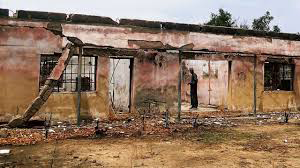
Source: Field Survey, 2022 Figure 1: Destructed School in Baga Fishing Community.
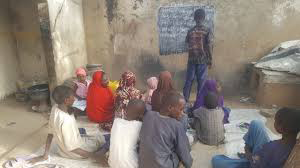
Source: Field Survey, 2022 Figure 2: Classroom Session in Baga Fishing Community.
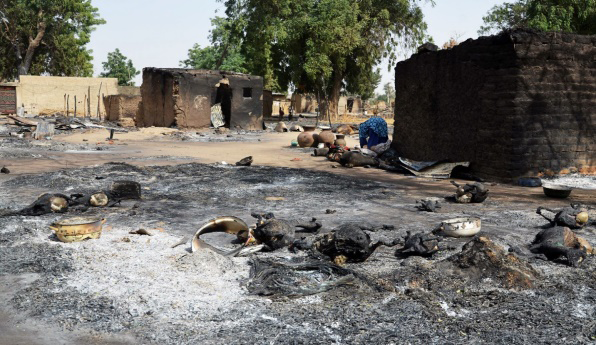
Source: Field Survey, 2022 Figure 3: Displaced Baga Fishing Community.
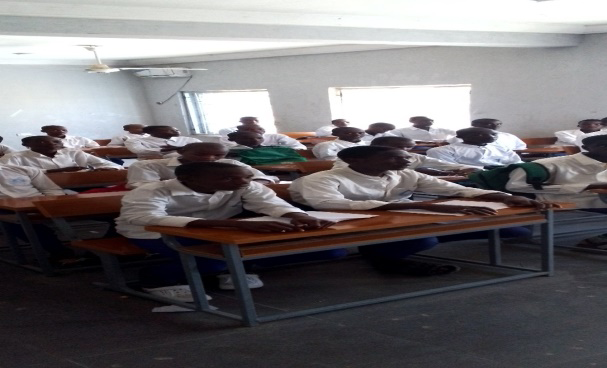
Source: Field Survey, 2022 Figure 4: Class room Session in Jere Local Government Area Borno State of Nigeria.
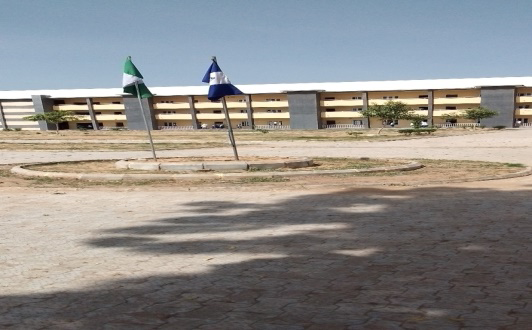
Source: Field Survey, 2022 Figure 5: School Building in Jere Local Government Area, Borno State of Nigeria Source: Field Survey, 2022.
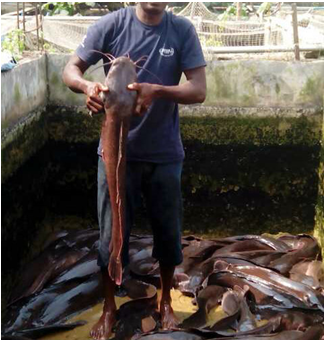
Source: Field Survey, 2022 Figure 6: Concrete Pond Fish Harvest in the Study Area.
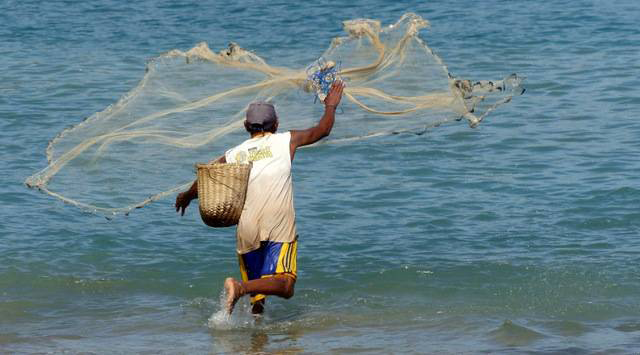
Source: Field Survey, 2022 Figure 7: Traditional Fishing in the Study Area.
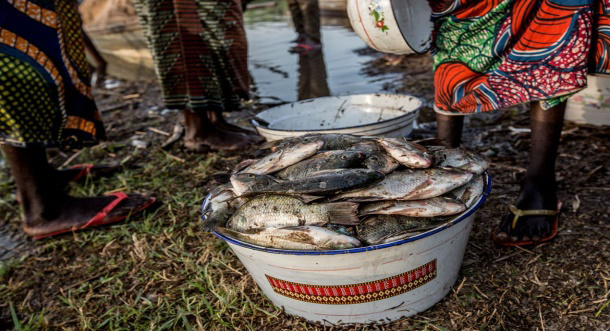
Source: Field Survey, 2022 Figure 8: Girls Fish Hawkers in the Lake Site of Baga Fishing Community.
Summary and Conclusion
The study concerned with the approach of traditional and modern fishing community under the background of socio- economic attributes in Borno State of Nigeria. The findings of the socio-economic attributes reveals the traditional fish farmers engages in both full-time/ part-time fish farming and in other agricultural activities, highest majority of fish farmers are married with very large members of household size, all the members have lifelong farming experience according to their age range and having polygamous family with no contact with extension agent, majority of the male fish farmers are from twenty-four years 24 and above, more so highest majority of the traditional fish farmers have not undergone formal system of education, with very low infrastructural support and other social services. In the other hand the aquaculture fish farmers engage in fish farming on part-time basis. Majority of the farmers are full-time civil servants and partly participate in other form of business and minor agricultural activities in addition to the fish farming. Most of the aquaculture fish farmers household size are less than five (5) household members and monogamously married and very negligible few farmers are single. The modern fish farmers get the services of extension workers in very rare situation if any thus they have no contact with extension agents. Very high proportion of the number of modern fish farmers have attained tertiary level of education and in term of infrastructural facilities and other social services the modern fish farmers are better up but the benefit has no direct link to modern fish production, if any? only at peripheral level. Both the traditional and the modern fish farmers earn more than forty thousand (N40,000) naira monthly income from fish production and other secondary sources of income as applicable. Given the analysis presented the need to address the socio-economic problem of both the traditional and modern fish farmers by formulating a policy framework that will suite the socioeconomic problem of both the traditional and the modern fish farmers in the fishing communities to uplift the general wellbeing of the fish farmers for the attainment of sustainable fish production [26].
Acknowledgement and Conflict of Interest
Contributions; Conceptualization: Babagana Zanna, writing original draft preparation: Babagana Zanna, Writing – review and editing; Babagana Zanna. The author has read the manuscript and agreed for onward vetting, corrections, guidance for further consideration and approval and subsequent publishing of the final version of the manuscript accordingly. The research work was carried out by Babagana Zanna without any financial support from any agency or individual and finally the research work has no any conflict of interest.
References
-
Opeyemi O (2020) Aquaculture Opens Up New Market Opportunities for Conflict Affected Fisher-Folks in Borno State. Report on Agriculture Based Livelihoods Program in Borno State by Food and Agricultural Organization of the United Nations (FAO), Nigeria.
-
FAO (2020a) Food and Agricultural Organization of the United Nations (FAO), Year Book of Fishery and Aquaculture Statistics. In: FAO.
-
Mialhe F, Morales E, Dubuisson-Quellier S, Vagneron I, Dabbadie L, et al. (2019) Global Standardization and Local Complexity. A Case Study of an Aquaculture System in Pampanga Delta, Philippines. Aquaculture 493: 365- 375.
-
Vasco S (2020) Updates for the Southern African Development Community and Southern African Region. Food and Agricultural Organization of the United Nations (FAO). Sub-regional Office for Southern Africa, Harare, Zimbabwe.
-
FAO (2020b) Food and Agricultural Organization of the United Nations (FAO), Consumption of Fish and Fishery Products. In: FAO.
-
Solomon O (2016) Review of Inland Fisheries, Poverty and Rural Livelihoods in the Lake Chad Basin. Economics Journal of Asian and African Studies.
-
Orobator PO, Akiri-Obaroakpo Tim, Orowa R (2020) Water Quality Evaluation from Selected Aquaculture Ponds in Benin City, Nigeria. Journal of Research in Forestry Wild Life and Environment 12(1): 24-33.
-
Fakoya K, Akintayo K (2022) Advocacy as a Challenge to Small-scale Fisheries Governance in Nigeria. Paper presented at the Three Days National Stakeholders and Advocacy Capacity Building Workshop on Small-scale Fisheries Guidelines. Held 9-11th May 2022; Aderemi Makanjuola Hall, Lagos State University, Ojo Nigeria.
-
Okeke N, Gray T, Ani K, Stead S (2023) Proposed Solutions of the Lake Chad Fisheries: Resilience Lessons for Africa?. Fishers 8: 64.
-
Agbelege OO, Ipinjolu JK (2001) An Assessment of the Exploitation and Management Techniques of the Fishery Resources in the Nigerian Portion of Lake Chad. Journal of Arid Zone Fisheries (JAZFI) 1: 1-6.
-
Welcome RL (1972) The Inland Waters of Africa. CIFA Technical Paper, pp: 117.
-
NPC (2016) National Population Commission of Nigeria, 2006 Census Report.
-
Sule OD, Ovie SI, Ladu BMB (2001) Marketing and Distribution of Fish from Lake Chad. Fisheries Society of Nigeria, (FISON) 2001. National Institutes of Freshwater Fisheries Research New Bussa, Niger State of Nigeria.
-
FDF (1998) Federal Department of Fisheries, Federal Ministry of Agriculture and Rural Development, Abuja – Federal Republic of Nigeria.
-
Tijjani BA, Abubakar M, Benisheik KM, Mustapha AB (2010) Resource Use Efficiency in Rice Production in Jere Local Government Area of Borno State, Nigeria. Nigerian Journal of Basic and Applied Sciences (NJBS) 18(1): 27-37.
-
OCHA (2018) Office for the Coordination of Humanitarian Affairs (OCHA) United Nations; Nigeria - Administrative Boundaries (Levels 0–3). Nigeria–Borno State: Konduga LGA Reference Map as at February 2018.
-
Kawuwa MB, Mairiga AG, Usman HA (2007) Community Perspective of Maternal Mortality: Experience from Konduga Local Government Area, Borno State of Nigeria. Annals of African Medicine 6(3): 109-144.
-
Lamido AA (2021) Revitalizing Education in North- eastern Nigeria: Exploring Wagt in the Post-Boko Haram Era. Exploring the Effects of Insurgency in Borno State of Nigeria. Department of Economics, University of Maiduguri, Nigeria, pp: 516-519.
-
Abegurin OO, Oyelami BA, Aboderin OO, Olaba OG, Ajanaku AO (2019) Adoption of Aquaculture Technologies among Fish Farmers in Oluyole Local Government Area, Oyo State. International Journal of Forest Animal and Fisheries Research 3(5): 188-194.
-
Grey T, Stead SM (2021) Resillience in the English Small- Scale Fishery: Small Fry but Big Issue; Cham, Switzerland 2021.
-
Chandler D, Reid J (2016) The Neo-Liberal Subject: Resilience, Adaptation and Vulnerability. Rowman and Little Field: London, UK.
-
OECD (2020) Organization for Economic Cooperation and Development: Sustainable Fisheries and Aquaculture Policies for the future: Agriculture and Fisheries; Fisheries and Aquaculture. Organization for Economic Cooperation and Development.
-
Ruvangwa E, Kabaragambe JB (2018) Review and Analysis of Small-Scale Aquaculture Production in Africa; Part 2. Rwanda. Wageningen Centre for Development Innovation, Wageningen University and Research. Report WCDI-18-022 Wageningen.
-
Bello MM, Sani H, Bukar A, Rabiu MM (2017) The Economic Effect of Insurgency on Smoked Fish Sellers in Maiduguri MetropoliSsSs of Borno State of Nigeria. Journal of Agricultural Extension 21(3): 37-45.
-
Kaleem O, Bio Singou Sabi AF (2020) Overview of Aquaculture Systems in Egypt and Nigeria, Prospects, Potentials, and Constraints. Journal of Aquaculture and Fisheries 6(6): 535-547.
-
Raji A, Omoyemi B (2001) An assessment of the Socioeconomic Problems and Potentials of the Artisanal Fishermen of the Lake Chad Basin Against the Background of the National Fisheries Policies. J Arid Zone Fish 2001: 1.
- Genetic Improvement of Nile Tilapia (Oreochromis niloticus): Advances in Selective Breeding and Genomic Approaches for Sustainable Aquaculture
- Microplastics, Contaminants, and Waste Hotspots: Divergences and Faults in Prioritizing Control Efforts
- Creating a Healthier, More Vibrant Open and Closed Aquatic Environment. A Submersible, Centrifugal Magnetically Affixed Current Changing Aquarium Pump
- An Attempt to Assess Alpha Diversity and Sample Size: Using the Ostracod Assemblages off Kumamoto Port, Japan
- Assessment of the Efficiency of Common Fishing Gears and Crafts Used at Mohananda River of Chapai Nawabganj, Bangladesh
- Fish Productivity and Biodiversity Status of Sundarban Mangrove in Bangladesh