
Acute Toxicity and Histological Changes in Gills and Liver of Juvenile of Clarias gariepinus expose to Organophosphate Pesticide (DD-Force)
In order to assess the acute toxicity of organophosphate pesticide (DD-force) on Clarias gariepinus, 180 fish of mean weight 18.23g and mean length of 11.45cm were divided into six groups of ten fish each. The range-finding tests of 0, 1.0mg, 1.2mg, 1.4mg, 1.6mg and 2.0mg of organophosphate pesticides (DD-force) per litre of water was used to determine the concentrations of the test solution for the definitive test (0, 0.10mg, 0.15mg, 0.20mg, 0.25mg and 0.30mg). The 96h LC50 value was found to be 0.171 mg/l with lower and upper confidence limit of 0.152 and 0.189 respectively. Water quality variables were within acceptable limits. Standard histological procedures were adopted in the assessment of the tissues. Fish exposed to different concentrations of DD-force showed general body weakness, hyperventilation, skin discoloration, loss of reflex, hyperactive, erratic swimming, which are behavioral changes. Histological alterations observed in the gill include congestion of secondary gill lamellae, hypertrophy, haemorrhages and lifting of the epithelia. Liver alterations include degeneration of hepatocytes, necrosis, severe vacuolar degeneration, congestion of central tubular and sinusoids. These results suggest that DD-force is toxic and have the disruptive effect on the tissues of fish.
Introduction
The ever-increasing world population and the attendant increase in food demand necessitated that new ways of increasing agricultural output are sought. In an attempt to increase agricultural output, man relies heavily on the use of chemicals to protect crops from pests, right from the time of dressing of seeds before planting, through fighting weeds and other pests on the farm, to the preservation of already harvested products. On one side, benefits derived from the use of pesticides in agriculture are immense, but on the other side, environmental pollution and/or degradation is one major problem that is linked to their application [1].
The aquatic environment is particularly one vulnerable area as it is the ultimate recipient of pollutants due to basin drainage. The aquatic ecosystems have been known to receive a wide spectrum of pollutants, which may be introduced to them directly or indirectly. The indiscriminate use of chemicals has resulted in large scale reduction in aquatic productivity. Pesticides have different diverse impacts on aquatic animals especially fishes which are of economic importance and high value from the point of biological conservation [2].
Indiscriminate use of pesticides in agriculture, animal husbandry, and post-harvest technology is a risk to the natural water system, public health and well-being of mankind. However, the unregulated discharge of agricultural chemicals especially pesticides into water bodies have caused ecological problems to all classes of animals in the aquatic habitat [3]. The aquatic environment is faced with the threat of biodiversity loss due to indiscriminate use of pesticides. Widespread application of various pesticides has intensified the problem of contamination to aquatic environment. They cause a series of problems to aquatic animals Mastan S, et al. [4]. Due to these synthetic chemicals, the environment has failed to keep its healthy characteristics.
DD-force (2, 3-dichlorovinyldimethyl phosphate) an organophosphate (OP) insecticides are highly toxic to fish and aquatic invertebrates. The uses of these chemicals have an impact on non-target organisms and information on this is growing. The contaminants can be carried from one organism to another along a food chain. Their role in the degradation of the aquatic ecosystem cannot be overlooked [5]. They could, therefore, be stored in the tissues of these non-target organisms, thereby inducing their ability to adapt to the environment.
Organophosphate pesticides are widely used in agriculture to control pests, but they can also have adverse effects on aquatic life, including fish. Clarias gariepinus, commonly known as the African catfish, is an important food fish in many parts of Africa and has also been used as a model organism in aquatic toxicology studies. There are growing concern about the potential impact of organophosphate pesticides on the health and survival of juvenile Clarias gariepinus. Although there are some studies on the acute toxicity of organophosphate pesticides on this species, there is limited information on the histological changes in the organs of juvenile Clarias gariepinus exposed to these pesticides.
Materials and Methods
Experimental Site
The experiment was conducted at the Fish Hatchery
Laboratory of the Department of Fisheries and Aquaculture, Bayero University, Kano, Nigeria.
Experimental Fish
One hundred and eighty (180) C. gariepinus (mean weight, 18.23±0.5g and mean standard length of 11.45±0.6cm) juveniles were used for the study, fish were purchased from a reputable fish farm from Kano, Kano State.
Source and Processing of DD-Force
The DD-force was procured from Samlet Nigeria Limited, Sabon Gari Market Kano, a supplier of Laboratory Chemicals and Equipment. DD-Force® 50% SC was obtained at a concentration of 500g/L in a one liter container. From the 500g/L, a stock solution was prepared by adding 1ml of the herbicide to 999ml of water [6]. The stock solution was then used to prepare different nominal concentrations of the toxicant by diluting measured volumes of the toxicant with dechlorinated tap water. The control solutions had only dechlorinated tap water without the toxicant.
Physicochemical Parameters of Test Solution
Water quality parameters such as temperature, pH, conductivity, total dissolved solids and dissolved oxygen concentration were monitored in the tanks using digital multi-parameter checker (HI 98126).
Experimental Design
Completely randomized design was used for the experiment. A total of eighteen (18) plastics tanks of (60cmx40cmx40cm) capacity were used. The plastic tanks were washed thoroughly and then filled with 20 litres of water. All plastic tanks were labelled. Fish were weighed and distributed at the rate of 10 fish per tank. A total of one hundred and eighty (180) of C. gariepinus juveniles were randomly stocked into the tanks at a stocking rate of 10 fish per tank in triplicates.
Range Finding Test
Based on available literature on acute toxicity test on tropical freshwater fish species, range-finding tests were conducted to determine the concentrations of DD-force that were used in the definitive tests. This was done by placing six concentrations of the organophosphate in separate plastic bowl containing 20 litres of water. Mortality of fish was determined at 12, 24, 48, 72 and 96 hours. The concentrations of the organophosphate were fine-tuned using lower ranges until about 85 to 95% mortality was recorded in the highest concentration and 25 to 30% in the lowest concentration.
The five concentrations used in the acute test were then geometrically ranged between these highest and lowest concentrations and made into triplicates.
Definitive Test
Results from range finding tests provided guide for the concentration level to be used in definitive test. The definitive test was carried out by filling eighteen (18) plastic tanks with 20 litres of water each. The test was carried out using concentration of atrazine earlier determined from range finding test. The concentrations used were 0, 0.10mg, 0.15mg, 0.20mg, 0.25mg and 0.30mg of DD-force per litres of water (mg/l). The response of the fish to slight stimuli was used as an index of toxicity while non-response of the fish to atrazine powder estimated to be lethal to 50% of the test organism after 96 hour of exposure.
Histological Studies
Histological experiment was carried out in the Department of veterinary Nursing Department, Ahmadu Bello University, Zaria, Kaduna State. At the end of the experiment, one fish per treatment, that is three fish per concentration were sampled after 96hour exposure. The organs were fixed in 10% formalin for three days after which the tissue was dehydrated in periodic acid Schiff’s reagent (PAS) following the methods of Hughes, et al. in graded levels of 50, 70, 90 and 100% alcohol for three days, to allow paraffin penetrates it. A gill arch of the right side of each fish was collected and fixed in Bouin’s fluid for 24 hours, dehydrated in graded ethanol concentrations and embedded in paraffin wax. Sagittal sections (5μm of thickness) were cut and mounted on glass slides. Sections were deparaffinized in xylene, hydratated in ethanol and stained with hematoxylin- eosin (H&E). The liver was quickly dissected, sliced into 3 mm thick slabs, and immersed in Bouin’s fixative for 24 hours, dehydrated, and embedded in paraffin; a minimum of 5 pieces resulted. Histological sections (5μm of thickness) were cut and stained with H&E. Changes induced by treatment in the gills and liver tissues were photographed and analyzed by light microscopy.
Statistical Analysis
Data were analysed using Minitab 14 for summary of statistics in water quality parameter. The mean lethal concentration (LC50) for 96 hours was computed using probit analysis [7].
Results and Discussion
The water quality parameters after 96-hours acute test of C. gariepinus juveniles expose to (DD Force) powder is shown in Table 1. The physico-chemical parameters of the test water measured during both acute toxicity bio-assay were within suitable ranges for the survival and normal growth of C. gariepinus. Hence changes in fish behavior and subsequently death could not have arisen from poor water quality of the test water. On the optimum pH scale for fish growth developed by Badiru BA [8], the range of pH for this study (7.33-7.43) corresponds to the desirable range (6.5- 9.0) for fish production. However, dissolved oxygen range for this study (4.54-5.03mg/L) spans the range for slow growth following long term exposure (1-5mg/L) of the dissolved oxygen scale for warm water fishes by Badiru BA [8]. Similarly, the temperature range for this study (24.3-30.4°C) is within the normal range of temperature in the tropics to which fish are adapted (25.53-25.57°C) as reported by Badiru BA [8]. Similar observations were reported by Bamidele A, et al. [9] who works on Clarias gariepinus expose to DD-force and Isiyaku MS, et al. [10] who expose mercury to Clarias gariepinus.
| Conc (mg/L) | Parameters | ||||
|---|---|---|---|---|---|
| pH | Temp (oC) | TDS (mg/L) | EC (µS/cm) | DO | |
| T0(control) | 7.43±0.03 | 25.53±0.07 | 67.87±0.09a | 135.73±0.18a | 5.03±0.03e |
| (T1) 0.10 | 7.47±0.03 | 25.53±0.03 | 69.50±0.13b | 139.00±0.26b | 4.97±0.03d |
| (T2) 0.15 | 7.37±0.07 | 25.53±0.09 | 70.68±0.03c | 141.37±0.07c | 4.82±0.02cd |
| (T3) 0.20 | 7.43±0.07 | 25.46±0.09 | 72.52±0.06d | 147.03±0.12d | 4.76±0.01bc |
| (T4) 0.25 | 7.37±0.03 | 25.53±0.09 | 75.07±0.06e | 154.13±0.12e | 4.64±0.01b |
| (T5) 0.30 | 7.33±0.03 | 25.57±0.03 | 78222.58±0.09f | 159.17±0.19f | 4.54±0.01a |
Table 1: Water quality parameters after 96-hr exposure of _Clarias gariepinus_ juveniles to DD-Force.
Means across the column with different alphabet are significantly different (p<0.05). DO: Dissolved Oxygen; pH: Hydrogen Ion Concentration; Temp: Temperature; EC: Electrical Conductivity; TDS: Total Dissolved Solids. Table 1: Water quality parameters after 96-hr exposure of Clarias gariepinus juveniles to DD-Force.
Several abnormal behaviours observed with fish exposed to various concentration of DD-force in this study were excessive gulping for air, erratic swimming behaviour, restlessness, loss of equilibrium, fin and barbell deformation, skin haemorrhage, discolouration and finally death agreed with Isiyaku MS, et al. [10]. Ladipo MK, et al. [11] and Bamidele A, et al. [9] who worked on Paraquat dichloride glyphasphate-isopropylammonium and DD-force on Clarias gariepinus. This also agrees with reports of Bobmanuel NOK, et al. [12] who stated that “behavioural response of fish to toxicants and different reaction time are due to the effect of chemicals, their concentrations, species, size and specific environmental conditions”.
The mortality of Clarias gariepinus juvenile after 96-hours exposed to different concentration of OP (DD Force) during the acute test is presented in Table 2. The linear relationship between Mean probit mortality and Log concentration of Clarias gariepinus juveniles exposed to various concentrations of DD-force for 96 hrs is shown in Figure 1. The LC50 is 0.171mg/L.
| Treatments/Concentration (mg/L) | Log Concentration | Number Stocked | Mortality | Probit | ||||||
|---|---|---|---|---|---|---|---|---|---|---|
| 12 hrs | 24 hrs | 48 hrs | 72 hrs | 96 hrs | Total | % | ||||
| T0 (Control, 0) | 0 | 30 | 0 | 0 | 0 | 0 | 0 | 0 | 0 | 0 |
| T1 (0.10) | -1.00 | 30 | 0 | 1 | 3 | 2 | 1 | 7 | 23 | 4.10 |
| T2 (0.15) | -0.82 | 30 | 0 | 1 | 4 | 4 | 3 | 12 | 40 | 4.56 |
| T3 (0.20) | -0.70 | 30 | 2 | 4 | 5 | 3 | 3 | 17 | 57 | 5.08 |
| T4 (0.25) | -0.60 | 30 | 9 | 5 | 4 | 4 | 4 | 26 | 87 | 5.95 |
| T5 (0.30) | -0.53 | 30 | 12 | 6 | 5 | 4 | 2 | 29 | 97 | 6.48 |
Table 2: Mortality of Clarias gariepinus juveniles exposed DD-Force over the 96-hr period.
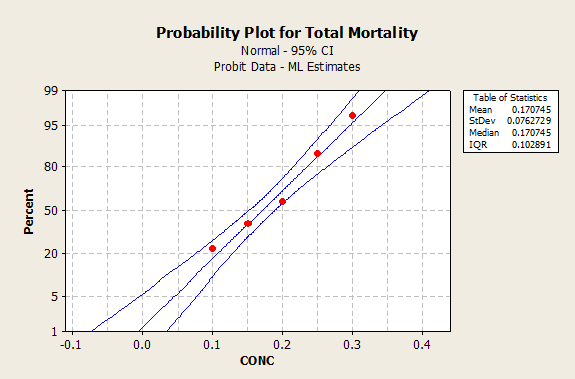
Mortality was directly proportional to the concentration of the toxicant and the length of exposure of the fish to the toxicant. The mortality was observed to be concentration and time dependent in this study. This shows that increase in concentration of DD-force resulted in higher mortalities. This is in line with the findings of Adewoyin OA, et al. [13] in which a direct relationship between mortality in C. gariepinus and concentration of DD-foce pesticides was recorded. Isiyaku MS, et al. [14] reported a dose and time-dependent decrease in mortality rate, such that as the exposure time increased from 12 to 96 hours, the median concentration was reduced.
The first death was noticed 45 minutes after the introduction of toxicant in the bowl with the highest concentration of organophosphate pesticides (DD-force) (0.30mg/l). This is in conformity with Isiyaku MS, et al. [14] who reported the first death in 30 minutes after introduction of toxicant to Oreochromis niloticus in acute concentration of tamarind seed husk. Datta M, et al. [15], Fafioye OO, et al. [16] and Okomoda J, et al. [17] recorded first death 54 minutes,
14 hours and 36 hours after the exposure to acute toxicity treatment of Clarias gariepinus with synthetic pyrethyroid Deltamethrin, Raphia vinifera extracts and Formalin respectively. Bamidele A, et al. [9] recorded the first death after 3 hours while treating Clarias gariepinus with DD-force pesticide.
The LC50 found in this investigation is 0.171mg/l which differ to that of Bamidele A, et al. [9] who exposes Clarias gariepinus in acute concentration of organophosohate pesticide (DD-force) and recorded LC50 0.180mg/l. However, Isiyaku MS, et al. [18] who exposes Oreochromis niloticus in acute concentration of tamarind seed husk powder recorded LC50 of 3.78mg/l which is far higher than what’s obtained in the present study. Slabbert JL, et al. [19] reported LC50 of 0.20mg/l when Poecilia reticulate was exposed to mercuric chloride. Shyong WJ, et al. [20] reported LC50 value of 0.168mg/l and 0.161mg/l in the exposure of Variocorhinus barbartulus and Zacco barbata respectively. Isiyaku MS, et al. [10], recorded 1.52mg/l as LC50 in an acute mercury toxicity treatment to Clarias gariepinus.
However, the LC50 found in the study was by far lower than those reported with Clarias gariepinus by Ayuba VO, et al. [21], Ezike C, et al. [22] and Guedenon P, et al. [23] who reported (204.17mg/l) for Datura innoxia, (334mg/l) for petrol, (129mg/l) for Lindanen (Gamma-Hexachloro- cyclohexane) and (46.11mg/l) for cadmium sulphate. The difference might be due to not only to the various substance and compound used in the experiment but also the distinct environment conditions.
The results presented in Table 3 summarized the histological changes observed in Clarias gariepinus exposed to different concentrations of DD-force. Histopathological changes in the gills and liver were observed for all the treatments. Lesions were essentially similar for all treatments and exposure time, although the intensity of cell damage increased with increasing concentration and time of exposure.
| Gills | Liver | |
|---|---|---|
| 0 | Normal gills no pathological lesion observed | Normal liver no pathological lesion observed |
| 0.1 | half of the gill arch have it filament and lamellae degenerated | Disarrangement of hepatic cords, deformed and atrophied hepatocytes |
| 0.15 | Hypertrophy of the gill arch, degenerated gill filament and lamellae | Fibrosis, rapture of hepatocytes, haemorrhages and vacoulation of cytoplasm |
| 0.2 | central parts of the gill arch have both the lamellae and filament degenerated | Cytoplasmic vacuolation, bile pigment disintegration and eosinophilic granules |
| 0.25 | High degenerated lesion observed at the gill arch, filaments, and lamellae | hepatic tissue showing focal necrosis, bile stagnation and cytoplasmic degeneration |
| 0.30 | Hypertrophy of gill arch and degenerated gill filament | Disarrangement of hepatic cords, shrunken and displaced nuclei |
Table 3: Histological changes observed in Clarias gariepinus exposed to different concentrations of DD-force.
The normal histology of the gill structure of Clarias gariepinus exposed to 0 mg/l of DD-force is shown in Figure 1 Following the exposure to DD-force, changes in histological structure were noted particularly in the filament and lamellae in Figures 2-7.
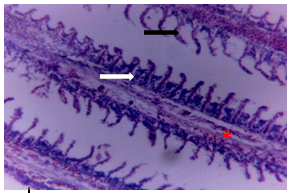
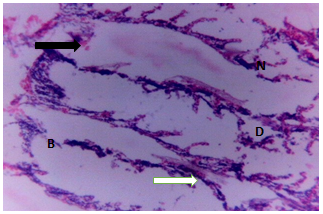
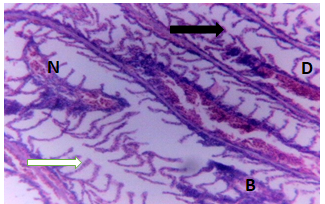
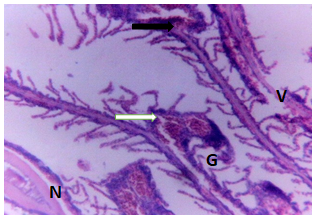
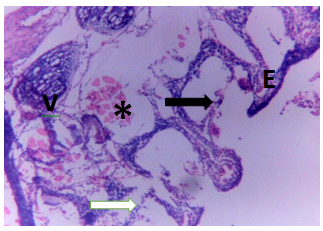
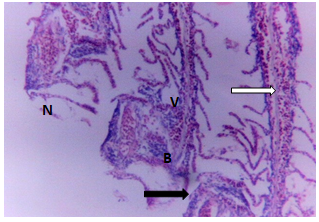
Histological results indicated that gill was the primary target tissue affected by DD force. Gills are generally considered good indicator of water quality, since the gills are the primary route for the entry of pesticide. In fish, gills are critical organs for their respiratory, osmoregulatory and excretory functions. Many investigators have reported the histological changes in gills of different fish species exposed to pesticides [24]. Epithelial hypertrophy and Hyperplasia observed in this study could be as a result of epithelial detachment as stated by Machado M, et al. [25] on exposure of Metynnis roosevelti to methyl parathrion. Epithelial lifting increases the distance through which the toxicant reaches the blood stream thereby causing impaired oxygen uptake Isiyaku MS, et al. [10] and could result in dysfunction or even non-functional gills and eventually suffocate the fish. The deformed, curve and congestion of secondary gill lamellae was probably due to increased capillary permeability Bamidele A, et al. [9]. Histological alterations observed in the gill tissues of C. gariepinus exposed to DDforce in the study are similar to reports in Oreochromis niloticus exposed to dimethoate Elezaby MM, et al. [24], Puntius gonionotus exposed to paraquat Cengiz EI, et al. [26] Oncorhynchus mykiss exposed to the fungicide captan [27]. Damages observed in the gill architecture in this study may have been responsible for impairment of the respiratory and regulatory functions of the gills and hence resulted in death.
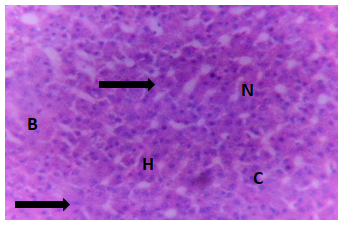
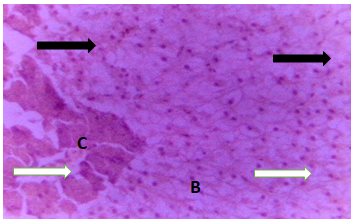
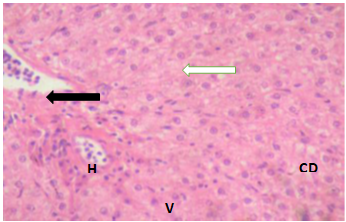
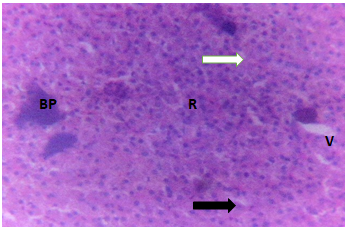
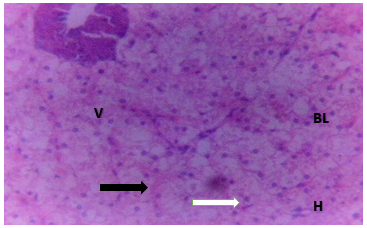
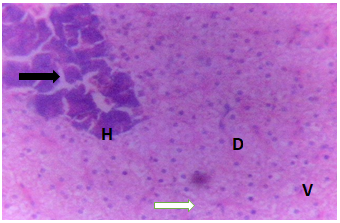
Figure 8 shows the normal liver cell with no pathological lesion observed in the control fish. The present study also demonstrates that the liver of control fish exhibits a normal architecture and there were no pathological abnormalities. The hepatocytes present a homogenous cytoplasm and a large central or subcentral spherical nucleus. The histopathological appearance of liver following exposure to DD force showed important alterations which comprise of hypertrophy of hepatocyets, nuclear hypertrophy, blood congestion in the central veins, as well as the diffusion of melanomacrophages in the parenchymal tissues of liver. It’s revealed that the increase of DD force causes cytoplasmic vacuolation, cellular necrosis in the parenchymal tissue, cellular degeneration, damage of nuclei, bile stagnation in addition to congestion in the blood sinusoids and decreasing in the number of hepatocytes nuclei of hepatic tissue [28, 29, 30].
The liver of the fish exposed to acute concentrations of DD force Figures 8-13 compared to the control showed varying degrees of alterations which includes, haemosiderin, necrosis, pyknotic nuclei, vacuolar degeneration, degeneration of hepatocyte, congestion of central tubular vein and congestion of sinusoids. Histological alterations observed in this study are in agreement with the findings of some authors who noticed different toxicological changes in the liver of fish after exposing to different toxicants. Congestion of central vein in fish liver was reported by Bamidele A, et al. [9].
Isiyaku MS, et al. [10] studied the impact of different toxicants on fish liver and they found degeneration of many hepatocytes. Hepatocytes with pyknotic nuclei in liver were studied by Auta J [31] and Indirabai WPS, et al. [32] in Labeo rohita. The most frequent encountered alterations in the liver of fish exposed to DDforce are those of vacuolar degeneration and necrosis. The necrosis of the liver tissues and vacuolar degeneration in this study probably resulted from the excessive work required by the fish to get rid of the toxicant from its body during the process of detoxification by the liver. The inability of fish to regenerate new liver cells may also have led to necrosis and vacuolar degeneration. The degeneration of hepatocytes may be attributed to direct toxic effects of pollutants on hepatocyte as found in pesticide toxicity, because it is the site of detoxification of all type of and chemicals [33].
Conclusion
The physico-chemical parameters of water such as temperature, dissolved oxygen, pH, electrical conductivity and total dissolved solids were within normal range. The median lethal concentration of organophosphate pesticide (DD-force) 0.171mg/l showing that the organophosphate pesticide (DD-force) was toxic to liver and gills of fish. Organophosphate pesticide (DD-force) accumulated by organism has resulted in adverse effects; such as genetic destruction, deterioration of liver and blockage of respiratory organs (gills).
Recommendation
The use of organophosphate pesticide (DD-force) in agricultural field should be controlled to prevent possible contamination by leaching into the aquatic environments. In this way aquatic organisms could be protected from these kinds of toxic chemical. The alterations reported in the histological responses of Clarias gariepinus juveniles exposed to acute concentrations of DD-force in this study indicate that histological analysis maybe useful approach for monitoring the long-term effects of pesticides on cultured fish. This in turn will affect the growth and fitness, fecundity of the fish population and other non-targeted organisms such as man through the food chain. Therefore, the toxic hazard of DD- force should be taken into consideration during its use near the aquatic habitat.
References
-
Olusegun SA (2001) Toxicity of Apron to juvenile mudfish (_Clarias gariepinus_ Teugel). M.Sc thesis, Usman Danfodio University, Sokoto, Nigeria, pp: 66.
-
Mekkawy IA, Mahmoud UM, Sayed AEDH (2013) Effects of 4-nonylphenol on blood cells of the African catfish _Clarias gariepinus_ (Burchell, 1822). Tissue and Cell 43(4): 223-229.
-
Rahman MZ, Hossain Z, Mollaqh MFA, Ahmed GU (2002) Effect of Diazinon 60EC on Testudineus (C. punctatus and B. gonionotus). The ICLARM Quarterly 25(2): 8-12.
-
Mastan S, Ramayya P (2009) Biochemical profile of _Channa gachua_ (Ham.) exposed to sublethal doses of Dichlorvos (DDVP). The Internet J Toxicol 8(1): 1-5.
-
Omitoyin BO, Ajani EK, Garus OA (2006) Toxicity of Gramoxone (paraquat) to juvenile African Catfish, _Clarias_ _gariepinus_ (Burchell, 1822). American Eur Journal of Agriculture and Environmental Science 1(1): 26-30.
-
Reish DL, Oshida PS (1987) Short term bioassay. In: Manuals of Methods in Aquatic Environmental Research, part 6 FAO. Fish Technical Paper 247: 1-62.
-
Finney DJ (1971) Statistical methods in biological assay. In: 2nd (Edn.), Hafner Pub. Co, Cambridge University Press, London, UK, pp: 68.
-
Badiru BA (2005) Water Quality Management in Aquaculture and Freshwater Zooplankton Production for Use in Fish Hatcheries. National Institute for Freshwater Fisheries Research, pp: 2-9.
-
Bamidele A, Michael OA, Damilohun SM (2018) Histological and Behavioural Changes of _Clarias_ _gariepinus_ Juveniles Exposed to Chlorpyrifos and DDforce. International Journal of Biological Sciences and Applications 5(1): 1-12.
-
Isiyaku MS, Annune PA, Tiamiyu LO (2015) Acute Toxicity and Histopathological Changes in Liver and Gill Epithelium of African Catfish (_Clarias gariepinus_) exposed to Mercuric Chloride. Journal of Aquatic Sciences 30(2): 329-336.
-
Ladipo MK, Doherty BF (2011) Acute Toxicity, Behavioural Changes and Histopathological Effect of Paraquat Dichloride on Tissues of Catfish (_Clarias_ _gariepinus_). Internation Journal of Biology 3(2): 67-74
-
Bobmanuel NOK, Gabriel UU, Ekweozor IKE (2006) Direct Toxic Assessment of Treated Fertilizer Effluents to _Oreochromis niloticus_, and catfish hybrid (_Heterobranchus bidorsalis_ ♂ x _Clarias gariepinus_ ♀). African Journal of Technology 5(8): 653-642.
-
Adewoyin OA, Afolayan AJ, Adebayo O (2017) Acute toxicity and histological effects of methomyl on the gills, liver and kidney of _Clarias gariepinus_. Journal of Applied Ichthyology 33(4).
-
Isiyaku MS, Annune PA, Tiamiyu LO (2019) Growth and Haematological Changes in African Catfish _Clarias_ _gariepinus_ Juveniles Exposed to Mercuric Chloride. Journal of Experimental Agriculture International 33(6): 1-7.
-
Datta M, Kaviraj A (2002) Acute Toxicity of Synthetic Pyrethroid Deltamethrin to Freshwater Catfish _Clarias_ _gariepinus_. Bulletin Environment Toxicology 70: 296- 299.
-
Fafioye OO, Adebisi SO, Fagade AA (2004) Toxicity of Parkia biglobosa and Raphia vinifera extracts on _Clarias_ _gariepinus_ juveniles. African Journal of Biotechnology 3(11): 137-142.
-
Okomoda J, Ayuba VO, Omeji S (2004) Heamatological Changes of _Clarias_ _gariepinus_ (Burchell, 1822), fingerlings exposed to Acute Toxicity of Formalin. Production Agriculture Technology 6: 100-109.
-
Isiyaku MS, Fagbenro OA, Olawusi-Peters OO (2021) Acute Toxicity and Behavioural Changes of Oreochromis Niloticus Juveniles Exposed to Tamarind (Tamarindus indica) Seed Husk Powder. South Asian Research Journal of Agriculture and Fisheries 3(3): 34-39.
-
Slabbert JL, Venter EA (1999) Biological assays for aquatic toxicity testing. Water and Science Technology 39(10-11): 367-373.
-
Shyong WJ, Chen HC (2000) Acute toxicity of copper, cadmium, and mercury to the freshwater fish _Varicorhinus barbatulus_ and _Zacco barbata_. Acta Zoology Taiwanica 11(1): 33-45.
-
Ayuba VO, Ofojekwu PC (2002) Acute toxicity of the root extracts of Jimsons Weed Datura innoxia to the African catfish (_Clarias gariepinus_) fingerlings. Journal of Aquatic Sciences 17(2): 131-133.
-
Ezike C, Ufodike EBC (2008) Acute toxicity of petrol to the African catfish _Clarias gariepinus_. Annals of research in Nigeria 6:1-4.
-
Guedenon P, Edorh AP, Hounkpatin ASY, Alimba CG, Ogunkanmi A, et al. (2012) Acute Toxicity of Mercury (HgCl2) to African Catfish, _Clarias gariepinus_. Research Journal of Chemical Sciences 2(3): 41-45.
-
Elezaby MM, El-Serafy S, Heckmann RK, Sharf E, Seddek MM (2001) Effects of some toxicants on the freshwater fish, _Oreochromis niloticus_. Journal of Egypt and Germany Society Zoology 36: 407-434.
-
Machado M, Fanta E (2003) Effects of the organophorous methyl parathion on the branchial epithelium of a freshwater fish Metynnis eoosevelti. Brazilian Archives of Biology and Technology 46(3): 361-372.
-
Cengiz EI, Unlu E (2006) Sublethal effects of commercial deltamethrin on the structure of the gills, liver and gut tissues of mosquito fish, Gambusia affinis: a microscopic study. Environmental Toxicology and Pharmacology 21(3): 246-253.
-
Boran H, Capkin E, Altinok I, Terzi E (2012) Assessment of acute toxicity and histopathology of the fungicide captan in rainbow trout. Experimental and Toxicologic Pathology 64(3): 175-179.
-
Wade JW, Omoregie E, Ezenwaka I (2002) Toxicity of cassava (Manihot esculenta Crants) effluent on the Nile tilapia _Oreochromis niloticus_ (L) under laboratory condition. J Aqua Sci 17(2): 89-94.
-
Fagbenro OA, Adebayo OT (2005) A Review of the Animal and Aquafeed in Nigeria. In: A synthesis of the formulated animal and aquafeed industry in Sub-Sahara Africa. CIFA Occasional Paper No 26, pp: 36.
-
Akinbulumo MO, Fagbenro OA, Fasakin EA (2005) Acute toxicity of ethanol extract of Derris elliptica roots to African catfish (_Clarias gariepinus_, Burchell, 1822) fingerlings. Biological and Environmental Sciences Journal of the Tropics (BEST) 2: 126-131.
-
Auta J (2001) Toxicity of Dimethoate to Juveniles of _Oreochromis nilotius_ (Trewavas) and _Clarias gariepinus_ (Tengels). Ahmadu Bello University, Zaria, Nigeria.
-
Indirabai WPS, Tharani G, Seetha P (2010) Impact of sublethal concentration of Endosulfan on biochemicals and histology of organ tissues of freshwater fish, _Labeo_ _rohita_ (Hamilton, 1822). The Bioscan 2: 215-218.
-
Mohamed FA (2009) Histopathological studies on _Tilapia zillii_ and _Solea vulguris_ from Lake Qarun, Egypt. World Journal of Fish and Marine Sciences 1(1): 29-39.
- Genetic Improvement of Nile Tilapia (Oreochromis niloticus): Advances in Selective Breeding and Genomic Approaches for Sustainable Aquaculture
- Microplastics, Contaminants, and Waste Hotspots: Divergences and Faults in Prioritizing Control Efforts
- Creating a Healthier, More Vibrant Open and Closed Aquatic Environment. A Submersible, Centrifugal Magnetically Affixed Current Changing Aquarium Pump
- An Attempt to Assess Alpha Diversity and Sample Size: Using the Ostracod Assemblages off Kumamoto Port, Japan
- Assessment of the Efficiency of Common Fishing Gears and Crafts Used at Mohananda River of Chapai Nawabganj, Bangladesh
- Fish Productivity and Biodiversity Status of Sundarban Mangrove in Bangladesh