
The Cytotoxic Combined Effects of Mixtures of Copper Oxychloride and Chlorfenapyr in HepG2 Cells and Postnatal Model of Toxicity in Female Sprague Dawleyrats and its Pups
Previously, we reported that each chlorfenapyr, insecticide, or copper oxychloride, fungicide, had cytotoxic, maternal and developmental toxicity. Here, we want to better understand the combined effect of mixtures of both pesticides in rats’ dams and its pups and also in HepG2 cells. The results revealed the cytotoxicity of mixtures of both pesticides in rats’ dams and its offspring’s through induction of biochemical alteration (elevation of liver enzymes activities, creatinine, and cholesterol) , oxidative stress (increases the level of MDA oxidants and reduction of GSH, GST, sod1, catalase induction) and histopathological changes in different organs likes liver, brain, kidney and spleen. Also, both pesticides induced cell death in HepG2 cells and enhanced oxidative stress evidence by increasing the level of MDA and reduction of the level of SOD1 and GSH in cultivated and treated tissue culture. Taken collectively, the mixtures of chlorfenapyr and copper oxychloride had cytotoxic effects on in-vivo and in-vitro cell lines.
Introduction
The use of insecticide and fungicide in the greenhouse has the purpose for increasing the productivity of different crops and fruits [1]. The reasons for the use of pesticides in the greenhouse are due to high humidity and controlled temperature that enhanced the growth of pests.
Recently in the world especially in European countries, there is a change from use of chemical to very advanced control system against pests in greenhouse through use biological enemies against pests. But, in developing countries as well as developing there is still behind and the misuse of pesticides is recorded except in some farms that its production only produce for exportation to another countries as they know about European and Arabic and American countries standards for pesticides residues. The toxicity of combined pesticides are reported all over the world and this toxicity in most cases are synergistic and more hazardous if we use each single pesticide [2, 3, 4, 5]. The toxic synergistic effects of mixtures of pesticides were reported in different system of the body like developmental, neurotoxicity, hepatorenal toxicity in different experimental animal studies and human [6, 7] and also effects on environment [6]. Also, some cases of human toxicity are recorded from use of more than one pesticide proofed later by medico-legal aspects of pesticide poisoning. In our countries, there is often published every year a book of pesticides recommendations form agriculture ministry, Egypt and all over the world even all products have precautions of uses to avoid accidental or occupational toxicity. Toxicity could happen for unusual reasons like adulteration of pesticide products or mixing of two products during spraying that could result in production of toxic gases or greenhouse gas [1]. The rationale of this study to evaluate the toxicity of combined use of 1/20 of LD50 of chlorfenapyr, insecticide, and copper oxychloride, fungicide, in female Sprague Dawley rats and its pups.
Materials and Methods
Animals
Sprague Dawley rats purchased from Experimental Unit in the Faculty of Pharmacy, Mansoura University; Animals weighed about 250 ±10 gm and were obviously healthy then grouped and housed in plastic cages with soft wood shavings as a bedding material then adapted for about 2 weeks and maintained on a balanced ration before the experiment.
Tested Chemicals
Chlorfenapyr and copper oxychloride were kindly obtained from Central Agricultural Pesticide Laboratory, Ad Doki, Giza, Giza Governorate after HPLC analysis to confirm the percentage. HepG2 (85011430, sigma, USA) was gifted to us was provided to us from faculty of medicine, Mansoura university, Egypt Calculation of LD50 of Copper oxychloride and Chlorfenapyr LD50 is the dosage that kills one half of tested animals, usually done on rats, mice or rabbits and measured as (mg/kg) for both technical or commercial products, less toxic materials have higher LD50 value and the vice versa whereas chemicals tested either orally or through inhalation or skin to determine the hazard levels One of OECD guidelines for acute oral toxicity testing of chemicals is the Up and Down Procedure (UDP) that was proposed by Bruce, et al. and revised and modified through OECD and accepted as a method for calculation of LD50 through AOT 425 statistical program.
The animals dosed with 48 h intervals and observed daily for 14 days, the first animal administered a doses below the level of the previously estimated LD50 that considered as a starting doses and if the animal survives, the doses for the next animal increased by 3.2 times the original doses but if it dies, the next animal doses decreased by the similar factor and the dosing stopped when the stopping criteria were met as when 3 animals survived with the upper successive dosing or presence of 5 reversals as example in any 6 tested successive animals through AOT 425 statistical program Graphs 1 & 2.
| Test Seq | Animal ID | Dosed (mg/kg) | Short Term | Long Term |
|---|---|---|---|---|
| 1 | 1 | 1170 | 0 | 0 |
| 2 | 2 | 1470 | 0 | 0 |
| 3 | 3 | 2000 | X | X |
| 4 | 4 | 1470 | X | X |
| 5 | 5 | 1170 | 0 | 0 |
| 6 | 6 | 1470 | X | X |
(X = Died, O = Survived); Estimated LD50 = 1470 mg/kg. Graph 1: Calculation of LD50 of Copper oxychloride.
| Test Seq | Animal ID | Dosed (mg/kg) | Short Term | Long Term |
|---|---|---|---|---|
| 1 | 1 | 920 | 0 | 0 |
| 2 | 2 | 1150 | X | X |
| 3 | 3 | 920 | 0 | 0 |
| 4 | 4 | 1150 | X | X |
| 5 | 5 | 920 | 0 | 0 |
(X = Died, O = Survived); Estimated LD50 = 1078 mg/kg. Graph 2: Calculation of LD50 of chlorfenapyr.
Experimental Design
Eighteen (16) pregnant female Sprague Dawley rats were separated into two groups with eight females for each. Chlorfenapyr and copper oxychloride were given orally and daily at combined doses of 1/20 of LD50 COC + 1/20 LD50 CFP equivalent to73.5 mg/kg Bw COC and 54 mg/kg Bw. To female Sprague Dawleyrats immediately at day first after delivery till 21 days of lactation. Both dams and neonates weighed daily and kept under observation until weaning.
Clinical Signs
The treated dams and neonates observed daily throughout the experimental period for any abnormal behavior, findings or alteration.
Maternal and Neonatal Body Weight Gain
The initial body weight determined from the day of parturition for both dams and neonates and then throughout the experiment the body weight calculated before each administration. The body weight gain 100% determined according to the following formula [8].
Sample Collection
At day 21 postpartum, dams and weaned rats euthanized with thiopental Na (40 mg/Kg i.p). For hematological examinations fresh blood samples collected from the heart with a sterile syringe and then collected in centrifuge tubes contain K3EDTA as anticoagulant.
The fresh blood was collected in gel tube (not contain anticoagulant), for biochemical analysis, then after one hour the serum was separated by centrifuge of clotted blood at 3000 rpm for 15 minutes then 20 in eppendorf tubes.
Liver sample removed from dams and weaned rats and washed with saline solution, for oxidative stress determination, then one gram of tissues homogenized in falcon tube with 9 ml ice cold phosphate puffer (PBS) PH7.4 through homogenizer then centrifuged at 3000 rpm for about 15 minutes at 4°C and the supernatant separated, collected and stored at -20°C [9]. The liver, kidney, spleen and brain specimens were collected from both dams and weaned rats and kept in 10% neutral buffered formalin for histopathological examination.
Hematological Examination
Blood sample analysis was carried out by Mindray BC- 1800 hematological analyzer whereas hemoglobin (Hb), red blood cell count (RBC), hematocrit (HCT), mean corpuscular volume (MCV), mean corpuscular hemoglobin concentration (MCHC) and mean corpuscular hemoglobin (MCH) evaluated besides total and differential white blood cells were also measured [10].
Biochemical Analysis
The serum Gamma glutamyl transferase activity, alanine aminotransferase activity, glucose, serum total protein, albumin, creatinine, urea and cholesterol level were measured by spectrophotometry and kits based methods.
Antioxidant and Oxidative Stress Biochemical Analysis
Liver homogenate of all treated groups and pups were analyzed for GSH, GST, SOD, CAT and MDA levels.
Histopathological Evaluations
Specimens from liver, kidney, spleen and brain were fixed in 10% formalin and 5μ thickness sections of specimens prepared then stained with hematoxylin and eosin (H&E) and examined microscopically for detection of lesions in treated groups versus control one.
Cytotoxicity of Chlorfenapyr and Copper Oxy Chloride on yhe Morphology Of Hepg2 Cells
The stock solution of chlorfenapyr (100 mmol/L) was prepared in ethanol and stored at 4°C. The fresh working solutions were prepared by dissolving the stock solution in the culture medium. We exposed HepG2 cells to different concentrations (10 ng/mL) of both chlorfenapyr and copper oxychloride for 24 and 48 hours to determine its toxic effects. The HepG2 cells were cultured according methods described earlier [11].
Cell Viability and Oxidative Stress Tests
The viability of cells was detected by quantification of formed formazan salt. In this regard, HepG2 cells (2 × 10⁵ cells) were seeded in 96-well plates. Later 24 h, the medium solution was changed with another fresh medium containing were added with inoculation of different concentrations of (10,ng/mL of mixtures of chlorfenapyr and copper oxychloride ( dissolved in ethanol). Then after 24 and 48 h., The MTT (50 µg/mL) was added to each well. After 4 h incubation at 37°C, the later solution was discarded and formed formazan crystals and was dissolved in DMSO (100 µL). The color developed was measured at 570 nm using a multi-plates spectrophotomter reader (Synergy HT, Bio- Tek, Winooski, Vermont). Additionally, the cell extract was centrifuged (10000 g, 10 min, 4ºC) and supernatant was used for oxidative stress assays such as glutathione (GSH), superoxide dismutase (SOD), and MDA.
Statistical Analysis
Statistical analyses were carried out using SPSS software program (13, USA). Homogeneity of the groups was tested by Kruskal Walis test. One-way ANOVA was used to define significance between groups at p< 0.05 [12].
Results
Postnatal Maternal and Suckling Pups’ Clinical Signs of Copper Oxychloride and Chlorfenapyr Exposure
Lactating females and suckling pups showed a relative decrease in the feed consumption and the body weight throughout the study in the treated group with mixtures of pesticides compared to control group.
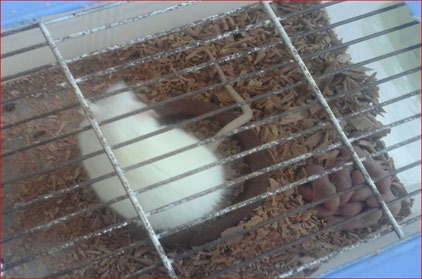
The signs of severe dullness and motor incoordination were obvious in the group administered the treated group with mixtures of pesticides. Furthermore suckling pups displayed decrease in appetite and aggregated to each other’s most of time especially at higher doses groups, signs illustrated at Figure 1.
Postnatal Maternal and Suckling Pups’ Body Weight Gain% Upon Exposure to Combined Doses of Copper Oxychloride and Chlorfenapyr
The group received the treated group with mixtures of pesticides showed a significant decrease in respect to the control group and results illustrated by Table 1. While suckling pups of maternally treated dams displayed a significant decrease in the body weight gain in the combined doses of the treated group with mixtures of pesticides that showed the most significant decrease in respect to the control group and results illustrated by Table 2.
| Group | Mean Initial body weight | Mean Final body weight | Body weight gain % |
|---|---|---|---|
| Group 1 Control | 158.67±2.33 | 206.67±0.88a | 30.25a |
| Group 2 1/20 of COC LD50 + 1/20 of CFP LD50 | 156.43±0.88 | 183.25±1.53db | 17.15b |
Table 3: The initial and final body weight mean and body weight gain % in lactating female rats administered orally combined dose
| Group | Mean Initial body weight | Mean Final body weight | Body weight gain % |
|---|---|---|---|
| Group 1 Control | 5.47±0.12 | 34.83±0.73a | 536.75a |
| Group 2 1/20 of COC LD50 + 1/20 of CFP LD50 | 5.53± 0.23 | 22.21±0.58b | 301.63b |
Table 4: The initial and final body weight mean and body weight gain % in suckling pups of maternally treated dams orally with
A, b, c, d: Different letters are significantly different between groups at P≤0.05. Table 2: The initial and final body weight mean and body weight gain % in suckling pups of maternally treated dams orally with combined doses of copper oxychloride and chlorfenapyr postnatally from 0th to 21th days postpartum daily in comparison to the control group (mean ± SE).
Metabolic, liver and kidney functions’ biomarkers in lactating dams and suckling pups
a. Metabolic, liver and kidney functions’ biomarkers in lactating dams The treated group with mixtures of pesticides showed a significant decrease in case of glucose and cholesterol. Concerning liver function, the combined doses the treated group with mixtures of pesticides displayed a significant increase in ALT, AST and GGT activity when compared to the control group. Concerning kidney function biomarkers, there was a significant increase in blood urea nitrogen in treated group with the treated group with mixtures of pesticides compared to control group Table 3.
| ALT (U/I) | AST (U/I) | GGT (U/I) | Glucose (mg/dl) | Cholesterol (mg/dl) | Protein (g/dl) | Albumin (g/dl) | Globulin (g/dl) | Urea (mg/ dl) | Creatinine (mg/dl) | |
|---|---|---|---|---|---|---|---|---|---|---|
| Group 1 Control | 24.06±1.97a | 34.67±1.7a | 16.63±2.49a | 152.47±2.66a | 93.9±1.84a | 8.53±0.52a | 5.77±0.45a | 2.77±0.28a | 39.33±0.85a | 0.56±0.02a |
| Group 2 1/20 of COC LD50 + 1/20 of CFP LD50 | 48.67±2.14b | 70.3±2.25b | 41.3±0.95b | 79.1±0.91b | 65.71±1.89b | 4.87±0.34b | 3.07±0.4bd | 1.80±0.47a | 66.76±2.23b | 1.41±0.31b |
Table 5: The postnatal maternal biochemical metabolic, liver and kidney biomarkers changes after administration of combined doses
A, b, c, d: Different letters are significantly different between groups at P≤0.05. Table 3: The postnatal maternal biochemical metabolic, liver and kidney biomarkers changes after administration of combined doses of COC, CFP beside the combined group orally from 0th - 21th days postpartum daily in comparison to the control group.
b. Liver and kidney functions’ biomarkers in suckling pups There was a significant increase in ALT and GGT activity in all suckling pups of dams treated with mixtures of pesticides compared to control group. Also, there was a significant increase in blood urea nitrogen and creatinine in the suckling of dams received treated with the combined doses of the treated group with mixtures of pesticides compared to control group when compared to control group (Table 4).
| ALT (U/I) | GGT (U/I) | Urea (mg/dl) | Creatinine (mg/dl) | |
|---|---|---|---|---|
| Group 1 Control | 35.27±1.22a | 24.30±0.96a | 47.33±1.65a | 0.69±0.02a |
| Group 2 1/20 of COC LD50 + 1/20 of CFP LD50 | 64.85±2.39b | 54.87±2.37b | 77.67±2.60b | 1.93±0.04b |
Table 6: The biochemical liver and kidney biomarkers change in maternally treated suckling pups with combined doses of COC and CF
a, b, c, d: Different letters are significantly different between groups at P≤0.05. Table 4: The biochemical liver and kidney biomarkers change in maternally treated suckling pups with combined doses of COC and CFP orally from 0th - 21th days postpartum daily in comparison to the control group.
Oxidative stress biomarkers in lactating dams and suckling pups a. Oxidative stress biomarkers in lactating dams There was a significant decrease in GSH, GST and CAT levels in treated dams treated with the combined doses of the mixtures of pesticides compared to control group. Also the treated group with the mixtures of pesticides displayed a significant decrease in SOD level in comparison to the control group. Additionally, the combined doses of the mixtures of pesticides showed a significant increase.in MDA level in respect to the control group (Table 5).
| Groups | GSH mg/g. tissue | GST U/g. tissue | SOD U/g. tissue | CAT U/g. tissue | MDA nmol/g. tissue |
|---|---|---|---|---|---|
| Group 1 Control | 28.69±0.95a | 10.78±0.81a | 27.42±1.04a | 17.96±0.94a | 30.97±0.93a |
| Group 2 1/20 of COC LD50 + 1/20 of CFP LD50 | 14.93±1.77b | 5.20±0.51b | 14.34±0.84b | 9.97±0.86b | 70.81±4.27b |
Table 7: The biochemical oxidative stress biomarkers changes in lactating dams after administration of combined doses of COC and
A, b, c, d: Different letters are significantly different between groups at P≤0.05 Table 5: The biochemical oxidative stress biomarkers changes in lactating dams after administration of combined doses of COC and CFP beside the combined group orally from 0th - 21th days postpartum daily in comparison to control group.
b. Oxidative stress biomarkers in suckling pups The suckling pups of treated dams with the combined doses of the mixtures of pesticides displayed a significant decrease in GST, GSH, SOD, and CAT levels in the comparison to the control group. On the other hand, the group received the combined doses of the mixtures of pesticides shown a significant increase in MDA level in respect to the control group (Table 6).
| Groups | GSH mg/g. tissue | GST U/g. tissue | SOD U/g. tissue | CAT U/g. tissue | MDA nmol/g. tissue |
|---|---|---|---|---|---|
| Group 1 Control | 18.94±1.10a | 8.04±0.44a | 14.63±1.17a | 9.37±0.51a | 49.45±0.96a |
| Group 2 1/20 of COC LD50 + 1/20 of CFP LD50 | 9.58±0.34b | 3.98±0.35b | 7.40±0.39b | 6.13±0.52b | 87.32±1.17b |
Table 8: The biochemical oxidative stress biomarkers changes in suckling pups of maternally treated dams with combined doses of C
A, b, c, d: Different letters are significantly different between groups at P≤0.05. Table 6: The biochemical oxidative stress biomarkers changes in suckling pups of maternally treated dams with combined doses of COC and CFP orally from 0th - 21th days postpartum daily in comparison to the control group.
Hematological Finding in Lactating Dams
The lactating dams shown a significant decrease in the total RBCs count in the group received the mixtures of pesticides in comparison to the control group. Furthermore there was a significant decrease in the Hb content in the group received the combined doses of the mixtures of pesticides in comparison to the control group. Also, total leukocyte counts in the groups treated with the mixtures of pesticides were increased significantly in comparison to the control group. On the other hand, there was no significance change in all treated group in PCV, MCV, MCH and MCHC levels in respect to the control values (Table 7).
| RBCs (million cells/uL) | Hb (g/dL) | PCV (%) | MCV (fL) | MCH (pg) | MCHC (g/ dL) | TOTAL WBCs (1000 cells/uL) | |
|---|---|---|---|---|---|---|---|
| Group 1 Control | 8.42±0.02a | 14.76±0.05a | 45.75±0.05a | 54.34±0.20 | 17.53±0.10 | 32.26±0.10 | 7.67±0.10b |
| Group 2 1/20 of COC LD50 + 1/20 of CFP LD50 | 6.43±0.14b | 11.05±0.15b | 36.39±0.31b | 56.59±0.74 | 17.20±0.45 | 30.38±0.44 | 8.92±0.03a |
Table 9: The hematological finding in lactating dams after administration of different doses of COC, CFP beside the combined grou
A, b, c, d: Different letters are significantly different between groups at P≤0.05. Table 7: The hematological finding in lactating dams after administration of different doses of COC, CFP beside the combined group orally from 0th - 21th days postpartum daily in comparison to control group.
Histopathological Findings
The histopathological changes were observed in lactating dams and suckling pups of treated dams with the mixtures of pesticides showed sever pathological changes especially at the higher doses groups in comparison to the control group. Liver: the pathological changes were more severe in the combined doses of COC and CFP of treated dams in comparison to the control group such as intralobular histiocytic infiltration with intralobular fibroblastic proliferation and degenerative changes and in the hepatic tissue. The suckling pups of treated dams with the mixtures of pesticides displayed congestion of portal vein and margination of leukocytes and focal histiocytic and lymphocytic infiltration in respect to the control group (Figure 2).
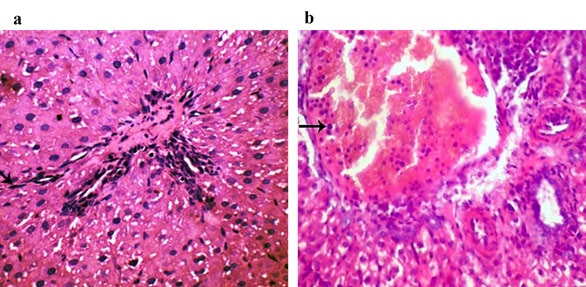
Figure 2: Shows (a) Liver of lactating dams treated with the combined doses (1/20 LD50 of COC and 1/20 LD50 of CFP) orally from 0th - 21th days postpartum showing fibroblastic proliferation extended from portal area (arrow) (HE, 400x). (b) Liver of suckling pups of treated dams with the combined doses (1/20 LD50 of COC and 1/20 LD50 of CFP) orally from 0th - 21th days postpartum showing congestion of portal vein and margination of leukocytes (arrow) (HE, 400x).
Brain
The lactating dams treated with the mixtures of pesticides showed a neuronal necrosis, neuronophagia and astrocytosis in the brain tissue with degenerative changes of purkinje cells in the cerebellum in respect to the control group. While the suckling pups of treated dams with the mixtures of pesticides displayed focal edema in the neurophils with focal hemorrhagic areas in the brain tissue in respect to the control group (Figure 3).
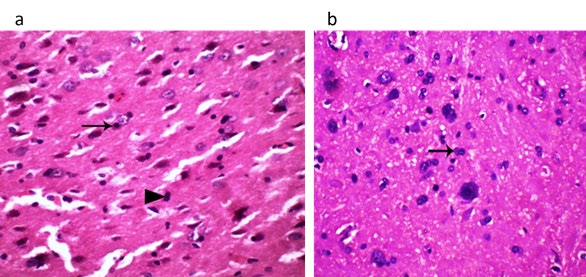
Figure 3: Shows (a) Brain of lactating dams treated with the combined doses (1/20 LD50 of COC and 1/20 LD50 of CFP) orally from 0th - 21th day’s postpartum showing satellitosis (arrow) and proliferation of astrocytes in brain parenchyma (astrocytosis) (arrow head) (HE, 400x). (b) Brain of suckling pups of treated dams with the combined doses (1/20 LD50 of COC and 1/20 LD50 of CFP) orally from 0th - 21th days postpartum showing astrocytosis (arrow) and edema of neuropil (HE, 400x).
Kidney
The lactating dams treated with the mixtures of pesticides shown a fibrous tissue proliferation in the renal glomeruli with degenerative changes in the renal tubular epithelium when compared to control group.
While the suckling pups of treated dams with the mixtures of pesticides displayed a degeneration in the renal tubular epithelium and interstitial lymphocytic infiltration with congestion on the renal glomeruli in respect to the control group (Figure 4).
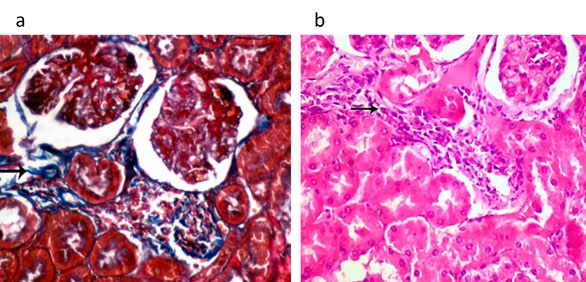
Figure 4: Kidney of lactating dams treated with the combined doses (1/20 LD50 of COC and 1/20 LD50 of CFP) orally from 0th - 21th days postpartum showing marked periglomerular and interstitial bluish stained fibrous tissue (arrow) in the renal tissue (MT, 400x). (b) Kidney of suckling pups of treated dams with the combined doses (1/20 LD50 of COC and 1/20 LD50 of CFP) orally from 0th-21th days postpartum showing lymphocytic and histiocytic infiltration in interstitial renal tissue (arrow) (HE, 400x).
Spleen The lactating dams treated with the mixtures of pesticides showed a marked lymphoid depletion in spleen. The pathological changes were more severe in the mixtures of pesticides in respect to the control group. While the suckling pups of treated dams with the mixtures of pesticides displayed sever lymphoid depletion with congestion of the splenic sinusoids when compared to control group (Figure 5).
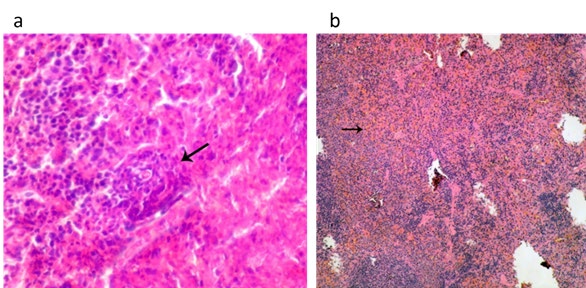
Figure 5: (a) Spleen of lactating dams treated with the combined doses (1/20 LD50 of COC and 1/20 LD50 of CFP) orally from 0th - 21th days postpartum showing lymphoid depletion in the splenic tissue (arrow) (HE, 400x).(b) Spleen of suckling pups of treated dams with the combined doses (1/20 LD50 of COC and 1/20 LD50 of CFP) orally from 0th - 21th days postpartum showing lymphoid depletion showing congestion of the splenic sinusoids (arrow) and marked lymphoid depletion (arrow) (HE, 100x).
The Effect of Combined Doses of Chlorfenapyr and Copper Oxychloride on Hepg2 Cells
Notably, the combined doses of chlorfenapyr and copper oxychloride is cytotoxic to HepG2 cells based on cell viability test and induction of oxidative stress as reduction of GSH and Sod1 while increased the level of MDA (Table 8).
| Concentration of chlorfeapyr+ copper oxychloride (ng/ml) | GSH mg/g. tissue | SOD U/g. tissue | MDA nmol/g. tissue |
|---|---|---|---|
| 0 | 20.69±1.095a | 8.42±0.054a | 14.97±0.93a |
| 10 ng/ml of each pesticide | 8.51±1.242b | 2.08±0.53b | 70.66±1.80b |
Table 10: Showed the cytotoxic to HepG2 cells based on induction of oxidative stress as reduction of GSH and Sod1 while increased
Discussion
The use of pesticides had beneficial purposes in agriculture, household and also control of vectors for disease transmission to animals or humans. In the greenhouse, there is more need to use pesticides to control pests and increase the production to overcome shortage in foods in the world especially in current time.
The mixtures and/or combination of pesticide in same time in agriculture or household could result in adverse effects in aquatic [13], livestock industry [14], small animals and human health. Also, it was recorded that mixtures of pesticide could lead to greenhouse gas that had hazardous effects on health and environment [1].
Previously, we reported that each chlorfenapyr or copper oxychloride alone induced developmental, maternal (based on biochemical alteration, oxidative stress and pathological changes) and postnatal toxicity in Sprague Dawley Rats [15, 16, 17] and induced cytotoxicity in HepG2 cells. The current study recorded that the first report of the toxic effects commination of 1/20 of LD50 of both chlorfenapyr insecticide and copper oxychloride on rats’ dams and its pups and also in HepG2 cells evidence by hepatorenal toxicity, lesions in brain and depletion of lymphocytes in spleen. In this regard, there many studies reported the toxicity of mixtures of pesticides were found all over the world and this toxicity in most cases were synergistic and more hazardous more than the use of each single pesticide [2, 3, 4, 5]. The toxic synergistic effects of hepatorenal toxicity, neurotoxicity, and immunosuppression [18] in different experimental animal studies and human poisoning cases [6, 7] and also effects on environment [6]. Moreover, the single or combined pesticides had cytotoxic to cell line like HepG2 [6, 19, 20] Notably, the cytotoxic effect of chlorfenapyr with other pesticides induced cytotoxic on CHO-K1 cell line [21] as well as indicated cases of human intoxicated with chlorfenapyr [22]. Taken collectively, the mixtures of chlorfenapyr and copper oxychloride are toxic and more hazardous than use each one alone as previously reported by us.
Conflict of Interest
The author have no conflict of interest
Acknowledgments
All authors thank Dr Mohamed Fawzy for help us in pathological examination and comments of all lesion in this research work. In addition, we thank for all staff member of our department for support us during experimental research Medicine.
Contributions
All authors share in designed, carried out, analysis the data, wrote and approved the submission
Financial Help
Financial supports come from department of forensic medicine and vice dean of research and post graduate, faculty of veterinary medicine, Mansoura University, Egypt
References
-
Zhang G, Lu F, Huang Z, Chen S, Wang X (2016) Estimations of application dosage and greenhouse gas emission of chemical pesticides in staple crops in China. Ying yong sheng tai xue bao The journal of applied ecology 27(9): 2875-2883.
-
Cedergreen N (2014) Quantifying synergy: a systematic review of mixture toxicity studies within environmental toxicology. PloS one 9.
-
Damalas CA, Eleftherohorinos IG (2011) Pesticide exposure, safety issues, and risk assessment indicators. Int J Environ Res Public Health 8(5): 1402-1419.
-
Rodney SI, Teed RS, Moore DR (2013) Estimating the toxicity of pesticide mixtures to aquatic organisms: a review. Human and Ecological Risk Assessment: An International Journal 19(6): 1557-1575.
-
Zhu W, Schmehl DR, Mullin CA, Frazier JL (2014) Four common pesticides, their mixtures and a formulation solvent in the hive environment have high oral toxicity to honey bee larvae. PloS one 9.
-
Mesnage R, Seralini GE (2018) Toxicity of pesticides on health and environment. Frontiers in public health 6: 268.
-
Rizzati V, Briand O, Guillou H, Gamet Payrastre L (2016) Effects of pesticide mixtures in human and animal models: an update of the recent literature. Chemico- biological interactions 254: 231-246.
-
Bhardwaj S, Srivastava M, Kapoor U, Srivastava L (2010) A 90 days oral toxicity of imidacloprid in female rats: morphological, biochemical and histopathological evaluations. Food and chemical toxicology 48(5): 1185- 1190.
-
Fernandez Botran R, Gorantla V, Sun X, Ren X, Perez Abadia G (2002) Targeting of glycosaminoglycan- cytokine interactions as a novel therapeutic approach in allotransplantation. Transplantation 74(5): 623-629.
-
Agbasi PUAN, Onye JJ, Ibeawuchi C, Uzoechi SC, Alagwu EA, et al. (2015) The effect of subchronic low dose of DDVP and sodium azid on the hematological indices of Sprague Dawleyrats. toxicology physiology and biochemistry 4: 103-110.
-
AlKahtane AA, Alarifi SA, Qahtani AA, Ali D, Alomar SY, et al. (2018) Cytotoxicity and genotoxicity of cypermethrin in hepatocarcinoma cells: a dose-and time-dependent study. Dose-Response 16(2): 1559325818760880.
-
Snedecor GW, Cochran WG (1989) Statistical Methods. 8th (Edn.), Iowa state University press, Ames, Iowa.
-
Deneer JW (2000) Toxicity of mixtures of pesticides in aquatic systems. PesManagement Science: formerly Pesticide Science 56: 516-520.
-
Oruc HH (2010) Fungicides and their effects on animals. In: Carisse O, et al. (Eds.), In-Tech Publishers, pp: 349- 362.
-
Elalfy MM, Abomosallam M, Sleem F (2019) The Teratogenic Effects of Fungicide Copper Oxychloride in Female Sprague DawleyRats. EC Veterinary Science 4: 1-15.
-
Elalfy M, Abomosallam M, Allah A, Mahmoud H, Eleuony O (2019) Maternal and Cytotoxic Effects of Chlorfenapyr as a Pro-Insecticide in Pregnant Female Sprague DawleyRats, 11(2): 29-38.
-
Sleem F, Elalfy MM, Allah AAA, Hamed MF, Abomosallam M (2019) Developmental and Ultrastructure Toxicity of Greenhouse Insecticide Chlorfenapyr in Rat Fetuses. American-Eurasian Journal of Toxicological Sciences 11(1): 1-10.
-
Flipo D, Bernier J, Girard D, Krzystyniak K, Fournier M (1992) Combined effects of selected insecticides on humoral immune response in mice. International journal of immunopharmacology 14(5): 747-752.
-
Mesnage R, Defarge N, Spiroux de Vendômois J, Séralini GE (2014) Major pesticides are more toxic to human cells than their declared active principles. BioMed research international 2014: 179691.
-
Zeljezic D, Mladinic M, Zunec S, Vrdoljak AL, Kašuba V (2016) Cytotoxic, genotoxic and biochemical markers of insecticide toxicity evaluated in human peripheral blood lymphocytes and an HepG2 cell line. Food and chemical toxicology 96: 90-106.
-
Al Sarar AS, Abobakr Y, Bayoumi AE, Hussein HI (2015) Cytotoxic and genotoxic effects of abamectin, chlorfenapyr, and imidacloprid on CHO K1 cells. Environmental Science and Pollution Research 22: 17041-17052.
-
Chomin J, Heuser W, Nogar J, Ramnarine M, Stripp R (2018) Delayed hyperthermia from chlorfenapyr overdose. The American journal of emergency medicine 36(11): 2129.e1-2129.e2.
- California Red-Legged Frog and Non-Listed Amphibians Response to Non-Native Fish Removal
- Industrial Standardization of the Bio-OS: Algorithmic Codification of Resilience Engineering Guidelines and Version V8 Architecture
- Climate Variability and the Sustainability of Snail Farming in Nigeria: Past Trends, Present Challenges and Potential Outlook
- The Evaluation of the Surveillance System of Anthrax in Gilgit-Baltistan, Pakistan, 2018
- Natural Decline to Extinction of A New Zealand Rabbit Population
- Mitochondrial Bio-Logistics: Steering Co-Enzyme Q10 and Lycopene Synergies within the Science 4.0 Bio-OS Framework