
Global Use of Face Masks for Victory against Covid-19
The use of the face mask always reduces the transmission of COVID-19 rapidly. This article is written on some things those are related COVID-19 and absolutely face mask. Here we discussed little about transmission process of COVID-19, filtering materials of masks, benefits of using masks, thoughts of people using mask, Governments policies about concerning of mask and route of the transmission of COVID-19 by presymptomatic and asymptomatic individuals. There are specific two general ways to reduce the pandemic; first, maintaining the social distance, frequent hand washing, self isolation. Second, use the face mask properly in public and maintain the proper guideline. It is proved that mask wearing reduces the transmission of the virus by reducing transmission of harmful infected droplets. Here we give protection to our health by using low cost intervention tool like mask. So, we should request people to wear mask and maintain the proper guideline and absolutely it will reduce the spread of the disease.
Introduction
It is a sincere issue that always a guideline is needed for common people to use masks properly. Mask is a tool that combats SARS-CoV-2 virus which causing COVID-19 [1]. Now mask is globally used to reduce the disease and also effective in source control. There are many masks in market but we will emphasis on cloth mask, surgical mask and N95 respirator. There are many countries now manufacture masks for delivering it to the people. Common cloth masks are now a global solution that is used by lots of people around the world. Many countries recommended the cloth mask for their people.
Route of Transmission of COVID-19
The primary routes of transmission are speaking, coughing, sneezing via small droplets. The size of the droplets commonly range from 5-10 micrometer [2]. Talking is an important route to transmit the virus rapidly. A huge amount of droplets are exposed when someone speaks loudly. Now there are many asymptomatic patients are detected and all have pre symptomatic incubation period ranging from 2 to 14 days [3]. Asymptomatic patients are more dangerous because they don’t have any symptoms or mild complication. SARS-CoV-2 virus differentiates itself from SARS-CoV by early activation in the upper respiratory tract and viral level is high in asymptomatic or presymptomatic patients [4].
Filtering Mechanisms Control Viral Transmission
There are many masks with different designs present in the market [5]. They can be made of different materials. N95 (American standard) and FFP2 (European standard) respirators are recommended for the clinical workers. But in this situation N95 respirators are not available in all regions or all centres. Alternatively used surgical masks for the droplet protection. It is also effective for source control [6]. Everyone should wearing masks for decreasing the chance of viral transmission by them unconsciously. Here a measurement between cloth mask and surgical mask;
when someone is speaking then expelling lots of droplet size 1 micrometer [7]. Normal cloth masks filtrate 45%-86% droplet for 0.02 micrometer and surgical masks filtrate more than that of cloth masks near about 89%. Another tea cloth mask found to filtrate 60% when droplet ranging from 0.02- 1 micrometer [8]. Always N95 respirators are not available in the market but there are many cloth and surgical masks are available which have a partial effect in reducing viral aerosol shedding (Table 1). There are many laboratory based proof that house hold cloth mask can filtrate relevant droplet sizes and also blocking the droplets from the wearer. So, cloth masks are always helping common people to keep the droplets to themselves [9].
| Type | Source control | Inhaled air filtration |
|---|---|---|
| Cloth face mask | Some but effective | Bad |
| Surgical mask | Good | Bad |
| N95 respirator without exhaust valve | Good | Good |
| N95 respirator with exhaust valve | Bad | Good |
Table 1: Comparison of face masks by function [10].
Efficiency of Different Masks
Moderate certainly evidence shows that washing hands, mask wearing probably reduces the transmission of respiratory viruses [11]. A cotton mask blocked 96% of viral load on average, at eight inches away from a cough of a patient [12] (Figures 1-4). A comparison is made between homemade mask and surgical mask; surgical mask is three times more effective in blocking the droplets. So, all masks are more or less effective to prevent the transmission of viral infections [13].

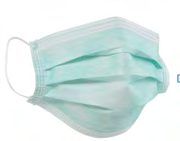
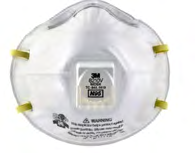
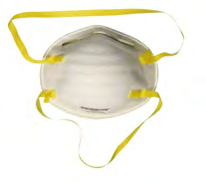
Health workers are strictly recommended to use N95 respirator and surgical masks [14]. Many scientists are expressing their views on these two types of masks. Radonovich, et al. [14] found that no such differences between surgical mask and N95 respirators in case of influenza disease. There has been a shortage and relatively high cost of N95 respirators, simple cloth mask may be a pragmatic alternative tool for preventing disease.
Some Thinking about Wearing A Mask
Many sick people are reluctant to wear mask. They show the reason that if they wear a mask, they are identified as sick and isolated from their society. So, they are not wearing the face mask to avoid stigma of illness [15, 16]. Stigma is a bold, powerful thing that many illnesses come with stigma for the sick. It is very essential to manage the stigma for controlling the epidemics. Sometimes stigma leads to people avoiding treatment [17]. Some people are reluctant to wear mask during pandemic because they think that they will be found as a criminal in front of public.
Benefits of Face Masks Against Epidemics
Cloth masks have not been shown to increase the spread of virus in public place. But people who does not wear mask, can spread the virus. Tuberculosis kills approximately 1.5 million people globally in every year and in 2018 near about 10 millions of people are attacked by tuberculosis [18]. There has been shown face mask also reduced the spread of the disease. Mask wearing is a primary non pharmaceutical intervention to reduce the secondary transmission of viral upper respiratory infections [19].
Impact on Population
The standard epidemiological measure of spread is known as net reproductive rate R0 . Local intervention like face mask can effect on the reproductive number of the epidemic. The main aim of any healthcare authority is to have aggregate effect of reducing R0 to below 1. Much common intervention can reduce the reproductive number by using face mask. The reduction of R0 by a factor (1-epm)2, where is efficacy of mask for viral trapping and pm is the percentage of population that wear masks [20].
Conclusion
Widespread mask use reduces the community transmission. Non-medical mask use material that obstruct droplets necessary size. Common homemade face mask have been shown to be effective in small trials at blocking transmission of corona virus [21]. Much protective measure like social distancing, frequently hand washing and use of face mask can potentially reduce R0 to below 1. We hope that mask use requirement is implemented by Governments and other Nongovernment organizations. It is very important for health authority to provide a proper guideline to people for making, using, and sanitization, re-using and washing of face mask. These proper guidelines help the community to reduce such pandemic.
Acknowledgement
Authors like to express their special thanks of gratitude to Principal Maharaj Swami Kamalasthananda and Controller of Examinations, Swami Vedanuragananda Maharaj of Ramakrishna Mission Vivekananda Centenary College, Rahara for extending their all support to complete the article . Authors are also thankful to Dr. Arunava Mukherjee , Department of Zoology , RKMVC College, Rahara, and Mr. Samir Sardar , Department of Zoology, RKMVC College, Rahara for their help in the preparation of the manuscript.
References
-
Wang Q, Yu C (2020) Role of masks/respirator protection against SARS-CoV-2. Infect Control & Hosp Epidemiol 41(6): 746-747.
-
Duguid JP (1946) The size and the duration of air- carriage of respiratory droplets and droplet-nuclei. Epidemiol & Infect 44(6): 471-4790.
-
Lauer SA, Grantz KH, Bi Q, Jones FK, Zheng Q, et al. (2020) The Incubation Period of Coronavirus Disease 2019 (COVID-19) From Publicly Reported Confirmed Cases: Estimation and Application. Annals Intern Medicine 172(9): 577-582.
-
Doremalen NV, Bushmaker T, Morris DH, Holbrook MG, Gamble A, et al. (2020) Aerosol and Surface Stability of SARS-CoV-2 as Compared with SARS CoV- 1. New Engl J Medicine 382(16): 1564-1567.
-
Brosseau (2009) N95 Respirators and Surgical Masks.
-
Man PD, Straten BV, Dobbelsteen JVD, Eijk AVD, Horeman T, et al. (2020) Sterilization of disposable face masks by means of standardized dry and steam sterilization processes: an alternative in the fight against mask shortages due to COVID-19 (2020). J Hosp Infect 105(2): 356-357.
-
Asadi S, Wexler AS, Cappa CD, Barreda S, Nicole M, et al. (2019) Aerosol emission and super emission during human speech increase with voice loudness. Sci reports 9: 1-10.
-
Sande MVD, Teunis P, Sabel R (2008) Professional and Home-Made Face Masks Reduce Exposure to Respiratory Infections among the General Population. PLoS One 3(7): e2618.
-
Papineni RS, Rosenthal FS (1997) The size distribution of droplets in the exhaled breath of healthy human subjects. J Aerosol Medicine 10(2): 105-116.
-
(2020) Interim Infection Prevention and Control Recommendations for Patients with Suspected or Confirmed Coronavirus Disease 2019 (COVID-19) in Healthcare Settings. US Centers for Disease Control and Prevention.
-
Burch J, Bunt C (2020) Can physical interventions help reduce the spread of respiratory viruses?. Cochrane Clin Answers.
-
Bae S, Kim MC, Kim JY, Cha HH, Lim JS, et al. (2020) Effectiveness of Surgical and Cotton Masks in Blocking SARSCoV-2: A Con- trolled Comparison in 4 Patients. Annals Intern Medicine M20-1342.
-
Long Y, Hu T, Liu L, Chen R, Guo Q, et al. (2020) Effectiveness of N95 respirators versus surgical masks against influenza: A systematic review and meta-analysis. J Evidence Based Medicine 13(2): 93- 101.
-
Radonovich LJ, Simberkoff MS, Bessesen MT, Brown AC, Derek AT, et al. (2019) N95 Respirators vs Medical Masks for Preventing Influenza Among Health Care Personnel: A Randomized Clinical Trial. JAMA 322(9): 824-833.
-
The Lancet (2020) COVID-19: protecting health-care workers. The Lancet 395 (10228): 922.
-
Abney K (2018) containing tuberculosis, perpetuating stigma: the materiality of n95 respirator masks. Anthropol South Afr 41: 270-283.
-
Joachim G, Acorn S (2000) Stigma of visible and invisible chronic conditions. J advanced nursing 32(1): 243-248.
-
(2019) World Health Organization (WHO) Global Tuberculosis Report.
-
Larson EL, Ferng TH, Wong-McLoughlin J, Wang S, Haber M, et al. (2010) Impact of Non-Pharmaceutical Interventions on URIs and Influenza in Crowded, Urban Households. Public Heal Reports 125(2): 178-191.
-
Tian L, Li X, Qi F, Tang QY, Tang V, et al. (2020) Calibrated intervention and containment of the covid-19 pandemic.
-
To KKW, Tsnag OTY, Leung WS, Tam AR, Wu TC, et al. (2020) Temporal profiles of viral load in posterior oropharyngeal saliva samples and serum antibody responses during infection by SARS-CoV-2: an observational cohort study. Lancet Infect Dis 20(5): 565-574.
- California Red-Legged Frog and Non-Listed Amphibians Response to Non-Native Fish Removal
- Industrial Standardization of the Bio-OS: Algorithmic Codification of Resilience Engineering Guidelines and Version V8 Architecture
- Climate Variability and the Sustainability of Snail Farming in Nigeria: Past Trends, Present Challenges and Potential Outlook
- The Evaluation of the Surveillance System of Anthrax in Gilgit-Baltistan, Pakistan, 2018
- Natural Decline to Extinction of A New Zealand Rabbit Population
- Mitochondrial Bio-Logistics: Steering Co-Enzyme Q10 and Lycopene Synergies within the Science 4.0 Bio-OS Framework