
Albizia Lebbeck Stem Bark Aqueous Extract as Alternative to Antibiotic Feed Additives in Broiler Chicks Diets: Performance and Nutrient Retention
A study was conducted to examine the effect of Albizia lebbeck stem bark aqueous extract (ATSM) as alternative feed additives in broiler chicks diets: performance and nutrient retention. Three hundred and seventy five (350) one-day-old Ross 308 broiler chicks of mixed sex were used for the experiment, the animals were reared in a deep litter poultry house and distributed into five treatment containing 75 birds each, each treatment was further divided into 5 replicates consisting of 15 birds each in a completely randomized design. Birds in treatment 1 (T1) were fed 0% ATSM, T2 were fed Oxytetracycline at 1.20 g per litre of water, T3, T4 and T5 were given ATSM at 10 ml, 20 ml and 30 ml per litre of water respectively. Clean feed and water were provided ad libitum throughout the experiment which lasted for 56 days. The result obtained revealed that there was average daily gain, average daily feed intake and feed: gain was influenced by the dietary treatments (P
Introduction
The huge increase in poultry production to meet the growing demand in the country has led to the rise in antibiotic use, leading to a worrying increase in antibiotic resistance diagnosed in animal and humans via direct contact, environmental contamination and food consumption causing high cases of diseases [1, 2]. This prompted a growing interest in the use of organic materials as substitute for antibiotics as feed additives in animal feed. Among the potential alternatives is the use of herbs, spices, probiotics, essential oil and plant extracts [3]. Plant extracts have also been reported to be relatively safe, effective and cheaper, it is also the most preferred because it contains multiple bioactive chemicals (phytochemicals) such as flavonoids, alkaloids, terpenes, tannins, phenol, glycosides [4]. According to Abdul, et al. phytochemicals comprises of primary (protein, chlorophyll and carbohydrates) and secondary compounds (alkaloids, saponin, phenol, alkaloids etc). WHO reported that there are over 500, 000 species of plant with high medicinal value. Some of these plants are still underexplored; among the potential plant is Albizia lebbeck which is found to be loaded with minerals, vitamins and several bioactive chemicals.
Albizia lebbeck (L) belongs to the family Mimosaceae. It is a native to deciduous and semi deciduous forest in Asia. It is also wide spread in the tropics in countries like Nigeria, Kenya, Etopia, Senegal, Benin republic, Congo, Liberia etc. The plant is mostly propagated via seeds [5, 6]. The leaves have traditionally been used to treat sores, leprosy, wounds, back ache and rheumatism [7]. The leaves, stems and seeds have been reported to perform multiple biological activities in animals such as antimicrobial, antioxidants, anti-inflammatory, antifungal, antispasmodic, antiviral, hypolipidemic, anti-allergic and neuroprotective properties [8, 9, 10, 11].
In view of these potentials, the use of Albizia lebbeck will help to build the bridge between food safety and livestock. Therefore, this experiment was designed to evaluate the effect of Albizia lebbeck stem bark aqueous extract (ATSM) as alternative feed additives in broiler chicks’ diets: performance and nutrient retention.
Materials and Methods
Experimental Site
The experiment was carried out at Division of Animal Nutrition, Sumitra Research Institute, Gujarat, India during the month of December to February, 2019.
Source, Processing and Chemical Analysis of Test Materials
Fresh and mature stem bark of Albizia lebbeck were harvested within the farm in Gujarat, India and authenticated by a botanist Mr. Ram Sharma. The stems were thoroughly washed with running tap water to remove debris, chopped into bits and allowed to dry under shade for 12 days in order to maintain the bioactive chemicals in the sample. After drying the stems bark were grinded into powder using mortar and pestle and stored in an air tight container for further analysis. 200 grams of the sample was soaked in 1000 ml of water for 72 hours in a refrigerator at 4°C, the mixture was frequently stirred and then sieved. The filterate (Albizia lebbeck bark) ATSM was stored in a labelled container.
Proximate compositions of the test material were determined in accordance with the Official Analytical Chemist [12]. Phytochemical evaluation of tannins, alkaloids, saponins, flavonoids, phenols, oxalate, glycosides, steroids and terpenoids were estimated using methods described by Atamgba, et al. [13, 14, 15, 16]. Determination of vitamin composition was determined according to the methods outlined by Ngozi, et al. [17]. Mineral analyses were carried out using Atomic Absorption Spectrophotometer (AAS) model 12-0TA.
Experimental Animals and Management
Three hundred and seventy five (350) one-day-old Ross 308 broiler chicks of mixed sex were used for the experiment. Prior to the commencement of the study, the deep litter pens were thoroughly disinfected, electrical fittings were properly fixed and the foot bath was constructed to ensure bio-security. Birds were weighed on arrival at the research farm and randomly divided into five treatments with five replicates of fifteen (15) birds in a completely randomized design. Wood shavings were used as litter material and the initial brooding temperature is 35°C, it was gradually reduced weekly by 2 oC until a temperature of 22°C was maintained. Vaccines were administered according to the prevailing vaccination schedule in the environment and the experiment lasted for 56 days.
Formulation of Experimental Diets and Set-Up
Three (3) basal diets were formulated at different stages of production to meet up with the requirements of birds according to NRC [18]. Broiler starter’s mash (0-21 days), growers mash (22-35 days) and finishers mash (36-56 days).
Treatment 1 (basal diet + 0 % ATSM), treatment 2 (basal diet +1.2 grams Oxytetracycline per liter of water), treatment 3 (basal diet + 10 ml ATSM per liter of water), treatment 4 (basal diet + 20 ml ATSM per liter of water) and treatment 5 (basal diet + 30 ml ATSM per liter of water).
Measurements
• Daily feed intake (g) was calculated as a difference between feed offered and left-over.
( ) ( ) Weight gain final weight g – initial weight g =
( ) ( ) ( )
Daily feed intake g / d Feed conversion ratio FCR Daily weight gain g / d =
( ) ( ) ( ) Final weight g – initial weight g Average daily gain g / d Number of experimental days = ( ) ( ) Concentrations of sample mg Recommended daily allowance RDA 1000 Requirement by animal = ×
Nutrient Retention Trial
A nutrient retention trial was carried out on the 56th day of the experiment; three birds were selected from each replicate. The birds were housed in cages with wire bottoms, trays were placed under each cage for fecal collection. The
birds were given a known amount of feed for seven days and clean water was also given throughout the experiment. Feed consumed were measured by weighing the left over feed daily and subtracting from amount of feed provided. Excreta were collected for 7days, dried and mixed thoroughly. Contaminants were carefully removed and the excreta were stored in containers before it was sent to the laboratory for further analysis.
The percentage retention was calculated using the equation below:
( ) ( ) ( )
Nutrient output DM in the excreta Nutrient retention Nutrient intake DM – 100 Nutrient intake DM = ×
Statistical Analysis
All data were subjected to one -way analysis of variance (ANOVA) using SPSS (18.0) and significant means were separated using Duncan multiple range tests [19]. Significant was declared if P ≤ 0.05 (Tables 1-7 & Figure 1).
| Materials | Starter (1-21 days) | Grower (22-35 days) | Finisher (36-56 days) |
|---|---|---|---|
| Maize | 56 | 60.5 | |
| Wheat offal | 8 | 7 | 8.05 |
| Soya meal | 28.55 | 22 | 21 |
| Groundnut cake | 10 | 11.55 | 6.05 |
| Fish meal | 2 | 2 | 2 |
| Bone meal | 0.35 | 0.4 | 0.4 |
| Limestone | 0.2 | 0.2 | 0.2 |
| Lysine | 0.15 | 0.15 | 0.15 |
| Methionine | 0.2 | 0.2 | 0.2 |
| Premix | 0.25 | 0.25 | 0.25 |
| Salt | 0.3 | 0.3 | 0.3 |
| TOTAL | 100 | 100 | 100 |
| Calculated analysis | |||
| Crude protein | 23.08 | 20.11 | 19.33 |
| Ether extract | 5.03 | 4.87 | 4.28 |
| Crude fibre | 3.06 | 3.95 | 3.42 |
| Calcium | 0.81 | 0.96 | 0.8 |
| Phosphorus | 0.47 | 0.4 | 0.51 |
| Lysine | 1.17 | 1.29 | 1.6 |
| Meth +Cyst | 0.87 | 0.82 | 0.51 |
| ME (Kcal/kg) | 2936 | 3000.8 | 3100.2 |
Table 1: Chemical composition of experimental diets. *Premix supplied per kg diet: - vit A, 13,000 I.U; vit E, 5mg; vit D3, 3000I
| Parameters | % Composition |
|---|---|
| Dry matter | 87.64 |
| Crude protein | 4.65 |
| Ash | 8.73 |
| Crude fibre | 46.4 |
| Ether extract | 0.77 |
| Energy (Kcal/kg) | 1870.7 |
Table 2: Proximate compositions of Albizia lebbeck stem bark.
| Parameters | Albizia lebbeck stem bark (%) | Albizia lebbeck bark extract (%) | *Permissible range (%) |
|---|---|---|---|
| Condensed tannin | 0.51 | 0.83 | 1.88 |
| Hydrolysable tannin | 1.44 | 2.31 | 2.56 |
| Flavonoids | 6.19 | 9.75 | 12.1 |
| Saponin | 0.23 | 0.55 | 7.02 |
| Phenols | 1.67 | 2.74 | - |
| Oxalate | 1.01 | 0.05 | 0.54 |
| Phytate | 0.15 | 0.22 | 2.3 |
| Alkaloids | 1.22 | 1.78 | 2.13 |
| Terpenoids | 0.4 | 0.95 | - |
| Glycosides | 0.02 | 0.09 | - |
| Steroids | 1.02 | 1.84 | - |
Table 3: Phytochemical analysis of Albizia lebbeck bark and Albizia lebbeck extract.
| Parameters | Composition (mg/100g) |
|---|---|
| Macro elements | |
| Calcium | 101.5 |
| Phosphorus | 67.1 |
| Potassium | 29.1 |
| Magnesium | 14.3 |
| Sodium | 4.67 |
| Micro elements | |
| Iron | 0.1 |
| Manganese | 1.33 |
| Copper | 0.07 |
| Zinc | 1.66 |
Table 4: Mineral compositions of Albizia lebbeck stem bark.
| Parameters | Composition (mg/100g) | **% RDA |
|---|---|---|
| Thiamine (B1) | 0.19 | 31 |
| Ascorbic acid (C) | 72.45 | 39 |
| Riboflavin (B2) | 0.02 | 34 |
| β-carotene | 0.56 | 6 |
| Niacin (B3) | 0.33 | 5 |
| Vitamin E | 0.02 | 1.19 |
| Vitamin K | 0.14 | 1.63 |
| Vitamin D | 0.1 | 0.08 |
Table 5: Vitamin compositions of Albizia lebbeck stem bark.
| Parameters (g) | T1 | T2 | T3 | T4 | T5 | SEM |
|---|---|---|---|---|---|---|
| Breed: Ross 308 | ||||||
| Number of animals | 75 | 75 | 75 | 75 | 75 | - |
| Initial body weight (g) | 47.08 | 46.92 | 47 | 46.88 | 47 | 0.54 |
| Final live weight (g) | 1733.1c | 2100.0b | 2166.4b | 2418.2a | 2471.2a | 43.65 |
| Weight gain (g) | 1686.0c | 2053.1b | 2119.4b | 2371.3a | 2424.2a | 96.11 |
| Daily weight gain (g) | 30.11c | 36.66b | 37.85b | 42.34a | 43.29a | 5.09 |
| Feed intake (g) | 5187.1a | 4880.6b | 4840.8b | 4810.0b | 4800.6b | 77.6 |
| Average feed intake (g) | 92.63a | 87.15b | 86.44b | 85.89b | 85.73b | 10.88 |
| Feed:gain ratio | 3.07a | 2.38b | 2.28b | 2.03b | 1.98c | 0.44 |
| Mortality (%) | 7.1a | 1.4b | - | - | - | 0.03 |
| Parameter (%) | T1 | T2 | T3 | T4 | T5 | SEM |
| Dry matter | 72.45c | 73.40c | 77.56b | 85.08a | 85.66a | 5.22 |
| Crude protein | 73.19c | 74.60c | 77.05b | 79.00a | 79.10a | 2.98 |
| Ether extract | 59.43c | 60.88b | 65.19b | 67.09a | 67.45a | 3.77 |
| Crude fibre | 45.16a | 43.33b | 43.45b | 44.08b | 44.19b | 4.53 |
| NFE | 69.42b | 80.11a | 80.32a | 79.19a | 80.85a | 2.1 |
Table 6: Performance traits of broiler chicks fed different levels of Albizia lebbeck stem bark.
Means in the same row with different superscripts are significantly different (P<0.05)
Means in the same row with same superscripts are significantly different (P<0.05) NFE, nitrogen free extract; SEM, standard error of mean.
Results
Proximate Compositions Of Albizia Lebbeck Stem Bark
The proximate composition of Albizia lebbeck stem bark is presented in Table 2. Dry matter (87.64 %), crude protein (4.65 %), ash (8.73 %), crude fibre (46.40 %), ether extract (0.77 %) and metabolizable energy (1870.7 kcal).
Phytochemical Compositions of Albizia Lebbeck Stem Bark and Albizia Lebbeck Extract
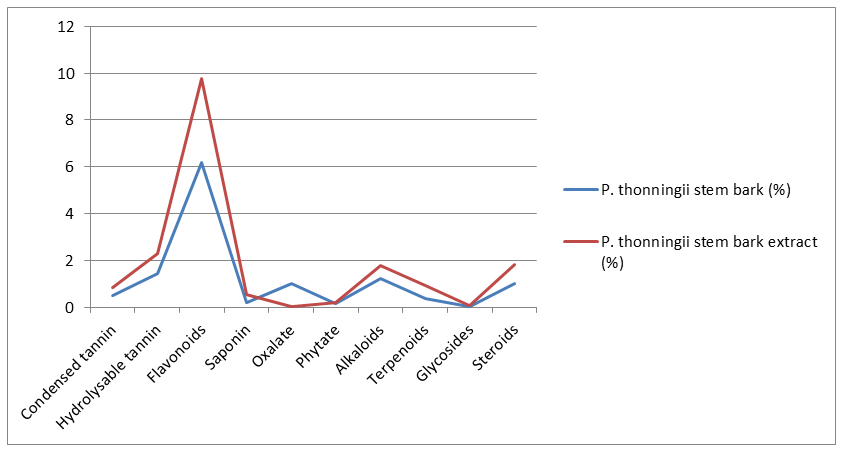
The phytochemical composition of Albizia lebbeck stem bark and Albizia lebbeck aqueous extract is presented in Table 3. Result revealed the presence of condensed tannin, hydrolysable tannin, flavonoids, saponin, phenol, oxalate, phytate, alkaloids, terpenoids, glycosides and steroids at 0.51 %, 1.44 %, 6.19 %, 0.23 %, 1.67 %, 1.01 %, 0.15 %, 1.22 %, 0.40 %, 0.02 %, 1.02 % and 0.83 %, 2.31 %, 9.75 %, 0.55 %, 2.74 %, 0.05 %, 0.22 %, 1.78 %, 0.95 %, 0.09 and 1.84 % respectively.
Mineral Compositions of Albizia Lebbeck Stem Bark
The mineral composition of Albizia lebbeck stem bark is presented in Table 4. Result revealed that calcium had the highest concentration of 101. 5 mg/100g followed by phosphorus (67.10 mg/100g), potassium (29.1 mg/100g), magnesium (14.3 mg/100g), sodium (4.67 mg/100g), zinc (1.66 mg/100g), manganese (1.33 mg /100g), iron (0.10 mg/100g) and copper (0.07 mg/100g) respectively.
Vitamin Compositions of Albizia Lebbeck Stem Bark
Vitamin analysis of Albizia lebbeck stem bark revealed the presence of β-carotene (0.56 mg/100g), thiamine (0.19 mg/100g), riboflavin (0.02 mg/100g), niacin (0.33 mg/100g), vitamin E (0.02 mg/100g), vitamin K (0.14 mg/100g) and vitamin D (0.10 mg/100g). The stem bark is abundant in vitamin C as presented in Table 5.
Growth Performance of Broiler Chicks Fed Different Levels of Albizia Lebbeck Stem Bark Extract
The performance characteristics of broiler chicks given different levels of Albizia lebbeck stem bark extract is presented in Table 6. The initial body weight, final live weight, weight gain, average daily gain, average feed intake and feed to gain ratio range between 46.92-48.08 g, 1733.1-2471.2 g, 1686.0-2424.2 g, 30.11-43.29 g, 85.73-92.63 g and 1.98-3.07 respectively. They were highest in T4 and T5, intermediate in T2 and T3 and lowest in T1 (P<0.05). While no mortality was recorded for T3, T4 and T5, mortality was highest in T1 (7.1%), and lowest in T2 (P<0.05).
Nutrient Retention of Broiler Chicks Given Different Levels of Albizia Lebbeck Stem Bark Extract
Table 7 shows the effect of treatments on nutrient retention of broiler chicks. Dry matter retention was highest for T2 (73.40 %), T3 (77.56 %), T4 (85.05 %) and T5 (85.66
%) and lowest for T1 (72.45 %) (P<0.05). CP retention was higher (P<0.05) for T2 (74.60 %), T3 (77.05 %), T4 (79.00 %) and T5 (79.10 %) than for T1 (73.19 %). Fat retention was lower (P<0.05) for T1 than for other treatments. CF retention was highest (P<0.05) for T2, T3, T4 and T5 and lowest for T1 (45.19 %). NFE retention was highest (P<0.05) for T2 (80.11 %), T3 (80.32 %), T4 (79.19 %) and T5 (80.85 %) and lowest for T1 (69.42 %) (P<0.05).
Discussion
The crude protein (CP) of Albizia lebbeck stem bark (4.65 %) conforms to the findings of Atamgba, et al. [13] who reported 4.70 % CP for Jatropha curcas stem bark but slightly lower than those obtained for Morinda lucida stem bark (5.70 %). Higher crude fibre was obtained in Albizia lebbeck stem bark is in line with the reports of Olanipekun, et al. [20]. According to Alagbe, et al. [21]; Ishida, et al. [22] adequate incorporation of dietary fibre improves feed digestion, reduces serum cholesterol and coronary heart diseases. Ash content obtained in this study (8.73 %) is contrary to the report of Uwaya, et al. this could be attributed to the differences in specie and age of plants. According to Ojewuyi, et al. [23]; Onwuka, et al. [24] ash content is an indication of the presence minerals in a sample. A low value was recorded for ether extract (0.77%) as a result of low level of carotene and pigments in Albizia lebbeck stem bark [9]. The energy content in the sample was determined to be 1870.7 kcal lower than that reported for Ipomea asarifolia leaf meal (2760.0 kcal) and Phyllantus amarus leaf meal (1967.4 kcal) [25]. Metabolizable energy is a portion of gross energy that is used by the animal to accomplish work, growth and heat production [26].
Phytochemical analysis of Albizia lebbeck bark and Albizia lebbeck extract revealed the presence of several bioactive chemicals or secondary metabolites which confers the plant ability to perform multiple biological activities and pharmacological significance [27]. Flavonoids was found to be abundant in the test material indicating that it plays vital as an anti-inflammatory, antiplasmodic, anti-thrombitic, anti- allergic and antioxidant properties [28, 29]. Other literatures have also pointed the role of flavonoids as adjuvants in vaccines [30]. Alkaloid performs the role of analgesics and antimicrobial effects [31]. Saponins are generally known for their antibacterial and antifungal properties [32]. Tannins have been suggested to be involved with antibacterial and anti-viral activity [33]. Phytate are strong antioxidants and have also been recognized for their ability to bind calcium and other minerals in the small intestine of animals [34]. The presence of steroids is an indication that Albizia lebbeck bark could play a major role in fertility of animals [13], The result on the phytochemical composition of the test material conforms to the findings of Labaran, et al. [35];
Labaran, et al. [6]. However, the values were within the lethal levels reported by Alagbe, et al. [36]. The presence of these phytochemicals reveals the great potentials of the plant as a source of phytomedicines.
The mineral composition of Albizia lebbeck stem bark is abundant in calcium (101.5 mg/100g) followed by phosphorus (67.10 mg/100g), iron had the least value (0.01 mg/100g). Calcium plays a vital role in bone formation, rigidity and support to animals [26, 37]. The calcium value obtained is greater than the reports of Akubugwo, et al. for Amaranthus hybridus. Phosphorus is an important component of nucleic acids and co-enzymes, deficiency of this mineral causes stunted growth and purplish veins in plant leaves [38]. Potassium helps in osmotic pressure balance, activation of intercellular enzymes and regulation of nerves [39]. Manganese is essential in the formation of some amino acids, enzyme activation and chlorophyll synthesis. Sodium is an important intracellular cation responsible for acid-base balance [40]. Zinc ensures chlorophyll formation and its deficiency leads to poor root formation. Magnesium is key in blood circulation and prevention of heart diseases [41]. Copper are important lignin biosynthetic enzymes and its deficiency causes chlorosis, necrosis and stunted growth. Manganese is responsible in chlorophyll formation, formation of amino acids and enzyme activation [42]. Irons are a component of cytochromes, enzyme activation and make part in blood cells of animals [43].The mineral composition of ATSM obtained in this study is contrary to the reports of Ukpabi, et al. [6] this could be attributed to differences in varieties, age, soil type as well as geographical location [44].
Vitamin analysis of Albizia lebbeck stem bark shows that the plant is abundant in ascorbic acid (vitamin C) which is a strong antioxidant responsible for strengthening the immune system and cell damage prevention [45]. Thiamine (B1) is a component of enzymes needed for energy metabolism and nerve function [46]. Vitamin B2 (riboflavin) is important for normal vision and skin health [47]. Niacin (B3) is a part of an enzyme needed for energy metabolism; important for nervous system, digestive system, and skin health [48]. Vitamin D is needed for proper absorption of calcium; stored in bones as reserve [49]. Proper clotting of the blood is the responsibility of vitamin K [50]. Vitamin A plays a key role in proper vision, healthy skin and mucous membranes, bone and tooth growth, immune system health [51].
Average daily gain, average daily feed intake and feed: gain ratio were influenced by the dietary treatments (P<0.05). These findings are in agreement with the reports of other [1, 52, 53]. The higher weight gain in T4 and T5 could be attributed to the presence of phytochemicals and other nutrients in ATSM. Phytochemicals have the ability to regulate feed intake, stimulate digestive secretions and maintain intestinal flora (eubiosis) in order to prevent risk of digestive disorders [54, 55, 56]. Presence of phenol and flavonoids also confers ATSM the ability to scavenge free radicals and prevents oxidative damage to biomolecules such as lipids, protein and deoxyribonucleic acids [57]. Higher mortality was also reported in T1 and T2 (P<0.05). Synergistic combination of phytochemicals in ATSM exhibits wide range of antibacterial activities against Gram positive and Gram negative bacteria [58, 59]. Plant metabolites are capable of showing strong flavours and thus positively influence the sensory characteristics of feed [60].
Nutrient retention among the treatments were significantly (P<0.05) influenced by the dietary administration of ATSM. This conforms to earlier findings of Olafadehan, et al. [1], Alagbe, et al. [61] but contrary to the reports of Tarek, et al. when Olive leaves extract was fed to broiler chickens. Higher nutrient retention in birds fed T4 and T5 indicated that ATSM has the ability to function as laxative, spasmolytic and anti-flatulence in the gastro-intestinal tract due to the presence of bioactive chemicals. Thereby, improving nutrient absorption via secretion of siliva, bile and enzymatic activity [62, 63]. This also confirms the earlier reports of Santi, et al. [64, 65, 66] when miadiasin was supplemented in the diets of broiler chicken [67, 68, 69, 70].
Conclusion
The use of medicinal plants or phytogenics has been adopted as one of the suitable replacement to antibiotics; they are relatively cheap and safe without side effects. Plants are loaded with several phytochemicals and other nutrients that are necessary for animal growth. They can also influence the sensory characteristics of feed, eating pattern, secretion of digestive fluids and feed intake [71]. The use of Albizia lebbeck stem bark (ATSM) has greatly justified the outcome of several researchers on phytomedicine, it was concluded from this experiment that the incorporation of ATSM at 30 ml per liter of water significantly influenced the growth of birds without any deleterious effect on their general performance [72].
References
-
Olafadehan OA, Oluwafemi RA, Alagbe JO (2020) Carcass quality, nutrient retention and Caeca microbial population of broiler chicks administered Rolfe (Daniellia oliveri) leaf extract as an antibiotic alternative. Drug Discovery 14(33): 146-154.
-
Rahimi S, Zadeh ZT, Torshizi MAK, Rokni H (2011) Effect of three herbal extracts on growth performance, immune response, blood factor and intestinal selected bacteria population in broiler chickens. Journal of Agricultural Science and Technology 13(4): 527-539.
-
Oluwafemi RA, Isiaka Olawale, Alagbe JO (2020) Recent trends in the utilization of medicinal plants as growth promoters in poultry nutrition-A review. Agricultural and Veterinary Sciences 4(1): 5-11.
-
Dhan P, Charu G, Girish S (2012) Importance of phytochemicals in nutraceuticals. Journal of Chinese Medicine Research and Development 1(3): 70-78.
-
Adubiaro H, Olaofe O, Ogunbusola E, Adeyeye E (2016) Nutritional and anti-nutritional attributes of underutilized tree crops: Adansonia digitata, Albizia lebbeck and Daniellia oliveri seeds. Ekiti State University Journal of Science and Tech 2(1): 24-33.
-
Labaran I, Lukman O A, Adam AA, Jamil DU, Umar M (2016) Analysis of some phytochemicals and minerals found in Aqueous extract stem bark of Albizia lebbeck. Dutse Journal of Pure and Applied Sciences 2(1): 231- 237.
-
Lowry JB (1989) Agronomy and forage quality of Albizia lebbeck in the semiarid tropics. Tropical Grasslands 23: 84-91.
-
Alagbe JO, Sadiq MR, Anaso EU, Grace FR (2019) Efficacy of Albizia lebbeck seed oil on the growth performance and carcass characteristics of weaner rabbits. Sumerianz Journal of Agriculture and Veterinary 2(12): 116-122.
-
Gupta M, Mazumber U, Kumar T, Gomathi P, Kumar R (2004) Antioxidant and hepato-protective effects of Bulhiniaracemosa against paracetamol and carbon tetrachloride induced liver damage in rats. Iran Journal of Pharmacological Therapy 3: 12-20.
-
McDonald SD, Prenzier M, Robards K (2001) Phenolic content and antioxidant activity of Olive extracts. Food Chemistry 73(1): 73-84.
-
Obdoni, BO, Ochuko PO (2001) Phytochemical and studies and comparative efficacy of the crude extracts of some homeostatic plants in Edo and Delta States of Nigeria. Global Journal of Pure and Applied Sciences 8(2): 203-208.
-
AOAC (2000) Official methods of analysis. 21st (Edn.), Association of official analytical chemists. Washington DC, USA.
-
Atamgba AA, Margret AA, Kayode D, Amonor JW (2015) The biomedical significance of the phytochemical, proximate and mineral composition of the leaf, stem bark and roots of Jatropha curcas. Asian Pacific Journal of Tropical Biomedicine 5(8): 650-657.
-
Harborne JD (1973) Phytochemical methods: A guide to modern techniques of plant analysis. Chapman and Hall, London pp: 279.
-
Odebiyi A, Sofowora AE (1978) Phytochemical Screening of Nigerian Medicinal Plant. Part II, Lloydia, 41: 234-246.
-
Boham BA, Kocipai AC (1974) Flavonoids and condensed tannins from leaves of Hawaiian vaccinium vaticulatum and V. calycinium. Pacific Sci 48: 458-463.
-
Ngozi KA, Chimaraoke O, Chima AEE, Jennifer CO (2017) Phytochemical, proximate analysis and mineral composition of aqueous extract of Ficus capensis leaves in South Eastern Nigeria. Journal of Applied Pharmaceutical Sciences 7(3): 117-122.
-
National Research Council (1994) Nutrient requirement of poultry. 9th (Edn.), Washington D.C. National Academy Press.
-
Duncan DB (1955) Multiple range and multiple F-test. Biometrics 11(1): 1-42.
-
Olanipekun MK, Adewuyi D, Adedeji DE (2016) Ethnobotanical importance and phytochemical analyses of some selected medicinal plants in Ado-Ekiti Local Govt. Area. Journal of Herbal Medicine Research, 1(3): 0007-0016.
-
Alagbe JO (2020) Caecal Microbial Population of Growing Grass Cutters (Thyronoyms Swinderianus) Fed Phyllantus Amarus and Pilogstigma Thonngii Leaf Meal Mixture as Partial Replacement for Soya Bean Meal. Concept of Dairy and Veterinary Sciences 3(5): 350-355.
-
Ishida H, Suzuno H, Sugiyama N, Innami S, Todokoro T, et al. (2002) Nutritional evaluation of chemical component of leaves stalks and stems of sweet potatoes (Ipomea batatas). Food Chemistry 68: 359-367.
-
Ojewuyi OB, Ajiboye TO, Adebanjo EO, Balogun A, Mohammed AO (2014) Proximate composition, phytochemical and mineral contents of young and mature Polyalthia longifolia Sonn. Leaves. Fountain Journal of Natural and Applied Sciences 3(1): 10-19.
-
Onwuka GI (2005) Food analysis and instrumentation; theory and practice. African Journal of Biotechnology 7(1): 1-5.
-
Alagbe JO, Sharma DO, Xing L (2019) Effect of aqueous Piliostigma thinningii leaf extracts on the performance and serum biochemical indices of broiler chicken. Noble International Journal of Agriculture and Food Technology 1(2): 62-69.
-
Anugwa FOI, Okorie AU, Kamalu TN (1989) Nutrient digestibility and microbial activities in exotic and indigenous Nigerian pigs fed a control or high fibre diet. Bulletin of Animal Health and Production for Africa 37: 297.
-
Odeyemi O, Oluduro AO, David OM (2014) Evaluation of antimicrobial activities of Albizia zygia DC leaf extracts against some clinically important pathogens. Journal of Natural Sciences Research 4(9): 98-105.
-
Edeoga HO, Okwu DE, Mbaebie BO (2005) Phytochemical constituents of some Nigerian medicinal plants. African Journal of Biotechnology 4(7): 685-688.
-
Enin GN, Antia BS, Enin FG (2014) Chemical assessment of the proximate, mineral and anti-nutrients composition of Sida acuta leaves. Journal of Organic Chemistry 7(14): 24654-24660.
-
Stafford HA (1997) Roles of flavonoids in symbiotic and defense functions of legumes roots. The botanical Review Interpreting Botanical Progress pp: 31-34.
-
Nwaogu LA, Alisi CS, Ibegbulem O, Igwe CU (2007) Phytochemical and antimicrobial activity of ethanolic extract of Landolphia owariensis leaf. African Journal of Biotechnology 6(7): 890-893.
-
Faizi S, Khan RA, Mughal NR, Malik MS, Sajjadi KE, et al. (2008) Antimicrobial activity of various parts of Polyalthia longifolia var. pendula: isolation of active principles from the leaves and the berries. Phytother Res 22(7): 907-912.
-
Adisa RM, Choudhary EA, Adenoye GA, Olorunsogo OO (2010) Hypoglycaemic and biochemical properties of Cnestis ferruginea. African Journal of Traditional Complementary and Alternative Medicine 7(3): 185- 194.
-
Graf E, Empson KL, Eaton JW (1990) Phytic acid a natural antioxidant. Journal of Biological Chemistry 262(24): 11647-11650.
-
Labaran I (2015) Effect of oral administration of Albizia lebbeck aqueous stem bark extract on some liver function indices of rats. American Journal of Innovative Research and Applied Sciences 1(4): 128-132.
-
Alagbe JO, Oluwafemi RA (2019) Performance and haematological parameters of broiler chicks gives different levels of dried lemon grass (Cymbopogon citratus) and garlic (Allium sativum) extract. Research in: Agricultural and Veterinary Sciences 3(2): 102-111.
-
Ibrahim NDG, Abdulrahman EM, Ibrahim G (2001) Elemental analysis of the leaves of Vernonia amydalina and its biological evaluation in rats. Nigerian Journal of Natural Products and Medicine 5: 13-17.
-
Simsek A, Aykut O (2007) Evaluation of the microelement profile of Turkish hazelnut varieties for human nutrition and health. International Journal of Food Science and Nutrition 58: 677-688.
-
Tajeda Jimenez M, Galvin A, Fernandez E, Liamas A (2009) Homeostatis of the micronutrients with specific functions. Current Opinion in Plant Biology 12: 358-363.
-
Akpanyung EO (2005) Proximate and mineral composition of bouillon cubes produced in Nigeria. Pakistan Journal of Nutrition 4 (5): 327-329.
-
Nwauzoma AB, Dawari SL (2013) Study on the phytochemical properties and proximate analysis of Piper umbellatum from Nigeria. American Journal of Research and Communication 1(7): 164-177.
-
Eastmond DA, Mac Gregor JT, Slesinki RS (2008) Trivalent chromium: accessing the genotoxic risk of the essential trace element and widely used human and animal nutritional requirement. Critical Review in Toxicology 38(3): 173-190.
-
Kavita SM, Asha AK, Sucheta AG, Nirmala RD, Rajashree VK (2010) Analysis of elements from the leaves and seeds of Polyalthia longifolia and its medicinal importance. Annals of Biological Research 1(2): 87-90.
-
Olafadehan OA, Oluwafemi RA, Alagbe JO (2020) Performance, haemato-biochemical parameters of broiler chicks administered Rolfe (Daniellia oliveri) leaf extract as an antibiotic alternative. Drug Discovery 14(33): 135-145.
-
Jenkins DJ, Spence JD, Giovannucci EL, Kim YI, Josse R, et al. (2018) Supplemental Vitamins and Minerals for CVD Prevention and Treatment. Journal of the American College of Cardiology 71(22): 2570-2584.
-
Maqbool A, Stallings VA (2008) Update on fat-soluble vitamins in cystic fibrosis. Current Opinion in Pulmonary Medicine 14 (6): 574-581.
-
Awuchi CG (2019) Medicinal Plants: the Medical, Food, and Nutritional Biochemistry and Uses. International Journal of Advanced Academic Research 5 (11): 220-241.
-
Bender DA (2003) Nutritional biochemistry of vitamins. Cambridge. UK: Cambridge University Press. ISBN 978- 0-521-80388-5.
-
Berdanier O, Carolyn D, Dwyer, Johanna T, Heber D (2016) Handbook of Nutrition and Food. CRC Press pp: 211-226.
-
Boy EM, Pandav C, de Benoist B, Viteri F, Fontaine O, et al. (2009) Achievements, challenges, and promising new approaches in vitamin and mineral deficiency control. Nutrition Reviews 67 S(1): S24-S30.
-
EFSA (2006) Tolerable upper intake levels for the vitamins and minerals. Scientific Panel on Dietetic Products, Nutrition & Allergies, European Food Safety Authority (EFSA).
-
Oleforuh VU, Chukwu GC, Adeolu AI (2014) Effect of ground ginger and garlic on the growth performance, carcass quality and economics of production of broiler chickens. Global Journal of Bio-Science and Biotechnology 3(3): 225-229.
-
Alagbe JO, Soares DM, Eimoga MM (2018) Efficacy of Shea butter (Butryospermum parkii)-Neem (Azadirachta indica) leaf meal mixture on performance and carcass characteristics, immune response and blood parameters in broiler chickens. Greener Journal of Agricultural Sciences 8(2): 42-51.
-
Liu Y, Song M, Che TM, Lee JJ, Bravo D, et al. (2014) Dietary plant extracts modulate gene expression profiles in ileal mucosa of weaned pigs after an infection. Journal of Animal Science 92: 2050-2062.
-
Van der Aar PJ, Molist F, van der Klis JD (2016) The central role of intestinal health on the effect of feed additives on feed intake in swine and poultry. Animal Feed Science Technology pp: 64-75.
-
Alagbe JO (2017) Effect of Miadasan as a dietary supplement on performance, carcass characteristic and blood profile of broiler chicken. Scholarly Journal of Agricultural Science 7(2): 27-33.
-
Hollman PC (2001) Evidence for health benefits of plant phenols: Local or systemic effects? Journal of Science and Food Agriculture 81: 842-852.
-
Lillehoj HS, Lee SH, Park SS, Jeong M, Lim Y, et al. (2016) Calcium montmorillonite-based dietary supplement attenuates necrotic enteritis induced by Eimeria maxima and Clostridium perfringens in broilers. Journal of Poultry Science 53: 329-340.
-
Guban J, Korver DR, Allison GE, Tannock GW (2006) Relationship of dietary antimicrobial drug administration with broiler performance,decreased population levels of Lactobacillus salivarius, and reduced bile salt deconjugation in the ileum of broiler chickens. Journal of Poultry Science 85: 2186-2194.
-
Caspar W (2002) Recent advances in animal nutrition. A paper presented at a 2002 International Symposium held in New Delhi, India.
-
Alagbe JO (2017) Effect of dietary inclusion of Polyalthia longifolia leaf meal as phytobiotic compared with antibiotics on performance, carcass characteristics and haematology of broiler chicken. Scholarly Journal of Agricultural Science 7(3): 68-74.
-
Jang JA, Morel PC, Wilkinson BH, Purchas RW (2007) Preliminary investigation of the effects of low level dietary inclusions of fragrant essential oil and oleoresins on pig performance and pork quality. Journal of Meat Science 75: 350-355.
-
Wenk C (2000) Recent advances in animal feed additives such as metabolic modifiers, antimicrobial agents, probiotics, enzymes and highly available minerals. Institute of Animal Sciences, Nutrition and Biology, ETH Zurich, Swizerland 13(1): 86-95.
-
Santi DU, Kim IH (2017) Efficacy of phytogenic feed additive on performance production and health status of monogastric animals-A review. Annals of Animal Science 17(4): 929-948.
-
Yan L, Zhang ZF, Park JC, Kim IH (2012) Evaluation of Houttuynia cordata and Taraxacum officinale on growth performance, nutrient digestibility, blood characteristics and fecal microbial shedding in weaning pigs. Asian Australian Journal of Animal Science 25(10): 1439-1444.
-
Alagbe JO (2017) Studies on growth performance, nutrient utilization and haematological characteristics of broiler chickens fed different levels of Azolla-Moringa olifera mixture. Greener Journal of Agricultural Sciences 7(6): 145-156.
-
Alagbe JO, Shittu MD, Eunice Abidemi Ojo (2020) Prospect of leaf extracts on the performance and blood profile of monogastric -A review. International Journal of Integrated Education 3(7): 122-127.
-
Gupta S, Lakshmi AJ, Majunath MN, Prakash J (2005) Analysis of nutrient and antinutrient content underutilized green leafy vegetables. LWT-Food Sciences Technology 38: 339-345.
-
Alagbe JO (2019) Haematology, serum biochemistry, relative organ weight and bacteria count of bacteria given different levels of Luffa aegyptiaca leaf extracts. International Journal of Advanced Biological and Biomedical Research 7(4): 382-392.
-
Omokore EO, Alagbe JO (2019) Efficacy of dried Phyllantus amarus leaf meal as an herbal feed additive on the growth performance, haematology and serum biochemistry of growing rabbits. International Journal of Academic Research and Development 4(3): 97-104.
-
Shittu MD, Adesina GO, Eseigbe S (2019) Productive performance and blood profile of weaner rabbit fed different inclusions levels of Ipomoea asarifolia leaf meal in replacement of soya bean meal. Journal of Biotechnology Research 5(11): 107-112.
-
Erubetine D (2003) Canine nutrition and health. A paper presented at the seminar organized by Kensington Pharmaceuticals Nig. Ltd.
- California Red-Legged Frog and Non-Listed Amphibians Response to Non-Native Fish Removal
- Industrial Standardization of the Bio-OS: Algorithmic Codification of Resilience Engineering Guidelines and Version V8 Architecture
- Climate Variability and the Sustainability of Snail Farming in Nigeria: Past Trends, Present Challenges and Potential Outlook
- The Evaluation of the Surveillance System of Anthrax in Gilgit-Baltistan, Pakistan, 2018
- Natural Decline to Extinction of A New Zealand Rabbit Population
- Mitochondrial Bio-Logistics: Steering Co-Enzyme Q10 and Lycopene Synergies within the Science 4.0 Bio-OS Framework