
Invitro Antibacterial Activity of Three Different Extracts of Betle Leaf (Piper Betle L.)
Naturally occurring plants are being used for food and medicinal purposes worldwide but the modern lifestyle ruined out the natural way of life. Piper betle L., commonly known as betel leaf is one among them from the member of piperacea family have been traditionally used in India, China, and Thailand to treat several diseased conditions. In the present study, we tested the antibacterial activity of this Piper betle extracts (ethanol, acetone and chloroform) with three different concentrations 5, 10 and 20µg respectively. The ethanol extract showed the maximum antibacterial activity against Klebsiella pneumonia, Enterococcus sp, Proteace sp with zone of inhibition of 11, 11 and 13 mm respectively. Thin layer chromatography profile showed five different bands (molecules). These results clearly indicate that the effective antibacterial molecule(s) present in the Piper betle leaves. Detailed investigation required to understand the properties and characteristics of these antibacterial molecule(s) which will be carried out in future studies.
Introduction
Mankind has relied on plants as a source of medicine for eons. Unsurprisingly, plants contain a much greater diversity of bioactive materials than any known man-made chemical library. Even today, as much as 80% of the population in developing countries banks on medicinal plants as their only affordable source of medication [1]. The countless benefits of these natural products, which actually emerged because of the interactions between among plants and their surrounding environment to enhance survival, are prodigious and well appreciated in every aspect of life. Furthermore, the wide variety of bioactive materials like vitamins, carotenoids, flavonoids, isothiocyantes, sulfides, thiols, phenols, and alkaloids in plant extracts have helped cure and/or manage several chronic conditions like diabetes, hepatitis, arthritis, cardiovascular, cerebrovascular diseases, and cancer [2].
Naturally occurring plants are being used for food and medicinal purposes all over the world but the modern lifestyle ruined out the natural way of life. In recent years we have been ignoring the rich natural heritage inherited from our ancestors. This ignorance has aggravated numerous health issues in our day to day lives such as digestive problems, aging problems, etc. Several researches are now being reverted back to explore natural plant materials for their nutraceutical, antimicrobial and nutritive potential. One such herb of importance is Piper betle L., commonly known as betel leaf [3].
Investigation of dietary plants that are also valued in the traditional systems of medicine might provide efficient formulation for prolonged use. The healing effect of different Parts of plants viz. piper betel, Emblica officinalis, Terminalia bellerica, and Termialia chebulaon indomethacin -induced acute experimental gastric ulcerated rates and compare the activity with that of the synthetic anti-ulcer drug, misoprostol [4].
Piper betel Linn. A member of the piperacea family is an edible plant with leaves that have been traditionally used in India, China, and Thailand. The betel plant is an evergreen and perannalin, creeper, with glossy heart shaped and white carkin. The genes Piper (piperacea) is largely distributed in tropical and subtropical region of the world. Piper betel is cultivated in India, Srilanka, Malasia, Indonesia, phillipine, Island and east Africa. The parts of piper betel utilized are leaves, root, stem stalks and fruits. Piper betel has light yellow aromatic essential oil, with sharp burning taste. Piper betle leaves is widely used as a mouth freshener after meal [15]. This plant has been shown to possess a variety of medicinal properties, which include gastro-protective, wound healing and also hepato-protective actions, which are largely ascribed to the presence of bioactive phenolic compounds [6]. Indian system of medicine and health has adopted the use of betel leaves in various ways [7].
The chemical constituents and their pharmacological activities of the principle ingredients in the betel quid have been studied by many works. Betel leaves contain various compounds such as water, carbohydrates, proteins, fat, minerals, vitamins, tannin, fiber, alkaloid, steroidal compounds, and essential oil. It contain volatile oil such as betel phenol and chavicol, tannin, sugar, vitamin-c, starch and distaste. Betel phenols possess the property of reducing the central nervous stimulation, sialogoue and local anaesthesia. However, the main active compounds that are responsible for the antibacterial effect are the hydroxychavicol, sterol, and tannin [8]. Betel leaves possess activity like antidiabetic, antiulcer, antiplatelet aggregation, antifertility, cardiotonic, antitumor, antimutagenic, respiratory depressant, antihelmenthetic and wound healing properties. Pier betel is used to treat alchoholism, bronchitis, asthma, leprosy and dyspepsia, antihistaminic, antioxidant property, antimicrobial activity, anti-inflammatory radioprotective and immunomodulatory property. Now a day using antibiotics to subside infection produces adverse toxicity to host organs, tissues and cells. Widespread use of drugs is leading to the development of resistance against them in the pathogen and also the side effects associated with them is urging people not to use them. Therefore there is a constant and urgent need to develop new antimicrobial drugs for the treatment of infectious disease from medicinal plant [9]. The best solution to such a problem is to use traditional method of fighting against pathogens. The herbal medicines, medicinal plants have been used since time immemorial for the treatment of uncountable diseases. Plant based natural constituents can be derived from any part of the plant like bark, leaves, roots, fruits, seed, fruit rind, etc. The betel leaves have also been used in traditional medicine as carminative, stimulant, antiseptic, antifungal, and antibacterial agent [10]. Previous studies on the betel leaves, roots and whole extract (mixture of volatile and non-volatile) of the green variety showed a very strong antimicrobial activity. These plant extracts were also used to cure urinary tract infections, cervicitis, vaginitis and gastrointestinal disorders and skin infections such as herpes simplex virus type-1 [11, 12].
Different extract of Piper betel leaves have been tested against four different microorganisms, namely Streptococcus pyogens, Staphylococcus aureus, Pseudomona saeruginosa and Escherechia coli. These microorganisms secretes different types of toxins, mainly enterotoxins and exotoxins and cause various wild type of diseases in human beings. Further, antihemolytic and antioxidative effects were studied and bioactive components from the extracts were isolated and their structural elucidation was done [13]. More studies have done in this plants and compounds from this plants. Even though there are some unrevealed compounds/ molecules are yet to be investigated. Therefore in the present study, aimed to study the antibacterial molecule(s) against some of the gram’s positive and gram’s negative bacteria.
Materials and Methods
Preparation of Plant Material
Fresh betel leaves were be collected from local farm and dried at room temperature. Dried leaves were be powdered mechanically then pack in soxhelet apparatus to extraction done. 15 gm of dry powder were subjected to soxhelet extraction with 300 ml ethanol, acetone and chloroform respectively. The extracts from respective solvents were collected by removing the solvent by evaporation and final dry/concentrated extracts were used for further studies.
Determination of Antimicrobial Activity
Three different extracts of Piper betel were checked against six different bacteria. Three different concentrations (5, 10 and 20µg) of plant extract were tested for antimicrobial activity using agar well diffusion method, standardized by National Committee for Clinical Laboratory Standards (2002). The microorganisms were be inoculated in 100 ml flask containing nutrient broth at 37oC, for 24 hrs. The wells were pored using sterile cup borer of 1mm diameter. The wells were filled with different concentrations (5, 10 and 20µg) of plant extract acetone, chloroform, ethanol respectively. These plates then incubated at 37 to 48°C according to optimum temperature required for bacterial species. The antibacterial activities were determined by the zone of inhibition around the well. The molecules present in the three different extract of piper betel leaves were separated by thin layer chromatography using Hexane: Ethyacetate: Acetic acid as mobile phase in the ration of 7:2:1 and the Rf values were calculated.
Results and Discussion
The antimicrobial effects were studied for six bacteria viz Klebsiella pneumonia, Enterococcus, Pseudomonas aeruginosa, E.coli, Proteace and Salmonella. All the three extracts showed abtibacterial activity against K. pneumonia, Enterococcus, Proteace species invariably. Interestingly ethanol extract showed the maximum antibacterial activity against K. pneumonia, Enterococcus, Proteace species. When compared with acetone and chloroform extracts (Figure 1). As shown in Table 1, the acetone extract showed inhibitory activity on K. pneumonia (7mm), Enterococcus (6mm), Proteace species (7mm). Chloroform extract showed inhibitory activity on K. pneumonia (9mm), Enterococcus (9mm), Proteace species (8mm). Ethanol extract showed inhibitory activity on K. pneumonia (11mm), Enterococcus (11mm), Proteace species (13mm).
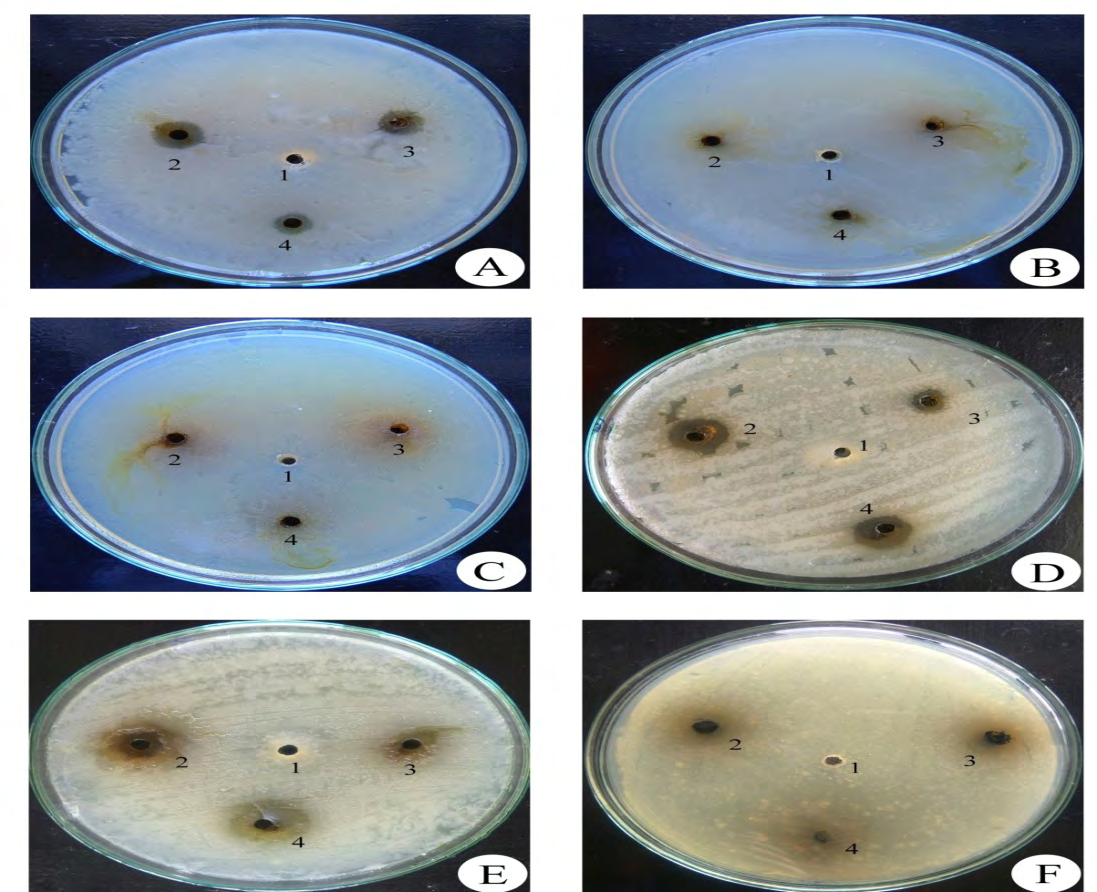
Figure 1: The antibacterial activity of piper betel performed against available pathogens. The zone of inhibitions mentioned are against highest concentration tested (20µg) only. 1: Control; 2: Chloroform extract; 3: Acetone extract; 4: Ethanol extract. A. Klebsiella pneumonia, B. Escherichiya coli, C. Pseudomonas aeruginosa, D. Enterococcus, E. Proteace species, F. Salmonella species.
| Bacterial species tested | Extracts from | ||
|---|---|---|---|
| Chloroform | Acetone | Ethanol | |
| Klebsiella pneumonia | 9mm | 7mm | 11mm |
| Escherichiya coli | - | - | - |
| Pseudomonas aeruginosa | - | - | - |
| Enterococcus sp | 9mm | 6mm | 11mm |
| Proteace sp | 8mm | 7mm | 13mm |
| Salmonella sp | - | -- | - |
Table 1: Antibacterial activity of three different extracts (Acetone, Chloroform and Ethanol) of piper betel leaves.
The zone of inhibitions mentioned are against highest concentration tested (20µg) only. Table 1: Antibacterial activity of three different extracts (Acetone, Chloroform and Ethanol) of piper betel leaves.
| Extract | Compound 1 | Compound 2 | Compound 3 | Compound 4 | Compound 5 |
|---|---|---|---|---|---|
| Acetone | 1.5 | 4.3 | 5.2 | 6.3 | 7 |
| Chloroform | 1 | 3.2 | 3.9 | 5 | 6.8 |
| Ethanol | 1.1 | 2.5 | 4.2 | 5.5 | 6.6 |
Table 2: Relative frequency (Rf) of 3 different extracts of piper betel leaves.
The ethanolic extract turned out to be most effective for its antibacterial activity against three bacterial strains. The Chloroform extract was less effective for antibacterial activity as compared to Ethanolic extract. The acetone was least effective among all three extracts for antibacterial activity.
The antimicrobial properties of plants have been investigated by a number of studies worldwide and many of them have been used as therapeutic alternatives because of their antimicrobial properties. Plants are the cheaper and safer alternative sources of antimicrobials [14]. Plants have been used for thousands of years to flavor and conserve food, to treat health disorders and to prevent diseases including epidemics. The knowledge of their healing properties has been transmitted over the centuries within and among the human communities. Currently, data on the antimicrobial activity of numerous plants, so far considered empirical, have been scientifically confirmed, concomitantly with the increasing number of reports on pathogenic microorganisms resistant to antimicrobials. Plant derived products may potentially control microbial growth and treatment of disease [15].
Medicinal plants have been found as important contributors to the pharmaceutical, agriculture and food industries. Due to side effects, high cost and emergence of resistant microbes the use of synthetic drugs are discouraged by the time. The medicinal properties of plants could be based on the phytochemical compounds present in them. The isolation, purification and characterization of bioactive compound from the crude extract is an essential step for the preparation of drugs.
Various solvents like water, chloroform, methanol, ethanol, acetone, etc., are commonly used for preparing plant extracts. The purpose of using solvents is to extract the active principle from plant components. In the present study, three different solvents were used viz., ethanol, aetone, and chloroform. Of all, the ethanolic extracts of all the betel leaves showed better antimicrobial activities against K. pneumonia, Enterococcus, Proteace maximum with inhibitory activity of 13mm against Proteace species than other solvents. The solvent ethanol can able to extract more antimicrobial compounds including polyphenols, tannins, terpenoids, saponins, xanthoxylines, lactones, flavones and phenol etc., Most of studies reported that ethanol is a better solvent for the extraction of different compounds from plants and this has been confirmed in the present study.
Piper betel leaf extracts containing high concentration of fatty acids like palmitic acid, stearic acid and hydroxy fatty acid esters shows potent antimicrobial activity against diverse pathogenic microorganism [16]. The phytochemical analysis of the betel leaf extract revealed the presence of important bioactive components. From other scientific studies and researches it was observed that the presence of antioxidants in other medicinal plants imparted antimicrobial properties to those plats. These studies prompted us to study the antimicrobial properties of betel leaf extract [5].
Also, the crude Piper betle leaves extract may have influenced the adhesion between the cell surface of the bacteria and the host surface via ionic interaction which could be responsible for the adherence effect demonstrated and also it has an influence on the cell surface area of the bacterial [17]. In present study among the six bacteria the maximum inhibition was observed against Klebsiella pneumonia and Enterococcus. The maximum bactericidal activity was observed only towards Klebsiella pneumonia, escherichiya coli, enterococcus and Staphylococcus Saureus [18].
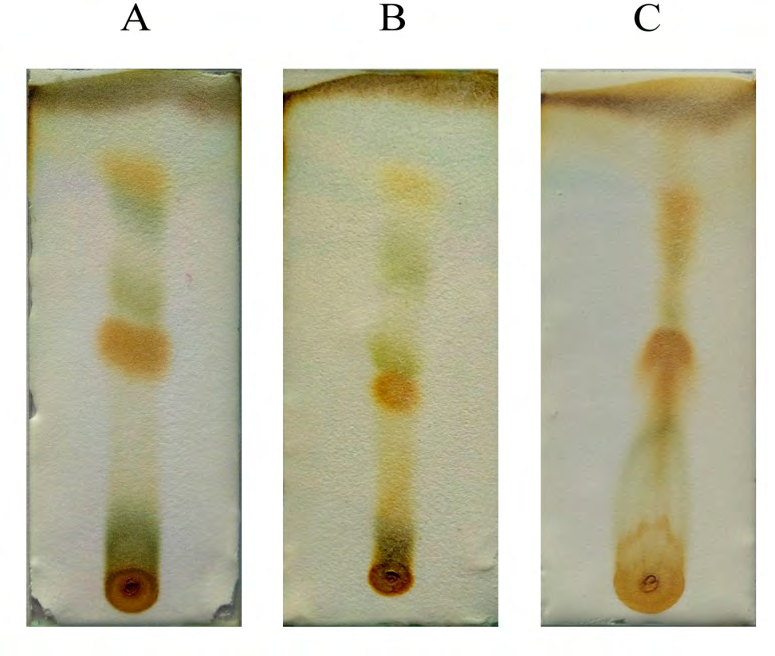
The TLC profile of all the three extracts showed five possible compounds/molecules present in the betel leaves (Figure 2). In this study also revealed that all the three extracts showed antibacterial activity against Klebsiella pneumonia, Enterococcus and protease. These results indicate that the betel leaf may have differential antibacterial activity against many bacterial species (Table 2).
In conclusion, the three different extracts of Piper betel leaf extract with five possible compounds showed antibacterial activity against Klebsiella pneumonia, Enterococcus and proteace. The isolation and characterization of molecule responsible for activity against each bacterium to be elucidated in future studies.
References
-
Monaco MK, Stein J, Naithani S, Wei S, Dharmawardhana P, Kumari S, et al. (2013) Gramene 2013: Comparative plant genomics resources. Nucleic Acids Res 42: 1193- 1199.
-
Karna P, Chagani S, Gundala SR, Rida PCG, Asif G, et al. (2021) Benefits of whole ginger extract in prostate cancer. Br J Nutr 107: 473-484.
-
Sarma C, Rasane P, Kaur S, Jyoti S, Joginder S, et al. (2018) Antioxidant and antimicrobial potential of selected varieties of piper betle L. (Betel leaf). An Acad Bras Cienc 90: 3871-3878.
-
Bhattacharya S, Chaudhuri SR, Chattopadhyay S, Bandyopadhyay SK (2007) Healing Properties of Some Indian Medicinal Plants against Indomethacin-Induced Gastric Ulceration of Rats. J Clin Biochem Nutr 41: 106- 114.
-
Datta A, Ghoshdastidar S, Singh M (2011) Antimicrobial Property of Piper betel Leaf against Clinical Isolates of Bacteria. Int J Pharma Sci Res 2: 104-109.
-
Arambewela LSR, Arawwawala LDAM, Ratnasooriya WD (2005) Antidiabetic activities of aqueous and ethanolic extracts of Piper betle leaves in rats. J Ethnopharmacol 102: 239-245.
-
Guha P (2006) Betel Leaf: The Neglected Green Gold of India. J Hum Ecol 19: 87-93.
-
Kamal T, Nazir KHMNH, Parvej MS, Rahman MT, Rahman M, et al. (2018) Remedy of contamination of multidrug resistant Salmonella and Escherichia coli from betel leaves (Piper betle) keeping them fresh for long time. J Adv Vet Anim Res 5: 73-80.
-
Tarun A, Rachana S, Amar Deep S, Imran W, Ankita G (2012) Comparative analysis of antibacterial activity of four piper betel varieties. Adv Appl Sci Res 3: 698-705.
-
Caburian AB, Osi MO (2010) Characterization and Evaluation of Antimicrobial Activity of the Essential Oil from the Leaves of Piper betle L. E-International Sci Res J 2: 2-13.
-
Caceres A, Cano O, Samayoa B, Aguilar L (1990) Plants used in guatemala for the treatment of gastrointestinal disorders. 1. Screening of 84 plants against enterobacteria. J Ethnopharmacol 30: 55-73.
-
Meyer JJM, Afolayan AJ, Taylor MB, Engelbrecht L (1996) Inhibition of herpes simplex virus type 1 by aqueous extracts from shoots of Helichrysum aureonitens (Asteraceae). J Ethnopharmacol 52: 41-43.
-
Chakraborty D, Shah B (2011) Antimicrobial, antioxidative and antihemolytic activity of piper betel leaf extracts. Int J Pharm Pharm Sci 3: 192-199.
-
Vignoli JA, Bassoli DG, Benassi MT (2011) Antioxidant activity, polyphenols, caffeine and melanoidins in soluble coffee: The influence of processing conditions and raw material. Food Chem 124: 863-868.
-
Silva NCC, Fernandes A (2010) Biological properties of medicinal plants: A review of their antimicrobial activity. J Venom Anim Toxins Incl Trop Dis 16: 402-413.
-
Rajeshbabu P, Ayyanar M, Rasool SK, Sheriff MA, Sekar T (2011) In vitro antibacterial activity of Piper betel L. and Black betel CV. Kammar leaves against Staphylococcus aureus and Streptococcus pneumoniae. J Pharm Res 4: 2223-2225.
-
Rahim HZA, Thurairajah N (2011) Scanning Electron Microscopic study of Piper betle L. leaves extract effect against Streptococcus mutans ATCC 25175. J Appl Oral Sci 19: 137-146.
-
Subashkumar RM, Tha T (2013) Antibacterial effect of crude aqueous extract of Piper betle L. against pathogenic bacteria. Int J Res Phar Biomed Sci 4: 42-46.
- Mitochondrial Bio-Logistics: Steering Co-Enzyme Q10 and Lycopene Synergies within the Science 4.0 Bio-OS Framework
- Hymenoptera Specimens from the Caño Negro Wetland, of the National Museum Collection, Costa Rica
- Science 4.0: Comprehensive Architecture of the Biological Operating System (Bio-OS) A Framework for Systemic Resilience and Industrialized Bio-Governance
- Rabbit on, or Hare Back? Understanding Climate Change
- Clinical Validation of Science 4.0: Flow Steering and Epigenetic Drift Inversion on a 76-Year-Old Hybrid System
- Seeds Planted by another Mind