
Parasite Species Richness of Fish from Fish Ponds and Fingerling Sources in Central Ethiopia: It’s Implication on Aquaculture Development
This study was conducted from from Lake Koftu, Sebeta ponds and selected private fish farms in Wonchi area, Ethiopia. The main objective was to compare the major parasites of O. niloticus and determining fish parasites diversity and richness in the three study sites. A total of 302 O. niloticus were examined using conventional parasitological examination procedures. From the sampled fish, 11 different genera of parasites were identified in the three study sites. One genus of Protozoa, one genus of Monogenea, unidentified larvae of Cestoda, four genera of Digenea, two genera of Nematoda, one species of Acanthocephala and one genus of Crustacea were recorded. The overall prevalence of parasites of O. niloticus covering all study sites was 83.4%. The prevalence of parasites in Koftu Lake, Sebeta ponds and private fish farms were found to be 100%, 71.0% and 82.2% respectively. There was statistically significant difference (p<0.05) between the study sites in overall prevalence and mean intensity of the parasite infestations. Koftu Lake and Sebeta ponds have higher diversity indices and show the same community similarity coefficient. Values of prevalence mean intensity and diversity of the parasites were especially high in Koftu Lake and there is a need to design control strategies especially when fingerlings from the lake are used for stocking in other water bodies and intensive and small-scale fish farms.
Introduction
Ethiopia has large water resources with estimated surface area of 733k km2 of major lakes and dams, 275 km2 of small water bodies and 7,285 km long rivers within the country [1]. The numbers of constructed water dams are also in progress for hydroelectric power generation and irrigation purpose including the Great Renaissance Dam. As a result of these ecological variations, the country has been the home of highly diversified flora and fauna. More than 200 species of fish are known to occur in lakes, rivers and dams in Ethiopia [2]. The country depends on its inland water bodies for fish supply for its population. The annual fish production potential of the country based on empirical methods on individual lake surface area and mean depth of major water bodies was estimated to be 94,500 tonnes [3].
The Ethiopian fisheries sector contributes to the gross domestic product (GDP) and thus plays an important role in the national economy [3]. Fishing as an economic activity earns people a living, provides protein food, employment, job opportunities, fish traders, fish processors and fish farmers. Therefore, efforts by the government of Ethiopia for intensification of fish production have been in top gear. With this expected growth in fish production, the quality and biosafety of the fish need to be guaranteed [4, 2].
Parasites are important components of host biology, population structure and indeed ecosystem functioning. They can be found in any fish species and within any type of aquatic and culture system. They range from protozoans such as flagellates, ciliates, and apicomplexans to metazoans including myxozoans, trematodes, cestodes, acanthocephalans, nematodes, and crustaceans [5]. The knowledge of fish parasites is of particular interest in relation not only to fish health but also to understanding ecological problems in tropical Africa. Fish parasites have long been recognized as serious threats of fish both in aquaculture and fisheries [6]. Because of this recognition, there has been in the recent past an increasing interest and an explosion of knowledge, reports and description of new species of parasites from the African continent [7]. However, much of the research has been mainly concentrated in Western and Southern African countries with very little work from Eastern Africa [8].
Studies on fish parasites in Ethiopia are very scarce and very few research articles deal with parasites in larger water bodies including a report of fish in Lake Tana, Lake Hawwasa, Lake Ziway, et al. [9, 10, 11, 12]. This indicates a slow progress in research in fish diseases and parasites. There are also some recent published articles on fish parasites of Ethiopian water bodies such as Lake Lugo, Small Abaya, Lake Ziway, et al. [13, 14, 15]. Koftu Lake has commercially important fish species where Sebeta fishery research centre is collecting fingerlings and disseminating them for small scale fish farmers when there is demand. Most parasites are easily transferred from the wild stocks to cultured stocks due to their direct nature of transmission and lifecycle. But in spite of the high commercial value of fishesin Koftu Lake, there is no documented work for fish parasites in the lake and no previous study on the status of parasites along the chain of fingerling stocking line from source to farmers.
Ecto and endo parasites can be serious pathogens of fish which can cause morbidities and mortalities in fish. They attack the vital organs such as gills, heart, and intestine, skin and eyes which essential for normal body functioning. There is a lack of knowledge and past records of the species of internal and external parasites infecting fish from most Ethiopian water bodies and fish farms is no exception. There is no previous study and report on parasite status of fish from the selected study sites for this study. Koftu Lake is one of the main sources of fish fingerlings to restock small water bodies and small scale fish farms. But the potential risks associated with fish parasites that can easily be transmitted to these water bodies and farms are not known. Therefore, the objectives of this study are to compare the epidemiological parameters of identified fish parasites and determine the parasites diversity and richness from the wild fish source and in fish farms.
Materials and Methods
Study Area
The study was conducted in Koftu Lake which is the source of fingerlings for the center and to dispatch to private and governmental fish farms, Sebeta ponds and selected private fish farms in Wonchi area, Ethiopia. Lake Koftu is located 50 km west of the capital Addis Ababa. The lake is situated at an altitude of approximately 1800 meter above sea level in the North-Western highlands of the country 80.82’N, 390.06’E. There are many human activities being done at the shoreline of Koftu Lake including animal watering and washing, cloth washing. The surrounding area is intensive agricultural land and farming is done to the shore of the lake. The land is not well vegetated and there is evidence of runoff in the lake which may affect the animal fauna serving as intermediate hosts for many fish parasites.
Sebeta fish Farm is located in Oromia regional state in Sebeta city administration. It is 24 km far from the capital city Addis Ababa. Sebeta fish farm has established in 1977 under the ministry of agriculture now called National Fishery and Aquatic Life Research Centre. The centre has 32 fish rearing and experimental ponds constructed from earthen ponds, concrete ponds and lined ponds. It is situated at 2200m above sea level and an altitude of 8°55′N 38°37′Ecovering a total area of 16 hectare. The area is characterized by a moderately warm climate with annual mean temperature of about 21OC.
The small scale fish farm selected for this study in South- West Shoa zone of Oromia region, Wonchi woreda (Senkole Kebelle), Ethiopia. The area is characterized by mixed farming system where crop and livestock are integrated [16]. It is located 157 km far from Addis Ababa and at an altitude of 2,063 m above sea level with coordinates of 8032’N 37058’E. In the Wonchi area, farmers are organized by group and have more than 21 small scale fish farmers in the district.
Sampling Design
The fish species included in the current study, O. niloticus, is the most cultured and economically important fish as it is preferred by many farmers and consumers. A cross sectional study was conducted to identify the most abundant parasites species in the study sites. A total of 302 O. niloticus were investigated from the three study sites.
Fish were collected mostly by fishing with seine nets in all the study sites. Fish were put in a fish tank with lake water and oxygen filled polyethylene bag and transported alive to the National Fishery and Aquatic Life Research Centre, Sebeta. They were killed by severing the spinal cord. All fish were weighed and the total length of the fish were taken using digital weighing balance and meter rule respectively and recorded.
Examination of Fish for Parasites
The external body surface including scales, gills, fins and operculum of freshly caught fish specimens were examined for external parasites. Any abnormalities on the fish were recorded. A hand lens was used for quick identification of ectoparasites on the skin and fins of the fish sample. Skin was also checked if there were capsules with metacercariae of trematodes in black dots and yellowish cysts which were sliced off the skin for further investigation. Scrapings from the fish skin were taken with a cover slip on dorsal part of the head and ventral region of the fish from head to just after the anal point and from fins. The mucus sample is then smeared onto a clean microscope slide along with a drop of pond/lake water. The sample was then covered with a cover- slip and examined under compound microscope on 100x and 400x magnification. The opercula were removed using scissors and gills were removed and then placed in Petri dish containing normal pond water. Gill rakers were detached apart by forceps and examined under stereomicroscope for the presence of worms.
For internal examination, the fish were dissected from anus ventrally along the middle of abdomen to mouth with care not to damage the internal organs and parasites in the body cavity. Then the fish was opened by cutting from anus up to the lateral line, then further along the lateral line up to operculum and the detached part was removed. Pericardial cavity, mesentery, liver, gonads, body cavity, sites behind the gills and other internal organs were checked for helminths by naked eyes and microscopically. The digestive tract was taken out together with pharynx, cleaned of adipose tissue and mesenteries; dissected along using scissors and investigated by parts. The inside part of the gut were examined by stereomicroscope and macro parasites were taken out using forceps. The ‘gut wash method’ [17] in saline was used to examine the intestinal contents. The eye balls were taken out using scissors and forceps. It was then crushed and examined under the stereo microscope and compound microscope. The kidneys and the liver were also examined for the presence of parasites.
Identification of Parasites
The identification of parasites collected was based on the distinctive body shapes and the morphological features of the collected specimen and those described in literature [13, 18]. A key to identification modified from Paperna [19] for identification of the major taxa of adult parasites of fish was exhaustively used. Taxonomic identifications were mostly limited to genus level except Acanthogyrus tilapia because the fish harbours mostly larval stages of nematode and trematode parasite and could not be distinguished to species level morphologically. The adult stage which is easy to identify is usually in the bid final host. Larval forms without visible diagnostic characteristics, such as sex organs, cannot be differentiated with certainty among taxa [20].
Protozoans and monogeneans were identified mainly based on the morphological characteristics of the fresh specimen referring standard manuals and scientific papers. The metazoan and crustacean parasites were preserved and taken to Natural History Museum (Austria) for detail morphological identification in the laboratory while they are in 80% Ethanol alcohol. In the lab further identification of crustaceans, acanthocephalans and digenesis, the specimens were stained in glycerine-ethanol for few days to remove the alcohol in the specimen and make it more visible under stereomicroscope.
Statistical Analysis
The collected raw data was entered in to Microsoft excel data sheets and analysed using SPSS-21 statistical software. Descriptive statistics, percentages and 95% confidence intervals were used to summarize the proportion of the infested. Statistical significance was set at p<0.05. Prevalence, intensity and abundance were analysed by using the calculations formulated by Bush, et al. [21]. U-test (Mann- whiten test) was used to compare intensities in the different study sites. Variance to mean ratio was calculated using excel to plot the distribution pattern of parasite infestation in the hosts. Shannon and Simpson`s species diversity indices were used to compare the parasite diversity of each study site.
Results
Water Physico-Chemical Parameters of the Three Study Sites
The physico-chemical parameters were measured during the study and their mean value were within the normal and tolerable range required for normal physiological activity of O. niloticus (Table 1). The desirable ranges of water dissolved oxygen; PH, temperature and conductivity for Nile tilapia are 4.5-8 mg/L, 6.5-9, 20-300C and 30-500 µc/cm respectively. A change from the desirable ranges of the physico-chemical factors may cause significant stress to the fish hence increasing its susceptibility to disease [22, 23].
| Parameters | Koftu Lake | Sebeta ponds | Private farms |
|---|---|---|---|
| DO(mg/l) | 5.62±0.26 | 7.10±0.66 | 4.15±0.78 |
| DO (%) | 78.03±2.93 | 104.00±12.63 | 57.10±10.79 |
| PH | 7.18±0.05 | 8.13±0.67 | 7.19±0.05 |
| Temperature (°C) | 18.50±0.65 | 20.33±0.74 | 18.03±0.66 |
| Conductivity(µc/cm) | 266.00±4.78 | 157.10±24.38 | 260.33±8.37 |
| Salinity | 146.50±4.63 | 79.90±11.99 | 144.93±6.29 |
Table 1: Common physico-chemical parameter values (mean ± SE) of the study sites.
*DO=Dissolved Oxygen Table 1: Common physico-chemical parameter values (mean ± SE) of the study sites.
Prevalence of Commonly Identified Fish Parasites
In this study, a total of 302 O. niloticus fish caught randomly from the study sites were examined for the presence of parasites from October 2016 to February 2017. Out of the 302 O. niloticus examined in the three study areas, 251 (83.4%) of them were infested with single or multiple parasites belonging to different genera. The fish from Koftu Lake showed 100% prevalence followed by private fish farms with a prevalence of 82.2%. Private fish farms have relatively lower prevalence than others (71.09%).
Different types of parasites both from internal organs and external body surfaces of the both fishes were identified. The most prevalent parasites species were the external parasites protozoan Trichodina spp. and the monogenetic trematode Cichlidogyrus spp. with a prevalence of 52.96% and 52.63% respectively followed by the digenean trematode Tylodelphys sp. from the eye of the fish.
Comparison of Common O. Niloticus Common Parasites among the Three Study Sites
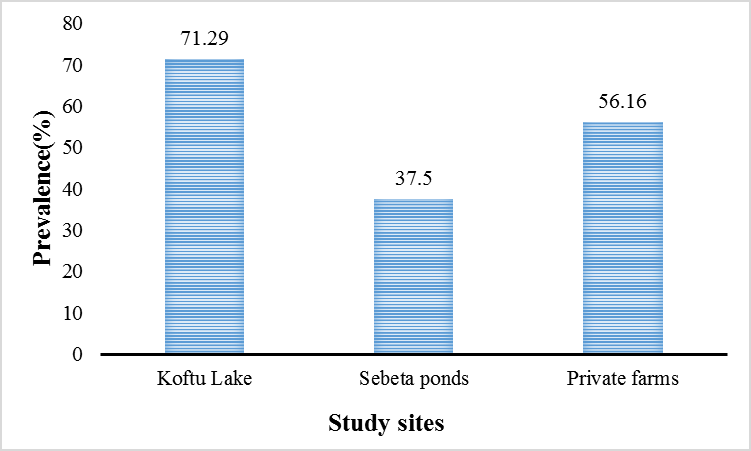
Trichodina spp. was the only protozoan parasite encountered in Lake Koftu, Sebeta ponds and Wonchi farms. The overall prevalence of Trichodina spp. in the three study sites was 52. 96%. The highest prevalence was observed in Koftu Lake with prevalence of 71.29% and the lowest was in Wonchiprivate fish farms with a prevalence of 37.50%. Infestation of the protozoan external parasite Trichodina spp. was higher in the natural water body (Koftu Lake) than the in cultured fish in Sebeta ponds and selected private ponds in Wonchi area.
Cichlidogyrus sp. was the only monogenetic trematode found in this study. The parasite occurred in O. niloticusin all three study sites with a total prevalence of 52.62. The highest values were recorded in Koftu Lake with a prevalence of 78.2% with a mean intensity of 12.5 worms per infected fish and the lowest was recorded in Sebeta fish ponds with a prevalence of 33.6% and mean intensity of 13. The mean intensity from O. niloticus of private farms was the least among the three study sites with 2.84 parasites per infected fish. Mann-Whitney U-test for intensities of Cichlidogyrus sp. showed that the intensity of Cichlidogyrus sp. in Koftu Lake is significantly different from Sebeta ponds and Wonchi private fish farms (Z=-7.721, p=0.00). A significance difference between the three study sites could be observed (P<0.05).
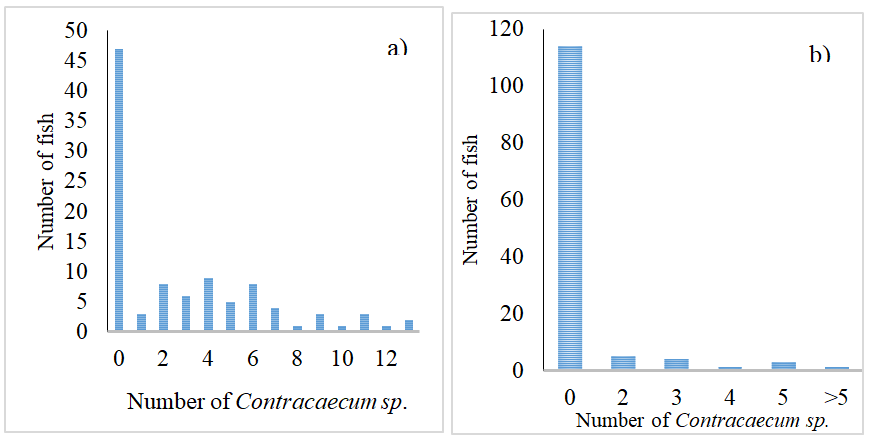
Figure 3 below shows the frequency distribution of Cichlidogyrus sp. in the three study sites. The index of dispersion was calculated for the infestation level and its frequency distribution of parasites which intensity was counted and calculated. The variance to mean ratios (v/m) of the Cichlidogyrus sp. in Koftu Lake, Sebeta ponds and selected private fish farms in Wonchi area are greater than one. High infestation of Cichlidogyrus sp. was on little number of fish sampled for the investigation and this shows over dispersion of the parasite with in the host population. The fish from Koftu Lake had relatively lower dispersion than the other two and most fish were infested by higher number of parasites. On the other hand, high number of infestation was only on little number of fish and the number of uninfected fish was high in Sebeta ponds and the private farms.
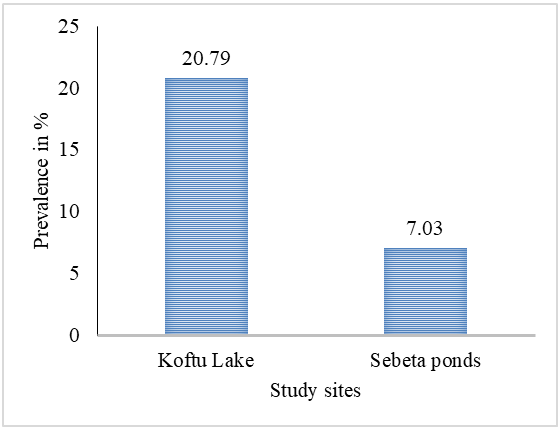
Plerocercoides of cestodes were encountered from Koftu Lake and Sebeta ponds with a prevalence of 20.79% and 7.03% respectively. The larval cestodes were found encysted in the liver and the wall of intestine but cestodes were not found in selected private fish farms (Figure 4).
Three genera of trematodes were identified from the three study sites including Clinostomumspp, Euclinostomumspp. and Tylodelphyssp. Back spot metacercariae were also found but was difficult to identify to genera level. Clinostomum sp. was found in Koftu Lake with a prevalence of 51.49% each infected with a mean intensity of 3.35 worms per fish. It was also found in Sebeta ponds with prevalence of 7.03% and mean intensity of 4.4 worms. Clinostomum sp. was not encountered in selected private farms in Wonchi area (Figure
5).
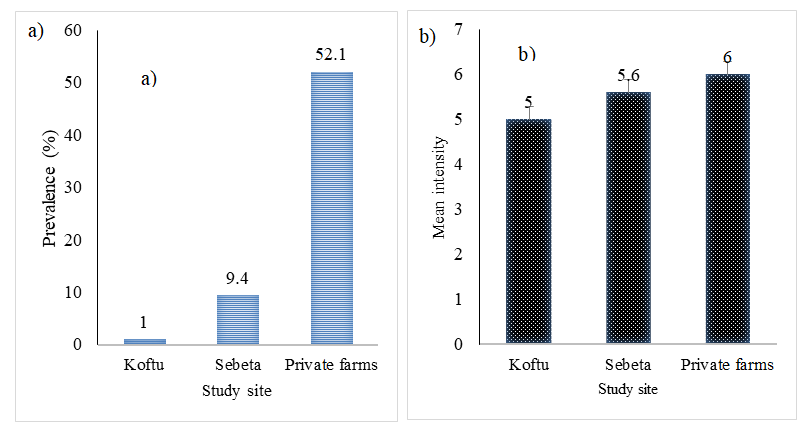
In this study, Euclinostomum spp. was one of the common parasites found in the three study sites but most dominant one in selected private fish farms with prevalence of 52.0% and the least was from Koftu Lake having prevalence of 0.98%. Mann-Whitney U-test for intensities of Euclinostomum spp. showed that the intensity in Sebeta ponds is significantly different from Wonchi fish farms (Z=-6.717, p=0.00).
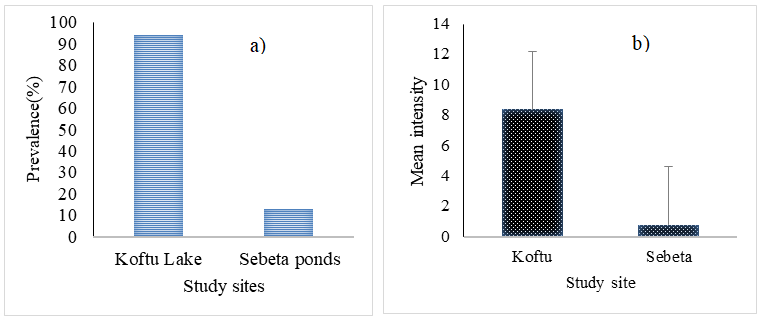
The digenean trematode Tylodelphys sp. was found in O. niloticusof Koftu Lake with a prevalence rate of 94.06% and mean intensity 8.42 parasites per infected fish. The prevalence and mean intensity in Sebeta ponds was 12.50% and 0.81 respectively which is much lower than Koftu Lake.
The parasite was not found in private farms in Wonchi area. Blackspot metacercaria were found in koftu Lake and Sebeta ponds with a prevalence of 27.72% in Koftu Lake and 23.44% in Sebeta ponds (Figure 6).
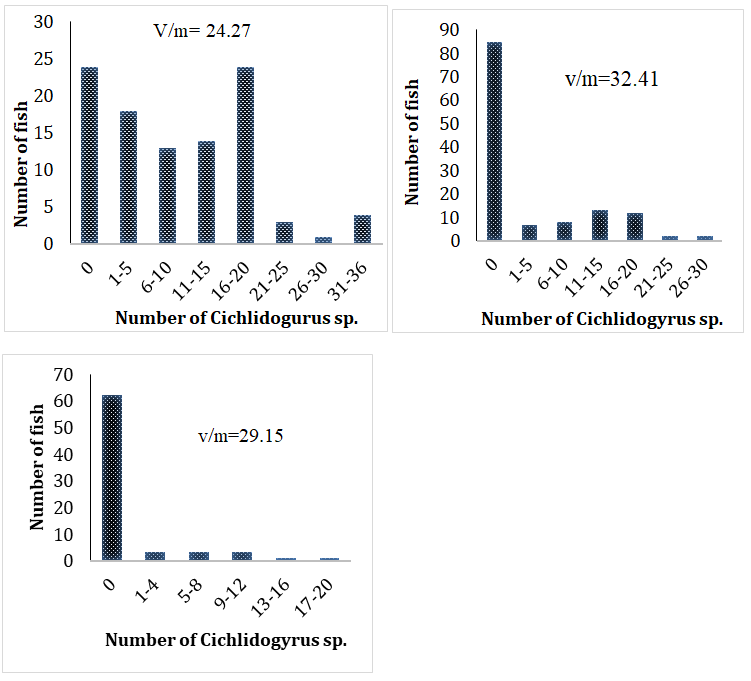
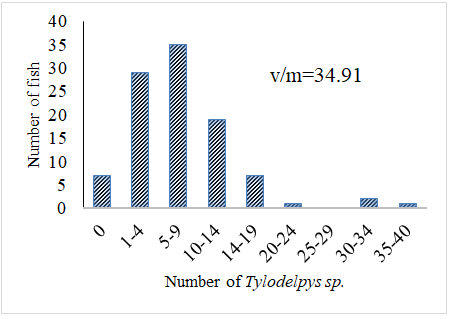
The index of dispersion (variance to mean ratio) of Tylodelpys sp. in Koftu Lake O. niloticus fish had also a value greater than one and it showed over dispersion in its distribution. There are few number of fish which are not infested by the parasites (Figure 7).
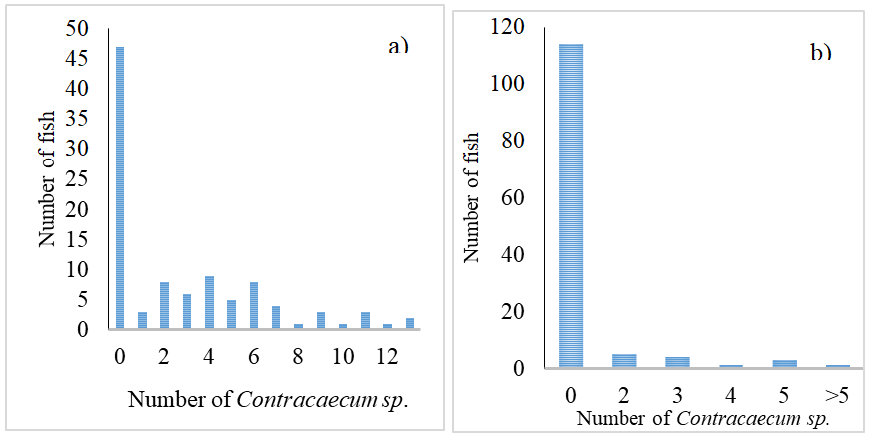
Among the nematode parasies, Contracaecum spp. and unidentified intestinal nematode were identified from O. niloticus of Koftu and Sebeta ponds. Higher prevalence of Contracum spp. was found from Koftu Lake which is 54.46% but it was lower in sebeta with prevalence of 17.19%. But the mean intensites from the two study sites are not that much different being 5.27 in Koftu Lake and 5.91 in Sebeta ponds. The prevalence of unidentified nematodes was 1.98% and 0.78% in koftu Lake and Sebeta ponds respectively. Mann- Whitney U-test for intensities of Contracaecum spp. showed that the intensity in Koftu Lake is significantly different from Sebeta ponds (Z=-7.335, p=0.00) (Figure 8).
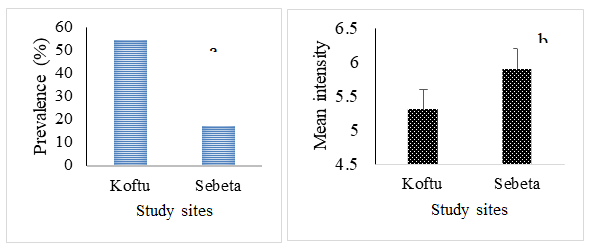
Most of the fish were not infested by Contracaecum sp. and the pattern was over disperses in Koftu Lake and Sebeta ponds. In Koftu Lake, there are some fish which are infested by parasites with lower intensity and very few were infested by high number of parasites (Figure 9).
All the Acanthocephalans found in this study were identified as Acanthogyrustilapiae.The location of the parasite was in the intestine of the fish. The prevalence of A. tilpia in O. niloticus of Sebeta ponds was 11.72% and mean intensity was 7.33 worms per infected fish. It was lower in private farms with a prevalence of 1.37% and mean intensity of 2 but it was not found in Koftu Lake fishes.
Parasite Diversity and Species Richness
The parasites fauna of fish from Koftu Lake is more diverse than Sebeta ponds and Wonchifish farms as shown by the Simpsons Diversity Index and Shannon index. The parasites fauna of private fish farms are least diverse than others (Table 2). The closer the Simpsons Diversity index (1-D) and Shannon index (H) to 1, the more diverse is the parasites fauna of fish.
| Study Site | Simpsons Diversity Index(1-D) | Shannon Index(H) + Evenness | Parasite richness | Dominant group of parasites |
|---|---|---|---|---|
| Koftu | 0.66 | 1.24 + 0.20 | 6 | Digenea |
| Sebeta | 0.59 | 1.23 + 0.63 | 7 | Protozoa |
| Farms | 0.44 | 0.66 + 0.60 | 3 | Protozoa |
Table 2: An index of parasite diversity and evenness.
Parasite community similarities were calculated by the Sorenso’s coefficient. Table 3 shows the community similarity of parasites in relation to the respective study sites. Sorenson’s community similarity coefficient between Koftu Lake and Sebeta ponds was 0.76. This value is close to 1 and showed that the most species found in Koftu Lake were also found in Sebeta ponds. In random sampling of individuals, there was a probability of 76% to find the same species from Koftu Lake and Sebeta ponds. But the probability to of finding individual parasites in random sampling from Kofu Lake and selected private fish farms in Wonchi area is 46% and that of Sebeta ponds and fish farms is 44%. Hence, the parasite community is more dissimilar in Sebeta ponds and private fish farms communities than the other two combinations.
| Koftu Vs Sebeta | Koftu Vs Farms | Sebeta Vs Farms | |
|---|---|---|---|
| Sorenson’s coefficient | 0.76 | 0.45 | 0.4 |
Table 3: Parasite component community similarity by Sorenson’s coefficient.
Discussion
The protozoan Trichodina spp. was found in Koftu Lake, Sebeta ponds and private fish farms in Wonchi area. Previous reports show that Trichodina spp. was recorded on fish in Kenya, Uganda and Ethiopia in cages, ponds and natural water bodies. The prevalence showed lower values in natural water bodies and higher in cultured fisheries. For example in Uganda, a comparative study conducted in ponds, cages and wild O. niloticus fish showed a prevalence of 34.6%, 22.2% and 1.8% respectively [13]. Tadesse, et al. [24] also reported higher prevalence of Trichodina spp. in cultured systems in Yemlo and Wonji ponds with a prevalence of 56.67 and 46.70 % respectively, but lower prevalence in natural water bodies of Lake Awassa and Lake Babogaya with prevalence of 10% and 14.4% was reported. In contrast the present investigation reveals different results than the above mentioned studies. The prevalence in Koftu Lake (70.59%) which is a natural water body is much higher than from cultured fish in Sebeta ponds (37.59%) and private fish farms (53.25%). The continuous change and inflow of stream water in to Sebeta ponds and fish farms may probably be the reason for the low infestation of Trichodina spp. in cultured Nile tilapia. The human activities in and around Koftu Lake might cause deterioration of the water quality due to high organic matter load which favors the proliferation of protozoan parasites. Further studies should be done considering biotic parameters such as fish density, abundance and reproductive status and abiotic factors including nutrients and other water quality parameters. Most of protozoan parasite are ubiquitous in aquatic systems and can cause great loss in fish farms by parasite induced host mortality. This might be supported by poor water quality and presence of external damage on fish body which lead to stress and favour the multiplication of the parasite on fish [19].
Among the monogeneans, Cichlidogyrus sp. was observed from all the three study sites in gills of O. niloticus. It is an external monogenetic trematode common in African water bodies reported from Uganda and Ethiopia [13]. High prevalence of Cichlidogyrus sp., 77.45% was found in Koftu Lake and the lowest being in Sebeta ponds with prevalence of 33.59%. This agrees with reports from Uganda where the highest prevalence was found in wild fish with prevalence of 63.35% compared to cultured fish which is 31.7% [13]. This result also contradicts the idea of Martines, et al. [25] who explains that external parasites are more successful in fish farms where they spread easily to multiple hosts because of the overcrowding. They have the ability to reproduce faster and transmit from fish to fish in aquaculture than in natural conditions. Low water exchange and poor bottom hygiene as well as stocking density are the main risk factors favouring spread of infestation and may represent a further conditioning factor leading to heavy gill infestation in farmed fish [13]. The higher prevalence in Koftu Lake and lower prevalence in Sebeta ponds might probably due to the fact that water in Sebeta ponds is regularly regulated and there is continuous discharge of water to the ponds. The agricultural activity around the Shore of Koftu Lake may also contribute to the water quality deterioration and high reproduction of the parasites.
In the present study, plerocercoides of cestodes were found encysted as white patches spread all over the liver and intestinal wall of the fish. The fish serves as intermediate host in this case. At least one intermediate host is required to complete their life cycle. Fish can serve as both intermediate and sometimes final host [18]. Identification of the plerocercoid larvae to genus level was not possible morphologically. The parasite was investigated in O. niloticus of Koftu Lake and Sebetaponds with a prevalence of 20.59% and 7.03%respectively. Tadesse, et al. [24] reported encysted plerocercoids of the cestode Amirthalingamiamacracantha in the liver of Nile tilapia from pond of Wonji, Yemlo and Lake Babogaya with prevalence of 3.33%, 6.67% & 11.43% respectively, in Ethiopia. The prevalence of cestode parasites was 10% in wild fish and 6.1% in caged Tilapia in Ethiopia during parasitological survey [13]. Outbreaks of cestode parasites could occur in lakes or reservoirs where copepods or Tubificid oligochaetes are often abundant and intensities and prevalence of most cestodes have seasonal peaks [26].
The digeneanvClinostomum sp. was one of the most common parasites identified in Koftu Lake and Sebeta ponds. This parasite species was also identified in many water bodies in Ethiopia including Tana Lake [12], Yemlo and Wonjipond, Babogaya Lake and Awassa Lake [24], Lugo Lake [27], Koka reservoir [28], Small Abaya [15] and Ziway Lake [14].
In this study, the prevalence of Contracaecum sp. in Koftu Lake was 50.98% and mean intensity was 3.4. The results are similar to reports of Contracaecum sp. FromO. niloticus from in Awassa Lake with a prevalence of 50%, but the mean intensity was higher in Awassa with 7 worms per fish than Koftu Lake which is 3.4. This could be attributed to the size of the fish sampled for the study. The size of the fish sampled in this study was smaller ranging from 6.5cm to 18cm in Koftu Lake. Smaller fish harbor lower numbers of parasites than bigger fish as there is a longer duration of exposure to parasitic agents in the environment which increases the chance of acquiring more parasites. Small fish also provide smaller surface area for the parasite availability on the host than larger fish [26, 27].
Prevalence of the parasites in Koftu Lake was higher than reported in Lugo Lake with a prevalence of 33.8% [27], Koka reservoir with prevalence of 27.39% [28], Lake Ziway with a prevalence of 8.60% [14] and Small Abya Lake with a prevalence of 18.8% [15]. The prevalence in Sebeta ponds was 7.03% with 4.4 worms per infested fish which is lower than Yemlo pond with a prevalence of 23.3% and Wonji cages with a prevalence of 20% [13, 24, 29]. This variation in prevalence of Clinostomum sp. could be due to the fact that it has an indirect life cycle with snails as first intermediate and fish eating birds as final host and the fish itself as the second intermediate host. Therefore, lower and higher abundance of the snail intermediate hosts and the fish eating birds as final host in the different study sites might play a contributing role in the variation of the prevalence.
Clinostomum sp. from Sebeta ponds might be carried by fingerlings from Koftu Lake during stocking the ponds. Its prevalence and mean intensity in Koftu Lake is 51.0% and 3.3 where as in Sebeta ponds prevalence was 7.3% and mean intensity was 4.4 parasites per fish. This difference in prevalence might be attributed to the presence of high numbers of fish eating birds in Koftu Lake (observation during the study period). In addition, the ponds in Sebeta were fenced and protected by nets placed on top of the ponds to hinder birds from eating fish. This could cause the breaking of the Contracaecum sp. life cycle which consequently might lead to lower prevalence than in Koftu Lake where the fingerlings are brought from (observational study). Kabunda, et al. [30] stated that fish heavily infested by Clinostomumsp. are often rejected by consumers when marketed whole fish because it gives unsightly appearance for the whole fish and can have economic importance.
In this study, Euclinostomum sp. was found primarily in the kidney but also reported from the gonads and brachial cavity of O. niloticus. Euclinostomum sp. was identified in Koftu Lake, Sebeta ponds and selected private fish farms in Wonchi area. It was also recorded in Ethiopia and Kenya from BOMOSA cage fish [13] like Machakose and Sagana farms [31] and Wonji cages and Awassa Lake [24]. The presence of Euclinostomum sp. was highest in selected private fish farm with a prevalence of 49.35% and a mean intensity of 5.9.
The digenean Tylodelphys sp. was found in O. niloticus of Koftu Lake and Sebeta ponds in the present study but not in private farms. This parasite was reported in Kenya from fish of Machakose and Sagana fish farms [31]. In Ethiopia, it was reported in Wonji ponds, Babogaya Lake and Awassa Lake [24]. It was the most dominant parasite in Kofu Lake with a prevalence of 93.2% and mean intensity of 8.4 worms per fish. This result is much higher than the prevalence recorded in Babogaya Lake, Wonji pond, and Awassa Lake in Ethiopia with prevalences of 2.8%, 6.6% and 6.7% respectively [24]. Florio, et al. [13] also reported 52% prevalence of Tylodelphys sp. in ponds and 50% in wild fish in Kenyan water bodies which is lower than the present study. The higher prevalence of Tylodelphys sp. in Koftu Lake could be associated to higher seasonal peaks of the intermediate hosts in the lake and availability of high numbers of fish eating birds which increase the as abundance of the parasites. It could also be associated with the human activity in and around the lake which could lead to water quality deterioration. This subsequently causes stress for fish and can lower the immune status. Therefore, detailed studies on seasonality of the parasite and its developmental stages as well as water quality issues related to human activities should be done to assess the risk of infection and to take preventive measures.
When there is high infection burden of Tylodelphys sp., it settles between lenses and retina causing partial blindness of fish. Severe infection may also lead to abnormal protrusion of the eye ball, blurred vision and total blindness [13, 19]. This hinders the fish from seeing food and is therefore leading to stunted growth which can lead to economic losses. Moreover fish may also be easily exposed to predators as they cannot escape from their enemy.
In this study, the nematode Contracaecum sp. was found in Koftu Lake and Sebeta ponds but not encountered in selected fish farms. It was reported in many African countries including in Nigeria, Uganda, Kenya [31, 32]. It was also recorded from many Ethiopian water bodies such as Koka reservoir, Yemlo pons, Babogaya, Tana Lake and Small Abay Lake [13, 15, 24, 28]. The prevalence of Contracaecum sp. in Koftu Lake was 53.92% with mean intensity of 5.27 and a prevalence of 17.19 with mean intensity of 5.91 worms per infested fish in Sebeta ponds was. There was no record of this parasite in selected private fish farms. There is a significance difference (p<0.05) in prevalence values of this parasite in the different study sites. This might be attributed to differences in the diversity and availability of zooplankton which serves as intermediate host and fish eating birds to complete its developmental cycle. From our observation, there were many fish eating birds in Kofu Lake and fish in Sebeta ponds were protected by fences and nets over the ponds.
Diversity and Richness
The highest parasite diversity was recorded from O. niloticus of Kofu Lake with Simpson diversity index of 0.66 and Shanon index of 1.24. There were 6 parasite genera identified in this study area. The indices in Sebeta ponds are almost similar compared to Koftu Lake with Simpson diversity index of 0.596, Shanon index of 1.23 and 7 parasite groups. This similarity in diversity and richness of parasites in Koftu Lake and Sebeta ponds may probably be the reason that fish are collected and stay in the Sebeta ponds for experiment and acclimatization for short time. The parasite diversity may not be affected by this short duration of stay and not affected by environmental factors which are not different from Lake Koftu. A similar taxonomic parasite species richness in Koftu Lake and Sebeta ponds has been observed when compared with other research carried out in Kenya, Uganda and Ethiopia [24, 31, 33]. A similar Shanon and Simpson’s diversity index was reported in Ethiopia in Babogaya and Wonji cages by Tadesse [24] in Kenya. Similar diversity index results were also obtained in Baringo Lake, Kenya. The diversity index and species richness in selected private fish farms in Wonchi area were lower than in Koftu Lake and Sebeta ponds. This might be due to the availability of higher numbers of fish eating birds which are final hosts especially for the presence of parasites with indirect life cycles. Most of the parasites discovered in the farms were external parasites with direct life cycles. The most dominant parasite in Koftu Lake was the digenean trematode Tylodelphys sp., but in Sebeta ponds and private fish farms, the protozoan Trichodina spp. was the dominant one. This might be associated with the higher abundance of piscivorous birds in Koftu Lake. Trichodina spp. and Cichlidogyrus sp. have direct life cycles and most common in culture condition than natural water bodies.
Frequency Distribution of Parasites within the Fish Host Population
Frequency distributions help to explain the dispersion concept of parasites in the host species population. Typically, there are three dispersion patterns: under dispersed random and over dispersed distributions. These various patterns help to indicate how parasite and host populations interact between each other. Fish parasites are usually highly aggregated within their host population, showing over dispersion and a negative binomial distribution. This means, that only a small number of hosts harbour nearly all parasites, showing very high infection rates. This variability is caused through heterogeneity in the behaviour and immunity of the host, environmental elements and spatial distribution of development stages of the parasite group. Some species also adopt direct reproduction ways in their hosts. Under dispersed distributions are rarely occurring in nature conditions, creating different theories. One theory implies a lower possibility of infection due to changes of the environment of a host. This is causing a interrupted host biology, with altered food and habitat selection. Nevertheless, many other theories consist, which are explaining under dispersion: parasite mortality, homogeneity and host mortality due to parasite infection.
The distribution patterns for Cichlidogyris spp., Tylodelphys sp. and Contracaecum sp. O. niloticus for all the study sites showed and over dispersion. This over distribution pattern may be attributed to the spatial heterogeneity in the distribution of the parasites which consequently be associated with presence or absence of the intermediate and final hosts. This also could affect the distribution of the infective stages of the parasite among the three different study areas. This study agrees with the study conducted in Yemlo, Wonji, Babogaya Lake and Awwassa Lake which showed over dispersion patterns of parasites for O. niloticus and C. gariepinus [24].
Conclusion and Recommendations
A total of 11 genera of external and internal parasites were found in O. niloticus of in three study sites. Lake Koftu and Sebeta ponds have almost similar parasite species richness which could suggest the introduction of parasites from natural water bodies to cultured condition through fingerlings. All O. niloticus from Lake Koftu harboured single or multiple parasite infestations and had higher parasite diversity than Sebeta and selected private fish farms. Ecto parasites such Trichodina spp. and Cichlidogyrusspp were found on fish in all the three study sites but the Digenea Tylodelphys sp. was the most dominant parasite in Koftu Lake as there are many fish eating birds around the lake. Generally there was low species richness with high dominance of few parasite groups. Clinostomum sp., Euclinostomum sp. And Contracaecum sp. were identified having a public health risk by eating raw fish. Based on the results of this study, it can be recommended that fingerlings from Koftu Lake could be a risk to use for stocking small water bodies and fish farms and the hatchery system should be strengthened to avoid the problem. Biotic factors like stocking density and abiotic factors like water chemistry and water quality which can influence the abundance of parasites should be taken into consideration in surveys of fish parasites.
References
-
FAO (2005) Aquaculture production. Year Book of Fishery Statistics, 96(2).
-
Mengesha TA (2015) Fish Species Diversity in Major River Basins of Ethiopia: A Review. World 7(5): 365-374.
-
Tesfaye G, Wolff M (2014) The state of inland fisheries in Ethiopia: a synopsis with updated estimates of potential yield. Ecohydrology & Hydrobiology 14(3): 200-219.
-
Teshome K, Dagne A, Degefu F, Adugna A (2014) Selective predisposition of Nile tilapia (O. niloticus L.) to bacterial and parasitic.
-
Marcogliese DJ (2004) Parasites: small players with crucial roles in the ecological theatre. Ecohealth 1: 151- 164.
-
Paperna, Thrustton, Řehulková E, Mendlová M, Šimková A (2013) Two new species of Cichlidogyrus (Monogenea: Dactylogyridae) parasitizing the gills of African cichlid fishes (Perciformes) from Senegal: morphometric and molecular characterization. Parasitology research 112(4): 1399-1410.
-
Gillardin C, Vanhove MPM, Pariselle A, Huyse T, Volckaert FAM (2012) Ancyrocephalidae (Monogenea) of Lake Tanganyika: II: description of the first Cichlidogyrus spp. parasites from Tropheini fish hosts (Teleostei, Cichlidae). Parasitol Res 110: 305-313.
-
Temesgen Z (2003) Study on parasites of fish at Lake Awasa, DVM thesis, Addis Abeba University, Faculty of Veterinary Medicine. Debre Zeit Ethiopia pp: 12.
-
Teferea S, Tadesse GE (1997) Observation on parasites of Tilapia nilotica and Claries mossaambicus at lake Awasa, Ethiopian of Journal of Agriculture Science 2: 126-130.
-
Yimer E (2003) Preliminary survey of parasites and Bacterial pathogens of fish at Lake Ziway, Ethiopia. Journal. Science 23: 25-33.
-
Florio D, Gustinelli A, Caffara M, Turci F, Quaglio F, et al. (2009) Veterinary and public health aspects in tilapia (Oreochromis niloticus niloticus) aquaculture in Kenya, Uganda and Ethiopia. Ittiopatologia 6: 51-93.
-
Bekelle, Reshid H, Adugna M, Redda M, Awol YT, et al. (2015) A study of Clinostomum (trematode) and Contracaecum (nematode) parasites affecting Oreochromis niloticus in Small Abaya Lake, Silite Zone, Ethiopia. Journal of Aquaculture Research and Development 6(3): 1-4.
-
Teshome H, Teshome K, Dagne A (2016) Potentials and challenges of smallholder fish farming in Ethiopia: The case of South West and West Showa Zones, Oromiya, Ethiopia. J of Science and Sustainable Development 4(1): 53-60.
-
Cribb TH, Bray RA (2010) Gut wash, body soak, blender, and heat-fixation: approaches to the effective collection, fixation and preservation of trematodes of fishes. Systematic Parasitology 76(1): 1-7.
-
Woo PTK (1995) Fish Disease and Disorder: Protozoan and Metazoan Infection. CABI international, walling ford, UK 1: 45-46.
-
Paperna I (1996) Parasites, infections and diseases of fishes in Africa: An update. CIFA Technical paper No. 31, FAO publication, Rome, Italy.
-
Bush AO, Lafferty KD, Lotz JM, Shostak AW (1997) Parasitology meets ecology on its own terms: Margolis et al. revisited. The Journal of parasitology 83(4): 575-583.
-
Bhatnagar A, Devi P (2013) Water quality guidelines for the management of pond fish culture. International Journal of Environmental Sciences 3(6): 19-80.
-
Devi PA, Padmavathy P, Aanand S, Aruljothi K (2017) Review on water quality parameters in freshwater cage fish culture. International Journal of Applied Research 3(5): 114-120.
-
Tadesse B (2009) Prevalence and abundance of fish parasites in BOMOSA cage systemsand Lakes Babogaya and Awasse, Ethopia. Thesis (M.Sc.): UNESCO-IHE, The Neverland’s.
-
Martins ML, Azevedo TM, Ghiraldelli L, Bernardi N (2010) Can the parasitic fauna on Nile tilapias be affected by different production systems?. Anais da Academia Brasileira de Ciências 82(2): 493-500.
-
Robert RI (2001) Fish pathology. 3rd (Edn.), Landa Catches ltd, Scotland, pp: 270-300.
-
Amare A, Alemayehu A, Aylate A (2014) Prevalence of Internal Parasitic Helminthes Infected Oreochromis niloticus (Nile Tilapia), Clarias gariepinus (African Catfish) and Cyprinus carpio (Common Carp) in Lake Lugo (Hayke), Northeast Ethiopia. J Aquac Res Development 5: 233.
-
Gulelat Y, Yimer E, Asmare K, Bekele J (2013) Study on parasitic helminths infecting three fish species from Koka reservoir, Ethiopia. SINET: Ethiopian Journal of Science 36(2): 73-80.
-
Roberts JR (1978) Fish pathology. Billiere Tindal, London, pp: 268-275.
-
Kabunda MY, Sommerville C (1984) Parasitic worms causing the rejection of tilapia (Oreochromis species) in Zaire. British Veterinary Journal 140(3): 263-268.
-
Otachi EO (2009) Studies on occurrence of protozoan and helminth parasites in Nile tilapia (O. niloticus) from central and eastern provinces, Kenya. MSc thesis, Egrton University., Kenya.
-
Okoye Uzodinma O, Ndupuh EE, Adeleye SA (2016) A survey on endo-parasites of Clarias gariepinus in some selected fish farms in Owerri west local government area of Imo state, Nigeria.
-
Akoll P, Mwanja WW (2012) Fish health status, research and management in East Africa: past and present. African Journal of Aquatic Science 37(2): 117-129.
-
Gumpinger PAMELA (2016) Parasites Species Richness of fish from Lake Baringo, Kenya. Masters Thesis, Universität für Bodenkultur Wien, Department Wasser-Atmosphäre-Umwelt (WAU) and Institut für Hydrobiologie, Gewässermanagement (IHG)).
-
Esch GW, Wake FU, Fernandez JC (1993) A Functionial Biology of Parasitism. Chapman Hall, London.
-
Pennycuick L (1971) Frequency distributions of parasites in a population of three-spinedsticklebacks, Gasterosteus aculeatus L; with particular reference to the negativebinomial distribution. Parasitology 63: 389- 406.
-
Anderson RM (1993) Epidemiology, Modern Parasitology. Blackwell Scientific Publications, Cambridge, USA.
- Mitochondrial Bio-Logistics: Steering Co-Enzyme Q10 and Lycopene Synergies within the Science 4.0 Bio-OS Framework
- Hymenoptera Specimens from the Caño Negro Wetland, of the National Museum Collection, Costa Rica
- Science 4.0: Comprehensive Architecture of the Biological Operating System (Bio-OS) A Framework for Systemic Resilience and Industrialized Bio-Governance
- Rabbit on, or Hare Back? Understanding Climate Change
- Clinical Validation of Science 4.0: Flow Steering and Epigenetic Drift Inversion on a 76-Year-Old Hybrid System
- Seeds Planted by another Mind