
First Record to Document Nesting Behavior and Breeding Environment of Barilius Bendelisis (Hamilton, 1807) in Aquarium Conditions
Natural spawning of Barilius bendelisis a cold-water cyprinid species of Himalayan region without applying any stimulating hormone in captive conditions was attempted for the first time. At the beginning of the breeding period, we observed various characteristics conduct of male fish, such as single male parental care, the presence of dominant males in the group, territorial and nesting behavior. It was observed that males exhibit series of agnostic behavior at the time of nest forming and there was territory guarding such as chase, lateral thrusts, butts, and rim circling and some unique behavior like yawning and body burying. Further, it was also confirmed that B. bendelisis did not exhibit true nest making fish characters. We also observed that the nesting and spawning process of B. bendelisis was a simple rock-loving broadcast spawning behavior, which was a polymorphic reproduction mode of cyprinids. During spawning process eggs were deposited by females in the nest pits subsequently fertilized by males. Male further covered the eggs under gravel layers where they got protection from predation and natural threats. Our results expand detailed understanding of the territorial and nesting behavior of male B. bendelisis during breeding, which will provide new knowledge of the breeding behavior of this cold-water cyprinid.
Introduction
The study of nesting behavior in a bony fish signifies evolutionary processes playing important role in the understanding of reproductive physiology, behavior, ecology, and its relationship with environmental conditions [1]. In most of the fishes’ nest building behavior, serve the main basic function as protection of eggs and their offspring. Some aspects of nest construction and design may play an important role in mate choice; nest building may also be subject to processes of sexual selection. The nesting behavior of bony fish is quite common, and the types of nesting behaviors observed vary greatly. Nesting behavior, in some cichlids carefully clean the rock surface before spawning or female salmon display nesting behavior by creating depressions in the gravel substrate [2]. Despite the widespread taxonomic distribution of nest building in teleost, many contemporary nest building studies have focused on a relatively small number of species, including members of the Gasterosteidae (sticklebacks), Centrarchidae (Sunfishes) and the Gobies fishes, Cichlid (Oreochromis) [3], Cyprinidae, Squalius pyrenaicus [4]. Studies on nesting and spawning behavior have been recorded on a ridiculously small number of Cyprinids species. However, the reproductive behavior in natural environments and captive conditions is poorly understood.
Barilius bendelisis belongs to family Cyprinidae, widely distributed throughout Ganga and Brahmaputra Drainage systems at the foot of the Himalayas in India, Bangladesh, Nepal, Maya, Pakistan, Shri Lanka and Thailand [5, 6, 7]. Its natural habitat is the torrential mountain region of small Coldwater rivers and medium to fast hill streams that have uncontaminated and highly oxygenated flowing water. The fish species is although demanded as food fish, at the same time it can become one of the potential candidate species for aquarium keeping [8]. Its reproductive behavior in natural environment and captive conditions is still poorly understood. In the current investigation, we attempted to spawn B. bendelisis in captivity multiple times without applying any hormone for the first time. Large-scale captive breeding programs with laboratory-raised animals is one of the important aspects in conservation of natural resources and restoration of threatened species like B. bendelisis. Knowledge of the spawning modes of such species necessitate to the success of such programs. Information on spawning behavior developed in this study can be used in conjunction with information on ecology, habitat requirements and life history for mass scale breeding programs of cold-water cyprinids B. bendelisis.
Materials and Methods
Experimental Fish
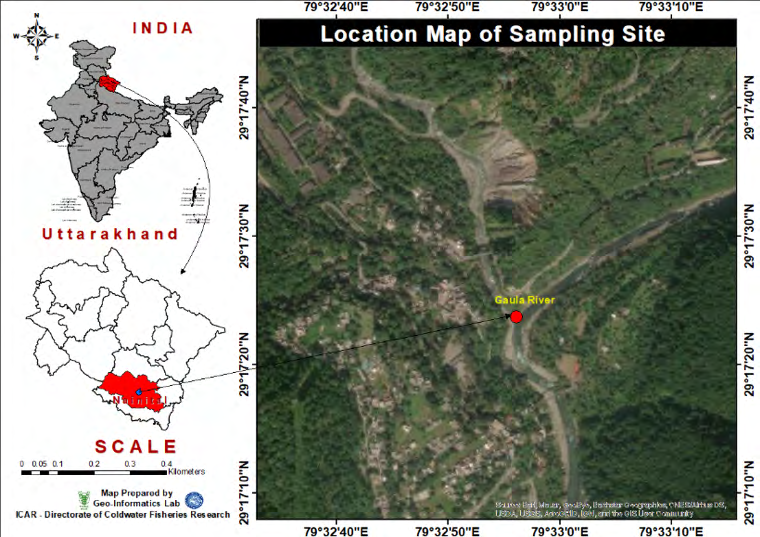
100 males and 180 females specimens of adult Barilius bendelisis were collected from shallow river bed of Gaula river (29o17’25’’ N Latitude. 79o32’53’’ E) in the Kumaon region of Uttarakhand India at an altitude of 595 m on February 15, 2017, by cast net fishing method (Figure 1). Fishes were packed in flexible polythene bags with oxygen and brought to wet laboratory of ICAR-Directorate of Coldwater Fisheries Research, Bhimtal-263136, and Nainital. All precautionary measures and ethical protocol were taken to capture fishes in wild as well as maintaining them in laboratory conditions so as to avoid any stress in experimental fishes. All fishes were disinfected with 2% potassium permanganate and acclimatized for 5 days in fiberglass reinforced plastic (FRP) tanks of size 200 X 100 X 90 cm having 1500-liter water capacity.
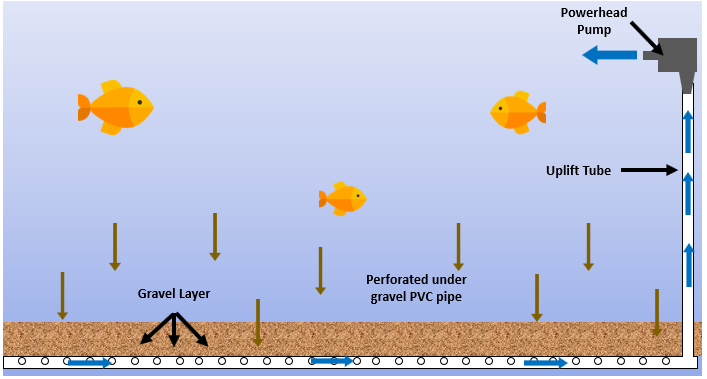
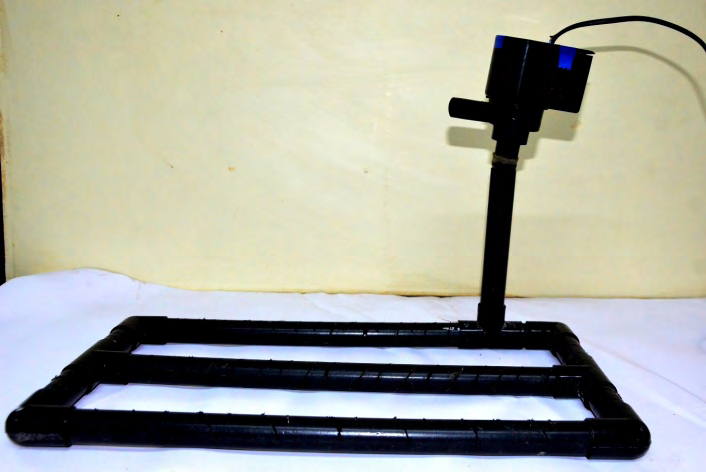
The water tank was equipped with bio filtration under gravel filter system (Figure 2). Filter was operated by a power head pump with a pumping capacity of 2500 liters per hour to maintain the optimum dissolved oxygen and lowest ammonia levels in tank water. Every other day, one-third volume of water was drained by bottle siphoning method that simultaneously cleaned the filter gravel bed. Same water quantity was replaced by tube well water. Fishes were not given feed for the first three days during acclimatization period. Later fishes were fed with wet food diet comprising of 32% crude protein @ 1-3% of body weight two times a day. The fishes fed ad libitum with commercial aquarium fish food, formulated wet feed, live feed like tubifex worms and chopped goat heart meat.
Experimental Aquarium Design
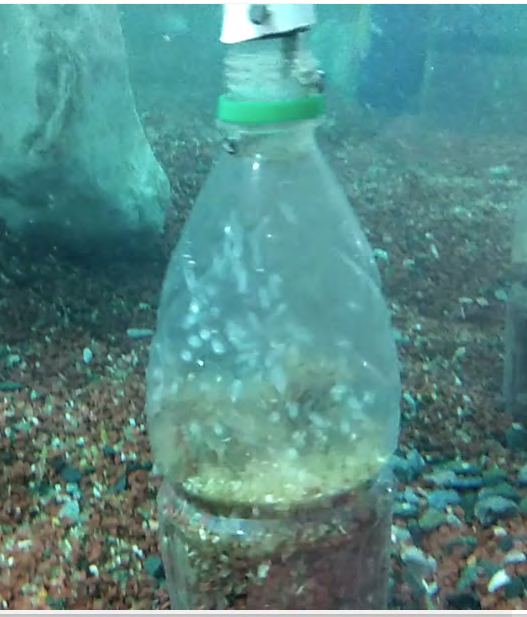
In the present study eight sexually mature healthy male of size range 12-16 cm in length and 25-38 g in weight and ten mature female of size range 10-14 cm length and weight 18-28 g weight randomly selected from acclimatization tank and were stocked for breeding and nest making behavior study in glass aquaria of 150x60x60 cm dimension having water-holding capacity of 1250-1300 liters in triplicate. For maintaining cold-water riverine fishes, it is prerequisite to maintain oxygen rich, totally ammonia free and low water temperature in captive aquarium conditions. Therefore, in experimental glass aquaria, we installed under gravel bio filtration system to eliminate maximum possible ammonia from water. Filter placed in the aquaria helped in maintaining optimum dissolved oxygen and water remained crystal clear throughout the experimental period. Under-gravel filter was indigenously designed with perforated PVC pipes, elbows and tees as shown in (Figure 2) and pipe filter was covered by 8-10 cm thick layer of red colored gravel stone of 5-8 mm in size. The developed filter works as mini re-circulatory system within aquarium as elaborately shown (Figure 3). Filter was operated by a power head pump with a pumping capacity of 2500 liters per hour. Power- head pump having venturi system that helped -in to maintain optimum dissolved oxygen level and generating water current that mimic stream flow like condition in brood stock aquarium. A 300 watts thermostat heater set at 210 C was placed in one corner of the aquarium to maintain uniform water temperature. Thick gravel layer facilitates natural spawning medium for nest building and egg deposition during spawning period. Some rock pieces were also added to give shelter to the experimental fishes. The aquarium tanks were placed on angle iron stand under tin shed where it received natural sunlight on one side of aquarium and normal photoperiod for inducing natural gonadal development and sexual maturity. Every alternate day filter gravel bed was cleaned to eliminate trapped detritus matter by bottle siphon method. One-third volume of water was drained and replaced with tube well water. Eggs deposited under the gravel above nest pit were recovered by bottle siphoning method. Barilius eggs have less specific gravity than gravel stone so they were easily sucked out from gravel layer and collected at end of siphon tube (Figure 4).
Water Quality Parameters
Aquaria water quality parameters such as, dissolved oxygen, ammonia, nitrite, nitrate, pH, alkalinity, and temperature was determined at regular intervals as per standard methods [9]. The water temperature was measured by centigrade thermometer. Total hardness was measured by EDTA method, and Dissolved Oxygen (Winkler’s method). Nitrate, nitrite, and ammonia were analyzed by test kit (Merk) following standard manufactures protocol.
Results
Experimental fishes were observed for the period from 22 February 2017 to 20 June 2017 for a period of 90 days and no mortality in fishes were recorded during entire experiment. Daily one-hour observation was made to record the changes in morphological characters in male and female B. bendelisis which covered body and fin coloration, appearance of breeding tubercles, behavioral changes in male as territorial behavior, selection of territory, building nest pit and agnostic behavior for protection of territory and nesting area. Behavioral sequences of all the records of males and females were captured with the help of a Nikon D-7000 SLR camera. The values of water quality parameters observed during study period are summarized in Table 1. There was no significant difference in water temperature, dissolved oxygen, ammonia, nitrate, and pH level during entire experimental period. All parameters were within optimum limit.
After 25-35 days rearing of brood stock, some marked behavioral changes were noticed in male and female fishes.
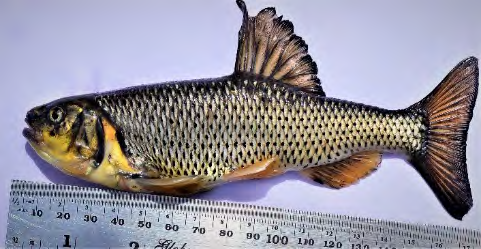
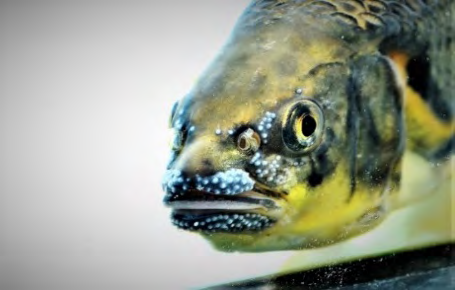
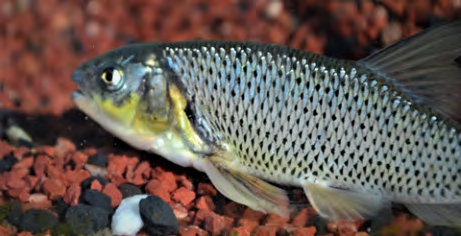
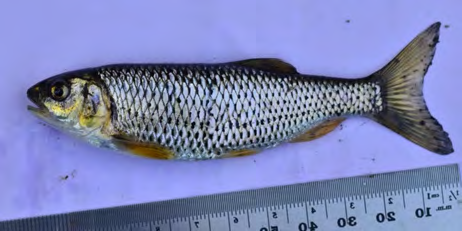
One of the remarkable features in the present investigation was that out of eight males stocked in experiment tank, one male attains fastest body growth and distinctly different from other males. The body of the male appeared more robust, having brightest body and fin coloration developed very prominent thick with spiny breeding tubercles on snout and lower jaw. This male in present observations referred as Dominant Male (Figures 5 & 6) and others referred as Rival Males (Figure 7). In females, head and mouth region had smooth surface without any breeding tubercle with bulgy body that was indication of ovary maturation stage. During breeding period in females, pelvic and pectoral fins developed orange coloration showing breeding intensification (Figure 8).
Breeding nest
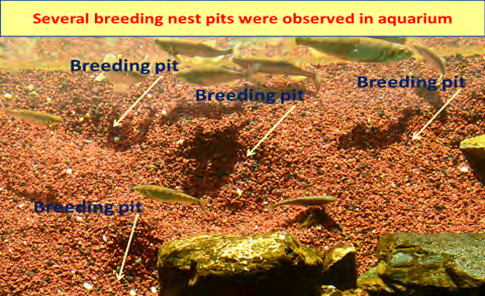
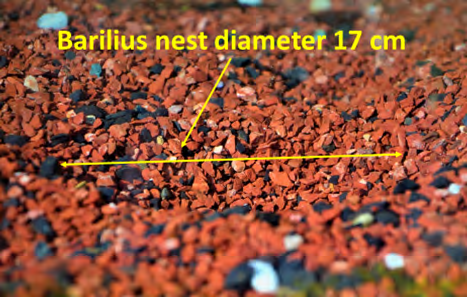
Regardless of size, nesting behavior was observed in Dominant males and Rival males. Dominant male built the largest nest whereas rival male built smaller nest in the same small vicinity in aquarium (Figure 9). Initially 2-3 depressions were observed that scattered on gravel surface area as nest pits. Several such breeding nest pits at different places of various size ranges within a vicinity of 60 cm was observed in the aquarium. Small nests were in range of 6-10 cm in diameter and 3-6 cm deep, whereas the largest nest was 15-18 cm in diameter and 5-7 cm deep (Figure 10). Each nest was defended by individual male but dominating male displayed most aggressive behavior in nest making as well as in defending the territory. Females were not observed to play any role in nest formation process. After spawning males or females were not observed to guard the nest which indicated that post spawning parental care was absent in B.bendelisis. Following behavior were observed in nest making process by males in aquarium. • Ripple digging: Male placed his body horizontally on gravel surface with erected dorsal fin and began to swing or vibrates caudal peduncle and caudal fin. When the body is bent, the caudal fin sweeps across the base. This
was the more frequent behavioral act of male during nest digging process.
- Body burying: During ripple digging process the male fish was observed to vibrates while pressing its posterior body part burying inside the gravel layer, thereby forming a depression on the gravel surface. Sometimes this behavior caused the male posterior body to bury into the gravel.
- Pectoral fin sweeping: Male sweep gravel surface by pectoral fins to eliminate some gravel stone and push them at anterior side of nest.
Territorial Behavior in Male
On commencement of breeding, male fish started exhibiting their territorial behavior. Dominant male selected one prime and suitable safe place in the aquarium, to establish its territory for making breeding nest. Other rival males also made their territorial area in nearby vicinity to make breeding nest in aquarium. Once the territory established, by the male, it started patrolling around and defended it by any intruder male in territory area. Making of breeding nest by male, gives indication of commencement of spawning period. A. In present investigation territorial behavior, in mature male markedly observed. Such behavioral character in this species during captive breeding is not quite common in cold-water cyprinid species. Following behaviors observed in male during nest making and territory defending. B. Lateral threat display: When rival male approaches towards nesting or territory area, both dominant and rival male take an aggressive position side by side, their dorsal and pelvic fins broadly spread, remain in position for a movement, and try to chase and attack on rival male. C. Chase: The dominating male erects dorsal and pelvic fins and make sudden movement that causes the approaching rival male to change direction, or the dominating male swims a short distance toward rival male causing it to suddenly change direction but then stops and immediately returns to its nest site. The male sometimes chases the rival male with varies in length and speed. D. Parallel swim: Both male in aggressive position, their body remain parallel to each other performing repeated short and quick body ripples and dominating male make darts on body of rival male. E. Rim circling: When rival male approaches towards the breeding territory dominating male make aggressive posture by curling its body in “C” shaped for a few movements and encircle the rival male with spreading it dorsal and pectoral fins and make few circles till the rival male run away from territory area. Rim circling movement were also observed above the nest while making the nest. F. Butting: The male swims rapidly towards the rival male and rams on body, head tail or on the flanks. G. Yawning: Another important finding reported in present investigation of frequent yawning by dominant male fish. Male fish widely open its jaws stretched with operculum spread with dorsal fin in erected form near the breeding nest. Such distinctive behavior of male frequently observed when male present on nest. Such behavior appears to have signal value both for threatening rival males and for attracting conspecific females.
First natural spawning in the aquarium observed on 10 April 2017. Later frequent spawning observed 4 times till the end of experimental period. In 60 days, observation period 5 times spawning was recorded (Table 1), most of the time maximum numbers of eggs collected from the biggest nest made by dominant male.
| Water Temp. (0C) | Dissolved oxygen (ppm) | Ammonia (ppm) | Nitrite (ppm) | Nitrate (ppm) | Alkalinity (ppm) | pH |
|---|---|---|---|---|---|---|
| 21.0 ± 1.2 7.8 ± 0.2 0.02 ± 0.01 | 1.40 ± 0.15 | 18.30 ± 2.5 | 121 ± 5.5 | 7.8 ± 0.2 |
Table 1: Water quality parameters of experimental tank during the study period.
| Date of eggs recovered from nest | Number of eggs obtained from Dominant male nest | Number of eggs obtained from other small nests | Fertilization % |
|---|---|---|---|
| 10.4.2017 | 370 | Nil | 65 |
| 26.4.2017 | 1245 | Nil | 55 |
| 16.5.2017 | 980 | 140 | 62 |
| 27.5.1017 | 1510 | Nil | 52 |
| 14.6.2017 | 1440 | 90 | 60 |
Table 2: Natural spawning dates and recovered eggs from nests.
| Dominant male | Rival male | |||||
|---|---|---|---|---|---|---|
| Behavior | Behavior (%) | Frequency per hour | Total count | Behavior (%) | Frequency per hour | Total count |
| Ripple digging | 45.8 | 24.0 | 240 | 50.3 | 8.8 | 88 |
| Tail sweeping | 18.7 | 9.8 | 98 | 27.4 | 4.8 | 48 |
| Circle swim | 13.4 | 7.0 | 70 | 15.4 | 2.7 | 27 |
| Pectoral fin sweeping | 10.3 | 5.4 | 54 | 6.9 | 1.2 | 12 |
| Body burring | 8.0 | 4.2 | 42 | 0.0 | 0.0 | 0 |
| Yawning | 3.8 | 2.0 | 20 | 0.0 | 0.0 | 0 |
Table 3: Behavior exhibited by dominant and rival male during nest making. Observations captured daily on an hourly basis for 10
| Dominant male | Rival male | |||||
|---|---|---|---|---|---|---|
| Agonistic behaviors | Behavior (%) | Frequency per hour | Total count | Behavior (%) | Frequency per hour | Total count |
| Rim circling | 35.7 | 14.5 | 145 | 41.1 | 4.6 | 46 |
| Lateral threat display | 29.6 | 12.0 | 120 | 23.2 | 2.6 | 26 |
| Chase | 16.0 | 6.5 | 65 | 19.6 | 2.2 | 22 |
| Butting | 11.3 | 4.6 | 46 | 16.1 | 1.8 | 18 |
| Body buried | 4.4 | 1.8 | 18 | 0.0 | 0.0 | 0 |
| Yawning | 3.0 | 1.2 | 12 | 0.0 | 0.0 | 0 |
Table 4: Agonistic behaviors displayed by B. bendelisis dominant and rival male during nest making in ten-hour time. Observations
Discussion
In natural habitats, the breeding season of B. bendelisis is reported between March to April and August to September. In the present study, male and female sexual maturity was also observed during April and May under captive conditions similar period as reported in its natural habitats. Earlier attempt to breed this species in laboratory conditions has been reported through induced spawning either through hormonal administration or through hypophysation and in B. bendelisis. Little is known about reproductive behavior of B. bendelisis in field as well as in laboratory conditions.
At the beginning of the breeding period, changes in male morphological characteristics were observed, such as prominent breeding nodules and body color. Nest building, behavior under captive conditions observed for the first time. However, in B. bendelisis spawning behavior never observed in the wild and we do not know if laboratory observations are representative of its natural reproductive behaviors. Nests making behavior observed both in dominant and rival male built smaller nest in same small vicinity area available in aquarium.
In the current investigation, we have observed that the nesting process of B. bendelisis is a simple lithophilic breeding behavior. Male first select a suitable territory and create some depressions or pit like structure on gravel surface. Several such depressions or pit were observed in the aquarium made by males. During the nesting process, the left and right ripples of the tail stalk and tail fin are the most common strategy. The dominant male accounted for 44%, followed by tail sweeping 19%, pectoral fin sweeping 15%, circle swimming 12%, body burying 7.7% and Yawn 4%. During the observation period, we noticed that after the nest was built, the dominant male often performed rapid circular motions on the nest. Dominant males used to fan their pectoral fins to clean up the displacement of gravel and small gravel blocks. A low percentage of ripple digging, and tail sliding were observed in competing males, and nobody burial and yawning behaviors were observed. Sweeping of the tail stalk and tail fin of the dominant male may be a behavior that shapes the nest and increases the height of the nest boundary. In some Minnows, this behavior is reported as a stimulating behavior before spawning. This behavior can also be used as a courtship display to attract females. In rival males, such behaviors were observed in extremely low frequency. Another unique behavior observed by Barilius dominant male during the nesting process, it vibrates its caudal peduncle and tail on the surface of the gravel while pressing its lower body into the gravel layer. With such act male bury its half of the body inside the gravel layer. Such behavior was not reported in any of rival males. The reason for the abnormal behavior of males attributable to this behavior may be the signal value that shows strength and strength to other males and attracts females. Another reason for this behavior is the thick gravel layer in the experimental aquarium. During the nesting process, the male may assess the depth of the hard or muddy bottom layer. Under field conditions, such a thick gravel layer is rarely available for nesting. So far, no abnormal behavior of this kind of nesting process has been reported in any other cyprinid species. It needs further research under field conditions.
Mouth opening, posture behavior hypothesized that such posture might help signal a state of spawning readiness. This unique behavior has not been reported in other Cyprinid species. In this posture, male may produce some sounds. The vocalization of many fish is a communication mechanism used during territorial defense and spawning.
Sound producing ability reported in some Minnows and Gobioid male fishes. We cannot record sound in the current experiment, so further research is needed to investigate this behavior in B. bendelisis. Very few studies reported on nest building behavior in Cyprinid species in laboratory conditions.
In captive laboratory conditions, a similar nest building behavior reported in some cold-water cyprinid species such as Chagunius chagunio and Dark mahseer Naziritor chelynoides. Nest building behavior studies in a cyprinid species Squalius pyrenaicus under aquarium condition reported by Santos, et al. [4]. When comparing nest-building behavior with present observations, it finds that in Squalius pyrenaicus only dominating male build single spawning nest pits in aquarium. Whereas in present investigation both dominating as well as subordinate male also made several nest pits in same aquarium within a periphery of 50 cm. This shows that the dominant males are limited within their short- distance territorial boundaries, and if other males nest in the same area, they will not be disturbed. Several spawning nests observed in experimental aquarium.
Similar nest making behavior of male on gravel surface reported in some of the cyprinid species like Stoneroller Minnow Campostoma anomalum [10], in Minnows species, Blue shiner Cyprinella caerulea in Devils River Minnow Dionda diabolic [11], in freshwater cyprinids, in Squalius pyrenaicus [4], In the current investigation, we observed that B. bendelisis males did not observe picking and transporting any pebble stones in their mouths during the nesting process. Such nest making behavior mostly reported in Minnows, Sunfishes, and Goby. During the nesting process, the male minnow mainly uses its jaws to pick and transport pebbles. In these species, they modified the keratinized inner mandibular epithelium in the cheeks to protect the tissues from damage when excavating and transporting stones. Picking up stone or gravel pieces by mouth in other species like sunfishes such as in Lepomis gibbosus reported by Miller, et al. [10], in Bluegill Sunfish Lepomis macro_chirus, in some sunfish species [2], and in round goby _Neogobius melanostomus [12]. In B. bendelisis male such specialized modifications in mandibular epithelium absent therefore it cannot be included in true nest making fish species.
In the current investigation, in most cases, the largest number of eggs collected from the biggest nest of the dominant male, and occasionally the number of eggs collected from the small nest pit is exceedingly small. This fact indicates that the dominant male can mate with the largest number of females, while competing males have fewer opportunities to mate with females. These observations indicate that there are dominant traits in B. bendelisis male_. This is in accordance with other studies of fishes, which attribute the existence of male size and success in reproduction as reported various species such as in Bicolor damselfish darter fish _Etheostoma nigrum mottled triplefin Forsterygion, freshwater Goby Padogobius martensi, Oreochromis mossambicus alpha male [3]. Preferences with mating with strongest male that build the biggest nest reported in many of cyprinid fish. Nest quality and nest characteristic very much effected on quality of individual males and its courtship success and female spawning choice reported in Damselfishes, three-spined sticklebacks, Gasterosteus aculeatus, in male pufferfish; Torquigener albomaculosus.
Females are generally more selective than males in discriminating among prospective mates, and they evaluate male genetic quality and resource-holding potential based on secondary sexual characteristics such as body size, coloration, ornamentation, and vocalizations [14]. Mate selection in female fishes correlated with male ornamentation. Possessing high ornamentation characters in male as an indication of high-quality territory, good parental care or protection and improved genetic characters. In female guppy choice to mate those males possessing brightest coloration and higher genetic quality.
Male Territorial Behavior
The dominant male makes the largest nest in a prime location in the aquarium. Once the nest is prepared, the male will stay in the specific nest area. He will protect the area from the same invaders through a series of intense encounters, such as chases, lateral thrusts, butts, and rim circling. The preparation of pits by dominant males has the dual function of being a spot for courtship displays and a spawning pit. This behavior is also indicative of attracting females to the spawning pit.
Presence of territorial behavior in male is the most essential character in male parental care evolution and giving more opportunities to produce more offspring [15]. In most families of fishes with male parental care, the males engage in territorial defense of their spawning site [16]. Dominance is a characteristic that conveys hierarchy in a group. A dominant individual routinely wins encounters with significantly greater than chance probability against a variety of conspecific opponents. This occurs because that individual has more dominance or aggressiveness with more power and strength than rivals or losers. Such aggressive behavior among males is a fundamental component of an individual’s social environment. Intraspecific competition intricately linked to male reproductive success [17], with evidence showing that variation in the competitive setting can affect the relative success of different types of males [14]. The higher frequency of threats showed by males is compatible with higher investment devoted by them patrolling territory in the early reproductive phases.
Multiple spawning within the territory probably occurs in over 90% of the species with solitary male care. The predominance of male parental care in fishes has been proposed to result from a higher probability of genetic relatedness to offspring in a mating with external fertilization. Females are less able to provide care due to their energy expenditure in gametes; however, males may expend considerable energy reserves in territory establishment prior to spawning [18]. The relationship between adult body size and acceleration in reproductive success for males and females with uniparental male care’ reported in sun fishes [18]. Several theories been suggested for male dominating territorial behavior as male have more advantageous position than female. Highest success in mating rate by dominant male suggest that whatever energy invested in maintaining territory and nest guarding given more return advantage in form of maximum mating opportunities with most of the available female in tank. Furthermore, in males more energy could spend on territory protection whereas in female more and more energy can utilize for gamete formation [18]. Male parental behavior and caring of their offspring are major factors in the evolution and maintenance of male parental care behavior [2].
Similar territorial defense behavior reported in some of the cyprinid species Campostoma anomalum pullum; [10], Chondrostoma lusitanicum; [19], Ladigesocypris ghigii [20], European minnow Phoxinus phoxinus [21], in Devils River minnow Dionda diaboli [11] and in Squalius pyrenaicus [4].
In wild conditions it is expected that on commencement of breeding period male fish make such depressions like structure by vigorous flexing of the body and caudal fin actively contributes to the displacement of the finer sand and gravel as nest pits on pebbles rich bottom in shallow downstream river region [22, 23, 24, 25]. Theses depressions or nests were made to reduce water flow or current impact so that during spawning female deposit eggs on such depressed gravel pit nest, that simultaneously fertilized by male. Barilius eggs are demersal and little adhesive in nature so that they remain settled on gravel surface [26, 27, 28, 29, 30]. Male further covered eggs with a gravel layer so that they remain safe from predation of other fish and external threats. Eggs in such conditions remain in touch with oxygen rich flowing water, their embryonic development completes and after yolk sac absorption they emerge from gravel layer in free swimming stage in natural environment for their further growth and development. Such behaviors indicate that B. bendelisis is territorial broadcast spawners. Broadcast spawning is believed to be the pleiomorphic mode of reproduction in cyprinids. Such observations further supported by personal observation during fish sampling collection from Gaula river, many adult B. bendelisis present in shallow riverbank region where clean gravels and pebbles present in abundant quantity. Furthermore, in same region presence of B. bendelisis juvenile shoals indicate the breeding ground in clean pebble and gravel rich shallow river riverbed areas suitable for spawning [31].
Conclusion
During multiple spawning in B. bendelisis, it was observed that nesting behavior in this fish species was displayed by the presence of one dominant male among the group and there was territorial behavior of different males which was recorded for the first time. Establishing knowledge about breeding of B. bedelisis in captivity was considered essential tool for mass scale seed production for aquaculture of this important fish species. The outcome of the study will aid in the formulation of recovery plans and proactive conservation efforts for the fish. At the same time, the current laboratory observations under aquarium will represent the natural reproduction behavior of the fish that is yet to be recorded. Therefore, more research is needed under field conditions to clearly understand the reproductive behavior of this species under nature.
In present study, we have investigated that B. bendelisis does not exhibit true nest making behavior rather it is simple lithospheric broadcast spawned. During spawning process eggs are deposited by females in nest pits prepared by males fertilize eggs, cover them under gravel to protect them from predation and other natural threats. Our results expand insight knowledge of territorial and nesting behavior in male’s B. bendelisis during breeding time that will provide better understanding of breeding behavior for other cold- water cyprinids and related species. This may lead to a more complete understanding of this unique spawning strategy.
Data Availability
All tables and figures generated and analysed during the current study are attached along with the manuscript and available for reviewers. My manuscript has no associated data for repository or uploading.
Ethical Statement
- Funding: There was no funding provided for this research work.
- Conflict of Interest: The authors declare that there is no conflict of interest.
- Ethical Approval: Not Applicable in this study.
- Informed Consent: Not Applicable.
References
-
Lehtonen Topi K, Wong Bob BM (2020) Male phenotype and resource type influence nesting behaviour in a fish. Animal Behaviour 166: 289-296.
-
Barber L (2013) The evolutionary ecology of nest construction: insight from recent fish studies. Avian Biology 6(2): 83-98.
-
Oliveira RF, Almada VC (1996) Dominance hierarchies and social structure in captive groups of the Mozambique tilapia Oreochromis mossambicus (Teleostei Cichlidae). Ethology Ecology & Evolution 8(1): 39-55.
-
Santos SC, Robalo J, Alamda V (2014) Spawning behaviour of a threatened Iberian cyprinid and its implications for conservation. Acta Ethol 17(2): 99-106.
-
Jayaram K (1981) A survey of the Cauvery river system with a major account of its. Zool Sur India OCC, 36, pp: 115.
-
Talwar P, Jhingran A (1991) Inland fishes of India and adjacent adjacent countries. New Delhi: Oxford and IBH.
-
Eschmeyer W, Fricke R (2021) May Catalog of fishes, electronic version. Eschmeyer’s Catalog of Fishes.
-
Suresh V, Mandal V (2001) Aquaculture development possibility on Hills through Integrated Watershed management. Fishing Chimes pp: 33-36.
-
APHA (1990) Standard Methods for the Examination of Water and Waste Water. In: 23rd (Edn.), APHA.
-
Miller H (1963) The behavior of the pumpkinseed sunfish Lepomis gibbosus (Linnaeus), with notes on the behavior of the other species of Lepomis and the pigmy sunfish, Elassoma evergladei. Behaviour 22(2): 88-151.
-
Phillips TC, James R, Fries NJ (2009) Agonistic and Courtship Behaviors in Dionda diaboli, the Devils River Minnow. The Southwestern Naturalist 54(3): 341-344.
-
Meunier B, Yavno S, Sameen A, Corcum DL (2009) First documentation of spawning and nest guarding in the laboratory by the invasive fish, the round goby (Neogobius melanostomus). Journal of Great Lakes Reseach 35(4): 608-612.
-
Rushbrook B, Dingemanse N, Barber I (2008) Repeatability in nest construction by male three-spine sticklebacks. Animal Behaviour 75(2): 547-664.
-
Andersson M (1994) Sexual Selection. Princeton: Princeton University, pp: 624.
-
Clutton-Brock T (1991) The Evolution of Parental care. Monographs in Behavior and Ecology Princeton Unoversity Press, Princeton, NJ.
-
Ridkey M (1978) PATERNAL CARE. Anim Behav 26(3): 904-932.
-
Berglund A, Bisazza A, Pilastro A (1996) Armaments and ornaments: an evolutionary explanation of traits of dual utility. Biol J Linn Soc 58(4): 358-399.
-
Gross MR, Sargent RC (1985) The Evolution of Male and Female Parental Care in Fishes. Amer Zool 25(3): 807- 822.
-
Carvalho V, Robalo J, Alamda V (2003) A discription of the reproductive behaviour of the endangered Iberian cyprinid Chondrostoma lusitanticum Collares-Pereira 1980 in captivity. Etologia 10: 23-25.
-
Poncin P, Stoumboudi M, Gervalle L, Barbieri R, Economou A, et al. (2005) The spawning behaviour of the endangered freshwater fish Ladigesocypris ghigii (Gianferrari, 1927). J Appl Icthyol 21(3): 225-228.
-
Jacob A, Evanno G, Renai E, Sermier R, Wedekind C (2009) Male body size and breeding tubercles are both linked to intrasexual dominance and reproductive success in the minnow. Animal Behaviour 77(4): 823-829.
-
Alain J, Guillaume E, Emanuela R, Roberto S, Claus W (2009) Male body size and breeding tubercles are both linked to intra-sexual dominance and reproductive success in the European minnow (Phoxinus phoxinus). Animal Behaviour 77(4): 823-829.
-
Balshine S, Sloman KA (2011) Parental care in fishes. In: Farrel AP, et al. (Eds.), Encyclopedia of Fish Physiology, San Diego: Academic Press 1: 670-677.
-
Barlow GW (1974) Contrasts in social behavior between Central American cichlid fishes and coralreef surgeon fishes. Anm Zool 14(1): 9-34.
-
Cardenas RO, Morris RM (2009) Mating systems and strategies of tropical fishes. Mexio: Encyclopedia of Life Support Systems (EOLSS).
-
Gittleman LJ (1981) The phylogeny of parental care in fishes. Anima Behav 29(3): 936-941.
-
King AHM, Kvarnemo C, Tullberg B (2005) The influence of territoriality and mating system on the evolution of male care: a phylogenetic study on fish. J Evol Biol 18(2): 371-382.
-
Midgley D (2007) File:Undergravel filter.png.
-
Mori S (1994) Nest site choice by three spined Stickleback, Gasterosteus aculeatus (from leiurus), in spring fed waters. Journal of Fish Biology 45(2): 279- 289.
-
Sargent CR (1982) Anirn Behav 30: 364-374.
-
Sousa SC, Collares PM, Almada V (2006) Reproductive success of nuclear nonhybrid males of Squalius alburnoides hybridogenetic complex (Teleostei, Cyprinidae): an example of interplay between female choice and ecological pressures?. Acta Ethol 9(1): 31-36.
-
Sutherland JW (1998) The importance of behavioural studies in conservation biology (Review). Animal Behaviour 56(4): 801-809.
-
Vernon AL (1976) A Field Study of Nesting Behavior of Male Bluegill Sunfish (Lepomis macrochirus Rafinesque. The American Midland Naturalist 96(1): 195-205.
- California Red-Legged Frog and Non-Listed Amphibians Response to Non-Native Fish Removal
- Industrial Standardization of the Bio-OS: Algorithmic Codification of Resilience Engineering Guidelines and Version V8 Architecture
- Climate Variability and the Sustainability of Snail Farming in Nigeria: Past Trends, Present Challenges and Potential Outlook
- The Evaluation of the Surveillance System of Anthrax in Gilgit-Baltistan, Pakistan, 2018
- Natural Decline to Extinction of A New Zealand Rabbit Population
- Mitochondrial Bio-Logistics: Steering Co-Enzyme Q10 and Lycopene Synergies within the Science 4.0 Bio-OS Framework