
Use of Larvivorous Fishes for Control of Aquatic Stage of Mosquitoes, the Vectors of Diseases
Mosquitoes belong to the Order: Diptera, Sub-order: Nematocera, Family: Culicidae, Genus: Anopheles, Aedes and Culex. Around 3556 species of mosquitoes have been identified worldwide. Diseases transmitted by mosquitoes include malaria, dengue, West Nile virus, chikungunya, yellow fever, filariasis, tularemia, dirofilariasis, Japanese encephalitis, Saint Louis encephalitis, Western equine encephalitis, Eastern equine encephalitis, Venezuelan equine encephalitis, Ross River fever, Barmah Forest fever, La Crosse encephalitis, and Zika fever, as well as newly detected Keystone virus and Rift Valley fever. According to the World Health Organization, the main important vector control is using different insecticides. Using chemical insecticides for controlling mosquitoes is limited because they develop resistance against these insecticides. So, efforts have been made to control the mosquito vectors by eco-friendly techniques using larvivorus fishes. In this research all, the relevant information regarding the topic of research is research through the internet and used in this paper. An intensive search of scientific literature was done in “PubMed”, “Web of Knowledge”, “Scopus”, “Google Scholar”, “SID”, etc. Results shows that one of important environmental friendly vector control is biological control, using different species of larvivorus fishes.
Background
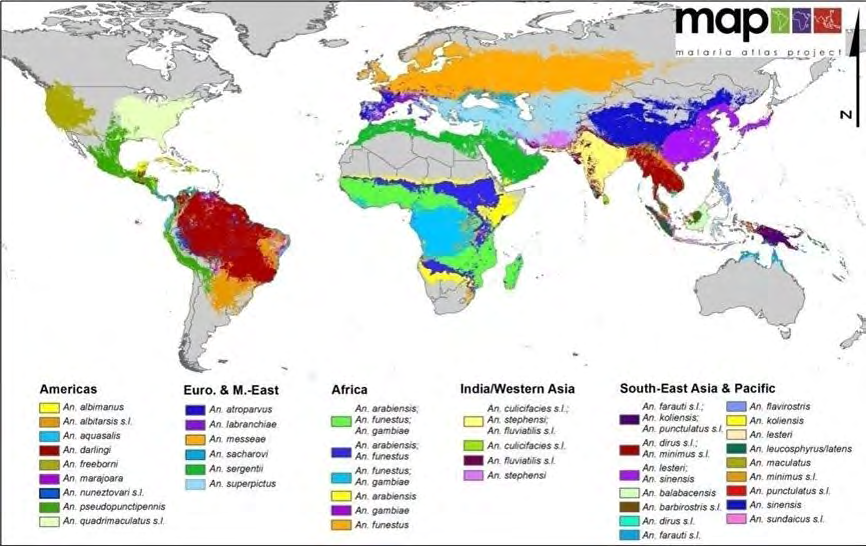
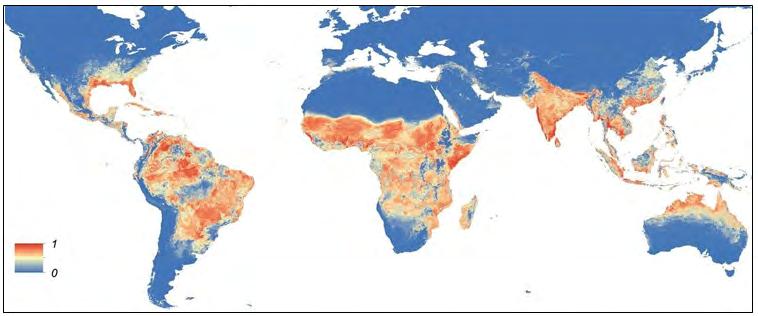
Mosquito vectors can transmit several pathogens, including arboviruses, protozoans and filariae that cause infectious diseases of significant public health concern. To a lesser extent, they may also transmit bacterial diseases Mosquitoes of medical importance belong to the family Culicidae and are widely distributed around the world. This large family currently encompasses 3556 valid species of mosquitoes distributed within the subfamilies Culicinae and Anophelinae. The mosquito vectors mainly belong to three genera, Anopheles, Aedes and Culex (Figures 1,4) [1-
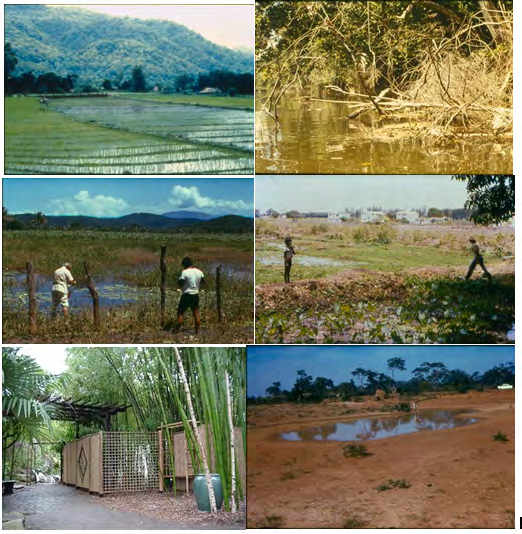
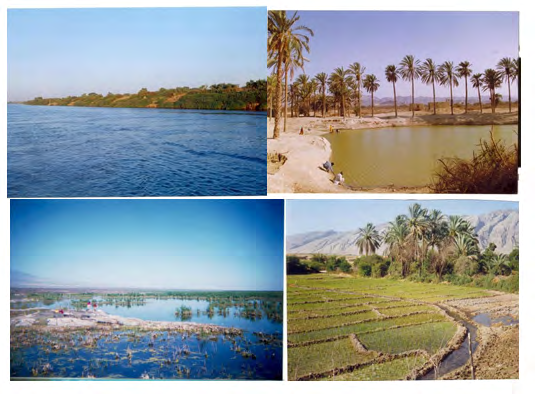
7]. Diseases transmitted by mosquitoes include malaria, dengue, West Nile virus, chikungunya, yellow fever, filariasis, tularemia, dirofilariasis, Japanese encephalitis, Saint Louis encephalitis, Western equine encephalitis, Eastern equine encephalitis, Venezuelan equine encephalitis, Ross River fever, Barmah Forest fever, La Crosse encephalitis, and Zika fever, as well as newly detected Keystone virus and Rift Valley fever Nearly 700 million people get a mosquito- borne illness each year resulting in over one million deaths [8, 9]. The mosquito breeding places are: small pools, fresh water, rice-land, drains, ditches, running water, with shade, brackish water, salt water, stream, ponds, lakes, marshes, well, water container, discarded tin can, discarded tyre, hoof- print (Figures 1-13).
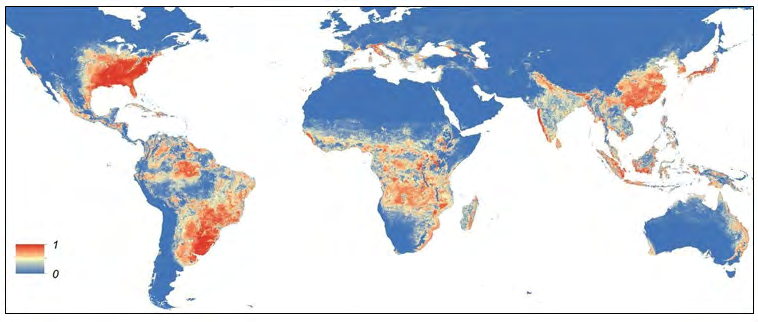
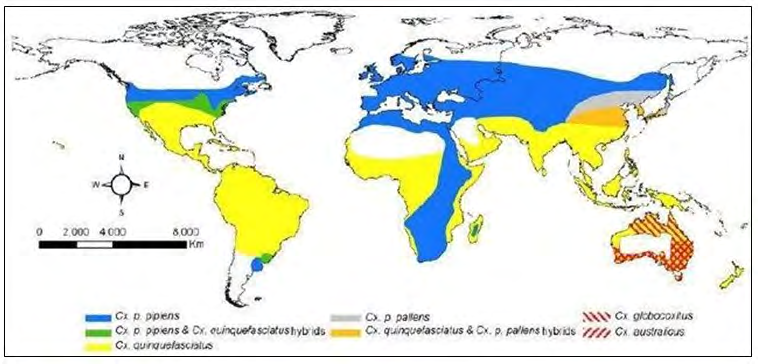
Different methods for Prevention and Control of mosquitoes: There are several measures are being used for mosquitoes control at the adult and larval stage including: environmental management, filling marshlands, drainage, clearing of vegetation, removal of water plants, storage of tires under cover, covering water container, environmental sanitation, indoor residual spraying of houses and animal shelters, impregnated bed nets , Ultra Low Volume (ULV) and fogging, larviciding, vaporizing insecticide from mats, mosquito coils, aerosol spraying, mosquito trap, paint in, mosquito traps, electronic mosquito swatter, mosquito repelling grids, a layer of polystyrene beads in the breeding places. Use of Bacillus thurigiensis, spraying on cattle, genetic control including: male sterility, refractory to plasmodium, transferring zoophilicity gene. Biological control are using dragonfly predator of mosquito, and Fungi, L. giganteum for mosquito larvae control. The important measure is using larvivorous fishes [10, 11, 12, 13, 14].
Importance of biological control for mosquitoes: development of insecticide resistance, environmental pollution due to insecticides, high cost of pesticides. Use of biological control such as Fish alone or in the contest of Integrated Vector Management (IVM). Potential larvivorous fishes are from families of: Poecilidae, Cyprinidae, Cyprinodontidae, Chichlidae. In 1905 Gambusia affinis fish introduced from Texas to Hawaiian Island, In 1920 to Spain and Italy, In 1920s to 60 countries (Figure 6), in 1908 Poecilia reticulata (Guppy) introduced from south America to British India (Figure 7) [15, 16].
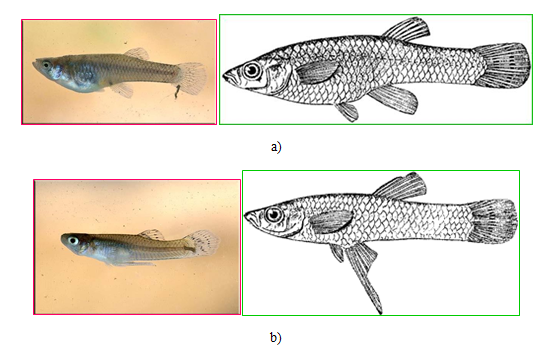
Potential larvivorous fish for mosquito control should have, high preference of mosquito larvae, surface feeder, ☺ terminal or superior mouth, small in size, high fecundity, tolerant to transportation, stressful environmental condition, temperature, pollutants turbidity.
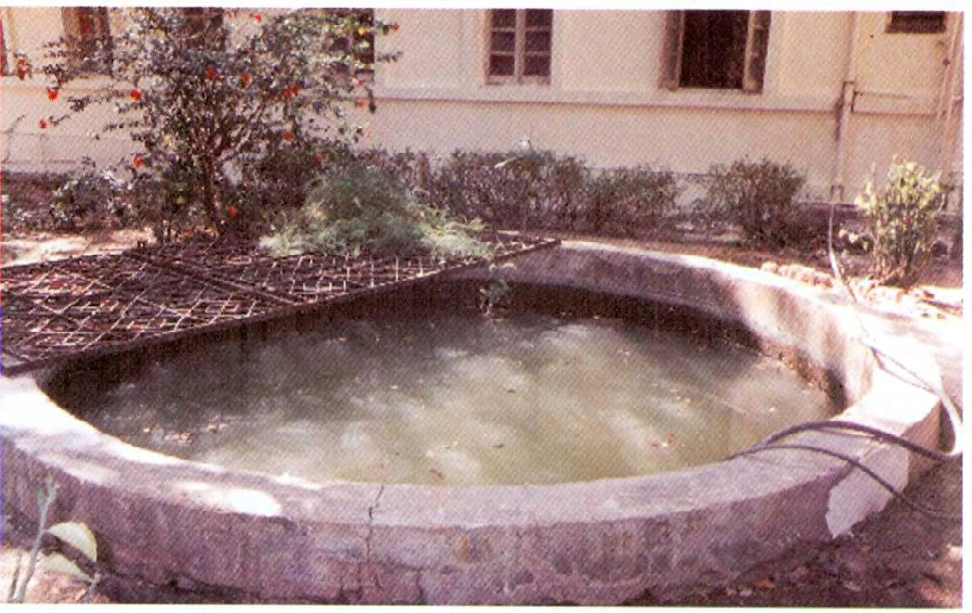
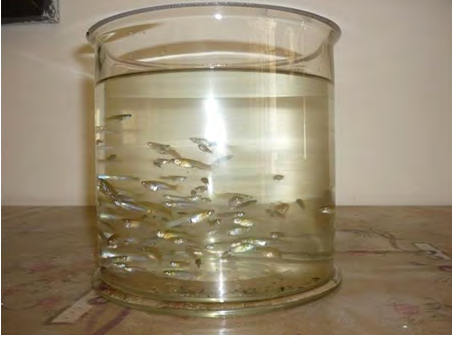
Preparation of natural ponds for rearing of fish are: Removal of predatory fishes by net or piscicide, Pumping out of water, Bottom of the pond should be exposed to sunlight for 3 days, The bed of the pond should be treated with quicklime 250-300kg/ha, After 15 days of lime application pond can be refilled with water, Removal of aquatic weeds, Removal of aquatic insects such as beetles and bugs, fertilization with nitrate and super phosphate, Design and fabrication of nursery ponds/hatcheries for rearing of fish. The site selection should have the following characteristics: fertile clay and loamy soil , good water retention, fertile land, pH= 7-8.5, land with high water level, site should be accessible, by vehicle, close to the water sources, the land should not be low lying and prone to flooding, and adequate sunlight. Fig. 8 shows the tanks for stocking fish.
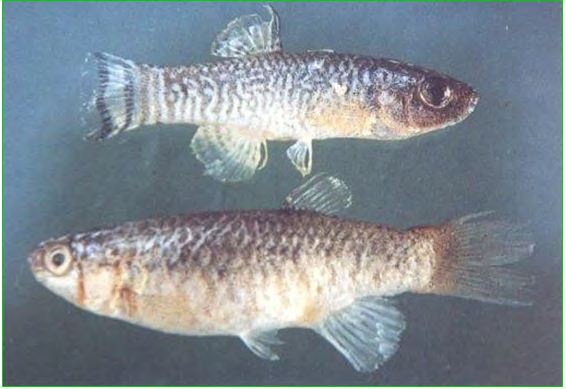
Hand net for collection of fish is shown in Figure 9.
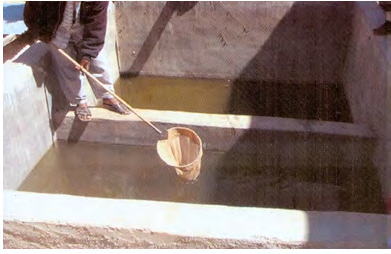
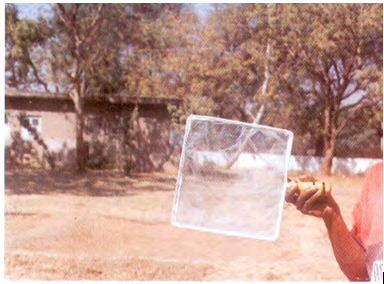
A rectangular hand net for collecting and transferring fish is shown in Figure 10.
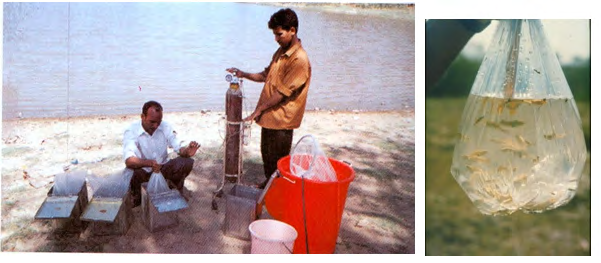
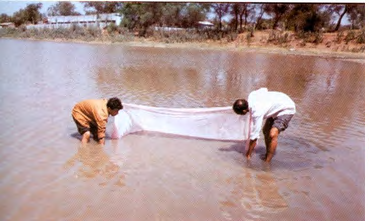
Collection of fish using large netting from large ponds is shown in Figure 11.
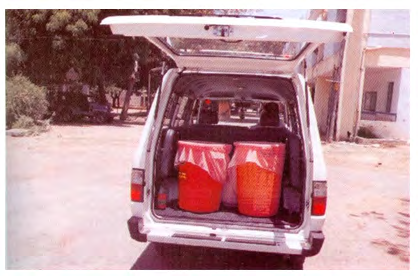
Transportation of fish in large water buckets is shown in Figure 12.
Methods
In this research all, the relevant information regarding the topic of research is research through the internet and used in this paper. An intensive search of scientific literature was done in “PubMed”, “Web of Knowledge”, “Scopus”, “Google Scholar”, “SID”, etc.
Results and Discussion
The larvivorous fishes can be used in man–made and natural habitats: water tanks, lakes, fountain, pools, cattle troughs, swimming pool, water storage tank, seepage , water pool, water storage, irrigation cistern, canals, shallow pools, small dams, rice field, ponds, riverbed pools, slow moving, small streams, swamps, temporary water collection (1-15). Several factors should be considered for evaluation of the use of fish including: use fish alone, combine use of larvivorous and phytophagous fishes, use of fish as component of Integrated Vector Management (IVM), implementation of fish by community participation, cost-effectiveness, availability of local capacity, impact on the mosquito density, impact on diseases incidence, social acceptance, cost benefit analysis of using fish.
Conclusions
More than half populations of the world are at risk of vector-borne diseases. Nearly all parts of the world are favorite breeding places for mosquitoes. According to these results, it is shown that the larvivorus fishes species are able to control of Anopheles, Aedes and Culex species of mosquitoes at their aquatic stages. These mosquito species are the main important vectors of disease to human. Due to insecticide resistance of the vectors to different insecticides, the using of biological control is an appropriate as Integrated Vector Management program.
Conflict of Interest
The author declares that there is no conflict of interest.
Acknowledgments
This research is partially supported by Ministry of Health and Medical Education of Iran under code number of NIMAD 995633.
References
-
Martinez Ibarra JA, Guillen YG, Arredondo Jimenez JI, Rodrigu Lopez MH (2002) Indigenous fish species for the control of Aedes aegypti in water storage tanks in Southern Mexico. Bio Control 47: 481-486.
-
Marti GA, Azpelicueta Mde L, Tranchida MC, Pelizza SA, Garcia JJ (2006) Predation efficiency of indigenous larvivorous fish species on Culex pipiens L. larvae (Diptera: Culicidae) in drainage ditches in Argentina. J Vector Ecol 31: 102-106.
-
Chandra G, Bhattacharjee I, Chatterjee SN, Ghosh A (2008) Mosquito control by larvivorous fish. Indian J Med Res 127: 13-27.
-
Griffin L (2014) Laboratory evaluation of predation on mosquito larvae by Australian mangrove fish. J Vector Ecol 39(1): 197-203.
-
Das MK, Rao MR, Kulsreshtha AK (2018) Native larvivorous fish diversity as a biological control agent against mosquito larvae in an endemic malarious region of Ranchi district in Jharkhand, India. J Vector Borne Dis 55(1): 34-41.
-
Yadav RS, Padhan K, Sharma VP (1992) Fishes of district Sundargarh, Orissa, with special reference to their potential in mosquito control. Indian J Malariol 29(4): 225-233.
-
Blaustein L (1992) Larvivorous fishes fail to control mosquitoes in experimental rice plots. Hydrobiologia 232: 219-132.
-
Walton WE (2007) Larvivorous fish including Gambusia. Am Mosq Control Assoc 23(2): 184-220.
-
Ghosh SK, Dash AP (2007) Larvivorous fish in malaria control: A new outlook. Trans R Soc Trop Med Hyg 101(11): 1063-1074.
-
Nelson S, Keenan L (1992) Use of an indigenous fish species, Fundulus zebrinus, in a mosquito abatement program: a field comparison with the mosquitofish, Gambusia affinis. Am Mosq Control Assoc 8: 301-312.
-
Walshe DP, Garner P, Abdel Hameed Adeel AA, Pyke GH, Burkot T (2013) Larvivorous fish for preventing malaria transmission. Cochrane Database Syst Rev 12: CD008090.
-
World Health Organiztion (WHO/EMRO) (2003) Use of fish for mosquito control.
-
Blaustein L, Karban R (1990) Indirect effects of the mosquitofish Gambusia affinis on the mosquito Culex tarsalis, Limnol Oceanogr 35: 767-771.
-
Angelon KA, Petranka JW (2002) Chemicals of predatory mosquitofish (Gambusia affinis) influence selection of oviposition site by Culex mosquitoes. J Chem Ecol 28: 797- 806.
-
Muhammad S (2015) Control of dengue carrier Aedes mosquitoes (Diptera: Culicidae) larvae by larvivorous fishes and putting it into practice within water bodies. Inter J Preventive Med Res 1(4): 232-237.
-
Bhattacharjee I, Aditya G, Chandra G (2009) Laboratory and field assessment of the potential of larvivorous, air- breathing fishes as predators of culicine mosquitoes. Biol Control 49: 126-133.
- California Red-Legged Frog and Non-Listed Amphibians Response to Non-Native Fish Removal
- Industrial Standardization of the Bio-OS: Algorithmic Codification of Resilience Engineering Guidelines and Version V8 Architecture
- Climate Variability and the Sustainability of Snail Farming in Nigeria: Past Trends, Present Challenges and Potential Outlook
- The Evaluation of the Surveillance System of Anthrax in Gilgit-Baltistan, Pakistan, 2018
- Natural Decline to Extinction of A New Zealand Rabbit Population
- Mitochondrial Bio-Logistics: Steering Co-Enzyme Q10 and Lycopene Synergies within the Science 4.0 Bio-OS Framework