
Cereal-Legume Intercropping: An Eco-Friendly Land-Use System for Sustainable Agriculture and Pest Management
Intercropping is a system of multiple cropping practice where two or more crops are grown simultaneously on the same field with a definite row arrangement. Crops from different species and/or families are generally used as component crops in the intercropping system. Intercropping cereal with legume is recognised as the most popular agricultural practice in many developing countries of the world. The cereal species is grown as a main crop and the legume species is grown for secondary importance. To date, four basic patterns of intercropping have been described based on spatial arrangement of component crops namely row, strip, relay and mixed intercropping. Now a days, Push-pull technology, a combined approach of cereallegume intercropping and trap cropping has gained popularity in the developing world particularly in some countries of Africa. Some factors i.e., maturity of component crops, time of planting and density and combination of component crops are given utmost importance for making the cereal- legume intercropping system successful. Cereal-legume intercropping is useful in terms of enhanced productivity, reduction of damage due to pests and diseases, control of weeds, conservation of environment, soil and biodiversity and improvement of forage quality. This system has several disadvantages as well, for example, competition for resources between component crops, additional costs, extra labor and difficulties in practical management and mechanization. Despite intercropping has a thousands of years old history, it is still not well-understood from an agronomic viewpoint and advanced research in this field are poor compared to works in monoculture. In this literature study, important works on cereal-legume intercropping system carried out by different researchers have been discussed and the findings in this study would be helpful to the researchers involved in this field.
Introduction
Intercropping refers to a type of agricultural practice where more than one crops are grown simultaneously on the same field [1, 2]. It is also known as mixed cropping, multiple cropping and polyculture. Nowadays this type of cropping is widely practiced in many parts of the world and is gaining popularity because of its considerable advantages.
In addition to enhanced crop yield through more efficient utilization of resources, reduced competition, reduced pressure of insect pests, weeds and diseases, intercropping also improves soil health and preserves biodiversity [3, 4, 5]. Crops from different species and/or families may be used as component crops in intercropping. These component crops should be grown simultaneously but sowing and harvesting time may be different. One or more crops are added with the main crop, the later having primary importance in relation to economy and food.
Species of annuals (cereals and legumes), perennials (shrubs and trees) or both (annuals and perennials) can be used as component crops [6]. Planning should be made carefully considering the crop varieties, soil and climate to avoid competition for resources between/among the component crops. For instance, intercropping deep-rooted variety with shallow-rooted variety or taller variety with shorter variety that require less shade.
Intercropping cereal with legume is recognized as the most popular agricultural practice in many developing countries of the world [7, 8]. Maize, sorghum and pearl millet are the most familiar cereal species, whereas bean, soybean, cowpea, pigeon-pea, groundnut are legume species. The cereal species is grown for primary importance and the legume species that helps in fixation of atmospheric nitrogen into the soil is added for secondary importance [9]. Although direct benefits of intercropping such as increased crop production and reduced pest and weed incidence can be calculated based on market-based methods, quantification of long-term environmental benefits such as improved soil health, reduced soil erosion and biodiversity conservation are often overlooked and/or not perceived by the stakeholders. Hence, quantification of the non-use values of these agro- ecological benefits generated by intercropping practices is necessary.
Many studies had been conducted worldwide on cereal- legume intercropping, but it is still not well- understood from an agronomic perspective. The aims of this study are to put together review of works conducted by various researchers, especially on cereal-legume based intercropping. How cereal-legume intercropping can be done on a spatial scale, what considerations to be taken into account and what are the potential advantages and limitations will be discussed in this paper.
Spatial Arrangement of Intercropping
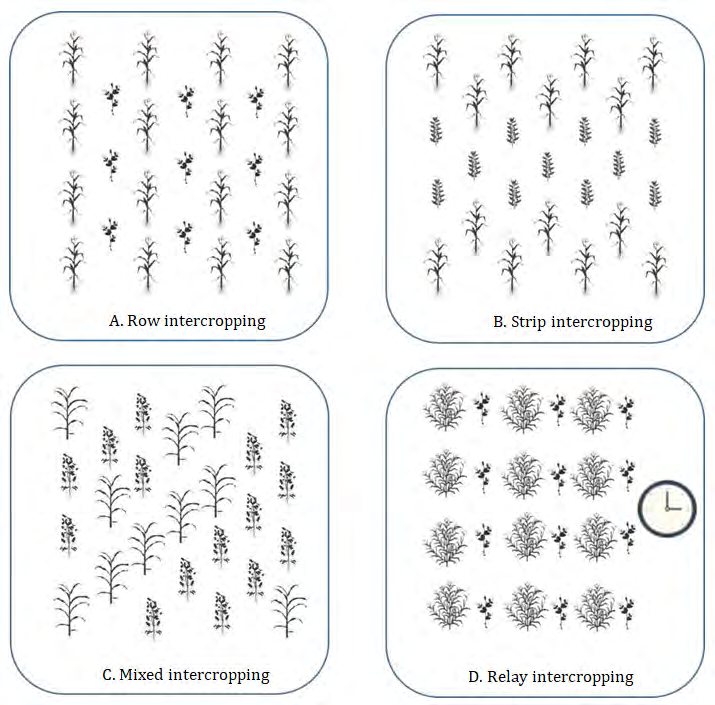
Depending on spatial arrangement four basic patterns of intercropping have been described [10] (Figure 1).
Row-intercropping: More than one crop species are cultivated simultaneously on a row by row basis. Strip-intercropping: More than one crop species are grown in different strips. The strips are sufficiently wide to promote independent cultivation but the crops within a strip can interact ergonomically because of narrow gaps. Mixed- intercropping: Growing crops of two or more species simultaneously without any regular pattern. This is commonly practised in labour-intensive subsistence farming systems. Strip width and combination of component crops and row orientation influence the productivity of this system. Relay- intercropping: Two or more crops are grown in such a way that the second crop is grown after the first one has gained reproductive stage but prior to harvesting. Based on the degree of physical association between the component crops, there are three categories of intercropping [11]. Full intercropping: Planting and harvesting time of the component crops are the same and there is a full association between the crops. Relay-intercropping: The second crop is planted into a previously planted crop that is about to mature and there is partial association between the crops. Sequential intercropping: Two crops are planted at the same land in the same year but the second crop is planted after the first one is harvested. Hence, physical association between the crops is absent.
“Push-pull” Technology- A Combined Approach of Cereal-Legume Intercropping and Trap Cropping
In sub-Saharan Africa, major losses of cereal yield are caused by stemborer larvae and parasitic striga weeds, Striga hermonthica and S. asiatica. To overcome these constraints an effective agricultural strategy called `push-pull’ was developed in Africa by International Centre for Insect Physiology and Ecology (ICIPE) in collaboration with other international and national partners for integrated management of pests, weeds and soil [12, 13]. This is a special type of agricultural practice where cereal-legume intercrops are combined with a trap crop. A repellent legume crop (push) such as Desmodium introtum or D. uncinatum is planted between the rows of a cereal crops like maize or sorghum and a trap crop (pull) such as napier grass (Pennisetum purpureum) or molasses grass (Melinis minutiflora) is grown around the intercrop as a border crop. The volatiles of the legume crop repel the gravid female stemborers from the cereal crop and those stemborers are attracted by the volatiles of the trap crop. Moreover, the legume controls the parasitic striga by stimulating abortive germination, increases the fertility of soil through nitrogen fixation, creates natural covering, and controls soil erosion and increases soil organic matter. As a result there is an increased yield of about 2 tonnes/hectare/ season. The cattle also get valuable fodder from the trap crop and intercrop plants; thereby milk production is promoted [4, 13, 14] .
![Figure 2: Schematic representation of ‘Push-pull technology’ for stemborer pest control (Adapted, with permission, from ICIPE) [13].](/fulltextimages/7750/fig_2.png)
Factors to be Considered in Cereal-Legume Intercropping
Some factors should be considered to make the cereal- legume intercropping successful. Such considerations include the following:
Maturity of component crops: The biggest corresponding effects and yield advantages occur if the growing periods of the component crops are different because they need the resources at different periods [15]. Such crops with different maturity periods which make their demand for resources i.e., nutrients, light, moisture and aerial space at separate times could be suitably intercropped. For instance, in maize green gram intercropping system, greatest demand of light for maize is about 60 days after planting, while green gram is ready to harvest [16].
Time of planting: Maize, sorghum etc. are the most common cereal crops in intercropping systems. Intercropping these cereals with other crops seems to dominate this system and when a cereal as a staple crop is intercropped with another crop, the later provides several benefits to the system. For instance, in corn-cowpea intercropping system, planting cowpea earlier between the rows of corn provide intermediate yield of marketable green ears of corn cultivars, indicating that cowpea aids in control weed control to a certain extent [17]. Intercropping maize with soybean help increase leaf area index (LAI), crop growth rate (CGR), and net assimilation rate (NAR) when soybean and maize are planted simultaneously or soybean is planted after maize. Conversely, the LAI, CGR and NAR values are lower when soybean is planted before maize. Thus, relative times of planting maize and soybean play important role in determining the yield and productivity in this system [18].
Plant density: If component crops are planted at full rate neither of them would give satisfactory yield because of overcrowding. Hence, density of each component crop is optimized by adjusting the rate of seedling below the full rate. Intercropping with such reduced seedling rate could give higher yield [19]. For instance, in maize-soybean intercropping system if the maize seedling density is increased from 38,000 plants/ha to 44,440 and 53,330 plants/ha soybean yield decreased by 21% and 23% percent, respectively [20]. In soybean-sorghum intercropping, the yield of soybean decreases due to inter-specific competition regarding nutrients, water, light, air, etc. between the component crops. But this increasing density shows positive effect on sorghum. Moreover, fixation of atmospheric nitrogen is also affected by plant density [21].
Crop combination: Successful intercropping requires careful and suitable combination of component crops. In this regard, several important factors such as planting densities, nutrient requirement, rooting system and shading are needed to be considered. Competition for resources among plants could be reduced by spatial arrangement as well as selecting crops that are capable of exploiting nutrients from the soil [22]. When cereal is intercropped with legume, the component crops utilize nitrogen from different sources. The cereal is superior in terms of competition for nitrogen than the legume. The legume causes the fixation of atmospheric nitrogen into the soil in the presence of suitable Rhizobium strains [23]. Nevertheless, some combinations influence the yield of the component crops negatively. For instance, intercropping Mucuna (Mucuna utilis) with maize lowers maize yield. But, yield of maize is much less affected when intercropped with green-gram (Phaseolus aureus) and cowpea (Vigna sinensis) [24]. Similarly, among the different cereals intercropped with soybean, pearl millet lowered the seed yield and biological yield of soybean as compared to sorghum and maize. This
may be attributed to stiff competition by pearl millet posed to soybean as observed in the tall and lanky plants, the fewer number of branches, reduced dry matter accumulation, etc. leading to reduced pods per plant [25].
Advantages of Cereal –Legume Intercropping Over Sole Cropping
Increased production: Cereal-legume inetercroping is an effective way of increasing yield and productivity. For example, intercropping maize with Desmodium significantly suppresses S. hermonthica and stemborer infestations, in maize, thereby enhances crop yields. A significant increase in height of maize plants and grain yields occurs by up to 103.2% in maize-Desmodium intercrops than in maize sole crops [26]. Intercropping finger millet (Eleusine coracana) with Green leaf desmodium, Desmodium intortum also give similar results [27]. Total revenue and gross margins are significantly higher in the intercrop compared to monocrop. In addition to higher finger millet grain yields, one part of the additional product, D. intortum is used as food for farmers’ livestock and the remaining part is sold.
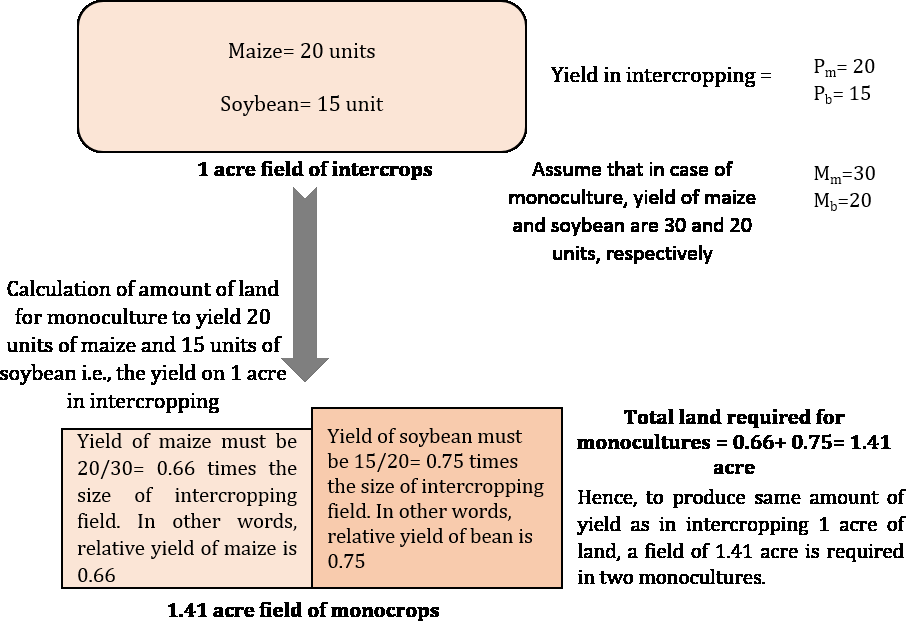
Land equivalent ratio (LER) also known as relative yield total (RYT) is the most common index adopted in intercropping system which is often used as an indicator to determine the efficacy of intercropping. It determines whether an intercrop is more productive than its respective monocultures [28]. LER value greater than one (LER>1) indicates greater efficiency of land utilization in intercropping system than monoculture system. On the other hand, monocultures are better if LER value is less than 1. For example, we assume that we have a field of one acre and we want to cultivate maize and soybean. We can either cultivate maize and soybean together as intercrop or divide the field into two portions and cultivate maize in one portion and soybean in another portion. But which one is more productive? We presume that the components crops in intercrop compete with each other. Then we can anticipate the relative yield of every crop to be less than 1. This relative yield is defined as Pi/Mi, where Pi stands for yield of component crop in the intercrop and Mi is yield of crop in monoculture. Here, the yield is calculated per unit area i.e., kg/acre or biomass/acre or other types of relevant quantity. Therefore, total relative yield is summation of two relative yields which can be expressed mathematically as follows:
[equation]
The following figure illustrates the amount of required land area for two separate monocultures to produce same amount of yield in a respective intercrop.
Considering the LER values, increased grain production recorded in barley-pea intercrop compared to sole crop of barley or pea [29]. Higher LER values in the barley-pea intercrop are observed in both same row and alternative rows combinations. Higher crop yield and lowest land requirement for barley-pea intercropping have been recorded when barley was grown without any application of N fertilizer. It also proves that this cereal-legume intercropping requires reduced amount of nutrients from the than the sole crops. When there is no supply of nitrogen fertilizer, the legumes fix atmospheric nitrogen into the soil, thus avoid competition with the companion crop for nitrogen resources. Mixture of nitrogen fixing and non- fixing crop give greater productivity than respective sole crops. For instance, average grain yield is increased by 70% and 57% in sorghum-cowpea intercrop compared to sorghum and cowpea sole crop, respectively. The LER value is meaningful (>1) in intercrop [30].
Reduction of pest attack: Reducing damage due to pests and disease is one of the most important advantages of intercropping. Two ecological theories have been coined [31] that are involved in reducing pest infestation and damage in intercropping: first, the ‘natural enemy hypothesis’- compared to monoculture, polyculture provides friendly, better environmental conditions that attract large numbers of predatory and parasitic insects, thereby suppress pest populations. The reproductive potential of natural enemies are increased due to the better distribution of pollen and nectar sources both temporally and spatially and increased abundance of herbivorous insects. Moreover, insects that predate at night also find favorable ground cover.
The second hypothesis called ‘resource concentration hypothesis’ states that the density of herbivorous insects are higher in higher density plant patches and lower in lower density plant patches. Herbivores are attracted to both host- plants and non-host plants by their chemical and visual stimuli. The over-all strength of these stimuli for a particular herbivorous insect is referred to as ‘resource concentration’. Species richness of host-plants, spatial arrangement and absolute density of a particular host, preference of each host by insects and effects due to interference of non-host plants determine the resource concentration. When the resource concentration is relatively lower, herbivores have to face difficulty in finding a host-plant, and sometimes they leave the host-plant even after arrival.
Intercropping maize with sorghum, millet or bean significantly lowers stemborer infestation compared to sole crops. Increased parasitism is also noted in intercrops than sole crops. The reason behind such higher parasitism is density-dependent factors rather than higher appropriateness of such arrangements to parasitoids [32]. One of the best ways of combined management of cereal stemborers and striga (S. hermonthica) in Kenya is intercropping finger millet (Eleusine coracana) with green leaf desmodium (Desmodium introtum). Stemborer infestation is significantly higher in monocrops than intercrop. In the intercrop emergence rate of S. hermonthica and damage rate of millet plants by stemborers is reduced by 99.3% and 53.2% respectively [27]. It has been reported that some info-chemicals are responsible for increased foraging by parasitoids. For instance, molasses grass secret (E)-4,8- dimethyl-1,3,7-nonatriene and (E)-ocimene that repel adult stemborers and attract parasitoids [33].
A trap crop of Napier grass or Sudan grass controls significant amount of stemborers when used as border crop in maize-sorghum intercropping. Although these grasses provide more suitable environment for oviposition, only 20% of the stemborer larvae can finally survive and become adults compared to 80% survival rate on maize. The underlying mechanism behind is that the grasses release sticky sap in response to penetration by stemborer larvae and thereby trap and kill the larvae [4, 12].
Weed management: Cereal yield production may be reduced by up to 80% by weed infestation [17]. This loss may be significantly reduced by intercropping cereals with legumes. A number of studies showed that cereal- legume intercropping reduces pressure of weed infestation to a certain extent [4, 17, 34]. For example, peas, Pisum sativum L. when cultivated as sole crop are week competitors against weeds. When this legume is intercropped with barley, Hordeum vulgare L. the weed infestation is lowered by three times compared to pea sole crop. This result could be explained by higher availability of nitrogen fixed by pea which causes increase of leaf areas of the component crops and subsequently creates a competition for light against weeds. Significant results is also found even if pea is intercropped with low percentage of barley [35]. Planting time also affects weed infestation to a certain extent. In an experiment of corn-cowpea intercropping, cowpea was sown at crops or after 5, 10 and 15 days. Results indicated that weed helps in corn weed suppression to a certain degree, especially when cowpea is sown earlier [17]. Significant weed suppression by legume is also recorded in `push-pull’ technology, a special type of intercropping. In this case, Desmodium spp., a repellent crop (push) is intercropped with maize in the presence of Napier grass or molasses grass, a trap (pull) border crop. In addition to repel stem borers from the cereal crop, Desmodium spp. also secretes root exudate volatiles. These volatiles cause abortive germination of seeds of parasitic Striga weed, thereby control weed infestation [4].
Improvement of soil health: The most potential advantage of cereal-legume intercropping is fixation of atmospheric nitrogen by the legume plant and converting it to a form that can be uptake by plants. In this way cereal-legume intercropping can replace nitrogen fertilization partially or entirely. When there is limited supply of nitrogen fertilizer, biologically fixed nitrogen can be a reliable source of nitrogen in cereal-legume intercropping [35, 36]. Moreover, because chemical fertilizers is one of the major causes of environmental pollution such as nitrate contamination, legumes when grown as intercrop are considered as an environment friendly, sustainable and alternative mean of introducing N into low-input agroecosystems [37]. Moreover, the roots and green parts of the legume crops can undergo decomposition and discharge nitrogen into the soil which may be used by the subsequent crops. Particularly, when there is low availability of N in the soil, using legumes as an intercrop component creates more advantages [38]. When legume is intercropped with cereal, nitrogen is directly transferred from the legume intercrop to the cereal mostly by secretion of nitrogen from the legume nodules. In addition, the residual nitrogen fixed by the legume intercrop becomes available on the sequential crops after the legume undergoes senescence and the residual parts are decomposed. Therefore, legumes not only supply some N to the cereal component but also contribute some residual nitrogen to the subsequent crops [39].
Eco-friendly approach: It is known that indiscriminate and wide use of pesticides in agro-ecosystems deteriorates the environmental health and is one of the major causes of biodiversity loss day by day. Since the intercropping strategy helps in managing the pests and weeds by increasing the resource concentration [31], it ultimately reduces the need for pesticides to be used in this system of cropping. Hence intercropping practices do not render harmful chemical residues into the environment. Thus intercropping preserves the biodiversity by rendering healthy environment. Moreover, Desmodium spp. along with Napier grass or Sudan grass in ‘push-pull’ provides effective mulching and reduces temperature within the intercropping system. Besides, soils of push-pull plots require higher amount of carbon compared to monocropped plots. Therefore, such system is more sustainable and has enhanced potential for mitigation of climate change impact [26, 40].
Conservation of soil: Cereal-legume intercropping is efficient agricultural practice for soil conservation. Regions where there is excessive rainfall soil become infertile due to excessive erosion and runoff. Intercropping systems seals surface pores of soil, thereby, prevents rain drops from hitting the bare soil; thus prevents water from entering the soil and reduce surface runoff [19]. For example, intercropping sorghum with cowpea decreases runoff by 20-30% and 45- 55% compared to monocultures of sorghum and cowpea, respectively. Moreover, this same intercropping system can reduce soil erosion by at least 50 percent compared to their respective monocultures [30].
Excess air reduces soil moisture by desiccation. If a taller crop is intercropped with a shorter one, the former one act as a wind barrier for the later and thus reduces desiccation [16]. In mono-cropping system, roots consume the moisture from the same depth of soil, thus competition for moisture occurs. This competition can be avoided by intercropping a shallow rooted crop with a deep rooted crop. Penetrating deep level into the soil deep roots get nutrients and moisture from deeper region. But shallow roots reduce soil erosion being binding at the surface. Moreover, shallow roots aid in aerating the soil. Such results were found when legume was intercropped with cassava [41].
Enhanced biodiversity: Intercropping promotes biodiversity in agroecosystems. Enhanced crop diversity in intercropping help enhance the diversity of ecosystem services provided. Increasing species diversity not only associated with nutrient cycling but also help in regulating soil fertility. It has been reported that, plant diversification in intercropping can potentially enhance diversity and abundance of natural enemies [42]. Higher diversity of predators has been reported in intercrops due to more diverse habitats. For example, a significant increase in abundance of spiders and predatory insects is observed when wheat is intercropped with faba bean. The greater abundance of predatory invertebrates could be attributed to the intercropping, which enhanced the abundance of natural enemies by providing plant resources, alternatives prey and suitable microclimates and consequently help in herbivores suppression. Furthermore, secondary food resources like extra-floral nectar and floral resources form faba bean make the intercropping plots more attractive to predaceous invertebrates [43, 44].
Improvement of forage quality: Cereal forages constitute the major portion of ruminants’ feed because of their high biomass production and low cost [45]. Forage cereals contain mainly carbohydrates and protein quality is too poor to be used for animal feed. Intercropping cereal forages with legumes offer a viable option to improve the quality of forage because protein quantity in legumes is almost double the quantity than cereals [45]. The crop produced by cereal legume intercropping has higher protein content as compared to monocrops of cereal and legume. Intercropping legumes with cereals and other fodder crops results in a variety of agronomic benefits including improved crude protein content [46, 47]. Maize-berseem clover intercrop has been shown to improve forage yield and quantity, particularly with respect to concentration of protein enhancing from 19 to 27 g/kg. Similarly, intercropping sorghum with soybean enhanced crude protein content in soybean leaves by 25 g/ kg than soybean monocrop.
Limitations of intercropping
Competition for Resources
Competition for resources (water, light, nutrients etc.) and also allelopathic effects between component crops in intercropping may reduce the crop yield [48, 49]. Combined experiment in some European countries show that pea-barley intercrops maintain an unbalanced competitive ability over weeds in spite of weed infestation variability, availability of soil nitrogen and crop biomass. However, this competition may be minimized by choosing suitable crops and planting time, and changing the spatial arrangement [35].
Additional Costs and Labour
Despite multiple benefits, intercropping requires some additional costs. For instance, total cost is considerably higher in intercrop because of additional cost of seed and labour for two dissimilar crops. Extra labours are needed for the planting, management, and harvesting of companion crops [27]. Crops should be harvested using machine to produce marketable yield. But harvesting with machine is not possible if the component crops mature at different times. Because of this limitation farmers are bound to harvest crops with hand, use animals for grazing crops in the field or harvest for on-farm animal feed [6].
Difficulties with Practical Management and Mechanization
Practical management of intercropping is difficult in areas where the farmers depend highly on mechanization or there are differences in requirements of component crops for fertilizers, herbicides, and pesticides. Serious problems of intercropping are extra cost for separation and marketing of mixed grains, loss of grain at harvest and difficulties in harvesting due to lodging. In the developing countries, farmers do not use expensive machinery particularly for intercropping because of availability of cheap manual labour. They mainly work in the fields by hands using simple tools. However, decreasing availability of rural labour due to rural- urban migration may lead to switching of intercrops towards sole crop.
Conclusions and Recommendations
Due to its tremendous benefits, cereal-legume intercropping has become a popular agricultural practice in many parts of the world, especially in the developing countries. Although cereal-legume intercropping is a traditional agricultural practice and its history dates back thousands of years, this system is not well-understood yet from an agronomic perspective. In addition, advanced research in this field are poor in the developing world compared to work in monocultures. Hence, further research in this field is necessary to understand better how cereal- legume intercropping system functions. Moreover, cereal- legume intercropping compatible with modern farming systems should be developed. To this end, following recommendations can be drawn for future research:
- Knowledge of behavioral ecology and biology of target pest populations and natural enemies is prerequisite to establish intercropping as an effective pest management strategy. The acquired knowledge may help in development of locally adjusted tailor-made intercropping strategies for optimal management of pest populations.
- A better understanding of responses of insect pests and beneficial organisms in intercropping system, especially ‘Push-pull’ technology and incorporation of such knowledge in diversification strategies for suppression of pest populations is still required.
- Finally, long term ecological research should be conducted to investigate the effect of natural enemies in diverse agroecosystems.
References
-
Bedoussac L, Journet EP, Hauggaard Nielsen H (2015) Ecological principles underlying the increase of productivity achieved by cereal-grain legume intercrops in organic farming A review. Agron Sustain Dev 35(3): 911-935.
-
Wezel A, Casagrande M, Celette F, Vian JF, Ferrer A, et al. (2014) Agroecological practices for sustainable agriculture. A review Agron Sustain Dev 34(1): 1-20.
-
Fung KM, Tai APK, Yong T, Liu X, Lam HM (2019) Co- benefits of intercropping as a sustainable farming method for safeguarding both food security and air quality. Environ Res Lett 14(4): 044011.
-
Khan Z, Midega C, Pittchar J, Pickett JA, Bruce T (2011) Push-pull technology: a conservation agriculture approach for integrated management of insect pests, weeds and soil health in Africa. Int J Agric Sustain 9(1): 162-170.
-
Rosa Schleich J, Loos J, Mußhoff O, Tscharntke T (2019) Ecological-economic trade-offs of Diversified Farming Systems – A review. Ecol Econ 160: 251-263.
-
Lithourgidis AS, Vlachostergios DN, Dordas CA, Damalas CA (2011) Dry matter yield, nitrogen content, and competition in pea-cereal intercropping systems. Eur J Agron 34(4): 287-294.
-
Layek J, Shivakumar BG, Rana DS (2014) Soybean– cereal intercropping systems as influenced by nitrogen nutrition. Agron J 106(6): 1933-1946.
-
Kiwia A, Kimani D, Harawa R, Jama B, Sileshi G (2019) Sustainable Intensification with Cereal-Legume Intercropping in Eastern and Southern Africa. Sustainability 11(10): 2891.
-
Hardarson G, Atkins C (2003) Optimising Biological N 2 Fixation by Legumes in Farming Systems. Plant and soil 252: 41-54.
-
Vandermeer JH (1989) The Ecology of Intercropping. Cambridge University Press, United Kingdom.
-
Beets WC (1982) Multiple Cropping and Tropical Farming Systems-1st Edition. CRC Press, The United States of America, pp: 170.
-
Khan ZR, Pickett JA, Van Den Berg J, Wadhams LJ, Woodcock CM (2000) Exploiting chemical ecology and species diversity: Stem borer and striga control for maize and sorghum in Africa. In: Pest Management Science 56(11): 957-962.
-
Khan ZR, Midega CAO, Pittchar JO (2014) Achieving food security for one million sub-Saharan African poor through push–pull innovation by 2020. Philos Trans R Soc B Biol Sci 369(1639): 20120284.
-
Kassie M, Marenya P, Tessema Y (2018) Measuring Farm and Market Level Economic Impacts of Improved Maize Production Technologies in Ethiopia: Evidence from Panel Data. J Agric Econ 69(1): 76-95.
-
Ofori F, Stern WR (1987) Cereal–Legume Intercropping Systems. Adv Agron 41: 41-90.
-
Yellamanda R, Sankara RG, Reddy S, Reddy G (2007) Principles of Agronomy. Kalyani Publishers.
-
Silva PIB, Silva PSL, Oliveira O, Sousa RPd (2008) Planting times of cowpea intercropped with corn in the weed control. Rev Caatinga 21(1): 113-119.
-
Addo Quaye AA, Darkwa AA, Ocloo GK (2011) Yield and productivity of component crops in a maize-soybean intercropping system as affected by time of planting and spatial arrangement. J Agric Biol Sci 6(9): 50-55.
-
Seran TH, Brintha I (2010) Review on Maize Based Intercropping. J Agron 9(3): 135-145.
-
Muoneke CO, Ogwuche MAO, Kalu BA (2007) Effect of Maize Planting Density on the Performance of Maize/ Soybean Intercropping System in a Guinea Savannah Agroecosystem. Afr J agric Res 2(12): 667-677.
-
Egbe OM (2010) Effects of plant density of intercropped soybean with tall sorghum on competitive ability of soybean and economic yield at Otobi, Benue State, Nigeria. J Cereal Oilseeds 1(1):1-10.
-
Fisher NM (1977) Studies in mixed cropping. II. Population pressures in maize-bean mixtures. Exp Agric 13(2): 185-191.
-
Mugwe J, Mugendi DN, Mucheru Muna M, Kungu JB (2011) Soil Inorganic N and N Uptake by Maize Following Application of Legume Biomass, Tithonia, Manure and Mineral Fertilizer in Central Kenya. In: Bationo A, Waswa B, Okeyo JM, Maina F, Kihara JM, et al. (Eds.), Innovations as Key to the Green Revolution in Africa. Springer Netherlands, pp: 605-616.
-
Agboola AA, Fayemi AA (1971) Preliminary trials on the intercropping of maize with different tropical legumes in western nigeria. J Agric Sci 77(2): 219-225.
-
Layek J, Shivakumar BG, Rana DS (2014) Soybean– cereal intercropping systems as influenced by nitrogen nutrition. Agron J 106(6): 1933-1946.
-
Khan ZR, Pickett JA, Wadhams LJ, Hassanali A, Midega CAO (2006) Combined control of Striga hermonthica and stemborers by maize-Desmodium spp. intercrops. Crop Prot 25(9): 989-995.
-
Midega CAO, Khan ZR, Amudavi DM, Pittchar J, Pickett JA (2010) Integrated management of Striga hermonthica and cereal stemborers in finger millet (Eleusine coracana (L.) Gaertn.) through intercropping with Desmodium intortum. Int J Pest Manag 56(2): 145-151.
-
Mead R, Willey RW (1980) The concept of a ‘land equivalent ratio’ and advantages in yields from intercropping. Exp Agric 16(3): 217-228.
-
Sahota TS, Malhi SS (2012) Intercropping barley with pea for agronomic and economic considerations in northern Ontario. Agric Sci 3(7): 889-895.
-
Zougmore R, Kambou FN, Ouattara K, Guillobez S (2000) Sorghum-cowpea intercropping: An effective technique against runoff and soil erosion in the sahel (saria, burkina faso). Arid Soil Res Rehabil 14(4): 329-342.
-
Root RB (1973) Organization of a Plant‐Arthropod Association in Simple and Diverse Habitats: The Fauna of Collards (Brassica Oleracea). Ecol Monogr 43(1): 95- 124.
-
Songa JM, Jiang N, Schulthess F, Omwega C (2007) The role of intercropping different cereal species in controlling lepidopteran stemborers on maize in Kenya. J Appl Entomol 131(1): 40-49.
-
Hassanali A, Herren H, Khan ZR, Pickett JA, Woodcock CM (2008) Integrated pest management: The push- pull approach for controlling insect pests and weeds of cereals, and its potential for other agricultural systems including animal husbandry. Philos Trans R Soc B Biol Sci 363(1491): 611-621.
-
Fujita K, Ofosu Budu KG, Ogata S (1992) Biological nitrogen fixation in mixed legume-cereal cropping systems. Plant Soil 141(2): 155-175.
-
Corre Hellou G, Dibet A, Hauggaard Nielsen H, Flohr A, Pelzer E, et al. (2011) The competitive ability of pea– barley intercrops against weeds and the interactions with crop productivity and soil N availability. F Crop Res 122(3): 264-272.
-
Rodriguez C, Carlsson G, Englund JE, (2020) Grain legume-cereal intercropping enhances the use of soil- derived and biologically fixed nitrogen in temperate agroecosystems. A meta-analysis. Eur J Agron 118: 126077.
-
Jensen ES, Carlsson G, Hauggaard-Nielsen H (2020) Intercropping of grain legumes and cereals improves the use of soil N resources and reduces the requirement for synthetic fertilizer N: A global- scale analysis. Agron Sustain Dev 40(1): 1-9.
-
Vesterager JM, Nielsen NE, Høgh Jensen H (2008) Effects of cropping history and phosphorus source on yield and nitrogen fixation in sole and intercropped cowpea– maize systems. Nutr Cycl Agroecosystems 80(1): 61-73.
-
Mayer J, Buegger F, Jensen ES, Schloter M, Heß J (2003) Residual nitrogen contribution from grain legumes to succeeding wheat and rape and related microbial process. Plant Soil 255(2): 541-554.
-
Khan, Midega C, Pittchar J, Pickett J, Bruce T (2011) Push- pull technology: A conservation agriculture approach for integrated management of insect pests, weeds and soil health in Africa. Int J Agric Sustain 9(1): 162-170.
-
El-Swaify SA, Lo A, Joy R, Shinshiro L, Yost RS (1988) Achieving conservation-effectiveness in the tropics using legume intercrops. Soil Technol 1(1): 1-12.
-
Letourneau DK, Armbrecht I, Rivera BS (2011) Does plant diversity benefit agroecosystems?. A synthetic review. Ecol Appl 21(1): 9-21.
-
Andow D (1991) Vegetational diversity and arthropod population response. Annu Rev Entomol 36(1): 561-586.
-
Van Emden HF (1980) Plant diversity and natural enemy efficiency in agroecosystems. Plant Divers Nat enemy Effic agroecosystems Crit Issues Biol Control 63(80): 330.
-
Ghanbari-Bonjar A, Lee HC (2003) Intercropped wheat (Triticum aestivum L.) and bean (Vicia faba L.) as a whole-crop forage: effect of harvest time on forage yield and quality. Grass Forage Sci 58(1): 28-36.
-
Sadeghpour A, Jahanzad E, Esmaeili A, Hosseini MB, Hashemi (2013) Forage yield, quality and economic benefit of intercropped barley and annual medic in semi- arid conditions: Additive series. F Crop Res 148: 43-48.
-
Strydhorst SM, King JR, Lopetinsky KJ, Harker KN (2008) Forage Potential of Intercropping Barley with Faba Bean, Lupin, or Field Pea. Agron J 100(1): 182-190.
-
Dangia N, Jalata Z, Daba G (2021) Effects of Varieties and Population of Soybean Intercropped with Maize on Yield and Yield Components of Associated Crops. J Plant Sci 9(4): 128-138.
-
Willey RW (1979) Intercropping: Its importance and research needs. Part-1, Competition and yield advantages. F Crop Abstr 32(1): 73-81.
- California Red-Legged Frog and Non-Listed Amphibians Response to Non-Native Fish Removal
- Industrial Standardization of the Bio-OS: Algorithmic Codification of Resilience Engineering Guidelines and Version V8 Architecture
- Climate Variability and the Sustainability of Snail Farming in Nigeria: Past Trends, Present Challenges and Potential Outlook
- The Evaluation of the Surveillance System of Anthrax in Gilgit-Baltistan, Pakistan, 2018
- Natural Decline to Extinction of A New Zealand Rabbit Population
- Mitochondrial Bio-Logistics: Steering Co-Enzyme Q10 and Lycopene Synergies within the Science 4.0 Bio-OS Framework